
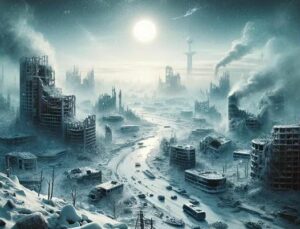
Preface. This post is a summary of what I thought interesting and important from this 2025 National Academy of Sciences report “Potential environmental effects of nuclear war.”
Unlike other nuclear winter papers reviewed in energyskeptic, the National Academy does not speculate on the number of deaths. Other researchers have estimated from one to five billion people might die, since nuclear winter can affect land and water ecosystems for decades. A nuclear winter is perhaps the most devastating of all the nine existential boundaries and polycrisis overshoot factors (Richardson 2023 and NOTE 1).
Nuclear weapons depend on civilian nuclear power plants for Uranium and expertise. They are joined at the hip. Since transportation in mining, logging, agriculture and other off-road essential industries cannot be electrified (or road trucks for that matter — When Trucks Stop Running: Energy and the Future of Transportation), there is no reason to construct any more electricity generating nuclear power plants, and especially not the 19.5% enriched uranium (HALEU) fuel for small nuclear reactors. Some scientists estimate that 13% enriched Uranium is enough to make a bomb. 20% is for sure, that is why the sneaky 19.5% is being used for HALEU fuel.
Until permanent deep underground radioactive waste storage facilities are built, no more reactors should be constructed, so that we don’t poison future generations for a few to hundreds of thousands of years (depending on which expert you prefer WNA 2025, EPA 2025). We simply must bury the waste for the sake of future generations, not create even more of it.
The National Academies is considered highly credible due to their independent, objective, nonpartisan advice that dates back to 1863. Each of their reports is written by experts chosen for their knowledge, not affiliations. Information is obtained at public meetings, submissions from outside parties, scientific papers, and committee member investigations. The peer review process is very rigorous, with other independent experts assessing the findings and making sure that everything is supported with evidence. The scientists who wrote the report then reply to reviewer comments and correct problems found. And the NAS appoints the members, the best experts in their field, not Congress to prevent bias and politicization of findings.
The paper stresses that more research needs to be done due to key uncertainties and data gaps, with too many variables making predictions difficult, such as the number of nuclear weapons dropped, the amount and composition of the fuel load, and so on.
EPA (2025) Radioactive Waste. United States Environmental Protection Agency.
Richardson 2023 Earth beyond six of nine planetary boundaries. Science. https://www.science.org/doi/10.1126/sciadv.adh2458
NOTE 1: Land Use Change, Biodiversity Loss, Freshwater Depletion, (Rain)forest destruction, Overfishing, Coral Reef Loss, Nitrogen & Phosphorus oxygen depletion (dead zones), Nuclear Winter & War, Stratospheric ozone pollution, Ocean Acidification, Insect Apocalypse & Pollinator (bee) loss, Invasive Species, Endocrine Disruptors, Antibiotic Resistance, (Forever) Chemicals, Mining tailings, Plastic, Soil Erosion, Degradation, Compaction, Salinization, Pollution, Development, Hurricanes & Tornadoes, Floods & Sea Level Rise, Drought & Dust Bowls, Heat Waves, Acid Rain, Wildfires, Earthquakes, Amazon & Permafrost Tipping Points, Mass Migrations
WNA (2025) Radioactive Waste – Myths and Realities. World Nuclear Association.
Alice Friedemann www.energyskeptic.com Author of Life After Fossil Fuels: A Reality Check on Alternative Energy; When Trucks Stop Running: Energy and the Future of Transportation”, Barriers to Making Algal Biofuels, & “Crunch! Whole Grain Artisan Chips and Crackers”. Women in ecology Podcasts: WGBH, UCSC, Financial Sense, Jore, Planet: Critical, Crazy Town, Collapse Chronicles, Derrick Jensen, Practical Prepping, Kunstler 253 &278, Peak Prosperity, Index of best energyskeptic posts
***
NAS (2025) Potential environmental effects of nuclear war. National Academies of Science.
https://doi.org/10.17226/27515
War is devastating to society; nuclear war even more so. Since the beginning of civilization, humankind
has been at war with itself, but no weapon has ever come close to the formidable power of a nuclear weapon. A nuclear war would not only brutally take human lives and leave everlasting wounds on society, but also cause significant and sometimes irreversible damage to the environment. The thermal, radiological, and blast effects of a nuclear detonation could severely impact the environment and destroy life. A modern city could become ruins in minutes, leaving behind rubble and fires ignited by ruptured gas lines, collapse of power grids and electrical shortages. The air could become so radiologically contaminated and heavily polluted in minutes to months, the water undrinkable, and the soil of the impacted area uninhabitable and unsuitable for agricultural use for decades to come. Fires from large nuclear detonations could potentially alter life on Earth to a degree never seen before in human history if a large quantity of smoke is produced. Fire-produced smoke could be injected into the stratosphere, then circulate around the globe for years blanketing the planet, shielding the sunlight and cooling the planet surface, thereby disrupting the food chain and production ecosystem
The impacts on the ecosystem (air, water, soil, cryosphere, and biosphere) and its services (built environment, medical, food, transportation, finance/commerce, and so on) have not been quantified in the past.
This committee was charged with reviewing the state of knowledge on the environmental effects of nuclear war and was informed by the latest publications on the subject and briefings by many experts in the field. This required exploring nuclear weapon employment scenarios, fires from such explosions, links between such fires and the stratosphere, state-of-the-art models used for simulating climate and environmental impacts, data gaps, and assumptions made in the modeling. Therefore, this study represents the latest knowledge the scientific community has amassed and current assessment based on published literature for the likely environmental impacts of wartime nuclear detonation.
The committee has provided four scenarios that represent plausible baselines for source terms in future modeling studies, with each scenario representing a qualitatively distinct scale of conflict: a largescale, strategic exchange between major nuclear powers, involving 2,000 warheads; a moderate-scale strategic exchange of 400 warheads; a small-scale exchange between regional nuclear powers, involving 150 warheads; and a very small-scale scenario with a single detonation.
For any employment scenario, nuclear detonations would release their energy in three main forms: thermal energy, kinetic energy creating an air shock wave, and initial and residual radiation (which is not considered in this study). The thermal energy travels through the atmosphere and can cause burns and ignite materials kilometers away, though it can be blocked by opaque materials or particles in the air. The shock wave creates overpressure that causes structural damage and creates secondary fire ignitions. For surface bursts or low-altitude airbursts, the combination of shock and thermal effects can pulverize buildings and loft debris into the characteristic mushroom cloud, resulting in highly radioactive local fallout within 24 hours and longer-lasting global fallout from smaller particles. The combined thermal and blast effects can generate large fires that produce emissions many times greater than the material in the nuclear cloud itself.
Nuclear detonations generate significant fires through both thermal pulses, which vaporize nearby materials and ignite combustible materials at greater distances, and blast waves, which create rubble and secondary ignition sources. The resulting emissions can be understood through three key factors. First, characteristic fuel loadings and consumption involve the density and composition of available fuels including buildings, vehicles, structures, roads, and vegetation, with different parameters determining what percentage of these fuels burn. Second, ignition and fire spread define the burned area, with sufficient fuel loading and favorable atmospheric conditions potentially allowing individual fires to merge into firestorms with strong convective columns, while areas with lower fuel loading may experience line like fire fronts driven by ambient winds and topography. Third, emission factors determine the specific pollutants released, including particulate black carbon, organic carbon, particulate matter (PM), and reactive gases such as carbon monoxide and nitrogen oxides, with these emissions potentially reaching the stratosphere where they can have long lifetimes and significant environmental impacts on regional and global scales
The emissions from nuclear detonation fires depend critically on plume dynamics, where injection height—determined by factors such as fuel loading, fire area, and conditions—dictates the severity of any environmental impacts, though challenges remain in predicting whether fires will inject soot into the upper troposphere or the stratosphere. In the troposphere, aerosols rise rapidly via heat-induced buoyancy, undergo efficient lateral mixing through weather systems and circulation cells within a month, and face relatively quick removal through dry deposition (settling onto surfaces) or wet deposition (precipitation-related processes).Conversely, in the stratosphere, the inverted temperature profile inhibits vertical mixing, allowing aerosols to persist for years rather than days or weeks, while lateral transport occurs more slowly through the Brewer-Dobson circulation with 3-year overturning times, leading to prolonged environmental impacts through altered Earth radiation balance, especially from scenarios involving numerous large fires producing substantial stratospheric particulates.
The emissions from fires caused by nuclear detonations could create significant disruptions across the physical Earth system. The response of global climate to a nuclear exchange would occur on a range of timescales, involving processes ranging from weeks to over a decade. Beginning with the most rapid effects, particulate loading in the upper atmosphere would immediately decrease solar radiation reaching Earth’s surface, with effects potentially saturating (not scaling linearly) once smoke optical depth exceeds certain thresholds. Stratospheric ozone would be depleted by injected nitrogen oxides and smoke, leading to increased ultraviolet radiation reaching Earth’s surface with subsequent ecosystem damage. Temperature changes would follow radiative alterations, with land surfaces cooling rapidly while oceans respond more slowly, potentially persisting for decades after smoke particles have cleared. Hydrologic cycle disruptions would occur within 10–14 days as altered radiation and surface cooling change radiative-convective equilibrium, affecting rainfall patterns and freshwater availability. Ocean circulation would be disrupted through changes in wind stress, thermohaline convection, and surface salinity from altered freshwater inputs. Cryosphere impacts would result from changes in heat transport from equatorial to polar regions and from carbonaceous aerosol deposition on snow and ice surfaces, potentially triggering long-lasting ice age conditions through albedo feedback mechanisms.
Nuclear war would disrupt ecosystems through changes in solar radiation, temperature, and the hydrologic cycle.
Ecosystem functioning would be significantly altered as decreased solar radiation reduces temperatures and slows the water cycle. Net primary production (NPP) would likely decrease in temperature-limited higher-latitude forests while effects on water-limited drylands remain uncertain due to competing factors of reduced precipitation and evaporative demand. Marine ecosystems would experience severe reductions in photosynthetically available radiation (up to 50% in worst-case scenarios) along with complex changes in ocean chemistry: initial increases in pH followed by prolonged decreases in calcium carbonate saturation states threatening coral reefs. Ocean cooling would enhance vertical mixing, temporarily increasing surface nutrient concentrations by approximately 30% and altering phytoplankton community structure, potentially favoring larger diatom species. Biodiversity impacts, though highly uncertain, could include local extinctions, habitat shifts, and colonization of abandoned croplands. Humans might respond by increasing deforestation in lower latitudes to compensate for agricultural losses, further threatening biodiversity. Freshwater ecosystems could face multiple stressors including direct blast effects, fires, altered hydrology, and contamination. It is likely that there will be an increase in harmful UV radiation from stratospheric ozone depletion.
A nuclear conflict would have significant societal and human impacts that extend far beyond the immediate blast zone. Ecosystem services such as agriculture and food production would be disrupted by cooling and changes in precipitation, which would reduce crop yields and livestock productivity. Environmental quality, in general, would be expected to decrease due to widespread air, water, and soil pollution from infrastructure damage and fires. Human health would suffer both from direct effects, such as from blast injuries or lack of emergency medical care, and indirect effects involving disease transmission, malnutrition, and mental illness. Persistent environmental contamination and psychosocial stressors could potentially create intergenerational health consequences. The broader societal impacts would include mass displacement straining shelter and resource systems, profound psychological trauma, behavioral disruptions such as panic and hoarding, potential curtailment of civil liberties, and cascading failures across interconnected critical systems
The committee highlights the interconnected vulnerabilities across global supply chains, financial systems, and communication networks, which could allow localized shocks from a nuclear event to catalyze cascading broader risks. The committee calls for a collaborative multiagency effort to assess these interconnected societal and economic impacts. Noting that comprehensive impact assessments are hampered by limited data, process understanding, and modeling capabilities, especially around critical areas such as agriculture and food security, the committee advocates investing in improvement of modeling that integrates climate, crop, livestock, and economic factors to bolster preparedness strategies.
Chapter 7
Detonations of large magnitude may disrupt (or destroy) societies through pathways that involve global-scale climate effects. The atmospheric changes discussed in previous chapters suggest potentially widespread impacts on agriculture, water resources, and other factors that are critical for human livability in the months to years following a nuclear war. Smaller regional detonations, although not as likely to cause global-scale changes in climate, could still produce impacts on environmental quality at local and regional scales. Air pollution and environmental contamination from nuclear detonation-induced fires would have significant impacts on ecosystem services, specifically agriculture, as well as human health and economic activity. In addition, even a limited weapons exchange might still cause ripple effects throughout globally connected systems, such as trade and financial networks.
Today’s advances in technology, communication, and trade have created intricate transnational networks that enable rapid propagation of impacts across regions. This interconnectedness leads to societal teleconnections, analogous to natural teleconnections in Earth systems, whereby a disruption in one region or sector generates cascading impacts, through societal influencing factors, that are not necessarily colocated with the initial disturbance (Viña and Liu, 2022). For instance, agricultural damage in a conflict region could reverberate through trade networks to produce global food supply disruptions. Harm to infrastructure such as ports could ripple through supply chains leading to unemployment spikes in dependent economies (Cottrell et al., 2019).
Breakdowns in one critical sector such as energy may disable other systems including water, food, health, and communications in unpredictable ways. This global interconnectedness also creates complexity and nonlinear behaviors as impacts propagate through societal systems. This complexity arises from the myriad of feedbacks between human and natural systems, which current models struggle to represent fully.
Individual and institutional responses to the crisis can further compound uncertainties through uncoordinated policies, unrest, hoarding, panic behaviors or instability. Ultimately, human responses to actual and perceived risks would modulate outcomes significantly following a nuclear war. Individual and collective actions taken in response to resource scarcity and instability can either worsen impacts through hoarding and unrest or enhance resilience through cooperation.
BOX 7-2 How Shocks May Affect an Interconnected World. Increased trade, investment, and information flows in a globalized economy have created many opportunities for export expansion and diversification. The distribution of gains of globalization has been uneven worldwide which has led to an increased vulnerability (i.e., risk of being negatively affected by shocks). These shocks could be caused by nature (e.g., droughts), economic shocks (e.g., trade policies), health pandemics (e.g., COVID-19) or armed conflicts (e.g., Russia-Ukraine war).
Some examples:
- An oil crisis was caused by the Iranian Revolution in 1979 and the drop in oil production. In both cases, the oil crisis caused an increase in global food prices.
- In the early 1980’s the Latin American debt crisis also influenced global food prices.
- Likewise, in 1997 after Thailand devaluated its currency relative to the U.S. dollar, a financial crisis spread across East Asia, disrupting economies in the region and leading to spillover effects in Latin America and Europe. This event also affected food security and global food prices.
- The world food price crisis between 2007 and 2008 was caused by a mix of factors, including severe droughts in grain-producing regions and increasing costs of fertilizers, food transportation, and other industrial agriculture inputs due to increases in oil prices.
- Another big spike in food prices occurred between 2011 and 2012, also due to severe droughts in parts of Ukraine and Russia, affecting wheat production.
- This was followed by a La Niña weather pattern that affected corn and soybean production in many countries.
- The COVID-19 pandemic created an increase in food prices around the world where low-income households were most affected. Supply chain disruptions and increased consumer demand for food raised food prices worldwide between 2020 and 2021.
- These conditions were worsened by the 2022 Russian invasion of Ukraine. The Russia-Ukraine war disrupted almost a third of the world’s wheat market.
- The 2023 escalation of the Israeli-Hamas conflict may have caused an increase in energy and fertilizer prices with corollary impacts on world food prices.
- Shipment bottlenecks and attacks on freight carriers in the Red Sea, a busy trade route for fertilizers, can cause fertilizer and oil price spikes (Bhattacharya, 2023; Rice and Vos, 2024).
7.2.1.1 Agriculture and Food Production. The consequences of a nuclear war for agriculture and food production can be extensive and have direct and indirect impacts on food production, distribution, and consumption systems, with far-reaching consequences for immediate and long-term food security. A nuclear war can result in widespread cooling and precipitation decreases caused by soot and debris injected into the atmosphere after nuclear weapon detonation. As described in Chapter 6 (Ecosystem Impacts), this debris can block solar radiation, reducing sunlight available for photosynthesis, and cause temperature drops and changes in weather patterns that disturb the timing of crop planting, growth, and harvesting. These impacts would lead to lower crop yields, reduced livestock feed availability, and low livestock yields. Temperature changes and season length variations further limit agricultural productivity by disturbing plant growth cycles and animal breeding patterns.
Previous studies have suggested that a smaller nuclear exchange could result in a sudden decline in global mean temperature and precipitation by up to 1.8ºC and 8%, respectively, with the rapidity of the cooling effect potentially being more harmful that its magnitude. Jägermeyr et al. (2020) use this scenario to evaluate the impacts on the global food system. Their results suggest that global production losses of major production systems range between 3% and 16% on average. However, the results also suggest a high variability across the different regions.
Several studies agree that the impact of a nuclear war on agriculture varies based on the locations of nuclear exchanges and magnitude of the detonations, where different regions could experience different extents of damage based on factors such as intensity of attacks, prevailing weather patterns, and other conditions such as whether the exchange is in the Northern Hemisphere main cropping season. Results suggest that the major impacts may occur on temperate regions above 30ºN latitude which includes the United States, China, and Europe. In general, areas closer to the Equator (southern latitudes) might experience comparably milder impacts owing to their more stable annual climate, although no region would remain entirely immune to the far-reaching consequences of a nuclear war. However, global trade analyses suggest that multiyear losses on major producing regions would constrain food availability, despite domestic reserves, and propagate to the Global South where the larger impacts will be on countries with high poverty and food insecurity rates (FAO et al., 2024; Glauber and Laborde Debucquet, 2023; Hochman et al., 2022; Jägermeyr et al., 2020; Puma et al., 2015; WFP and FAO, 2024).
This can be accentuated by the disruption or destruction of infrastructure, transportation systems, and supply chains which would hinder the movement of agricultural products, leading to challenges in accessing input and output markets and distributing food. These conditions can create price fluctuations due to supply-and-demand dynamics, and the limited availability of essential agricultural inputs such as fertilizers, seeds, and labor, which can become limited or entirely inaccessible due to the destruction of production facilities and transportation routes, or policies implemented in certain countries. This scarcity can further hamper crop production and food security. Figure 7-4 shows how fragile and vulnerable the global food system is to self-propagating disruptions (i.e., multiplier effect) due to the high level of interconnectedness and the amount of food that is traded across countries and continents (Puma et al., 2015).
The social and economic upheaval of nuclear war can cause large-scale migration and displacement of populations. People may be forced to leave their homes and agricultural lands due to immediate danger from the conflicts and subsequent breakdown of societal structures. This situation could lead to labor shortages affecting planting, harvesting, and other critical agricultural activities.
The environmental aftermath of nuclear war could lead to loss of biodiversity in agricultural ecosystems. Radioactive fallout, pollution, and habitat destruction could contribute to the decline of various plant and animal species, disrupting ecosystem services crucial for maintaining soil fertility, pest control, and ecosystem health. This could further challenge agricultural systems to recover and adapt to the new post-war conditions.
7.2.1.2 Natural Resources Provision. In the present-day ocean, characterized by overfishing, a nuclear war would have devastating impacts on marine wild-capture fishery productivity, with a 30% decline in catch after a global conflict (injecting 150 Tg of soot; Scherrer et al., 2020). If a conflict were to occur in an overfished state, the increased demand on marine fisheries productivity would eventually send fisheries productivity into a decline of 70%. Xia et al. (2022) estimated that after regional or global nuclear war that injects more than 5 Tg of soot, aquatic food production would not be able to compensate for reduced crop output, leading to large calorie deficits for global society.
Accessible freshwater within lakes and rivers represents less than one-tenth of one percent of all water on Earth. Nevertheless, estimates suggest that freshwater fisheries produce approximately 19% of globally captured fishes each year (Allison and Mills, 2018). When combined with freshwater aquaculture production, which represents approximately 68% of global aquaculture, freshwater fishes represent over 40% of annual global fish consumption. Beyond freshwater systems, discharge and nutrients from rivers also support fisheries production in estuaries and marine systems. In combination, a recent review suggested that the species comprising 77% of the total global fisheries catch are dependent on freshwater systems for at least some part of their lives (Broadley et al., 2022). Consequently, the disruptions of hydrologic processes and degradation of freshwater ecosystems caused by nuclear detonation and described in previous chapters have the potential to significantly impact global fisheries food production.
BOX 7-3 Impacts on Ecosystem services. Several historical disasters illustrate the potential for large-scale damage to agriculture, natural resources, and environmental quality—key ecosystem services that sustain human populations.
Pakistan’s catastrophic flooding in 2022 damaged agricultural lands across 4 million hectares directly inundated by floodwaters (Nanditha et al., 2023). Early estimates suggest that the floods may have destroyed over 40% of food crops including staple commodities and 75% of fruit and vegetable crops (Ahmed and Farooq, 2022; Center for Disaster Philanthropy, 2023; Qamer et al., 2023). With agriculture central to Pakistan’s economy, the agricultural devastation threatens protracted food insecurity and economic disruption through the degradation of essential ecosystem services.
The Australian bushfires of 2019–2020 directly burned over 46 million acres of forests, farmland, and grazing lands across multiple states (Jalaludin et al., 2020; WWF-Australia, n.d.). The destruction reduced national cattle stocks by over 300,000 head and damaged fruit production. Modeling suggests that the fires may have wiped out up to 70% of timber supplies in some impacted regions (Bowman et al., 2021; Peel, 2020). By disrupting agriculture and destroying crop, timber, and livestock resources, the bushfires severely degraded natural capital providing essential ecosystem services.
The 2010 Haiti earthquake damaged irrigation systems across 3,500 hectares of farmland, destroyed crop storage and processing facilities, and generated debris that disrupted agricultural production. This severely constrained Haiti’s food production capacity in the aftermath, forcing increased dependence on imports. The breakdown of irrigation infrastructure and inability to process and store crops demonstrates the vulnerability of agricultural systems when critical built systems are damaged.
The 1991 Mount Pinatubo eruption in the Philippines ejected ash across croplands and grazing areas and generated mudflows that buried vegetation (Mercado et al., 1996). The ash fall caused US$60–90 million in damages to croplands, and the regional agricultural production index fell by over 15% in the year following the eruption. This demonstrates the disruption that volcanoes can inflict on agriculture through burial of and damage to land resources.
The Marshall Islands nuclear testing from 1946 to 1958 contaminated the local environment and marine ecosystems. Radioactive fallout introduced contaminants such as cesium-137 into foods such as coconut, fish, and produce at levels far exceeding global averages. The pollution of subsistence food sources undermined indigenous lifestyles dependent on local agriculture and fishing. This case illustrates the persistent damage nuclear events can inflict on natural resources that communities rely upon (Cartier, 2019).
7.2.1.3 Environmental Quality (e.g., clean air, water, soil). Nuclear war could impact environmental quality through the degradation of natural processes that remove pollutants and harmful substances from the air, water and soil pollution stemming from infrastructure damage, fires, and loss of waste management. Particulates, heavy metals, and hazardous chemicals released into the air from destroyed buildings, industrial facilities, and other infrastructure could contaminate air regionally. Toxic materials and debris from damaged infrastructure could also pollute waterways and soils. Widespread fires ignited by nuclear blasts could release dense smoke containing particulates, polycyclic aromatic hydrocarbons (PAHs), dioxins, and other hazardous compounds that could pose risks to human and ecological health. Loss of sanitation and waste management infrastructure could spread microbial and chemical pollutants through release of untreated sewage and industrial waste.
7.3 IMPACTS ON HUMAN HEALTH. A nuclear war would have potentially devastating consequences for human health and well-being, resulting in human mortality and morbidity in the immediate aftermath of the event and in the longer term (Baum and Barrett, 2018). This section summarizes current understanding of the direct (immediate, proximal) impacts and more complex (higher order, longer term) impacts felt at the individual and community levels.
7.3.1.1 Direct Impacts. With respect to physical health, the nuclear blast itself will cause bodily harm, including hemorrhaging and embolisms, as well as disrupt local water sources. Thermal radiation can cause burn injuries and eye damage (e.g., flash blindness and retinal burn). Burn severity is dependent on the distance from the detonation (see Section 2.3.4). Although the effects of irradiation are not within the scope of this report, it is worth noting that individuals outside the fireball range may receive 1,000 times more ionizing radiation from the flash than they would from a year’s natural background exposure, dying within days of acute radiation poisoning. Radiation exposure depends heavily on the dose; large negative effects from high doses can lead to acute radiation syndrome (ARS), which includes symptoms such as nausea, vomiting, bleeding, and brain damage. Moderate doses of exposure can lead to increased risk of cancer or chronic radiation syndrome. Lower doses of exposure are less clear.
In the aftermath of a nuclear exchange and resulting fires, exposure to the immediate environmental changes—in sunlight, temperature, precipitation, and atmospheric chemistry—would be expected to impact physical health. Over the longer term, physical health may be impacted by environmental changes (i.e., poor outdoor quality, less time outdoors, less exercise). Results from climate change may result in declines in crop production following a nuclear war (less nourishment affects physical health). Smoke from fires may lead to stratospheric ozone loss, increasing ultraviolet radiation which could lead to negative physical health outcomes, such as skin cancer, eye damage, and sunburn. Tropospheric ozone can also have impacts on pulmonary disease, asthma, chronic obstructive pulmonary disease, and cardiovascular effects (Donzelli and Suarez-Varela, 2024).
An important factor determining the severity of the direct impacts on survivors would be the availability, or lack, of continued care. Surviving and traumatized communities may cope poorly with noncommunicable diseases, such as diabetes and care for older people. Power outages create barriers in healthcare essentials in need of refrigeration, such as insulin, monoclonal antibodies, vaccines, and blood.
With respect to mental health, in addition to the expected physical health outcomes, there would be lasting impacts on survivors’ mental health (Baum and Barrett, 2018). This literature shows evidence of increased suicide rates, lower self-esteem, and fear of radiation, which can lead to poor mental health outcomes (Baum and Barrett, 2018). There is also evidence of social stigmatization from others in the community, often related to fear of ionizing radiation (Baum and Barrett, 2018). With respect to children, globally, there are findings regarding the attitude of children and adolescents, some as young or under the age of 11, on simply the threat of a nuclear war (Bachman, 1983; Beardslee and Mack, 1983; IOM, 1986; McGraw and Tyler, 1986). Moreover, evidence may suggest the growing concern about the threat of a nuclear war compared to years past (Bachman, 1983). Additionally, children and adolescents are made aware of nuclear war through the media or school, and often process the information without their parents and remain alone in their fears (Beardslee and Mack, 1983). Additionally, there is some evidence of generational ripple effects. One study (Ben-Ezra et al., 2012) indicated that grandchildren of Japanese living in Hiroshima and Nagasaki, who were exposed to the atomic bomb, showed higher fear of radiation exposure and higher levels of post-traumatic stress disorder (PTSD) symptoms compared to a comparison group.
The environmental aftermath of a nuclear war could produce severe health impacts related to exposure to the products of the explosions, fires, and destruction of built environments (this report does not consider radiological effects, such as fallout), as well as severe burns, trauma, and radiation sickness from blast exposure and fallout. Emissions from resulting fires could also elevate concentrations of hazardous air pollutants such as particulates, ozone, and toxic chemicals that could impact cardiovascular and respiratory health. Prolonged exposure to smoke could increase risks of cancer, organ damage, and premature mortality. Residual ash and contaminated water sources may contain heavy metals, dioxins, and other toxic substances that could have lasting health effects through ingestion, inhalation, and direct contact.
Health impacts that are more proximal to the nuclear detonations, in space and time, would be simpler and likely involve exposures to ambient environmental conditions, such as colder temperatures. Health impacts via exposures to air pollutants emitted in the initial blast and subsequent fires. These can include elevated concentrations of particulate matter, ozone, and toxic compounds such as PAHs, dioxins, metals. There has been significant work to measure the health impacts from those exposed to wildfire smoke as discussed in Chapter 3. Health outcomes include respiratory and cardiovascular impacts, premature mortality, negative health outcomes and more (e.g., mental health). In the ash remaining, there could be contaminants that impact human health. For example, reactive hexavalent chromium was measured in high levels in the soils and ash after large fires in California. Homes exposed to smoke may include prolonged exposures to volatile organic compounds (Li et al., 2023).
7.3.1.2 Complex Impacts. Over months to years, complex health impacts could emerge relating to disease transmission, malnutrition, mental illness, and broader wellbeing. Agricultural losses and water contamination could cause nutritional deficits, especially in vulnerable groups. Damage to health infrastructure could increase risks from treatable infectious diseases while population displacement could spread pathogens. Mental health disorders such as PTSD, anxiety, and depression would likely rise given trauma and loss. Breakdown of health systems and services could broadly impair care and worsen public health. Quantifying these complex, indirect impacts involves deeper uncertainties but are not necessarily unique to wars in which nuclear weapons are deployed.
Persistent exposure to environmental contamination from radioactive particles and toxic substances could elevate cancer risks and other chronic illnesses. Compromised ecosystems reeling from nuclear events may struggle to provide adequate nutrition, clean water, and other environmental provisions crucial for public health. Mental health strains could mount as trauma reverberates through communities, potentially exacerbating societal tensions and eroding social cohesion. Broader psychosocial dimensions such as personal security, social relationships, and overall wellbeing may deteriorate. Those displaced may experience disrupted access to health services and face new environmental health hazards in temporary settlements. Marginalized groups could bear disproportionate longer-term health burdens due to pre-existing vulnerabilities.
Accessible shelter will be critical to survival of the displaced.
——————————-
Toon et al.(2007) evaluated smoke emissions based on a fuel burden per person of 1.1 × 10⁷ g/person,4 assuming 100 weapons (50 detonated in each country) with 15-kt yield each are detonated in highly populous urban areas such that total area burned covers 13 km2, to mimic what happened in Hiroshima. The study projected soot generation for this weapons use scenario in 13 different countries, producing a range of soot generated varying from 0.85 to 5.22 Tg, in Israel and China, respectively. For such an employment on U.S. urban centers it was estimated that 1.2 Tg of elemental carbon would be generated. In all scenarios it was predicted that most of the soot would reside in the middle or upper troposphere where it could potentially self-loft into the stratosphere. The Robock et al.(2007) paper building on Toon et al.(2007), used 5 Tg of BC injected into the upper troposphere, projected a maximum global-average surface shortwave radiation change of -15 W/m2 reaching this peak roughly 6
months after the nuclear exchange. This had an associated global average surface cooling of -1.25ºC 25 minima with the most rapid and intense cooling occurring over the first 3 years after the nuclear exchange and lasting roughly 10 years. Additionally, due to global cooling there was a roughly 10% global average reduction in precipitation
Reisner et al.(2018) employed a fire dynamics model to determine the outcome of a nuclear exchange scenario analogous to that of Toon et al.(2007). Using available information about fuel quantities in a U.S. city chosen as a generic suburb, the model resulted in most of the BC generated staying below 12 km and 0.20–0.24 Tg of BC reaching above 12 km. This height was chosen because they found that this was the approximate maximum height of weather systems. For this scenario, they saw statistically insignificant anomalies for near-surface atmospheric temperature, net solar radiation flux, and precipitation rate. This work additionally evaluated the 5-Tg stratospheric soot injection scenario and saw maximum decreases in near-surface atmospheric temperature of -2ºC, net solar radiation flux of -13 W/m2, and precipitation rate of -0.26 mm/day all occurring within the first 5 years after the BC injection.
In this National Academies of Sciences, Engineering, and Medicine (NASEM) study, plausible nuclear employment scenarios are based on recent cited estimates of nuclear weapon stockpiles. These estimates of the total nuclear weapons have fallen dramatically (by approximately 90%) relative to estimated global stockpiles at the time of the earlier 1985 and 1975 studies as shown in Figure 2-1 and Table 2-1. The committee also notes that technological advances in both missile and aircraft delivery and guidance systems coupled with improvements in warhead design and reliability of each system, have led to substantial reductions in the
This National Academies’ study considers four plausible scenarios as described in detail in Table 2-2 and include:
- Large-scale strategic exchange of 2000 warheads.
- Moderate-scale strategic exchange of 400 warheads
- Small-scale regional exchange of 150 warheads.
- Very small-scale use of a single warhead, to “demonstrate resolve” and a willingness to employ nuclear warheads.
The warhead yields shown in the table are rounded into four general classes, that is, 1 Mt, 500 kt, 100 kt, and 20 kt, consistent with estimates found in the openly available literature (DOE, 2015; Glasstone and Dolan, 1977; Mikhailov, 1996; SIPRI, 2020), and do not necessarily reflect the actual
The maximum number of weapons for the United States was in 1967 when the country possessed 31,255. The Union of Soviet Socialist Republics (USSR) numbers peaked in the 1980’s with ca. 39,000 (UN, 2024). As noted in Chapter 1, with New START, the United States and Russia agreed to limit the number of operationally deployed and accountable strategic nuclear warheads to 1,550 for each country (Arms Control Association, 2022). In effect the stockpile of each country has decreased by approximately 90% since the end of the Cold War.
Similarly, the National Security Report by Frankel et al.(2015) arrived independently at four general scenarios listed here:
- United States-Russian Unconstrained Nuclear War.
- Regional Nuclear War Between India and Pakistan.
- Chinese High-Altitude EMP Attack on Naval Forces.
- A single weapon detonated in a city. Scenarios 1, 2, and 4, above, align with those described in this report
Potential Environmental Effects of Nuclear War calculations using large-scale high-performance computers) that should be used or developed for determining damage and smoke production given a weapon detonation yield, HOB, location, and target set (see Finding 2-3, Recommendation 2-3). As noted earlier, one might consider that a complementary report to the present study is that of Frankel et al.(2015). In discussing potential scenarios, the authors outline similar uncertainties with nuclear war planning and weapons employment: • Design and yield of weapons, • Strategic or tactical use, • Accuracy or reliability, • Height of burst, • Weather, • Topography. As Frankel et al (2015) write, “some answers to these questions are imponderable; others are likely to be better known to one side—generally the attacker—than to the other prior to nuclear weapons use. Many are evident to all after an attack has taken place”
The Glasstone and Dolan book on Nuclear Weapon Effects has been heavily used by researchers since it was published in 1977 as a source of authoritative technical data on nuclear weapon effects. Many of the effects models provided in the book, such as those for air blast, are empirical in nature and based on detailed test data measurements from past U.S. nuclear weapons tests, mostly during the atmospheric tests of the 1950s. Some models are based on theoretical one-dimensional physics-based models, such as those for thermal radiation effects. The empirical models describe a set of thresholds for general first-order blast and fire damage characteristics at the target as a function of range to the target. None of these simple models take into account three-dimensional effects that can significantly modify or attenuate the effect at the target. More detailed weapons effects information exists within controlled DoD and DOE/NNSA work areas, which over time are and can be made available for broader use, through established channels for identifying and releasing such information for broader use. A few other earlier DoD released unclassified reports also used by researchers include Brode (1968), Defense Nuclear Agency (1972), and Office of Civil Defense (1967).
…Detonations release approximately 35% of their energy as thermal energy, while production of a strong air shock wave accounts for another 50% of the energy release. The remaining 15% of energy is released as initial prompt and residual radiation (Glasstone and Dolan, 1977), the effects of which are not examined in this report. The bomb components and environmental material within the expanding fireball are vaporized and form particulate matter as they cool, condense, and solidify. Thermal energy is transmitted through the atmosphere and can be of sufficient intensity to cause burns and ignite materials up to many kilometers away; however, the transport of thermal radiation can also be reduced or blocked by opaque materials, solid structures, terrain, or by transport through particle- or water-vapor-laden air. Shock waves travel through the air and other materials, both heating them and causing an increase above atmospheric pressure at the shock front, known as “overpressure. ” Heating of the air forms oxides of nitrogen (NOx), while the overpressure can cause structural damage that becomes a secondary source of fire ignitions. When weapons are detonated as surface bursts or low-altitude airbursts, the strong hydrodynamic shock and thermal effects from these detonations rubblize buildings and loft rock, soil and other matter near ground zero, which are then entrained and lofted farther by the thermally buoyant fireball, ultimately becoming a nuclear “mushroom” cloud that can contain a significant amount of material. In these cases, activated debris and fission products are highly radioactive. Much of this activity is on larger particles and deposits within the first 24 hours and is known
Nuclear clouds from the higher-yield weapons, that is, 100 kt to 1 Mt in these plausible scenarios, have the potential to directly inject gases and particulates (bomb and entrained debris) into the stratosphere, where fine particulate matter can have a long lifetime and NOx can deplete ozone (O3) (Chapter 5).High-yield surface bursts may inject material from the fireball as mentioned above, as well as entrained material into the stratosphere; however, airbursts at the fallout-free height of burst or above do not entrain or loft significant amounts of surface material and only have the potential to inject gases and particulates from the detonation. For both surface bursts and airbursts (excluding high-altitude airbursts), interaction of thermal and kinetic energy with the ground surface is significant and can result in large fires and significant blast damage. Fires from the thermal effects and blast damage can generate significant emissions that are many times the mass of the material within a nuclear cloud. If these fires have sufficient intensity, they have the potential to inject the emissions into the upper tropopause or lower stratosphere. At these altitudes, soot in the fire emissions will be heated through absorption of solar radiation and will further loft air parcels whose volume will include other smoke aerosols and gases, in addition to the soot. These aerosols can block sunlight at Earth’s surface and have a long lifetime in the stratosphere, especially as lofting from solar heat absorption counteracts sedimentation (Chapter 5). Furthermore, heating of the surrounding atmosphere and heterogeneous chemistry will lead to destruction of ozone at some altitudes. The recent literature (from approximately 1985 onwards) on nuclear winter has been more concerned with fire emissions than those from the detonation. This is because as weapon yields have decreased over time, nuclear clouds are less likely to deposit significant masses of material in the stratosphere, meaning that large fires could inject much more aerosol mass into the stratosphere when compared to the mass entrained in anuclear cloud. Additionally, aerosols that absorb sunlight, such as black carbon from fire emissions, are required for self-lofting. Finally, it is critical to note that fires can result from detonations in any of the scenarios, while only the largest-yield weapons (generally in the 100-kt to megaton class) have the ability to directly inject material from the detonation into the stratosphere
3.1.1 Fires from Nuclear Detonations. Fire has long been recognized as a key outcome of the intense discharge of radiation, light, and heat produced by the detonation of a nuclear weapon. In the moments after the detonation, a thermal pulse would vaporize materials nearby and start fires at farther distances wherever it impinges on combustible materials with enough energy to ignite them. In addition, an expanding sphere of superheated air produced by the initial fireball would create a blast wave that breaks apart structures, creating rubble and igniting a second set of fires from damaged structures, vehicles, equipment, and other sources of fuel load describes the total amount of combustible materials present in an area that could potentially contribute to a fire. Combustible materials include any materials that can burn under normal conditions, such as wood, paper, plastic, nonmetal furniture, cooking oil, vegetation, and other items in buildings or outdoor environments such as urban areas, wildland, or at the wildland urban interface (WUI). The fuel load in a given area is a crucial factor in estimating fire risk and fire behavior, determining the potential intensity and spread of a fire, as well as assessing fire emissions and, ultimately, their ecological and social impacts.
Following a nuclear blast, there are two surface-temperature pulses and two pulses of thermal emission of thermal radiation from the fireball (Glasstone and Dolan, 1977). The first is of very short duration (one-tenth of a second for a 1-megaton explosion) with high temperature and much of the radiation in the UV range, less for skin burns but capable of permanent or temporary effects on the eyes. The second radiation pulse may last for several seconds (~10 seconds for a 1-megaton explosion), carries about 99% of total thermal radiation energy, most of the rays reaching Earth are visible and infrared light. This radiation is the main cause of skin burns up to 12 miles or more away, and of eye effects at even greater distance. The radiation from the second pulse can also cause fires to start under suitable conditions.
Description of the Atmosphere. There are two key regions of the atmosphere relevant to the prediction of the environmental effects of the detonation of nuclear weapons; these are the troposphere and stratosphere, which are separated by the tropopause. The troposphere is the portion of the atmosphere adjacent to Earth’s surface and extending to the height of the tropopause at an altitude of 7 km at the poles and 20 km at the Equator. The overlying stratosphere contains the critical ozone layer, which protects Earth’s lifeforms from ionizing UV radiation, and extends from the tropopause to the stratopause approximately 50 km above Earth’s surface. The troposphere is further divided into a planetary boundary layer (PBL), which is adjacent to the surface and where wind is influenced by frictional interaction with vegetation, topography, and other surface features, and the overlying free troposphere. The PBL thickness is highly variable in space and time, but it rarely exceeds 1 km.
Chapter 5 summary
Earth system processes will respond to possible perturbations from a nuclear weapons exchange at different timescales and rebound at different rates.
Particulate loading into the upper atmosphere will change Earth’s radiative balance and decrease solar radiation nearly instantaneously. Stratospheric ozone will be depleted in the presence of injected NO and smoke from nuclear blast and fires, with the OC and BC playing an important role in chemistry and radiative processes, likely increasing the radiative effects for the troposphere and potentially losses of ozone and other chemistry. Decreases in ozone lead to increases in UV and expected damages to ecosystems. It is as yet unclear as to whether OC will yield larger declines in PAR and UV radiation than what has been reported for shortwave radiation. In the absence of triggering cryospheric tipping points, global temperatures will respond linearly to these radiative changes with a lag and response times in the ocean system and cryosphere will be longer. The hydrologic cycle response to these radiative changes will have a fast component directly from the solar radiation changes and a slow component because of temperature changes in the surface ocean. Impacts will be felt at the watershed scale, yielding concern about water access. There will be an immediate need for clean water and a potential need to pivot between water banks—snowbanks (short-term storage), aquifers and groundwater (long-term water storage)—as a result of possible contamination.
At varying timescales, particulate loading will also impact ocean state and circulation directly through its three main physical drivers (solar radiation absorption , surface heat exchange, and wind stress) and indirectly through its impact on internal climate variability. Changes in the cryosphere will be driven by radiative effects as well as albedo effects from deposition of soot. Stratospheric ozone will be depleted in the presence of injected NO and smoke from nuclear blast and fires, with the OC and BC playing an important role in chemistry and radiative processes, likely increasing the radiative effects for the troposphere and potentially losses of ozone and other chemistry. Decreases in ozone lead to increases in UV and expected damages to ecosystems.
Chapter 6 ecosystem impacts
As the nuclear exchange scenarios described in Chapter 2 increase from small to very large, the cooling of the atmosphere will increase, the duration will be longer and the spatial impact broader, shifting from regional to global phenomena.
Nuclear war is expected to produce rapid reductions in temperature, as indicated by models and analyses of past volcanic eruptions. Past volcanic eruptions can be used as a model of the type of climate effect expected from a nuclear war scenario. It is clear evidence that past volcano eruptions have reduced global temperature between 0.5 and 1°C and up to 2.7°C. These eruptions and the associated changes in climate have apparently caused large impacts on human society (Sigl et al., 2015). The volcano-eruptions effects are relatively small when compared to the hypothetical climatic effects following nuclear war soot injections (5–150 Tg) reported by the National Research Council (NRC, 1985) and by Xia et al (2022) that ranged from –1 to –15°C, reaching a peak temperature decrease approximately 3 years post-soot injection.
The 1991 eruption of Mount Pinatubo is one of the largest volcanic eruption events in the last 100 years with a TNT equivalent burst of 70 Mt. The event injected roughly 15 million tons of sulfur dioxide into the stratosphere which subsequently reacted with other atmospheric compounds resulting in significant terrestrial impacts (Tahira et al., 1996; Guo et al., 2004). Diffuse sunlight increased by 20% but direct sunlight decreased by 21% resulting in a net 2.5% reduction in total global sunlight (1991 1993). This equates to over a 6 W/m2 decrease in net solar radiation (Proctor et al., 2018). Global temperatures dropped by 0.5 °C between 1991 and 1993 and precipitation over land decreased resulting in a record decrease in runoff and river discharge into the ocean from 1991 to 1992 (Aquila et al., 2021).
a recent study demonstrates that global mean surface photosynthetically available radiation (PAR) decreases from 62 W/m2 to 25 W/m2 in the year following a simulated nuclear war that injects as a worse-case scenario 150 Tg of black carbon into the atmosphere, with a gradual recovery to preconflict PAR values ~10 years following the conflict (Harrison et al., 2022).
Coupe et al. (2021) report the recovery back to annual-mean PAR takes 6, 8, and 10 years, respectively, in the 27.3-, 46.8-, and 150-Tg soot simulations.
Only two studies report on the UV changes that may occur post-conflict. Mills et al. (2014) find summer enhancements of UV indexes of 30–80% over midlatitudes 3 years after a simulated conflict that injects 5 Tg of black carbon into the atmosphere. Using an Earth system model with interactive chemistry and inline photolysis and actinic flux calculations, Bardeen et al. (2021) illustrate that, following a regional nuclear war (5 Tg black carbon), surface UV increased 5–10% that persists for 2–6 years post-conflict. Whereas, following a large-scale nuclear exchange (and the worst-case amount of 150 Tg black carbon from the study), a pulse of surface UV radiation (10–20% increase) begins ~8 years post conflict and persists for ~4 years, during the period when the soot has cleared but stratospheric ozone has not yet recovered (Bardeen et al., 2021).
In addition to PAR and UV, photosynthesizing organisms are sensitive to the availability of nutrients such as nitrate, phosphate, and iron. In marine ecosystems, the supply of these nutrients would be expected to change significantly under climate conditions caused by a large-scale nuclear war. In the ocean, nutrients are generally more abundant in deeper waters, so photosynthesis occurs most readily in locations where light is plentiful (i.e., surface waters) and where vertical mixing and circulation bring up nutrients from depth or winds and currents can transport nutrients horizontally. In a cooler climate following a large-scale nuclear war, waters at the surface of the ocean would become colder and denser, destabilizing the water column and enhancing vertical mixing (see Section 5.5.1), with consequences for nutrient delivery. Harrison et al. (2022) found that global ocean surface nitrate concentrations increase by ~30% 2–3 years following a global nuclear war (150 Tg black carbon), driven by increases in the vertical nutrient flux from the deep to the surface ocean. Enhanced global surface nutrient concentrations persist well beyond the atmospheric soot perturbation. Approximately 10 years post-conflict, the ocean enters a new state, characterized by elevated nitrate concentrations in the upper 500 m and lower nitrate concentrations below, with the magnitude of the anomaly proportional to the radiative forcing across a range of nuclear war scenarios (5–150 Tg black carbon; Harrison et al., 2022).
Lovenduski et al. (2020) simulated the response of surface ocean acidity to regional and global nuclear wars that inject 5, 27, 47, and 150 Tg of black carbon into the atmosphere. They found increases in globally averaged surface ocean pH of 0.005 Ω 0.05 units that peak 2 Ω 4 years after nuclear war and persist for ~10 years, driven by changes in the temperature-sensitive carbonate chemistry equilibrium constants. In the North Atlantic, North Pacific, and Equatorial Pacific, surface ocean pH increases by 0.6 units in the largest regional conflict (47 Tg black carbon). Such changes in pH would alleviate the low pH values brought on by ocean acidification, providing a temporary reprieve for shell-building organisms.
A reduction in temperature will slow the water cycle and reduce global precipitation. Simultaneously, it will decrease the PET, which represents the demand for water that occurs through plant-leaf transpiration and bare-soil evaporation. So, the impacts of nuclear war–induced cooling on soil water will depend on the relative change in precipitation and PET. The relative effect of changes in precipitation and PET would vary regionally. Regions that currently receive abundant precipitation, such as temperate forests, would not exhibit large changes in the soil-water balance. On the contrary, water-limited regions such as grasslands, steppes, and deserts will benefit by reduction in PET. It is likely that these regions would experience an increase in soil-water availability.