
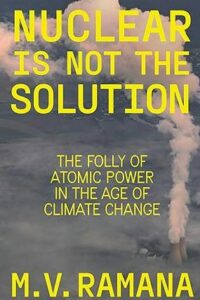
 Preface. This is a book review of Ramana’s “Nuclear is not the Solution: The Folly of Atomic Power in the Age of Climate Change.” A great overview that covers many topics, one of the best out there, and most recent. Also some of my kindle notes. But still, so much not covered, and this is such an important topic now that there are billions of dollars of Nuclear Cheerleaders convincing people that Nuclear Is The Answer. Before buying into the hoopla, read this book to be more informed about what is hype and what is realistic. Especially because most of the public, especially younger generations, have forgotten how dangerous they are. And if you’ve read my books, you know that electricity can’t replace diesel transportation, so all we are doing is creating toxic waste dumps for tens of thousands of future generations as oil declines to drips by 2100 or sooner.
Meanwhile, the nuclear lobby is so strong that Congress and the NRC are pretty much captured and the public brainwashed into thinking nuclear power is great because it doesn’t emit CO2.
For the sake of your future and your friends and family and generations to come there needs to be a lot more opposition. Trump is temporary, nuclear waste is 10,000 to a million years.
Alice Friedemann www.energyskeptic.com Author of Life After Fossil Fuels: A Reality Check on Alternative Energy; When Trucks Stop Running: Energy and the Future of Transportation”, Barriers to Making Algal Biofuels, & “Crunch! Whole Grain Artisan Chips and Crackers”. Women in ecology Podcasts: WGBH, Financial Sense, Jore, Planet: Critical, Crazy Town, Collapse Chronicles, Derrick Jensen, Practical Prepping, Kunstler 253 &278, Peak Prosperity, Index of best energyskeptic posts
***
Ramana MV (2024) Nuclear is Not the Solution: The Folly of Atomic Power in the Age of Climate Change. Verso.
Nuclear power & Nuclear Weapons: Nuclear power makes catastrophic nuclear war more likely.
My research shows that nuclear energy is just not a feasible solution to climate change. A nuclear power plant is a really expensive way to produce electricity. And nuclear energy simply cannot be scaled fast enough to match the rate at which the world needs to lower carbon emissions to stay under 1.5 degrees
SMRs are designed to generate between 10 and 300 megawatts of power, much less than the 1,000–1,600 megawatts that reactors being built today are designed to produce. For over a decade now, many of my colleagues and I have consistently explained why these reactors would not be commercially viable and why they would never resolve the undesirable consequences of building nuclear power plants. Nuclear advocates are not deterred by such arguments. They insist that this time it will be different. Nuclear plants would be cheap, would be quick to build, would be safe, would never have to be shut down in unplanned ways, and would not be affected by climate-related extreme weather events.
Proponents of nuclear energy have other reasons to support their preferred technology. They argue that nuclear reactors can do much more than just generate electricity. The “much more” depends on the specific context, and could include creating well-paying jobs, boosting national pride, providing energy independence, supplying clean water, and producing medical isotopes to treat cancer. As the public has become more concerned about climate change, nuclear advocates have appended to this list two more applications for energy from nuclear reactors: capturing carbon dioxide from the atmosphere (direct air capture) and producing hydrogen and high-temperature heat for industrial processes.
Nuclear energy is deeply imbricated in creating the conditions for nuclear annihilation. Expanding nuclear power would leave us in the worst of both worlds.
Technically, there are significant overlaps between the apparatus needed to produce nuclear energy and what is needed to produce the fissile material, the hardest step in acquiring nuclear weapons. In addition, personnel can be interchanged between the nuclear energy and weapons programs. And finally, there are institutional incentives for organizations developing nuclear energy to get involved in making nuclear weapons, due to the political power that flows from the latter.
Nuclear technology also contributes to powering long-range submarines, especially those used to fire off nuclear missiles, and to providing the material to manufacture depleted uranium munitions used in Iraq and Ukraine.
Nuclear energy advocates often argue against conflating nuclear energy with nuclear weapons, but the connection is visible for all those who want to look. As of September 2023, 275 of the 410 nuclear reactors labelled as operating by the International Atomic Energy Agency are in countries possessing nuclear weapons. While it is certainly true that not all countries with nuclear energy have produced nuclear weapons, they are closer to being able to do so than they would be if they had never built nuclear reactors.
Institutions and governments around the world developing nuclear technology often start by touting its potential to produce electricity. This was the case in India. For over two decades, India’s Atomic Energy Commission was ostensibly working on nuclear energy only “for peaceful purposes,” until the 1974 test of a nuclear weapon blew up that pretense
Although climate change scares me, I am even more scared of a future with more nuclear plants. Increasing how much energy is produced with nuclear reactors would greatly exacerbate the risk of severe accidents like the one at Chernobyl, expand how much of our environment is contaminated with radioactive wastes that remain hazardous for millennia,
Liability / FINANCIAL
According to the Japan Center for Economic Research’s estimate from 2019, the final costs of clean-up of Fukushima may exceed ¥80 trillion (around $750 billion at 2019 exchange rates).
Even in the event of a severe accident, owners of nuclear plants pass on their liability to the public. In the United States, this transfer happens through the Price-Anderson Act, first passed in 1957, which caps the financial liability to nuclear plant owners at levels far lower than the actual costs of dealing with severe accidents like the one at Fukushima—roughly a tenth of Japan’s GDP in 2019.
The government—in other words, the taxpayer—pays the rest. The public also will have to pay the long-term expenses associated with dealing with the multiple forms of radioactive waste and the subsidies aimed at inducing private companies to invest in nuclear power.
“What you have is a system of socialization of cost and risk and privatization of profit.
Events that cause widespread radioactive contamination—severe nuclear accidents—can never be ruled out, especially as nuclear power expands, especially as climate change results in increasingly common severe weather events like hurricanes.
The denial strategy adopted by many nuclear energy advocates is two-pronged: first, deny that accidents are possible, and second, deny that accidents are harmful by rejecting the well-documented links between exposure to radiation and health impacts reminiscent of the tobacco industry’s efforts to delink smoking and cancer.
There is a second economic problem for nuclear power: the high operating costs of plants. The latter includes the costs involved in paying workers, buying uranium, fixing failed equipment, and so on. Together, these set the minimum price the owner of the plant needs to be paid for electricity
This is particularly challenging in states and countries that have opened up their electricity sector to market competition. In such markets, the price for the electricity is set by all the plants that can supply this commodity, with their differing production costs.
In the electricity sector, nuclear power lost the competition. This is why, over the past decade, a number of old reactors have been retired, even though they were still licensed to operate for many more years.
In the United States, there were 104 nuclear reactors in operation at the end of 2010. A decade later, at the end of 2020, there were 94. the main reason for these shutdowns was poor economics.
If this is the outlook for nuclear plants whose costs have been paid off, it is not surprising that new reactors are simply not competitive in the electric marketplace.
Nuclear power’s economic problems will worsen as more renewable energy comes on the grid. Solar and wind power plants have low operational costs, which means that it is economically sensible to use their output as and when they are generating power.
Likeliness of Accidents
As explained in a 2014 paper in the journal Regulation and Governance, the probabilities of accidents at nuclear plants are objectively calculable. This renders nuclear accidents different from phenomena like terrorism. Most people would realize that one cannot quantify the risk of a major terrorist attack. Nuclear proponents want to quantify accident possibilities because they expect this exercise will result in very small probabilities and lead policymakers to ignore this contingency in their planning.
Nuclear plants must contain the fission process and other dangerous materials while operating under challenging conditions: high temperatures, intense pressure, concentrated energy production, damage to materials from radiation. These technological goals are not straightforward or easily achieved under all circumstances, and so both airplanes and nuclear reactors are capable of severe accidents.
History tells us that reactors of many different designs are susceptible to severe accidents. Accidents have been initiated by external events, equipment failures, and by workers making mistakes. How operators might act is “intrinsically hard to analyze,” as an elite group of safety experts explained in their 1978 Risk Assessment Review Group Report to the US Nuclear Regulatory Commission.
Consider what happened at Japan’s Kashiwazaki-Kariwa nuclear plant during the 2007 Chuetsu earthquake. When the ground subsided, various underground electric cables moved downward and created an opening in the reactor’s basement wall, which then allowed some radioactive materials to escape into the sea. The failure “was beyond our imagination,” a Tokyo Electric Power Company official confessed.
Perrow identified two relevant characteristics, interactive complexity and tight coupling. Their combination makes nuclear reactors and similar technologies prone to catastrophic accidents. It should be intuitively obvious that complex systems can fail more easily—simply because there are more parts that can fail. At nuclear reactors, valves can get stuck, pumps might not circulate water when switched on, and pipes might corrode and break. Perrow’s insight was that these failures could combine to create more unmanageable failures due to the capacity of the different parts of the system to interact with each other.
There is a greater potential for hidden and unexpected interactions between the different component parts. As a result, the number of pathways leading to a severe accident becomes greater—and beyond the comprehension and predictive abilities of designers. The sheer complexity of nuclear reactors lends itself to the problem of the “unknown unknowns,
If a potential route for an accident is not foreseen, then the reactor, or any other technological system for that matter, cannot incorporate safety features aimed at protecting against that specific failure route—at least, as designed. And as the 1978 Risk Assessment Review Group Report to the US Nuclear Regulatory Commission pointed out, it is conceptually impossible to list all possible pathways to accidents.
The most common approach to reducing the risk of accidents is by adding safety systems, or by introducing redundancy so that there will be a backup in the event that one component fails. But if one starts with Perrow’s ideas—in particular, the role of interactive complexity—it becomes clear that many accidents are emergent, not present in any individual component. It may be the case that an additional safety system can compensate for that individual component failing. But because the addition will increase the complexity of the system, new pathways to an accident will emerge.
This possibility is best understood through an example first pointed out by the political scientist Scott Sagan in his book The Limits of Safety: the case of the 1966 accident that ruined the Fermi fast breeder reactor in the United States. The accident started with two pieces of zirconium breaking off from what was called the “core catcher” at the base of the reactor. The core catcher was a safety system meant to stop molten fuel from escaping out of the reactor in the event of an accident. Following their detachment, these zirconium pieces blocked channels through which molten sodium, the material that was used to cool the fuel, would flow. Bereft of any means to conduct away the heat produced by fission reactions, those fuel rods melted and contaminated the reactor with radioactive materials. In other words, an additional safety system caused the accident.
At Fukushima, the earthquake proved to be the common cause. The earthquake took out the external electricity supply to the reactor while also setting off a tsunami. The tsunami, in turn, rendered inoperable the diesel generators that were to provide backup power.
The second problem with redundancy is propagation—wherein failures start cascading from one system to another. When the Fukushima reactors’ cooling systems failed, that caused the zirconium cladding to melt, thereby allowing radioactive materials to escape from the fuel assemblies. In the case of proposed small modular reactors, the presence of multiple reactors at one site means that an accident at one could trigger an accident at an adjoining one.
Due to climate change, plant operators might have to shut down nuclear reactors more frequently as a precautionary measure. My former colleague Ali Ahmad showed that in the last decade (2010–2019), the frequency of climate-related nuclear plant outages was already nearly eight times higher than it was in the 1990s. Outages will become only more frequent in the future.
MONEY: Such shutdowns will have another impact, as each closure reduces the revenue for the organization operating the plant. Andrei Covatariu, Ali Ahmad, and I quantified these losses in the case of Western Europe, and climate-change-related stoppages could result in losses of hundreds of millions of dollars or even over a billion dollars.4 ACCIDENTS Such losses will inevitably create pressure to cut costs; should these organizations succumb to such pressure, they will increase the risk of accidents.
A final reason why safety systems won’t eliminate the risk of accidents is that the external world might act in ways to destroy or deactivate these systems.
I write this amid Russia’s brutal attack on Ukraine, and its occupation of the Zaporizhzhia nuclear plant. Starting on March 3, 2022, when shelling of one of the buildings in the nuclear complex led to a fire breaking out, there has been international concern about an accident at the plant. Analysts have come up with at least three scenarios that could plausibly end with radioactive materials escaping into the atmosphere from some facility at the Zaporizhzhia complex and contaminating the surrounding region.
The most obvious one is that one of the reactors could be damaged by a rocket or missile. The second scenario involves one of the spent fuel pools—structures filled with water where the irradiated nuclear fuel rods are stored for cooling—being damaged, causing the water to leak out and the fuel rods to burn. The third scenario could unfold if the electricity supplied to the plant is interrupted, perhaps because Ukraine’s energy grid collapses, and the plant loses all backup means to cool the reactor—akin to what happened at Fukushima Daiichi. In all these scenarios, systems that are meant to ensure the safety of the fuel would be damaged by external events.
And a flood from overflowing from a lot of rain.
Ukraine is unlikely to be the last time nuclear power plants will be attacked. A nuclear plant needs “a stable environment” to operate safely, including “permanently functioning cooling,” which is required even when the reactor is “shut down.” No one can ensure that these conditions will obtain during a war.
An important result of climate change is the increasing frequency of extreme weather events. Many of these affect the availability of water, which is critical to the functioning of nuclear power plants; large quantities of water have to be circulated through nuclear reactors in order to remove the tremendous amounts of heat produced in their radioactive cores.
This is why nuclear reactors are almost always located near a large body of water—the ocean or a large lake or river. Therefore, droughts and water shortages, as well as extreme heat leading to a rise in temperatures of water bodies—all of which become more frequent as a result of climate change—can affect the functioning of nuclear reactors.
Other consequences of climate change that affect nuclear plant safety include greater levels of flooding, strong storms and hurricanes, and wildfires. Such events can disable multiple safety systems simultaneously, thereby threatening the safe operation of nuclear plants.
Further, in the event of an accident, some of these external conditions—for example, floods or wildfires—would make accessing the site harder, challenging potential responses to the accident.
The Rebuild Japan Initiative Foundation report found it remarkable that “even in the technologically advanced country of Japan, the government and the plant operator, Tokyo Electric Power Company (TEPCO), were astonishingly unprepared, at almost all levels, for the complex nuclear disaster that started with an earthquake and a tsunami.” The report then proceeded to query why preparations proved so inadequate. The most important cause for the failure to prepare was a “belief in the ‘absolute safety’ of nuclear power,” a “myth” propagated by “interest groups seeking to gain broad acceptance for nuclear power.
it is often the case that the non-safety goals are best achieved in ways that are not consistent with designing or operating for lowest risk.” Nuclear reactor designers must always trade different priorities: despite lip service, safety is seldom the first priority, and never the only priority.
For most nuclear operators, their mission might be to boost their profits. Or in the case of state-owned entities like India’s Atomic Energy Commission, it might be to capture a large fraction of the country’s energy sector and achieve concomitant political power.
And then there are non-safety goals set by more powerful actors. In China, for example, the central government’s ambitious targets for nuclear energy have meant its state-owned enterprises and regulators have had to rapidly build nuclear plants, even in the face of safety concerns.6
Turkey’s Vision 2023, a set of goals laid out for the centennial of the formation of the Turkish Republic. This, of course, meant that these plants would have to be built according to a politically expedient timetable rather than one aimed at reducing risk of accidents. The Chamber of Turkish Engineers and Architects sued the Environment Ministry over its hurried approval of the environmental impact assessment report for the country’s first nuclear plant.
REGULATORY CAPTURE & Accidents / Safety
The industries being controlled are keenly interested in how regulators operate, and they do their best to infiltrate or affect these agencies, a phenomenon termed “regulatory capture.” One of the problems identified by the independent investigation commission set up by Japan’s Diet was the loss of “the necessary independence and transparency in the relationship between the operators and the regulatory authorities of the nuclear industry of Japan,” which it clarified was “best described as ‘regulatory capture’—a situation that is inconsistent with a safety culture.
Frank von Hippel chastised the US Nuclear Regulatory Commission (NRC) as a “textbook example” of regulatory capture. Frank gave multiple examples as evidence, including the case of the Davis-Besse nuclear plant and the refusal of the NRC to mandate the safe storage of spent fuel in cooling pools and the installation of filtered vents to capture some of the radioactive materials released during accidents.
In the United States, the nuclear industry has a powerful lobbying capacity, especially in the form of the Nuclear Energy Institute (NEI). The NEI has weakened the NRC and its capacity to oversee the safety of nuclear reactors by lobbying for changes in rules or by reducing the NRC’s budget. The NEI’s 2017 End of Year Report proudly announced that it had “worked with the House Appropriations Committee to again reduce the NRC’s budget … by an additional $85 million,” going on to explain that this represented a decline of at least “$139 million (close to $800,000 per reactor)” since the 2014 fiscal year.
The nuclear industry also has friends in very high places, especially the US Congress. They have wielded their power over the purse strings of the NRC to weaken the agency. An example was the late senator Pete Domenici who describes in his 2004 book A Brighter Tomorrow how he threatened Shirley Ann Jackson, the NRC’s first African American chair, with cutting the “agency’s budget by a third” and forcing the NRC to lighten regulations on the nuclear industry. The senator was richly rewarded for his efforts, receiving hundreds of thousands of dollars in campaign contributions, including from “at least three dozen firms on the membership roster of the Nuclear Energy Institute,” according to NBC News.
Since then, the NRC has been pliant to the industry. The occasional member of the commission trying to forge an independent path is kept in check by other members. When Gregory Jaczko, the NRC chair at the time of the Fukushima accidents, proposed that the NRC postpone licensing of new reactors in the United States till the lessons of the Fukushima accident were internalized, he was rebuffed by other commissioners. His memoir, Confessions of Rogue Nuclear Regulator, describes “the bulldozer mentality of the American nuclear power industry and the majority in Congress who supported it.
When ASN head Pierre-Franck Chevet told journalists that problems at a reactor under construction were “serious, even very serious,” retired executives called his action an “abuse of power” and accused him of going against the national interest. This was particularly galling to Chevet, a career civil servant whose motivation to work on nuclear safety dated back to the 1986 Chernobyl accident, which sparked a desire to avoid a similar catastrophe in France.
In a 2010 interview with Talk Nation Radio, the retired journalism professor Robert Jensen explained that because “the disparity in wealth that is created by the corporate form will inevitably lead to disparities in power” there will never be adequate regulation.
But it is not just corporations. Regardless of their legal status, all sorts of organizations, including state-owned entities, that build or operate nuclear reactors and other facilities wield significant political power. Using this power, such institutions can and do undermine any external bodies overseeing their behavior. Public interest groups can seldom match their capacity.
Regulators cannot ensure that nuclear reactors will not have accidents.
Nuclear advocates have other talking points: reactors that depend on passive safety cannot suffer accidents. Passive safety refers to systems that do not need any external input or energy to operate and rely on natural physical laws (e.g., gravity or thermal convection) to remove the heat produced. The argument is that because nothing can interrupt the action of physical laws, these passive systems reliably prevent accidents.
While passive systems might operate, it is not clear whether they will provide the necessary amount of cooling. For example, when compared with electrical pumps that are traditionally used for cooling the fuel during accidents, passive systems might simply not be quick enough at removing the necessary amounts of heat, and the fuel could be damaged.
What conditions will prevail during a nuclear accident are not easily predictable in advance. Accidents, almost by definition, are chaotic, occurring due to reasons that engineers fail to consider—an unexpectedly intense earthquake, or flooding caused by a tsunami. it is difficult to predict how passive safety mechanisms will work.
PERMANENT STORAGE
Some of these radioactive materials produced in nuclear reactors will continue to emit radiation for millions of years. Two examples are the fission products iodine-129 and cesium-135—close cousins of iodine-131 and cesium-137, which have been responsible for the largest health impacts from the Chernobyl and Fukushima accidents. The numbers 129, 131, 135, and 137 represent the number of neutrons in the nuclei of these elements, which determines how quickly or slowly the nucleus decays. While iodine-131 has a half-life of eight days, iodine-129 has a half-life of 15.7 million years; cesium-135 has a half-life of 2.3 million years in comparison with the thirty-year half-life of cesium-137. Humanity had never encountered these materials prior to the 1940s, when these were first produced to make the bombs dropped on Hiroshima and Nagasaki
Therefore, wastes containing these elements must be stored and isolated from human contact for these unimaginably long stretches of time.
None of us will be around to verify whether these different moving parts—radioactive substances, geological formations, water flows—will behave according to twentieth- or twenty-first-century mathematical models.
Conditions at the repository can change considerably over the eons. To start with, the geology itself. Geology is a historical science, not a predictive one. Past geological phenomena cannot tell us what will happen in the very long-term future. While the chosen location might have no volcanoes now, there is no guarantee that one might not erupt tens of thousands of years into the future, bringing all those buried wastes right up to the surface.
The surrounding rock is also affected by the presence of the wastes. As the radioactive wastes decay and generate heat, the rock will become hotter. The rock is already not in its natural state, because it will fracture as gigantic machines bore tunnels into it to emplace the wastes. Thus, its ability to prevent water flows could be compromised. Climate change can also affect the flow of water into the repository.
These changes might lead to water corroding the containers inside which the wastes are placed. There is also uncertainty about how microbes might impact the repository over these long periods of time.
There will also be “unknown unknowns.” Therefore, how nuclear waste will behave in the far future is unknowable.
We do not need to wait for millennia to be concerned. Existing repositories have already demonstrated multiple kinds of failures: design failures, human failures, and institutional failures. Take the example of the Asse repository in Germany. Planners built this repository inside a salt dome, ignoring warnings about flooding raised by local NGOs. And sure enough, there has been influx of brine into the repository since 1988. The result of this design and institutional failure was having to retrieve all the radioactive waste buried there at immense expense
More recently, in 2014, a drum of transuranic waste stored underground at the Waste Isolation Pilot Plant in the United States exploded, releasing plutonium and americium, which made their way to the surface. The price tag was over $2 billion. The explosion occurred because of a decision to use “kitty litter made out of wheat instead of clay,” an error that happened amid organizational pressures on workers to accelerate their performance, creating stress and increased workload. Even the Department of Energy concluded that organizations involved in managing the facility had allowed safety culture “to deteriorate within pockets of the organization.” Reinforcing the argument about why it is impossible to be confident about safety, three scholars from Stanford University explained why the accident showed “how difficult it is to predict potential failures of such a disposal system over millennia” in an article in the journal Nature.
Although the nuclear industry and allied organizations have proposed storing waste from nuclear power plants in geological repositories for decades, not a single one is operational. Some countries, like Finland and Sweden, have chosen sites, but these have not been built and certainly have no wastes stored in them. National plans to site repositories have faced significant opposition.
If the siting process is to be carried out democratically, with people being given accurate and comprehensive information, most repository proposals will inevitably be blocked by public opinion.
The public’s sentiments are often dismissed by nuclear proponents as ignorance. This is similar to how concerns about potential harm from other pollutants have been traditionally dismissed. Institutions that generate technical assessments of risk are not neutral parties without biases, and their claims are intended to serve their underlying interests.
Proposed alternative solutions to the problem of nuclear waste are similarly tainted. Case in point: the chemical reprocessing of spent fuel, which is favored by many nuclear advocates as the best way to deal with nuclear waste. Originally developed during the Second World War to produce plutonium for the atomic bomb that flattened Nagasaki, reprocessing uses chemical means to separate plutonium and uranium in spent fuel from radioactive fission products. The plutonium thus extracted, these advocates argue, could be used as fuel in specially designed nuclear power plants. Reprocessing, thus, also becomes a way to advocate for building more nuclear reactors.
Proponents of reprocessing even have a great PR term for it—“recycling,” a word dear to corporate green washers. But the term is misleading, because reprocessing does not in any way allow reusing the vast majority of radioactive substances produced in nuclear reactors. The reason is simple: except for uranium and plutonium, no other element can fission and generate energy. The remaining fission products—for example, iodine-129 and cesium-135—cannot be used as nuclear fuel, and so they still have to be buried in a repository or managed in some other fashion.
Reprocessing also produces waste streams containing radioactive materials in varying concentrations. Streams with low levels of radioactivity tend to be very voluminous, which makes storing them on site very expensive. Therefore, reprocessing plant operators simply release these waste streams into the environment, typically into the ocean, where they can travel widely.
The other use for plutonium is, of course, nuclear weapons. Indeed, apart from a handful of scientists and engineers, the vast majority of the world’s population learned about plutonium from news of the Fat Man bomb that devastated Nagasaki. In 1974, India exploded its first nuclear weapon using plutonium from a reprocessing plant ostensibly built for expanding nuclear power capacity.
Reprocessing, therefore, is also greatly attractive to countries interested in making nuclear weapons. In fact, globally, more plutonium has been produced through “civilian” reprocessing than in facilities marked as being military,
If burying wastes and hoping they will not resurface anytime soon are the best solutions the nuclear industry has to offer after decades of research, it is ironic that at the other end of the nuclear fuel chain, the industry actively hunts for buried radioactive materials and brings them up to the surface. I am talking of mining for uranium. The irony lies in the result of such mining: the widespread contamination of land and water. Members of the public have suffered numerous illnesses because they get exposed to different radioactive materials produced alongside uranium ore, although these risks have been overshadowed by the risks to workers involved in these activities.
Once uranium ore is mined, it must be chemically treated to separate the uranium from other minerals. This process creates large quantities of wastes, usually called mill tailings. Tailings contain a toxic blend of heavy metals and radioactive material: the former category includes molybdenum, arsenic, and vanadium, while the latter category includes thorium-230 and radium-226. The radium-226 decays into radioactive radon gas, which mixes with air and spreads to considerable distances. Dealing with these materials is not easy.
The leftover tailings are usually stored above ground, in artificial ponds of water called tailings dams. This water can percolate into drinking water supplies, introducing radium-226 and other substances, like arsenic. Exposure to these hazardous elements is harmful to health. Arsenic, for example, is a known carcinogen and gives rise to a host of other health problems involving organs like the kidney and the skin. Contamination can be far more extensive when such dams fail—and dams have repeatedly failed around the world.
In July 1979, one such failure at Church Rock, New Mexico, resulted in over a thousand tons of contaminated sediment and 370 million liters of contaminated water being spilled into the Puerco River, where it flowed all the way to Navajo County in Arizona. As scholar Valerie Kuletz points out in her book The Tainted Desert, the “Navajo people in the surrounding area were unable safely to use their single source of water, nor could they sell or eat the livestock that drank from this water.” A mere $525,000 was offered as a collective payment to these victims. Even without accidents, the Navajo people have suffered incalculable health consequences as a result of uranium mining. But they are, by no means, the only Indigenous peoples thus affected. Much of the uranium that has been mined around the world has come from areas occupied by Indigenous peoples, including in Australia, Canada, India, and the United States.
The nuclear industry’s plans for disposing of radioactive waste streams also disproportionately target areas largely populated by Indigenous peoples. And, again, there has been resistance,
The now-cancelled Yucca Mountain repository was strongly resisted by the Western Shoshone people, on whose lands the site is located. In 2020, the Saugeen Ojibway Nation overwhelmingly rejected Ontario Power Generation’s plan for a radioactive waste repository near Lake Huron.
Proponents of nuclear energy have to constantly describe their preferred technology using terms like “clean” and “safe” precisely because it is not. No one says safe solar energy or safe bicycles, because the adjective is superfluous.
For nuclear power to significantly contribute to mitigating climate change, a very large number of reactors would have to be built in countries around the world, including in countries with no operating nuclear plants. Can organizations, across countries and cultures, with multiple priorities, including cost-cutting and profit-making, be expected to follow the demanding practices needed to operate these reactors safely? The answer has to be negative. Exhibit A for this proposition is the entity I started this chapter with—the Tokyo Electric Power Corporation. Its lack of emphasis on safety has been testified to in extreme detail following the Fukushima crisis. If a well-funded organization in a country renowned for its technological prowess, with significant experience dealing with natural disasters like earthquakes and tsunamis, cannot be trusted to prioritize safety, which ones can?
The radioactive contamination resulting from accidents like those at Fukushima and Chernobyl spreads out over large tracts of land. And the land stays contaminated for a very long time. Such accidents become ongoing disasters, not events that can be relegated to the past tense.
“On a good day Australian uranium becomes radioactive waste. On a bad day it becomes fallout [from an accident]. On a really bad day, the uranium ends up in a weapon of mass destruction dropped on a country.
NUCLEAR POWER TODAY, NEW REACTORS, COST
In the first two decades of this century, 95 reactors were started up around the world while 98 reactors were closed down.1 Between the start-ups and the shutdowns, the nuclear fleet has stayed more or less constant since the late 1980s.
How does one reconcile this declining trend of nuclear power with the hyperbolic statements of people like Macron and Johnson? Such governments, and private companies from those countries, have invested an enormous amount of money in propelling nuclear development.
Construction of Hinkley Point C can be described only in superlatives. About 6 million cubic meters of soil and rock have been excavated for one purpose or the other. EDF announced in 2019 that it had poured 9,000 cubic meters of concrete, reinforced by 5,000 tons of steel, into a large hole in the ground that it had excavated previously.
By the time the two reactors are ready, at least 200,000 tons of steel will have been used on that site. Others have claimed that the project might require up to a million tons of steel. Even the electrical power consumed within the plant is nearly as much as a small country; Eritrea’s power plants, for example, can together generate only 200 megawatts.
COST OVERRUNS
As of February 2023, construction alone is estimated to cost almost £33 billion (roughly $40 billion).
And then there is the single EPR being constructed in Flamanville in France that is running at €13.2 billion (around $15 billion) more than four times what was forecast when construction started.
Russia’s Leningrad-2 plant went up from ?133 billion to ?244 billion. India’s Koodankulam-1 and -2 reactors, imported from Russia, rose from ?131.71 billion in 2010 to ?224.62 billion by 2015, and its prototype fast breeder reactor has gone up from ?34.9 billion to, currently, ?68.4 billion.
In China, the country that is sometimes held out to be the great hope for nuclear power, eleven reactors become operational during this period. Of these only two—Tianwan-4 and Tianwan-5—met the expected construction schedule. Taishan-1 and -2 reactors were to have taken 4.1 and 4.5 years but took 8.7 and 9.2 years respectively. Likewise, Sanmen-1 and -2 reactors went from an expected 4.5 and 4.7 years to 9.2 and 8.7 years respectively. In South Korea, an erstwhile hope for nuclear power, the Shin-Kori-4 reactor went from a projected 5 years to 9.6 years. In Russia, the country that has led the race in signing reactor export contracts, the twin units at Leningrad-2 were to be completed in 5 years but took 9.4 and 10.5 years.
One study by Benjamin Sovacool, Alex Gilbert, and Daniel Nugent examined 180 nuclear projects and found that a mere 5 met anticipated cost and time targets. The remaining 175 took, on average, 64 percent more time than projected, and had final costs that exceeded the initial budget, again on average, by 117 percent.
Because we are discussing many countries that have built nuclear plants for decades, these cost and time escalations cannot be because of ignorance or inexperience.
Often, the correct descriptor is not “underestimation” but “deliberate misrepresentation.
Bent Flyvbjerg, who specializes in studying large projects of all kinds, explained in the pages of Harvard Design Magazine in 2005 that the ones that receive investment and approval are ones where the “proponents best succeed in designing—deliberately or not—a fantasy world of underestimated costs, overestimated revenues, overvalued local development effects, and underestimated environmental impacts.” Flyvbjerg was not discussing nuclear projects specifically,
NUCLEAR DOES NOT BALANCE WIND AND SOLAR
Solar and wind outputs are variable. The ideal way to compensate for the variability of solar and wind power is a complementary source of power that can also vary quickly.3
Though possible, varying the output from nuclear power plants is challenging for a number of technical reasons. More importantly, doing so would decrease their economic competitiveness. If nuclear power plants have to act as complement to solar and wind energy then each plant would sell fewer units of electrical energy. That would increase the cost of generating power because the high fixed expenses at nuclear power plants have to be recouped over fewer units of energy sold.
Operating reactors in this manner would also make revenue streams uncertain since how much nuclear power is generated will depend on the ebbs and flows of sunshine and the wind.
An Exelon official explained the corporate giant’s problem was that wind power “coming in from the Dakotas and elsewhere” can “depress the market prices, particularly in the evening whenever the wind is high and the load is low.” This competition with wind energy meant losses for Exelon. Exelon threatened to close its nuclear plants, but simultaneously lobbied for subsidies. The lobbying paid off and the state of Illinois chose to subsidize Exelon’s nuclear fleet. Naturally, these subsidies are paid for by customers.
It is this difficult economic context that leads nuclear plant owners to desperately seek new sources of revenue, for example, through the bizarre alliance with Bitcoin-mining firms. The relationship is a result of the two enterprises coming together to hope that each other’s woes will be the answer to their problems. For cryptocurrency miners, the problem is the extremely energy-intensive nature of their enterprise, which is pumping out more carbon dioxide than some countries. For nuclear power plant owners, the problem is selling their expensive power on competitive electricity markets. This has resulted in a spate of announcements about cryptocurrency firms entering into agreements with current or prospective nuclear plant owners to buy electricity from them and claiming environmental brownie points. But expensive power won’t help Bitcoin manufacturers, and a niche and unstable market won’t help nuclear reactor owners. It is a sign of the times that people think that nuclear power can be used to greenwash an enterprise that is environmentally wasteful and has no social purpose, utilizing huge amounts of energy to do pointless computations.
YEARS TO BUILD NUCLEAR PLANTS
One can’t start construction of a nuclear reactor immediately. The requisite planning and fundraising—remember it costs billions to construct a plant—might take another decade. As annual World Nuclear Industry Status Reports testify, the average nuclear plant takes around a decade to go from start of construction to producing electricity. (For the technically inclined, the weighted mean of the construction time for all reactors that became operational between 2011 and 2020 is 9.9 years, with construction time being defined as how long it took to go from when concrete was first poured at the base of the reactor and the reactor starts feeding electricity to the grid.) A total time period of around 20 years is typical.
In the United States, for the 75 nuclear plants whose construction started between 1966 and 1977, final costs and construction times exceeded initial projections by 207% and 94% respectively.
By the late 1980s, it was apparent that these reactors would be uneconomical. Many of the projects were abandoned. In 2007, the US Congressional Research Service reported that “more than 120 reactor orders were ultimately canceled” within the United States.
At a global level, France’s Commissariat à l’énergie atomique et aux énergies alternatives (Alternative Energies and Atomic Energy Commission, or CEA) reported in 2002 that there were 253 “canceled orders” in 31 countries.
THE PUBLIC PAYS
loan guarantees and insurance against regulatory delays, and a production tax credit. All were ways of making citizens cover financial risks and insure against any losses for utility companies. As a 2008 Congressional Budget Office report explained, “Loan guarantees and insurance against delays reduce the financial risk of investing in advanced nuclear power plants by transferring risk to the public” and even went on to add a cautionary note: “Economic theory suggests that such incentives cause recipients to invest in excessively risky projects because they do not bear all the cost of a project’s failure.
Utility companies did invest in excessively risky projects. Altogether, they proposed building more than 30 reactors. Only four nuclear reactors proceeded to the construction stage, and two of these reactors were abandoned mid-project. The remaining two are the ones at the Vogtle power plant in Georgia. In all these cases, the public bore the financial burdens resulting from the failure of these projects.
These overly optimistic estimates projected construction costs of between $1 billion to $2 billion dollars for a 1,000-megawatt reactor. Such estimates came from nuclear reactor vendors, the US Department of Energy, and prestigious universities like the University of Chicago and the Massachusetts Institute of Technology. The low projections for the cost of construction were matched by their assumption that these reactors could be constructed in three to four years.
At the most fundamental level, the reason for this high cost is that a nuclear power plant is just a very elaborate way of converting water to steam. But the underlying process used to generate the heat that is used to boil water—namely, nuclear fission—is inherently hazardous. Thus, controlling this hazardous process ends up requiring a very contrived technological artifact, somewhat reminiscent of a Rube Goldberg machine. Because of the sheer complexity of the process, it will always be expensive.
they can also experience catastrophic accidents. This unique characteristic necessitates the multiple safety features used in a nuclear plant, which in turn require vast quantities of materials. Also required are workers with high levels of training, necessitating higher salaries, and a regulatory infrastructure to ensure that plants operate safely. All of these compel expending lots of money.
Nuclear power promoters don’t like to admit to these underlying characteristics. Instead, they blame excessive regulation for the high costs. This argument has become especially resonant in recent decades, thanks to neoliberal antipathy towards regulation.
If nuclear power is so expensive and it takes so long to build a reactor, why do corporations get involved in this enterprise at all? The answer is complicated, but the simplified version is that they do so only when the public can be made to bear a large fraction of the high costs of building nuclear plants and operating them, either in the form of higher power bills or in the form of taxes. Then many companies find nuclear power attractive.
If the public pays, high costs are not a problem.
The base load review act was drafted with input from an attorney who worked with SCE&G, and read like a wish list corporate executives dreamed up. It enabled the South Carolina Public Service Commission to authorize the utility to charge customers for costs involved in the development of the proposed V.C. Summer nuclear reactors. What could be charged included “evaluation, design, engineering, environmental and geotechnical analysis, permitting, contracting, other required permitting including early site permitting and combined operating license permitting, and initial site preparation costs and related consulting and professional costs”—in other words, just about everything.
Crucially, it allowed SCE&G to pass on the interest and other financing costs for the multibillion-dollar loans it needed to proceed with the project. Transmitting costs to customers is not new for electricity firms. Customers have historically paid the costs associated with power plants, plus a profit margin for the company. And it enabled having customers pay these well before the nuclear plant started generating power. As a result, even though they were never to get any electricity from this facility, South Carolina customers found their monthly bills go up by about $27.
Before SCE&G could charge customers, the South Carolina Public Service Commission needed to be persuaded that building two large nuclear reactors was a wise choice. SCE&G’s argument used by nuclear proponents around the world was that unless they built these nuclear plants, SCE&G could not reliably provide its customers electricity in the future. To borrow from chess terminology, one might term this argument for nuclear power the “lights will go out” gambit.
The typical result is the triumph of private profits over the public interest. Translation: if a utility company could borrow money and invest in a project and charge its consumers enough to pay off those interest charges, then it would be tempted to incur such expenditure, regardless of whether consumers need this project.
Once the regulator has approved investment in a nuclear power plant, or any other generating facility for that matter, then electricity consumers end up having to pay whatever costs accrue from that project. The high cost of constructing a nuclear plant, then, is not a problem for the project developers, because they get paid in any case. Indeed, the more the cost, the more the profit to the utility, albeit at the expense of consumers, who will pay more for their electricity.
SCE&G claimed that its energy sales would increase by 22% between 2006 and 2016, and by nearly 30% by 2019. In fact, SCE&G’s energy sales declined by 3% by the time 2016 rolled around.
SCE&G initially projected the construction cost of the two nuclear reactors at $4.94 billion (in 2006 dollars, which is roughly $6.23 billion in 2020 dollars). That cost quickly doubled to $9.83 billion even before the full licensing application was submitted.
The arguments from SCE&G for constructing two nuclear reactors were full of holes and a conscientious regulator looking out for the public’s interest would have rejected the proposal.
Tom Clements from the environmental group Friends of the Earth in the Bulletin of the Atomic Scientists in 2021 argued that SCE&G’s application should be denied because 1) the cost of the reactor project will be astronomical and … likely to spiral out of control”; and 2) SCE&G had provided “almost no analysis of the use of alternative sources of power”—in particular, wind and solar energy—as well as energy conservation and efficiency. Both points were obvious, but not to the Public Service Commission. Years later, Clements would exhort the commission to side “for once” with customers and require that SCE&G and its shareholders be forced to bear a major portion of the cost increase to no avail.
As part of President Bush’s nuclear power advocacy, his administration had enacted the 2005 Energy Policy Act. It offered several incentives, including tax credits that companies can receive in exchange for each unit of electricity that is produced in their plants. These credits were valued at approximately $2.2 billion for V.C. Summer. The catch: the tax credits were available only if reactors started generating power by January 1, 2021. When they were announced, the nuclear industry and its proponents were happy with the tax incentives. But like Oliver Twist, they wanted more. The Nuclear Energy Institute approached Congress and lobbied for a 30% tax credit for just investing in building a new nuclear reactor instead of waiting until it produced electricity; as a backup, they suggested the deadline be pushed back to the start of 2025, according a 2014 Congressional Research Service report. In other words, even as nuclear advocates were advertising how quickly a new generation of reactors would be built, they were unhappy about limiting possible tax credits only to plants that actually generate power and that do so within 15 years. Unfortunately for SCE&G’s executives, that attempt failed, and those restrictions remained in place.
Construction of the reactors started in March 2013. What Marsh wasn’t telling his interviewers was that the project was delayed. There was a pattern to these delays. During most years after 2009, SCE&G would go back to the Public Services Commission and petition for revisions to the schedules and costs, and the commission would approve. This happened in 2010, 2011, 2012, and 2015. By 2016, SC&G was projecting a cost increase of 51%, from $4.5 billion to $6.8 billion (in 2007 dollars) for its share of the project. Overall, the project cost was being reported as $16 billion by 2017.
Westinghouse’s design had a number of shortcomings, but these became apparent only after construction started. Most of these problems can be traced to the reactor design—which nuclear advocates described using glowing adjectives like “innovative” and “novel”—and its supposed virtue: modular construction. Building a reactor in a modular fashion involves two sets of activities. First, a factory would fabricate parts (or modules) of the reactor and ship them to the construction site. Second, these prefabricated parts would be assembled together at the site to make the nuclear power plant. One can think of these modules as being somewhat like Lego blocks.
Except it didn’t work that way in South Carolina, or at any of the other sites for AP1000 reactor projects. To start with, the AP1000 design was far from complete. Over the course of constructing the V.C. Summer and Vogtle projects, Reuters reported in May 2017, Westinghouse made “several thousand” technical and design changes.
This should have been expected. Even before the V.C. Summer project commenced, Westinghouse’s AP1000 design had been selected by China’s State Nuclear Power Technology Corporation. Anyone following the saga of AP1000 reactors in China—and one would expect people like Marsh to have been paying close attention—the problems with Westinghouse’s product should have been embarrassingly obvious. At the Sanmen nuclear plant, a layer of shielding that surrounded the reactor pressure vessel expanded and seeped out. The steel supports for the 115-ton pressurizer, which helps control pressure levels, were too weak. Such problems kept recurring, demonstrating the folly of assuming that pretty computer-generated graphic simulations would actually work in the real world. The next round of problems occurred while converting the “final” design into actual equipment and a fully constructed reactor. Plans simply did not work the way they were supposed to. Workers, it turned out, could make mistakes. And managers could cut corners or be deceptive. Such problems are not unique to nuclear manufacture. But the consequences of manufacturing errors could be a devastating accident leading to large-scale radioactive contamination, and that is unique to nuclear power.
In 2013, workers dropped and damaged a prefabricated building section and then tried to cover up the accident. After a lengthy investigation, the Nuclear Regulatory Commission concluded that “a former company official deliberately instructed subordinates to initially provide false statements as to the cause of the drop” reported Nuclear Intelligence Weekly. The NRC also found that the manufacturers had improperly labeled components, or had produced parts with wrong dimensions, and neglected required tests. All these failures during manufacture could be traced to deficient quality control. Companies involved seemed “clueless” about the complexities involved in the manufacturing process, such as welding for nuclear reactor components. Worse, the managers in charge of the manufacture seemed hostile to the idea of maintaining high standards in production and complying with regulations.
There were similar errors at the construction site in South Carolina. In 2015, workers were drilling into concrete when they went too far and damaged the containment vessel, a component critical to the safety of the reactor.
SCE&G’s schedule had not carefully considered the details of putting together the different modules of the reactor. It turned out that something called the CA03 module could be installed only after the so-called CA01 module had been installed. This meant that the delays in one added to the other.
The following year, on March 29, 2017, Westinghouse, the largest historic builder of nuclear power plants in the world, filed for chapter 11 bankruptcy protection. The New York Times called it a “blow to nuclear power” and pointed out that it was companies like SCE&G that would find it hard, because they had to absorb losses that Westinghouse could not cover.
Marsh’s stated hope was that Westinghouse would cough up enough of a compensation for what it hadn’t delivered to cover additional costs. That was patently unrealistic. After all, Westinghouse had sought bankruptcy protection precisely to avoid such payments. In any case, the additional costs had swollen so much that even a solvent Westinghouse could not have filled the gap sufficiently and South Carolina’s electricity consumers would have to pick up even more of the tab than they already had.
Santee Cooper, on the other hand, evaluated how the project was going and concluded that if it went ahead with construction, it would have to spend 75% more than it had budgeted, and the two units would be over four years late. Four years late meant that the project would not qualify for the federal tax credits. In July 2017, Santee Cooper announced that its board had voted to suspend construction, and SCANA reluctantly followed suit.
But there was money to be made here too. The Base Load Review Act had generously allowed SCE&G to recoup even the “abandonment costs estimated at $4.9 billion” at a “guaranteed rate of return” of 10.25%, and the company could be receiving money for “its costly mistake” according to Nuclear Intelligence Weekly. If that were spread out over the six decades that the BLRA allowed, then SCE&G’s customers would be paying the company hundreds of millions of dollars for that entire period. At that time, 18% of their monthly electricity bills already went to the abandoned nuclear reactors and associated costs.
Further, SCE&G had issued around $3.5 billion in long-term corporate bonds to finance the project. These bond holders had to be paid their financing costs, roughly a figure of $2 billion, as of 2018. In other words, the expenditure on the project has continued to increase even after it was abandoned. Customers continue to be charged for this component of costs.
In 2019, Dominion agreed to pay $60 million and another $61 million in 2022. In the first tranche of payments, the resultant checks that customers received in the mail were so small—some as little as 4 cents—that many did not even bother to cash them, more than 10% went unclaimed.
In all, at least $9 billion had been spent on construction, roughly $5 billion by SCE&G and $4 billion by Santee Cooper. All that was left to show for that expenditure was a big hole in the ground.
South Carolina is not the only instance where customers had to pay for projects that never materialized. In Florida, for example, customers paid nearly $900 million for the canceled Levy County units. To companies in the business, nuclear reactor construction is truly a gift that keeps on giving, while robbing society at large.
Peter McCoy, who was then the chair of the House Utility Ratepayer Protection Committee and who was appointed by President Trump to the position of US attorney, seemed appalled that the ratepayers had to make up SCE&G’s losses while investors continue to “make a 10.25% return.”
Soon, SCANA insiders were testifying against the management, and what they revealed was not pretty. It became clear that SCANA’s statements to the Public Utilities Commission were just feel-good stories, meant to gloss over ongoing problems. The head of SCE&G’s accounting team, who resigned after refusing to support the company’s lies, characterized internal documents and emails as “creative writing”. Kevin Marsh, she revealed, had ignored her team’s estimates of likely cost increases, preferring to put the best face on the project
“SCANA touted progress being made on the project” and these “false statements enabled SCANA to bolster its stock price, sell $1 billion in corporate bonds at favorable rates, and obtain regulatory approval to charge its customers more than $1 billion in increased rates to help finance the project.”
SCANA “knew that the project was significantly delayed, the construction schedule was unreliable and unachievable, and the company was unlikely to qualify for $1.4 billion in federal production tax credits because the new units would not be completed by the Jan 1, 2021 deadline for receiving the tax credits.”
The lesson for neighboring Georgia was to dig deeper into that hole. Its Public Service Commission voted to continue with the construction of the Vogtle reactors even after Westinghouse sought bankruptcy protection. Such blatant disregard on the part of a commission that was supposed to look out for the public good can be described only as corruption. That was also the case in South Carolina, as well as in multiple other places around the world. Corruption, especially of the systemic kind, as opposed to individual malpractice, also helps us understand why some corporations continue to build expensive nuclear power plants.3 citation: Cassandra J, Ramana MV (2021) Big money, nuclear subsidies, and systemic corruption. Bulletin of the atomic scientists.
Georgia Power and its parent Southern Company, have reaped billions in extra profit after they embarked on the wildly expensive Vogtle project.
Building power plants, or trying to do so, is not the only way to make money in the nuclear enterprise. As nuclear power plants age, they become prone to more problems and an increased risk of suffering accidents. Should the power plant’s owners decide to do the right thing and shut down the reactor, they will likely embark on a series of processes called decommissioning, aimed at removing all the radioactive material from the reactor and the site to prepare the land to be used for other purposes. This geriatric stage in the nuclear reactor’s existence is another cash cow for corporations.
PricewaterhouseCoopers has identified “nuclear decommissioning” as “one of the fastest growing segments of the nuclear power industry.” As detailed in the World Nuclear Industry Status Report 2021, the growth will likely be most rapid in the United States, home to the most nuclear reactors—and the oldest ones.
Westinghouse officials—not that they have a lot of credibility—estimated annual revenues of a billion dollars from decommissioning. By law, nuclear power plant owners have to plan for decommissioning by setting aside money during the period that electricity and revenues are generated. These decommissioning funds can be sizeable; in the case of the Pilgrim nuclear power station, the fund has more than $1 billion, reported a 2018 article in the Boston Globe. When Holtec bought the reactor, it obtained access to this pot of money. Holtec’s main product line, though, are special casks costing millions of dollars to store spent fuel. These casks are manufactured in the state of New Jersey, and Holtec was promised $260 million in tax breaks for locating its factory there. Holtec plans to build a facility in the state of New Mexico to store casks containing radioactive spent fuel from decommissioned nuclear power plants. If the plan goes through, that is another source of profits for Holtec, because all the spent fuel from Pilgrim and the other nuclear plants that it has purchased would go there—packaged in Holtec casks, of course.
It is not just workers having to speed up [that is less safe]. The quicker the timeline for decommissioning, the hotter the temperature and the higher the radioactivity levels of nuclear plant materials. In the more traditional approach to decommissioning, these materials would be allowed to stay on-site as they cooled, and some of the radioactivity would decay away. In the accelerated version, workers will have to handle more radioactive materials, increasing the radiation doses they would be exposed to. The entity purchasing the reactors is a subsidiary of Holtec International and would have only limited liability. In other words, the subsidiary could declare bankruptcy and walk away from the job. This has raised questions about what might happen if the decommissioning fund is exhausted because of cost overruns and the site is not yet cleaned up to required standards.
So, the answer to the question of why Holtec would spend $1,000 to buy these old reactors has to do with the many ways in which it is going to profit from that purchase, while mitigating possibilities for losing money. Holding the bag in the latter case is, of course, the taxpayer.
There are also large amounts of money waiting to be made even further along, if and when a repository to store the waste is set up (see chapter 1). In 2019, the World Nuclear Waste Report reported that as of 2008 the total cost “of research, construction and operation” of the proposed geologic repository at Yucca Mountain over a hypothetical “150-year period—from when work started in 1983 through to the facility’s expected closure and decommissioning in 2133” was estimated at $96.2 billion (in 2007 dollars), including the $13.5 billion already spent as of 2008.
In the United Kingdom, which is further along in the process of making more accurate estimates of its liabilities for decommissioning, the 2022 estimate ran to staggering £149 billion—over the next hundred years. Compare this with the 2018 estimate of £121 billion, and, better still, to the 2006 estimate of £51 billion, and you can see how fast these liabilities are growing. Steve Thomas, a British energy analyst (see chapter 4), estimated the total bill to be as high as £260 billion.
Why alliances? As argued, nuclear reactor vendors have one overwhelming goal: to persuade governments to force ratepayers and taxpayers to pay the high costs of nuclear reactors. Having multiple groups lobby for this goal makes the job easier. Alliances also helps nuclear advocates resist policies favoring renewable energy. Having multiple, seemingly independent entities put out propaganda in support of nuclear power helps persuade the public that the expensive and risky source of electricity might be necessary, or even a good idea.
Companies tend to join hands especially during periods when the nuclear reactor market is floundering. In 1987, as the industry reeled from the simultaneous impact of the Chernobyl catastrophe and over-capacity in reactor building, Martin Spence explained in Capital and Class that nuclear companies formed “defensive alliances” at “both national and international levels” as they bided their “time and [waited] for an upturn.
Companies often target universities. To smooth its entry into Indonesia, ThorCon, which is peddling a thorium-based nuclear plant built on a ship, signed agreements with the renowned Bandung Institute of Technology and a number of other universities. ThorCon’s other partner is even more powerful: Indonesia’s Defense Ministry.
Alliances also feature in countries like China, with an entirely different market system. China has two large “state-owned enterprises” that compete to build reactors. The older one, China National Nuclear Corporation (CNNC), has historically participated in both civilian and military nuclear activities. The second, China General Nuclear (CGN), was originally created to operate China’s first imported nuclear power plant at Daya Bay. Despite their fierce rivalry, both companies came together to design the Hualong-One reactor, and formed an equally owned joint venture, Hualong Corporation, to market this design abroad.
In India, too, only state-owned entities can operate nuclear plants. The primary entity, Nuclear Power Corporation, has close ties with major private companies like Larsen & Toubro, Walchandnagar, Godrej & Boyce, and Tata Consulting Engineers. The public support that these companies offer bolsters the government’s ideological clout. For example, in May 2017, when India’s cabinet, chaired by Prime Minister Narendra Modi, announced plans to construct ten nuclear reactors, the director of Larsen & Toubro called the move “bold and historic,” while the chief operating officer of Godrej & Boyce, termed it a “visionary” step. Godrej & Boyce’s praise may also be motivated by a vision of future profits: they got a contract for (rupees) 4.7 billion in 2021.
the Nuclear Economics Consulting Group published a report advising “oil and gas majors” to invest in new nuclear plants, specifically small modular and advanced reactors to dispel “their perceived (and sometimes actual) climate change insouciance.
Companies view nuclear power as an attractive investment as long as the exorbitant costs of building and operating nuclear plants are foisted on the pocketbooks of the public, either in the form of higher electricity bills or in the form of taxes, and the multiple environmental and economic risks associated with the technology are socialized. The profits, of course, accrue to companies.
many powerful organizations and some governments benefit economically and politically from the nuclear energy business.
It is not just electricity companies that profit from nuclear power. The list of other corporate interests vested in nuclear power is long: starting from financial ones buying up and selling businesses, to consulting companies offering advice about how to go about building a nuclear plant, to Wall Street banks loaning money, to law firms writing contracts, to insurance companies that take a cut for agreeing to hold part of the bag in the event of an accident, to … I could go on in this fashion. The Canadian company Brookfield Business Partners entered this nuclear investment club only in 2018, when it purchased Westinghouse.
For SMRs to be portrayed as solving climate change, proponents have to necessarily argue for building them by the hundreds and thousands within the next couple of decades. Even as paper projects, it is obvious that this buildout will not proceed smoothly. But nuclear advocates cannot acknowledge this reality. To do so would automatically eliminate small modular reactors from realistic plans for lowering emissions at any meaningful scale or time frame.
GOVERNMENT SUPPORT OF NUCLEAR ESSENTIAL
Despite the UK government making its interest in nuclear power abundantly clear, no company embarked on building reactors absent substantial funding. Examining this history more closely illuminates how the fortunes of nuclear power critically depend on government support,
Governments promote the interests of nuclear energy producers by providing subsidies of different kinds, and skewing electricity markets. Such financial and policy backing undergirds nuclear power,
Governments also support nuclear power by disseminating propaganda: offering justifications for why nuclear energy is necessary, including by projecting impending shortages of energy; making claims about why nuclear power should be attractive to different groups in society—for example, by touting how many jobs it creates; and by positing nuclear energy as a marker of modernity and status, especially in developing countries. Both forms of support tend to be offered by all mainstream parties, ranging from the technocratic liberal end of the spectrum (Blair or US Presidents Obama and Biden) to the right wing, known for their antipathy to addressing the climate crisis
To be sure, not every government supports nuclear energy in this fashion. The vast majority of governments around the world don’t do any of this. But those countries also don’t deploy any nuclear power plants.
For example, the Hinkley Point C project in the United Kingdom illustrates nuclear power’s dependence on government action. That project would not have proceeded if it had not been subsidized by taxpayers. The government enabled the finances that made the project possible. Without the guarantee of a fixed price for multiple decades, EDF would not invest billions of pounds. In turn, the government passed on those costs to future consumers of electricity, who will be paying more for their power than they would have otherwise. Those “top-up payments,” a report from the House of Commons Committee of Public Accounts estimated, will “cost consumers around £30 billion over the 35-year contract.” The International Institute for Sustainable Development estimated in 2016 that if loan guarantees and decommissioning costs are taken into account, EDF could be receiving as much as £58 billion in subsidies.
The idea was similar to what happened in regulated states such as Georgia and South Carolina in the United States. Consumers would pay upfront for the reactors, well before they started generating electricity, including for overruns or construction delays. They would “also compensate nuclear investors if the project were scrapped,
The flow of profit is what sets apart the investors from the consumers. Consumers are not treated like financial firms or investment banks. Instead, under the RAB model, consumers provide the financing for projects “at zero interest,” bearing “some of the risk associated with construction costs,” but without being “paid to hold these risks in the way investors would be.” When it comes to financially supporting nuclear power companies, the United Kingdom is no exception. The French government has routinely propped up EDF, including with an injection of 2.2 billion euros in 2022.
In the United States, nuclear companies benefit from subsidies, grants, and bailouts from state governments and the federal government. Again, 2022 was a particularly lucrative year. In April, the Biden administration offered $6 billion through its Infrastructure Investment and Jobs Act. Three months later, the Inflation Reduction Act included a “zero-emission nuclear power production credit” that offers up to $30 billion to nuclear utilities according to the Congressional Budget Office. The Nuclear Information and Resource Service offers a higher estimate: $53.5 billion through 2032; what is more, these “taxpayer dollars would accrue to a very small number of large power corporations and utility holding companies. Over 85% of the total would be claimed by 12 companies, with $20 billion by one corporation, Constellation, which owns 21 merchant reactors.”
States did their bit to ensure profits to utility companies with nuclear plants. In August 2022, California’s governor, Gavin Newsom, offered a “$1.4 billion forgivable loan” to Pacific Gas & electric to keep the Diablo Canyon nuclear plant open. In 2021 Execon received $694 million from Illinois to keep reactors operating. Plus bailouts of $14 billion (NY $7.6 B, IL $2.4 B, NJ $2.7 B, Connecticut $1.6 B).
Bailouts by state governments in the United States were so profitable that even anti-government interventionists like the Koch brothers invested in firms that operated nuclear plants. The rationale for these wealth transfers to companies was explained in June 2019 by then Secretary of Energy Rick Perry in the context of a debate over subsidizing the Davis-Besse nuclear plant in Ohio. As reported in Utility Dive, Perry called upon states to craft tax and regulatory policy to send “the message that capital is welcome in your state.” In other words, all the talk bout avoiding CO2 emissions is really about making sure capitalists are kept happy.
The beneficiaries of these subsidies are all giant corporations. Pretty much every nuclear plant in the United States is owned by companies that have market capitalizations of tens of billions of dollars. Even though I have used the common term “subsidies,” a more appropriate term might be “corporate welfare.” These giant corporations and various associated organizations have engaged in extensive lobbying and propaganda campaigns to get governments to pass legislation that make consumers pay more for the electricity they use. In turn, the interventions by governments have increased the financial might of these corporations, which in turn contributes to their clout in state and national policymaking and their ability to fund their advocacy efforts, and even to pay politicians tidy sums of money.
During the Trump presidency, government officials pushed hard on Eastern European states to purchase US nuclear reactors, signing agreements with Bulgaria and Romania in October 2020. The Biden administration followed up with a $14 million grant to Romania to encourage it to embark on building (US) small modular reactors.
Governments have used financing arrangements, often through Export Credit Agencies, to make it easier for importing countries. Canada’s Export Development Corporation, for example, has loaned money to India, Pakistan, Argentina, Romania, South Korea, and China as part of its strategy to promote CANDU reactors. The United States provided such financing for 50 of 63 export orders for US nuclear reactors between 1955 and 1980.
More recently, the Trump administration changed the rules governing the Development Finance Corporation to allow it to fund nuclear projects. It is “the only government development agency in the world” to do so, suggests the Hill. Such institutions are supposed to be focused on improvements in the world’s poorest countries, none of which are likely to benefit from expensive nuclear power plants. But the proposal allows the nuclear industry to profit at the expense of the taxpayer while pretending to alleviate poverty. And of course, this change was touted as “crucial to meeting climate and energy leadership goals,” ironically by two senators, Lisa Murkowski and Joe Manchin, well known for their support for fossil fuel industries.
Russia has taken this financing approach to new heights. In Bangladesh, it loaned 90% of the cost of two VVER-1200 reactors, and this loan is to be paid back over “the next 28 years with an 8-year grace period,” clearly an investment for the long term. Rosatom is paying the full cost of constructing and operating four VVER reactors in Turkey, hoping to make its money by selling electricity—the build-own-operate model.
In countries that are importing these reactors, the availability of “easy money” leads to politically opportunistic elites pushing for these nuclear projects. Such elites range from government officials and politicians to corporate conglomerates to even media houses that are seeking to further globalization and trade. Such drivers motivate not just nuclear power projects but a variety of megaprojects.
In China, governments of provinces like Hunan, Hubei, and Jiangxi have attempted to pressure the national government to build nuclear plants in their provinces. Part of their motivation has been the economic benefits that flow from these reactors that are paid for by national-level state-owned enterprises.
Governments also act as advertising agencies for nuclear power, promoting it as desirable. Such advocacy not only serves as rationalizations for their own investment in nuclear power, but also effectively undermines opposition, either from local groups or from other elite constituencies.
Over the last decade, the most common advertisement has been nuclear energy’s purported climate-mitigating properties.
Nuclear hydrogen amounts to two fantasies for the price of two.
The jobs argument is seen as having bipartisan appeal. Maria Korsnick, CEO of the Nuclear Energy Institute, the industry’s lobbying organization, revealed to Bloomberg in 2017: “If you look at what we’re passionate about, I would say jobs, jobs, jobs.
The US lobbying organization, Nuclear Innovation Alliance, claimed that “a U.S. SMR industry could create or sustain hundreds of thousands of American jobs.” Implicit in this claim is the pitch to people like Donald Trump, so that he could take credit for these putative jobs at election time. It is not just nuclear plants. Countries like Canada and Australia that have large reserves of uranium emphasize mining and processing jobs, often using exaggerated projections of nuclear energy expansion.
The crucial question is how many jobs are created per unit of investment in each of these ventures.
Jobs in the renewable sector also tend to be more geographically distributed, whereas nuclear jobs are highly concentrated.
For decades, the nuclear industry has focused on reducing the numbers of workers needed, both to manufacture and operate power plants. This is unsurprising, because the main economic challenge faced by owners of nuclear plants is cost. This explains proposals for nuclear reactor designs operating in a completely automated fashion, or with minimal operators. Likewise, the nuclear industry has switched to using modular methods to manufacture reactor components, to reduce the amount of labor needed to build a nuclear plant. This trend is only intensifying, further directing investment away from labor toward capital.
Turkey is one of the countries that is constructing its first nuclear power plant. This construction has played very well into President Recep Tayyip Erdogan’s brand of politics, which relies on portraying Turkey as a great state with him at its helm. One manifestation has been yoking nuclear power to the historical occasion of the founding of the Turkish republic. In Erdogan’s words, “In 2023, we will commission the first reactor at this plant, and Turkey will thus join the countries that use atomic energy. In 2023, we will mark the 100th anniversary of our republic with the successful completion of this project.” Despite this keen interest, Akkuyu has not been commissioned as of January 2024.
Profits don’t materialize from thin air, but by short-changing members of the public. In the case of the Hinkley Point deal, the UK House of Commons Committee of Public Accounts was quite blunt: “Consumers are locked into an expensive deal lasting 35 years … [They] are left footing the bill and the poorest consumers will be hit hardest. Yet in all the negotiations no part of Government was really championing the consumer interest.
Depending on the context, government officials can use several arguments in favor of nuclear power and reeat them often, such as delivering energy security, saving us from climate change, providing jobs, and making a country modern.
History tells us that these promises will not be realized. But this history is brushed aside with the claim that this time it will be different. And by the time such problems become apparent, the ruling leaders at the time of the investment decision have moved on, either into retirement or into other lucrative private-sector roles.
The constructive and destructive uses of nuclear technology are so intimately related that “the benefits of the one are not accessible without greatly increasing the hazards of the other.” These close connections are precisely why nuclear power is attractive to some proponents. The overlap between the two pursuits explains why some governments support nuclear power, despite the manifest shortcomings of the technology detailed elsewhere in this book.
Nuclear power can serve as a gateway to a variety of military applications. Conversely, military nuclear technologies can propel the development of a nuclear energy industry. Both pathways help cement the political power of institutions involved in the development of these technologies and make it harder to exert any kind of democratic control over them.
Private corporations profit from both technologies.
The first reactors constructed in many countries were all intended to produce plutonium to be used in nuclear weapons. The Hanford site in the US state of Washington was home to the first nuclear reactors that produced plutonium for the bomb dropped on Nagasaki on August 9, 1945.
The next major military applications involved various nuclear-powered marine vessels. The most prominent of these are nuclear-powered submarines. But there are also nuclear-powered aircraft carriers, nuclear-powered cruisers, and nuclear-powered icebreakers. Besides changing the nature of warfare, nuclear-powered propulsion ended up shaping the nuclear energy industry too. The reactor designs first developed to power nuclear submarines became the basis for nuclear power plants in many countries around the world.
Rickover is often described as the “father of the nuclear navy” because he pioneered the use of nuclear propulsion in submarines. After exploring different kinds of nuclear reactors (for example, sodium-cooled fast neutron reactors), he selected a design known as the pressurized light water reactor to power the first nuclear submarines. Over the next three decades, this design ended up dominating the nuclear power plant market, beating out various other alternatives that were proposed in other countries, and even designs proposed by rival developers in the United States. Had this design not been used to produce nuclear-powered vehicles armed with nuclear weapons patrolling underwater around the world, pressurized light water reactors might not have had the large market share they do today (304 of the 413 reactors listed as operational as of January 2024 by the International Atomic Energy Agency’s Power Reactor Information System database).
The interdependence of these two technologies was laid out in a March 1987 interview to the Washington Post by Pakistan’s dictator, General Muhammad Zia-ul-Haq: “Once you have acquired the technology, which Pakistan has, you can do whatever you like. You can use it for peaceful purposes only; you can also utilize [it] for military purposes.
We may be seeing a repeat of this two-step move in Saudi Arabia. Around a decade ago, Saudi officials announced that the country is embarking on an ambitious energy diversification plan, including a massive addition of nuclear power. Soon Saudi officials had announced plans to install 18,000 megawatts of nuclear generation capacity, equivalent to over 15 large nuclear power plants, by 2032.
The natural and obvious way to reduce reliance on hydrocarbons in sun-baked Saudi Arabia is solar energy. By 2010, the cost of solar power plants had already started declining. So, why atomic energy?
Does Saudi Arabia need nuclear weapons to counter Iran? MBS: Saudi Arabia does not want to acquire any nuclear bomb, but without a doubt if Iran developed a nuclear bomb, we will follow suit as soon as possible.
Might Egypt or Belarus or Turkey, which have been building their first nuclear power plants, eventually acquire nuclear weapons? We can’t say for sure, but as history shows, nuclear reactors can only help.
Although many of these connections between nuclear energy and nuclear weapons were clear from the beginning of the atomic age, the nuclear industry and advocates for nuclear power have tried systematically to erase this connection. They portray nuclear energy as peaceful and beneficial to humanity and nuclear weapons as an undesirable goal, or a necessary evil at best.
Whether it is Eisenhower or Nordhaus, promoters of nuclear power feel that it is important to create the perception of a clear divide between the two technologies. Otherwise, they feel, those who oppose weapons of mass destruction will also oppose nuclear energy.
a country with nuclear power plants arrives at a point that is “short of the actual possession of nuclear weapons, but that can account for much of what has to be done technically to acquire them,
The uranium-235 isotope has a special property: it can sustain a chain reaction, which is the basis of both nuclear power plants and nuclear bombs. When a uranium-235 nucleus is struck by a neutron, it splits (fissions), producing other lighter radioactive elements and neutrons. This fission occurs regardless of the neutron’s energy level. If these neutrons can go on to trigger further fission reactions, the result is a chain reaction. Materials capable of sustaining a chain reaction are called fissile materials. Besides uranium-235, the most commonly used fissile material is plutonium-239. The concentration of uranium-235 in nature is usually too low for such a chain reaction to occur. Therefore, to make nuclear weapons the uranium-235 concentration must be enriched, from 0.7 percent to ideally around 90%.
The dominant technology today to enrich uranium is the centrifuge. The connection between nuclear energy and nuclear weapons derives from the fact that any technology capable of enriching uranium-235 from 0.7 percent to 3% can further enrich it, even up to the levels of concentration needed to build nuclear weapons. This potential ability to use uranium-enrichment technology for making either nuclear fuel or nuclear weapons materials was the underlying technical reason for concern about Iran’s centrifuge program.
Plutonium is not found in nature but is produced from uranium. When uranium fuel is irradiated in the reactor, the uranium-238 isotope absorbs neutrons and gets transmuted into plutonium-239. This plutonium can be separated from uranium and other chemicals in the irradiated fuel through a chemical operation called reprocessing.
Countries can begin producing plutonium ostensibly for electricity generation and then use it to make or test nuclear weapons. Examples of countries that have done this are India and North Korea.
Nuclear technology expansion and nuclear weapons
The Pakistani higher education system is so poor, there is no place from which to draw talented scientists and engineers to work on a nuclear establishment. But, if France or somebody else created a broad nuclear infrastructure, and built enrichment plants and reactors, hundreds of Pakistanis could be trained, and with blueprints and other knowledge obtained along the way would be able to build new plants not under scrutiny by foreigners.
Pakistan was not the only country that had its nuclear personnel trained in the United States. Pakistan’s neighbor India also benefited from US training with over 1,100 scientists and engineers going to the Argonne Laboratory and other facilities between 1955 and 1974. Nor was the United States the only country providing such training. Its neighbor Canada trained 263 Indian scientists and engineers prior to 1971. These exchanges between the United States and Canada and the two nuclear powers of South Asia were to stop after 1974. That was when Indian scientists and engineers, trained in many countries around the world, conducted India’s first nuclear weapons explosion utilizing plutonium produced in the CIRUS reactor constructed by Canada, which also used heavy water from the United States.
Officials in the U.S. and Canada were concerned about the possibility that the people being trained could help develop nuclear weapons and that the nuclear facilities they were helping India and Pakistan set up could be used to produce plutonium usable in nuclear weapons. But they were overruled by other officials interested in supporting the nuclear industry, either for profit or for geostrategic reasons, who downplayed the risk of weapons acquisition. Similar considerations lead some to argue in favor of exporting nuclear power plants to Saudi Arabia today.
Over 35 Iranian students arrived in the U.S. in 1975 to study nuclear engineering. For the extra professors and classroom space, the Iranian government paid MIT more than half a million dollars.
The Shah of Iran proposed to build over 20 nuclear reactors. In 1975 US Secretary of State Henry Kissinger signed a National Security Decision Memorandum, which laid the basis for the planned sale of nuclear reactors to Iran at an estimated cost of over $6 billion. Kissinger absolved himself in 2005 in the Washington Post by saying, “They were an allied country, and this was a commercial transaction. We didn’t address the question of them one day moving toward nuclear weapons.
What has been happening in Iran does show quite clearly that people who are trained ostensibly to build a nuclear energy program can then go on to design or build facilities—uranium centrifuges, heavy water reactors—that could be used to make nuclear weapons materials. In countries possessing nuclear weapons, nuclear energy programs can serve a different purpose: providing jobs to people trained in the nuclear sciences and related fields as part of the weapons program.
In the United States, there is a long tradition of employees of the “nuclear navy,” which operates nuclear-powered submarines that constitute one of the three ways of attacking any part of the world with nuclear weapons, moving on to the “civilian” nuclear industry after retirement.
Nuclear energy proponents argue that “prospective employment in the civilian nuclear power sector is a core incentive to academic training and military careers in nuclear energy” and “this supply chain of expertise is at least as essential as the material inputs. Thus, the existence of over 90 nuclear power reactors in the country allows the US military to attract people to its nuclear-weapons-related segments.
In India, many officials involved in the development of nuclear energy have moved on to the military side as they became more senior.
There is another connection between nuclear weapons and nuclear energy: it is often the same institutions that lead work in both areas. The case of the US Department of Energy is a good example.
Kenneth Bergeron’s Tritium on Ice from 2002 points out that “its charter” involves both the “promotion of commercial nuclear power and production of nuclear weapons.” The connection is common enough that in a 1996 paper in the journal International Security, the political scientist Scott Sagan advanced the idea of a domestic politics model of why countries acquire nuclear weapons, where these are used as “political tools” to “advance parochial domestic and bureaucratic interests.
Many large private corporations profit from both these activities and have a vested interest in the acquisition, maintenance, and expansion of nuclear energy and weapons. In the United States, the country that best exemplifies this tendency, the connection was identified in 1961, when outgoing President Dwight Eisenhower cautioned against the “unwarranted influence” and “misplaced power” arising out of the “conjunction of an immense military establishment and a large arms industry” in his farewell address.
Corporations involved in the nuclear weapons enterprise were among the most influential of this arms industry, and many of them also profited from the quest for nuclear energy. Some examples are Westinghouse, General Electric, Babcock & Wilcox (now BWXT), and Bechtel. But as Susi Snyder documents in the 2019 report, “Producing Mass Destruction, many lesser-known companies like AECOM, Fluor, and Jacobs also engage in both pursuits. AECOM, for example, is a major contractor at the Lawrence Livermore National Laboratory, one of the United States’ two nuclear weapon laboratories, and is involved with life extension programs for the B61 nuclear bomb and the W80-1 nuclear warhead. Its website also highlights its role as “engineer or constructor of record” in 49 nuclear power plants, including units in Spain, Italy, Brazil, Mexico, and Taiwan, not to mention the United States. Likewise, Fluor has contracts worth billions of dollars for the W88 nuclear warhead, while being heavily invested in the NuScale small nuclear reactor.
One company that has for decades operated and profited enormously from nuclear energy and nuclear weapons, in the U.S. and abroad is Bechtel, which has provided engineering and construction services at 88% of U.S. nuclear electricity generating plants. Bechtel also has large contracts for nuclear-weapons-related work. For example, its contract for constructing a chemical plant to deal with the large quantities of highly radioactive wastes at the Hanford site in Washington state was valued at $12.2 billion in 2006.
And then there is corruption. At Hanford, Bechtel and AECOM have had to pay millions of dollars in fines. In 2016, the two agreed to pay $125 million for knowingly violating “quality standards” and using “substandard materials” in construction projects, and also improperly using “federal funds to lobby Congress to try to cut the DOE’s budget for independent oversight of work. The second conviction was in 2020 and the two companies agreed to pay $57.5 million in connection with “inflated labor hours being charged to DOE, and for falsely billing DOE for work not actually performed.
Bechtel is also involved in the management or operations of many of the facilities that manufacture, test, and maintain the US nuclear arsenal, including the Los Alamos Laboratory, the Livermore Laboratory, the Pantex plant in Texas (where nuclear bombs and warheads are assembled, refurbished, and dismantled), the Y-12 plant in Tennessee (where the secondaries for thermonuclear weapons are made), and the Bettis and Knolls Atomic Power Laboratories, which provide research and technical support for the navy’s nuclear submarines and aircraft carriers.
One way Bechtel achieves this status is by cycling its executives into positions within the US government and absorbing government officials who step down, such as W. Kenneth Davis, a chemical engineer who headed Bechtel’s nuclear division for over 20 years. Davis came to Bechtel in 1958 via the Atomic Energy Commission (AEC), where he was deputy director and the head of the reactor development division.
Davis eventually retired from Bechtel to become deputy secretary of energy under President Ronald Reagan. Within the Reagan administration, journalist William Greider revealed in 1982, Davis worked to modify or eliminate the rules put in place under the Gerald Ford and Jimmy Carter administrations to regulate international trade in nuclear technologies that had been devised in response to India’s first nuclear weapons test of 1974. Bechtel opposed these rules because they came in the way of profiting from nuclear activities in many countries, especially in the Middle East. Davis was helped by various others within the cabinet, especially President Reagan’s secretary of state, George Shultz, another Becthel person.
Shultz also moved in and out of government. He had already served two stints in US administrations: as secretary of labor and secretary of the treasury for President Richard Nixon. In May 1974, when Nixon’s Watergate scandal was at its height and impeachment hearings began, Shultz quietly moved out to become executive vice-president of the Bechtel Corporation, rising eventually to the position of vice-chair of the Bechtel Group until 192 when President Reagan tapped him. Well after retiring, Schultz became deeply involved in the now infamous company Theranos, which falsely claimed to have revolutionized the way blood tests were conducted, heavily promoting its CEO Elizabeth Holmes, before she was convicted of fraud.
With such high-level personnel within the government, it is no wonder that Bechtel has been rewarded with billions of dollars in contracts. Bechtel joined General Electric and a number of electrical utilities to form a lobbying group called the United States Committee for Energy Awareness aimed at maintaining public and government support for nuclear energy. By 1983, the New York Times estimated they were spending up to $30 million annually, some of it from monthly bills paid by electricity consumers. The committee, explains investigative journalist Sally Denton, placed “supposedly independent energy experts on radio and television talk shows” and submitted “letters to the editors and Op-Eds to dozens of newspapers throughout the country.”
Babcock & Wilcox (B&W)
By the beginning of the 21st century, these strategies would lead to creating widespread government support for paper nuclear power plant designs called small modular reactors. The first company to profit massively from that wave of SMR propaganda was Babcock & Wilcox, another company deeply embedded in the military-industrial complex. During the Manhattan Project, it became a supplier of equipment to the US nuclear weapons program. In the 1950s, B&W went into the nuclear reactor business by supplying one for the first nuclear-powered merchant ship, Savannah. Around the same time, it entered the commercial nuclear power plant business, when it obtained the contract for the Indian Point 1 plant in New York. But its best-known project was the Three Mile Island plant in Pennsylvania, which attained notoriety when unit 2 of the plant melted down in 1979.
Babcock & Wilcox never sold another nuclear power plant in the civilian realm. But it managed to maintain a monopoly on supplying nuclear reactors and other components for the nuclear submarines constructed by the US Navy. It is one of the two private firms licensed to process highly enriched uranium and produce fuel for the navy’s nuclear submarines.
Bechtel and B&W are examples of companies that have profited for decades from simultaneous involvement in the military and commercial nuclear sectors. Such companies benefit from many channels for overt or hidden cross-subsidies.
It is remarkable that whenever the nuclear power industry is in trouble, the strongest argument that officials use in order to obtain government support is to emphasize the overlap with military uses.
The argument has been particularly potent in the last decade because all the countries with nuclear weapons have been modernizing their arsenals.
In 2011, as the Japanese nuclear industry was reeling from the catastrophic Fukushima accident, an official from the Liberal Democratic Party, which has dominated Japanese politics for decades, argued that Japan’s capabilities in nuclear power and “leading-edge rocket technology” make it “possible to create nuclear weapons in the relatively short time of several months to a year.” This was evidently seen as a strong argument for why Japan should continue to maintain nuclear power, at a time when public opinion had completely turned against the option.
None of the reports and statements produced by nuclear proponents explain how they determined what is national security and why the already oversized military capabilities of the United States had to be maintained and expanded. The primary purpose of that rhetorical thrust was to mark off nuclear power as a national security imperative and prevent any questioning.
The first major report was led by Ernest “Ernie” Moniz, a physicist and nuclear energy enthusiast. Moniz was the founding director of the Massachusetts Institute of Technology’s Energy Initiative. Fast forward to 2017 when Moniz stepped down from the position of secretary of the Department of Energy during President Obama’s second term. In August, Moniz launched a report that called the United States nuclear energy enterprise a “Key National Security Enabler.”
Among the many arguments laid out in the report for economic support of nuclear power plants, one explicitly pointed to two material linkages between the supposedly separate industries. First, the “nuclear weapons stockpile requires a constant source of tritium (half-life about 12.5 years), provided by irradiating special fuel rods in one or two power reactors.” Second, the report argued that “a strong domestic supply chain is needed to provide for nuclear Navy requirements. This supply chain has an inherent and very strong overlap with the commercial nuclear energy sector and has a strong presence in states with commercial nuclear power plants.”
Also in 2017, the Nuclear Energy Institute, the advocacy group for the nuclear industry, lobbied Congress to pass legislation that would extend tax credits to nuclear power plants under construction. Among their arguments was the claim that if these plants were not constructed, then “it would also stunt development of the nation’s defense nuclear complex, because the engineering expertise on the energy side helps the defense side.” In other words, trained people possess expertise in cutting across these compartments.
Many of these talking points were echoed the following year in a leaked May 2018 Department of Energy memo:
The entire US nuclear enterprise—weapons, naval propulsion … depends on a robust civilian nuclear industry … a significant portion of our naval fleet relies on nuclear power. The Navy has over 100 nuclear reactors in ships and submarines, and if civilian capabilities were to deteriorate further, U.S. nuclear defense capabilities (infrastructure, supply chain and expertise) will similarly suffer. Importantly, the civil nuclear industry supports the Navy as a synergistic partner for personnel and supply chain. University nuclear engineering programs supply both the nuclear navy and civil nuclear industry with highly trained personnel, and the civil nuclear industry provides an attractive employment opportunity following military service. Absent a vibrant civilian industry, university programs contract or collapse. The civil nuclear industry helps support the supply chain of over 700 companies in 44 states, which are also relied upon by the nuclear navy.
The chorus grew louder the following month, when “several dozen retired generals and admirals, former State, Defense and Energy Department officials, three former chairmen of the Nuclear Regulatory Commission, and a sprinkling of former senators, governors, industrialists” wrote a “letter to Energy Secretary Rick Perry attesting to the connection between U.S. nuclear power plants and national security.” The letter, which is hosted on the website of the Nuclear Energy Institute at the time of this writing, asserts that the “national security benefits of a strong domestic nuclear energy sector take many forms, many of which overlap” and highlights the fact that “many of the companies that serve the nuclear sector also supply the nuclear Navy and major DOE programs.
Likewise, Russia and China also use nuclear power for geostrategic purposes, as nonmilitary means of influencing other countries.
The expansion of nuclear energy also thwarts efforts toward a world free of nuclear weapons. It will not be possible to eliminate nuclear weapons without policies and resource-allocation decisions that are grounded in the reality that nuclear energy cannot be separated from nuclear weapons. Conversely, the existence of nuclear weapons anywhere in the world allows corporations and countries to continue to call for the investment of public resources into uneconomical and environmentally damaging nuclear power plants and other nuclear facilities.
A complete phaseout of nuclear power would help focus the world’s attention on safeguarding nuclear materials and safe, permanent disposal of all the nuclear wastes and spent nuclear fuel, separated plutonium, or other stockpiles of nuclear weapon materials that had been produced before nuclear power is completely phased out.
Billionaires for nuclear energy
By 2015, Third Way, a pro-nuclear think tank, compiled a list of over 45 companies that had received a total of $1.3 billion in private funding to develop reactors based on either nuclear fission or fusion. Although the amounts invested are relatively small when compared with the historical costs of developing and testing nuclear reactor designs and having them licensed by regulatory authorities, nuclear advocates marshalled such statistics to create the impression that the nuclear sector is growing and ripe for more investment.
The buildup was intense. News media also highlighted the private sector investing in nuclear reactor start-ups. In 2014, Harvard Business School produced a case on NuScale Power with the subtitle “The Future of Small Modular Reactors,” which envisioned a couple of hundred SMRs being built during the 2020–35 time frame. The hype and the investment fed into each other.
Many of the people behind such investments are high-profile individuals. Well-known names frequently featured in the media are Bill Gates and Peter Thiel. Other prominent billionaires investing in, or simply promoting, nuclear power include Sam Altman and Elon Musk.
In an interview on CNBC in February 2021, Bill Gates announced: “There’s a new generation of nuclear power that solves the economics, which has been the big, big problem. Gates’s financial contribution to this “new generation of nuclear power” has been through a company called TerraPower. Founded in 2006, TerraPower has featured Gates as the chair of the board. How much Gates has personally invested is not publicly known.
Even a few million dollars of “seed” funding is sufficient to hire a handful of nuclear engineers—including graduate students—and buy some fancy computers and specialized software. Because most of these supposedly innovative advanced reactor designs are just reruns of designs first studied in the 1940s to the 1960s, these investments suffice for producing a rough conceptual design,
Additionally, a lot of the initial research and development is done on the taxpayer’s dime. The NuScale reactor design, for example, was the outcome of the Multi-Application Small Light Water Reactor project funded by the US Department of Energy and largely carried out in two public institutions: Idaho National Laboratory and Oregon State University.
Going from that early stage to a design detailed enough to convince a safety regulator about the low probability of a serious accident is much harder. Any good regulator will pose many tough questions. Answering them will not be easy, requiring “several million person-hours of design/engineering work” to reach “the level of technical confidence demanded by regulatory authorities” according to a 2018 report by a group of MIT nuclear engineers. It is expected that the EPR2 reactor design will require 20 million person-hours to complete.
All that labor is reflected in the price tag. A 2015 US Government Accountability Office report estimated that developing a new nuclear reactor design and obtaining the US Nuclear Regulatory Commission’s certification “can cost from $1 to $2 billion,” a figure corroborated by the 2018 MIT report. That might be an underestimate, going by the case of NuScale, the leading SMR vendor in the U.S. In a 2023 earnings call, the NuScale CEO declared that the company had invested more than $1.8 billion. But the reactor hasn’t been licensed and the regulator still has many questions about the design that NuScale hopes to build.
That is a lot of money, and most investors don’t commit anywhere close to those amounts—even those that are personally wealthy enough to write a check for a billion dollars without missing it. Instead, after their initial investment, they rely on the government to pick up a substantial part of the tab. For example, TerraPower, the company backed by Bill Gates, received a $40 million grant in 2016, followed by another $80 million in 2020, and $8.5 million in 2022, all from the Department of Energy. Further, the 2021 Infrastructure Investment and Jobs Act has earmarked $2.5 billion for nuclear projects, and a TerraPower nuclear project proposed for the state of Wyoming is expected to receive part of this funding. For TerraPower, government support might add up to nearly as much as private investments, at least as far as the publicly available information can tell us.
TerraPower is not alone in seeking public funding. Just about any company working on new nuclear reactor designs, whether it is Transatomic or NuScale, has received large amounts of taxpayer money. A paper published in Environmental Research Letters in 2017 calculated that between 1998 and 2015, companies and institutions working on “advanced nuclear” reactors received about $2 billion in U.S. government funding. All for nothing. Not one of the projects that received any part of the $2 billion saw the light of day.
Learning nothing from these failed ventures to develop “advanced nuclear reactors,” the US DOE also funneled millions of dollars into small modular reactors. The budget watchdog organization Taxpayers for Common Sense has calculated that between 2011 and 2021, the DOE has spent “more than $1.2 billion on SMRs” and has announced further awards over the next decade that could amount to “at least $5.5 billion more” than what has already been awarded.
Nor do these investors want to wait for the couple of decades it will take for the nuclear reactor concept to be fully developed, scrutinized by a regulator, and power plants sold. Instead, they push the company to “go public”—namely, sell stock to the public as early as possible. Ray Rothrock, a venture capitalist and investor, was asked by a panel of the US National Academies of Sciences, Engineering, and Medicine in January 2021 how investing in such nuclear reactors makes money for people like him. Rothrock’s answer, in essence, was that investors make a lot of money when the company goes public, and this happens well before these reactors sell any energy.
This is, in essence, a standard Silicon Valley strategy. The primary purpose of the new reactor design is not to produce energy safely or cheaply, but to make money for these investors in the short term. Such investments also serve the implicit ideological function: convincing others that nuclear ventures will be profitable. Hype begets hype.
In recent years, there has been a tendency for nuclear companies to go public by setting up what is called a special purpose acquisition company (SPAC). At least three SMR companies have chosen this route: NuScale, X-energy, and Oklo. SPACs, explains a February 2021 article in Harvard Business Review, are “shell companies that have no operations or business plan other than to acquire a private company using the money raised through an IPO (Initial Public Offering), thereby enabling the latter to go public quickly.” Because the company goes through an IPO with no prior business activity, it offers no records to scrutinize its actions. Given all the problems with nuclear energy, one can see why companies developing new reactor designs might be attracted to this option.
But then, when the shell company merges with another company, the latter effectively becomes a public company, without having undergone checks meant to protect investors from scams and excessive risk. Even the US Securities and Exchange Commission has been concerned about the growth in SPAC transactions. Nevertheless, going public keeps the hype cycle up.
By January 2023, the cost estimate went up even further, to an eye-popping $9.3 billion for just 462 megawatts of power capacity. In per-kilowatt terms, that estimate for the UAMPS project is around 250% more than the initial per-kilowatt cost for the Vogtle project in Georgia. Finally, in November 2023, UAMPS and NuScale terminated the project because of insufficient interest.
The public ought to be skeptical of investing in SMRs. As their name suggests, small modular reactors produce relatively small amounts of electricity—less than 300 megawatts by definition. When the power output of the reactor decreases, it generates less revenue for the owner, but the cost of constructing and operating the reactor is not proportionately less. All else being equal, a (large) reactor that produces, say, five times as much power as a small modular reactor does not need five times as much steel or five times as many workers.
SMRs, on the other hand, will suffer from diseconomies of scale. They will have greater material and labor requirements relative to their power output, and thus be more expensive than large ones when these costs are weighted by electricity-generation capacity.
SMR proponents argue that there are ways to save money during manufacture and these savings will compensate for diseconomies of scale. These savings, according to this fictional narrative, comes from manufacturing SMRs en masse in factories—hence the term “modular” in small modular reactors—and by learning from the experience of building many reactors. We have heard such stories. When it started marketing the AP1000 and AP600 reactors, Westinghouse promised that it would reduce cost and the time taken to build these reactors by utilizing “modular construction techniques.” Wielding language virtually identical to contemporary SMR descriptions, Westinghouse emphasized how its design maximized the use of modules, which would be built in factories and shipped to the plant site.
Factory construction did not avoid all the problems plaguing building reactors at the final site because there were problems in the factory. Should there be a safety problem with any SMR, all the other SMRs fabricated in the same factory, or even all SMRs using the same design or the same flawed component, might have that problem too. Manufacturers would have to recall all these SMRs, just as Boeing had to recall its 737 Max airplanes and Toyota its Corolla cars. Transporting a radioactive reactor back to the factory is no simple matter. Figuring out what to do about an electricity system relying on factory-made identical reactors under recall is an even bigger headache.8
The essential idea of using small nuclear reactors to produce energy in a variety of contexts dates back to the late 1940s. Well before anyone started building commercial power plants, the United States Army, Air Force, and Navy each initiated research and development programs for various types of small nuclear reactors. For the air force and navy, nuclear energy offered a new way to power their preferred vehicles for delivering death and destruction: long-range bombers in the case of the air force, and submarines and aircraft carriers in the case of the navy.
The closest analogs to today’s SMRs come from the Army Nuclear Power Program: eight small reactors, some of which were built in isolated locations like Antarctica and Greenland. These reactors, too, proved problematic, and the army shut down all of them. The PM-3A reactor at McMurdo Sound in Antarctica, for example, developed “several malfunctions, including leaks in its primary system [and] cracks in the containment vessel,” according to the official history of the army’s nuclear power program. Leaks from the plant resulted in soil being contaminated. The army ultimately had to remove large quantities of this soil and ship the contaminated consignment to Port Hueneme, a naval base north of Los Angeles, for disposal.
Even as these military-funded efforts spluttered, the US Atomic Energy Commission funded the construction of several small power reactors, which were, at least in the eyes of the commission, suitable for use in rural areas and for foreign export. None of the reactors funded by the Atomic Energy Commission operated till their promised lifetime.
Illustrative of the economic challenges faced by small nuclear reactors is the 22 MW Elk River plant built about 50 kilometers northwest of Minneapolis, Minnesota. A December 1956 advertisement from its operator dubbed it “Rural America’s First Atomic Power Plant.” As with SMRs proposed today, Elk River used prefabricated components, and transported components to the site using a standard railroad flat car. But all those practices didn’t save the project. Cracks appeared in the cooling system piping of the reactor within four years after it started. Faced with high repair costs, the operating company decided to shutter the reactor. Its spokesperson told the Chicago Tribune in December 1971 that it didn’t want “to spend the money, especially since the reactor has not been too economical because it is too small,” adding that the reactor had produced power at twice the cost of power from coal-fired plants.
This case provides an early example of what we discussed above: diseconomies of scale. The trend continues—several such units have been permanently shut down in recent years. Even nuclear power enthusiasts acknowledge that smaller nuclear plants “tend to be unprofitable more often than do large ones.
When such problems are highlighted, nuclear proponents offer another argument. These problems belong to the past and are relevant only to older reactor designs. Newer reactor designs, which go by names like “advanced” reactors, or “generation-IV” reactors, or some other such fancy name, will not be afflicted by these issues.
The term “advanced” is arguably the most sweeping of these. If one goes to their historical origins, even the large reactor designs being offered by US nuclear reactor companies can be termed advanced.
These days nuclear advocates shift the definition and use terms like “advanced” to refer to reactor designs not cooled by water. That cooling role is played by gases like helium, or molten metals like sodium, or by molten chemical compounds called salts (of which common salt—sodium chloride—is an example).
X-energy plans to build high-temperature gas-cooled reactors. This idea dates back to 1944, even before the bombing of Hiroshima and Nagasaki, when Farrington Daniels proposed a “high temperature pebble pile” to produce plutonium for nuclear weapons. Since then, many countries have built such reactors, including two commercial ones in Germany and in the United States respectively, as well as test reactors in the United Kingdom, Japan, and China. Each of these reactors proved problematic, suffering a variety of failures and unplanned shutdowns. Leaks of various components resulted in oil or water getting into the nuclear cores of these reactors on multiple occasions. Water poses a special danger. When it enters the reactor core, the reactivity of the system goes up because the water slows down neutrons. That scenario constitutes one of the two chief accident sequences—the other being entry of air—involving high-temperature gas-cooled reactors that could lead to nearby populations being exposed to significant amounts of radiation.
As a result of these failures and outages, all these high-temperature gas-cooled reactors operated for only a fraction of the time. A standard measure of performance called load factor for the four commercial high-temperature gas-cooled reactors range from a maximum of 62% for the AVR in Germany to an abysmal 15.2% for the Fort St. Vrain reactor in the United States. No wonder owners of these reactors shut them down well before their operating licenses expired.
The case of the Fort St. Vrain reactor reveals some of the challenges. Construction of the reactor started in September 1968 and the reactor reached criticality in January 1974, but its performance was so erratic that its owners waited for over five years before declaring it to be operating commercially. Between 1981 and 1989, the reactor suffered “279 unusual events” such as incursions of water and air, according to a 2003 report from the Oak Ridge Laboratory. There was also a major safety problem with its control rods whose function is to regulate the rate at which fission reactions occur in the reactor. In 1988, the plant’s owners decided to shut it down, telling the New York Times that despite their efforts, “it seldom runs”.
The HTR-PM, China’s demonstration high-temperature reactor, was to have been built between 2007 and 2010. Construction started only in 2012 and took 10 years to reach full power, and, in the first few months after reaching full power, operated with a load factor of around 10%, worse than Fort St. Vrain.
Sodium-cooled fast neutron reactors
Sodium reacts violently with water and burns if exposed to air. Reactors cooled with sodium are thus susceptible to fires. Sodium can also interact chemically with the stainless steel used in various components of the reactor as the temperature of these components varies, a likely cause for practically all such reactors leaking sodium.13 Fast neutron reactors are also capable of a variety of accidents. There is a long history of such accidents starting with the 1955 partial core meltdown of the EBR-1 in Idaho, and the devastating accident in 1966 at the Fermi-1 demonstration fast reactor near Detroit, Michigan
A particular concern with fast reactors are the so-called core disruptive accidents, where the core heats up, assumes a more critical configuration, and blows itself apart—a possibility first explored in 1956 by the Nobel Prize–winning physicist Hans Bethe. Having to deal with these safety concerns makes fast neutron reactors significantly more expensive to build than the more common thermal reactors, as the International Panel of Fissile Materials explained in a 2010 report on the topic.
Nor are these reactors likely to be built quickly. Construction began on India’s prototype fast breeder reactor (PFBR) in 2004 and was to start operating in 2010, but still hasn’t in 2024. Countries around the world have built these reactors for tens of billions of dollars. Yet no breeder reactor has succeeded commercially. Nor, for the reasons mentioned above, should one expect good performance in the future. Bill Gates might believe that his company will be different, but this is unlikely. How sodium behaves when it interacts with air or water does not change, even if the sodium resides within a nuclear reactor backed by one of America’s oligarchs.
MOLTEN SALT REACTORS
Another class of problematic reactor designs rediscovered in recent years uses molten salts. This type has been pursued by Transatomic, before it folded up; two companies that have received Canadian government support, Terrestrial and Moltex; as well as Korean, European, and Chinese entities. As the name suggests, such reactors use nuclear materials dissolved in hot chemical salts. Thus, reactor components would operate within a chemically corrosive, hot and highly radioactive environment. Decades of search have identified no materials that can survive for long periods in such an environment without losing their integrity.
The Molten Salt Reactor Experiment, which operated intermittently from 1965 to 1969 at the Oak Ridge Laboratory, offers the only real empirical experience with such reactors. Over those four years, the reactor was shut down 225 times; only 58 of these shutdowns were planned. The remaining were due to unanticipated technical problems. Those problems have not gone away. Numerous technological challenges remain to be overcome, concluded a 2015 report from France.
SAFETY, PROLIFERATION, & WASTE
All of these “advanced” or “generation-IV” or “small modular” reactors bring with them the usual predicaments. They are at risk of severe accidents, produce radioactive waste, and create the means to acquire nuclear weapons.
Power plant designers also have financial priorities. This is why small modular reactor proposals often envision building multiple reactors at a site. Taking advantage of common infrastructure elements, the hope goes, could lower unit costs. NuScale, for example, plans to build 12 reactor modules at each site. With multiple reactors, the combined radioactive inventory becomes comparable to that of a large reactor. Multiple reactors at a site also increase the risk of contagion: an accident at one unit might induce accidents at other units. This is even more probable when the underlying reason for the accident is a common one that affects all the reactors, such as an earthquake.
Nuclear advocates have a split attitude toward radioactive waste. On the one hand, they trivialize the problem. The Nuclear Energy Institute, for example, says, “The entire amount of waste created in the United States would fill one football field, 10 yards deep.” In other words, no big deal.
Fast neutron reactors, such as the one proposed by Bill Gates, will use sodium which reacts strongly with water. So, the waste generated in such reactors cannot be disposed of in geological repositories without extensive processing. Such processing has never been carried out at scale.
MSRs promise risk-free energy, environmental nirvana, and machines that will “deliver clean and plentiful electricity in a carbon constrained future.” But we’ve seen that these claims are not true. Yet because nuclear advocates constantly repeat these talking points, they have become ubiquitous and have been adopted by policymakers.
Plenty of studies have shown that SMRs would not be cheaper but more expensive.
During Bill Gates’s frequent appearances on TV channels, hosts never questioned him about the sorry history of fast neutron reactors. The media has been complicit in promoting unwarranted excitement about small modular and advanced reactors.
When Westinghouse’s AP1000 reactor was finally built, the actual construction time exceeded the simulated projected schedule by over a factor of three. The failure in the real world did not result in the nuclear industry discontinuing reliance on such tools. If anything, it has doubled down on such simulations. The reason: simulations can help persuade potential investors and clients by creating (false) confidence. As Clelland explained, “Visualization offers tremendous sales potential.
One institutional player has not quite fallen for the sales pitch, at least not just yet: the safety regulator. Their mandate requires regulators to critically question the safety claims made by companies. Such questioning could pose problems for some companies. In January 2022, the US Nuclear Regulatory Commission rejected an application from Oklo to license its Aurora reactor. The plausible reason for Oklo not supplying the required information is that the company has simply not performed the needed safety analyses.
The decision drew loud complaints from nuclear proponents. The Nuclear Innovation Alliance, a think tank, told CNBC that “the decision was a disappointment and a sign of outdated regulatory processes” adding the wishful claim that advanced “reactors are expected to be safer than any reactors to date and should be able to meet NRC’s standards.” Complaints about the NRC are not new.
Ed Lyman from the Union of Concerned Scientists explained that Oklo, and some other new reactor companies, “just want the NRC to accept the reactor is going to be safer” and “essentially let them do whatever they want.
The political right also loves the idea of scrapping regulations. As an example, consider the Heritage Foundation’s “policy briefing guide” called Solutions, which “offers conservative recommendations on key policy issues.” The guide’s proposals for energy policy include: “Stop the regulation of greenhouse gases” and “Overhaul nuclear energy regulation.
Finally, there are nuclear boosters like Ted Nordhaus, a signatory of the Ecomodernist Manifesto, who denounced the Nuclear Regulatory Commission for “the decline of the legacy nuclear industry” in an April 2023 article with Adam Stein in Foreign Policy. In other words, if nuclear energy has problems, it must be the fault of regulators.
In 2019 Trump signed the Nuclear Energy Innovation and Modernization Act which forces the NRC to “reform” its fee structure and “develop a streamlined licensing process for advanced reactor designs.” “Reform” and “streamline” are code words—the nuclear industry and its friends are forcing the NRC to reduce its questioning and charge companies less, thus weakening its capacity to regulate.
Every week, my Google Alert for the term “small modular reactors” feeds me dozens of articles on the subject. Without the benefit of my years of research into nuclear power, reading these articles regularly would have convinced me that a new era of nuclear power is imminent, and will soon solve climate change, illuminate houses of poor villagers, produce hydrogen cheaply, and provide water by removing salt from seawater. In this avalanche of propaganda, honest assessments of the prospects of these reactors and their ability to deliver the promised benefits are as scarce as hen’s teeth.
I get it. Journalists writing these articles face tight deadlines. So, I imagine they rely primarily on the public relations materials circulated by companies selling nuclear energy. What I find less obvious is why investors are putting millions of dollars or euros into patently problematic technologies.
Many of the excellent scholars, analysts, and professionals mentioned in this book have produced comprehensive and wide-ranging critiques. This literature is easily available to anyone who wants to dig deeper. One would think that Silicon Valley’s billionaires would engage in due diligence before investing their money. Instead, their actions are better described by what Walter Bagehot, editor of the Economist, wrote about the South Sea Bubble of the early 18th century: “At particular times a great many stupid people have a great deal of stupid money.
With unrivalled fortunes, many individuals investing in nuclear reactors have ample wealth and can afford to lose millions on various unprofitable ventures. Society’s problem is what else they do: using their public reach to hype nuclear energy, especially the specific nuclear reactor they are investing in, as well as getting governments to channel public money into nuclear companies.
Sam Altman, CEO of OpenAI said that “The alternative to not having enough energy is that crazy de-growth stuff people talk about. We really don’t want that,” referring to the philosophy that restricting production, consumption and energy use is a way to conserve natural resources. “I think it’s insane and pretty immoral when people start calling for that.” Altman’s resort to name calling suggests that he might be worried by the idea of degrowth catching on. Those concerned with environmental problems and climate change might start seeing the absolute necessity for systemic change rather than superficial technological bandages. Any such change would affect the privileges of Sam Altman and the small group of insanely wealthy people who occupy the 0.1 percent of today’s wealth bracket.
Conversely, promoting nuclear power and other untested technologies serves to divert the public’s attention away from the larger systemic drivers— in particular, unabated capitalism and its need for never-ending economic growth—of the climate crisis. Pushing the nuclear agenda allows maintaining the false idea that the current pattern of development can continue indefinitely with no limits, while climate change is solved by using one more technology from the same toolbox responsible for the problem in the first place.
CONCLUSION
Risks from nuclear energy include radioactive fallout from severe accidents contaminating large swaths of land; growing inventories of radioactive wastes of different kinds that are difficult to manage because they remain hazardous for hundreds of thousands of years; and the spread of the ability to produce nuclear weapons.
Severe accidents are made more likely because nuclear facilities are operated by organizations with multiple priorities, including cost-cutting and profit-making; we cannot rely on regulatory oversight to ensure safety.
The ability to use nuclear energy for military purposes is an asset for nuclear advocates, especially when they seek government support. The continued use of nuclear reactors to generate electricity is a major obstacle to global nuclear disarmament, the only way to eliminate the risk of catastrophic nuclear war.
Government support is critical to nuclear power. Governments provide subsidies and justify such funding by making groundless assertions about nuclear power’s environmental desirability or its economic attractiveness. Governments also create the legislative environment necessary for private corporations building or operating nuclear power plants to socialize their costs and risks and to privatize their profits.
When coupled with Silicon Valley’s slogan “Move fast and break things,” such investors are certain to leave the public with a radioactive mess.
It is not feasible for nuclear energy to expand quickly enough to meaningfully help lower carbon dioxide emissions to levels sufficient for keeping global temperatures under 1.5 degrees Celsius. It would take too long to build the thousands of nuclear reactors that proponents of the technology are calling for to deal with the climate crisis. It takes 15 to 20 years to plan for and build each nuclear plant, and even longer for unproven theoretical reactor designs, such as small modular reactors or high-temperature gas-cooled reactors. In the United States, the country with the most operating reactors, the most recent reactors built have taken at least 18 years to go from the planning stage to supplying power to the grid. Over this period of time, they produce no electricity, and won’t contribute to reducing emissions, but will divert financial investments and people from more sustainable energy technologies.
France, which is more reliant on nuclear energy than any other country, has taken even longer to plan and build its latest reactor, Flamanville-3.
Nuclear plants are better suited to baseload generation than to load following, as using them in the latter mode has technical and economic implications. Abrupt shifts in the levels of power generated can result in the temperature of the fuel changing quickly and, in turn, increase the likelihood of radioactive materials leaking out.
Although climate change has been widely recognized as a major problem, few confront that problem by examining and critiquing the globalized capitalist system that is driving it, in an unending search for profit through extraction, production, and ever-increasing consumption. Fewer still call for changing that economic system.
“Someone once said that it is easier to imagine the end of the world than to imagine the end of capitalism.” That lack of imagination is a critical element in the story of nuclear energy’s survival.
Fukushima
Only three reactors were operating, and these were shut down as soon as sensors in the plant detected the earthquake. However, the nuclear fuel assemblies within these reactors were still very hot, and the radioactive fission products that had accumulated within these fuel assemblies continued producing heat even after the reactor was shut down. Radioactive elements, by their nature, decay, and each decay releases energy that heats the surrounding materials. There is just no way to turn off that heat.
This phenomenon was critical to what ensued, because the combination of the earthquake and tsunami had damaged all means of removing this heat. With no outlet, the accumulating heat resulted in the temperature of the fuel assemblies increasing. Soon those assemblies started melting, allowing the radioactive fission products to break out of the outer layer of cladding that surrounded the uranium in the fuel. The cladding was made of an alloy of the element zirconium. ACCIDENT: As it heated up, the zirconium started undergoing a chemical reaction with the surrounding steam and produced copious amounts of hydrogen. Eventually, that hydrogen gas caught fire and exploded.
Over the following days, a complex cocktail of radioactive materials escaped from the damaged reactors. Carried by the wind, these radioactive materials were deposited over much of Japan and elsewhere. The result was widespread contamination of the land and ocean. In the days before they moved out of their homes, and while in transit to more distant areas, they were exposed to high levels of radiation from the radioactive gases in the air and from radioactive dust that had settled on the land and buildings.
In the chaos of those early days, it was impossible to measure radiation levels. There were simply not enough radiation monitors on the ground. As a result, estimates of the doses to which Kanno and others like her were exposed will always remain uncertain. Nuclear advocates have used this state of affairs to introduce doubt about the health impacts of Fukushima.
HEALTH
Exposure to radiation at any level is harmful, but the relationship between radiation exposure and cancer is statistical, not deterministic. Scientist Jan Beyea has likened radiation exposure to obtaining a negative lottery ticket. Not everyone who gets a ticket wins the lottery, but some do. Likewise, not everyone who is exposed to radiation will get cancer (or some other disease), but some will. At low levels of exposure, the likelihood of cancer is directly proportional to the radiation dose; in mathematical terms, a linear relationship.
After reviewing twenty-nine papers that examined “total solid cancer, leukemia, breast cancer, and thyroid cancer, as well as heritable effects and a few nonmalignant conditions,” a group of leading epidemiologists concluded in a 2019 article in Health Physics that “the preponderance of recent epidemiologic data on solid cancer is supportive of the continued use of the linear no-threshold model for the purposes of radiation protection.
If the relationship between exposure and harm is indeed linear, then anyone in Japan, or other parts of the world, exposed to even low levels of radiation from the Fukushima reactor accidents will have an increased risk of developing cancer. The increase will not be easy to pick out. The cancers from Fukushima-related radiation exposure would occur at the same time as a much larger number of people develop cancers from other causes—for example, smoking or exposure to other toxic chemicals.
The debate is deeply political, because the only bodies with the necessary resources to carry out or fund the time-consuming and labor-intensive work needed to produce radiation dose estimates are national or international agencies and institutions connected to nuclear energy. Especially in countries pursuing nuclear power, these agencies have an interest in underestimating doses and impacts. The same is true of international agencies like the International Atomic Energy Agency.
In her 2019 book Manual for Survival: A Chernobyl Guide to the Future, historian Kate Brown has elaborated how some of these agencies and scientific administrators used an “arsenal of tactics” in the aftermath of Chernobyl to make unwanted health reports “go away,” using a playbook that included classifying data, limiting questions, stonewalling investigations, blocking funding for research, sponsoring rival studies, relating dangers to “natural” risks, and drawing up study protocols designed to find nothing but catastrophic effects. Given this reality, the above estimates of the likely numbers of deaths from the Chernobyl and Fukushima disasters are most likely underestimates.
I have made my argument in terms of the number of deaths only because this is the metric most often chosen by nuclear advocates. Even without considering deaths, accidents like the ones at Fukushima and Chernobyl have majorly impacted local people and communities displaced by the high levels of radioactive contamination. The economic consequences of these accidents were also grave and cannot be denied.
The most important stroke of luck occurred at the pool holding the spent or irradiated fuel from unit 4 of the Fukushima Daiichi nuclear power plant. Water in the spent fuel pool started evaporating. Had the process continued, the exposed spent fuel would have caught fire, leading to the release of much larger amounts of radioactive materials than were actually released by the accident. This was part of the worst-case scenario laid out to then prime minister Naoto Kan, leading to the possible evacuation of 50 million residents in the Tokyo metropolitan area.
Fortunately, evacuation proved unnecessary due to a “fortuitous” occurrence no one could have predicted: water leaked into the spent fuel pool from the reactor well, allowing the evaporating water to be replaced.
The role of luck is not unique to Fukushima, and many nuclear power plants and other facilities have had close calls. We cannot always count on luck, however. Another element of luck at Fukushima was the direction of the wind. During the period when the reactors were actively expelling radioactive materials into the atmosphere, the wind largely headed out into the ocean. As a result, much of the radioactive fallout did not affect areas inhabited by people—rather, marine life was more exposed.
One deliberate choice helped too—requiring or advising people to evacuate their homes and the prefecture. This was not done as quickly as it might have been, but this was a case of better late than never, because as the UNSCEAR report records, evacuation averted significant radiation exposures.
The high levels of radioactive materials, especially cesium-137, contaminating the land allowed little choice: had they remained where they were, many more would have suffered from and succumbed to cancers and other diseases.
Evacuation may mean a one-way move. More than a decade after the 2011 disaster, the Fukushima prefecture retains radioactive hotspots, despite billions of dollars spent on decontaminating the area.
The areas surrounding Chernobyl, the 1986 accident has left thousands of square kilometers uninhabitable because the land continues to be contaminated by the radioactive element cesium-137, which emits penetrating gamma rays as it decays with a half-life of thirty years.
All of this could happen to any nuclear plant. Residents of areas near these plants must live with the prospect of things going out of control on one very bad day, having to evacuate their homes, and never being able to return.
ACCIDENTS OR NEAR ACCIDENTS
LWR: In 2002, leaking boric acid almost ate through the steel in a key part of a nuclear reactor—the pressure vessel head—at the Davis-Besse nuclear plant in the state of Ohio. The result was a gaping hole the size of a football WITH only a thin stainless-steel lining protecting the nuclear reactor from a meltdown with a large release of radiation to the atmosphere. There had been indications earlier, such as dried boric acid deposits on the outside of the vessel. But oversight was lax and routine inspections failed to detect the ongoing process of corrosion. Just prior to the discovery of the hole, the Davis-Besse plant received the highest ratings possible in the US Nuclear Regulatory Commission’s Reactor Oversight Process. The plant was to be shut down by December 2001 for a full inspection, but the operating organization got NRC’s approval to postpone full inspection by some months. The NRC’s inspector general attributed this approval “in large part” to wanting to lessen the financial impact on the utility.
2 Responses to Nuclear power is not the solution