Oceans in danger: excessive fishing, pollution, bioinvasion, acidification, oil spills, eutrophication

Carl Safina, Sarah Chasis. 9 Oct 2004.  Saving the Oceans. Two major commissions have proposed far-reaching reform of ocean policy. It’s time for Congress to act. Issues in Science & Technology. National Academy of Sciences.

Oceans have been suffering from a variety of escalating insults for decades: excessive and destructive fishing; loss of wetlands and other valuable habitat; pollution from industries, farms, and households; invasion of troublesome species of fish and aquatic plants, and other problems. In addition, climate and atmospheric changes, which many scientists link to the combustion of fossil fuels and other human activities, are melting sea ice, changing ocean pH, stressing corals, killing plankton that are vital to the marine food web, increasing coastal erosion, and threatening to disrupt Earth’s temperatures in ways that will alter weather and deplete ocean life.

What do oceans do for us?

  • Drive and moderate weather and climate
  • Yield food and a variety of other products, such as pharmaceuticals; aid transportation
  • Provide recreational opportunities
  • Serve as a buffer that enhances national security.
  • U.S. ports handle $700 billion worth of goods annually
  • The cruise industry accounts for $11 billion in spending
  • Commercial fishing’s total value exceeds $28 billion
  • Recreational saltwater fishing has been estimated to be worth $20 billion.
  • Offshore oil and gas industry produces $25 – $40 billion of product, and it contributes (through royalties and other fees) more than $4 billion to the U.S. Treasury.
  • In a flourish refreshingly out of character for a government body, the commission notes, “We also love the oceans for their beauty and majesty and for their intrinsic power to relax, rejuvenate, and inspire. Unfortunately, we are starting to love our oceans to death.”

The many ways we’re assaulting the ocean

  • Every 8 months,  11 million gallons of oil—equal to the Exxon Valdez oil spill—run off the nation’s streets and driveways or are poured into storm drains and enter the nation’s waters.
  • Many other pollutants also find their way to sea.
  • Well over half of coastal rivers and bays are moderately to severely degraded by excessive nutrients (many from fertilizers) that wash off the land from farms and households. These nutrients can increase the severity and frequency of harmful algal blooms that, in turn, can cause serious problems. The blooms can deplete oxygen levels in the water, thereby endangering fish and other forms of aquatic life and degrading coral reefs, and they can produce their own toxic chemicals that can directly poison sea life. As evidence of such problems, each summer, nutrient pollution from the Mississippi River creates in the Gulf of Mexico a “dead zone” the size of Massachusetts, where, on a sea floor devoid of oxygen, nothing can live.
  • more than one-third of fish are overfished, several face possible extinction
  • half of fish are caught using dragged nets and dredges that actually damage bottom habitat on which fish and other living resources depend. Indeed, fishing is changing relationships among species in food webs, altering the functioning of entire marine ecosystems.
  • alien invasive species that have become established in coastal waters are increasingly displacing native species and altering food webs and habitats.

Tundy Agardy. 9 Jan 2004. America’s Coral Reefs: Awash with Problems. Issues in Science & Technology. National Academy of Sciences.

Reef Destruction

  • From the disease-ridden dying reefs of the Florida Keys, to the over-fished and denuded reefs of Hawaii and the Virgin Islands, this country’s richest and most valued marine environment continues to decline in size, health, and productivity.  The U.S. has jurisdiction over a surprisingly large proportion of extant coral reefs, including the world’s third largest barrier reef in Florida; a vast tract of reef systems throughout the Hawaiian Islands; and extensive reefs in U.S. territories such as Puerto Rico, the U.S. Virgin Islands, Guam, American Samoa, and the Northern Mariana Islands. These reef resources contribute an estimated $375 billion to the U.S. economy annually, yet virtually all of these reef ecosystems are under threat, and many may be destroyed altogether in the coming decades.
  • 5 percent of world commercial fisheries are reef-based, and over 50 percent of U.S. federally managed fishery species depend on reefs during some part of their life cycle
  • Worldwide, some 30 percent of reefs have been destroyed in the past few decades, and another 30 to 50 percent are expected to be destroyed in 20 years’ time if current trends continue.
  • In the Caribbean region, where many of the reefs under U.S. jurisdiction can be found, coral cover has been reduced by 80 percent during the past three decades.
  • 37 percent of all corals in Florida have died since 1996

How are we killing the reefs?

  • Eutrophication: overfertilization of waters from fertilizer, sewage, and animal wastes, which cause algae to overgrow and smother coral polyps; in extreme cases, leading to totally altered and biologically impoverished alternate ecosystems.
  • Sediments that increase turbidity and reduce the sunlight reaching the coral colonies, one of the worst sources of sediment is from deforestation
  • Overfishing. The removal of grazing fishes, for instance, increases the likelihood that algae will dominate the reef, causing a subsequent decline in productivity and diversity. Reef communities denuded of even relatively small numbers of fishes are also less likely to recover from episodic bleaching events, because recruitment is inhibited by the lack of grazing fishes to create settlement space. Similarly, declines in sea turtle species such as hawksbill and green turtles negatively affect reef ecology. The removal of top predators such as reef sharks, jacks, and barracudas can also cause cascading effects resulting in reduced overall diversity and declines in productivity. Despite these impacts, very few coral reef areas of the United States have fishing regulations expressly designed to prevent these ecological cascading effects from occurring. In fact, most people would be surprised to find out that even in seemingly protected reefs, such as those that occur within the Virgin Islands Biosphere Reserve around St. John, U.S.V.I., almost all forms of recreational and commercial fishing are allowed.
  • Narrow tolerance ranges in temperature and salinity. Warming affects both coral polyp physiology and the pH of seawater, which in turn affects the calcification rates of hard corals and their ability to create reef structure. For this reason, even a slight warming of sea temperatures has dramatic effects, especially when coupled with other negative impacts such as eutrophication and overfishing. There is some indication that warming sea temperatures may render coral colonies vulnerable to the spread of disease or to increased mortality in response to normally nonpathogenic viruses and bacteria. The spread of known coral diseases and the emergence of new, even more debilitating diseases are alarming phenomena in the Florida Keys reefs and underlie many of the die-back episodes there in the past decade.

Recommended reading

Tundi Agardy et al., Aquatic Conservation: Marine and Freshwater Ecosystems 13 (2003): 1-15.

Herman Cesar, Lauretta Burke, and Lida Pet-Soede, The Economics of Worldwide Coral Reef Degradation (WWF Netherlands, Zeist, Netherlands, 2003).

Michael J. Risk, Marine and Freshwater Research 50 (1999): 831-837.

C. Wilkinson, ed., Status of Coral Reefs of the World: 2000 (AIMS, Dampier, Australia, 2000).

Web page of the USCRTF (www.coralreef.gov).

Terry P. Hughes et al., “Climate change, human impacts, and the resilience of coral reefs” Science 301 (August 15, 2003): 929-933.

Posted in Oceans | Tagged , , | Comments Off on Oceans in danger: excessive fishing, pollution, bioinvasion, acidification, oil spills, eutrophication

The Race to Adapt, a book review of Klare’s “The Race for What’s Left”

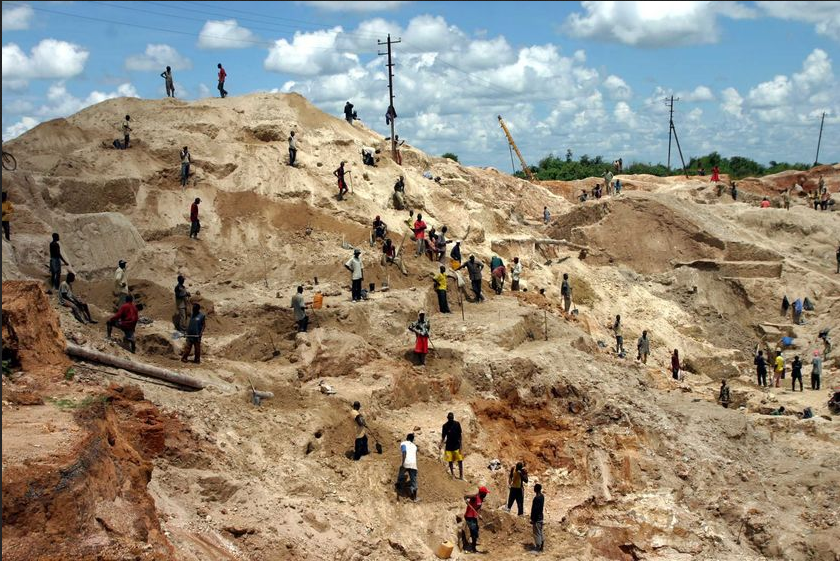
Mining for ColtanColtan mining

Preface. This is a book review of Michael Klare’s “The Race For What’s Left: The Global Scramble for the World’s Last Resources” . Alice Friedemann www.energyskeptic.com  author of “When Trucks Stop Running: Energy and the Future of Transportation”, 2015, Springer, Barriers to Making Algal Biofuels, and “Crunch! Whole Grain Artisan Chips and Crackers”. Podcasts: Collapse Chronicles, Derrick Jensen, Practical Prepping, KunstlerCast 253, KunstlerCast278, Peak Prosperity , XX2 report ***

Klare MT. 2012. The Race for What’s Left: The Global Scramble for the World’s Last Resources. Picador.

We’re about to invade the last areas on earth to drill for oil and mine ore essential to the survival of modern industrial civilization.  The rate of exploitation has sped up to a blur as more nations compete for the same resources.  What’s left could mostly be gone in less than a generation, unless war erupts as nations fight over the scraps.  Certainly more oil spills, explosions, pollution, chemical leaks, biodiversity loss, and other environmental disasters will grow in frequency and severity as the race gets increasingly desperate. Klare writes “And this is only the beginning. As the race for what’s left gains momentum, it will intrude with greater force into world affairs, threatening the survival of animal species, local communities, giant corporations, and entire nations.  The global economy as it currently stands cannot grow and prosper without an increasing supply of numerous critical resources—but acquiring these materials will pose an ever greater threat to the safety and stability of human society and the natural world” (p210). Klare’s understanding of what we need to do is spot on — he warns that what we should be doing is racing to adapt, not racing to plunder what’s left.  In the long run, the nations that adapt will come out ahead. Klare thinks that governments will use increasing force and deployment of combat troops in nations with resources.  As countries increasingly try to secure resources by military means, the risk of war increases.  Klare and many others believe war is most likely to break out in the East and South China seas, which have a lot of oil and natural gas reserves (p 223).  But Klare mentions plenty of other regions where war could start. When I saw the chart on page 24 of the enormous amount of resources  consumed between 1950 and 2000 — at an increasingly exponential rate — I was amazed anything was left, no wonder the time left is so short.  For example, between 1950 and 2000, the production of Bauxite went up 1,513%, Natural gas 1,082%, Crude oil 618%, and copper 399%. Oil is the master resource that unlocks all of the others, since 97% of transportation runs on oil, yet we rely for a quarter of our oil on only 20 large fields discovered decades ago (p 22).  Two-thirds of world oil comes from these and other large fields.  The production from the largest 10 has already declined 30%.

Decline rate of large oil fields is 9.7% and it’s accelerating

The average rate of decline for these large fields after peak production was 9% and this rate increased – in 2003 the rate was 8.7% but by 2007 it was 9.7% per year.  Yikes, exponential decline. How much would your paycheck be in 10 years if every year the amount subtracted kept growing?

The rate of oil flow is going down too

Have you ever tried to force a frozen milk shake up a straw?  Desperate as you might be, you have to wait for it to melt a bit.  We’ve used up the easy, shallow, light, sweet oil and we’re left with mainly nasty, gunky, tar sands, heavy oil, and extra heavy oil that refuses to flow without a lot of extra cost and energy, leaving less energy and money to run the rest of society at a much slower rate.  It’s like having a million dollars in your bank account, but you can only take out a hundred dollars a month. What’s left is in smaller reservoirs and deeper areas that deplete faster than the old giant fields.  Much of the last oil is offshore, where oil rigs are subject to hurricanes and storms, or icebergs, and far from where it’s needed.  Much is also in failed states where violence makes getting at the remaining resources tricky, or fragile ecosystems, such as the arctic.

Deepwater oil (depth of water over 1,000 feet)

Drilling and extracting oil in the deep ocean is so difficult and expensive it’s often compared to space exploration. Oil companies are expected to spend $387 Billion dollars drilling offshore between 2010 and 2014.  By 2020 10% of our oil will come from deepwater and ultra-deep wells.  By then onshore and shallow-water oil wells will be in decline, so deepwater oil will be quite important. Ultra-deep wells are drilled in 3,500 feet to 7,000 feet deep water and then another 30,000 feet beneath the ocean floor.  Shell is drilling a well in 8,000 feet of water — picture 6 Empire State Buildings stacked on one another.

Arctic Oil

About a quarter of the remaining oil is in the arctic region – perhaps 90 billion barrels, a 3 year supply for the world.  The chunk within American territory is 26.7 billion barrels, as much as in Prudhoe Bay and several times more than what might be in ANWR. Russia is the big winner with the potential of 219 billion barrels of oil equivalent (much of this is natural gas, not oil) from both Siberia and the Arctic. Getting this oil out wont’ be easy:
  • In winter the waters are covered with thick pack ice
  • The rest of the year ice floes pose a threat for drilling platforms and ships
  • Temperatures often drop below minus 40 Fahrenheit
  • Severe storms with gale-force winds sweep through
Drilling could have these effects
  • Accelerated global warming
  • Harm to ocean wildlife and fisheries
  • If the pipeline from the well to the shore corrodes and leaks, catastrophic oil leak
If a blowout happens, that would be a true disaster in this fragile ecosystem.  The arctic is too remote for quick help, there aren’t service vessels, skimmers, or booms stockpiled, and nothing could be done if it happened in the winter.

Tar Sands

Canada has the potential to be able to get at 170 billion barrels (out of 1.7 trillion) from the Alberta tar sands (5.6 years worth of world-wide oil consumption). These sands are closer to coal than oil and need to be mined, and then a very energy intensive process is required to strip the oil from the sand using natural gas.  This uses clean natural gas to make a dirty fuel, which has been compared to “using caviar to make fake crabmeat”. Klare never ventures into Energy Returned on Energy Invested in his book, but many systems ecologists believe that the EROEI or tarsands is at best 3 to 1, so this is not an energy resource that can outlast oil.  The head of the nuclear engineering department at U.C. Berkeley, Per Peterson, said there are plans to build nuclear reactors to split off hydrogen to refine the oil sands with as well as provide the energy to do so, but given the tremendous EROEI of nuclear power plants, the ten years it takes to build one, and the increased risk of a disaster in such a harsh climate, this may be a pipe dream (the first pilot project is decades away).  As climate change forces Homo sapiens toward the poles to survive, it would be a shame to have long-term nuclear waste to cope with.

Heavy and Extra Heavy Oil

Not only is that nastier and difficult to extract and process than conventional oil, as mentioned above, there are also more toxic wastes from the high sulfur content and other pollutants. Just like tar sands, it has to be heated and mixed with natural gas to get it to flow through pipelines. Venezuela has about a trillion barrels of this glop, of which 652 billion barrels (22 years) might be recoverable, making this one of the largest reservoirs of unconventional petroleum in the world.

Oil Shale

Don’t confuse this with shale oil. It’s not really oil, it’s a precursor called kerogen.  Companies have been trying to figure out how to convert it for decades.  In 2013 Royal Dutch Shell, which has been trying to get the shale oil out since 1982, gave up on it.  Exxon Mobil gave up long ago too, after spending $5 billion trying.

Easy coal is gone  

It’s getting more difficult and dangerous to mine the remaining coal, because it’s very deep underground.  The shallow coal has been mined out. Going after the deeper coal increases cave-ins, and jolts from collapsing walls that can’t hold the mountain above up anymore.

Mexico will start importing oil as soon as 2015

Mexico had the 2nd largest oil field ever discovered (after Ghawar in Saudi Arabia), but it’s been declining rapidly, throwing Mexico into an economic crisis.  Production has dropped 33% from 3.71 million barrels per day in 2006 to 2.48 million barrels per day (in 2013).  The Mexican population is growing, so their own demand for oil is rising while production falls. By 2015 Mexico will stop exporting, and start importing oil, bad news for the USA because other oil will come from more distant and less reliable countries.

Metals and Minerals

Some of the best wild places on earth are about to be ruined by mining

There are many examples of this in the book, I think the worst is the Pebble Project at Iliamna Lake in Alaska which couldn’t possibly be guaranteed not to release the arsenic, mercury, and other toxic chemicals used to leach gold and copper from the ore.  This would ruin the world’s largest salmon fishery, which employs 12,500 people and which the Native Americans depend on for food, as well as much of the rest of this fragile arctic ecosystem. Another of many areas to be ruined by mining is Ivindo National Park in Gabon where there’s iron ore (p 132).  Niger has large deposits of uranium, where about 10% of world output comes from (4,000 metric tons) and soon, perhaps, another 10% more if another mine opens up.

The Race for the last Uranium, copper, iron, bauxite, etc.

Even common minerals are growing scarce. Ores have less metal so the cost and energy to get it out increases.   Some random facts from the book:
  • China is eager to find uranium abroad for their 11 nuclear power plants and 16 under construction, since they don’t have large deposits themselves.
  • Afghanistan has lots of copper, iron, bauxite, gold, lead, tungsten, zinc, niobium and other minerals worth more than $1 trillion.
  • Mongolia has a lot of copper and gold, but it’s so remote that building transportation and other infrastructure to get at it will cost $4.5 billion.
  • Mongolia also has coking-coal (to make steel), a higher grade than that used to generate electricity.  They have the largest untapped reserves in the world, about 7.5 billion metric tons (how much will that raise the Earth’s temperature?)

Rare Earth Elements, Platinum Group Metals (PGM), and other Essential metals

Clean energy applications are now using about 20% of the rare earth elements, much of them in advanced electromagnets and lightweight batteries (p 155). The Toyota Prius is especially dependent on rare earths, with each electric motor requiring 2 pounds of neodymium, and each battery 22 to 33 pounds of lanthanum. Other high-tech applications: Scandium. Aluminum alloys, semiconductors, stadium lights Yttrium. Lasers, fiber optics, energy-efficient light bulbs Lanthanum. Hybrid electric motors and electric car batteries Cerium. Lens polishers Praseodymium Searchlights, aircraft parts, portable electronics Neodymium. High-strength magnets, hybrid electric motors, portable electronics Promethium. Portable X-ray units Samarium. Glass manufacture, high-strength magnets Europium. Energy-efficient light bulbs, fiber optics Gadolinium. Neutron radiography Terbium. high-strength magnets, hybrid electric motors, portable electronics Dysprosium. High-strength magnets, hybrid electric motors, portable electronics Holmium. Glass tint Erbium. Metal alloys Thulium. Lasers Ytterbium. Stainless steel Lutetium. None currently Niobium. high-performance alloys for oil and gas pipelines Manganese and vanadium. corrosion-resistant high-strength steels Titanium. alloys used in air and space vehicles, lightweight armor Gallium and indium. photovoltaic solar cells Gallium. electronic devices, high-speed semiconductors, light-emitting diodes, Indium. coatings for flat-panel displays, infrared detectors, high-speed transistors Lithium. advanced motor-vehicle batteries, rechargeable batteries, wind turbines Tantalum. automotive electronics, pagers, personal computers, portable telephones, cell phone capacitors and other compact electronic devices, as well as steel used in jet engines and nuclear reactors. Platinum (PGM). automotive catalytic converters, hydrogen fuel cells Palladium, iridium, rhodium, ruthenium, osmium (PGM). All have exceptionally high melting points, superb electrical conductivity, outstanding catalytic capabilities, excellent resistance to corrosion. Ideal for catalytic converters, in jet engines, and in portable electric devices. 25% of all manufactured goods either have these metals or were made on equipment that used them. For some key industrial applications no substitutes exist.

Essential Metals are Vulnerable to Supply Chain & single source failure

China started restricting export of rare earth metals, which alarmed other nations, since they’re vital to high-tech products.  The Department of energy estimates that China accounts for 95% of total worldwide rare earths production, other experts say it’s even higher, 97%.  Natural concentrations of rare earths are uncommon so they have to be pulled out of composite ores with lots of other minerals, including often radioactive ones, and that makes it both expensive and dangerous.  To get the metals out requires acids that produce highly toxic wastes that can poison water and farmland.  China is infamous for ignoring the environment to save money at a low cost, which drove other rare earth mining companies out of business. Platinum group metals are exceptionally rare. They’re found in very small amounts in just a few locations – 90% comes mainly from South Africa and Russia. Tantalum comes from coltan, a columbite-tantalite mineral. Its key chemical properties are hard to find substitutes for. Most if the deposits are in the failed state the Democratic Republic of the Congo, by civilians forced at gunpoint to dig for tantalum, tin, tungsten, gold, and other minerals and carried out on foot to collection sites. Many of these metals are essential, have no substitutes, and yet are subject to supply risks because only a few countries or companies mine them.

Peak food: Land Grabs for the last Arable Soil

Many countries are far beyond their ability to feed themselves, and would be devastated if for some reason they were outbid for food on the open market, that they’ve taken to buying land all over the world to be sure they can feed their people. Private investors also see fertile farmland as a great new asset class, so banks, hedge funds and other wealthy investors are buying vast tracts of land. Arable land is getting to be as scarce as oil or minerals as 7 billion people continue to reproduce exponentially with few areas left that can be made into farmland. Topsoil is eroding faster than new soil can form on about a third of the world’s cropland (it takes up to 500 years for soil to recover from human civilization after a crash, which happens roughly every 1,500 years according to Montgomery’s “Dirt: the erosion of civilizations”). Climate change is also expected to render a third of the planet uninhabitable at worst, and crop production much lower from desertification and extreme weather at best, making arable farmland even more valuable.  Klare mentions ‘peak soil’ on page 194, a term I first coined back in 2007 in Monbiot’s Guardian article “A new generation of biofuels turns out to be another environmental disaster”.  My energyskeptic paper, “Peak Soil: Why Cellulosic and other Biofuels are Not Sustainable and a Threat to America’s National Security” has a section called “Do you want to Eat, Drink, or Drive” because growing biofuels crops competes with edible crops, which will also drive up the price of farmland. Two-thirds of the land being grabbed is in Africa.  Other countries include Russia, and South America (Patagonia, Brazil, the Amazon).  The countries buying this land are Saudi Arabia, China, India, South Korea and many others.  Much of this is going on secretly, but Klare mentions several deals that total millions of acres, for example, both Saudi Arabia and South Korea have bought millions of acres in Ethiopia. Wild lands are about to lose massive amounts of biodiversity, such as Kenya, where enormous sugarcane and jatropha plantations in the Tana River delta are taking over. Two-thirds of China’s land is arid grassland or desert, and what little arable land they have continues to be paved over or lost to desertification and other damage that goes back to Chairman Mao’s insane assault on nature (see Shapiro’s book “Mao’s War Against Nature”).  China is investing heavily in Brazil, Africa (Mozmbiuque, Zimbabwe, Benin, Kenya, Liberia, Mali, Senegal, Cameroon, Mali, Uganda, Democratic Republic of the Congo), Venezuela, Australia, Argentina, Russia, the Philippines, Southeast Asia, Central Asia, and Russia).

Klare’s vision of the future

Klare predicts that only the largest companies will be able to lay claim to what little is left and thrive, driving all others into bankruptcy at worst or being bought out at best.  Likewise, only the strongest nations will succeed at gaining access to what’s left, and nations’ left behind will fall into hardship and decline.  The competition between the remaining countries is likely to be ruthless (pp 213-214). The risk of war increases as nations use their militaries to secure resource areas.  The United States is very active in Nigeria, the Republic of Georgia, and the Persian Gulf kingdoms; China is heavily involved in Sudan, Zimbabwe, and Central Asian republics (p 221).  Russia appears to be getting more aggressive in trying to kick Western companies out of former areas they controlled before the Soviet Union broke up. China is especially clever at cutting very long-term deals for food, land, oil, and minerals in exchange for massive loans (p219), and builds good-will as well as the ability to make off with these goods by building infrastructure in foreign countries. Klare notes that all of this can only end with natural resources vanishing, wilderness areas destroyed, most corporations going bankrupt, massive unemployment, and war.  The local people in these remote areas will suffer the most, but in the end, we all will. Much of the land being grabbed is stolen from local people, who will someday take their land back, especially as hunger grows and infrastructure falls apart – distant countries won’t be able to fly or truck food to their homelands from the foreign land they “own”. His solution is that we should stop trying to get the last resources and begin a race to adapt.  I disagree with him that this can be done with alternative energy, but he’s right that efficiency is important – besides consuming less, that’s really all we can do. My Conclusion I think Klare’s “race to adapt” may become the new mantra as we reach the point where there’s no other choice, but if we wait that long, it may be too late to try to adapt. The race needs to be to adapt to a way of life we once had.  The age of wood.  We know what that lifestyle is. Billions of people are living that way now, from remote tribes and the desperately poor to those who’ve chosen this lifestyle, such as the Amish and back-to-the-landers.  What’s difficult is figuring out how to reconfigure our infrastructure now while we still have the energy to do so to make the future as pleasant as we can for future generations.  Don’t we owe the grandchildren that? Before fossil fuels, it took 9 out of 10 people to grow food for the lucky 10% who were craftsmen, merchants, or in religious orders.  We ought to be adapting now by figuring out how to get half of our population back to farming over the next 20-30 years, ideally small family farms that grow and make artisan food and other such products.  If there’s no planning, then the survivors of unplanned collapse will end up being peasants on large farms. To get there, we’d have to find incentives for women to have just one child.  I’d welcome hearing other kind ways to get back to our pre-fossil-fuel carrying capacity of 100 million people (meat and a glass of wine once a week, up to 250 million people eating oatmeal for breakfast, lunch and dinner). Already the economy has stopped growing, and because of the net energy cliff, at most we can only hope to maintain slow-to-no-growth a decade or so by scavenging every last morsel of oil and minerals. A shortage of any of energy resources or minerals will hasten collapse. Each depends on the other. Computers use over 66 minerals – if one or more are missing and computer chips and high-tech products can’t be made, drilling and other energy resources can’t be extracted either, because chip-driven computers, vehicles, satellites, and even toasters depend on high-tech products.  So does the grid.  Too bad high-tech products are built to fail, not just from planned obsolescence, but in many other ways. Conversely, extracting metals from ore requires tremendous amounts of energy, so it’s more likely an energy shortage will limit mineral resources than the other way around. Decreasing energy also means less food can be grown and distributed, since trucks, tractors, harvesters, granaries, fertilizers, pesticides, and every other component of the agricultural supply chain depends on oil and natural gas.

The longer we wait to start the race to adapt, the fewer the people who will reach the finish-line.

Posted in Energy Books, Peak Critical Elements | Tagged , , , | 1 Comment

Book Reviews: Why I Write Them, How I Find Them

I’ve read thousands of mainly non-fiction books over the past 40 years.

Why I write Book Reviews

I write book reviews for a number of reasons — to give my brain a “workout”, as a source of information for my own book about the decline and fall of our fossil-fuel-based civilization, and to stave off Alzheimer’s and dementia.  Definitely not for money, I’ve never been paid to write a review, or had an author send me a book.

Why Books?  What about Newspapers and magazines?

I read newspapers and subscribe to many science magazines, Time, the New Yorker, National Geographic, etc. to keep up-to-date, but I find most newspapers of record (i.e. the New York Times) aren’t covering the issues and topics that really matter every day.

Even if infrastructure, resources, cyberwar, agriculture, topsoil, and issues that matter are covered, they’re approached and written about through the false filters of economic, political, and social points of view.

When an important topic, such as disposal of radioactive waste, makes the news, it’s only a short piece about a specific power plant.  Complex topics can’t be covered in newspapers or magazines — they have limited space.

How I find books to read

I mostly find out about what books to read by subscribing to Science magazine and looking at their “books received” list — which is only available online (it’s not in the print version of Science).  Then I go to the University of California Berkeley (UCB) library system and thumb through the book to see if I actually want to read it.

I also find out what books the UCB library has on a topic I’m interested in, such as cyberwar / cyberattack / cybertheft and then look at all the books on shelves above and below the one(s) I’ve chosen, to see what else I might have missed.

UCB has many online-only sources that are free to the public, such as congressional records, and the electronic resources I can’t read from home I read and take notes on using computers at one of the UCB libraries.

While I workout at the gym, shop for groceries, walk, or hike, I listen to science, skeptical, book review, BBC, NPR’s Fresh Air, To The Best of Our Knowledge, and This American Life;  podcasts like The Moth (stories), How Stuff Works Stuff You Should Know and Stuff You missed in history class — all of these are good sources of books to read.

And then there’s the New York Times book review, or going to the few bookstores still surviving and randomly pulling books of the shelf to look through them.  In the past, but less so now, I’ll discover a book in yahoo groups energyresources and similar groups, private email from scientists I’m in touch with, and these blogs or compilations of resource/ecology news stories:

Peak Resources and the Preservation of Knowledge

Because there are no alternative resources of energy that can replace fossil fuels, our leaders ought to be looking at how to transition to a lower energy society — back to the past in as orderly a way as possible to prevent sudden discontinuities that throw us into world war, civil war, and to limit the number of deaths as we descend the net energy cliff and carrying capacity relentlessly declines.  PostCarbon’s website, www.resilience.org, is dedicated to how to go about doing this from the bottom up, since for many reasons, our political and economic leaders can’t discuss peak oil and climate change.

Once society descends into chaos, a lot of libraries and books will be destroyed by fascistic or rigid fanatic religious leaders, or burned to provide energy to cook with or heat homes, by natural disasters, by insects, by aging (at most books last 500 years) — so the more books people buy (and of course, I’d like to see people buy the ones on my booklist), the greater the chance some books will make it through to the next Renaissance, where scholars can transcribe what they find the most useful to save and preserve knowledge.  Computers will be one of the first fossil-fuel produced products to go away, so all of the information being stored electronically will only last as long as the last computer and computer chip.

What books might I be reviewing in the future?

Obviously I only have the time to review a few of the ones below that I find the time to read.

To give you an idea of the books I have on my U.C. Berkeley library list right now (September 2013), here’s my “A” list, the most wanted:

ANTH ED-P BF723.M55 H73 2009 Mothers and others : the evolutionary origins of mutual understanding /
ANTH CC72.4 .Q44 2010 Questioning Collapse Human Resilience, Ecological Vulnerability, and the Aftermath of Empire
ANTH E99.M69 O78 1991 It Will Live Forever (processing acorns in the Yosemite Valley)
ANTH MORR F2520.1.Y3 C49 2013 Chagnon. Noble savages. My life among two dangerous tribes, the Yanomamö & the anthropologists
ANTH GN281 .D56 2010 Too smart for our own good : the ecological predicament of humankind
ANTH GT2850 .J66 Feast: Why Humans Share Food.         9-16-13
ANTH BUSI HM851 .O4 No Place to Hide
BIOS GE180 .H35 2013 Arming Mother Nature The Birth of Catastrophic Environmentalism
BIOS GF75 .S25 2011 Our Dying Planet: An Ecologist’s View of the Crisis We Face
BIOS GT2920.M55 V35 2011 Milk A Local and Global History
BIOS MAIN PS3623.I5788 A57 2010 Anthill: a novel  by E. O. Wilson
BIOS QC902.9 .S28 2012 Saving a million species : extinction risk from climate change
BIOS QC981.8.C5 P425 2011 Driven to Extinction The Impact of Climate Change on Biodiversity
BIOS QH541.15.E25 N38 2011 Natural capital : theory & practice of mapping ecosystem services
BIOS QH541.5.S6 S6429 2012 Soil Ecology and Ecosystem Services
BIOS QH78 .M23 2013 The Great Extinctions What Causes Them and How They Shape Life
BIOS QK46.5.D58 N33 2009 Where Our Food Comes From: Retracing Nikolay Vavilov’s Quest to End Famine
BIOS QK570.2 .M6813 2013 Seaweeds Edible, Available, and Sustainable
BIOS QK603 .R57 2011 The Book of Fungi A Life-Size Guide to Six Hundred Species from Around the World
BIOS MORR QL122 .P73 2011 Prager. Sex, Drugs, and Sea Slime The Oceans’ Oddest Creatures and Why They Matter
BIOS QL430.2 .W55 2010 Kraken The Curious, Exciting, and Slightly Disturbing Science of Squid
BIOS QL696.F32 V353 2011 Vulture
BIOS QL719.O7 V474 1998 Land Mammals of Oregon    David Herlocker recommends as best one
BIOS QL737.C432 H464 2011 Dolphin diaries : my 25 years with spotted dolphins in the Bahamas
BIOS QL737.R68 S68 2012 Squirrels of the World $63 all 285 species
BIOS QL751 .A667 2013 Animal Personalities Behavior, Physiology, and Evolution
BIOS QL757 .H34 2011 Parasites in Ecological Communities: From Interactions to Ecosystems
BIOS QL757 .H67 2012 Host Manipulation by Parasites
BIOS QL84.2 .M66 2013 Wild ones: a sdismaying, reassuring story about looking at people looking at animals in America
BIOS QP135 .M38 2012 Just the Conclusions (extinction?) Extreme measures : the ecological energetics of birds and mammals
BIOS MORR QP145 .R53 2013 Roach. Gulp Adventures of the Alimentary Canal
BIOS RA1231.C3 C33 2013 Cadmium From Toxicity to Essentiality
BIOS SD418.3.A53 H43 2010 The Fate of the Forest Developers, Destroyers, and Defenders of the Amazon
BIOS SF469 .J47 2013 Global Pigeon
BIOS TD299 .C47 2011 water asia’s new battleground
BIOS TX558.A3A12 B3 1985 Acorns as food, nutrient analysis
BIOS TX725.M628 O88 2012 Cookery section: Jerusalem : a cookbook  best hummus recipe    Avail 6-11-2013
BUSI at UCB can U C articles? business then top choice http://www.lib.berkeley.edu/find/types/articles.html   supply chain microchip, cyberwar or attack
BUSI HD38.5 S896242 Supply chain management  also S877 and @3844
BUSI HD9135 .P76 2011 Golden holocaust : origins of the cigarette catastrophe and the case for abolition due 9-28-2013
BUSI HD9502.5.B542 G53 2009 The Biofuel Delusion The Fallacy of Large Scale Agro-Biofuels Production
BUSI MORR HE571 .G465 2013 George. Ninety percent of everything. inside shipping, the invisible industry that puts clothes
BUSI HF5386 .H243 2011 Beauty pays : why attractive people are more successful
BUSI TS178.4 .N944 2013 America’s Assembly Line
EART GB5014 .G547 2008 Global Catastrophic Risks
EART GC190.2 .T39 2011 The Dance of Air and Sea How Oceans, Weather, and Life Link Together
EART QC903 .K56 2010 Hack the Planet: Science’s Best Hope-or Worst Nightmare-for Averting Climate Catastrophe
EART QC981 .R763 2005 c.2 Plows, plagues, and petroleum : how humans took control of climate
EART QE28.3 .Z35 2008 The Earth After Us What Legacy Will Humans Leave in the Rocks?
ED-P BF209.L9 H6413 2013 LSD My Problem Child. Insights/Outlooks
ED-P MORR BF531 .D33 2012 Davidson. The emotional life of your brain : how its unique patterns affect the way you think, feel, & live
ED-P MORR BF575.A886 H47 2012 Herz. That’s Disgusting Unraveling the Mysteries of Repulsion
ED-P BF575.C88 V56 2013 Why Only Humans Weep Unraveling the Mysteries of Tears
ED-P BF575.L3 H89 2011 Inside Jokes: Using Humor to Reverse-Engineer the Mind
ED-P BF637.H4 P38 2012 Pathological Altruism
ED-P BF698.9.I6 K38 2013 Ungifted Intelligence Redefined
ED-P BF714 .S66 2011 Situations Matter Understanding How Context Transforms Your World
ED-P MORR BF773 .S54 2011 Shermer The believing brain : from ghosts and gods to conspiracies–how we construct beliefs
ED-P HQ1206 .E956 2013 Evolution’s Empress Darwinian Perspectives on the Nature of Women
ED-P HV6721.L3 S38 2012 Addiction by Design Machine Gambling in Las Vegas
ED-P IN PROGRESS The Stressed Sex Uncovering the Truth About Men, Women, and Mental Health
ED-P LB1620 .F46 2012 Exam Schools Inside America’s Most Selective Public High Schools
ED-P ON ORDER Sibling Relationships in Childhood and Adolescence: Predictors and Outcomes
ED-P QL568.A6 P24 2013 The Spirit of the Hive The Mechanisms of Social Evolution
ED-P MORR QL696.P2367 M357 2012 MARZLUFF. Gifts of the crow: how perception, emotion, & thought allow smart birds to behave like humans
ED-P QL757 .K365 2010 What’s Eating You? People and Parasites
ED-P QL785.27 .B347 2011 The exultant ark : a pictorial tour of animal pleasure
ED-P QL785.27 .K56 2013 How Animals Grieve
ED-P QP376 .F46 2010 The Other Brain From Dementia to Schizophrenia, How New Discoveries About the Brain
ED-P QP376 .L563 2013 The Unpredictable Species What Makes Humans Unique
ED-P QP458 .S44 2012 Neurogastronomy : how the brain creates flavor and why it matters
ED-P RC555 .B555 2013 Bad Boys, Bad Men Confronting Antisocial Personality Disorder
electronic Floods in a Changing Climate Extreme Precipitation
ENGI EARTmp QE535.2.N6 T46 2011 Cascadia’s fault : the coming earthquake and tsunami that could devastate North America    MORR too
ENGI TD195.E49 F39 2012 Energy and the Environment Scientific and Technological Principles
ENGI MORR TD345.P77 2011 The ripple effect : the fate of freshwater in the twenty-first century
ENGI POK TD799.85 .G33 2011 Digital rubbish : a natural history of electronics
ENGI TD885.5.G73 J66 2011 Engineering strategies for greenhouse gas mitigation
ENGI TD898.118 .A45 2013 Too Hot To Touch The Problem of High-Level Nuclear Waste
ENGI TJ163.3 .F855 2012 Fundamentals of Materials for Energy and Environmental stability
ENGI TK7871.85.V36 Microchips  — any newer articles?
ENVD F869.S357 R83 2011 A Negotiated Landscape The Transformation of San Francisco’s Waterfront Since 1950
ENVD MORR G156.5.E58 B53 2012 Visit sunny Chernobyl : and other adventures in the world’s most polluted places
ENVD GE149 .R6313 2012 Bankrupting Nature: Denying Our Planetary Boundaries   DUE 2-20-2014
ENVD MORR HC108.D6 L44 2013 LeDuff. Detroit : an American autopsy
ENVD HD9539.P583 S62 2013 Plutopia : nuclear families, atomic cities, and the great Soviet and American plutonium disasters
ENVD HT166 .H535 2011 Urban code : 100 lessons for understanding the city
ENVD NA6230 .A83 2011 The Heights Anatomy of a Skyscraper
ENVD QC903.2.U6 K35 2012 Climate Change in California Risk and Response   due 7-1-13
ENVD QH353 .E53 2011 REFERENCE SECTION  Encyclopedia of Biological Invasions
ENVD QH541.15.B56 L588 2012 A world in one cubic foot : portraits in biodiversity
MAIN BF199 .P765 2012 Curious behavior: yawning, laughing,hiccupping, and beyond   Avail 7-1-2013
MAIN BF575.H27 D57 2011 What makes your brain happy and why you should do the opposite
MAIN BF637.P76 P46 2012 The Art of Procrastination A Guide to Effective Dawdling, Lollygagging and Postponing
MAIN MORR BX1713 .M87 2012 God’s jury : the Inquisition and the making of the modern world
MAIN CT275.H62575 A5 2011 arguably essays by Christopher Hitchens
MAIN D247 .P37 2013 Global Crisis: War, Climate Change and Catastrophe in the Seventeenth Century
MAIN D923.B79 1992 Neither here nor there: travels in europe   Bill Bryson
MAIN HC79.E5 I51339 2012 Inclusive Wealth Report 2012 Measuring Progress Toward Sustainability
MAIN MORR PN1031 .O77 2011 ORR. Beautiful & pointless : a guide to modern poetry
MAIN MOFF/RR PN2287.F4255 A3 2012 bossypants
MAIN MORR PS3610.O3 O76 2012 Johnson. The orphan masters son (2013 fiction winner)
MOFF BD435 .P525 2012 How Science and Philosophy Can Lead Us to a More Meaningful LIfe
MOFF MORR D228 .M36 2011 Charles Mann 1493 : uncovering the new world Columbus created
MOFF D810.D57 G53 2013 The Deserters. A hidden history of world war II   IN-process sep 3 2013
MOFF GE155.M57 M67 2012 The Big Muddy : an environmental history of the Mississippi and its peoples
MOFF GE180 .P53 2013 Snail Darter and the Dam How Pork-Barrel Politics Endangered a Little Fish and Killed a River
MOFF GT2850 .M375 2009 Just Food: Where Locavores Get It Wrong and How We Can Truly Eat Responsibly
MOFF HC260.W4 K56 2013 When the Money Runs Out The End of Western Affluence
MOFF HC79.D45 E23 2013 Economic Impacts of Natural Disasters
MOFF Q172 .O88 2011 Fool me twice fighting the assult on science in america
MOFF QH353 .T73 2013 Trash Animals How We Live with Nature’s Filthy, Feral, Invasive, and Unwanted Species
MOFF QL638.95.L3 C37 2005 The devil’s teeth a true story of obsession and survival among america’s great white sharks
MOFF QL85 .O46 2008 Made for each other the biology of human animal bond
MOFF QP572.A27 H64 2013 Adrenaline
MOFF RC443 .T67 2008 The Insanity Offense How America’s Failure to Treat the Seriously Mentally Ill Endangers Its Citizens
MOFF TJ808 .A449 2012 Sustainable Materials: with both eyes open
MORR BP605.S2 H55 2013 Miscavige. Beyond Belief: My Secret Life Inside Scientology and My Harrowing Escape
MORR D756 .A78 2013 Atkinson. The Guns at Last Light: The War in Western Europe, 1944-1945 (Liberation Trilogy
MORR D810.S8 S535 2012 Mulley. The spy who loved : the secrets and lives of Christine Granville, Britain’s first female special age
MORR E897 .S33 2013 Scahill. Dirty Wars: The World Is A Battlefield
MORR electronic only Kreidler through Pekar
MORR GF75 .G88 2012 Guterl. The fate of the species. Why the human race may cause its own extinction   EnergySkeptic
MORR HC110.E5 S363 2013 Sanderson. Terra Nova The New World After Oil, Cars, and Suburbs
MORR BUSI HC110.I5 N63 2012 Noah. The great divergence. America’s growing inequality crisis and what we can do about it
MORR HF1604 .C26713 2013 Cardenal. China’s silent army : pioneers, traders, fixers &workers remaking the world in Beijing’s image
MORR HG181 .K35 2013 Kaiser. Act of Congress how America’s essential institution works, and how it doesn’t
MORR HJ2381 .B375 2012 Bartlett. The benefit and the burden : tax reform–why we need it and what it will take
MORR JK1991 .N54 2013 Nichols. Dollarocracy. how the money-and-media election complex is destroying America
MORR KF229.C37 L43 2013 LEAMER. price of justice : a true story of greed and corruption  (about Massey Coal)
MORR PN145 .L67 2013 Lopate. To Show and to Tell: The Craft of Literary Nonfiction
MORR PN4874.H215 A6 2013 Hainey. After Visiting Friends: A Son’s Story
MORR PS3563.I4614 Z46 2013 Min. The Cooked Seed: A Memoir
MORR PS3569.E314 L47 2013 Sedaris. Let’s Explore Diabetes with Owls
MORR QB631.2 .C48 2012 Childs. Apocalyptic planet : field guide to the everending Earth
MORR QM495 .W55 2012 Williams. Breasts, a natural and unnatural history
MORR RA645.O23 L873 2012 Lustig Fat Chance beating the odds against sugar, processed food, obesity & disease
MORR RB125 .N388 2012 Natterson Zoobiquity : what animals can teach us about health and the science of healing
MORR RC569.5.V55 R35 2013 Raine. The Anatomy of Violence The Biological Roots of Crime
MORR RF290 .B58 2013 Bouton. Shouting Won’t Help Why I–and 50 Million Other Americans–Can’t Hear You
MORR T14.5 .C37 2012 Casti. X-events : the collapse of everything     Energyskeptic: get when you’ve built up site, see index
MORR TR140.H44 H84 2013 Huffman. Here I Am: The Story of Tim Hetherington, War Photographer
MORR UA23 .M19 2013 Mazzetti. The way of the knife : the CIA, a secret army, and a war at the ends of the Earth
MORR A thru Dunnavant (1st 2 shelf areas) and Kreidler through Pekar
Physics QC774.E94 B97 2010 The Many Worlds of Hugh Everett III Multiple Universes
Physics AstronomyQC6.4.C3 S74 2011 The fallacy of fine-tuning : why the universe is not designed for us  351 Le Conte Hall near campanile
PUBL f N8223 .A53 2011 OVERSIZE The art of medicine : over 2,000 years of images and imagination
PUBL HM1101 .P763 2008 Catalogue of Risks Natural, Technical, Social and Health Risks
PUBL QP RA RJ nutrition books
PUBL RA1231.M5 H54 2009 Diagnosis mercury : money, politics, and poison
PUBL RA427.3 .H43285 2009 Health, Risk, and Adversity
PUBL RA427.3 .W65 2008 Know Your Chances Understanding Health Statistics     get again and do a book review
PUBL RA638 .M675 2011 The panic virus : a true story of medicine, science, and fear
PUBL RA643 .S76 2011 Eradication : ridding the world of diseases forever?
PUBL RA644.8.D44 S53 2011 Sick societies. responding to the global challenge of chronic disease
PUBL RA793 .E67 2011 Changing Planet, Changing Health How the Climate Crisis Threatens Our Health and What We Can Do
PUBL RB152 .E963 2008 evolutionary medicine and health
PUBL RB153 .S78 2006 Exposure A Guide to Sources of Infections
PUBL RB155 .E96 2008 evolution in health and disease
PUBL RC183.1 .H66 2002 The Greatest Killer Smallpox in History
PUBL RC270.8 P43 2011 Why millions survive cancer : the successes of science
PUBL RC961 .H68 2008 Forgotten People, Forgotten Diseases The Neglected Tropical Diseases & Their Impact on Global Health
PUBL OPTOM RM216 .N8628 2006 Nutritional Health Strategies for Disease Prevention (2006 — 2012 electronic only)
PUBL TD195.C58 L63 2012 The silent epidemic : coal and the hidden threat to health
SOCW HV553 .P527 2008 Phoenix of Natural Disasters Community Resilience


And if I get through the above list and new books that I’m adding, these are my “B” list, second most wanted:

ANTH MOFF E99.K79 .N44 1983 Make Prayers to the Raven  A Koyukon View of the Northern Forest
ANTH F2520.1.M9 E94 2008 Don’t Sleep, There Are Snakes  Life and Language in the Amazonian Jungle
ANTH PUBL HQ766.5.C6 G74 2008 Just One Child Science and Policy in Deng’s China
ANTH P116 .B87 The Talking Ape. How Language Evolved.
ANTH QL737.P93 C43 Baboon metaphysics : the evolution of a social mind    2007
ANTH RA649 .W25 2008 Contagious Cultures, Carriers, and the Outbreak Narrative
ANTH QL758 .H37 Man the Hunted Primates, Predators, and Human Evolution
BANC F912.G36 B76 2007 History of the Central Brooks Range Gaunt Beauty, Tenuous Life
BANC SH20.H35 A3 2010 North by Northwestern: A Seafaring Family on Deadly Alaskan Waters
BIOS \f\ QL451 .H553 2007 The Private Life of Spiders
BIOS \f\ QL82 .W545 Wildlife Spectacles
BIOS 546 .F667 2009 Dazzled and Deceived Mimicry and Camouflage
BIOS BL53 .N49 2006 Why We Believe What We Believe Uncovering Our Biological Need for Meaning, Spirituality,
BIOS F909 .M373 Alaska Wilderness Exploring the Central Brooks Range
BIOS GE105 M39 ENVIRONMENTAL SCIENCE: SYSTEMS AND SOLUTIONS (scan, has nuke plant stats)
BIOS HC 79 E5 G597145 Global Survival (last chapter is Lovelock POPOK)
BIOS MOFF HD1476.U5 P95 Raising Less Corn, More Hell The Case for the Independent Farm and Against Industrial Food
BIOS BUSI HD9415 .H67 Putting Meat on the American Table Taste, Technology, Transformation
BIOS HQ25 .J83 Dr. Tatiana’s advice to all creation
BIOS LB3479.U6 P55 2010 Free for All Fixing School Food in America
BIOS ML3830 .L38 2006 This Is Your Brain on Music
BIOS ON ORDER Vegetables I Asteraceae, Brassicaceae, Chenopodicaceae, and Cucurbitaceae
BIOS Q180 .C64 Stop Working and Start Thinking A Guide to Becoming a Scientist.
BIOS MOFF QE721.2.E97 E96546 Extinction : how life on earth nearly ended 250 million years ago
BIOS MOFF QE721.2.E97 H34 Catastrophes and lesser calamities: the causes of mass extinctions
BIOS QF75 b76 Feed or Feedback. AG, pop dynamics, and the state of the planet
BIOS QH104.5.G73 J64 Prairie Dog Empire A Saga of the Shortgrass Prairie [not yet, fairly dry]
BIOS QH105 NAT HISTORY OTHER: QH104.5 QH541  QK86 qk149 QL430 QL696 QL768 ps283 SD397
BIOS QH105.C2 B45 2006 California’s Frontier Naturalists
BIOS QH105.C2 C3 .90 Introduction to California Chaparral
BIOS QH105.O7 L87 1999 Hidden Forest The Biography of an Ecosystem
BIOS QH161 .T52 2007 Sacred Sea A Journey to Lake Baikal
BIOS QH31.L95 R65 The Lysenko Effect The Politics of Science
BIOS QH31.M4516 T63 2007 Chrysalis: Maria Sibylla Merian and the Secrets of Metamorphosis
BIOS QH331 .S324 Scientists Debate Gaia The Next Century
BIOS QH353 .B555 2007 Biological Invaders in Inland Waters
BIOS QH353 .I598 2006 Invasive Species in the Pacific Northwest
BIOS QH366.2 .E847 Evolution (May)
BIOS QH366.2 .J322 Evolution in Four Dimensions (May)
BIOS QH367 .B35 The Ghosts of Evolution
BIOS QH431 .C474 2006 When a Gene Makes You Smell Like a Fish And Other Tales
BIOS QH45.2 .D38 2006 Threads from the Web of Life Stories in Natural History
BIOS QH45.2 .V47 2004 Nature An Economic History
BIOS QH450 .E649 2007 Epigenetics (probaby way too hard!!!)  May Recommended this
BIOS QH456 .G58 2006 Mismatch Why Our World No Longer Fits Our Bodies
BIOS QH46.5 .A88 2007 Amazing Rare Things The Art of Natural History in the Age of Discovery
BIOS QH51 .A73 2009 The Nature Study Movement  The Forgotten Popularizer of America’s Conservation Ethic
BIOS QH510 .S63 2008 Energy in Nature and Society
BIOS QH541 .T49 Theoretical Ecology Principles and Applications.
BIOS QH541.5.P7 G723 Grasslands. Developments Opportunities Perspectives.
BIOS QH541.5.S6 S87 Sustaining Biodiversity and Ecosystem Services in Soils and Sediments
BIOS QH541.5.S7 R54 2006 River and Stream Ecosystems of the World
BIOS QH545.P4 C37 2006 Pesticide Selectivity, Health and the Environment
BIOS QH75 .M478 2006 The End of the Wild
BIOS QH76.5.W34 W57 2008 The American West at Risk Science, Myths, and Politics of Land Abuse and Recovery
BIOS QH84.8 .N36 2007 Life in the Soil A Guide for Naturalists and Gardeners
BIOS QH86 .F65 Forest Diversity and Function Temperate and Boreal Systems
BIOS QH91.1 .K37 2006 Sensuous Seas Tales of a Marine Biologist
BIOS QH96.57.A1 L3513 2007 Limnoecology The Ecology of Lakes and Streams. 2nd ed.
BIOS QK46.5.D58 S86 2007 Measuring Plant Diversity Lessons from the Field
BIOS QK495.R78 B73 2009 the perfect fruit – good breeding, bad seeds
BIOS QK669 .L44 2007 Nature’s Palette The Science of Plant Color
BIOS QK911 .S45 2010 From Plant Traits to Vegetation Str Chance & Selection in the Assembly of Ecological Communities
BIOS QK926 .B835 The forgotten pollinators
BIOS QK96.B27 2008 Gods and goddesses in the garden Greco-Roman mythology and the scientific names of plants
BIOS QL463 .T87 2006 Flies in the Face of Fashion, Mites Make Right
BIOS QL496 .C67 2006 Other Insect Societies
BIOS QL505.5 .B43 2007 Cockroaches Ecology, Behavior, and Natural History
BIOS QL553.C67 M55 2006 100 Caterpillars Portraits from the Tropical Forests of Costa Rica
BIOS QL568.F7 M64 2010 Adventures among Ants: A Global Safari with a Cast of Trillions   DUE 7-29
BIOS QL696.A52 D832 Ducks, Geese and Swans
BIOS QL696.C52 K87 Herons.
BIOS QL696.P2367 C37 Noncooperative Breeding in the California Scrub-Jay
BIOS QL698.3 .H435 2010 The Nesting Season: Cuckoos, Cuckolds, and the Invention of Monogamy
BIOS QL698.3 .U4313 2006 Between the Wingtips the secret life of birds
BIOS QL737.C2 U73 2010 Urban Carnivores: Ecology, Conflict, and Conservation
BIOS QL737.C4 K434 2009 Watching Giants The Secret Lives of Whales
BIOS QL737.P93 M34 2007 Macachiavellian Intelligence How Rhesus Macaques and Humans Have Conquered the World
BIOS QL737.P96 H364 2007 Gorilla Society  Conflict, Compromise and Cooperation Between the Sexes
BIOS QL737.R68 T48 2006 Squirrels The Animal Answer
BIOS QL751 .C8825 Headless Males Make Great Lovers And Other Unusual Natural Histories.
BIOS QL754 .H63 2009 Animal Migration Remarkable Journeys in the Wild
BIOS QL756.5 .F665 2007 Foraging Behavior and Ecology
BIOS QL756.56 .E26 2008 The Ecology of Browsing and Grazing
BIOS QL757 .P2825 Parasitism and Ecosystems
BIOS QL759 .R89 Avoiding Attack The Evolutionary Ecology of Crypsis, Warning Signals, and Mimicry
BIOS QL761 .F46 2006 Female Infidelity and Paternal Uncertainty Evolutionary Perspectives
BIOS QL776 .S35 2005 The Evolution of Animal Communication Reliability and Deception in Signaling Systems
BIOS MOFF QL785 .B36 Animal Passions and Beastly Virtues Reflections on Redecorating Nature.
BIOS QL785 .M47 2007 Carrots and Sticks Principles of Animal Training
BIOS QL785 .R25 2006 Rational Animals
BIOS QL785 .W9525 Do Animals Think
BIOS MOFF QM26 .S58 2008 Your inner fish : a journey into the 3.5-billion-year history of the human body
BIOS QP251 .L56 The Case of the Female Orgasm Bias in the Science of Evolution
BIOS MOFF QP251 .R568 2008 Bonk The Curious Coupling of Science and Sex
BIOS QP376 .D697 2004 The Great Brain Debate Nature or Nurture
BIOS MOFF QP38 .S275 2005 Monkeyluv : and other essays on our lives as animals
BIOS QR185.95 .U55 2007 Defending Life The Nature of Host-Parasite Relations
BIOS RB127 .D67 2006 Worst of Evils The Fight Against Pain
BIOS RB155 .E96 2008 Evolution in Health and Disease
BIOS RC178.G72 L665 2004 Great Plague The Story of London’s Most Deadly Year
BIOS RC88.9.T47 M53 2006 Microorganisms and bioterrorism
BIOS RS61 .S637 Drug Discovery A History
BIOS S494.5.I5 O46 2008 Creating abundance : biological innovation and American agricultural development
BIOS S494.5.S86 D48 2006 Developing and Extending Sustainable Agriculture
BIOS S494.5.S86 R36 2006 Agricultural Sustainability Principles, Processes, and Prospects
BIOS S534.C2C275 S65 no.3485 The home orchard : growing your own deciduous fruit and nut trees
BIOS S534.C2C275 S65 no.3497 Watersheds, groundwater and drinking water : a practical guide
BIOS S589.7 .W647 2006 Introduction to Agroecology Principles and Practices
BIOS S589.757.M57 F76 2007 From the Corn Belt to the Gulf
BIOS S590.7 .S67 2006 Soils and Societies Perspectives from Environmental History
BIOS S596 .H55 2008 Soil in the Environment Crucible of Terrestrial Life
BIOS S605.5 .B46 Future Harvest: Pesticide-Free Farming
BIOS S605.5 .D87 Good Growing Why Organic Farming Works
BIOS S605.5 .O62 2006 Organic Agriculture A Global Perspective
BIOS SB113.3 .S96 Seed Fate Predation, Dispersal, and Seedling Establishment
BIOS SB123 .K554 2009 Hybrid the History and science of plant breeding
BIOS SB229.C9 F8613 2008 From Rainforest to Cane Field in Cuba An Environmental History since 1492
BIOS SB354.8 .R54 2006 Introduction to Fruit Crops     MAIN also — if and when you get property elsewhere – this section has many books on fruit/nuts
BIOS SB950 .A74 2008 Areawide Pest Management
BIOS SB950 .F57 1998 Pests of Garden & Small Farm A Grower’s Guide to Using Less Pesticide (FREE book in ajf/garden)
BIOS SB950.2 A1 M39 American Pests
BIOS SB950.3.D44 .U54 2007 Integrated Pest Management for Developing Countries
BIOS SD121 .P25 v.5:10 Home storage of vegetables  <1917>
BIOS SD383.3.U6 B69 Trees National Champions
BIOS SD391 .P97 2009 A Critique of Silviculture: Managing for Complexity
BIOS SD397.A48 F74 2007 American Chestnut The Life, Death, and Rebirth of a Perfect Tree
BIOS SD428.A2 W45 2006 This Land A Guide to Western National Forests
BIOS SF281 .D66 The Domestic Horse The Origins, Development, and Management of Its Behaviour
BIOS SF523 .W542 The Hive The Story of the Honeybee and Us
BIOS SH327.5 .C56 2004 The End of the Line How Overfishing Is Changing the World and What We Eat
BIOS SH327.7 .H46 2007 Fish Conservation A Guide to Understanding and Restoring Global Aquatic Biodiversity
BIOS MOFF SH334 .M55 2007 Swimming in Circles Aquaculture and the End of Wild Oceans
BIOS TC405 .P43 2006 When the Rivers Run Dry Water–The Defining Crisis of the Twenty-First Century
BIOS TD223.6 .W34 2003 Water and Climate in the Western United States
BIOS TD224.C3 G74 2007 Managing Water Avoiding Crisis in California
BIOS TP570 .B1827 2008 Grape vs. Grain A Historical, Technological, and Social Comparison of Wine and Beer
BIOS TX353 .F668 2007 Food The History of Taste
BIOS TX355 .L88 2005 Fashionable Food Seven Decades of Food Fads     NOT Checked out
BIOS TX601 .S69 Making the best of basics : family preparedness handbook   Walton Feed sells
BIOS TX612.V4 C45 1980 Keeping the harvest : home storage of vegetables & fruits /
BIOS TX631 .M62 2010 Modern gastronomy A to Z : a scientific and gastronomic lexicon
BIOS TX715 .F685 2009 Food of a younger land: a portrait of american food before the national highway system
BUSI GF47 .H45 2007 Peak everything : waking up to the century of declines    ALSO AVAILABLE ELECTRONICALLY
BUSI HB3722 .L35 2010 I.O.U. Why Everyone Owes Everyone
BUSI HB3722 .P76 2009 It takes a pillage : behind the bailouts, bonuses, and backroom deals from Washington to Wall Street
BUSI MOFF HB95 .K54 2007 The Shock Doctrine The Rise of Disaster Capitalism
BUSI HB97.3 S56 2008 The mind of the market : compassionate apes, competitive humans, and other tales
BUSI HC79.E5 S6652 2008 The bridge at the edge of the world : capitalism, the environment, and crossing from crisis to susta
BUSI MORR HE199.A2 M39 2006 Uncommon Carriers (McPhee on drivers of vehicles)
BUSI HF5416.5 .P66 2010 Priceless The Myth of Fair Value (and How to Take Advantage of It)
BUSI HG5993 .S65 2009 Twighlight of the bombs
BUSI T54 P47 1984 Normal Accidents Living with High-Risk Technologies (UCB doesn’t have 1999 edition)
BUSI TD195.E5 T735 2007 Renewable Energy Cannot Sustain a Consumer Society
BUSI TN870 .H45 2006 The oil depletion protocol : a plan to avert oil wars, terrorism and econmic collapse
CHEM QD39.7 .E47 2007 Better Looking, Better Living, Better Loving How Chemistry Can Help You Achieve Life’s Goals
EART GB1003.2 .Y68 2007 Groundwater in the Environment An Introduction
EART GC21 .E28 2009 The World Is Blue: How Our Fate and the Ocean’s Are One
EART MOFF QC981.8.C5 C69 2007 Climate Change Biological and Human Aspects
EART QE522 .V8885 2005 Volcanoes and the Environment
EART TP995 .E54 Energy, Waste and the Environment A Geochemical Perspective
ED-P BF468 .N67 2006 Beyond 9 to 5 Your Life in Time
ED-P BF531 .E486 Emotion, Evolution and Rationality
ED-P BF531 .F69 2008 Emotion Science Cognitive and Neuroscientific Approaches to Understanding Human Emotions
ED-P BF575.L3 M27 2007 psychology of humor
ED-P BF575.L8 N48 2006 New Psychology of Love
ED-P BF633 .T385 Brainwashing The Science of Thought Control
ED-P BF637.P4 L48 2003 Power of Persuasion How We’re Bought and Sold
ED-P BF685 .B585 Basic Instinct The Genesis of Behavior
ED-P BF698.95 .R44 2007 evolutionary psychology as maladapted psychology
ED-P MOFF BF701 .B85 Adapting Minds Evolutionary Psychology and the Persistent Quest for Human Nature
ED-P BF723.C5 G675 2009 philosophical baby what children’s minds tell us about truth, love, and the meaning of life
ED-P BF723.T53 K345 2004 The Long Shadow of Temperament    there’s a 2008 edition just released not at UCB yet apparently
ED-P PUBL BF724.6 .H69 2004 How Healthy Are We? A National Study of Well-Being at Midlife
ED-P BL240.3 .G66 Scientific and Religious Habits of Mind Irreconcilable Tensions In the Curriculum
ED-P GN281 .G7 2010 Fatherhood Evolution and Human Paternal Behavior
ED-P GN482 .K66 2010 The Evolution of Childhood: Relationships, Emotion, Mind
ED-P HM1076 .H88 2008 Folk Psychological Narratives The Sociocultural Basis of Understanding Reasons
ED-P BUSI HV551.2 .C533 Terror and Catastrophe in the Popular Imagination.
ED-P HV5801 .H459 2009 Addiction A Disorder of Choice
ED-P LC40 .W93 2008 Family Ties Relationships, Socialization, and Home Schooling
ED-P N482 .K66 2010 The evolution of childhood : relationships, emotion, mind   Melvin Konner.
ED-P QP251 .F7613 2006 Lust and Love Is It More Than Chemistry?
ED-P MOFF QP376 .L577 The Accidental Mind
ED-P QP402 .B56 2006 Biology of Personality and Individual Differences
ED-P QP84 .H35 2006 Size Matters How Height Affects the Health, Happiness, & Success of Boys — & the Men They Become
ED-P RC439.5 .R4228 2005 Recovery in Mental Illness Broadening Our Understanding of Wellness
ED-P RC454.4 .F33 Origins of Psychopathology
ED-P RC455.4.E8 W38 2010 Crazy Like Us The Globalization of the American Psyche
ED-P RC514 .C658 2008 Cortical Deficits in Schizophrenia From Genes to Function
ED-P RC516 .M382 2007 Bipolar Expeditions Mania and Depression in American Culture
ED-P RC569.5.F3 W66 Women and Victimization Contributing Factors, Interventions, and Implications
ED-P RJ503 .T75 Treating & Preventing Adolescent Mental Health Disorders What We Know & What We Don’t Know
ED-P RM315 .R447 Intoxicating Minds How Drugs Work
ED-P RM315 .W46 2010 Your Brain on Food How Chemicals Control Your Thoughts and Feelings
ED-P RJ506.H9 B765 Attention Deficit Disorder The Unfocused Mind in Children and Adults
ENGI QH541.15.B56 B584 2007 Biodiversity Under Threat
ENGI TD1060 .N386 2008 Natural processes and systems for hazardous waste treatment
ENGI TD898 .H35 2008 Poison in the Well  Radioactive Waste in the Oceans at the Dawn of the Nuclear Age
ENGI TJ163.16.D53   REF DICTIONARY OF ENERGY
ENGI TJ163.2 .F36 2004 Energy Technology and Directions for the Future
ENGI TJ163.9 .D3 Fundamentals of Renewable Energy Processes
ENGI TK9152.165 N38 2005 Safety Related Issues of Spent Nuclear Fuel Storage
ENGI TS161 .I58 Life-Cycle Assessment of Metals Issues and Research Directions
ENVI GT2846.G7 E93 2002 Bogs, baths and basins : the story of domestic sanitation
ENVI HT166 C73 2009 Carfree design manual
ENVI SB319 .P38 2007 Fruits and Plains The Horticultural Transformation of America
ENVI TT197.5.B8 N861 Home Storage
MAIN B528 .I78 2009 A Guide to the Good Life The Ancient Art of Stoic Joy
MAIN BJ45 .M66 2008 Moral Psychology (several volumes)
MAIN BQ9288 .A967 2006 Zen-brain reflections : reviewing recent developments in meditation and states of consciousness
MAIN CB482 .S65 2010 Water The Epic Struggle for Wealth, Power, and Civilization
MAIN MOFF D16.9 .S62 2008 On Deep History and the Brain
MAIN D56.52.H45 K3713 Travels with Herodotus (TRAVEL)
MAIN MOFF DA566.4.B79 1995 notes from a small island  bill bryson
MAIN DS206 .I2613 2008 A Traveller in Thirteenth-Century Arabia Ibn Al-Mujawir’s Tarikh Al-Mustabsir
MAIN DS63.2.U5 Y48 2008 The absence of grand strategy : the United States in the Persian Gulf, 1972-2005
MAIN DT333 .B46 White Gold (TRAVEL)
MAIN DT351.S9 J43 2007 Stanley : the impossible life of Africa’s greatest explorer
MAIN CMHE DU222.B8 M8 1967 The life and adventures of William Buckley, 32 years a wanderer amongst the aborigines [in storage?]
MAIN E101 .H77 2008 a voyage long and strange rediscovering the new world
MAIN F865.S93 H87 2006 John Sutter A Life on the North American Frontier
MAIN G540 .H37 A Sailor’s Life
MAIN G93.I24 D861 adventures of ibn battuta (TRAVEL)    not checked out
MAIN GE160.G8 H84 Pan’s Travail: Environmental Problems of the Ancient Greeks & Romans
MAIN GV191.52.K58 M68 2007 Naked in the Woods Joseph Knowles and the Legacy of Frontier Fakery
MAIN HB991.A3 P78 2010 Prudence and Pressure Reproduction and Human Agency in Europe and Asia, 1700-1900
MAIN ANTH HM1111 .F68 Foundations of Human Sociality Econ Experiments
MAIN HN290.N6 A76 2004 Waiting for the Rain The Politics and Poetry of Drought in Northeast Brazil
MAIN HQ29 .D523 2008 Sexual Fluidity Understanding Women’s Love and Desire
MAIN JC481 .L595 2002 Fascism, breakdown of democracy, authoritarian and totalitarian regimes : coincidences and distinctions
MAIN JC481 .P3736 2004 The anatomy of fascism
MAIN JK468.E7 G56 2007 The American Lie Government by the People and Other Political Fables
MAIN JZ5675 G545 2010 The Global Politics of Combating Nuclear Terrorism   XEROX ABSTRACTS
MAIN JZ5830 .I53 2007 Incapacitating Biochemical Weapons Promise or Peril?
MAIN KF228.S685 B37 2008 Side Effects A Prosecutor, a Whistleblower, and a Bestselling Antidepressant on Trial
MAIN KF373.C564 A3 2007 Justice and Science  Trials and Triumphs of DNA Evidence
MAIN P325 .H79 2007 Origins of Meaning  Language in the Light of Evolution
MAIN P96.P75 L63 2010 Eavesdropping An Intimate History
MAIN PN4784.T3 J68 2007 Journalism, Science and Society
MAIN MORR PR9387.9.A34354 H35 Half of a Yellow Sun  (Africa)
MAIN QC981.8.G56 H365 2009 Storms of my grandchildren : the truth about the coming climate catastrophe and our last chance to save
MAIN MOFF QH541.5.D35 K67 2007 The Silent Deep The Discovery, Ecology, and Conservation of the Deep Sea
MAIN RC443 .S395 2005 Madhouse A Tragic Tale of Megalomania and Modern Medicine
MAIN TN805.A5 G665 The Dirty Secret behind America’s Energy Future [get when you write about coal]
MAIN ENVI TT197.5.B8 S81 1975 Sunset ideas for storage
MOFF BC177 .B42 Logic Made Easy How to Know When Language Deceives You
MOFF BF 575.D4 I78 2006 On Desire Why We Want What We Want
MOFF DG311 .H43 2006 The Fall of the Roman Empire: A New History of Rome and the Barbarians
MOFF E98.F6 B9 Native American Stories
MOFF GB5014 .M3966 Surviving Armageddon Solutions for a Threatened Planet
MOFF HA29 .A88 2007 Super crunchers : why thinking-by-numbers is the new way to be smart
MOFF HD866.H5 Fanshen; a documentary of revolution in a Chinese village      FEMINIST WOMEN BEAT UP MEN
MOFF HM1101 .S864 2007 Worst-Case Scenarios
MOFF HQ784.T4 G83 2007 Into the Minds of Babes How Screen Time Affects Children from Birth to Age Five
MOFF JC481 .P372 2002 Fascism   a very short introduction
MOFF Q1 .B47 2008 Best American Science and Nature Writing
MOFF Q162 .A59 2007 The canon   a whirligig tour of the beautiful basics of science
MOFF QA401 .B35 2008 The Numerati
MOFF QC926.32 .G67 Ice The Nature, the History, and the Uses of an Astonishing Substance
MOFF QH545.C545 N38 Nature in Fragments The Legacy of Sprawl.
MOFF R723.5 .G75 2007 How doctors think
MOFF R724 .E385 2010 White Coat Black Hat Adventures on the Dark Side of Medicine
MOFF SF538.3.U6 J33 2008 Fruitless Fall The Collapse of the Honey Bee and the Coming Agricultural Crisis
MOFF TD763 .S557 2010 Dirty Water One Man’s Fight to Clean Up One of the World’s Most Polluted Bays
MORR ENVD GT165.5 .B79 2010 At home : a short history of private life / Bill Bryson.
MORR HV4504 .W96 2010 Mark Wyman    Hoboes : bindlestiffs, fruit tramps, and the harvesting of the West
PHYS QC791 .M33 Fusion The Energy of the Universe
PUBL QH541.15.B56 S96 2008 Sustaining Life  how human health depends on biodiversity
PUBL QP141.A1 W66 v.93 Nutrigenetics and nutrigenomics  TOO OLD, BUT MAYBE OTHER BOOKS NEARBY GOOD
PUBL RA1229 .M53 2008 Doubt is their product : how industry’s assault on science threatens your health
PUBL RA395.A3 R66 2006 Are We Ready? Public Health Since 9/11                                     Library is at 1 University Hall
PUBL RA395.A4 O749 2007 Just Don’t Get Sick Access to Health Care in the Aftermath of Welfare Reform
PUBL RA401.A3 P43 Pharmacy and the U.S. Health Care System
PUBL RA410.5 .F38 2008 Who Owns Your Health?  Medical Professionalism and the Market State
PUBL RA418.3.E85 B37 2006 The great stink of Paris and the nineteenth-century struggle against filth and germs
PUBL RB151 .B64 2002 evolving health the origins of illness
PUBL RB152 .T56 The Poison Paradox Chemicals as Friends and Foes.
PUBL RC268.25 .S74 1997 Living Downstream An Ecologist’s Personal Investigation of Cancer and the Environment
PUBL RC268.5 .F63 2007 Dynamics of Cancer Incidence, Inheritance, and Evolution
ZZZZ Infrastructure Civil Engineering (through May 2007)
ZZZZ Infrastructure JAWRA   Journal of the Water Resources Assoc  (VERY technical — TOO technical)
ZZZZ Infrastructure PE The magazine for professional engineers   June 08 has a couple of articles to see
ZZZZ Infrastructure Journal of Energy Engineering ASCE  mar, apr, june 2008 available online
ZZZZ Infrastructure Natural Hazards Review
ZZZZ Infrastructure Waste and Resource Management
ZZZZ Infrastructure Green Source   The magazine of sustainable design
ZZZZ Infrastructure Water Environment research (editorials)
ZZZZ Infrastructure W&WT  Water & Wastewater Treatment
ZZZZ Infrastructure American Water Works Assoc  May 2008 issue dedicated to conservation
ZZZZ Infrastructure wef.org/magazine   Water Environment Federation
ZZZZ Infrastructure Water Environment & Technology
ZZZZ Infrastructure Water Pollution Control
ZZZZ Infrastructure Waste Age  (garbage)
ZZZZ Infrastructure ASHRAE Journal  May 2008  13 tips from Energy Star schools
ZZZZ Infrastructure Modern Power Systems
ZZZZ Infrastructure powermag.com  Power business & tech for the global geneeration
ZZZZ Infrastructure Journal of Energy Resources Technology    Mar 2008 – wind article (UCB didn’t have this online!)
ZZZZ Infrastructure Journal of Solar Energy Engineering  — very technical, maybe good articles, editorials?
ZZZZ Infrastructure IET Renewable Power Generation
ZZZZ Infrastructure Institution of Engineering & Technology
Posted in Books | Comments Off on Book Reviews: Why I Write Them, How I Find Them

Willpower: How to get it and lead a more joyful life

A book review by Alice Friedemann of “Willpower.  Rediscovering the Greatest Human Strength, by Roy Baumeister & John Tierney, 2011.

Self-control is ultimately about enjoying your time on earth and sharing joy with those you love.

self-control

Warning Signs Your Willpower is Slipping

You react more strongly – in experiments, subjects were more sad, happy, frightened, or upset watching movies, felt ice water to be more painful, and stronger desires (to eat a cookie for example).  Look for an overall intensity of feelings, because this means your brain’s circuits aren’t controlling your emotions as well as usual.

The feeling of depletion isn’t obvious, the signs are subtle.

  • Easily bothered or more so than usual?  Frustrated?
  • Volume turned up so you feel more strongly (i.e. husband harsh tone sets you off)
  • Reluctant to make a decision
  • Exert yourself mentally or physically
  • Can’t concentrate, wonder why it’s taking you so long to do something

It’s important to monitor yourself or

  • You’ll say something you regret and damage relationships
  • Succumb to impulses to overeat, drink, spend
  • Make bad or no decisions

The 4 ways You Use Up Willpower

1)      Thought control, which you overcome by focusing, or never changing your beliefs about the world, filtering out what you don’t want to hear.  Yet another reason why fanatics on the left, right, and woo-woo are so inflexible.

2)      Controlling emotions, i.e. escaping from bad moods, unpleasant thoughts, anger. Often done by distraction – TV shows, alcohol, meditation, etc. (37).

3)      Impulse control, what most of think of willpower, resisting chocolates, alcohol, etc.

4)      Performance control – getting things done, balancing being fast as well as accurate, not quitting a task, etc.

You Have Limited Willpower

  1. You have a finite amount of willpower that gets used up every time you use it
  2. This willpower is used for all tasks, there aren’t separate reservoirs for work, dieting, exercise, being nice (35)

Finding Your Perfect Mate

Why can’t all the millions of beautiful, successful, singles in big cities find mates?  Author Tierney sampled personal ads from Boston, Baltimore, Chicago, Los Angeles, and New York.  Pickiest were New Yorkers, with 5.7 essential criteria, followed by Chicago 4.1, and the others 2.  One NYC ad insisted the man be handsome, successful, over five foot nine, and between 21 and 35.

Another study of tens of thousands of people who filled out detailed profiles confirmed this.  When there’s too much information and choice people get ridiculously choosy.  Better to do speed0-dating, limited to less than 25 people.  What happens with too many choices is that people look for perfection and won’t settle for someone who isn’t of the ideal height, age, and dozens of other parameters.


Bottom line: if you won’t settle for less than perfection, you end up with no one.


Relationships


Depleted willpower is one of the reasons couples fight – when they get home after a long day it’s hard to not be annoyed by your partner or kids, to be kind.  All day long willpower gets deleted from resisting food, being nice to unpleasant coworkers, etc.   Solution: leave work while still some energy, don’t use up all your willpower on your job or your home will suffer (p 24).


When people deprived of willpower and asked to do a difficult task, people didn’t do as well.  They were wired for EEG and scientists could see that the brain area that’s crucial to self-control, their anterior cingulate cortex, was slowed down, making error-detection as it deteriorates more difficult (p 29).


Democrats have more Anterior cingulate cortex, the home of self-control


Interestingly, studies of the difference between Democrat and Republican brains in the United States have revealed that “liberals generally had a larger volume of gray matter in the anterior cingulate cortex, a part of the brain associated with coping with uncertainty and handling conflicting information (Smithsonian 2012).


Another study in Plos One by Schreiber et al  “Red Brain, Blue Brain: Evaluative Processes Differ in Democrats and Republicans” says that “Liberals and conservatives exhibit different cognitive styles and converging lines of evidence suggest that biology influences differences in their political attitudes and beliefs. A recent study suggests that liberals and conservatives have significantly different brain structure, with liberals showing increased gray matter volume in the anterior cingulate cortex, and conservatives showing increased gray matter volume in the in the amygdala.  The results suggest that liberals and conservatives engage different cognitive processes when they think about risk, and they support recent evidence that conservatives show greater sensitivity to threatening stimuli.


Or as Chris Mooney describes it in his book “The Republican Brain: The Science of Why They Deny Science—and Reality”, the anterior cingulate is the area that makes corrective responses which can override the automatic emotional system 1 and bring in system 2 reasoning (see Daniel Kahneman’s “Thinking Fast and Slow” for details on system 1 and 2).


Does this mean that Democrats have more self-control than Republicans?


No glucose, no willpower


In some very cleverly and elegantly designed experiments, it was clear that people who were short on glucose had less willpower.  This was true of another social animal as well – dogs – just like people they spent less time on tasks unless fortified with sugary drinks.


Self-control, glucose, and dieting


No wonder it’s so hard to lose weight.  Exerting self-control uses up glucose, which makes you hungry, especially for sweets, since your body knows they’ll be effective right away (though any food will work).  People under stress especially crave sweets.  This is why dieting is the one area that even people with greater than average self-control don’t do much better than the rest of us.


Over and over in experiments the unexpected finding was that dieters who blew their diet overate the rest of the day, as if there was no point, what researchers call the “What the Hell” effect.  Sometimes dieters didn’t know they’d eaten too much because they weren’t self-aware enough to notice the signals from their body that they were full (Dr. Lustig might say our hormones are so out-of-whack from junk food we aren’t even getting those signals anymore).


External clues are the wrong way to go, yet that’s what diets are: external rules, a plan, rather than inner feelings and cravings.  Dieting means being hungry a lot of the time despite what diet gurus say.  To succeed you have to learn to eat only when you’re hungry, because it’s hard to stick to rules, and when you fail, there’s nothing left to guide you.


Buying a car or any expensive product – Decision Fatigue


Customers buying a car were observed as they made choices on 56 colors of interior fabrics, gearshift knobs, 13 kinds of tires & rims, 25 kinds of engine/gearbox, etc.  It wasn’t long before people got tired and took the path of resistance by taking the default option.  He doesn’t outright accuse car salesmen of this, but it sounds like they’d be smart to fatigue people with choices that didn’t cost much so that they’d go for the more expensive default options later.


Self-awareness helps with self-control


If you don’t drink alcohol, can see yourself in a mirror, etc., you’re less likely to transgress.  In smaller tribes, where we evolved, you’d be in big trouble if you didn’t live up to community standards, that’s why we developed self-awareness.


Why do religious people live 25% longer?


1)      Less likely to develop bad habits (drunk, risky sex, drugs, smoking)

2)      More likely to wear seat belts, visit the dentist

3)      Better social support

4)      Their faith helps them cope with misfortune

5)      Better self-control, perhaps from Sunday school, meditation, praying, interrupting daily routine to pray/meditate (180-181)

6)      Like the mirror in the self-awareness above, feeling God is watching you helps with self-control, and also by their congregation

7)      Participating requires discipline, you’ve got to get up and go to services, follow rules.


You can’t fake it, if you’re an agnostic/atheist who goes to religious services to meet people or business connections won’t have the level of self-control as true believers.


Agnostics need to find their own “sacred” values, such as saving the environment, a reverence for the wonderment of nature. Bible substitutes seem to be the 7 Habits and other self-help books for secular people as well.


Addiction and willpower


Cravings are very strong during withdrawal, and other feelings are more intense as well.  This is because so much willpower is being used to stop taking drugs that willpower is depleted, which makes the addict want drugs even more.  Even the slightest stress becomes magnified because of willpower depletion, making the temptation to take up drugs again even harder to resist.  No wonder so many relapse (p 31).


Finish this sentence: “After awakening, Bill began to tink about his future.  In general he expected to…”


I finished it with “retire and travel around the world”.  It turns out that the wealthier you are, the more likely Bill will do something in a few years, or a high aspiration.  But if you’re an addict Bill is going to do something ordinary within the next 9 days, like go to the dentist.  Addicts have short-term perspectives, which can make you more likely to become addicted, and then addiction further shrinks your horizons because all you want are quick rewards, a reinforcing loop.


So if you’re preparing and thinking about the next financial crash or energy crisis and your friends think you’re crazy, maybe they just have short-term ostrich-like horizons…


Students:  During exam time students behave badly


They smoke, drink too much coffee, more alcohol, eat junk food, don’t wash dishes, clean floors, comb their hair, floss their teeth, go on shopping sprees, spend too much time with friends, and so on.  They’re grumpier and irritable.  Why? They’ve destroyed so much of their willpower to study hard that other aspects of their life slide.


Glucose imbalances might lead some people to commit crimes

The most famous example is the “Twinkie” defense, here are some other interesting cases:

  • 90% of juvenile delinquents just taken into custody had below-average glucose levels (45)
  • People with hypoglycemia more likely to offend in: traffic violations, shoplifting, embezzlement, arson, etc
  • In Finland researchers could predict with 80% accuracy who would go on to commit violent crimes just by looking at glucose levels, since glucoe tolerance means your body isn’t good at converting food into usable energy which eventually leads to diabetes. Most diabetics aren’t criminals, but they do tend to be more impulsive, have more tantrums,  distracted working on long tasks, more issues with alcohol, anxiety, and depression, etc., probably because it’s harder to cope with stress since their bodies aren’t giving their brains enough fuel (p 46)


Your brain doesn’t stop working when glucose runs low, it just slows down in some areas and speeds up in others.


Miscellaneous


  • Ear worms happen because you didn’t get to hear the entire song (p 81)
  • Judges more likely to release prisoners right after meals.  In all situations, if depleted willpower, easier to make no decision (98-99)
  • To Do Lists suffer if there are too many items, and often the goals on the list conflict (i.e. work versus family, etc.).  When goals clash, you worry, get less done, and your physical and mental health suffers.   You brood too much.

Tips

  • Focus on one project at a time (38)
  • Only take on 1 self-improvement at a time, forget New Year resolutions, you’re setting yourself up for failure
  • Enough glucose helps your self-control, so eat a good breakfast, and be well-fed before an important meeting, and avoid arguments late afternoon at work or when you get home – if you have a bone to pick with your partner, wait until you’ve both eaten (p 57).
  • Avoid food that has a high glycemic index like white bread, white rice, potatoes because the sugar vanishes all too quickly.  Instead, eat vegetables, nuts, raw fruit, fish, and whole grains. (p 58).
  • When you have the flu, stay home so your immune system gets the glucose.  Besides, driving a car with a cold is more dangerous than mild intoxication.
  • When you’re tired, SLEEP. Don’t short-change yourself.  Sleep deprivation can even lead to diabetes.
  • Make monthly, not daily plans.  Daily have an advantage of what to do today, but it uses up time in the long run to make 30 daily plans, and they aren’t flexible, so when you have to change plans you feel demoralized.
  • If a task will take less than 2 minutes, do it now
  • Eat before any kind of shopping (i.e. for a car) so your willpower will last longer
  • Share your data – pedometers help, but competing with someone else or letting them know how you’re doing works across the board – weight, alcohol, etc.  This is perhaps the main reason AA works – the people – positive peer pressure.  Though also the “warehousing” – if you’re at an AA meeting, you’re not at a bar.
  • To improve willpower, whenever you think of your posture, sit up straight, walk tall, switch to your left hand, speak only in complete sentences avoiding abbreviations, no cursing – all of these build up your willpower.  When you increase willpower in one area it often extends to other areas, i.e. when you work out, you might also drink less, etc.
  • If you can use self-control to develop good habits, then these good habits become more natural, automatic, established
  • Students who partied/studied or professors hoping to get tenure who worked in bursts were less likely to succeed than those who studied and wrote a bit every day, kept up.  Make writing a daily habit and you’ll produce more with less effort.
  • If you crave a sweet snack or wine, tell yourself you can have it later, and then eat a piece of fruit or something healthy to quell hunger.  Also, I can have this later operates in the mind a bit like having it now and satisfies the craving a bit, sometimes this is more effective than eating the treat.  The suppression can even persist to the next day.
  • Brush your teeth right after dinner, this helps with willpower because it’s a hassle to brush a second time later
  • Trying to lose more than 10% of your weight is NOT REALISTIC.  You’ll probably just bounce back again, even higher.   Set a goal of 5 to 10%.
  • Have a plan before you go to a party: I won’t eat potato chips, or at a buffet “I’ll only eat vegetables and lean meat”.  This can become an automatic process in the future and help you deal with other temptations.
  • Weigh yourself every day
  • Plan meals a week ahead of time
  • Keep track of what you eat, purchase, weigh, whatever you’re trying to control and use that to plan better in your to do list and goals
  • Reward yourself for reaching a goal, or with little successes
  • Avoid temptations, avoid situations where you’ll be tempted
  • Don’t procrastinate – change the oil, and avoid more hassles later
  • Don’t procrastinate – use the airline miles, go to the Exploratorium, African zoo in Sonoma county, Sacramento, plan for that trip to Iguaçu falls, etc
  • Once a year, perhaps your birthday, reflect on how well you spent the past year and see what progress you’ve made, which goals met, which remain, which hopeless
  • Have a vague 5-year objective and intermediate goals, and monthly plans
  • Set a firm time limit for tedious tasks or you’ll never reorganize or clean out your closet because you won’t even start knowing it’ll take a day
  • Set your goals for the week – no more than 3 goals, perhaps the ones you’ve procrastinated the longest on that are also important
  • No matter what your goal, don’t stop getting enough sleep, eating well, bathing, dieting, neatness because all of these boost your willpower, especially neatness and not looking slovenly
  • Change your routine to break bad habits – i.e. watching same TV show in same chair, going past the ice cream shop.  Break habit by diff route to work, stroll in a new area, only can have chocolates if you do exercise in front of TV, or break a habit on vacation far from usual routines
  • If your goal is to write, set aside time when you will write or DO NOTHING – a clear boundary that reduces demand on willpower
Posted in Health | Tagged , , , , | Comments Off on Willpower: How to get it and lead a more joyful life

How fuel prices are being affected by the current boom in domestic oil production

Senate 113-71. July 16, 2013. Gas Prices Hearing on how U.S. gasoline and fuel prices are being affected by the current boom in domestic oil production and the restructuring of the U.S. refining industry and distribution system. Senate Hearing.

[ Below are excerpts from the transcript of this hearing ]

Today, the committee is going to look at the changes taking place in the U.S. petroleum industry and their impact, not only on the oil industry, but more importantly, on the prices that our people pay at the pump.

Unlike the immediate benefits that American consumers and businesses have seen from low natural gas prices, at the gasoline pump, it’s been pretty much business as usual. While the U.S. economy may be benefiting from declining oil imports, prices at the pump have remained consistently high. For years, a number of representatives in the oil industry have told the American people that U.S. gasoline prices are at the mercy of world oil prices. That was basically the case because of our dependence on imported oil. New oil supplies from America have turned that dynamic on its head. Some regions of the country like the Midwest that have access to the lowest price crude oil have some of the highest refining margins in the Nation. Our committee is going to explore on a bipartisan basis why so many consumers have not benefited from these new lower cost sources of crude oil.

The U.S. refining industry clearly has a major competitive advantage over other overseas suppliers, especially for markets in North, South, and Central America, but many of our people want to know why prices are so high here at home when there is so much extra gas and diesel fuel that it can actually be exported. Our people want to know why the flood of new domestic crude hasn’t been lowering prices at the pump. Instead, refiners in the middle of the country with the greatest access to the cheapest crudes have had the highest margins with the difference between the cost of the oil they buy and the gasoline and diesel fuel they sell often exceeding $40 or $50 a barrel. In many cases, these refining margins are now at record or near-record levels; some, as I say, over a substantial amount a gallon. What’s been good for refiners hasn’t necessarily been good for the consumer.

Another important development in the U.S. oil and gas industry are the structural changes that have taken place. The largest refinery in the United States is no longer a major integrated oil company; it’s an independent refiner, Valero, who will be testifying here this morning. Refiners often don’t own their own distribution terminals. Oil companies no longer own their own service stations. The number of oil refineries in the country has also declined, though total refining capacity is up, making our Nation more dependent on a smaller number of larger, more complex refineries. An outage at one of these refineries, whether planned or accidental, is now a major factor in the price at the pump. Last October, a minor electric power outage in a major refinery in California raised wholesale gasoline prices over 80 cents a gallon in a matter of hours. In the upper Midwest last month, the prices shot up almost—again, a substantial amount, in a week as a result of refinery outages.

Senator MURKOWSKI. I was home in the State over the Fourth of July recess and had the opportunity to spend a little bit of time on the Kuskokwim River. I was going out looking at, talking to individuals in their fish camps about what’s happening with fishing, price of fuel, and what that means to them in their villages, and it was just after the spring barge had come and delivered fuel. If you live on the Kuskokwim, you get 2 fuel deliveries a year; you get one in the spring, which is June, and you get one in September, provided that you can get upriver. Sometimes, you can only get one barge in, but basically, your price for fuel is set when those purchases are made, and everyone in the village—it’s not like there’s any competition out there; it is what it is—and when you’re in Bethel, which is the big hub community, paying over $5 a gallon for your fuel, when the barge comes in, you’re hoping that it’s going to go down. The prices didn’t go down, they went up 20 cents, so on Monday, you’re sitting at $5.15 and on Tuesday, you’re sitting at $5.35 for the balance of the summer with no relief in sight. You go upriver to Aniak and they were hit with a 20-cent increase in their fuel for the summer. You go 10 miles upriver to Chuathbaluk and there’s no fuel; there is just no fuel. You want fuel for your boat, you borrow some fuel from your neighbor and you go downriver to Aniak and it’s about a $50 run for that 10 miles.

Adam Sieminski, Administrator of the Energy Information Administration at the Department of Energy

Currently, transportation constraints are limiting the full impact of increased domestic crude production, but these constraints are expected to ease in the coming years. Historically, about 90 percent of the crude oil and petroleum products in the United States have been transported by pipeline. However, shipments of crude oil by rail from North Dakota’s Bakken Shale formation have increased dramatically over the past year, reflecting both lags in adding pipeline infrastructure to transport growing volumes of crude and the ability of rail shipments to serve east coast refineries in the United States and Canada and U.S. west coast refineries, where Bakken crude has its greatest economic value as a replacement for seaborne imports of light sweet crude oil. Crude oil and petroleum products shipments by rail averaged 1.37 million barrels per day during the first half of 2013. (Up 48 percent from 927,000 bpd in same period in 2012) according to the Association of American Railroads (AAR), which tracks movement of commodities by rail. Crude oil accounted for an estimated 50 percent of the combined deliveries in the oil and petroleum products, up from 3 percent in 2009. This topic was discussed in the EIA This Week in Petroleum article of July 11 (See Attachment 1*)

Because truck and rail are less cost-effective options for moving crude, they typically have accounted for a very small portion of refinery crude receipts, averaging just 1 percent of total receipts from 2000 to 2010. Starting in 2011, this truck and rail volume increased, and in 2012 it represented 3 percent of refinery receipts. Additionally, domestic barge receipts also increased, and now account for close to 3 percent (Figure 2*). Expanding existing pipelines or building entirely new ones is costly and requires lengthy regulatory review.

Jeffrey B. Hume, Vice Chairman of Strategic Growth Initiatives for Continental Resources

Just to clear one thing up before we get started, I noticed in the purpose statement for this oversight meeting that the word ‘‘boom’’ is used to describe the current growth in U.S. domestic oil production. Indeed, total petroleum liquids production in our country has accelerated tremendously in recent years. In fact, the U.S. has recently surpassed Russia and is running neck to neck with Saudi Arabia in the rankings as the world’s largest producer of petroleum liquids. However, often times when I hear the word ‘‘boom,’’ it’s used in reference to an era like the dot-com bubble or some other wild business cycle that inevitably ended in a ‘‘bust.’’ This just is not the case with respect to the recent gains in U.S. oil production. A much more accurate way to describe the current rise in domestic production would be to use the word ‘‘renaissance,’’ as this remarkable ‘‘re-birth’’ of the U.S. onshore oil industry is being driven by sustainable technological developments such as horizontal drilling. These revolutionary advancements have enabled companies 1 Source: EIA International Energy Statistics. Production of Crude Oil, NGPL, and Other Liquids in 2012. http://www.eia.gov/cfapps/ipdbproject/ iedindex3.cfm?tid=5&pid=55&aid=1&cid=regions&syid=2012&eyid=2012&unit=TBPD. like Continental Resources to unlock vast resource plays located deep underground, and produce oil from formations that were previously inaccessible using traditional methods. And, the best news of all is that this 21st century ‘‘renaissance’’ is moving us closer to the goal of North American energy independence. When we reach this goal—and are no longer an energy ‘‘debtor’’ nation—we will have bolstered national security, fortified our leadership position at the global negotiating table, and provided Americans with much-needed relief in the form of high-paying job opportunities and savings at the pump.

In today’s environment, two good ways to lower the prices Americans pay for gasoline and fuels are to support additional domestic production on both private and government lands

It’s worth noting, however, that the energy business is very capital intensive, and these figures just mentioned are predicated upon the maintaining of current legislation. Without current law regarding intangible drilling costs (IDCs) and percentage depletion, producers would not be able to generate the capital necessary for the continued growth in domestic drilling and production activity. A recent study by Woods Mackenzie suggests that repealing producers’ deduction for IDCs in 2014 could result in a 15-20 percent drop in annual domestic drilling, meanwhile curtailing over $400 billion of investment from 2014 to 2023. Consequently, 65,000 jobs per year would be lost in the oil and gas industry. To me, those figures provide powerful evidence for the need to maintain support of the oil and gas industry as a very positive contributor to our economy and American way of life.

Wilian R. Klesse, Chairman and CEO of Valero

Valero is a Fortune 500 company based in San Antonio, Texas. We are the world’s largest independent petroleum refiner, with assets that include 13 U.S. refineries with a combined throughput capacity of approximately 2.3 million barrels per day, ethanol, renewable and wind energy facilities, a network of pipelines, terminals and branded and unbranded independent wholesale customers.

The U.S. is the largest, most sophisticated market for refined petroleum products in the world with New York Harbor being a pricing point and the U.S. Gulf Coast a huge physical supply market. The modern oil and gas industry has been providing energy for Americans for nearly 150 years. During this time, the industry has proved cyclical and seasonal. No new refinery with significant operating capacity has been constructed since the 1980s, while the total number of refineries has decreased by half, overall capacity has increased from 16,859,000 barrels-per-calendar- day then to 17,823,659 barrels-per-calendar-day with an annual utilization rate of about 89 percent today.1 As the number of U.S. refineries has declined, the operating capacity complexity of the remaining refineries has been increased to keep up with worldwide demand. Imports and exports also influence market prices and prices are very visible in the commodity exchanges around the world where anyone can buy and sell benchmark crude oil, natural gas, and refined products. The refining industry was hit hard by the recent recession. Much of the financial news regarding U.S. refining was uniformly negative since the beginning of the recession in 2008 through last year. Rising crude oil prices, declining demand and ever-changing regulations led to weak margins for refiners, even causing several East Coast refineries to shut down.2 While crude prices remain high, and demand is still down about 10 percent today compared to pre-recession levels, the outlook for refiners has improved significantly due to the increase in North American natural gas and crude oil production which are giving the industry competitive advantages in the global market.

Refining is energy intensive, and Valero consumes about 700 million cubic feet a day of natural gas. In fact, energy is the largest component of a refinery’s variable operation costs. Additionally, natural gas liquids are an important ingredient in creating finished products from crude oil, and the current supply dynamics have reduced the costs of these feedstocks. As shale oil production has increased, larger volumes of crude oil from highly productive basins like the Bakken and Eagle Ford have replaced imports for the domestic refining industry.

Despite the recent rise in domestic crude oil production, oil prices overall have not fallen significantly. The U.S. remains a net crude oil importer, so crude prices clearly reflect movements in the global marketplace as the prices paid must be high enough to attract the imported crude supply to America.

There are other factors affecting retail product prices, some of which can be affected by government policy. According to the Energy Information3Administration (EIA), the wide range of factors that combine with the price of crude to set the retail price for gasoline include: Different gasoline formulations required in different parts of the country Over the years, federal and state governments have required that refiners produce a range of specialized gasoline blends. Neutral third parties such as the Government Accountability Office (GAO) have long recognized that the rising number of required fuel blends results in a variety of additional costs for refiners that increase the retail price of gasoline.5 As the GAO has explained: Many experts have concluded that the proliferation of these special gasoline blends has caused gasoline prices to rise and/or become more volatile, especially in regions such as California that use unique blends of gasoline, because the fuels have increased the complexity and costs associated with supplying gasoline to all the different markets.6 Transportation, distribution, and marketing costs A major variable impacting retail gasoline prices are the costs associated with transportation and distribution of crude oil and gasoline. The product supply infrastructure involves virtually all aspects of transportation infrastructure, touching on pipelines, barges, ships, terminals, rail, trucking, and storage tanks. Permitting and siting delays connected to the construction of new pipelines and other Energy structure can drive up retail prices and make gasoline prices more volatile because of inevitable supply disruptions related to equipment problems, weather events, or other unpredictable and uncontrollable events.8

The specific location of individual retail outlets

Gasoline prices are highly variable based upon specific location. As the GAO has explained, ‘‘Retail gasoline prices can vary from one region of the United States to another, between and within states and cities, and even within neighborhoods.’’9 Proximity to refineries, regulation by all levels of government, and competition in local markets all combine to have significant impacts on retail prices in ways that cannot be controlled by refiners. Most retail outlets are operated by independent business people. They set their retail price.

Taxes

One of the most important variables related to retail gasoline prices are taxes imposed by federal, state and in some cases, local governments. The GAO has reported that ‘‘differences in gasoline taxes help explain why gasoline prices vary from place to place in the United States.’’

The market for non-gasoline products

Refineries cannot produce only gasoline and diesel. The refining process results in a significant portion of each barrel of crude oil becoming products other than transportation fuels.11

The actual yield of refined products depends on refinery processes and type of crude processed. The production and marketing of these products, which typically sell at a gross margin loss compared with the price of crude oil, has to be offset by the sales of profitable products. While low-cost natural gas has benefited refiners operating and feedstock cost, it has also resulted in lower margins on natural gas liquids and petrochemical feedstocks that the refinery produces. However, the net benefit is positive.

Most importantly, as U.S. gasoline demand declined from 2007 and as the renewable fuels mandate volumes increase, some U.S. refiners—those that are large merchants and wholesale, spot sellers—find themselves in an unintended predicament of either reducing gasoline production, exporting more gasoline at discounted prices, or buying renewable fuel credits (RINs), which soon may not even be available because the market is going infeasible. If the option of buying RINs doesn’t exist because none are available or because of very high pricing, the domestic supply will be reduced. It’s hard to believe that when Congress passed the Energy Independence and Security Act of 2007, a possible outcome was to reduce U.S. gasoline supplies and increase gasoline prices. However, as a refiner and an ethanol producer, that is exactly the potential outcome we find ourselves in today. No one expects that U.S. gasoline demand will rebound strongly and to begin to grow again, and there are physical constraints on using higher blends of ethanol in gasoline including the lack of car warranties to approve those blends. As a result, there simply aren’t enough gallons of gasoline in which to put all of the required gallons of ethanol— and that has driven the price of corn ethanol RINs from $0.05 in late 2012 to as high as $1.16 recently. Also, there is no cellulosic ethanol and advanced ethanol has to be imported.

At Valero alone, we anticipate cost increases of some $500 to $750 million this year just as a result of volatility in the market for RINs. Unfortunately, this cost will not add one more gallon of fuel into the market. It is nothing more than a federally mandated cost to each gallon of transportation fuel that may be passed on to the consumer. At the outset of the RFS, EPA found in its regulatory preamble that RIN’s cost would be negligible. This estimate has turned out to be profoundly incorrect as the program approaches an infeasible situation, expected in 2014.

Some have suggested, including the EPA, that the refining sector should move the percentage of ethanol blended from 10 percent to as high as 15 percent, a blend called E-15. While Valero supports ethanol and is a leading producer, experts have repeatedly noted that the E-15 blend is not warranted for use by 95 percent of cars on the road today. E-15 reduces engine life and prompts fuel pump failures and consumer misfuelings. American Automobile Association (AAA) even called on EPA ‘‘to suspend the sale of E-15 until motorists are better protected.’’24 There are also issues with boats, lawn mowers, motorcycles and other small engines. Greater reliance on higher ethanol blends is not the way to go, and would likely undermine consumer confidence in alternative fuels. Plus, we must all consider the effect corn ethanol in fuel has had on world food prices.

Implications of Outages

Some observers, particularly in the West, have questioned the role of refinery outages in consumer prices. For environmental and safety reasons, it is necessary every few years to shut down an operating unit for a ‘‘turnaround.’’ Generally, turnarounds are scheduled for low demand seasons with weather considered for efficient turnaround execution. Supply arrangements are made to cover for lost production, and there is currently surplus refining capacity in the United States. But unforeseen problems can complicate even the best plans, resulting in localized supply concerns. Clearly, as refineries have become larger, unplanned outages because of mechanical problems have caused increased priced volatility seen by the consumer. The Federal Trade Commission has monitored the petroleum industry for years, including during the aftermath of Hurricane Katrina, for possible collusion and market manipulation. They found: no evidence to suggest that refiners manipulated prices through any of these means. Instead, the evidence indicated that refiners responded to market prices by trying to produce as much higher-valued products as possible, taking into account crude oil costs and physical characteristics. The evidence also indicated that refiners did not reject profitable capacity expansion opportunities in order to raise prices.26 The bottom line is that refiners take measures to limit the effect of unit outages on inventory and supply. These include increased production of alternate units, continued production from partially shut down units, import of alternate supply, and stockpiling of inventory leading up to a turnaround or outage. These steps are crucial to avoiding a major disruption in supply from a single outage. When there are regional shortages caused by hurricanes or other factors affecting refinery production, one area where regulators can help is by quickly providing Jones Act waivers that would increase the number of available ships, so that fuel supplies can quickly be moved from unaffected parts of the country.

Bradley Olson. Drivers risk $13B gas-price hike as ethanol charge grows. Bloomberg. March 19, 2013. http:// fuelfix.com/blog/2013/03/19/drivers-risk-13-billion-gas-price-hike-as-ethanol-charge-grows/ 24 See AAA CEO Urges Suspension of E15 Gasoline Sales in Testimony to Congress, AAA Public Relations. February 26, 2013. http://newsroom.aaa.com/2013/02/aaa-ceo-urges-suspension-of- e15-gasoline-sales-in-testimonyto- congress/

There has been much written and said about E15, but you need to know that E15 cannot meaningfully help solve the blend wall problem in the short term. We estimate there are 700,000 gasoline dispensers in use in the U.S. and only 5,000 have been approved for E15, and I’m only talking dispensers. There are also underground tanks and underground lines that have not been approved for E15. It will require many years and lots of money to upgrade 160,000 gas stations to handle E15; one estimate I saw was $3 billion.

A few months ago, a major investment bank on Wall Street predicted ethanol RINs will go to $3 next year, and that will likely significantly increase gasoline prices over what they would normally be. We are urging the EPA administrator to adjust the ethanol mandate as needed to ease potential economic harm.

In April 2007, several refineries in the Midwest, all serving the same region, were closed for maintenance. The price shocks in Minnesota, South Dakota and North Dakota were so severe, Senator Dorgan authored an amendment to the 2007 energy bill for EIA to have a coordinator to improve communications. It is now 6 years later and Congress has not appropriated funds for that position. Ironically, just 2 months ago, the same region was hit with a similar situation. For most of May, motorists in North Dakota, South Dakota, Minnesota paid 40 to 80 cents a gallon more as a result of the refinery problems. We hope you will support funding.

Last, I have to mention credit card fees. Interchange fees imposed on gas stations is not a cents per gallon charge, but a percentage of the total. When Minnesotans were paying $4.50 a gallon in May, if they were using their Visa credit card, they were likely paying 11 cents a gallon to Visa. Now the Federal gasoline tax is 18.4 cents, but you’ve got to build and maintain roads with that. Visa gets 11 cents a gallon for what? To make matters worse, Visa charges interchange fees on Federal excise taxes, so they get a cut on that as well. We continually believe credit card fees need to be addressed.

Mr. Gilligan, President of Petroleum Marketers Association.

PMAA is a federation of 48 state and regional trade associations representing more than 8000 petroleum marketing companies nationwide, the majority of which are small businesses as defined by SBA. These companies are very diverse but all have one thing in common, they all bring to market liquid fuels such as gasoline, diesel, heating oil, ethanol, biodiesel, jet fuel and kerosene. Our member companies are engaged in the transport, storage and sale of petroleum products on both the wholesale and retail levels. They supply gasoline to convenience stores, diesel to truck stops, lubricants to industry and heating oil to millions of customers. Not only are these companies primary suppliers of fuels they also own and/or operate over 80,000 retail facilities in the U.S. They also are often specialists serving farmers, railroads, marinas and airports with the fuels they need.

Over the past 12 years, the major integrated oil companies have dramatically reduced their direct retail operations and have sold those businesses to petroleum marketing companies. Of the 160,000 U.S. retail gasoline locations, over 94 percent are now owned by independent businesses. When I joined PMAA in 1998, 70 percent of the Shell stations in the U.S were owned by Shell. Today nearly all Shell stations are owned by independent petroleum marketing companies.

Petroleum marketing companies do not benefit from high gasoline or diesel prices. Because they operate in such a transparently competitive environment, higher wholesale prices must be absorbed by retailers until street prices catch up. Thus, rising gasoline prices not only burden motorists, but petroleum marketers as well. In order to remain competitive, retailers usually offer the lowest price for gasoline to generate volumes sold and customer traffic inside the convenience store. When gasoline prices are unusually high, customers often reduce their purchases of convenience items. Additionally when prices are high, some retailers struggle with credit line limits.

Another factor most PMAA member companies have in common is most are ‘‘rack buyers’’. In the industry, wholesale product is loaded at ‘‘terminal racks’’ and there are approximately 1200 terminals in the U.S. Access to the terminal racks is quite restricted. Companies permitted to load product at terminals must have a plethora of state, local and federal licenses and permits. Also, they must have credit terms with refiners which is crucial for trade to function.

Because PMAA member companies are ‘‘rack buyers’’, I will focus most of my testimony on what factors influence wholesale rack prices and how they impact petroleum marketers and consumers.

The Price of Crude Oil is the primary driver of wholesale gasoline and diesel prices accounting for 67 percent of the price per gallon in May 2013. A recent phenomenon in the oil markets is the price spread between the Brent crude oil contract and the light sweet WTI crude oil contract. Historically, the West Texas Intermediate (WTI) contract was the dominate price benchmark for the world, but since 2011, the North Sea Brent crude oil contract has taken over as the dominate benchmark. The sweeter, light crude WTI oil contract delivered in Cushing, Oklahoma was $2—$3 higher compared to the Brent contact and now it’s common to see the Brent contract price $10—$20 above the WTI contract, although, in recent days that spread has narrowed to less than $5. Because Bakken and Eagle Ford oil shale developments are delivered to Cushing, Oklahoma, they put downward price pressure on the WTI contract, but only have a modest impact on the world’s oil prices because the WTI crude oil is landlocked and doesn’t have an outlet to the world oil market. However, this doesn’t take away from the fact that the U.S. must continue to pursue domestic oil production to prevent future oil price shocks and limit OPEC’s power to dictate price.
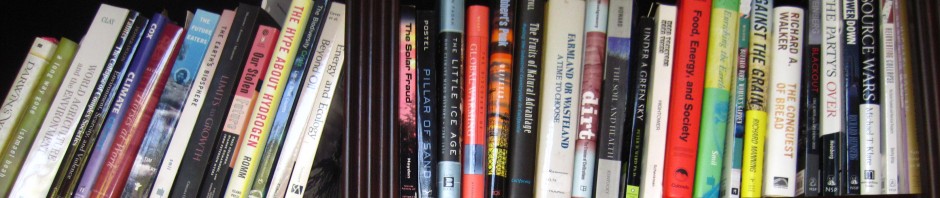

Posted in Refining, U.S. Congress Transportation | Comments Off on How fuel prices are being affected by the current boom in domestic oil production

Phosphates add heavy metals such as cadmium to soils

Larsen, A., et al. March 1, 2001. Re-engineering the toilet for sustainable wastewater management. Environmental Science and Technology Vol 35(9):192-197 

http://www.internal.eawag.ch/~maurer/abstracts/09larsen.html

Current fertilizer production and use consume limited resources and harm the environment. At current extraction rates, reserves of phosphate rock that are economically recoverable with today’s technology will last less than 100 years. (http://minerals.usgs.gov/minerals/pubs/commodity).

In addition to resource limits, phosphate rock has a high heavy metal content, giving rise to hazardous wastes when processed. The cadmium content of phosphate rock, for example, ranges from 0.1 to 850 mg cadmium per kilogram phosphorus. Because these impurities are not entirely removed from the final product, phosphate fertilizer application introduces heavy metals, such as cadmium, which is very toxic, into the soil. This problem will worsen if rock of lesser quality is used in the future as the resource is expended.

There are also impacts associated with hauling raw materials long distances to where they are needed, as well as after their consumption, when nutrients are discharged into lakes, rivers, and oceans, where they cause pollution and are largely unavailable for use in agriculture.

Posted in Hazardous Waste | Comments Off on Phosphates add heavy metals such as cadmium to soils

Peak element and mineral production

Minerals_years_left

Click to enlarge


Posted in Mining, Peak Critical Elements, Peak Platinum Group Elements, Peak Precious Elements, Peak Rare Earth Elements | Tagged , , | Comments Off on Peak element and mineral production

Jeremy Faludi: Your Stuff: If It Isn’t Grown, It Must Be Mined

Below is an excerpt from Jeremy Faludi’s “Your Stuff: If It Isn’t Grown, It Must Be Mined” (25 Dec 2007).

Where does your stuff come from? Before the store, before the factory, where did it really begin? If it isn’t made of wood, cloth, or other living matter, it was dug out of the ground.

Ultimately, one day our industrial economy will be made up entirely of recycled and biologically grown material.  How rapidly are we depleting the minerals we have, and how do we get to sustainable mining?

Current Usage

How much mining is needed to support your life today?

Note that the numbers in the link above do not include tailings, and the ratio of tailings to ore can be huge. The concept of the “ecological rucksack” measures how many kilos of material must be mined (or grown) to produce one kilo of end-product. According to a report by NOAH, the Danish Friends of the Earth, every 1 kg of gold in your hand carries an invisible history of 540,000 kg of material in its ecological rucksack. A few other notable metals in the report: copper 356 kg/kg, stainless steel  23 kg/kg, and virgin aluminum’s is 66 kg/kg, while recycled aluminum is just 1.2 kg/kg. Good ecological rucksack calculations like those in NOAH’s report also include water and air, comprising a somewhat comprehensive measurement of ecological footprint. In addition to the ecological rucksack, there is sometimes a social cost as well.

The Mineral Information Institute even has some cute and informative (if dated) posters on mineral use in daily life.

The USGS has an excellent report, Materials in the Economy—Material Flows, Scarcity, and the Environment, with legions of data.  Much of the non-renewable material we use is invisible to us: “Crushed stone and construction sand and gravel make up as much as three quarters (by weight) of new resources used annually.” You probably don’t go out and buy gravel yourself; it is mostly used to build and repair the roads you drive on.
Peak Minerals

How much mining can the Earth sustain?  Mineral compounds can return to the Earth’s crust on their own, slowly. Steel can rust away in a few decades, and aluminum takes between 200 and 500 years to degrade. (Estimates vary widely, but a page by the state of Nevada has a nice and well-illustrated list of how quickly various materials degrade. Compare Aluminum’s degradation rate to styrofoam’s.) But minerals are clearly a non-renewable resource on the time scale of our lives.

Some researchers have begun to argue that just as we are hitting peak oil, we will soon be hitting peaks for other minerals, and have already passed peaks for some. Italian chemist Ugo Bardi published a research paper on The Oil Drum: Europe in October, whose abstract follows:

We examined the world production of 57 minerals reported in the database of the United States Geological Survey (USGS). Of these, we found 11 cases where production has clearly peaked and is now declining. Several more may be peaking or be close to peaking. Fitting the production curve with a logistic function we see that, in most cases, the ultimate amount extrapolated from the fitting corresponds well to the amount obtained summing the cumulative production so far and the reserves estimated by the USGS. These results are a clear indication that the Hubbert model is valid for the worldwide production of minerals and not just for regional cases. It strongly supports the concept that “Peak oil” is just one of several cases of worldwide peaking and decline of a depletable resource. Many more mineral resources may peak worldwide and start their decline in the near future.

The minerals Bardi and co-author Marco Pagani found to be peaking were Mercury, Tellurium, Lead, Cadmium, Potash, Phosphate rock, Thallium Selenium, Zirconium, Rhenium, and Gallium. Note that most of these are key components in computers and other electronics.

How serious is “peak minerals”? In May, NewScientist released a report with excellent charts plotting expected years to depletion for twenty of the most-used minerals, as well as the percent recycled, the amount an average US consumer will use in their life, and a map of the world showing where the various metals are mined.

According to the report, copper has between 38 and 61 years left before depletion, indium (used in LCD monitors) has between 4 and 13 years, silver (used in catalytic converters and jewelry) has between 9 and 29 years, and antimony (used in flame retardants and some drugs) has between 13 and 30 years. It appears that the market already knows this in a dim way: copper prices have tripled in the past decade, and as the report points out, indium is even worse: “in January 2003 the metal sold for around $60 per kilogram; by August 2006 the price had shot up to over $1000 per kilogram.”

As with peak oil, the economics of this situation both help and hurt. They hurt because higher ore prices make it more economically viable to do larger-scale mining at lower rates of return, causing more destruction per unit of product.

Most mining is currently a toxic catastrophe…in 2000, the US EPA’s Toxics Release Inventory listed metal mining as being responsible for a whopping 47% of all toxic waste released by industry in the country (but less in 2005 because mines have been “offshored” to poorer countries, as well as some better practices).


Posted in ! PEAK EVERYTHING | Comments Off on Jeremy Faludi: Your Stuff: If It Isn’t Grown, It Must Be Mined

Pandemics

As declining energy leads to lower farm yields, malnutrition and starvation will make people far more vulnerable to diseases.  A lack of anti-biotics, and little transportation to get to medical facilities at some point down the oil depletion curve is an especially deadly combination.  But even if energy were plentiful and cheap, we’d be in trouble, as Laurie Garrett explains in her book “Betrayal of Trust: The Collapse of Global Public Health”.

Ill prepared for a pandemic. 6 march 2014. Klaus Stohr. Nature. Vol 507, p 820.

Over the last 500 years, there have been, on average, 3 severe influenza pandemics in each century. The most recent pandemic was declared in 2009. Yet despite much investment in public health and many improvements in vaccine production techniques and know-how, the availability of influenza vaccines during this event was far from adequate: 6 months into the pandemic, 534 million doses were available, and after 1 year that number had risen to 1.3 billion — enough for only 8% and 25%, respectively, of the world population. We were lucky that the pandemic declared in 2009 turned out later to be mild and that just 1 hsoutof vaccine was sufficient to protect most peope. This is not usually the case during a severe influenza pandemic.

Here is wikipedia’s definition of pandemic:  an epidemic of infectious disease that has spread through human populations across a large region or even worldwide. Throughout history there have been a number of pandemics, such as smallpox and tuberculosis. More recent pandemics include the HIV pandemic and the H1N1 pandemics of 1918 and 2009.

The list of pandemics and death tolls in history are in wiki’s List of Pandemics.  Here are the ones where over a million people died:

  •   5,000,000     Roman Empire     165–180     Antonine Plague     smallpox
  •  25,000,000     Eastern Roman (Byzantine) Empire     541–542     Plague of Justinian     bubonic plague
  • 100,000,000     Europe, Asia     1338–1351     Black Death     bubonic plague
  •    1,000,000     Russia     1852–1860     third cholera pandemic     cholera
  •    1,000,000     worldwide     1889–1890     1889–1890 flu pandemic     influenza
  •  75,000,000     worldwide     1918–1920     1918 flu pandemic     influenza
  •    2,000,000     worldwide     1957–1958     Asian flu     influenza
  •    1,000,000     worldwide     1968–1969     Hong Kong flu     influenza

Notable pandemics and epidemics

  • HIV and AIDS
  • Cholera
  • Influenza
  • Typhus
  • Smallpox
  • Measles
  • Tuberculosis
  • Leprosy
  • Malaria
  • Yellow fever

Possible future pandemics:

The world health organization also lists these:

  • Hendra virus infection
  • Leptospirosis
  • Meningitis
  • Nipah virus infection
  • Rift Valey fever
  • tularaemia
  • Viral hepatitis

This is the History Channel’s depiction of the SHingTF during a global pandemic. It makes you think about our future should be loose 2/3’s of the worlds population while watching a family survive wave after wave of attacks by thieves and destitute marauders.

Posted in Disease, Pandemics | Comments Off on Pandemics

Cascading failure + Liebig’s Law + Supply Chain Breakdown = Collapse of civilization

Declining supplies of high-quality, easy-to-get fossil fuels with no alternatives ready to replace themever — is the #1 issue.

As long as we have oil, all problems can be solved, unless oil lasts long enough to deplete every other resource.  Meanwhile it’s a fountain of life, a pill that cures all diseases, allowing the destruction of the most remote rainforests, depletion of all schools of fish, the mining of topsoil over 40% of earth’s surface to farm, ranch, build roads, towns & cities, pull up water hundreds of feet deep for irrigation,  and allows for very long global supply chains to the point where almost no nation can supply its citizens using only locally produced food and goods.

The #2 issue is that all of our infrastructure was built when energy was extremely cheap and plentiful, when oil had an Energy Returned on Energy Invested (EROEI) of 100:1.  Charles Hall believes we need at least a 13 or 14:1 EROI to maintain civilization at the current level.

Now we’re down to as around 10:1 oil EROEI in the USA, and at best 30:1 in the Middle East.  The last oil in the Arctic, even if it can be gotten at with current technology, is probably less than 10:1 and likely to bring on financial collapse.  At worst, there’s a good chance of a world war as nations fight over the last large oil deposits remaining.

We don’t have enough fossil fuels left to replace, let alone maintain our infrastructure:

Concrete. Roads, bridges, buildings, airports, and anything else made of cement is not going to last — a century from now concrete will be nothing but rubble.

Oil & Natural Gas pipelines. The 2.6 million miles of oil and natural gas pipelines are rusting apart. According to the PHMSA, “Pipelines deliver trillions of cubic feet of natural gas and hundreds of billions of tons of liquid petroleum products every year. They are essential: the volumes of energy products they move are well beyond the capacity of other forms of transportation. It would take a constant line of tanker trucks, about 750 per day, loading up and moving out every two minutes, 24 hours a day, seven days a week, to move the volume of even a modest pipeline. The railroad-equivalent of this single pipeline would be a train of 75 2,000-barrel tank rail cars everyday.” (U.S. Dept of transportation pipeline & Hazardous materials Safety Admin).

Coal. Just like oil, coal has peaked, and the easiest to get at and highest energy coal has already been mined.  We’re probably past the “peak energy” of coal, and the dregs are low quality or too remote to mine.  How are you going to transport this remaining coal if the roads and bridges have crumbled?  Even if there were still viable oil or gas pipelines left that happened to be near a coal mine, you’d use up most of the energy in the coal to liquefy it and move it by pipeline.  The clock is ticking on coal mining.

Electric grid: It’s rusting and unprotected from cyberattacks.  In addition, due to deregulation, it’s falling apart and not being taken maintained properly — it used to be triple-plated (a failure in one part still left two other intact components for electricity to flow through and buffer the grid from failure), now it’s barely single-plated. See my Electric Grid Overview for details.

The #3 issue is that supply chain failure from financial collapse, wars, climate change, and social unrest will make maintenance of the existing complex system impossible in some places, and since the world is so inter-dependent, and there are single points of (supply-chain) failure, that will affect even stable, peaceful nations.  Key and essential products absolutely essential to operating today’s complex society will stop being made — forever — because microchips and other specialized tools and vehicles will require fossil fuel energy, materials, infrastructure, and knowledge that won’t be available when the world emerges from the first collapse.

Supply Chain Failure. Read David Korowicz’s “Trade-Off. Financial System Supply-Chain Cross-Contagion: a study in global systemic collapse”.

Climate change caused supply chain failure: Excerpts from Make Supply chains climate-smart. Society’s infrastructure is hit hard by extreme weather. Networks of trade, transport and production need to adapt globally says Anders Levermann. 6 Feb 2014. Nature Vol 506.

Extreme weather — including massive storms such as Typhoon Haiyan and Hurricane Sandy, and severe floods and droughts–is likely to become more frequent and intense as global warming accelerates.  Links in global economic chains and world markets mean that extreme weather in one place can have repercussions elsewhere, such as:

  • High rainfall and Cyclone Yasi in 2010-11 paralyzed the world’s 4th largest region of coal exploration in Queensland, Australia. Coking coal prices rose 25%.
  • Droughts and floods in Russia, Pakistan, and Australia in 2011 caused global food prices to clime, contributing to the escalation of civil unrest in Egypt, Syria, and Saudi Arabia.
  • The devastating flood in Thailand in 2011: The local impact was calamitous. Its effect on hard-disk production made it also a global event causing a worldwide shortage for months afterwards.
  • As protests in Brazil, Turkey, and Greece in recent years have show, societies do not have to be brought to the verge of starvation to descend into turmoil.
  • Disruption to pharmaceutical supply networks is already having deadly consequences. The increasingly complex supply chains for drugs are highly susceptible to blockages, causing shortages of medicines.
  • Pakistan is still suffering from monsoon-induced floods in 2010 and 2011.
  • If hurricanes Sandy & Katrina had hit the US seaboard in the same season as last year’s drought, even the United States might have struggled to cope.
  • The cessation of exports from the Philippines from fisheries and agriculture would affect 6% of US production directly, and secondarily could affect 21% of US Production

Social unrest.  If there is world war III, global financial collapse, or major disruption that takes the world decades to recover from, when stability returns, it will be impossible to return to mining coal, tar sands, and oil and gas extraction.  We’ve left only the remote and difficult energy resources for a future society with mainly wood to use as fuel and not much tech-savvy left. Oil refineries cost tens of billions to build, we only have 30 refineries in the USA all built before the 1980s, by the time the USA recovers from the first collapse/depression, they will have either rusted or been targets of war or terrorism.  There will be very few engineers with experience left to rebuild the complex society we have now.  The infrastructure will be rubble, but this time both the energy and physical resources to rebuild with will not be available.

Microchips. The ability to make microchips will be gone for good, and the kind of machinery you need to get at the remaining coal, oil, and natural gas requires exquisite levels of nanotechnology level computerization and microchips — so no more fracking, mining, not even toasters…   https://energyskeptic.com/2012/we-wont-even-be-able-to-build-toasters/

The #4 problem is that our civilization is a House of Cards — it requires so many material resources, so much energy, and so many kinds of technical knowledge — that any missing pieces and the house can’t be rebuilt. Whatever poorer quality replication (simpler microchips, gravel roads) is attempted in the future won’t ascend nearly as high and will be more prone to collapsing again.  Liebig’s Law ensures that the next societies will never be able to reach the level of civilization we have now.

Liebig’s Law. A shortage of anything means little if anything can be rebuilt, or rebuilt extensively.  After the first collapse, all of the infrastructure will need replacing. To go back to trying to get the remaining remote oil, coal, and natural gas for the energy to do this requires too many components to list.  You’d need to rebuild roads, bridges, mining equipment.  A shortage of anything — knowledge, technology, steel, cement, iron, tools, microchips, container ships, trucks, food, water, plastics would prevent going back to the technology enabled by fossil fuels.

Cascading Failures

Gail Tverberg, at ourfineworld.com gives an example of a cascading failure as what might happen as a result of “oil depletion in Egypt, Syria, and Yemen. All of these countries were at one point oil exporters. They each now have substantial financial problems because of the loss of oil exports. The population of each of these countries has now grown, so there are now many more mouths to feed. Unfortunately, without oil exports, the financial situation is such that it is not possible to provide the level of food subsidies and other benefits that an oil exporter can provide. The result seems to be serious civil disorder that threatens to spread beyond the these countries own borders. See my post Oil and Gas Limits Underlie Syria’s Conflict.”

These factors work synergistically, and any one factor can create cascading failures in all the others.

No wonder world leaders deny peak oil.  Stability would vanish in an instant and bring on a permanent crash much sooner if world leaders acknowledged the energy crisis and lack of alternatives to replace fossil fuels.  On the other hand, the lack of critical thinking skills in America is extensive in America it might not matter.  Look at how many believe in endless growth forever (Capitalism), astrology, angels, deny climate change, and so on.  Scientific literacy is so low, and the pressure to always be positive and techno-optimistic so high, that telling the truth to enable people to properly prepare for the future might not make any difference, people believe what they want to believe.

Alice Friedemann

Posted in 3) Fast Crash, Alternative Energy, Cascading Failure, Electricity Infrastructure, Infrastructure & Collapse, Oil & Gas, Predictions, Supply Chains | 2 Comments