Peak Oil, Coal and Natural gas in China

Source: Visual Capitalist (2021) Which countries have the world’s largest coal reserves? The USA has 23% of reserves? I doubt it, the USGS found that nearly half of US coal, in the powder river basin has 35 years left, not 250 years Luppens, James A., et al. 2015. Coal Geology and Assessment of Coal Resources and Reserves in the Powder River Basin, Wyoming and Montana. USGS.

Preface. Below are excerpts from 2 articles.  You may want to read Tverberg’s article here since I left out the charts and included just a few excerpts. Some key points:

  • The world needs growing energy supply to support the world economy. China is increasingly having difficulty with its energy supply. When China has trouble with its energy supplies, the world as a whole has a problem with its growth in energy supplies.
  • China’s shrinking coal and gas reserves will lead to shrinking energy consumption per capita, and that will be extraordinarily traumatic. Population may fall, commodity prices drop to low levels. Debt would tend to default; prices of shares of stock would fall. Many governments would fail. If shrinking energy consumption per capita starts in one country (whether China or elsewhere), it could easily spread to other countries around the world.

Coal especially depends on diesel fuel to be transported by rail or ship since it can’t flow through cheap pipelines like oil or natural gas. When I wrote “When Trucks Stop Running”, 40% of the cargo hauled by rail was coal!!!

Tad Patzek, former chairman of the Department of Petroleum and Geosystems Engineering at the University of Texas, Austin, found that energy-contentwise, global coal peak may have occurred already in 2011. By 2050, remaining coal will provide only half as much energy as today, and carbon emissions from coal will decline 50 % by 2050. Patzek used the same Hubbert methods that successfully predicted peak oil to come to this conclusion (Patzek et al. 2010).

A good percent of remaining coal reserves are lignite with an EROI so low it’s often not worth mining. Consider the knock-on effects of low quality coal and coal shortages on manufacturing, and supply chains in China:

China could face further power shortages this summer despite taking drastic measures to boost coal production, as much of the new supply is of lower quality than before and burns more quickly in power stations. Some utilities in southern China saw coal use rise by nearly 15% in late May from a year ago, but power generation volume remained nearly the same. Increased coal imports by European buyers keen to replace Russian coal and gas supplies have also reduced high-grade coal supplies and pushed international coal prices well above domestic Chinese prices, making imports economically unfeasible for many Chinese power firms. Higher than usual temperatures forecast in eastern and central China this summer may also push up demand for air conditioning, while expected flooding may disrupt power generation from hydropower during the upcoming rainy season (Xu 2022).

And this in turn is halting the production at numerous factories, including those supplying Apple and Tesla. Aluminum production has gone down 7%, cement production 29%, and it’s likely that steel, paper, chemicals, dyes, furniture, soymeal, and glass will production will also be affected (Singh 2021)

The United States is often said to have 250 years of coal reserves.  But that estimate was made in 1974.  A national academy of sciences report in 2007 said they thought the number might be closer to 100 years and recommended the USGS do another survey. And when the USGS did that, and reassessed America’s most important reserve, the Powder River Basin in Wyoming and Montana, where 42% of our coal is produced, they found that at most, 40 years of reserves were left.  Not 250 years. This is the coal that keeps the lights on in much of America. But the only major news media that reported this were U.S. News and World Report and the Pittsburgh post gazette (see my post “USGS: Half of U.S. Coal runs out in 35 years, not 250” for citations).

Clearly other coal reserves need to be re-evaluated again too.  It’s a good bet the reserves in Illinois will go down, since even though coal production is half of what it was 20 years ago, it’s still credited with reserves nearly the size of Montana.

Alice Friedemann  www.energyskeptic.com  Author of Life After Fossil Fuels: A Reality Check on Alternative Energy; When Trucks Stop Running: Energy and the Future of Transportation”, Barriers to Making Algal Biofuels, & “Crunch! Whole Grain Artisan Chips and Crackers”.  Women in ecology  Podcasts: WGBH, Jore, Planet: Critical, Crazy Town, Collapse Chronicles, Derrick Jensen, Practical Prepping, Kunstler 253 &278, Peak Prosperity,  Index of best energyskeptic posts

***

Tverberg, G. 2019. Seven reasons we should not depend on imported goods from China. ourfiniteworld.com

China consumes more fuel for industrial production than the US, India, Russia, and Japan combined. Because so much production has been outsourced to China, we depend on China for a huge percent of the stuff we use.

China’s coal production peaked in 2013, and oil in 2015. In 2018, China imported 71% of its petroleum (either as crude or as products), and 43% of its natural gas. It was the largest importer in the world with respect to both of these fuels.

For many commodities, China consumes over half of the world’s commodity supply. If China’s industrial demand is growing, prices will tend to rise, allowing more of the mineral to be extracted. Higher commodity prices tend to be needed over time because the ores of highest concentration (and otherwise easiest to extract ores) tend to be extracted first. Ores extracted later tend to be more expensive to extract, so higher prices are required for extraction to be profitable.

China is experiencing peak coal. The consequences are that coal prices cannot rise very high is because if they do, the prices of finished goods will need to rise as well. Wages of workers around the world will not rise at the same time because the higher cost of production takes place due to something that is equivalent to “growing inefficiency.” The coal mined is of lower quality, or in thinner seams, or needs to be transported further. This means that more workers and more fuel is needed for each ton of coal extracted. This leaves fewer workers and less fuel for other industrial tasks, so that, in total, the economy can manufacture fewer goods and services. Because of these issues, countries experiencing peak coal are pushed toward economic contraction.

So peak coal, rather than leading to high prices (to compensate for the higher extraction costs),  tends to lead to war, or to tariff fights.

If higher coal prices really were possible over the long term, it would make it possible to open new mines in more distant locations. The location of coal mines is important because transport costs by rail or truck tend to be high.

Based on China’s consumption of diesel and gasoline, it appears that China’s industrial growth suddenly leveled off in 2012 (diesel consumption), while gasoline has risen as China grows their economy more as one of service than industry.

Wang, J.L, et al. 2017. A review of physical supply and EROI of fossil fuels in China. Petroleum Science.

This paper reviews China’s future fossil fuel supply from the perspectives of physical output and net energy output, also known as energy returned on invested (EROI).  For society, net energy – the energy available to society after subtracting the energy needed to produce the energy–is the only true energy.

Net energy analyses show that both coal and oil and gas production show a steady declining trend of EROI (energy return on investment) due to the depletion of shallow-buried coal resources and conventional oil and gas resources, which is generally consistent with the approaching peaks of physical production of fossil fuels.

Peak dates in the literature very considerably due to different assumptions about ultimately recoverable resources (URR), what kind of model was used, and differences in the historic production data.  For example, peak oil production has been predicted to occur from 2002 to 2037 with peak production rates from 140 Mt/year to 236 Mt/year.  So this paper rejects both the very high and very low forecasts, papers that didn’t consider economic factors, and then uses the average result of the remaining studies to come up with these recommended results:

  • 2014: Oil production (conventional) peak of 170 Mt/year.
  • 2021: Oil production (unconventional) peak 65 Mt/year (based on very few papers)
  • 2018: Oil production (conventional and unconventional) peak 230 Mt/year.  9.6 EJ/year)
  • 2040: IEA peak demand 780 Mt/year

Similarly, conventional natural gas production peak estimates range from 2018 to 2049 and peak production from 100 to 400 billion cubic meters (bcm)/year. Recommended results:

  • 2030: Natural gas production (conventional) peak of 190 Bcm/year
  • 2058: Natural gas production (unconventional) peak of 270 Bcm/year.
  • 2040: Natural gas peak. 350 Bcm/year. 13.6 EJ/year
  • 2040: IEA demand 600 Bcm/year

Coal production peak estimates range from 2010 to 2039 at production rates from 2314 to 6096 Mt/year.  In China in 2014, coal provided 73% of total energy supply and 66% of total energy consumption.

  • 2020: Coal peak. 4400 Mt/year.    91.9 EJ/year)

China has had an average annual GDP growth rate of 9.8% from 1978 to 2014 due to an increase in annual energy consumption from 570 million tonnes of coal equivalent per year (Mtce/year) to 4260 Mtce/year, at an average annual growth rate of 5.8% (NBSC 2015), with fossil fuels accounting for 90% of energy consumption.

It’s likely that the role of natural gas will increase, coal will decrease, and oil remain the same share of fossils consumed.   China has been a net oil importer since 1993.

[ My comment: That is, as long as imports are available.  Oil producing nation populations and petrochemical industries have been growing for decades.  If China increases their oil imports, this will affect all other nations, since after oil production nations peak, exports are expected to decline rapidly, i.e. the Export Land Model ].

Net energy or energy  (energy output minus energy input to get that energy)

In the past, fossil fuel resources with high quality (which means very little energy inputs required to extract these resources) were abundant, and their EROI values were usually greater than 30, and up to 100 and over. So there was no great need in the past to be concerned with the fossil fuel net energy outputs or EROIs. However, we have now become aware that the EROI, and hence the amount of energy surplus of fossil fuels to society, has changed recently, due to the rapid depletion of high-quality fossil fuels after 2000 (Wang et al. 2017).

The EROI of China’s overall oil and gas is much lower than that of coal and was forecast to be 9.9 in 2012. Unfortunately, there are no separate studies for the individual oil and gas industries at a national level because oil and gas are usually concomitant and their input data are also mixed. If the input data for oil and gas can be collected separately, it can be expected that the EROI of oil will be lower than gas since China’s oil industry has been developed for years and has entered its mid- and late period, while gas industry is still in its middle and early period.

The energy inputs during the mid- and later period are much larger. For example, the Daqing oil field, the largest oil field in China, has been developed for nearly 60 years and entered its late period. To maintain its production level or reduce its production decline rate, the Daqing oil field has been using advanced enhanced oil recovery (EOR) methods for many years, such as polymer flooding and the alkaline-surfactant-polymer (ASP) flooding method. These methods are well known for their high cost and environmental impact, which in turn leads to lower EROI and declines in the Daqing oil field’s EROI, which is down to 6.4 in 2012.

References

Patzek, T., et al. 2010. A global coal production forecast with multi-Hubbert cycle analysis.
Energy 35: 3109–3122

Singh S (2021) China power crunch spreads, shutting factories and dimming growth outlook. Reuters. https://www.reuters.com/world/china/chinas-power-crunch-begins-weigh-economic-outlook-2021-09-27/

Xu M (2022) Analysis: Quantity over quality – China faces power supply risk despite coal output surge. Reuters
https://www.reuters.com/markets/commodities/quantity-over-quality-china-faces-power-supply-risk-despite-coal-output-surge-2022-06-21/

Posted in EROEI Energy Returned on Energy Invested, Peak Coal, Peak Natural Gas, Peak Oil | Tagged , , , , , | Comments Off on Peak Oil, Coal and Natural gas in China

Richard Heinberg: Energy and Authoritarianism

Preface. Heinberg wrote this a year ago. Brilliant and well structured, he conveys as much in this article as many books, and consolidates what must be many years of research. But Heinberg is not the only one to wonder if peak oil means the end of democracy.

The 2010 German military study said “…people will experience a lowering of living standards due to an increase in unemployment and the cost of oil for their vehicles. Studies reveal that only continuous improvement of individual living conditions provide the basis for tolerant and open societies. Setbacks in economic growth can lead to an increase in the number of votes for extremist and nationalistic parties.”

In his 1981 book “Energy and the National Defense”, University of Kentucky Press, Howard Bucknell said that just as democracy in Greece was founded on slave labor, democracy here was founded on cheap and plentiful energy. Energy decline will be the “most serious and far-reaching challenge faced by our nation since the Civil War”. Democracy requires a large and strong middle class, but an energy decline will shrink the middle class and make it more likely the United States will not be stopped from undertaking military adventures. In times of emergency, the actions we take change our form of government, such as when we sent many Japanese to internment camps during World War II. Bucknell wondered what an energy crisis that lasted for a decade or more would do to our government.
Bucknell doubts a democracy can make the decisions needed to survive before being overwhelmed by the obviously coming energy crisis, because the public’s understanding of the energy situation is so far removed from reality. When given uncertain and contradictory information, the public believes what they want to believe. And politicians rarely attempt to educate the public factually.

How the transition is made is important as well – if prices are used to change energy consumption, there are issues of economic and social inequality. If oil exporters set prices, we risk economic instability, which is likely to lead to social and political instability, which then leads to “demagogues and terrorism”.

The only way dictatorship can be avoided and democracy survive, is to start early and begin moving forward. The faster the transition is made, the less social disorder there’ll be, and time may be shorter than we think.

Bucknell concludes his book with a call to all of us as citizens to intelligently work hard together during the dangers of the next decades. It would be a shame if the epitaph of the great American experiment in democracy were “Canceled due to a lack of energy”.

To see the full length posts on energyskeptic of the German military peak oil study and a book review Bucknell’s book, see:

Summary of German Armed Forces Peak Oil Study

Déjà vu – Lessons learned from the “Peak Oil” crises of 1973 & 1979

Alice Friedemann   www.energyskeptic.com  author of “When Trucks Stop Running: Energy and the Future of Transportation”, 2015, Springer and “Crunch! Whole Grain Artisan Chips and Crackers”. Podcasts: Derrick Jensen, Practical Prepping, KunstlerCast 253, KunstlerCast278, Peak Prosperity , XX2 report

Richard Heinberg. September 16, 2017. Energy and Authoritarianism. PostCarbon

Could declining world energy result in a turn toward authoritarianism by governments around the world? As we will see, there is no simple answer that applies to all countries. However, pursuing the question leads us on an illuminating journey through the labyrinth of relations between energy, economics, and politics.

The International Energy Agency and the Energy Information Administration (part of the U.S. Department of Energy) anticipate an increase in world energy supplies lasting at least until the end of this century. However, these agencies essentially just match supply forecasts to anticipated demand, which they extrapolate from past economic growth and energy usage trends. Independent analysts have been questioning this approach for years, and warn that a decline in world energy supplies—mostly resulting from depletion of fossil fuels—may be fairly imminent, possibly set to commence within the next decade.

Even before the onset of decline in gross world energy production we are probably already beginning to see a fall in per capita energy, and also net energy—energy that is actually useful to society, after subtracting the energy that is used in energy-producing activities (the building of solar panels, the drilling of oil wells, and so on). The ratio of energy returned on energy invested (EROEI) for fossil energy production has tended to fall as high-quality deposits of oil, coal, and natural gas are depleted, and as society relies more on unconventional oil and gas that require more energy for extraction, and on coal that is more deeply buried or that is of lower energy content. Further, renewable energy sources, especially if paired with needed energy storage technologies, tend to have a lower (some say much lower) EROEI than fossil fuels offered during the glory days of world economic growth after World War II. And renewables require energy up front for their manufacture, producing a net energy benefit only later on.

The quantities and qualities of energy available to any society have impacts that ripple through its economy, and hence every aspect of daily life. As Lynn White, Marvin Harris, and other anthropologists have shown, the political and social institutions of every society are determined—in broad strokes, though certainly not in the details—by what Harris called its infrastructure, or its ways of obtaining energy, food, and materials. Abundant, easily transported and stored energy from fossil fuels made industrial expansion possible during the twentieth century, and especially after World War II. This period of turbo-charged economic growth had repercussions in fields as diverse as manufacturing, farming, transportation, and even music (via the electrification of live performance as well as the flourishing of the recording industry). That’s right: your favorite rock band is an epiphenomenon of fossil fuels.

Further, as archaeologist Joseph Tainter has pointed out, societies often use complexity (an increase in the variety of tools and institutions) as a means of solving problems. But complexity carries energy costs, and the deployment of complexity as a problem-solving strategy is subject to diminishing returns. Tainter argues that this is a comprehensive explanation for the historic collapse of civilizations—one that has obvious implications for our own society: clearly, if its energy supplies are compromised, its capacity to successfully deploy complexity to solve problems will be impaired.

All of which suggests that if and when energy sources decline, industrial societies will face systemic challenges on a scale far beyond anything seen in recent decades. In this essay, I propose to examine just one area of impact—the realm of politics and governance. Specifically, I address the question of whether (and which) societies will have a high probability of turning toward authoritarian forms of government in response to energy challenges. However, as we will see, energy decline is far from being the only possible driver of authoritarian political change.

The Anthropology and History of Authoritarianism and Democracy

It is often asserted that democracy began in ancient Greece. While there is some truth to the statement, it is also misleading. Many pre-agricultural societies tended to be highly egalitarian, with most or all members contributing to significant decisions. Animal-herding societies were an exception: they tended to be patriarchal (men made most decisions), and, among men, elders and those with more property (women, children, and captives were treated as chattel) held sway. (Herders, whose social relations reflect the harshness of their environment, typically live in places unfit for farming, such as deserts.) A good example of democracy completely independent of the Greek tradition is the Iroquois confederacy of the American northeast, whose inclusive decision-making system incorporated checks and balances; it served as an inspiration for colonists seeking to design a democratic government for themselves as they threw off the yoke of British rule.

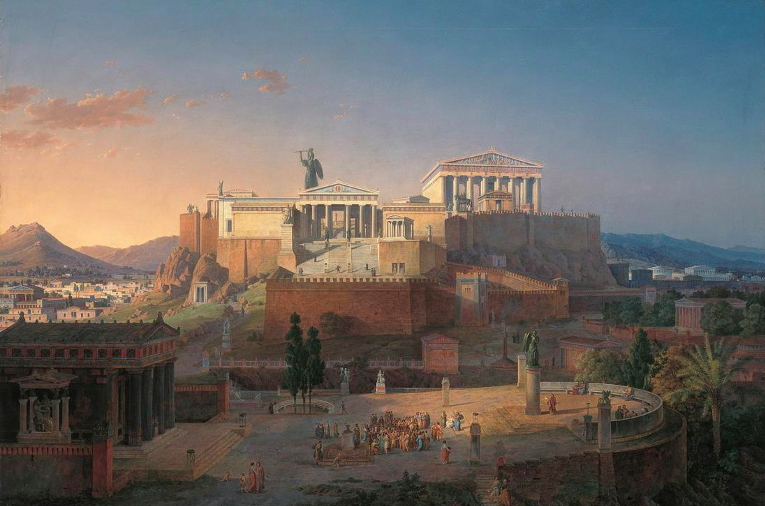
Early agricultural societies were often rigidly authoritarian. Marvin Harris explained this development in infrastructural terms: stored grain surpluses required management and distribution authority, as did irrigation systems. But the appropriation of so much power by an individual or family required further justification; hence new sky-god religions emerged, valorizing kings and pharaohs as wielders of divine power. Greece, however, differed from Egypt and other “hydraulic” civilizations (i.e., ones based on huge irrigation systems): it enjoyed enough rainfall so that irrigation wasn’t required. Farmers could grow diverse crops independently, without relying on state controls over water and grain. Hence it was in Athens that democracy emerged (or re-emerged) as a political system—imperfect though it may have been (Attica’s total population was likely between 150,000 and 250,000, but free citizens numbered only 20,000 to 30,000: women, slaves, and foreigners could not participate in the public process of making decisions).

Prior to the fossil fuel era, Europe enjoyed a significant injection of wealth from its sail-based pillaging of much of the rest of the world. Merchants, as a social class, began to jostle against the aristocracy and clergy, previous holders of political power. Wealth and abundant energy supported the development of science and philosophy, which—when combined with newer technologies like the printing press—helped usher in the age of reason. The autocratic rationale for rule, “because God granted me divine power,” no longer seemed reasonable. In Britain, the monarchy began reluctantly to cede some of its authority to parliament during the mid-seventeenth century; then, a little over a century later, thirteen of Britain’s colonies in North America rebelled and formed a federated republic. Revolution in France further stoked demands throughout Europe and elsewhere—by philosophers and commoners alike—for wider distribution of political power.

In modern times, industrial expansion based on abundant energy from fossil fuels has led to urbanization and to the employment of much of the population in factory, sales, and managerial positions. This detachment of people from land has in turn produced greater geographic and social mobility, as well as opportunities to organize collective demands for power sharing (via trade unions and political organizations of all kinds), including women’s suffrage. Democracy has spread to more and more nations—always kept at least partly in check by centralized economic and military power. Meanwhile, an ever-greater mobility of capital, goods, information, and people has also led to the geographic expansion of polities—nations of larger size, alliances between nations, trade blocs, and an intergovernmental organization offering membership to all countries (the United Nations).

Now, in all likelihood, comes an era of declining and reversing economic growth, as well as reduced mobility. Existing forms of government will be challenged. Ultimately, larger political units may tend to break up into smaller ones, and many democracies may be vulnerable to authoritarian takeover. But the risks will vary significantly by country, based on geography and local history.

How Nations Succumb to Authoritarian Takeover

Before exploring those risks, it may be helpful to review the four main ways in which democracies have changed into authoritarian regimes in recent history.

  1. Election of a dictator. Mussolini initially came to power in Italy through election, as did Hitler in Germany, Ferdinand Marcos in the Philippines, and “Papa Doc” Duvalier in Haiti. Why do people elect authoritarians? Typically, they do so because they feel threatened—by a foreign or domestic enemy, or by hard times—and want a strong man to take charge. Usually the elected authoritarian-in-waiting only assumes dictatorial power later, without asking the consent of the electorate. For example: in a recent essay, Ugo Bardi recounts how declining exports of British coal to Italy after World War I led to an energy famine, which in turn resulted in riots, shifting political alliances, and the rise of Mussolini and the Fascists.

The following brief representative picture of how an authoritarian leader can take total power following election is from journalist Tim Rogers, recounting Nicaraguan leader Daniel Ortega’s ascendancy:

“When Daniel Ortega was elected president in 2006 with a twiggy 38 percent victory, Nicaragua had a constitutional ban on consecutive reelection as a safeguard against dictatorship. . . . Eleven years later, Ortega is starting his third consecutive term as president after rewriting the constitution, banning opposition parties, and consolidating all branches of government under his personal control. Ortega orchestrated his power grab by polarizing the country, dividing the opposition, attacking congress, demonizing the press, forbidding protest, demanding personal loyalty from all government workers, and turning all his public appearances into campaign rallies for his core base of supporters. He institutionalized his cult of personality and normalized . . . threats of violence and chaos. . . .”

  1. Military coup. The list of military dictatorships in recent decades is long. Clayton Thyne and Jonathan Powell maintain a coup dataset, according to which there were 457 coup attempts worldwide from 1950 to 2010, most by military factions. Of these, about half were successful. The reason military putsches are so common is not hard to discern: the taking of power by armed force is likely to be most often—and most successfully—attempted by those who are already professionalized wielders of weaponry.
  2. Foreign interference or foreign support for a coup. If a powerful nation wishes to exert near-total control over a weaker country, one of the most effective ways to do so is to install a puppet dictator who can then be bribed and threatened. This is a strategy the United States has deployed often, beginning early in the twentieth century with its support for dictators in Central and South America. Also, in the early 1950s, the U.S. supported Shah Pahlevi over Iran’s elected President Mohammad Mossadegh, leading to decades of dictatorship there. However, the U.S. is far from the only country to have ruled other nations by remote control: Britain, France, and Russia/USSR did the same in one instance or another.
  3. Revolution. Most revolutions are fought against authoritarian regimes or foreign rulers. On rare occasions, however, the people—typically a rambunctious faction of the people—attempt to overthrow an elected government in favor of a would-be dictator. Such revolutions are usually more accurately described as civil wars. Coups in which an elected leader is overthrown in favor of an authoritarian with the help of foreign influence can be stage-managed to appear as revolutions (this happened in the case of Mossadegh in Iran). More frequently, however, revolutions that are widely intended to result in democratic reforms eventually result in the coalescing or emergence of an authoritarian regime (for example, in France at the end of the 18th century, in Russia in 1917, in China in 1949, in Cuba in 1959, and in Cambodia in 1963).

Risk Factors for Authoritarian Takeover

Economic decline led by energy decline probably won’t automatically result in despotism, just as industrialism and economic expansion didn’t everywhere lead to democracy. What are the circumstances that are likely to push nations to adopt more authoritarian governments?

Below are some notable risk factors (this is not an exhaustive list). From here on, I will occasionally refer to the Democracy Index (compiled by the UK-based Economist Intelligence Unit), which seeks to measure the state of democracy in 167 countries based on 60 indicators.

  • Economic decline or instability. Periods of high joblessness, disappearing savings, and declining incomes can lead to widespread dissatisfaction with government, offering an opening for demagogues, military coups, revolutions, or foreign takeovers.
  • Weak democratic institutions with a short history. Democracy is a habit that needs reinforcement. It also needs institutions—parties and election machinery (polling places, fair counting of ballots, etc.). If those institutions have shallow roots, it is easier for them to be undermined or corrupted.
  • Dysfunctional media. Democracy only functions if the public is well informed with regard to issues and the actions of government. Media organizations can become weak, dominated by special interests, polarized, or suppressed by government. Their ownership can be consolidated by a few companies with similar political interests. In our current age of electronic information, media are vulnerable to outright propaganda, “fake news” (i.e., reporting characterized by ideologically spun, inaccurate, or even wholly invented stories), and the clever use of social media (bots and trolls).
  • High and growing levels of economic inequality. Some of the early observers of democracies, including Toqueville, noted that procedural democracy (equality before the law, universal voting rights, the right to express oneself in the political sphere) can be undermined by the power of wealth. Rich people can buy influence in ways both obvious and subtle. This is why healthy democracy is often correlated with progressive taxation and the availability of government-run social programs for those who are unemployed, retired, or sick.
  • Simmering resentments among social/racial/religious/ethnic groups, offering fodder for scapegoating. In hard times, demagogues can play upon such resentments to gain support and take power.
  • Deep political polarization. Polarization drains people’s attention from areas of shared interest and potential cooperation, and focuses it instead on points of disagreement. As each party demonizes the other, former political extremists may find their way into the mainstream. Polarization can offer an opening for a demagogue who promises to trounce the opposition party once and for all, if given dictatorial powers.
  • Weak financial systems heavily dependent on debt. As economic historians have shown, heavy reliance on debt always results in an eventual financial crash. See “economic decline” above.
  • Special vulnerability to foreign influence or takeover. If a country is militarily weak but has a strategically significant geographic location (for example, along the route of an important oil or gas pipeline), or if the country happens to possess strategically important resources (minerals or fossil fuels), more powerful nations are likely to have a keen interest in keeping that country controllable.
  • A powerful military with a history of domestic intervention. If social chaos ensues for whatever reason, the military is likely to step in; and when it does it is more inclined to install a dictator than to restore or build a democratic system. That’s because the military itself, in virtually every nation, has an authoritarian internal structure. (The Iroquois insisted that peace chiefs be different from war chiefs—an idea borrowed by the framers of the U.S. Constitution, which specifies that no acting military leader may assume the presidency).
  • Special vulnerability to climate change or other environmental disasters. People don’t inevitably turn to strong leaders after natural disaster. Over the short term, they tend instead to band together. Old grievances tend to be temporarily forgotten, and distinctions between rich and poor are at least somewhat erased. However, over the longer term, ecological disruption can lead to scapegoating and either revolution or a turn toward strong men who promise to restore order. For example, the Syrian civil war, which began in 2011, was preceded by a long and devastating regional drought linked to climate change; refugees from the countryside flooded cities, straining infrastructure already burdened by the influx of some 1.5 million refugees from the Iraq War. These refugees provided recruits for the Free Syrian Army, which rebelled against the authoritarian Assad regime.
  • High population growth rate. Nations with high fertility rates typically find it difficult to overcome poverty, absent a robust resource-exporting economy. Indeed, of the ten nations that currently have the highest population growth rates (Lebanon, Zimbabwe, South Sudan, Jordan, Qatar, Malawi, Niger, Burundi, Uganda, and Libya), seven have fully authoritarian regimes according to the Democracy Index, while three have “hybrid” governments; only two (Qatar and Lebanon) have a per-capita GDP higher than the world average. As world energy declines, countries with fast-growing populations will probably see higher-than-typical per-capita decline rates in energy usage, likely leading to economic and social instability.

Most of the above might be considered generic risk factors, in that they apply to all societies even without taking energy decline into account. Other risk factors are more directly related to potential energy supply problems:

  • A high dependency on food imports. History has shown (for example, in Egypt in 2011) that food shortages can rapidly lead to social unrest and ultimately to revolution or authoritarian takeover. High food import dependency is therefore a point of vulnerability in societies given the likelihood that energy decline will also entail a decline in mobility, including the movement of food and other necessary goods.
  • Government’s budget tied to fossil fuel export revenues. If a government derives most of its revenues from fossil fuel exports, it will eventually face a declining revenue stream. Even Saudi Arabia, which has been a top oil exporter for decades, recognizes this (it is an authoritarian monarchy; several other major oil exporters are likewise classified as authoritarian regimes by the Democracy Index). Norway has sought to prepare for the inevitable by saving its oil export revenues in a permanent investment fund; currently that nation enjoys the highest rating of any country on the Democracy Index, and its citizens also rank high in terms of per capita income and self-reported happiness.
  • High per capita energy usage. Countries that have high per capita rates of energy usage have further to fall as energy becomes harder to produce. Countries with low rates of per capita usage typically already have ways of meeting basic needs relatively simply and directly—with a higher percentage of the total population engaged in food production, and a more robust informal economy.
  • High dependency on energy imports. If heavy dependence on revenue from fossil fuel exports can constitute a vulnerability for democracies, heavy dependence on imports can as well. Even though the U.S. was a major oil producer throughout the twentieth century, by 1970 it was increasingly dependent on imported crude; hence it faced economic hardship due to the 1970s Arab oil embargo.

There is something missing from these lists that is hard to define but nevertheless crucial to our present discussion. Perhaps Pankaj Mishra captures it best in his recent, difficult book, The Age of Anger. There he describes how, from its beginnings in the eighteenth century, modern capitalist, urban, industrial life disrupted previous patterns of settled existence. People lost their connections with land and tribe, and traditional livelihoods, and hence some essential aspects of their identity. In return, economic liberalism promised mobility, comfort, and intellectual and moral advancement. Instead many experienced anonymity and alienation, and the result was widespread resentment. This in turn led to decades of revolution and terrorism in Europe throughout the nineteenth century, with many prominent assassinations (U.S. President McKinley, French President Marie François Sadi Carnot, Bavarian Prime Minister Kurt Eisner, Russian Czar Alexander II, Serbian King Aleksandar Obrenović, Spanish Prime Minister Juan Prim, and many others) as well as bombings and other violent events.

Today urbanization, commercialization, and technological disruption are proceeding at a faster pace than ever and reaching billions in formerly rural nations in East and South Asia, the Middle East, and Africa. Millions of young people are being educated for life as consumers and workers, yet are finding the promises of “development” ringing hollow. Unemployment rates among young males are often very high in these nations, and young men educated for urban industrial life are being attracted to militant fundamentalism. The rise of militant fundamentalism, along with high rates of immigration from fast-urbanizing countries, generates fear in the first-wave industrialized countries—a fear that leads to a rise in “traditionalism” and a turn toward authoritarian leaders who promise to suppress terrorism and reduce immigration. In effect, for both the young Islamist radical and the older Trump voter, tribalism is a powerful motivator. We will return to this subject later as we consider ways to counter or mitigate risks to democracy.

Typically, a surplus of unemployed young males also increases the likelihood of war. During wartime, the combatants gain a sharper sense of meaning and purpose. Democracy seldom flourishes during war, though it can persist and blossom anew afterward.

Clearly, nations are in widely varying circumstances, with different areas and degrees of vulnerability to energy decline; and they are thus likely to react differently to the ensuing economic stresses. Full “democracies” according to the Democracy Index (Norway, Canada, New Zealand, etc.) are probably best situated to respond in ways that preserve democratic institutions and traditions. Nations currently listed by the Democracy Index as “flawed democracies” (United States, Philippines, Indonesia, etc.) are probably most at risk of shifting further toward authoritarianism via election. Countries that are currently “hybrid states” (Turkey, Venezuela, Pakistan, etc.) or “authoritarian” (Russia, Egypt, China, etc.) are more likely to experience revolutions or coups.

Countering the Risks to Democracy

How could nations in the “democracy” or “flawed democracy” categories resist a tendency to slide toward authoritarianism? It stands to reason that, if risk factors are present, reducing vulnerability would entail countering those factors as much as possible:

  • Build and support independent media. Governments and leaders should resist the temptation to favor media outlets that simply parrot their own talking points, or that disparage current leaders’ enemies. Maintain full press freedoms, including legal protections for journalists.
  • Work to limit climate change and other ecological drivers of human misery. This includes not only efforts to adapt to higher sea levels, but also to reform agricultural practices (carbon farming) and dramatically reduce carbon emissions in transportation and manufacturing.
  • Work to reduce extreme political polarization. Avoid wedge issues. Nations with more than two major parties sometimes fare better at avoiding polarization.
  • Support and strengthen democratic institutions. Prioritize fair elections (universal voting rights, public financing of campaigns, limits to campaign contributions, plenty of accessible polling stations that are open a sufficient number of hours, transparent methods of ballot counting).
  • Promote tolerance. For a nation, ethnic, religious, and cultural homogeneity can be an asset in avoiding political unrest during hard times. But many nations are ethnically, religiously, and culturally diverse, and any effort to reduce that diversity would necessarily entail human rights violations. Nations with diverse populations must simply make the best of the situation, celebrating and honoring their diversity and protecting minorities.
  • Discourage inequality. Most nations already counter economic inequality through progressive taxation and social welfare programs. But economic stresses from energy decline will require more creative thinking and experimentation, including encouraging worker-owned cooperatives and discouraging shareholder-owned corporations; implementing high inheritance taxes with no loopholes; and finding ways to reduce the role of debt in society.
  • Minimize power of military and intelligence agencies. Keep the military separate from governance institutions. Keep the military budget within modest bounds. Don’t over-glamorize the military. And don’t permit “black ops” or domestic surveillance.
  • Build low-energy infrastructure, habits, informal economy. This implies a change of direction for most nations, which tend to be hooked on large-scale infrastructure projects (highways, airports) that lock in energy dependency. Promote low-energy ways of providing for basic human needs, such as solar hot water heaters and cookers, walking, and bicycling.
  • Promote population stabilization. Support family planning and elevate the social status of women.
  • Build local food production capacity. Support small farmers, local food, and agriculture that minimizes dependence on fossil fuel inputs.
  • Stabilize the financial system. Reduce reliance on debt in every way possible, shrinking the size of the financial system relative to the “real” economy of goods and services.
  • Decentralize both the economy and the political system. Encourage distributed energy, local currencies, and local food. Allow city and regional governments to make all decisions except those that require national or international deliberation.
  • Avoid being the target of foreign political meddling. Maintain vigilance with regard to electronic and propaganda warfare. Don’t take on big international loans.

These recommendations are far easier to spell out than to carry out. And at least two of them are seemingly at odds with each other: a nation that keeps its military and defense budgets at minimum levels might be more likely to be the target of foreign meddling or intervention. Further, while most democracies are making at least some efforts along some of these lines, in many cases they are being overwhelmed by trends toward increasing polarization of politics and media, and increasing economic inequality.

Further, most of the above recommendations fall within the bounds of modern liberal norms and discourse. But, as we have seen, the entire project of industrial and social “progress,” as framed within the liberal economic tradition, has produced whole classes of casualties and rebels. The endemic risks to urban, capitalist, industrial societies stemming from the resentment and alienation described by Mishra—that lead increasingly to terrorism, religious fundamentalism, and authoritarianism—are inherently difficult to track or counter. To defuse this deep, amorphous threat to democratic values and institutions, perhaps something more is needed beyond the mere strengthening of media and democratic institutions—something that ties people back to the land and gives them both a “tribal” identity and a larger sense of purpose. A new religion might fit the need, but it is difficult to summon one at will. If advocates of democracy and cultural pluralism continue to fail to fill this void, authoritarians of various stripes will certainly seek to do so.

Are Dictatorships or Democracies Better at Responding to Energy-Economy Decline?

In the contemporary world, democracy is widely (though not universally) prized over authoritarian forms of government. This is certainly understandable: authoritarianism leads to the regimentation of thought and behavior, and often to the subjection of large segments of the population to psychological and/or physical violence. But are democracies inherently superior to authoritarian regimes in dealing with crises such as energy decline, climate change, resource depletion, overpopulation, and financial instability?

To adapt proactively to environmental limits and impending scarcity, governments may have to do some unpopular things. Restrictions on consumption (such as rationing) may be required, along with the encouraging of smaller families. Such policies cannot help but rankle, following decades of rising economic expectations. Economic redistribution could help reduce the stress of scarcity for a majority of the populace, but many will still resent the new conditions. Elected leaders may find it difficult to maintain sufficient popular support for such policies. Could authoritarian regimes fare better? A few historic examples come to mind.

During the early 1990s, Cuba saw a sharp decline in energy supply due to a cutoff of low-cost oil imports from the now-defunct Soviet Union. At the time, Cuba’s food system was highly centralized and dependent on oil-fueled farm machinery and food transport. Cuban leaders responded to the crisis by decentralizing food production, reducing fuel inputs, and encouraging urban gardening. The result was a rapid and thorough restructuring of the nation’s food system that averted widespread famine. It is unclear whether such measures would have been feasible outside a command-and-control authoritarian political context.

Both China and Iran managed to substantially reduce their nations’ high birth rates—China (beginning in the 1970s) via its compulsory one-child policy, and Iran (starting in the 1980s) through vigorous but voluntary family planning efforts. Both nations formulated and managed these programs via top-down, centralized, and authoritarian methods.

These examples might suggest that authoritarian regimes are inherently more resilient than democracies. However, there are instances where authoritarian regimes have instead proven brittle. For example, when Soviet Union failed to deal with economic decline in the 1980s the government collapsed, as did the nation’s economy. In contrast, some democracies (such as the U.S. during the Great Depression and Britain in the 1930s and ’40s) have persisted during privation, though somewhat authoritarian temporary measures were instituted, including greater control of the media by government.

Many authoritarian regimes are poorly situated to help the populace weather economic crisis simply because their leaders are too obsessed with self-enrichment, self-aggrandizement, and self-protection. It could be argued that if a society is already impoverished due to the incompetence of its authoritarian leadership, its people will have fewer expectations to be dashed, and their standard of living will not have as far to fall before hitting subsistence level. But this is faint encouragement. There must be some better recommendation for today’s nations than “crash your economy and suppress your people’s aspirations now, so that they won’t be disappointed later.”

*          *          *

The relationship between energy, the economy, and politics is messy and complicated. There is not a simple 1:1 correlation between energy growth and economic growth: the Great Depression occurred in the United States despite the presence of abundant energy resources. Similarly, there will probably not be a strict correlation between energy decline and economic contraction.

One important wild card is the role of debt: it enables us to consume now while promising to pay later. Debt can therefore push consumption forward in time and (for a while, at least) make up for declining energy productivity. It would appear that the “fracking” boom of the past decade, which probably delayed the world oil production peak by about a decade, depended on the power of debt. But when debt defaults cascade, an economy may decline much faster than would otherwise be the case (default-led financial crashes have occurred repeatedly in modern history). And debt defaults can cripple the financial and thus the economic system of a nation with plenty of energy resources (as happened in the U.S. in the 1930s).

As we have seen, dictatorships can sometimes adapt well to scarcity. We can only hope that, if scarcity does indeed lie in our immediate future, authoritarian leaders will minimize rather than add to their people’s suffering. Similarly, we should hope that everyone in democracies has access to information that helps them make collective choices that lead to successful adaptation to inevitable, impending scarcity. Unfortunately, flawed democracies may be particularly vulnerable when energy supplies decline. Given their political polarization and saturation with “fake news,” they are more likely to succumb to demagogues who promise to return the nation to a condition of abundance if granted extraordinary powers.

It is highly likely that, as events unfold, the causal criticality of energy decline will be hidden from the view of most observers, whose attention will be fixed instead on shocking but comparatively superficial and secondary political and social events. A more widespread understanding of the role of energy in society, and of the likely limits to future energy supplies, could be extremely beneficial in helping the general populace adapt to scarcity and avoid needless scapegoating and violence. Perhaps this essay can help in some small way to deepen that understanding.

Posted in Collapsed & collapsing nations, Energy Policy & Politicians, Richard Heinberg | Tagged , , , | Comments Off on Richard Heinberg: Energy and Authoritarianism

Rising Sea Levels – What to do?

Preface. I first published this in June 2014, but thought I’d re-update it now that $2.5 million is going to be spent by Resilient by Design on 10 teams to come up with solutions for rising sea levelsThey failed to come up with anything useful:

  1. Resilient by Design Bay Area Challenge Proposals Unveiled (Part 1)
  2. Resilient by Design Bay Area Challenge Proposals Unveiled (Part 2)

The problem with levees and seawalls are that they just push the water to higher flooding levels where to protection exists.  See my energyskeptic book review of “Battling the Inland Sea” about the building of the levee system in California in the 19th century for more lessons to be learned from the past.

The only solution I can see that makes any sense is the one to dredge vast amounts of the bay to create wetlands that extend out from the shore the required distance.

Frederikse et al (2020) have found that without 58,000 large dams in the world holding back so much water, sea level rise would be around 12% higher today.  Since dams have a lifespan of 60 to 100 years on average, at some point that water will gush back into the ocean, raising sea levels.  It would take five times as many new dams to stop the current rate of sea level rise, with few places to put them.

Alice Friedemann   www.energyskeptic.com  author of  “Life After Fossil Fuels: A Reality Check on Alternative Energy”, 2021, Springer; “When Trucks Stop Running: Energy and the Future of Transportation”, 2015, Springer and “Crunch! Whole Grain Artisan Chips and Crackers”. Podcasts: Derrick Jensen, Practical Prepping, KunstlerCast 253, KunstlerCast278, Peak Prosperity , XX2 report ]

What Can be done?

Levees and Seawalls. Protecting California from a 1.4 meter rise in sea level would require 1,100 miles of levees and seawalls, and would cost roughly $14 billion (table 1) to build and $1.4 billion a year to operate and maintain it. No one is going to spend $14 billion on this, because there’s no guarantee the levees and seawalls would work, and the sea is going to keep rising for millennia, constantly overtopping whatever is put in place. An unusually large storm event can also cause it to rupture like the levees in New Orleans during Hurricane Katrina, even if it has been well maintained.

Paradoxically, it increases vulnerability. Hard shoreline protection is not as effective as natural shorelines at dissipating the energy from waves and tides. As a result, armored shorelines tend to be more vulnerable to erosion, and to increase erosion of nearby beaches. Structural flood protection can also increase human vulnerability by giving people a false sense of security and encouraging development in areas that are vulnerable to flooding.

Barriers are ecologically damaging and would harm the Bay’s salinity, sedimentation, wetlands, wildlife and endangered species, and increase sedimentation, making parts of the Bay shallower, while increasing coastal erosion.

A huge dike under the Golden Gate bridge won’t work for many reasons – it would cost four times as much as the Three Gorges Dam, and California gets huge floods (i.e. Arkstorm). If the dike were up to protect from rising sea levels, we’d be flooded from inland water with upstream flooding in the freshwater tributaries of the Bay.

Elevated development is a short-term strategy. Unless it’s on stilts directly over water, characteristics of shorelines are altered and will need protection just like low-lying development. Its advantage is merely that it is not threatened by sea level rise for a longer time. We don’t know if higher land or structures will support high-density, transit-oriented new development. Much of our region’s high-density neighborhoods and transit are near the Bay’s shoreline. If low-density development is allowed along the shoreline, it could increase global warming emissions, and may not warrant expensive protection measures in the future.

Floating development: structures that float on the surface of the water or that float during floods or tides. Floating development works only in protected areas, not in areas subject to wind and wave action from storms, such as the ocean coastline. This type of development has not yet been demonstrated in high-density cities. From an engineering perspective, many structures can be built to float, though they cannot be retrofitted to do so.

Floodable development: structures designed to handle flooding or retain stormwater. Floodable development could be hazardous. Stormwater, particularly at the seaward end of a watershed, is usually polluted with heavy metals and organic chemicals, in addition to sediment and bacteria. Large quantities of stormwater sitting on the surface, or in underground storage facilities, could pose a public health hazard during a flood or leave contamination behind. This could be a particular problem in areas with combined sewer systems, such as San Francisco, where wastewater and street runoff go to the same treatment system. Also, wastewater treatment systems that commonly treat the hazards of combined sewer effluent before releasing it into the Bay do not work well with salt water mixed in. If floodable development strategies are designed to hold and release brackish water, new treatment methods will be needed for the released water to meet water quality standards. Finally, emergency communication tools and extensive public outreach and management would be required to prevent people from misusing or getting trapped in flooding zones. Floodable development is untested. We don’t know if buildings and infrastructure can be designed or retrofitted to accommodate occasional flooding in a cost-effective way. It is not clear exactly how much volume new floodable development tools will hold. Some of the more heavily engineered solutions, such as a water-holding parking garage, may not turn out to be more beneficial than armoring or investments in upsizing an existing wastewater system.

Living shorelines. Wetlands are natural and absorb floods, slow erosion, and provide habitat. Living shorelines require space and time to work. Wetlands are generally “thicker” than linear armoring strategies such as levees, so they need more land. They also require management, monitoring and time to become established. Living shorelines are naturally adaptive to sea level rise, as long as two conditions are present. The first condition is that it must have space to migrate landward. The second condition is that they must be sufficiently supplied with sediment to be able to “keep up” with sea level rise. Due to the many dams and modified hydrology of the Delta and its major rivers, this is a concern for restoration success in San Francisco Bay. Wetlands will never be restored to their historic extent along the Bay, in part because of the cost of moving development inland from urbanized areas at the water’s edge. Important challenges for our region will be determining how much flooding new tidal marshes could attenuate, restoring them in appropriate places, and conducting restoration at a faster rate than we would without the looming threat of rising seas.

Managed Retreat. Abandon threatened areas near the shoreline. This strategy is a political quagmire. It involves tremendous legal and equity issues, because not all property owners are willing sellers. And in many places, shoreline communities are already disadvantaged and lack the adaptive capacity to relocate. In addition, retreat may require costs beyond relocation or property costs if site cleanup — such as to remove toxics — is needed following demolition

Consequences for the ports and airports

The main problem for shipping is not the port. It’s the roads and railroad tracks surrounding the port that are vulnerable, many of them less than 10 feet above sea level, and there’s nowhere to move them. Raising them would make them vulnerable to erosion and liquefied soils from floods or earthquakes.

An even bigger deal would be any harm done to the Port of Los Angeles-Long Beach, which handles 45%–50% of the containers shipped into the United States. Of these containers, 77% leave California—half by train and half by truck (Christensen 2008).

The Port of Los Angeles estimates that $2.85 billion in container terminals will need to be replaced. If the port is shut down for any reason, the cost is roughly $1 billion per day as economic impacts ripple through the economy as shipments are delayed or re-routed according to the National Oceanic and Atmospheric Administration 2008-2017 Strategic Plan. Replacing the roads, rails, and grade separations nearby would cost $1 billion. If the port’s electrical infrastructure were damaged, equipment such as cranes would be non-operational and cause delays and disruptions in cargo loading and offloading. These would cost $350 million to replace. The port also has an 8.5 mile breakwater that prevents waves from entering the harbor with two openings to allow ships to enter the port. An impaired breakwater would render shipping terminals unusable and interrupt flows of cargo. The breakwater has a $500 million replacement value and is managed by the Army Corps of Engineers.

Airports. Meanwhile, all of the airports in the SF Bay area are vulnerable to sea level rise, especially San Francisco and Oakland. In 2007, the Oakland International airport transported 15 million passengers and 647,000 metric tons of freight. San Francisco International Airport is the nation’s 13th busiest airport, transporting 36 million people in 2007 and handling 560,000 metric tons of freight $25 billion in exports and $32 billion in imports, more than double the $23.7 billion handled by vessels at the Port of Oakland.

County                        Miles of levees & Seawalls     Cost 2000 dollars

Alameda                      110                              $   950,000,000

Del Norte                    39                                $   330,000,000

Contra Costa               63                                $   520,000,000

Humboldt                    42                                $   460,000,000

Los Angeles                94                                $2,600,000,000

Marin                           130                              $   930,000,000

Mendocino                  1                                  $     34,000,000

Monterey                     53                                $   650,000,000

Napa                            64                                $   490,000,000

Orange                        77                                $1,900,000,000

San Diego                   47                                $1,300,000,000

San Luis Obispo          13                                $   210,000,000

San Mateo                   73                                $   580,000,000

Santa Barbara              13                                $   180,000,000

Santa Clara                  51                                $   160,000,000

Santa Cruz                  15                                $   280,000,000

Solano                         73                                $   720,000,000

Sonoma                       47                                $   240,000,000

Ventura                       29                                $   790,000,000

Table 1. $14,000,000,000 cost to build 1,100 miles of defenses needed to guard against flooding from a 1.4 m sea-level rise, by county.

It’s not just California that faces this — globally, scientists have found that 269 airports are at risk of coastal flooding now. A temperature rise of 2C – consistent with the Paris Agreement – would lead to 100 airports being below mean sea level and 364 airports at risk of flooding. If global mean temperature rise exceeds this then as many as 572 airports will be at risk by 2100, leading to major disruptions without appropriate adaptation (Yesudian 2021).

References

Copeland, B, et al. November 24, 2012 What Could Disappear. Maps of 24 USA cities flooded as sea level rises. New York Times.

Grifman, P., et al. 2013. Sea level Rise Vulnerability Study for the City of Los Angeles. University of Southern California.

Heberger, M. et al. May 2009. The Impacts of Sea-Level rise on the California Coast. Pacific Institute.

Conti, K., et al. Nov 20, 2007. “Analysis of a Tidal Barrage at the Golden Gate,” BCDC

Frederikse T et al (2020) The causes of sea-level rise since 1900. Nature 584.

Preliminary Study of the Effect of Sea Level Rise on the Resources of the Hayward Shoreline. March 2010. Philip Williams & Associates, Ltd.

Sorensen, R. M., et al. Erosion, Inundation, and Salinity Intrusion Chapter 6 Control of Erosion, Inundation, and Salinity Intrusion Caused by Sea Level Rise. Risingsea.net

Yesudian AN, Dawson RJ (2021) Global analysis of sea level rise risk to airports. Climate Risk Management


Posted in Sea Level Rise, Transportation Infrastructure | Tagged , , , | 4 Comments

Book review: the politics of California’s central valley levees

Preface. This is a book review of Robert Kelly’s “Battling the Inland Sea”.  But it is much more than that, better than any book I know if explaining the human nature of “conservatism vs liberalism”.  It drives me nuts that the most selfish individuals in a society who grow rich off of destroying ecosystems for their own benefit are called conservative though.  Anyhow, this is a great story, with good guys and bad guys, and ought to be a movie.

Continue reading

Posted in Agriculture, Agriculture Infrastructure, Dams, Earthquakes, Floods, Politics, Sea Level Rise | Tagged , , , , | Comments Off on Book review: the politics of California’s central valley levees

Robert Rapier: Oil demand is growing, not shrinking. There is no peak oil demand in sight.

[ Yes, this article was published 10 months ago, but with all the attention to fake news today, I thought it would be worthwhile pointing out that peak demand is propaganda, not based on facts.

Since the goal of fake peak oil news is to prevent panic and social disorder, and there’s little governments or businesses can do to prevent a die-off during the transition from fossils back to biomass and muscle power (extreme overshoot of carrying capacity), I can’t help but wonder if I were in charge if I might also put out stories like this to keep fossil fueled civilization going as long as possible. Offering hope, such as renewables, carbon sequestration, and so on, is one way to hold things together as long as possible.  Why crash civilization before it will happen anyhow?  And why bother to tell people the truth since they won’t believe it anyway (best books on this: Fantasyland: How America Went Haywire: A 500-Year History, Too Much Magic: Wishful Thinking, Technology, and the Fate of the Nation)

As an observer of the biggest and most tragic event in human history, past or future (until the sun expands and swallows the Earth anyhow), I am just one of many journalists following the story as it unfolds, and hope that future historians will find articles debunking peak oil demand of interest.

There have been dozens of articles about Peak Oil Demand and the end of Peak Oil lately, often due to electric cars or other technology saving us.  Here are just a few from 2017:

No, peak demand will happen because of peak oil when we’re forced to cut our demand as it declines exponentially at 6% a year.  In capitalist countries, it will be the poor first (already happening since the financial crash), then middle class, and finally upper middle class.  Even the rich won’t be able to continue driving whenever they want because social unrest will be so high they won’t dare leave the gates of their armed compounds.  Only the military will have oil to the very end…

The idea that electric cars are lowering demand is ridiculous. Electric cars haven’t made a dent, just a small scratch in oil demand.  Electric cars are only 0.2% of light-duty vehicles, and cost so much only the upper 5% can afford them, even with subsidies. 

Meanwhile, consumption of oil in developing countries is increasing at a fast pace.  There’s no sign of peak demand.  And they’re not buying electric cars in India, Brazil, and other nations where the electric grid comes down a lot.

Only in Europe is demand slightly dropping, but that’s because their governments are so much more far-sighted, less corrupt, and peak oil aware than nation’s elsewhere.  Europe began planning for oil decline decades ago, especially since they don’t have much oil of their own or a giant military to grab it from oil producing nations.  Mass transit is so fantastic and cheap in many European cities that people don’t  drive.   For example, in Munich, Germany, the rail, tram, and bus systems run very often, and we spent just 6 euros a day to ride their quiet and modern trains, trams, and buses.  When I came back to San Francisco, BART and other mass transit here looked like they were from a third world country, with their very infrequent service, filthiness, and on BART, enough decibels to harm hearing.

I suspect the peak oil demand idea is one more attempt by the wealthy and powerful to hide peak oil, because peak oil studies have shown that if peak oil were acknowledged, stock markets all over the world would crash since the economy would be shrinking from then on and debts couldn’t be repaid.  Credit would freeze and dry up.  Panic and social disorder would follow.  Michael Lynch and other analysts have been trying for years to quench the idea of peak oil and Lynch  even used to float his peak-oil denial theories on peak oil yahoo groups to learn what the counter-arguments might be.

Excerpts from Robert Rapier’s article below has factual statistics showing that oil demand is growing, not declining.

Alice Friedemann   www.energyskeptic.com  author of “When Trucks Stop Running: Energy and the Future of Transportation”, 2015, Springer and “Crunch! Whole Grain Artisan Chips and Crackers”. Podcasts: Derrick Jensen, Practical Prepping, KunstlerCast 253, KunstlerCast278, Peak Prosperity , XX2 report ]

Robert Rapier. August 31, 2017. Oil demand is growing nearly everywhere. Forbes.

I broke down oil demand growth in the past five years (2011-2016) in various regions of the world. I chose the past five years, because those years have marked rapid growth in sales of electric vehicles (EVs). If the near-term peak oil demand hypothesis is true, you might expect to see a slowing of oil demand growth in regions with fast growth in EVs. (For more details on the peak oil demand hypothesis, see Peak Oil And Peak Demand Have Entirely Different Outcomes).

World-wide, oil demand has grown by 6,800,000 barrels per day (69% of that in the Asia Pacific). Consumption increased 16.1% in the Asia Pacific, 16% in Africa, 12.5% in the Middle East, 7.6% in the world, 4.7% in South and Central America, and 4% in the U.S.   Oil consumption only dropped in the European Union, by 4.1%.

Norway’s oil consumption grew 1%, despite being the leader in growth and total market share for electric vehicles (EVs).

My conclusion Is that outside of the EU, there are no clear cut examples of declining oil demand in the past five years. To the contrary, oil demand continues to increase in most regions of the world, including those with high growth rates for electric vehicles.

Posted in Dependence on Oil, Electric Vehicles, Other Experts, Peak Oil, Transportation | Tagged , , | 1 Comment

Korowicz: A study of global system collapse

Preface. I’ve extracted about half of Korowicz’s paper, left out the references, math, charts, and tables, so you might want to read the original document yourself. This is a great explanation – one of the best – of the intertwined spheres of complexity (financial system, supply chains, oil production, electric grid, and so on) and how incredibly fragile this has made civilization, because if one breaks, it crashes the other systems. Then Korowicz describes the feedback loops. For example, if oil prices rise, food prices and the cost of everything else rise since there isn’t anything in society that doesn’t depend on oil, social unrest rises, high oil prices drive businesses bankrupt, the financial system fails, belief in the monetary system and government fails, and so on. Oil prices then drop, exploration and drilling stop and projects are canceled and new ones not started, because the price of oil is so low it’s not economic to do so. When oil shortages begin, the price shoots up, and crashes the financial system again. This is why Gail Tverberg, in her blog ourfiniteworld.com, writes that low oil prices, not  may be the sign that peak oil has arrived.

Clearly at some point on this ever ratcheting downwards spiral trucks start being unable to pump diesel fuel in some regions or nations, and supply chains start to break.

Above all, Korowicz explains why there is likely to be a very fast crash when one of these important hubs fails.  Fossil-fueled civilization is not going to fade away over centuries like some of the civilizations ages ago (though it turns out the Mayans, the western Roman empire, and civilization in 1177 B.C., among others, fell rather rapidly, so I don’t know why so many people believe it takes centuries.  Perhaps it’s because historians can find events that happen centuries before the collapse helping to trigger it.

Related posts:

Alice Friedemann  www.energyskeptic.com Women in ecology  author of 2021 Life After Fossil Fuels: A Reality Check on Alternative Energy best price here; 2015 When Trucks Stop Running: Energy and the Future of Transportation”, Barriers to Making Algal Biofuels, & “Crunch! Whole Grain Artisan Chips and Crackers”.  Podcasts: Crazy Town, Collapse Chronicles, Derrick Jensen, Practical Prepping, KunstlerCast 253, KunstlerCast278, Peak Prosperity

***

Korowicz, D. 2012. Financial System Supply-Chain Cross-Contagion: a study in global systemic collapse. Feasta Metis Risk Consulting   www.feasta.org

This study considers the relationship between a global systemic banking, monetary and solvency crisis and its implications for the real-time flow of goods and services in the globalized economy. It outlines how contagion in the financial system could set off semi-autonomous contagion in supply-chains globally, even where buyers and sellers are linked by solvency, sound money and bank intermediation. The cross-contagion between the financial system and trade/production networks is mutually reinforcing.

The growing complexity (interconnectedness, interdependence and the speed of processes), the de-localization of production and concentration within key pillars of the globalized economy have magnified global vulnerability and opened up the possibility of a rapid and largescale collapse. Collapse in this sense means the irreversible loss of socio-economic complexity which fundamentally transforms the nature of the economy.

As the globalized economy has become more complex and ever faster (for example, Just-in-Time logistics), the ability of the real economy to pick up and globally transmit supply-chain failure, and then contagion, has become greater and potentially more devastating in its impacts. In a more complex and interdependent economy, fewer failures are required to transmit cascading failure through socio-economic systems.

The most powerful primary cause of such an event would be a large-scale financial shock initially centering on some of the most complex and trade central parts of the globalized economy.  A large-scale and globalized financial-banking-monetary crisis is likely from the outcome and management of credit over-expansion and global imbalances and the growing stresses in the Eurozone and global banking system. Also from the manifest risk that we are at a peak in global oil production, and that affordable, real-time production will begin to decline in the next few years. In the latter case, the credit backing of fractional reserve banks, monetary systems and financial assets are fundamentally incompatible with energy constraints. It

This breakdown, however and whenever it comes, is likely to be fast and disorderly and could overwhelm society’s ability to respond. The longer the crisis, the greater the likelihood it can’t be reversed.

A networked society behaves like a multicellular organism…random damage is like lopping off a chunk of sheep. Whether or not the sheep survives depends upon which chunk is lost….When we do the analysis, almost any part is critical if you lose enough of it….  National economies can have local character and limited degrees of freedom, but they exist inter-dependently, just as a heart or lung cannot exist apart from the body and still retain its original identity.

Consider that a modern auto manufacturer has been estimated to put together 15,000 individual parts, from many hundreds of screw types to many tens of micro-processors. Imagine if each of their suppliers put together 1,500 parts in the manufacture of their input to the company (assuming they are less complex), and each of the suppliers to those inputs put together a further 1,500. That makes a total of nearly 34 billion supply-chain interactions (15,000 x 1,500 x 1,500),

Mobile devices, now ubiquitous, represent the culmination of 20th-century physics, chemistry and engineering. They signify thousands of direct and billions of indirect businesses and people who work to provide the parts for the phone, and the inputs needed for those parts, and the production lines that build them, the mining equipment for antimony in China, platinum from South Africa, and zinc from Peru, and the makers of that equipment. The mobile device encompasses the critical infrastructures that those businesses require just to operate and trade transport networks, electric grids and power-plants, refineries and pipelines, telecommunications and water networks across the world. It requires banks and stable money and the people and systems behind them. It requires a vast range of specialized skills and knowledge and the education systems behind them. And it requires people with income right across the world, not just as producers, but also as consumers who can afford to share the costs of the phones and associated networks there are economies of scale right through the diverse elements of the globalized economy.

Consumers can only afford the devices because work is done within the globalized economy.

The speed of interaction between all these parts of the globalized economy has been getting faster. Automatic trading occurs over milliseconds, and financial and credit shocks can propagate globally in seconds.

One of the major transformations in business is that lean inventories and tight scheduling means many businesses and industries hold hardly any stock. Automatic signals go from check-out counters, to warehouses, to suppliers who ramp production up or down to meet demand. That supplier too sends signals to their suppliers who also run Just-In-Time logistics (JIT).

In all the vast complexity of the globalized economy, there is no person or institution in control, or who knows how it all fits together, for it is far beyond our comprehension. Facebook, for example, does not need to know how to make an electric grid work, or how to process antimony, yet nevertheless they are all connected through diverse and unfathomable relationships. Each person, business, institution and community acts within their own niche; with their evolutionary heritage and their common and distinct histories; with their acquired skills and assets; and through physical and cultural networks.

What emerges at a large scale is the globalized economy. We are both contributors to, and dependent upon, the functioning of that economy.

Stepping back, what can be observed is that a new phase in global growth began to take off in the early 1800s. It was faster and more sustained than ever before1. Because the growth was exponential, each year’s 3% growth added more goods and services than the year before. Rising economic growth was in a reinforcing cycle with growing complexity. That stability provided the narrative arc that has taught us to assume economic growth will continue, technology will evolve in complexity, food will be in the supermarket tomorrow and the lights will remain on. We have adapted to its normalcy.

Maddison estimates that Gross World Product grew:

  • 0.34% (1500-1820)
  • 0.94% (1820-1870)
  • 2.12% (1870-1993)
  • 1.82% (1913-1950)
  • 4.9% (1950-1973)
  • 3.17% (1973-2003)
  • 2.25% (1820-2003).

The complexity is attenuated in simple things: my mobile phone works, money is accepted for bread, and my train arrives. We notice the immediacy of things, not the living fabric of conditionality from which it emerges.

The general stability of the globalized economy and the operational fabric has provided the conditions for goods and services, socio-political structures, critical infrastructure, companies, global markets and a myriad other systems adaptive to that environment to evolve and maintain their local stability over time. This is just like an animal adapted to its ecological niche. The niche is dependent upon the wider ecosystem operating within the range of conditions (or stability domain) that maintain the niche and so keep in check the animal’s security (food, shelter, disease vectors, symbiotic relationships and predators).

A complex networked society can in many ways be remarkably resilient. If there is crop failure in one place, food can come from another region. If there is a break in a company’s supply-chain, a replacement part can come from elsewhere. Increased complexity and its twin, growth, have allowed the displacement and reduction of risk in space and time. Insurance, pensions, sewage systems, wealth, healthcare, and socio-political systems have all contributed to an era of huge reductions in the risk to an individual’s daily welfare, especially in the most advanced economies.

The individual risk can sometime be removed, or it sometimes is pooled or displaced over space and time. The green revolution of the 1950’s-70’s staved off the risk of major famine by a deep integration of food production into the innovating platform of the globalizing economy. That macro-system turned fossil fuels into increased production through fertilizers, pesticides and machinery. It drove efficiencies through interconnection and economies of scale, and de-localization through packaging, additives and transport. It also enabled the more than doubling of the human population, each individual on average consuming more year-on-year, and habituating to that. The cost of the revolution, in greenhouse gas emissions and degraded fertility could be displaced onto a future generation.

The green revolution could be said to have displaced and magnified risk into the future. That future is likely soon upon us.

In a more complex and tightly coupled economy, rather than absorbing shocks, the economy can amplify and transmit them: we saw this as the financial crisis has evolved. We are now dependent upon many more interactions to maintain our welfare. More complexity and connectivity means there are many more points where failure or breakdown can occur.

More interdependence between nodes means that the failure of one node can cause cascading failure across many nodes. De-localization means that there are many more places and events that can transmit failure, and major structural stresses can build at a global scale. There is less local resilience to failure, in that we cannot repair or replace many critical elements from local resources.

The rising speed of processes means that failure for even a short time can, for example, overwhelm tiny inventories, causing cascading failure along supply-chains. In addition, the high-speed spreading of such failure if it were to spread at the speed of financial markets or inventories could outrun our ability to bring it to a halt or even slow it down.

Rising complexity leads to increased systemic risk. While this has been recognized at the fringes of academic work for many years, it has only recently begun to come in to more mainstream thinking with reports addressing some of the issues from the World Economic Forum, including in its Global Risks 2012 report, and Chatham House7.

The financial and monetary keystone hub has virtually no system diversity. Whatever bank one cares to consider, whatever form of country financing, whatever monetary system they all share the same platform of fiat money and credit-money creation by fractional reserve banking. The whole of the financial and economic system is dependent upon credit dynamics and leverage. [ My comment: In an ecosystem, this would be a disaster, similar to having just a handful of species instead of millions ].

Such credit dynamics helped to entrench the imbalances that built up in the global economy between countries running trade surpluses and those absorbing ever-rising credit flows. Without the level of de-localization, complexity, and open connectivity, it is doubtful that such high levels of debt could have built across so many countries. Debt is now not just a feature of countries and banks – it is a system stress in the globalized economy as a whole.

The banking system has become less and less diverse too: there are many banks in the world, but banking activity has become more concentrated in only a tiny fraction of them; these are the ‘too-big-to-save, too-big-to-fail’ banks. The connectivity between retail banks, merchant banks and the shadow banking system has further removed system diversity and buffers to the spread of contagion.

Further, the response to the financial crisis has been to stave off a global banking collapse by releasing some of the tension onto sovereign states, where credit expansion could be maintained, at least for a while. This is particularly true of countries within the Eurozone which cannot print their own currency. This has reduced the system diversity of the financial system, and removed buffers to the spread of contagion, by coupling sovereign financing and the banking system ever more tightly. By enabling further credit expansion, which is part of why there was a problem in the first place, the risk of systemic failure has increased. The risk of systemic failure is further increased by the process of debt deflation, itself the direct result of credit over-expansion.

The shortening ‘relaxation time’ – the time markets remain confident between new crisis points in the Eurozone and political-economic reaction – suggests a growing inability of the interacting systems to absorb risk displacement in space and time. We are likely to be impelled to respond faster and faster as the socio-economic environment becomes riskier, more unpredictable and high speed.

The financial system, because it links almost everything in the economy, could be compared with the heart or lungs.

Consider the default of Argentina on its sovereign debt a decade ago. In the most general terms, the potential cascading effects on the global economy were dependent upon the size of the default relative to the global economy, the relative importance of Argentina’s economy and confidence within the globalized economy. The world economy easily absorbed the impact: indeed, this was not the first time that Argentina and countries of similar size had defaulted. With its newly devalued and competitive currency, it could re-equilibrate with the stable surround of a strong, confident, globalized economy, and soon returned to growth.

The stress within the globalized economy arose out of its internal dynamics. However, even if we were to restore and invigorate global growth, we would still be on the edge of an environmental constraint with profound implications. That constraint would expose in an even starker manner the inherent instability of the global financial system.

There is an acknowledged risk that we are now at the peak of global oil production. That is, the amount of affordable oil that can be brought on stream in real-time time is hitting constraints and will decline. Economic and complexity growth are predicated on rising and adaptive energy flows. Constraints on energy flows that cannot be substituted affordably, adaptively, and in real-time, are expressed through constraints on economic activity.

If the global economy cannot grow and starts to contract, feedback processes drive further contraction. A contracting economy is incompatible with the credit backing of the globalized economy and the value of all financial assets because it undermines the ability to service debt in real terms. Monetary stability, bank solvency, intermediation and credit are all dependent upon confidence in continuing credit expansion and rising economic activity. That is, the financial and monetary systems that we have come to take for granted were adaptive within a particular set of conditions.

When those conditions change, the financial and monetary system keystone-hub may slip out of its historical equilibrium.

Generally, we tend to assume that change is gradual; a dependent condition changes and the system responds proportionally. Our assumption of gradual change tends to imagine that the effects of economic contraction, debt deflation, climate change, energy depletion, or biodiversity loss will gradually grind us down, snipping away at our wealth and welfare over years or decades. This may be so.

However, all those changing conditions need to do is drive the globalized economy, or keystone-hubs within it, out of their stability domain, after which the system’s internal interdependencies come out of synch with what they have adapted to and the system can be at risk of collapse. The speed of that collapse is related to the levels of integration and complexity in the system.

One of the effects of massive credit over-expansion and/or the peaking of global oil production is the growing risk of a global systemic financial shock. The likelihood, as with so many financial crises of the past, is that the breakdown of the global financial system will be sudden and catastrophic, marked by complacency and hope turning to fear and panic. It would happen over hours and days.

Production Flow Keystone-hub

We have briefly outlined the risks of failure in the financial and monetary system keystone-hub. However, its most critical function is to enable the flow of goods and services in the globalized economy, that is, it maintains the production flow keystone-hub. Production flows are enabled by money, credit and bank intermediation. It is this which keeps food in the supermarkets, businesses and production running, and critical infrastructure serviced.

Production flows determine our dependencies and the ability to maintain any form of socio-economic complexity. As production flows have grown in complexity, de-localization, interdependence and speed, our vulnerability to any form of major financial shock has increased immensely.

The societies that would be impacted most extensively and rapidly are the most complex ones. Being the most complex, they have the greatest number of critical inputs into keeping systems (factories, supermarkets, critical infrastructure) running. They have the highest levels of interdependence and are adaptive to leaner, JIT logistics.

Consider briefly a ‘soft-to-mid-core’ (Spain, Italy…..Belguim, France?), disorderly default and contagion in the Eurozone, coupled, as would be likely, with a systemic global banking crisis. There would be bank runs, bank collapses and fear of bank collapses; uncertainty over the next countries to default and re-issue currency; plummeting bond markets; a global market collapse; and a global credit crunch. Counter-party risk would affect trade, just as it would affect the inter-bank market.

Within days there could be a food security crisis, health crisis, production stoppages and so on within the most directly impacted countries, and the number of such countries would rise.

Governments, emergency services, and the public would by and large be shell-shocked. Without serious preplanning, a government would be unable even to provide emergency feeding stations for weeks. There would be growing risk to critical infrastructure.

Imports and exports would collapse in the most exposed countries and fall for those as risk. It would also cut global trade as Letters of Credit dried up. The longer the crisis went on the more countries would be at risk. But once the contagion took hold, it would be very difficult for the ECB/ IMF or governments to stop; it would be a large-scale cascading failure at the heart of the global financial system.

The collapse in trade within some critical trade hubs would mean missing critical inputs for production processes across the world, stopping further production, which could cascade through production globally.

Factories from Germany to China and the US would shut down, helping to spread further financial and economic fears within those countries.

Supply-chain contagion would feedback into deepening and spreading financial system contagion, which would in turn feedback into further supply-chain contagion.

What largely unites the left, the right, and the green is the assumption that they could re-shape or re-order the economy and financial system (if only their respective bogeymen would get out of the way). This is probably an illusion. The concept of lock-in is used to explain why.

There is something that is implied in the outcome of the fuel blockades and in the McKinnon study: the impact of the crisis becomes non-linear in time. That is, the damage caused by the disruption does not rise in proportion to the length of time the disruption occurs: rather it starts to accelerate. Later, we shall argue that this is firstly because inventories and buffer stocks cushion the early impact of the crisis, but as time goes on, those inventories are exhausted. Secondly, the level and structure of interconnections mean that the more people, businesses, goods and services (nodes) that are affected, the greater the chance of infecting the remaining unaffected nodes. Further, the more nodes that are infected, the greater the chance that ‘hubs’ such as critical infrastructure will be infected. Their failure has a disproportional effect on the general economy. Finally, as the crisis evolves, more businesses terminally fail due to loss of cash-flow.

One outcome of the financial crisis of 2008 was the reintroduction of the concept of a systemic banking collapse, and  its link to supply-chains. For a moment, following the collapse of Lehman Brothers, there was a brief freeze in the issuance of Letters of Credit, a pillar of international trade, as banks hoarded liquidity and worried about counter-party risk. As a result the Baltic Dry Shipping Index, measuring bulk shipping demand, dropped by more than 90%. Only action by monetary and government authorities ensured that this was a passing moment.

There is no pillar of the economy more all-encompassing than the financial and monetary system: it links almost every good and service in the world. The fabric underpinning the exchange of real goods and services is enabled by money, credit, and financial intermediation. Money and credit have no intrinsic value. We swap a piece of paper or entries in a computer for the real labors and skills of billions of strangers across the world. This works if they too believe that those digits can be exchanged elsewhere for real things or services at a later time. What is implicit in such trust is faith in monetary access, stability and bank intermediation.

Some inputs are critical; such that a good or service cannot occur without them. So if a factory (or piece of infrastructure, socio-economic system or service function) has n critical inputs required to produce its output, it only takes one failure to stop production.

This is a version of Liebig’s Law of the Minimum, a principle derived from 19th century agriculture in which plant growth is limited not by the total level of resources, but by the scarcest resource.

The failed output of one company can spread through supply-chains causing further failure in production, or even meaning a spare part of the grid was not available so shutting down a whole swathe of industry, petrol pumps, bank machines, and so on.

We can say that in a more complex society there are a greater number of failure paths for any system, and an increased likelihood that the loss of that system will cause cascading failure in wider integrated systems.

A local region is less resilient to the loss of a critical input as the resources required to fix or replace it is unlikely to be locally available.

Because we live in a Just-In-Time economy, interruption in any link for more than a few days may cause inventories to vanish, so propagating interruptions through supply chains/networks. That is, we are dependent on much more time sensitive interdependencies.

With such amazing potential for failure, the astounding thing is that there is so little failure. Supermarkets are full with their usual brands, factories hum away and critical infrastructure is re-supplied, not just here or there, but right across the globalized world. Mostly things work, most of the time. When there is a failure, the globalized economy is highly adaptive to repairing localized damage. High speed communication, transport and long-range financial and monetary stability means that any shortage of a critical input can be quickly substituted from a range of sources.

But there are limitations. Some things are far easier to substitute than others. There are many bakers of bread and shops in which to purchase it. There are fewer makers of computers or cars. For very complex and specialized goods, there may only be one or two bespoke suppliers with very limited ability to ramp-up production outside of ‘normal’ parameters; otherwise very complex production systems would have to remain idle but ready outside of ‘freakish’ situations. This is a cost companies may not be able to carry, even if the externalized risk to society might be very high.

There are also larger scale failures that can initiate a ‘rip’ in the fabric of the globalized economy – for example, state collapse (Somalia, USSR); monetary (Zimbabwean hyperinflation, Argentinean crisis, 1999-2002); financial (Trade Credit Collapse post-Lehman Bros.); infrastructure failure (US North-East grid failure in 2003, UK fuel blockades in 2000); or production flows (Icelandic volcano 2008, fuel blockades, & Thai flooding in 2011). The key systemic concerns are whether the rip can be repaired, how long it takes to do so, and the potential for a crisis spreading – in other words for the rip to become a tear or worse.

The time-to-repair issue is critically important; if the post-Lehman credit crunch had deepened and expanded, it could have caused cascading failure, quite possibly swamping the ability of central banks and governments to respond and repair/ re-stabilize.   The general level of centrality, or ‘hubness’ of a rip clearly both affects the ease of repair and the potential for any crisis to spread. A hyper-inflating Zimbabwe could latch onto the US dollar, not vice-versa!

The ability of the ‘core’ to help stabilize part of a weakened periphery also depends upon the health of the core. If the core is already weakened, the damaged periphery might tip the core over the edge.

What we have seen to date is a remarkable 200-year period of global economic growth, centered on an expanding and ever more complex core integrating a wider periphery. Even through the Great Depression and World Wars, the globalized economy bounced back and continued to evolve.

The most important parameter for defining this transformation is energy flows through the globalized economy. Thus energy flow, in the form adaptive to any particular system (food, light, fossil fuels), is generally a determining condition of the systems’ stability.

Economic and complexity growth are mutually reinforcing. Growing economies of scale, innovation and specialization link them. Increasing complexity in a system takes it further from the equilibrium to which all things tend. Maintaining complexity is a battle against entropic decay, and growing complexity is a battle against the universal tendency towards disorder. If you do not keep putting energy into something, it decays, and by decaying approaches equilibrium with its environment.

Our society’s sensitivity to growth rates that move too far from their normal growth rate is expressed in a general increase in anxiety over unemployment, depression or inflation. It is also within this stability domain that the cycle of booms and recessions occur, with an assumption of reversion to the long-term trend.

At a certain point, a slight change in the conditions or a tiny perturbation can cause the system to pass a tipping point and the state to transform into something very different.

It is not uncommon for complex systems to undergo a rapid transition to an alternative state, a critical transition. It could be a heart attack and death, abrupt climate change, the collapse of the northern cod fishery, the Arab Spring, the major market crash, an electric grid collapse,

This can occur when the state of the system crosses a tipping point and undergoes a phase transition or regime shift. This is the point at which the system no longer undergoes negative feedback returning the system to its old equilibrium; instead positive feedback drives it away to a potentially alternative state. Positive feedback is a reinforcing cycle that amplifies a disturbance.

There is a intuition that the whole of our globalized economy, under the prospective effects of energy and resource depletion, climate change, biodiversity loss, or debt deflation (the current condition within much of the Eurozone and elsewhere) will undergo a gradual if grinding contraction. This may be so.

Our understanding of economies, of the discipline of economics and of economic models has developed within the context of a particular type of socio-economic change they have been created within – long-range economic and complexity growth and stability.

As the risk of major systemic change grows, those models will likely prove increasingly erroneous as the system moves out of its historical equilibrium.

A hub for me and my city might be the electric grid or the banking system. This is because if either one failed the city would grind to a halt, because almost all nodes (people, factories, goods and services, transport) are directly and indirectly linked to both. The banking system and grid are of course are very tightly coupled. If the grid went down, failure would be rapidly spread to accounts and payment systems and ATM machines. That is, there would be high-speed cascading failure between hubs. Looking at the inverse, if the banking system were to fail it might take longer for the grid to fail, as running our grid does not depend upon real time financial transactions.

Financial & Monetary System: At the heart of the financial and monetary system we have fiat money, credit and bank intermediation. Our ability to trade and invest requires faith that the money we receive for our real resources and labors is accessible and will be acceptable elsewhere in space and time for the real resources and labor of others. Because fiat money has no intrinsic value, it exists through collective confidence in relative monetary stability.

The interrelationships between money, credit and the banking system mean that the hub’s stability is dependent upon the ability to service credit expansion, or in general the debt/GDP ratio. Credit hyper-expansion can destabilize this and/ or GDP destruction.

Economies of Scale: People around the world share the costs of consuming what is produced in the world, which is affordable because people around the world are also producing what is being consumed. It is adaptive to levels of population, income and the evolving distribution between discretionary and non-discretionary expenditure. It is also related to the scale and structure of global aggregate demand.

Production Flows: This includes factories and supply-chains. It’s the chain of final and intermediate goods and services transactions and the combinations that produce things in the economy and move them through the economy. They comprise flows for final consumption, and flows to maintain and repair factories and infrastructure against the inexorable effect of entropic decay. As production has expanded (economic growth) and become more complex, more and more production tributaries are required to be maintained.

Behavior: This is the collective behavioral responses and expectations adaptive to economic and social conditionality. This includes the extent of those we cooperate with (social radius), social discount rates, habituation, herd behavior, and our willingness to maintain institutions of trust (local law, international law, IMF, EU), popular consensus and radical social change.

Critical Infrastructure: Generally the collectively shared infrastructure that provides critical services that support wider economic and social processes. It includes grids and power stations, IT networks, transport, the banking system, sewage & water systems, and emergency services. Generally the collectively shared infrastructure that provides critical services that support wider economic and social processes. It includes grids and power stations, IT networks, transport, the banking system, sewage & water systems, and emergency services.

Energy & Resource Infrastructure: This is all the things between an in situ resource and the user of that input in the production system. This includes oil rigs, refineries, pipelines, farm machinery, fertilizers and mining systems. It sends food and energy and other resources into the globalized economy.

All of the core keystone-hubs co-evolved together, and each supports the functionality of the others. Together they maintain the dynamic state of the globalized economy. It will be noted that these keystone-hubs are very high level critical inputs for the globalized economy, and subject to Liebig’s law of the minimum. If the financial and monetary system failed, so too would production flows and replacements for critical infrastructure while bank runs and food riots could bring down governments (behavior). If critical infrastructure were to fail so too would banking systems, production flows, energy & resource infrastructure and behavioral response.

A very important feature of these primary global hubs is that they tend to have little or no redundancy. That is, they have no substitutes at scale. For example, we are all dependent on fiat currency, fractional reserve banking, and credit. We have almost no resilience to a systemic failure of the financial system, as we hold little currency, no alternative delocalized trading systems, have little to barter (as our personal productivity is dependent upon the globalized financial system), and have little capacity to maintain ourselves at even subsistence level (low personal and community resilience).

Likewise, while we might have a choice of electricity providers, they share a common grid. If the grid were to fail there is no fallback system. Diesel generators are limited. Further if grid failure initiated banking and IT system failure, diesel may be unobtainable. A reason for the concentration on hubs and a lack of redundancy arises

One of the principal ways of gaining overall efficiency is by letting individual parts of the system share the costs of transactions by sharing common infrastructure platforms (information and transport networks, electric grid, water/sewage systems, financial systems), and integrating more. Thus there is a reinforcing trend of benefits for those who build the platform and the users of the platform, which grows as the number of users grows. In time, the scale of the system becomes a barrier to a diversity of alternative systems as the upfront cost and the embedded economies of scale become a greater barrier to new entrants, especially where there is a complex high-cost hub infrastructure.

A related feature of all of them is that they share path dependency. That is, their current form and structure is contingent upon historical conditions.

Understanding this is critical, for it helps define the extent of their stability domains and their susceptibility to change.

To frame some examples that will be drawn upon later, the keystone-hub is imagined to be forced into the condition of a contracting economy, that is, the very opposite of its path dependent evolution. What will be shown is that this moves it out of its stability domain, it crosses a tipping point, and positive feedback drives it towards some form of disintegration.

The normal negative feedbacks that maintain the systems stability fail and become swamped by the effects of positive feedback. Thus the normal stabilizers in an economy to reverse a recession (devaluation, efficiency gains, exports, deficit spending) become impossible, of not enough scale, or too slow to drive the system back into its historical equilibrium.

Credit is one of our economies’ principal ways to inter-temporalize risk. Money in the bank and borrowing on all scales from people through to governments allow us to manage risk in recessions. But if the recession or depression is too deep this tool becomes increasingly vulnerable due to debt deflation, say, and the system loses resilience.

Deflation, if it is deep enough, can induce systemic financial failure, a fast and powerful positive feedback of cascading collapse.

Reverse economies of scale in critical infrastructure: As the globalized economy expanded in scale, larger and more complex critical infrastructure had to expand to service that growth. As infrastructure such as water/ sewage systems, telecoms networks, and power and grid infrastructure expanded, the fixed costs of maintenance and repair rose also. This reflects our eternal battle against entropic decay. The income a utility earns must cover the fixed costs of the maintenance and repair of its network plus normal running costs. Because infrastructure has amongst the largest scale and most complex physical structures in the economy, its fixed costs are very high. In a constant or expanding economy this can be afforded. The scale of our infrastructure is adapted to the economies of scale of the economy we have now. However, in a contracting economy it sets off a positive feedback of reduced demand, deteriorating networks, and growing economic damage to the wider economy.

As the economy contracts, then the customers of the utility have less to spend. A decline in revenue would mean that the utility income relative to the fixed costs would fall. If they want to maintain the network, they may have to raise the price of their service; this would drive away some customers, and cause others to use less services. Thus the utility revenue would fall further, requiring further price rises, spending falls and so on. If the utility cannot afford to maintain the network, the service deteriorates making it less attractive for customers, who drop out, reducing income and so on.

The infrastructure does not decline linearly with economic contraction, rather there is a positive feedback of accelerating infrastructure decline until it is no longer viable, and fails. Overall, it will have undergone a phase transition from a scale adaptive state where it operated well into a new collapsed state.

Complex critical infrastructure is very interdependent. Thus failure of an integrated grid-power station- water- sewage- telecoms – transport network under economic contraction would be set by failure of the weakest link. Further, because critical infrastructure is a keystone-hub, its failure can have cause cascading failure across other keystone-hubs, thereby driving the whole of the economy out of its stability domain.

The ability of the contracting economy to maintain critical infrastructure by subsidizing it would be increasingly difficult as contraction undermined other keystone-hubs.

Debt deflation:  Bank-issued interest-bearing credit is the source of almost all money in the economy. Because credit is charged at interest, credit expansion is required to service previously issued credit. In order for the issued credit-money to retain its value relative to goods and services in the economy, GDP must increase commensurate with credit-money expansion.

The amount of credit-money can fall in an economy because over-borrowed people and businesses cannot borrow any more while de-leveraging takes money out of the economy. In addition, people and businesses are more cautious, saving more and spending less, so the velocity of money falls also. Less credit-money in the economy flowing more slowly through the economy means less for businesses. Some businesses fail, leading to growing bad debts, rising unemployment, less taxation income, reduced confidence and investment. Asset prices fall, GDP declines, and the real cost of debt rises. Rising bad debts means bank capital is destroyed, risking bank’s solvency, and the general economic outlook worsens. Bank issued credit-money and its velocity in the economy declines further. The cycle continues, and GDP falls further. The cost of credit on international markets for the country and banks rises due to fears of default, which increases the vulnerability of both.

Let us imagine some of the debt is written off. The country and investors can again go to the market and decide to borrow for real production that will grow GDP and hopefully allow the loans to be serviced in future. But producing GDP requires energy. Let us imagine that the energy to grow GDP is not there, rather it starts to decline.

But what if we thought that energy constraints were to continue to contract growth for many years, how would that change things?  Banks would see that the real economic activity required to service outstanding debt could not be repaid in real terms. They would understand that as almost all money and deposits were issued into circulation as loans, all the money and deposits in the economy could not repay outstanding principal + interest. They would stop issuing new credit. The public and businesses might notice that as the economy declines, more and more of its shrinking productive output would have to go on servicing debt.

We may not get far into this process. That is because banks have evolved in the expectation of continued growth. Their retained earnings and shareholder capital amount to only between 2-9% of their loan book. Only a small percentage of loans have to go bad before the bank is bust. So a contracting economy would mean, very soon into the process, that all banks failed. No amount of liquidity would change that. Bank intermediation required for economic life would stop. Because our monetary system is based upon bank issued credit-money, it too would come apart.

So rather than a continuing deflationary slide, a point would come when the banking system just collapsed, along with our monetary system. This tends to happen when reality finally shatters the delusions that supported the system up until that point. Then, in a wave of panic and fear, investors, depositors, bond holders and all the interlinked counterparties would run to exit the financial system. This would also be a phase transition.

Trust Radii in Expansion & Contraction: The evolutionary economist Paul Seabright argues that trust between unrelated strangers outside our own tribal grouping cannot be taken for granted. In an expanding economy, trade can be expected to increase into the future. To share in that future’s good fortune, we and those within our own identified group need to be regarded by the distant others with whom we might trade as trustworthy. If we are untrustworthy (don’t pay for goods received) we not only damage our own future benefit, but also our groups’, so they too have an interest in preventing a free-loader on the groups’ good name. From this has grown institutions of trust and deterrence (‘good standing’, international legal frameworks, the EU, IMF) to reinforce cooperation and deter free-loaders. Trust builds compliance, which brings benefits, which builds trust. This has been true in an era of global economic expansion.

In a contracting economy the situation might be expected to break down. If less and less is expected to be available in the future, the benefit of grabbing something now increases (because you are getting poorer), and the cost of breaking trust with a stranger across the world falls (because the benefits of future trade are going to fall anyway). Because it is with a far off stranger rather than someone within your tribal group, your reputation as a freeloader will be minimal.  Trust takes a long time to build but can be lost rapidly. For Seabright, global trade hangs upon a thread as fine as trust.

A related issue is the contraction of trust radii, and a hardening of tribal feeling in times of stress and crisis. A suspicion of ‘outsiders’ and increasing nationalism are common features of an economic crisis.

The banking system: Prior to the beginning of the financial crisis, risk management by regulators was focused on individual banks. It was common to hear how increased interconnection and integration between banks reduced systemic risk by dispersing individual bank risk over the whole system.

The crisis prompted a wave of studies, drawing particularly upon ecology, emphasizing how the structure between banks could increase systemic risk. This included collective effects like herding, in which financial networks enabled imitative strategies in the search for yield, or transmitted collective euphoria or panic. They also showed how deregulation and connectivity had removed ‘circuit-breakers’ in financial systems such as the integration of retail banks into merchant banks trading on their own account.

Further the nature of the connections between banks was explored. Each bank was not connected at random to other banks, rather a very small number of large banks were highly connected with lots of other banks, who had few connections to each other.  Big banks have greater economies of scale and bargaining power, so can attract more business than their smaller rivals with better deals or market crowd-out, thus generating. Big banks have greater economies of scale and bargaining power, so can attract more business than their smaller rivals with better deals or market crowd-out, thus generating even greater economies of scale.

When the Federal Reserve Bank of New York commissioned a study of the structure of the inter-bank payment flows within the US Fedwire system they found remarkable levels of concentration. Looking at 7,000 transfers between 5,000 banks on an average day, they found 75% of payment flows involved less than 0.1% of the banks and 0.3% of linkages.

The failure of a hub node has a disproportionate impact, especially if those hub nodes have high connectivity to each other. This concentration opened up the possibility of ‘too big to fail’ and ‘too big to save’ banks, that is, a small group of banks that were ‘hubs’ of the global banking system. Upon this small number of super-connected banks stand the operations of lots of small ones.

Production Flows

Some countries’ role in trade is far more important to the globalized economy than others.

Importance Index to rank their influence: For example Thailand was at the center of the 1997-1998 Asian financial crisis ranked 22nd in terms of global trade share, but 11th on their level of importance. That means its potential as a crisis spreader was higher than its trade volumes indicated. Their results are based upon 1998 data. We list them in terms of their Importance Index (Eurozone countries in blue): USA(1st), Germany, Japan, France, UK, Italy, Belgium-Lux, Spain, Russian Fed, Netherlands (10th).

Hidalgo & Hausmann used international trade data to look at two things – the diversity of products a country produces, and the exclusivity of what they produce. An exclusive product is something made by few other countries.

The most complex countries (such as those in the Eurozone) are diversified and make more exclusive products. More exclusive products have less substitutability.

What is Collapse?

The shock from a collapse depends upon the level of complexity lost. The Black Death which killed about one third of Europe’s population in the middle of fourteenth century did not fundamentally alter the socio-economic complexity of the time3. A dead producer represented a dead consumer. The same small number of social functions (farmer, mason, and cleric) remained before and after, there were just fewer people doing each role. This reflects low levels of complexity and interdependence within and across functions in society.

However, in modelling of pandemic influenza in modern societies, it was found that once more than about 10% of people are randomly removed from the workforce, the risks of large-scale societal dislocation increases significantly. This is because at this level of removal it is likely that key people with specialized knowledge will disappear from the workforce, meaning that key teams or functions cannot operate, which further cascades through other co-dependent functions throughout social and economic networks.

One analysis shows that the evolution of key manufacturing processes over the last century saw a six order of magnitude increase in the energy and resource intensiveness per unit mass of processed materials. This should be quite intuitive – as we put more and more elements and functionality onto a micro-chip, the energy and resource requirements rise.

A systemic collapse in the globalized economy implies there is connectedness and integration. It also requires contagion mechanisms.

It can be argued that collapse happens when a system crosses a tipping point and is driven by negative feedbacks into a new and structurally and qualitatively different state, one with a different arrangement between parts and a fall in complexity. The operational fabric could cease to operate and the systems that are adaptive to maintaining our welfare could cease or be severely degraded. As a society, we would have to do other things in other ways to establish our welfare.

The speed of collapse would be set by the speed of the fastest and most responsive systems coming out of their equilibrium, causing cascading failure across other systems. In particular we will consider that the monetary and financial keystone hub would spread contagion to the keystone hub of production flows, which would feed back into the financial and monetary system and other keystone hubs. The speed of contagion would be set by the operational speeds of these hubs. As the operational speeds have increased along with the growth of the globalized economy, and the functioning of more complex societies have become ever more dependent upon their moment-by-moment, day-by-day operation, the potential speed of collapse has risen.

Converging Crises in the Financial, Banking & Monetary System

In this section the context in which an unprecedented and catastrophic shock could occur sometime within this decade is presented. The first sub-section considers the implications of massive credit expansion and global imbalances over decades. At the heart of this is too much debt relative to GDP. This is particularly acute as credit, monetary systems and bank solvency are highly codependent and support the functionality of the globalized economy. Since 2007/8 when the crisis first broke, systemic risk has increased. Continued ‘kicking the can’ and reduced buffers and confidence in the global financial system have increased the risk of a catastrophic financial shock.

There is a growing risk that oil and food constraints will increasingly bear down on global economic growth in the near-to-medium term. If the amount of affordable oil available to the global economy declines in real-time, and cannot be substituted in real-time, then economic contraction becomes inevitable.

Economic contraction feeds back into further economic contraction. Sustained economic contraction is totally incompatible with the credit backing of the globalized economy as expressed through monetary systems, fractional reserve banking, fiat money, financial intermediation and all financial assets. The market ‘discovery’ of such an incompatibility could also be catastrophic.

However, we may not ‘see’ much of the effect of oil constraints because the effects of a breakdown of the financial system arising from the already present implications of credit expansion has already caused cascading failure through keystone-hubs, collapsing the globalized economy and energy demand. Or we may see oil (and food) constraints merely nudge that already increasingly unstable system tipping it into a collapsed state.

Credit over-expansion and imbalances: The response to the financial crisis in 2007/8 staved off a full banking crisis and avoided tipping the economy into a new great depression.

It did not solve the massive disparity between debt and income; it displaced immediate risks onto sovereigns via bank guarantees and unsustainable deficits. We responded to too much debt with more debt, yet our ability to service that debt is even more questionable than four years ago.

In many cases, through direct and indirect means, we are borrowing additional principal to service existing debt-the very definition of Ponzi borrowing. This situation was always untenable. But the displacement of immediate risk has further increased the potential for catastrophic systemic failure by removing potential buffers in the financial system and undermining further the confidence in the institutional and political actors that would be required to manage a crisis.

The Bank of International Settlements point out that the core issue is not just financial debt; government, corporate (non-financial) and household is far above levels that undermine growth in many of the most advanced economies. They concluded that if government debt is greater than 100% of national income growth is undermined, if household debt is above 85% of national income growth is undermined, and if corporate debt is above 90% growth is undermined.

In the Eurozone just prior to the crisis, even Germany and the Netherlands had levels of Total External Debt-to-Exports, and Total External Debt-to-GDP that exceed Reinhart and Rogoff’s criteria for countries tipped as likely to default. Out-side of the Eurozone, the United Kingdom has total debt (government +financial + non-financial +household) of over 900% of GDP, while Japan’s is over 600%. While the United States continue to benefit from their dollar reserve status, grave questions remain, even with the best global outlook, as to whether they will be forced to inflate their currency or default in the medium term.

What these debt figures do not take into account are contingent liabilities. They do not include state guaranteed bonds, bank guaranteed bonds, or the guarantees behind the complex ‘rescue’ mechanisms within the Eurozone. Mark Grant uses the example of Belgium, which at the end of 2011 had an official government Debt-to-GDP ratio of 98%. What are not included in the calculation are the guarantees for banks such as BNP Paribas and Fortis bank, as well as standing behind loans to the financial sector. It is also accountable for part of the balance sheets of the ECB, the Stabilization funds, and the Macro Financial Assistance Fund. So Belgium’s total debt and contingent liabilities-to-GDP are 203%.

There are also large liabilities distributed throughout the Eurozones’s internal payments settlement system (TARGET2). For example, Hans-Werner Sinn of the Bundesbank estimates German contingent liabilities of over half a trillion Euros could be revealed were the Eurozone to break-up41.

The concern about such contingent liabilities, which exist throughout the Eurozone, is that provided there is no deepening of the financial crisis, or especially if there is no major shock, one can pretend them away. But if a shock occurs and the country is called to pay guarantees it immediately imperils its own solvency. Further, as such a shock it likely to be part of a global banking crisis and a multi-country sovereign crisis in the Eurozone, there would be little credit available to cover liabilities in the market, even if it was affordable. Sovereigns and banks are hot-wired for rapid contagion in the event of a shock. This is part of what we have referred to as a loss of system diversity (putting the banking system and sovereigns on the same platform), that can increase the speed and scale of any major crisis.

Banks create deposits when they create loans. Their pumping of credit-money is what makes the world go around. When there is no further capacity for borrowing in an already over borrowed economy, and de-leveraging destroys money as loans are extinguished, the money-credit supply drops relative to the goods and services produced in the economy. Less credit-money in the economy means less for economic activity, resulting in business closures, defaults, falling asset prices, and rising unemployment. As the economic outlook worsens, people and businesses reduce spending due to fear of unemployment, say, and in anticipation of falling prices. This reduces the velocity of money, further reducing the effective money flowing through the economy. This further reduces economic activity in a reinforcing spiral. In all of this, assets and collateral are eaten away.

Austerity policies by governments cannot reverse this process – they exacerbate it. Hypothetically new money could enter the economy from foreign trade reversing the deflationary forces. But with much of the world’s biggest importers suffering from too much debt, where is this growth to come from? Canada, Australia and China seem to be on the edge of a collapsing property bubble and therefore contain vulnerable banking systems.

Sovereign risk can only increase. Eurobonds, further leverage of the European Financial Stability Facility (EFSF), and waves of European Central Bank liquidity add debt but do not address insolvency. Indeed, new waves of central bank liquidity seem to be suffering from declining marginal returns, and worse,

Fractional reserve banking system, core capital and shareholder equity is only a tiny fraction, 2%-9%, of assets. Thus leverage of 26 times core capital in the Eurozone banking system could mean an asset loss of just 4% would wipe out the banks. This would leave the banks unable to cover their liabilities to the public, businesses, and other financial institutions.

Leverage throughout the shadow financial system is far higher via complex securitization, and off-balance sheet liabilities. Financial assets are the leveraged collateral for further financial assets which have been further collateralized and leveraged. The use of repos, collateral re-hypothetication and an array of derivatives are the shadow banking system’s equivalent of fractional reserve credit expansion, but without the transparency that the ‘normal’ banking system is expected to pay some heed to. Because of this huge leverage, once a ‘run’ on such financial assets occurs, it can vaporize massive levels of virtual wealth. Because of the complexity and opacity of how and where such assets are held, in a crisis banks would be unsure whether counter-party banks or even their own balance sheet is safe from one moment to the next.

The Bank of International Settlements shows that over-the-counter derivatives outstanding rose by $100 Trillion to some $700 Trillion between 2010 and 2011, over ten times global GDP43. While these values are regarded as ‘notional’, they represent a web of obligations that may not be redeemable. For example, US treasury secretary Timothy Geithner’s refusal to support a ‘hair-cut’ of Irish bondholders was in the context of US banks holding Credit Default Swaps on Eurozone debt. The implication being that US banks may not be able to pay out if called upon to cover a ‘credit event’, with cascading implications.

Further intrinsic vulnerability is reliance upon short-term funding. Ninety banks in The European Banking Authority’s stress tests in mid-2011 have to re-finance €5,400 billion, equivalent to 45% of EU GDP in the following two years. If there is already far too much debt in the financial system and thus on bank balance sheets, and economic contraction due to debt deflation is likely, then the affordability of re-financing such sums would naturally decline further. Authorities can help systemically important banks ‘hide’ possible

Insolvency, but they can only play such games if their bluff is not called. For example, there is concern that the US banking system may be holding huge unacknowledged losses that are being obscured by the suspension of the ‘mark to market’ rule in 200846. The bluff calling can come from a run on banks, a collapse in bond values, a frozen inter-bank market, a margin call, or a forced asset sale.

The ECB, which alone has an infinite balance sheet (it can print indefinitely at any scale), is by its actions further destabilizing the financial system by pushing risk it can absorb onto parts of the system that cannot. It is also making itself indispensable to further refinancing operations as those risks spread and it crowds out private capital.

Peak Oil and its Economic Implications. But if the above pessimism turns out to be foolish, if the global economy maintains strong levels of growth, it is likely to hit new constraints, ones that are already being made apparent. The high quality and affordable oil that powered the growth of the globalized economy is being replaced by increasingly low grade and expensive oil. There are already good indications that we cannot maintain production at this level; rather, it will begin to fall. This is an issue of today. Conventional global oil production, 90% of our oil, has been essentially flat since 2005.

Oil contributes to about 40% of global energy production, but well over 90% of all transport fuel. It provides the physical linkages of goods and people across the globalized economy. It also is a raw material in a huge range of production from plastics to pesticides. Peak oil is the point in time when global oil production has reached a maximum and thereafter it enters a period of terminal decline.

The phenomenon of peaking, be it in oil, natural gas, minerals, or even fishing is an expression of the following dynamics. With a finite resource such as oil, we find in general that that which is easiest and cheapest to exploit is used first. As demand for oil increases, and knowledge and technology associated with exploration and exploitation progresses, production can be ramped up. New and cheap oil encourages new oil-based products, markets, and revenues, which in turn provide increasing revenue for investments in production. For a while this is a self-reinforcing process. Countervailing this trend, the energetic, material and financial cost of finding and exploiting new production starts to rise. This is because as time goes on new fields are found in smaller deposits, in deeper water, in more technically demanding geological conditions and require more advanced processing.

The oil produced from individual wells peak and then decline. So must production from fields, countries and the globe. Two-thirds of oil producing countries have already passed their local peak. The United States peaked in 1970 and the United Kingdom in 1999, and decline has continued. It should be noted that both countries contain the worlds’ best universities, most dynamic financial markets, most technologically able exploration and production companies, and stable pro-business political environments. Nevertheless, in neither case has decline been halted.

There are good grounds for arguing that we are at or near the peak of oil production now. The International Energy Agency argued that conventional oil production peaked in 2006. More than 60 countries have already passed their peak. To continue supplying oil commensurate with a growing economy in the light of the prospective decline in conventional production as more old fields deplete, will require huge production increases from unconventional oil such as tar sands, coal-to-liquids, polar and deep water oil. Further, oil producers are using more of their own production to feed their growing economies, meaning there is a declining volume of internationally traded oil.

The question then is can sufficient oil be brought on stream on time, at an affordable price, and at a sufficient energy return on energy invested (EROI). Or can the economy’s requirement for additional oil be substituted by efficiency measures, or with other energy sources such as renewable energy

Further, this requires massive investment from manufacturers and consumers, again, on time and at scale. This requires a strong confident economy, functioning credit markets, and customers who can afford a decline in transport asset resale value. Again there are analysts who argue that substitution and efficiency cannot substitute.

Peak oil is not primarily concerned with reserves, but flow ratesPromises of energies yet to be accessed, technologies not yet in production (never mind being rolled out at scale) are irrelevant if the constraint is pressing. Using an analogy, it is of little use knowing that there is an oasis a hundred miles away if a stumbling man is dying of thirst now.

Because the economy is path dependent, it is adaptive to particular forms of energy flows, as revealed in our fixed assets (cars, refineries and pipelines), settlement patterns, trade arbitrage and ultimately many of the structural and social characteristics of the economy. One cannot jump across energy carriers without time, effort and the working operational fabric of the globalized economy.

Thermodynamic-Economic.  To anybody with a basic knowledge of physics it should seem natural and necessary that rising energy flows are required for economic growth. More particularly, it is the amount of that energy that can be converted into useful work.

Economic. The thermodynamic constraints are expressed through the changing internal dynamics of the global economy. Rising oil prices affect the economy in two principal ways. Firstly, they squeeze discretionary income. Rising prices have direct effects on the cost of transport, pesticides and so on. More broadly, the indirect effects are upon every element of GWP because energy prices represent a cost of producing GWP. The price of oil is embedded in every good and service produced. Hamilton and Deutsche Bank have argued that when energy share of total consumer expenditure becomes too large, recessions occur.

The second impact of high oil prices is that importers experience a weakening of their balance of payments. More money leaks from a potentially already deflating economy.

High oil prices feed back into the economy through reduced economic activity, increasing pressure on discretionary income and rising defaults. This is an accelerator of debt deflation dynamics.

One can have rising prices in a deflationary environment

Debt deflation, even without rising food and energy prices, leads to reduced discretionary spending. Food and energy prices, because they are at the heart of non-discretionary expenditure, lead to further squeezes on discretionary spending, credit issuance, and the ability to service debt. Thus economies are caught between vice-grips of debt deflation arising from credit over-expansion, and the rising costs of its primary needs. This reinforces a debt deflationary spiral.

This leads to reduced economic activity and thus a fall in energy demand. The result is an overhang of spare production capacity and a deteriorating investment climate for energy investment.

After the oil price collapse in 2008, when oil prices dropped below the marginal cost of production for new developments, projects were cancelled. Credit conditions put further strain on project finance. According to the International Energy Agency about $17o billion of new projects were cancelled or delayed. The result will be further reductions in available oil in the future when those projects were expected to come on stream.

This situation demonstrates that constrained oil production, even if necessary to the economy does not necessarily lead to ever-rising prices. Economies can only pay so much for oil before their economies become damaged. Damaged economies use less energy and cannot invest in future oil (or other energy) production. This then becomes a harbinger of even deeper economic constraints.

One might assume that falling oil (and food) prices might lead to renewed economic activity, initiating an economic recovery until oil production constraints are again felt. But the production constraints would be felt at a lower level of production not only because of the natural decline rates associated with standard peak oil models, but because of the reduced levels of investment.

Economies would still remain in a debt deflationary environment arising from credit over expansion, so it is doubtful that any growth would be forthcoming. Rather economic contraction would continue, even while oil and all energy prices dropped. If however, by whatever means, a relatively painless debt write-off allowed economic growth to take off, it would soon be hit by rising oil and food prices, again initiating a new debt deflationary cycle, causing further economic contraction and reduced energy investment.

Even if we had the ‘perfect’ monetary and financial system, sustained contraction would still affect the production flow hub, the critical infrastructure hub, the energy and resource infrastructure hub, and the economies of scale hub – all of which are adaptive to growth or economic maintenance of the status quo. The de-stabilization of any of these hubs would be likely to lead to destabilization of other hubs. The net effect would be to collapse the globalized economy, for it is maintained and dependent upon those hubs.

Food production

Global food production has been hitting constraints as rising populations and changing diets hit against flattening productivity, water and fertility constraints, and the likely early effects of climate change.

One of the main effects of the Green Revolution of the 1950’s, 60’s and 70’s was to put food production onto a fossil fuel platform. Modern food production relies on pesticides, fertilizers, machinery, drying systems, long-haul transport, packaging, freezing and so on, all fossil fuel dependent.

Modern seed varieties require more water, which requires more complex irrigation and aquifer pumping, again requiring more fossil fuel input, and putting more strain on already stressed water supplies. By various estimates, between six and ten fossil fuel calories are used to produce every calorie of food.

Food is now being converted into fuel, adding further pressure to already strained supplies. Today, 40% of the US corn crop is used to produce biofuels, and globally, biofuels consume 6.5% of grains and 8% of vegetable oil production.

Food is the most inelastic part of consumption. Like oil, rising prices drive out other consumption, which can lead to job losses, unemployment, and defaults. The most developed countries spend about 10% of their disposable income on food, however in many parts of the world it is over 50%.

The two rounds of QE were to support battered financial institutions. This injection helped drive a global commodity bubble, affecting an already stressed global food market. Pressure was displaced from the US onto the plates of citizens in the Middle-East and North Africa.

There is general agreement that one of the contributing factors to the rolling revolutions beginning at the end of 2010 was increasing food prices eating into already strained incomes. Food is, and always has been a mainstay of welfare and social peace.

A contracting economy

Proxy wealth can be created at virtually no cost and can expand in a wave of optimism. Real wealth is limited by available land, hard assets and GDP. GDP depends on the operation, stability and functionality of the globalized economy, which requires real energy and resource flows.

A terminally contracting global economy is incompatible with the credit backing of the global financial system, fractional reserve banking, and the monetary system, as we have seen in section III.3.1. This is simply because in an expanding economy credit (principal + interest) can be serviced in real terms; in a contracting economy not even the principal can be returned. So our problem of hyper-credit expansion is that debt expands beyond the GDP’s ability to service it, while debt deflation and peak oil causes GDP to contract undermining the ability of the economy to service debt.

The loss of faith, as is the way with markets and human behavior, will be waves of panic as holders of such proxy assets run for the exit, trying to convert a mountain of financial assets into a molehill of real assets. It would be a sellers-only market.

The conversion of financial to real assets would be further constrained as money is required for intermediation. But in such a crisis, people would cling to any cash they had, banks would be collapsing, there would be fears of currency re-issue, inflation, or even hyper-inflation.

Global financial markets and the assets they trade are, in their entirety, a Ponzi scheme, and like all Ponzi schemes, they live only as long as confidence is maintained before collapsing under the weight of lost illusions.

Something sets off an interrelated Eurozone crisis and banking crisis, a Spanish default say, which spreads panic and fear across other vulnerable Eurozone countries. This sets off a Minsky moment when overleveraged speculators in the banking and shadow banking system are forced to unwind positions into a one-sided (sellers only) market. The financial system contagion passes a tipping point where governments and central banks start to lose control and panic drives a (positive feedback) deepening and widening of the impact globally. In our tropic model of the globalized economy, the banking and monetary system keystone hub comes out of its equilibrium range, crosses a tipping point, and is driven away by positive feedbacks to some new state.

This directly links to another keystone-hub, production flows. Failing banks, fears of currency re-issue, fears of further default, collapse in Letters of Credit, and growing panic directly quickly shut down trade in the most affected countries. As the week progresses factories close, communications are impaired, social stress and government panic increases. After a week almost all businesses are closed, there is a rising risk to critical infrastructure.

Trade is impaired globally via a credit crunch. This undermines exports from some of the most trade-central countries, with some of the most efficient JIT dependencies in the world. This cuts inputs into the production and trade into countries that were initially weakly affected by direct financial contagion. Globally, the spread of trade contagion depends on complexity, centrality, and inventory times and once a critical threshold is passed spreads exponentially until the effect is damped by a large-scale global production collapse (implying another keystone-hub, economies of scale is driven out of equilibrium).

Trade contagion and its implications feed back into financial system contagion, helping drive further disintegration. The interacting and mutually destabilizing effects of keystone-hubs coming out of equilibrium destroy the equilibrium of the globalized economy initiating a systemic collapse.

Once the financial system contagion crosses a particular threshold the de-stabilization of the globalized economy will be exceedingly difficult to arrest; this point may be in as little as ten days.

As financial and monetary systems become more unstable, the risks associated with doing anything significant to change or alter the course increase (see also the discussion of lock-in in the final section). In addition, the diversity of national actors, public opinion, institutional players and perceptions works against a coherent consensus on action. Therefore the temptation is to displace immediate risk by taking the minimal action to avert an imminent crisis.

The actions taken to prevent a crisis, or preparations for dealing with the aftermath of a crisis, may help precipitate the crisis. Therefore to avoid precipitation, the preparation has to be low key and below the radar of the public and markets. This limits the extent and scope of preparation, increasing the risk of a chaotic and slow response.

Black swans & brittle systems — the growing stress in our very complex globalized economy means it is much less resilient.

Rumors of default cause a run on Country A’s banks. The government, without full preparation, defaults and new lending to the government stops. Bills cannot be paid and it becomes immediately clear that the economy will experience a shock. Bond values plummet. The domestic banking system faces a wipe-out. Cash machines close and transactions cannot be processed. Those with access to cash stockpile food and medicines, building a public and political sense of panic.

Money is needed to pay bills and support banks. Will the country a) get new loans and stay in the Euro, or b) restore its national currency and leave the Euro?

Defaults and stays in Euro: The country should in theory be better able to service new loans after defaulting on old ones. The requirements could be enormous, they would need debt to run the state and re-capitalize the banking system rapidly. But if country A receives market support, worried creditors of countries B, C and D are likely to see their bond values plummet, and public debt and banking re-financing costs spiking, and thus spreading systemic risk through the banking system and sovereign debt markets. Thus, financing is unlikely to be forthcoming (we may also be in the grip of a credit crunch), and for the country concerned, having a new national currency would have been a part of the reason they entered a default. Thus it is more probable that a country would default and re-issue.

Defaults and re-issues new currency: How prepared are the government and local central bank authorities, how long will it take to be implemented? Further, how does the complexity of modern financial and monetary architecture within the real economy hinder implementation and what is the chance it will be botched?

One can assume that there would be forced conversion of Euros into the new currency at one or more conversion rates. The banking system would have been made insolvent by a flight of Euros overseas or into cash. The government would intend to re-capitalize the bank in the new currency. There would be a bank holiday over which all deposits and liabilities would be converted into the new national currency. Euro notes would have to be stamped with some sign of its new status. As the government would have been bounced into it, the banks could be shut for a week or more before electronic payments systems were again able to process transactions.

There would be an imposition of capital controls, including trade controls, to prevent an outflow of deposits. Trade controls would be needed to prevent companies falsifying imports in order to get money out. The practicalities in real-time of facilitating trade while at the same time instituting trade controls would be immense.

If it intends to issue a new national currency, it will need to re-denominate all assets and liabilities in the new currency. This will immediately destroy the balance sheets of many companies that had Euro liabilities, but now hold a devalued new currency asset base. This would spread losses directly to companies across the world.

The value of the new currency would fall rapidly against the euro and other currencies. This would lead to an immediate soaring of prices of the most basic goods and the overnight destruction of savings. Let us say the government of an exiting country decides to set an exchange rate with the euro that can be defended with the help of the IMF, say. Ideally, one would want a carefully controlled money supply. However in the growing intensity of the crisis, the temptation would be to print more and more cash to maintain government services and temper major social unrest. The result could be a break-up of the defended exchange rate, major inflation, or even hyper-inflation.

Once one country defaults, it undermines the confidence that the next weakest countries, B, C, and D will not default. Bank runs and asset flights undermine bank balance sheets as television pictures of queues forming outside banks in major European capitals are beamed around the world. How long would it take to introduce capital controls or bank holidays? Would they undermine trade? Bond values plummet, re-financing costs jump across the bond markets causing further contagion. National banks collapse, but cannot be bailed out. The process of default contagion undermines prospects for global economic growth and thus prospects for continued solvency of what were previously though to be ‘good’ credit risk countries. Trouble comes to countries E, F and G, which may or may not be in the Eurozone. An inverted pyramid of debt is vaporised.

The second interrelated track is what is likely to be rapid contagion across the global banking and shadow banking system. The process of bank contagion, like sovereign default, is a fear driven process of cascading de-stabilization. As sovereign bonds are defaulted on, national banks shut their doors, and the prospect for whole economies rapidly turn dire, all classes of debt become at risk. The mood turns fearful and pessimistic. France (say) and the Netherlands have to publicly ‘stand behind their bank depositors’, but in the context of increasing fear and paranoia, rather than re-assuring, this causes panic and bank runs. In many cases state guarantees and national deposit insurance turn out to be, or are perceived to be worthless (see the case of Belgium, discussed earlier).

A Minsky moment occurs when massively overleveraged speculators are forced to unwind their positions to a one-sided (sellers only) market forcing a “discontinuous price discovery”. Falling asset values, margin calls, a general flight from risk assets to cash, counter-party risk, forced asset sales to cover obligations (collateral, CDS contracts, capital ratios), discovery of competing claims on collateral, a collapse in credit markets, and collapsing hub banks would re-enforce a rapid and deepening global spread of the crisis. Trade credit and working credit for businesses would vanish. Oil prices would collapse as positions are closed and a flight to liquidity at any price occurs. The global economic outlook would turn awful, raising fears for all credit assets around the world. Raw fear and counter-party risk would paralyze even the banks thought most secure.

There would be a major flight to the dollar, but huge currency volatility would remain as major US banks have to be rescued with unlimited liquidity even though they are clearly insolvent. The outlook for the US economy would turn dire. Its rapidly appreciating currency, the prospective massive drop in GWP, and the prospective massive debt to income levels would mean a deflationary shock with the growing risk of inflation. Investment would stop. US, UK, Japanese, Chinese, and Australian banks would have to be rescued.

Central Banks & Governments to the Rescue?

Within a day or two we would see global bank runs, bank and credit collapses and food security crises spreading from one default country to prospective defaulters. The banking system would be transmitting profound insolvency across the world. There would be a race between the disintegration process and government and central bank response.

But as the US authorities prevented severe contagion after the fall of Lehman brothers, and bailed out the insurer AIG to protect counter-parties to derivative contracts, why could governments and central banks not do so again? The first reason is that the global financial system is understood to be in a more precarious state now than three years ago, with the cracks apparent not just in Europe and the US, but in China, and elsewhere and with that there is less confidence, and more of its flip-side, fear. Secondly, this would now include a sovereign debt crisis and the break up of the Euro. Third, the tools that officials could wield in 2008 have become worn. Interest rates are already very low, and the crisis is likely to emerge as a consequence of a loss of faith in yet more ‘ big bazooka’ patches, and even more ECB liquidity.

In the end the only backstop a central bank has is the ability to print infinite money, and if it has to go that far, it has failed because it will have destroyed confidence in the money.

Trade Credit & Insurance. The broadest effect on trade is through the issuance of Letters of Credit; this would have world-wide significance.   Letters of Credit are the method of payment for over 90% of international shipping. They are intermediated by banks over a period between when a buyer-seller agreement is made and when goods are delivered in exchange for a bill of landing. In 2008, following the collapse of Lehman Brothers and the subsequent credit crunch, banks withdrew from such financing. This was held to be responsible for a 93% drop in the Baltic Dry Shipping Index, which measures the cost of bulk dry shipping.

For Letters of Credit to operate, it requires that banks are willing and able to extend credit. Firstly, this requires that banks are solvent. Secondly, even if they are solvent, in a severe credit crunch and financial crisis they are likely to hoard cash on their own balance sheets. This is because they are at risk from closed inter-bank markets; a general collapse in asset values due to forced sales; opaque counter-party risks; and possible bank runs. Of all credit issuance, Letters of Credit are the easiest to pull so as to preserve core liquidity/ solvency.

A related issue is credit insurance. Most European exports are uninsured, though coverage rises as high as 25% for export focused Germany. Already Euler Hermes, Europe’s biggest trade credit insurer, has suspended cover on shipments to Greece. There are also indications that there is growing caution about coverage of exports to Spain and Italy. During the 2008 crisis, governments stepped in when private sector insurance was pulled. However, in the contagion scenario outlined in this section, many governments could not provide such coverage, or could not afford to risk open-ended contingent liabilities.

Almost all trade within the country would stop as banks would be rendered insolvent and be shut down in order to enable re-issue. People and businesses would be left with cash on hand. Supermarkets, pharmacies, and petrol stations would quickly run out of stock. Re-supply of businesses, factories, and hospitals would become increasingly difficult as inventories vanished. Within days there would be the beginnings of a food security crisis and a lack of medicines. Panic buying could be expected. Initially the most exposed would be those with little cash at hand, low home inventories, mobility restrictions, and weak family and community ties. The number of people affected would increase significantly as the days went on.

Businesses could not re-stock because they could not pay their suppliers. While it is sometimes mentioned that a currency re-issue could be completed over a weekend, this seems exceedingly optimistic for some of the reasons already mentioned (the uniqueness of the experience, the complexity of financial and monetary systems and infrastructure, the reflexivity trap). It could be days, or even weeks.

Even if the exchange rate of the new currency with the Euro was known, and had the new currency available to businesses and the public, re-pricing would highly problematic. For example, suppose Italian bank accounts underwent a one Euro to one new Lira re-issue. Further, assume there is a defended 50% devaluation of the new Lira against the Euro. One cannot assume that every price along the supply-chain would just be the same nominal value in the new currency. In broad terms, the more import dependent the good or service, the higher the new price would have to be.

This makes re-pricing highly opaque. Firstly because there are so many links in complex supply-chains, and the more links, the greater uncertainty in what the end price might be. Further, because of the dispersed delocalization of supply-chains, they would be subject to growing volatility across many exchange rates.

This brings us back to another facet of the stable surround idea. That is, large-scale stability can support new elements integrating with a system, or help a failed part re-equilibriate. So pricing a new good or service is possible because of the wide stability of prices along the supply-chain, the price stability of essential services, and the pricing of competitors. But if there is a systemic pricing fog (massive volatility) across a whole economy, there is no stable point of reference. This adds to the time over which transactions may not occur, even after a ‘successful’ re-issue.

Even if the re-issue was successful, speedy, and the effect of the pricing fog was minimal, there would remain many challenges. Many businesses would be bankrupt, having lost Euro assets. People and businesses would hoard any remaining Euros, but even the new currency would be spent guardedly. One would expect a massive and rapid reorientation away from discretionary consumption towards primary needs-food, essential energy, medicines and communication.

Certain businesses could argue that as ‘essential’ they should have access to larger currency transfers. Firstly, this may take time (days, weeks?) to organize and institute mechanisms to prevent capital flight. However, the ability of the business to produce is not its own gift, it exists interdependently in a complex society. Because of the number of conditions that are required for production of goods and services in complex societies, the failure of only one element can cause a general output failure- this we have linked with Liebig’s Law of the Minimum. Increasing complexity means the company may be unable to spot its vulnerabilities as they depend not just upon the direct but also indirect dependencies. Further, the more extensive the shut-down of wider economic activity the greater the chance that any of their critical inputs might be compromised. For example, remembering the discussion of pandemic planning, key employees, or inputs/ services may not be able to arrive due to lack of transport fuel, so shutting down production. So while some larger companies have been preparing for a break-up of the Eurozone, they can never guarantee production in a crisis.

Red Countries are the ones in the worst shape and fail first

Red countries’ imports would collapse as companies had no access to, or limited access to money and credit. Exporters to red countries would fear they would not get paid, or be paid in a devalued currency.

Even if a red company had money kept in the bank of an Amber or Green country its ability to utilize imports from elsewhere will be increasingly impaired due to other failures in its local supply-chain. Furthermore, it may be tempted to hold onto any deposits elsewhere even at the risk of shutting down its own production if it feared a major economic collapse.

Barter might work for simple exchanges, but not the diversity of goods and services in a complex economy. Red imports would collapse.

Red Exports. The value of earning potentially ‘hard’ currency which could be deposited in a green country bank would be immense. However, the ability to export would be undermined by an inability to produce (Liebig’s law of the minimum). Even if a good or service could be produced, the company would have increasing difficulty exporting it. This could be due to transport and shipping problems, getting and paying for insurance, or the availability of customs agents. If the product could be produced and shipped, there would be no demand from other red countries.

Green (better off than red nations) imports: There would be a severe drop in imports from red countries, and increasing drops from amber countries. Lack of trade credit would also affect imports from other green countries. Imports from amber countries could drop because of production/ supply-chain failures in those countries, fear over getting paid, and exchange rate volatility.  Weak currency green countries would see drops in exports from rapidly appreciating US dollar/ sterling. Green imports would drop.

Green Exports Production would begin to be affected by lack of inputs from red and amber countries in particular, but even from some green countries. This could begin to ripple through wider supply-chain networks, affecting local production and goods and services available for export. Green exports would drop.

Supply-Chain Contagion

The second phase is the links, via supply-chains, to other nodes that are not affected by the primary cause. That is, the high complexity de-localization of dependencies means that supply-chain failure in one place can propagate elsewhere on the planet, causing further failures elsewhere. This is supply-chain contagion.

In our scenario, the impact is in some of the most high centrality countries in the world (section III.4); the Garas et. al. list of most central countries is: China, Russia, Japan, Spain, UK, Netherlands, Italy, Germany, Belgium, Luxembourg, USA, France. We would be expecting at least three of them to be in the red/ amber phase along with a number of other countries such as Greece, Portugal, and Ireland (which probably has high centrality even if not in the top 10).

Non-Eurozone countries would also be likely to see plummeting bond markets, bank-runs and bank collapses, and while they could print money in a crisis, exporters to those countries would no doubt fear rapid inflation and thus question real returns, thus hampering imports and exports. In addition, the Minsky moment impact would freeze credit worldwide, and see banks failing across the world. The UK would probably be in the midst of a major banking and shadow banking crisis as the City of London froze.

These countries produce some of the most complex and least easily substitutable goods and services in the world. So the loss of such outputs to the world economy would be of very high impact.

These countries would also have high levels of vulnerability as they are the most complex with high levels of interdependencies. This would also reflect a long term habituation to normalcy. Those many decades of stability will have embedded increasingly complex, high efficiency JIT logistics.

For a trade collapse or a wider system collapse, one does not need everything to fail, only certain things. The impact can then cascade across businesses, economies and society.

A supply-chain crisis becomes non-linear in time. That is, the damage caused by the disruption does not rise in proportion to the length of time the disruption occurs, rather it starts to accelerate. We can hypothesize that this is firstly because inventories and buffer stocks cushion the early impact of the crisis. If the crisis-causing event is shorter than inventory times, there should be minimal supply-chain problems. As inventories have fallen, tolerance for largescale and shorter-timed interruptions has fallen.

Secondly, the level and structure of interconnections mean that the more people, businesses, goods, and services (nodes) that are affected, the greater the chance of infecting any remaining unaffected nodes.

The number of infected nodes starts to rise exponentially. Later, the rate of supply-chain failure slows as the pool of unaffected nodes declines. Ultimately, all globally interconnected nodes fail. This is the localization limit, where the only transactions are gift, barter, or residual trading between closely linked people.

The contagion spreads fastest where the inventories are shortest, that is where JIT logistics are most efficient.

The connection between critical infrastructure elements is probably too complex to understand.

The functioning of core elements of critical infrastructure does not occur in a vacuum. Because of interdependencies between elements of critical infrastructure, and because of the general level of complexity (many critical dependencies, consumables, higher levels of low substitutability inputs), there is considerable scope for failure. Thus while a power and grid company might be confident that it has a vast inventory of all the things it needs, it can never be confident that its co-dependents have had such foresight. Water, telecommunications or transport companies might not be so well-prepared, and so pose a contagion risk.

The period of financial and supply-chain crisis would have changed societies. As the financial system resumed operation, many people may not have been paid and confidence would be shattered. Non-discretionary consumption would have fallen dramatically, leading to further economic contraction, rising unemployment, and a growing share of falling national income spent on necessities. Thus large parts of the globalized economy could lose significant productive output. Spare capacity that existed could be directed to deal with the devastation of the crisis, rather than restarting what existed before. Further, the operational fabric of countries and regions could be so impaired that complex planning and delivery of reconstruction could be impossible.

One cannot just shut down production lines and infrastructure for an extended period and expect them to work again on demand. Systems rust and decay, valves leak and chemicals go out of date, the longer systems remain idle, the harder they are to resume. This is particularly true for more complex systems. Even with a fully viable operational fabric, a shut-down in a semi-conductor or pharmaceutical plant can take weeks to resume.

We do not like to think of ourselves as potentially irrational herd animals. We seek narrative frameworks that purport to explain our good fortune, ideally in ways that flatter. Reinhardt and Rogoff called it the This Time It’s Different syndrome as each age sought to deflect warnings by arguing we’re smarter now, better organized, or living in a different world. Just as the sellers of an overpriced home will convince themselves that it was their interior decorating skills, not an inflating bubble that got them the good deal.

Of course warnings may keep coming, and almost by definition, from the fringes. When assessing risks that challenge consensus, people are more likely to defer to authority, which generally sees itself as the representative of the consensus. Furthermore, as a species with strong attachments to group affirmation, being wrong in a consensus is often a safer option than being right but facing social shaming, or especially if found to be wrong later. Far better to say: “Look, don’t blame me, nobody saw this coming, even the experts got it wrong!

But even if we can appreciate a warning, the inertia of the status quo generally ensures acting on such warnings is difficult. In general we choose the easiest path in the short-term, and the easiest path is the one we are familiar and adaptive with. We would rather put off a hard and high consequence decision now, even if it meant much higher consequences sometime in the future.

The consensus can often be correct and the marginal voices may be deluded. The point for the risk manager is to try and step through cognitive and social blind-spots by first recognizing them. This is particularly true if the risks (probability times impact) considered are very high.

Unfortunately, it is very clear that we have learned almost nothing general about risk management as a societal practice arising from the financial crisis. We have merely adopted a new consensus, with a questionable acknowledgement that we will not let this type of crisis happen again. However, the argument in this following report is that we are facing growing real-time, severe, civilization transforming risks without any risk management.  We live in a culture that often assumes that being able to conceptualize major change, means such change is possible-if only vested interests could be tamed, or politicians were as wise and virtuous as their critics.

The real practical and intellectual challenge is not in the elegance of the solutions, but how it might be introduced in real-time and in a manner that would not unravel the global financial and monetary system that we depend upon for trade, food and medicines, also in real-time. The form of the monetary system is not a merely a ‘thing’ controlled by ‘them’. It is not like replacing some components in a machine (a complex system), but like pulling out a key organ of the living fabric of the globalized economy (a complex adaptive system). But we know far less about the economy’s dispersed connectedness then we do of the body’s. However, we should be able to intuit that as our dependencies have become ever more complex, high speed and interdependent, our vulnerability to such potential tinkering has increased. Likewise, we might acknowledge that our JIT, high complexity food systems are increasingly vulnerable. But changing that system at scale would increase food prices just as discretionary income is contracting, food poverty is increasing, and our ability to service debt is being undermined by debt deflation.

Collectively, it is like we are passengers travelling in an unimaginably complex plane locked onto a perilous course. Our understanding of the engine and guidance system is partial, nor do we know many of the connections between them. We may want to change course by retooling the guidance system, but there’s a meaningful risk it will stall the engine, and we’ll plummet to the ground. Good risk management might argue that before repairs are done, we ensure the passengers have parachutes, but time is running out, maybe it already has.

Conclusion

We are locked into an unimaginably complex predicament and a system of dependency whose future seems at growing risk. To avoid catastrophe we must prepare for failure.

We are entering a time of great challenge and uncertainty, when the systems, ideas and stories that framed our lives in one world are torn apart, but before new stories and dependencies have had time to evolve. Our challenge is to let go, and go forth.

Our immediate concern is crisis and shock planning. It should now be clear that this is far more extensive than merely focusing on the financial system. It includes how we might move forward if a reversion to current conditions proves impossible. That is we also need transition planning and preparation. Even while subject to lock-in and the reflexivity trap, this will be most effective if it works from bottom-up as well as top-down.

Finally, neither wealth nor geography is a protection. Our evolved co-dependencies mean that we are all in this together.

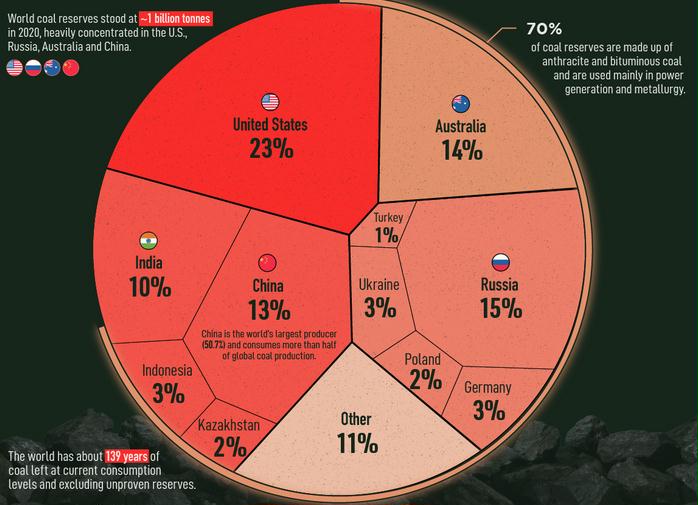


Posted in 2) Collapse, Cascading Failure, Critical Thinking, David Korowicz, Interdependencies, Liebig's Law, Social Disorder, Supply Chains | Tagged , , , , | 3 Comments

Why world leaders are terrified of water shortages

Preface. The article blow shows how water crisis in Yemen and Syria led to civil war, mass migration, roadblocks by angry citizens, water riots, increased dengue fever as people hard water, and 1 million refugees fleeing to Europe.  Egypt also has extreme water scarcity, with nearly twice the population of Yemen and Syria combined.

About 75% of China’s remaining coal reserves are in water scarce regions that use 80 to 99% of their water for agriculture now.  I question whether China will be able to shift water use to water intensive coal mining, coal generation of electricity, coal to chemicals, and eventually coal to liquids as governments become desperate to replace declining oil with a drop-in fuel.  If China tries to develop their last coal reserves this will lead to civil war, chaos, mass migrations, riots, and so on, as it has in the Middle East.  And where would the water come, from since already aquifers are being drained that won’t refill for tens of thousands of years.

Alice Friedemann  www.energyskeptic.com  Author of Life After Fossil Fuels: A Reality Check on Alternative Energy; When Trucks Stop Running: Energy and the Future of Transportation”, Barriers to Making Algal Biofuels, & “Crunch! Whole Grain Artisan Chips and Crackers”.  Women in ecology  Podcasts: WGBH, Jore, Planet: Critical, Crazy Town, Collapse Chronicles, Derrick Jensen, Practical Prepping, Kunstler 253 &278, Peak Prosperity,  Index of best energyskeptic posts

***

Halverson, N. 2016. Why world leaders are terrified of water shortages. Mother Jones.

Secret conversations between American diplomats show how a growing water crisis in the Middle East destabilized the region, helping spark civil wars in Syria and Yemen, and how those water shortages are spreading to the United States.

Classified US cables, made public years ago by WikiLeaks, reviewed by Reveal from the Center for Investigative Reporting show a mounting concern by global political and business leaders that water shortages could spark unrest across the world, with dire consequences.

Many of the cables read like diary entries from an apocalyptic sci-fi novel.

“Water shortages have led desperate people to take desperate measures with equally desperate consequences,” according to a 2009 cable sent by US Ambassador Stephen Seche in Yemen as water riots erupted across the country.

On September 22 of that year, Seche sent a stark message to the US State Department in Washington relaying the details of a conversation with Yemen’s minister of water, who “described Yemen’s water shortage as the ‘biggest threat to social stability in the near future.’ He noted that 70% of unofficial roadblocks were set up citizens angry about  water shortages, which are increasingly a cause of violent conflict.”  He noted that 14 of the country’s 16 aquifers had run dry.

The classified 2009 cable by Ambassador Stephen Seche states “Water remains a socially threatening, yet politically sensitive subject in Yemen; government action has stagnated as water resources continue to decline. The lack of regulation of drilling rigs and the cultivation of qat are largely responsible for the continuing decline of water resources. The lack of water has resulted in water riots in the governorates of Aden, Lahj, and Abyan. Water scarcity has health consequences and has been linked to a dengue fever outbreak, as people hoard water in Taiz”.  He predicted that conflict between urban and rural areas over water would lead to violence.

Less than two years later, rural tribesmen fought their way into Yemen’s capital, Sanaa, and seized two buildings: the headquarters of the ruling General People’s Congress and the main offices of the water utility. The president was forced to resign, and a new government was formed. But water issues continued to amplify long-simmering tensions between various religious groups and tribesmen, which eventually led to a full-fledged civil war.

Thomas Friedman, a columnist for the New York Times, found similar classified US cables sent from Syria. Those cables also describe how water scarcity destabilized the country and helped spark a war that has sent more than 1 million refugees fleeing into Europe.

In 2008 a Syrian cable asked the UNFAO for seed and technical assistance to 15,000 small-holding farmers in northeast Syria in an effort to preserve the social and economic fabric of this rural, agricultural community.  If UNFAO efforts fail, Yehia predicts mass migration from the northeast, which could act as a multiplier on social and economic pressures already at play and undermine stability Syria.  Syria Representative Abdullah bin Yehia briefed econoff and USDA Regional Minister-Counselor for Agriculture on what he terms the “perfect storm,” a confluence of drought conditions with other economic and social pressures that Yehia believes could undermine stability in Syria. Without direct FAO assistance, Yehia predicts that most of these 15,000 small-holding farmers would be forced to depart Al Hasakah province to seek work in larger cities in western Syria (Damascus and Aleppo, primarily). Approximately 100,000 dependents — women, children and the elderly or infirm — would be left behind to live in poverty, he said.  Children would be likely to be pulled from school, he warned, in order to seek a source of income for families left behind.  In addition, the migration of 15,000 unskilled laborers would add to the social and economic pressures presently at play in major Syrian cities.  A system already burdened by a large Iraqi refugee population may not be able to absorb another influx of displaced persons, Yehia explained, particularly at this time of rising costs, growing dissatisfaction of the middle class, and a perceived weakening of the social fabric and security structures that Syrians have come to expect and – in some cases – rely on.

The classified diplomatic cables, made public years ago by WikiLeaks, now are providing fresh perspective on how water shortages have helped push Syria and Yemen into civil war, and prompted the king of neighboring Saudi Arabia to direct his country’s food companies to scour the globe for farmland. Since then, concerns about the world’s freshwater supplies have only accelerated.

It’s not just government officials who are worried. In 2009, US Embassy officers visited Nestlé’s headquarters in Switzerland, where company executives, who run the world’s largest food company and are dependent on freshwater to grow ingredients, provided a grim outlook of the coming years. An embassy official cabled Washington with the subject line, “Tour D’Horizon with Nestle: Forget the Global Financial Crisis, the World Is Running Out of Fresh Water.

“Nestle thinks one-third of the world’s population will be affected by fresh water scarcity by 2025, with the situation only becoming more dire thereafter and potentially catastrophic by 2050,” according to a March 24, 2009, cable. “Problems will be severest in the Middle East, northern India, northern China, and the western United States.”

At the time of that meeting, government officials from Syria and Yemen already had started warning US officials that their countries were slipping into chaos as a result of water scarcity.

The water-fueled conflicts in the Middle East paint a dark picture of a future that many governments now worry could spread around the world as freshwater supplies become increasingly scarce. The CIA, the State Department, and similar agencies in other countries are monitoring the situation.

In the past, global grain shortages have led to rapidly increasing food prices, which analysts have attributed to sparking the Arab Spring revolution in several countries, and in 2008 pushed about 150 million people into poverty, according to the World Bank.

Water scarcity increasingly is driven by three major factors: Global warming is forecast to create more severe droughts around the world. Meat consumption, which requires significantly more water than a vegetarian or low-meat diet, is spiking as a growing middle class in countries such as China and India can afford to eat more pork, chicken, and beef. And the world’s population continues to grow, with an expected 2 billion more stomachs to feed by 2050.

The most troubling signs of the looming threat first appeared in the Middle East, where wells started running dry nearly 15 years ago. Having drained down their own water supplies, food companies from Saudi Arabia and elsewhere began searching overseas.

In Saudi Arabia, the push to scour the globe for water came from the top. King Abdullah decreed that grains such as wheat and hay would need to be imported to conserve what was left of the country’s groundwater. All wheat production in Saudi Arabia will cease this year, and other water-intensive crops such as hay are being phased out, too, the king ruled.

A classified US cable from Saudi Arabia in 2008 shows that King Abdullah directed Saudi food companies to search overseas for farmland with access to freshwater and promised to subsidize their operations. The head of the US Embassy in Riyadh concluded that the king’s goal was “maintaining political stability in the Kingdom.”

In a 2014 speech, US Director of National Intelligence James Clapper said food and water scarcity are contributing to the “most diverse array of threats and challenges as I’ve seen in my 50-plus years in the intel business. “As time goes on, we’ll be confronting issues I call ‘basics’ resources—food, water, energy, and disease—more and more as an intelligence community,” he said.

These problems are not just happening overseas, but already are leading to heated political issues in the United States. In the western part of the country, which Nestlé forecast will suffer severe long-term shortages, tensions are heating up as Middle Eastern companies arrive to tap dwindling water supplies in California and Arizona.

Almarai, which is Saudi Arabia’s largest dairy company and has publicly said it’s following the king’s directive, began pumping up billions of gallons of water in the Arizona desert in 2014 to grow hay that it exports back to the Middle East. Analysts refer to this as exporting “virtual water.” It is more cost effective to use the Arizona water to irrigate land in America and ship the hay to Saudi Arabia than it is to fill a fleet of oil tankers with the water.

Arizonans living near Almarai’s hay operation say their groundwater is dropping fast as the Saudis and other foreign companies increase production. They are now worried their domestic wells might suffer the same fate as those in Syria and Yemen.  In January, more than 300 people packed into a community center in rural La Paz County to listen to the head of the state’s water department discuss how long their desert aquifer would last.

Five sheriff’s deputies stood guard at the event to ensure the meeting remained civil—the Arizona Department of Water Resources had requested extra law enforcement, according to county Supervisor Holly Irwin.  “Water can be a very angry issue,” she said. “With people’s wells drying up, it becomes very personal.

Thomas Buschatzke, Arizona’s water director, defended the Saudi farm, saying it provides jobs and increases tax revenue. He added that “Arizona is part of the global economy; our agricultural industry generates billions of dollars annually to our state’s economy.”

But state officials admit they don’t know how long the area’s water will last, given the increased water pumping, and announced plans to study it.

After the meeting, the state approved another two new wells for the Saudi company, each capable of pumping more than 1 billion gallons of water a year.

Back in Yemen in 2009, US Ambassador Seche described how as aquifers were drained, and groundwater levels dropped lower, rich landowners drilled deeper and deeper wells. But everyday citizens did not have the money to dig deeper, and as their wells ran dry, they were forced to leave their land and livelihoods behind.

“The effects of water scarcity will leave the rich and powerful largely unaffected,” Seche wrote in the classified 2009 cable. “These examples illustrate how the rich always have a creative way of getting water, which not only is unavailable to the poor, but also cuts into the unreplenishable resources.”

2008 Saudia Arabia cable

One of the unintended consequences of the dramatic increase in oil prices has been huge inflation in basic commodities, including grain. Food security continues to be a concern in Saudi Arabia, especially with regard to lower and middle income population, and foreign workers.  The Saudi Arabian government (SAG) is seeking alternative sources for grain importation, particularly investing in agricultural initiatives in third-world and developing countries in return for reduced prices on grains.  The SAG also hopes to use these investments to help create sustainable development and jobs in less-developed countries.  Rising costs of food have caused considerable concern among lower income groups, both Saudis and guest workers.  If inflation continues unabated, it could undermine political stability in the Kingdom.  End summary.

On July 27, Econoff met with Taha Alshareef, Assistant Director General for Foreign Trade,  and Ahmed Al Sadhan, General Manager of the National Office for Industrial Strategies, at the Ministry of Commerce.  In this meeting, Al Sadhan stated the need for Saudi Arabia to seek alternative grain sources in response to rising global food prices. Saudi Arabia has 1.76% arabale land, and water scarcity makes it impossible to sustain the current levels of grain production in the Kingdom.

Saudi concern over food security is not new. Historically, all grains have been imported into Saudi Arabia, apart from wheat, which was grown in the Qassim region using fossil water from the aquifer.  In the 1980s and 90s, the government employed massive subsidies, the result of which Saudi Arabia was even briefly a wheat exporter until water depletion drove them to import all grains.

Al Sadhan said the SAG is currently in its sixth week of feasibility studies of investing in farms in third-world and developing countries, whereby Saudi rials would pay the operating costs of the farms and provide management; in exchange for local land, labor, and a portion of the grain produced (particularly wheat and rice).  He also said the countries in which the farms operated could use the remainder of the grain produced to ameliorate their own rising food costs.  Alshareef noted that private Saudi companies have had success with similar ventures in the past.

Al Sadhan said this initiative comes directly from King Abdullah, as part of his effort to make KSA  a “good world citizen” and implement his view that “rich countries have an obligation to help less wealthy nations.”  However, he stressed a desire to maintain a low profile on the feasibility study, for fear that target countries might inflate the cost of farm-land in anticipation of investment. Al Sadhan specifically mentioned Sudan and India as potential target countries.  He also suggested the possibility of future collaboration with the U.S. farming industry.

SAG interest in these investments appears genuine for the primary purpose of addressing the fundamental food security issue, though the driver behind this new initiative is the sudden price inflation of basic commodities.  Rapid rise of oil prices has caused sudden price inflation, but because of variants in income distribution, there is the risk of civil unrest if food prices become too high, particularly from the lower and middle class Saudis, as well as the foreign worker population.

Food price inflation could pose a direct threat to the social contract between the House of Saud and the bulk of the population.  Therefore these programs seem aimed less directly at the economy and more at the goal of maintaining political stability in the Kingdom.  Although keen to keep these projects quiet during the initial fact-finding stages, it seems highly probable that upon announcement, the SAG will accentuate the public relations angle of sustainable development and job development in less-developed countries.

2009 Yemen cable (rest of it here)

… small riots take place nearly every day in neighborhoods in the Old City of Sana’a because of lack of water, and he predicted that the capital could run out of water as soon as next year. One of the major causes of Yemen’s dwindling water supply is the lack of water governance. Hundreds of privately owned, unregulated rigs are used to drill private wells deep into the earth in search of water. The owners of these drills are “running wild, drilling holes everywhere.  We need to control these private rigs.”  A major obstacle to doing so is that fact that the rig owners are powerful individuals – army officers, sheikhs, members of the president’s family, and certain government ministers – who are “untouchable” by the law.  Another major cause is agriculture.  Up to 85 percent of water is used for agriculture, and half of that is for growing the narcotic drug qat.

O one “very easy way to make water use more efficient” is to lift diesel subsidies.  Cheap diesel is leading to the water crisis because, on the one hand, “many farms would no longer be sustainable if their owners were paying the right price for diesel,” and on the other, it fuels the private rigs that are running rampant across the country.

This story was originally published by Reveal from the Center for Investigative Reporting  

Further reading

Posted in Caused by Scarce Resources, Drought & Collapse, Mass migrations, Middle East, Social Uprising, Starvation, Water | Tagged , , , , , | 1 Comment

Renewable EROI must include storage, low capacity factor, wide boundaries

[ Trainer argues that when you consider how the capacity factor of wind and solar are to fossil plants, seasonality of wind and solar the number of facilities is quite large to deal with the intermittency problem.  Therefore the storage (hydropower, batteries, biomass, etc) must be included in the EROI calculation, the renewable system can’t operate without them.  Plus the capacity factors of wind and solar are getting lower, because the best sites have already been built on, so the future capacity factor will be less, not equal or more than today’s.  The lifetime of 25-30 years is questionable, plus the erosion of their performance over time usually isn’t included (i.e. dust impairing solar panels).  Trainer makes a case that boundaries need to be as wide as possible, including the EROI of the workers, transmission, and so on.  Prieto, Hall and others have pointed this out too.  In summary, Trainer makes a good argument that the EROI values for wind and solar are far lower than commonly assumed, and that what would be more effective is reduction in demand, De-growth.  He writes that “a core claim of The Simpler Way project (2017) is that a sustainable and just society based on 100% renewable energy supply is desirable and could be easily achieved, but only if there is a radical transition to new settlement patterns, economies, political systems, and most difficult of all, new values and non-affluent conceptions of the good life”.

Alice Friedemann   www.energyskeptic.com  author of “When Trucks Stop Running: Energy and the Future of Transportation”, 2015, Springer and “Crunch! Whole Grain Artisan Chips and Crackers”. Podcasts: Derrick Jensen, Practical Prepping, KunstlerCast 253, KunstlerCast278, Peak Prosperity , XX2 report ]

Trainer, Ted. August 14, 2017. The overlooked significance of the EROI for renewable energy supply systems.   $$$ awaiting publication

Abstract. Until recently it has not been possible to estimate the energy return on energy invested (EROI) for 100% renewable energy supply systems, because simulations of the amount of capacity required have not been available.  This study takes the finding of a simulation for Australian electricity, along with commonly quoted EROI values for the technologies assumed, and derives a conclusion for total system EROI.  The EROI values for individual renewable technologies do not provide a reliable guide to this value because of the large amount of redundant plant that must be on hand to enable whole systems to meet demand reliably despite intermittency. Problems and uncertainties regarding commonly assumed EROI values for renewables are discussed and it is argued that in future more defensible values are likely to indicate lower system values than this study arrives at.  The general finding is that 100% renewable supply systems could have values that are too low to sustain energy intensive societies.

Introduction.

Although considerable attention has been given to the energy return on energy invested (EROI) for individual renewable technologies, especially for PV, there does not appear to have been any attempt to estimate the significance of this factor for whole renewable systems. This is somewhat remarkable as the impact can be expected to be significant because in order to deal with intermittency whole renewable systems have to involve a large amount of differing types of renewable plant that remains idle much of the time.  Whereas 1.2 GW of coal-fired generating plant is capable of meeting a constant 1 GW demand (taking into account a 0.8 capacity factor), various studies have found that for a 100% renewable system to do this would require enough plant to generate 4 – 6 GW.  This much greater amount of generating equipment would involve a greater embodied energy cost of construction.

No generally valid conclusion on system embodied energy cost can be arrived at.  Any finding would depend on the particular mix of renewable technologies involved in a specified system, and this mix would be determined by the climatic conditions characteristic of the region.  It has not been possible to carry out meaningful studies of whole system embodied energy costs until recently, because simulations providing estimates of renewable technology mixes have only recently been attempted.  These estimate the amounts of various technologies that seem to be required to meet demand reliably, and therefore they enable estimation of the associated total system capacities and embodied energy costs.

Method.

The following discussion explores the significance of embodied energy costs for a 100% renewable electricity supply for Australia.  It is based on the mix and quantities of various renewable technologies found by Lenzen et al (2015) to be capable of meeting 2010 demand reliably at minimum cost.  The approach has been to take estimates of the embodied energy costs of each of the technologies involved in the simulation, to multiply theses by the quantities of each that were found to be needed, to derive a total cost, and to consider its significance.

In principle this approach is relatively straight forward but it is complicated by uncertainties to do with the embodied energy concept and the estimation of EROI values. Some of these will be discussed later, along with their probably significant implications for calculating system EROI. However at this point it is important to say that it is not appropriate to approach the question of system EROI by using estimates of “buffered” EROIs for each renewable technology.  Some studies have attempted to deal with the effect of intermittency on a technology’s EROI by estimating the effect of including the plant needed to enable energy supply from it taking into account its intermittency.  For instance Weissbach et al. (2013) do this assuming that the lowest back-up cost option for this purpose, i.e., pumped hydro storage. The effects found are large; the wind EROI value falls from 16 to 3.9.

However, these values are of little or no use when it comes to estimating the EROI of a whole supply system.  These systems are designed so that technologies can complement and substitute for each other as much as possible. If wind input falls for a period it might not be necessary to draw on any “buffering” capacity specifically provided for wind if solar or some other input happens to be high in that period. Thus it is not that in a whole system each component technology would need to come equipped with its own “buffering” capacity capable of allowing it to go on contributing despite no availability of its particular energy source. The way the problem is tackled in the main simulations is simply to provide one or a few back-up sources capable of topping up combined input from all components when necessary. System EROI can therefore be estimated using the “un-buffered” EROI values for each component along with that of the backup system.

Results.

This study begins by taking commonly stated EROI values for the main renewable technologies(…see Table 1), and derives a system EROI for a particular combination of these. As noted, some difficulties with these values will be considered later. The values to be used are close to those Hall (2017) gives in his review of the energy return field.

What capacities might be needed?

The following analysis will be based on the findings of the simulation of a 100% electricity supply carried out by Lenzen et al. (2015.) Though secondary to their main findings, they consider a case which “…might come close to what would be implemented in the real world.” Their Table 2 gives the capacities of various renewable technologies that would be needed to meet demand in this scenario. These add to 162 GW, about 7 times average Australian demand. Others arrive at significant multiples; for instance in their earlier simulation of Australian supply Elliston, Diesendorf and MacGill (2012) arrive at a multiple of 3.3, and Hart and Jacobson (2011) arrive at 4.3.

The use of biomass for energy supply is controversial, including questions to do with quantities available.  Lenzen et al. note that if no biomass is to be used in the Australian situation total renewable capacity would have to be in far greater, in the region of 320 GW, 14 times average demand. However it is likely that use of “Turkey Nest” pumped hydro storage would be the best option. Substituting this for the contribution biomass makes in this case would not alter total system capacity needed.

Table1 below makes transparent the simple derivation of an overall system EROI given the quantities set out by Lenzen et al. for the scenario they describe.

Table 1: Derivation of a system embodied energy estimate.

*    Uncertain: Lenzen et al. assume 15 hour storage.

**   Uncertain: Plant lifetime assumed to equal coal-fired plant.

These figures indicate that the embodied energy of the whole system corresponds to a constant flow of approximately 3.42 GW, or 26 TWh/y. Lenzen et al. report total system output at 287 TWh/y for the case being considered, corresponding to a constant flow of 32.7 GW. The EROI for energy generated would therefore be c. 32.7/3.41 = 9.6.


However this is not the most appropriate measure; what matters most is the energy cost in relation to the amount of energy needed and thus delivered for use. Lenzen et al. find that the system must spill 61 TWh/y, meaning that the ER value that is of most concern relates to the c. 220TWh/y the system would deliver for use. Thus the EROI of a system capable of meeting the average demand of c. 220 TWh/y or 25.1 GW would be 25.1/3.42 = 7.3. This means that in order to meet demand the amount of additional electricity that must be generated to cover embodied energy costs would be an amount more or less equal to 3.42/25.1 = 14% of demand.

This analysis does not include the energy cost of the extensive transmission system that the Lenzen et al., simulation found would be required to connect remote generating areas and demand sites across the nation.

There are reasons for suspecting that actual EROI values for the specific renewable technologies would be significantly lower than those used in column 1 of Table1 above.

Complications regarding capacity factors.

Debates over the EROI of renewables has focused almost exclusively on the denominator in the ratio, leaving concerns about the numerator almost largely unexamined. Central among these are the actual generating conditions and therefore capacity factors to assume. The convention is to assume capacity factors achieved in favourable conditions.

Table 2 in Lenzen et al. shows that except for PV the capacity factors achieved by the major renewables wind and CSP in the locations they occupy in the cost-minimizing solution are much lower than is commonly assumed. For instance the figure for wind is 0.18 whereas the usually quoted figure is 0.33 – 0.4, and for CSP it is only 0.26 despite the 15 hour storage assumed which should enable approximately three times that value in ideal conditions.  This is because 100% renewable scenarios have to involve a mix of renewables and locations that will minimize overall system production cost while achieving the reliability standard all through the year. The resulting pattern requires many of the renewable components to be located at less than ideal sites.  The task is to ensure that enough renewables are in sites that can contribute to meeting demand all through the year and during periods when all renewable input is low and at times when wind for instance is only at significant strength in a few locations.

This is the downside of common claim that “…the wind is always blowing somewhere.”  It is, but if a system is designed to maintain input by locating many farms in many locations to ensure that enough are where wind is blowing at any time, then it is likely that there will be times when a few farms are providing the input and the rest are more or less idle.  This means the capacity factor of the wind sector within a 100% renewable system will be much lower than normally assumed 0.33 – 0.4.

Thus the energy contributed by the wind sector in the Lenzen et al. case would be only around 0.18/0.33 = 55% of the amount that would be contributed had all the farms been located in the favourable conditions assumed for normal EROI estimation, and therefore the EROI of turbines in this “real-world” situation is likely to be in the region of 10, not the usually assumed18.

It is important to recognize that wind farms installed to date have probably not been significantly affected by this factor.  They have been located at the best available sites for wind performance, not in the regions that will enable them to contribute to maintaining system output in difficult times even though these might not be ideal for wind. Despite this it is somewhat sobering to find that the world average capacity factor has been reported at 0.15. (Damn the Matrix, 2017.) This suggests that large scale development of wind energy in future will see movement to less ideal sites and thus an even lower value.

Another issue involved in the numerator of the EROI ratio concerns the lifetime assumed for renewable devices.  These assumptions must be tentative as it will take time to provide confident data. For wind turbines and PV modules the assumption is often 25 to 30 years but some believe it is less than 20 years. (Damn the Matrix, 2017.) The decline in PV module output with age also affects life time output, (…although it is usually included in estimates of their “performance factor”.)

It is appropriate to compare the above renewable system value with that for existing fossil-fueled systems.  About 90+% of the present Australian electricity supply system is made up of fossil-fuelled generators, and most of the rest is hydro.  If an EROI of 40 is assumed for both, then the total system EROI would be about 40. Therefore the value for the renewable system arrived at above is less than one-fifth of this.

These issues to do with capacity factors also add to the case against the value of estimating “buffered” values for renewable technologies. They show that the EROI of a renewable technology depends primarily on what its role in a particular system is, especially on where it is located and the extent to which it is called upon to maintain system performance in conditions that are less than ideal for it. In Europe where there might be no solar contribution for long periods in winter, along with calm conditions providing little wind, capacity factors for very large wind or solar sectors spread over less than ideal sites would probably be quite low.

In addition renewable systems must spill energy (even with hydrogen or PHS storage; see Trainer 2017b) and the effect of this cannot be estimated from preconceived “buffered” values for each component technology.

To summarise, when interpreting standard EROI values it needs to be kept in mind that these assume output in good conditions, but output in the locations and conditions in which various technologies must be placed in order to play their role in a renewable system may well be around half as high.

The significance of CSP efficiency on system EROI.

In the above case taken from Lenzen et al. CSP is called upon to make a major contribution, providing 59% of energy generated.  It’s role is especially significant In their Fig. 5 illustration of how the system arrived at would get through the worst five days in the year.  This task required about 1,680 GWh, 61 % of supply, to come from CSP plus biomass storage, and (from inspection of the plot) CSP made up just over half of this of this, averaging c. 15.6 GW and rising to 19.4 GW for a time. It is therefore important to consider reasons for suspecting that this very significant contribution would have required far more capacity than the simulation found to be necessary.

In view of the complexity of the modeling task it made sense for the simulation not to take into account embodied energy costs or to delve into the unsettled issue of the efficiency of CSP in poor conditions. Trainer (2017b) explored the efficiency question and found that the effect evident in data from various studies was likely to be large; in fact it could mean that to get through difficult periods in winter would require three or more times as much CSP capacity as the simulation found to be necessary.

If this is correct it would show that meeting demand would require significant upward revision of the amount of renewables the approach Lenzen et al. estimated to be sufficient, and this would markedly reduce the 7.3 system EROI value derived above.

How sound are the EROI values used above?

There are reasons for thinking that the EROI values assumed above and set out in Table 1 are much too high, i.e., favourable to renewables. Unfortunately there has been relatively little study of EROI values for renewable plant apart from PV and even in that case there is intense debate.  The EROI field in general is unsettled and difficult to interpret, especially in view of differing definitions and items included in embodied energy tallies.

The main issue has been the “boundaries” that should be set when deciding which energy costs to include.  For instance in addition to the energy used in the factory making PV panels energy is used “upstream” to make the refineries etc. providing the aluminum. Should the energy used to make the bulldozers that mined the alumina that eventually went into module frames be included?  Should the worker’s clothes, and the energy used in their travel to the factory be included?

In addition there are many “downstream” energy costs and losses, including losses in transmission and in inverters, breakdowns, dust on panels, poor maintenance and alignment etc.  Prieto and Hall (2013) demonstrate the marked effect of drawing relatively wide boundaries. In their study of the Spanish PV system they list many factors that detract from the useful energy delivered by the system and when several but not all of these are taken into account they find that the system EROI is not the commonly claimed 8 – 14 but around 2.4.

It can be argued that there should be no dispute or confusion regarding the concept or definition of EROI or where to draw boundaries. The core question is, what is the total amount of net energy a technology can deliver, and therefore all factors detracting from this should be taken into account, meaning that in principle no boundaries should be set.  They only become relevant and important in the practical task of getting actual measures. At some point it will be too inconvenient or impossible to estimate energy used far “upstream”, or what the fraction of energy used at some point (e.g., in producing the bulldozer) should be accounted to module production. (The fact that had the worker not been producing PV modules the energy cost of his clothes or tools or lunches would still have been paid if he had been working on something else, is irrelevant; these were costs of module production.) In other words, at some point in the path upstream an inevitable “truncation” in the chain of cost factors taken into account will occur, and the sum of those cut out of consideration could be significant. (For steel production Lenzen and Dey (2000) estimate that 50% of actual costs might not be included.)

It would seem therefore that total system EROI studies should follow the Prieto and Hall approach to the Spanish PV system, attempting to use the widest possible boundaries.  Many of the (relatively few) pronouncements on wind and CSP values are either clearly not based on wide boundaries (at times only the embodied energy of construction materials is included) or no information is given on factors included. The fact that when Prieto and Hall attempted to take into account (almost) all possible costs and losses in a whole system and arrived at an EROI value less that one-third the commonly stated value for PV modules suggests that when similarly inclusive studies are carried out for wind or CSP farms values reported will be significantly lower than those in column 2 of Table 1 above.

Conclusions and policy implications.

This has been a tentative first exploration of what seems to have been a neglected issue and its main value might be in indicating the kind of analysis that needs to be carried out more thoroughly.  Nevertheless its findings add difficulties to the quest for 100% renewable supply.

Hall, Balough and Murphy (2009) are among those who have considered the minimum EROI for an energy supply system that would enable rich world societies to maintain their present levels of economic and cultural activity. Although quite speculative at this point in time, the estimates ventured tend to be around 7 -10.

The total system EROI for rich societies is presently estimated by people like Hall (2017) to be in the region of 18, which means that if 18 units of energy are produced a net 17 are available for use.  If a renewable supply involved a fall of EROI to 7.3 then the amount of net energy available for use per unit produced would be only 6.3/17 = 37% of the present amount. This suggests that the critical level would be well above 7.

Trainer (2017a) outlines a case that 100% renewable supply of all energy, including the 80% that is not presently in the form of electricity, would be unaffordable. That case was based on the dollar costs associated with the Lenzen et al. study which did not take into account any embodied energy costs. Taking them into account appears from above to increase the amount that needs to be generated by 3.42/25.1 = 14%. This in turn suggests that the 20c/kWh production cost Lenzen et al. arrive at would rise to 23 c/kWh. Trainer (2017c) lists 10 factors operating on production cost that the study did not deal with (e.g., added cost for remote area construction, a higher cost now for imported components…) and when the four that could be quantified were taken into account production cost was multiplied by 2.3.  This indicates a production cost of 52.4 c/kWh when embodied energy costs are included, and adding distribution and related costs might bring the retail price to 74 c/kWh, around three times the price at the time the study was carried out.

Electricity makes up only 20% of total energy demand, but to provide the other 80% from renewable sources would involve more than scaling up production by four, given the need to convert electricity to other energy forms and the energy inefficiency of doing this. It would also involve embodied energy costs for conversion equipment, such for hydrogen production, pumping and storage. If the embodied energy costs of 100% renewable systems are in the region of those arrived at above then including these would add significantly to the weight of the case that 100% renewable energy supply is unaffordable.

These issues set formidable policy problems and choices. This study and that of Trainer (2017a) add to the grounds for thinking that 100% electricity supply for Australia would be at least severely economically disruptive and that 100% total energy supply would not be affordable. If so it would seem that the energy problems being encountered can only be solved on the supply side by an extremely large commitment to fourth generation breeder reactors. The alternative, on the demand side, is De-growth. A core claim of The Simpler Way project (2017) is that a sustainable and just society based on 100% renewable energy supply is desirable and could be easily achieved, but only if there is a radical transition to new settlement patterns, economies, political systems, and most difficult of all, new values and non-affluent conceptions of the good life.

REFERENCES

Damn the Matrix, (2017), Questions about EROI at researchgate.net 2015-2017l, 29th May. https://damnthematrix.wordpress.com/2017/05/

Elliston B., Diesendorf, M., and I. MacGillll, (2012). “Simulations of scenarios with 100% renewable electricity in the Australian National Electricity Market”, Energy Policy, 45, 606 – 613.

Hall, C. A. S., (2017), Energy Return on Energy Investment, Dordrecht, Springer.

Hall, C. A. S., S. Balogh, S. and D. J. R. Murphy, (2009), “What is the minimum EROI that a sustainable society must have?”, Energies, 2, 25–47.

Hart, E. K., and M. Z. Jacobson, (2011), “A Monte Carlo approach to generator portfolio planning and carbon emissions assessments of systems with large penetrations of variable renewables”, Renewable Energy, 36, 2278 – 2286.

Lenzen, M., and C. Dey, (2000), “Truncation error in embodied energy analyse of basic iron and steel products”, Energy, 25, 577 – 585.

Lenzen, M., B. McBain, T. Trainer, S. Jutte, O. Rey-Lescure, and J. Huang, (2016), “Simulating low-carbon electricity supply for Australia”, Applied Energy, 179, Oct., 553 – 564.

The Simpler Way Project, (2017), thesimplerway.info/

Trainer, T., (2017), “Can renewables meet total Australian energy demand: A  “disaggregated” approach”, Energy Policy,109, 539-544.

Trainer, T.,  (2017) “Some difficulties in storing renewable energy”, Energy Policy, (In press.)

Weißbach, D., G. Ruprecht, A. Huke, K. Czerski, S. Gottlieb, A. Hussein,

(2013), “Energy intensities, EROIs (energy returned on invested),

and energy payback times of electricity generating power plants”, Energy, 52, 210-221.


Posted in Solar, Solar EROI, Wind, Wind EROI | Tagged , , , , , , | 3 Comments

Biodiversity loss has gone beyond the planetary boundaries

Source: Tanja Folnovic, June 23, 2015 “Loss of Biodiversity”. http://blog.agrivi.com/post/loss-of-biodiversity

Preface. The survival of homo sapiens depends on the ecosystem that supports us, so a loss of biodiversity is a threat to our survival and ultimately can lead to extinction.

Alice Friedemann   www.energyskeptic.com  author of “When Trucks Stop Running: Energy and the Future of Transportation”, 2015, Springer and “Crunch! Whole Grain Artisan Chips and Crackers”. Podcasts: Derrick Jensen, Practical Prepping, KunstlerCast 253, KunstlerCast278, Peak Prosperity , XX2 report ]

Newbold, T., et al. July 15, 2016. Has land use pushed terrestrial biodiversity beyond the planetary boundary? A global assessment. Science (253):288-291

For 58.1% of the world’s land surface, which is home to 71.4% of the global population, the level of biodiversity loss is substantial enough to question the ability of ecosystems to support human societies. The loss is due to changes in land use and puts levels of biodiversity beyond the ‘safe limit’ recently proposed by the planetary boundaries — an international framework that defines a safe operating space for humanity.

This is the first time we’ve quantified the effect of habitat loss on biodiversity globally in such detail and we’ve found that across most of the world biodiversity loss is no longer within the safe limit suggested by ecologists” explained lead researcher, Dr Tim Newbold from UCL and previously at UNEP-WCMC.

The team found that grasslands, savannas and shrub lands were most affected by biodiversity loss, followed closely by many of the world’s forests and woodlands. The ability of biodiversity to support key ecosystem functions where plants and animals can grow and nutrients are recycled is becoming increasingly uncertain.

Levels of biodiversity loss are so high that if left unchecked, they could prevent long-term sustainable development.

It’s worrying that land use has already pushed biodiversity below the level proposed as a safe limit,” said Professor Andy Purvis of the Natural History Museum, London, who also worked on the study. “Decision-makers worry a lot about economic recessions, but an ecological recession could have even worse consequences — and the biodiversity damage we’ve had means we’re at risk of that happening. Until and unless we can bring biodiversity back up, we’re playing ecological roulette.”

The team used data from hundreds of scientists across the globe to analyze 2.38 million records for 39,123 species at 18,659 sites to estimate how biodiversity in every square kilometer land has changed since before humans modified the habitat.

They found that biodiversity hot spots — those that have seen habitat loss in the past but have a lot of species only found in that area — are threatened, showing high levels of biodiversity decline.

Posted in Biodiversity Loss, Extinction | Tagged , , | Comments Off on Biodiversity loss has gone beyond the planetary boundaries

Homer-Dixon predicts 20 to 30% chance of Trump causing financial crisis, war, civil violence, and authoritarianism over next 5 years

[ Homer-Dixon wrote an article over a year ago for the Toronto Globe and Mail titled “Crisis analysis, how much damage can Trump do? (A lot). How’d his prediction turn out?

Within this article is a link showing 4 major risks during the Trump administration and the odds of their occurring within the next 5 years (here):  

  • Severe Financial crisis: 25%. Financial, demand, and unemployment shocks significantly exceeding those experienced in the Great Recession (i.e., global GDP declining at 2% per year for at least one year.
  • Severe civil violence: 25%. Active engagement of paramilitary groups supporting Trump; widespread organized violence between Trump supporters and opponents; significant violence between law enforcement and protesters; violent attacks by militant Trump supporters on loci of opposition to Trump policies, such as media outlets, judges, and prominent individuals; bombings; assassinations of elected officials.
  • Severe Authoritarianism: 30%. Declaration of state of emergency; federalization of the National Guard; suspension of key civil liberties; state-directed prosecution and imprisonment of journalists, academics, civil-society leaders, and political opponents; mass arrests; registration of members of identified enemy groups.
  • Severe intensity war: 20%. War between US and one or more great powers involving massed ground, air, and/or naval forces, and conventional or cruise missiles; large casualties; direct attacks on one or both homelands; any conflict with substantial risk of escalation to nuclear use.

The odds of moderate levels of these events are much higher:

  • Moderate Financial crisis: 40%. Financial, demand, and unemployment shocks not significantly exceeding in magnitude those accompanying the 2008-09 Great Recession (2009 global GDP growth rate: -1.7%)
  • Moderate civil violence: 60%. Sporadic but organized violent political demonstrations, protests, strikes and riots, with some direct violent confrontations between Trump supporters and opponents; some police shootings and attacks on police associated with these events
  • Moderate Authoritarianism: 60%. Use of federal resources to intimidate and constrain journalists, judges, and Trump opponents, limit voting rights, and limit electronic communication; substantially increased application of force to track, seize, and deport immigrants; criminalization of protest; purging from civil service of opposition elements; refusal of federal authorities to abide by court rulings
  • Moderate intensity war: 60%. Contained regional conflict between US and intermediate or great powers

And of course, there are many events out of Trump’s control listed in the category “Fast Crash” of energyskeptic that could also hasten these events.

Alice Friedemann   www.energyskeptic.com  author of “When Trucks Stop Running: Energy and the Future of Transportation”, 2015, Springer and “Crunch! Whole Grain Artisan Chips and Crackers”. Podcasts: Practical Prepping, KunstlerCast 253, KunstlerCast278, Peak Prosperity , XX2 report ]

Homer-Dixon, Thomas. 2017-3-19. Crisis analysis: How much damage can Trump do? (A lot). Toronto Globe and Mail.

“Okay, here’s what happened,” wrote an American friend after the U.S. election. “Someone threw a switch, and now we’re living in an alternative universe.”

The big problem with alternative universes is that we don’t know how they work. The assumptions, intuitions and rules of thumb we’ve previously used to anticipate events, and guide our navigation, suddenly don’t apply. So we face an exploding range of possible futures, including many that once seemed crazy.

U.S. President Donald Trump’s psychological characteristics make such uncertainty acute. It’s clear, for instance, that Mr. Trump’s lying is less a calculated political strategy than a reflection of his deep inability to distinguish fantasy from reality. He creates a make-believe world for himself and surrounds himself with people who, to advance their narrow ends, help him sustain that world. When Mr. Trump appears to be lying, he’s simply reporting what he sees in his own alternative world, where fantasy and reality mush together.

As Adam Schiff, the ranking Democrat on the House Intelligence Committee, tweeted on March 6, 2017: “We must accept possibility that POTUS does not know fact from fiction, right from wrong. That wild claims are not strategic, but worse.”

The entirely predictable chaos of the new administration’s first weeks has many liberals fantasizing that Mr. Trump will be removed from office before his term finishes. But we’ve seen enough of him to know he’s unlikely to leave willingly through any legitimate and lawful political mechanism, like impeachment. Instead, if Mr. Trump feels cornered, he’ll declare that his enemies are conspiring against him and call his supporters – many of whom are heavily armed – to come to his aid.

It’s also possible that Mr. Trump will find his groove, allowing things to settle down. Yet his performance so far suggests his administration will instead lurch from crisis to crisis. To make some sense of these outcomes, I’ve charted the most likely crisis types. Drawing on analysis by a wide range of scholars, I’ve also estimated the probabilities of each type at one, two, and five years into a Trump administration (the latter timeline assumes that Trump is re-elected in 2020).

There are four principal types, I’d argue: financial crisis, civil violence, authoritarianism, and war. Each crisis type then has various possible levels of intensity. “Moderate” authoritarianism could involve, for instance, use of federal resources to intimidate or constrain journalists and judges; substantially increased application of force to track, detain and deport immigrants; and criminalization of protest. Mr. Trump, or in the case of criminalization of protest, his acolytes at the state level are already checking some of these boxes, so I estimate the probability of this degree of authoritarianism in the administration’s first year to be 70%. “Severe” authoritarianism would involve actions like a declaration of a state of emergency, federalization of the National Guard, or suspension of key civil liberties. This outcome is much less likely; even after five years, I don’t think it’s higher than 30%.

A “moderate” war crisis, by my definition, would include any regional conflict between the United States and an intermediate power like Iran, or a great power like China, say in the South China Sea. “Severe” war would involve use of massed military force against a great power like Russia. The category would also include any conflict, for instance, with North Korea, that carries a substantial risk of nuclear escalation. In part, because of Mr. Trump’s expressed hostility towards Iran and China, and his tendency to see all international relations in zero-sum terms, I estimate the five-year probability of a “moderate” war crisis to be high, at 60%.

The four crisis types are likely to be causally linked. In particular, civil violence or war could create conditions that Mr. Trump might use to justify an authoritarian crackdown. Financial crisis could also be a consequence of war. The administration’s decision-making incompetence increases the risk of financial crisis, civil violence, and war. For instance, Mr. Trump’s team of advisers contains little high-level economic expertise, so his administration could be out of its depth should serious trouble develop in financial systems overseas, say in China or Europe.

The specific probabilities that one plugs into this model are not entirely speculative. Experts can argue about the details, but they’re largely in agreement that, for instance, the risk of nuclear war has jumped, which is why The Bulletin of the Atomic Scientists recently moved the minute-hand of its doomsday clock closer to midnight.

Yet the specific probabilities are less important than the overall analytical exercise of categorizing the types of crisis Mr. Trump might create and the causal pathways that might lead to them. It helps us see possible futures more clearly. In Mr. Trump’s alternative universe, we need all the help we can get.

Thomas Homer-Dixon is the CIGI chair of global systems in the Balsillie School of International Affairs, University of Waterloo. He is well-known within the fields of ecology, international risk, and biophysical economics.

Posted in Crash Coming Soon, Scientists, Social Disorder, War | Tagged , , , , | 1 Comment