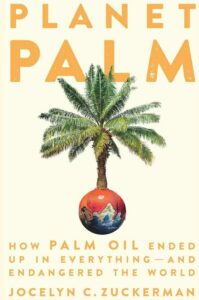
Preface. This is a book review of “Planet Palm: How Palm Oil Ended Up in Everything-and Endangered the World.” I am mainly interested in the use of palm oil for biofuels, but it also harms health, which much of the book is about.
Despite pledges to not cut rainforests down for palm oil, rainforests continue to be cut down. In the coming decade, the majority of growth in global consumption of palm oil will likely be for biofuels. A 2020 report published by Rainforest Foundation Norway predicted that the result of such expansion could be as many as 13 million acres of additional forest loss—nearly twice the size of Belgium—including some 7 million acres of peatland.
By 2017, oil palm made up 31% of biofuels, today 36% of biodiesel feedstock.
This book reports about land grabs and large-scale territorial acquisitions by outsiders. The phenomenon, which had come to the world’s attention in the aftermath of the financial and food crises of 2008, entails investment banks, pension funds, land-poor countries, and agribusiness seizing vast swathes of fertile ground in places like Ethiopia and Madagascar—places where traditional land rights are easy to exploit. Much of the land grabbing is for palm oil.
In my book “Life After Fossil Fuels” and energyskeptic.com post “Peak Soil” I record the many ways energy crops are destructive to biodiversity, pesticide pollution, fertilizer runoff, topsoil erosion, aquifer depletion, and climate change. Palm oil releases enormous amounts of CO2 because rainforests are clear-cut to grow them in peat soils.
The next big biofuel hopium is renewable diesel a drop-in fuel that can replace petroleum diesel, and increasingly replacing biodiesel, which many engine makers do not allow at all, or at most in concentrations between 5 and 20%.
Renewable biodiesel is made from restaurant grease, animal fat, and soybean or other oil seeds, and although it is not supposed to be made from palm oil, it still gets in, through loopholes, used restaurant cooking oil, and mislabeled imports.
In the SF Bay Area, hundreds of diesel trucks drive to hundreds of restaurants to collect grease and then 30 miles or so to two former petroleum refineries that now make renewable diesel. Probably for a negative energy return, but who cares, the government subsidizes it. And California gets about 99% from other states and the world, because the state has an additional subsidy.
What follows are some of my kindle notes.
Alice Friedemann www.energyskeptic.com Author of Life After Fossil Fuels: A Reality Check on Alternative Energy; When Trucks Stop Running: Energy and the Future of Transportation”, Barriers to Making Algal Biofuels, & “Crunch! Whole Grain Artisan Chips and Crackers”. Women in ecology Podcasts: WGBH, Financial Sense, UCSC, Jore, Planet: Critical, Crazy Town, Collapse Chronicles, Derrick Jensen, Practical Prepping, Kunstler 253 &278, Peak Prosperity, Index of best energyskeptic posts
***
Zuckerman JC (2021) Planet Palm: How Palm Oil Ended Up in Everything-and Endangered the World. The New Press.
HARM
Liberia proved a rude awakening. The violence on display there extended beyond the destruction of the landscape to the Liberians themselves. In one village, a scattering of mud-block and thatch houses located inside an oil-palm concession run by a Singapore-based company, a 50-year-old father of seven described how the outsiders had shown up and bulldozed the town in which he’d spent his entire life. Others talked of how the company had destroyed their crops and gravesites, polluted their streams, and run them out of their homes. “What I’ve lost is plenty,” a 53-year-old woman told me through tears. “We can’t plant plantains. We can’t plant rice. We can’t plant peppers.
“The guy who was a respected farmer,” he said, “has now become a slave laborer.” The company responsible for the changes had been in operation in Sinoe for just 13. It had signed an 865,000-acre lease good for 65 years, with an option for a 33-year extension. In was just getting started.
Indonesia is home to Earth’s largest concentration of tropical peatlands—soils formed over thousands of years through the accumulation of organic matter—and when farmers and palm oil companies drain and burn that land as a precursor to planting, massive quantities of carbon dioxide escape into the atmosphere.
Though many companies have signed zero-deforestation commitments and otherwise pledged to protect the environment, in Sumatra fruit grown illegally on peatlands and other protected areas routinely makes its way to their mills and, ultimately, to our own kitchens, bathrooms, and fuel tanks.
Today, palm oil stands center stage in what The Lancet has termed the Global Syndemic: the combined twenty-first-century crises of obesity, malnutrition, and climate change.
IT’S IN EVERYTHING
I discovered that the landscape overhaul taking place in Liberia was already well underway in Southeast Asia, and that the result of this agricultural revolution is literally everywhere. In the space of just a few decades, palm oil has quietly insinuated itself into every facet of our lives, with roughly half of all products in U.S. grocery stores now containing some part of the plant. (Though the commodity in question is palm oil, the plant from which it derives—it’s not technically a tree—is called the oil palm.) Palm oil alone now counts for one-third of total global vegetable-oil consumption.
Palm oil in toothpaste, soap, shampoo, conditioner, moisturizer, mascara, and lipstick. It’s in doughnuts, baby formula, dog food, Nutella, crackers, ice cream, snickers, and the feed consumed by cows, pigs, sheep, and chickens.
STATISTICS
India, now the world’s number-one importer of palm oil, went from buying 30,000 metric tons in 1992 to 9.2 million in 2019. China saw an increase from 800,000 metric tons to 6.4 million over the same period. Worldwide, production of palm oil has more than doubled in just the last 15 years; oil-palm plantations now cover more than 104,000 square miles—an area larger than New Zealand. With producers running out of land in Indonesia and Malaysia, which together account for some 85% of today’s global palm oil supply, they’re expanding to Papua New Guinea, the Philippines, and the Solomon Islands, and farther afield to Latin America, as well as, obviously, to Africa. Last year, global consumption reached nearly 72 million metric tons—that’s roughly 20 pounds of palm oil for every person on the planet.
Palm oil imports to the United States have increased from 29,000 metric tons to more than 1.5 million.
In the last 15 years, imports to the U.S. have risen a whopping 263%, thanks in part to the Food and Drug Administration’s ban on trans fats. Semi-solid at room temperature, palm oil emerged as the ideal swap-in for the partially hydrogenated oils formerly used to enhance the texture and extend the shelf life of products like cookies and crackers. In addition to its widespread presence in processed foods, cosmetics, and personal-care products, palm oil is used in all sorts of industrial materials and, increasingly, as a biofuel.
THE PLANT
The plant’s shiny fruits provide two oils—one from the tangerine-colored pulp and another from the central kernel—each of which lends itself to numerous applications. The plants begin bearing fruit at about three years old and have an economic life of 25 years. They are quite productive, yielding considerably more oil per acre than either soy or rapeseed. With the trees reaching as high as 90 feet, falls can be fatal. Using a machete, he then hacks at the desired bunch until it goes hurtling to the ground.
Women “sweat” the fruits under a mat to loosen them from the spiky husks and then boil them in metal drums to soften the fruit and slow the development of free fatty acids, which lead to rancidity. The steamed fruit then gets dumped into a vat to be stomped on, old-world-winemaker style, or to a mill powered by humans, animals, or machines for crushing. After the nuts are removed, and cracked later to get at the kernels inside, the resulting mustard-colored mash is transferred to a trough filled with water, where the oil floats to the surface to be skimmed off. After a final pass over the flames, the oil is poured through a basket or other filter to remove remaining fibers, leaving a brick-hued product.
African American culinary historian Jessica Harris notes that after standing for a few days, palm wine, made from the sap of the plant, has the kick of the proverbial country mule and becomes western Africa’s form of white lightning.
History
The oil-palm plant, Elaeis guineensis, is native to West and Central Africa and has spiky brown bunches cradling hundreds of plum-sized, bright-orange fruits. Archaeological findings suggest that the Egyptians were trading palm oil as early as 3,000 B.C.; in the fifth century B.C.
By the 1890s, the era in which Achebe’s novel takes place, a thriving international trade in palm oil was under way along the continent’s western coast. Its heart, at the mouth of the Niger River, in today’s southern Nigeria, became known as the Oil Rivers—a curious foreshadowing of the role that the Delta would play a century later as the troubled trading ground for a different sort of oil. Europeans originally sourced the oils for lighting their lamps, but the two substances would eventually find their way into soaps and candles, and into the lubricants required by the age’s shiny new machinery.
Eventually, tins made with the oils would conserve Europeans’ food, palm kernels would nourish their dairy cows, and, by the end of the nineteenth century, palm kernel oil would make its way into the faux butter they were spreading on their toast.
Whereas in 1870 more than 80% of Africa south of the Sahara was ruled by indigenous chiefs and kings, by 1910, all that had changed, with the region a patchwork of colonies, protectorates, and territories overseen by white newcomers. The fruit went across the Atlantic on slave-bearing vessels destined for the sugar and tobacco plantations established by the Portuguese in Brazil. En route, palm oil was used for feeding the captives, and the kernels eventually found their way into the New World dirt,
Escaped and freed slaves built communities along the coast amid those groves, adapting the culinary and spiritual traditions of their African forbears as a form of resistance and a way of preserving their identity. Today, dendê, as the oil is known in Brazil, features prominently not just in the region’s traditional dishes, but in its religious ceremonies and in much of its art.
Though Parliament outlawed the slave trade in 1807, the institution was foundational to Britain’s commercial empire. Between 1750 and 1780, for example, some 70 percent of the government’s total income came from taxes derived from its slave-powered colonies. (No one ever asks where all those young men looking for wives in Jane Austen novels got their money, a Ugandan friend noted recently.) The Niger Delta, in particular, spreading some two hundred seventy miles along the coast from Lagos to the Cameroonian border, had proven a lucrative hunting ground.
With the Second Industrial Revolution transforming life back home in England, vegetable oil was suddenly in hot demand as a lubricant for the era’s new railroads and machines. Palm oil also proved ideal as a tinning flux, and it was the basis for most of the candles being made at the time. By 1850, Liverpool was producing some thirty thousand tons of palm oil–based soaps every year.
The value of palm oil exports rivaled that of the slave trade at its peak, with the Niger Delta ground zero for the boom.
The kings of the countries where the palm tree grows find that the labor of their subjects, in collecting the fruit and extracting the oil, is far more remunerative to them than the selling of these subjects into slavery. Over the years, the leading Delta middlemen had built up corporation-like entities known as “houses” by acquiring people, both slave and free, through a complicated political system involving routine skirmishes with neighbors and rivals. The more “clients” a middleman could claim, the more expansive his geographical domain and the greater his potential to source oil. While the smaller houses numbered in the hundreds. Competition among the houses was fierce, with ongoing clashes leading to the buildup of military fleets: canoes mounted with cannons and large-caliber guns would glide through the creeks alongside those ferrying oil.
As the slave ships neared port, palm oil would have been slathered into the captives’ skin with an aim toward hiding their wounds and scars and enhancing their attractiveness to buyers.
Lever Brothers Ltd., dedicated exclusively to the production and sale of soap. Plenty of others were making similar products at the time, but Lever didn’t intend to get lost in the crowd. He experimented until he’d found the right blend of ingredients for the ideal lather and rinse—including some 41.9 percent palm-kernel or coconut oil—and took to selling his bars as single units. (Most grocers at the time sliced off portions from long bars and priced them by the pound.) He began wrapping his soaps in parchment to avoid the sweating then plaguing other brands, and tucked them into colorful cardboard boxes. He also spent lavishly on advertising, emphasizing the quality and purity of Sunlight and introducing slogans and giveaway campaigns, tactics he’d picked up from monitoring marketing trends in the United States. The average British citizen was plowing through 17 pounds of soap every year.
In 1914, Lever diversified from soap into margarine, a product whose origins dated to a few decades earlier, when—just before the siege
France’s Napoleon III had put out a call for a cheap butter substitute to feed the country’s military and underclasses.
With the Brits now churning out margarine, and the Dutch having entered the soap market, competition for West Africa’s palm oil and kernels began to heat up.
In 1911, Lever signed a contract on concessions totaling 1.8 million acres for cultivating and harvesting oil palm in the Belgian Congo,
Harvesting oil-palm bunches from natural groves was at least as grueling as—and arguably more dangerous than—gathering latex, and HCB’s expat staff had been struggling to find men to do the job.
Scrambling to fill the growing demand back home for oil and kernels, the Congo’s colonial administrators and Lever’s agents began pressuring the local chiefs to sign up more of their constituents for work. HCB managers eventually convinced the Belgian government to re-introduce a head tax, and by 1914, all Congolese men were required to pay the impôt indigène, with supplemental charges levied on wives. (The latter provision was aimed at the chiefs, who, as polygamists, would be forced to recruit multiple laborers or to send their own slaves to work off their considerable debts.)
As in Leopold’s day, local agents took to raiding villages, often wielding the dreaded chicotte. It wasn’t long before they were being met by flying arrows. The recruiters began traveling with military reinforcements and, with the coerced help of handsomely compensated local chiefs, forcing entire villages to relocate closer to Lever’s plantations and mills.
With the outbreak of war in 1914, Lever’s German market collapsed, and the British government began imposing restrictions on all commerce with Holland. “The trade that has taken us nearly thirty years to build up,” Lever seethed, “is being wrecked.” In fact, he would profit handsomely from the conflict. In addition to providing munitions makers with glycerine, a by-product of soap manufacturing required for the production of cordite, a gunpowder substitute, he supplied the government with soap and margarine, using cut-price oil and kernels diverted from Germany by the blockade.
Between 1914 and 1918, British margarine production rose from 78,000 to 238,000 tons a year, leading Lever to build a new factory devoted expressly to its manufacture. The wartime demand for oil and kernels saw their value skyrocket—palm oil shot from 29 pounds a ton in 1914 to 41 pounds in 1915—eventually prompting the British government to impose ceilings on both.
The model garden city of Port Sunlight, meanwhile, would also turn out to be something of a mirage. Fewer than half of Lever’s employees and their families actually lived in its houses, and those who did often weren’t very pleased about it. “No man of an independent turn of mind can breathe for long the atmosphere of Port Sunlight,” wrote the secretary of the Bolton branch of the Engineers’ union in a 1919 letter to Lever. “That might be news to your Lordship, but we have tried it. The profit-sharing system not only enslaves and degrades the workers, it tends to make them servile and sycophant, it lowers them to the level of machines tending machines.
PROCESSING PALM OIL
The Sapi Oil Palm Mill is located in a place called Beluran, a two-hour drive west of Sandakan. The mill processes 30,000 tons of palm oil every year. A dozen dump trucks piled high with spiky bunches sat lined up outside, with a smell that brought to mind burnt molasses. Still more bunches lay mounded on the ground, their fruits gleaming tangerine and crimson in the sun. It was mid-October, the height of a harvest season here, so the action at Sapi, one of more than 450 mills now dotting the country—oil-palm plantations cover some 14 million acres of Malaysian land—extended around the clock. Ready for processing at the Sapi Oil Palm Mill, in Malaysian Borneo. One by one, the trucks drove onto a pair of weighbridges, where agents in air-conditioned booths punched numbers into computers. The drivers then dumped their loads into a series of metal rail cars that progressed along tracks to a pressure cooker–like device that both sterilized the fruits (halting the development of free fatty acids) and loosened them from their husks. Back inside the building, where the roaring, whooshing, clanking machines reduced my technician-guide to shouting, the individual fruits got stripped from their bunches and threshed around in a drum, emerging with the look of charred dates. Operating like a slow-speed blender, a digester then loosened the flesh from the nuts and heated the whole mass, readying it for the press, which expelled a thick, blackish sludge of oily fiber and nuts. The sludge was then fed into a centrifuge, which separated it into a deep-brown “decanter cake” and an oil that, once clarified, got funneled into steel tanks, ready for transport to the refinery. The kernel-containing nuts, meanwhile, sporting a stringy beige fringe that gave them the look of tiny coconuts, would get trucked off to different facilities to be crushed and their kernels extracted.
Treatment with phosphoric acid, they explained, at temperatures ranging from 90 to 110 degrees Celsius, served to de-gum the thick crude oil, after which it got bleached, cooled, and filtered. Finally, it would be “steam stripped,” at temperatures of up to 270 degrees, to remove free fatty acids and volatile compounds, a process known as neutralizing and deodorizing. The resulting “RBD,” or “refined, bleached, and deodorized” oil, makes up much of what gets sold on commodities markets worldwide.
Some of the bigger refineries further “fractionate” the oil into solid and liquid forms, known as stearin and olein, respectively. Much of the former gets shipped off to oleo-chemical plants, where it’s further manipulated and broken down into various fatty acids, fatty alcohols, esters, and glycerines, which in turn are sold to detergent and cosmetics manufacturers, and to the chemical industry. Almost all of the olein ends up with the food industry, to be sold as cooking oil or used in processed foods. Palm kernel oil, having also undergone bleaching and deodorizing, eventually moves on to oleo-chemical companies, which fractionate it for use in cosmetics and personal-care products. (The palm kernel meal that remains, known as expeller, mostly ends up with the livestock industry, which prizes it as a cheap source of protein.) At this point, the palm oil has very little in common with the traditional foodstuff native to West Africa and Bahia, Brazil. It’s gone through so much processing, in fact, that it can turn up in products listed under any of some two hundred names.
In 2019, thanks to decades of development and aggressive marketing, Malaysia’s palm oil industry produced a record 20.5 million metric tons of oil, worth some $9 billion. But in the last two decades, the country has lost no less than 20 million acres of tree cover.
By the time I arrived in northern Sumatra, poachers’ guns were just the latest threat facing the region’s storied birdlife. Since the days of Adrien Hallet, tens of thousands of square miles of rainforest have fallen here to make way for oil-palm cultivation. As the forests have disappeared, hornbills, as well as orangutans and other creatures, have found themselves squeezed into ever-tinier patches of suitable habitat. Today more than 75 percent of Sumatra’s 102 lowland forest–dependent bird species are considered globally threatened.
At the same time, plantations and the new roads that go with them render what’s left of the forests that much more accessible to poachers like these guys, who kill the helmeted hornbills for their casques, solid-keratin enlargements on the upper part of their bills. Long prized by the Chinese for sculpting into snuff bottles and jewelry and grinding into traditional medicines, the casques have taken on new status in recent years, thanks in part to the growing difficulty of procuring elephant tusks.
communist sympathy was surging: by the early 1960s, the PKI had become the largest party in the country, claiming a membership of some 20 million. In October of 1965, the country’s long-simmering social tensions came to a devastating head when an alleged coup attempt served as impetus for the Indonesian army and its related paramilitary groups to slaughter between 500,000 and one million members of the PKI and its purported associates. Over the course of five months, grisly massacres played out across the archipelago, with death squads moving from village to village and murdering every supposed communist, trade unionist, and peasant in their paths. Also targeted were Chinese immigrants,
Among the main settings of the atrocity, which the CIA called “one of the worst mass murders of the 20th century,” were the oil-palm and rubber plantations that stretched across northern Sumatra. (Documentary evidence of the CIA’s own complicity in the event has since been widely acknowledged.)
By 1967, when a general named Suharto was named acting president, the Indonesian population wasn’t just traumatized—it was also deathly poor, with 60 percent of its citizens surviving on less than a dollar a day. Over the next two decades, the World Bank would advise Suharto to expand the palm oil sector as a way to engage its rural poor,
Transmigration, another World Bank–backed scheme, which entailed the forced resettlement of millions of Indonesians from the archipelago’s crowded islands to less-populated ones like Sumatra and Borneo, where they were encouraged to cultivate the crop. In subsequent years, the government would launch campaigns aimed at promoting domestic consumption of palm oil. Whereas in 1965 it accounted for just 2 percent of Indonesians’ cooking-oil usage, by 2010 that figure had soared to 94 percent. The World Bank also underwrote Suharto’s forest policy, under which more than half of the country’s rainforests were logged and converted to plantations. The folks on the receiving end of those lucrative logging and oil-palm concessions? The president’s family, friends, and fellow military officers. In 2004, Transparency International ranked Suharto the most corrupt leader of all time.
Transmigration entailed the clearing of massive amounts of land and the displacement of the peoples who had lived and hunted there for generations. In the last few decades, Sumatra’s semi-nomadic Orang Rimba and Batin Sembilan tribes have lost tens of thousands of acres of forest to the palm oil industry.
the sort of land grabbing that I’d gone to investigate in Liberia is here largely perpetrated by the state itself
The 2019 U.N. report I mentioned in the prologue found that as many as one million species of plants and animals are today threatened with extinction. The situation is particularly bleak for tropical forests, which, recall, house more than half of the world’s biodiversity. The demise of individual species can lead to the collapse of entire ecosystems,
A violent thirty-year separatist insurgency had long spared Aceh the grim environmental fate of the rest of Sumatra, but the signing of a 2005 peace accord put an end to that. Since then, the palm oil industry has set its sights on something called the Leuser Ecosystem, a 5.6-million-acre expanse of lowland and mountainous rainforest that spreads across the bottom half of the province. Home to 382 bird, 105 mammal, and 95 reptile and amphibian species, the butterfly-shaped Leuser is a UNESCO-designated World Heritage site and ranks among the most biologically diverse places on Earth. (The poachers live at its heart, in a hamlet called Tamiang.) The Leuser, one-third of which forms Gunung Leuser National Park, is the last place on the planet where there is terrain of sufficient size and quality to support viable populations of Sumatran tigers, elephants, and rhinos, and of orangutans, clouded leopards, and sun bears. In addition to its helmeted, rhinoceros, and other hornbill populations, the Ecosystem is alive with the calls of the tan-breasted partridge, the salvadori’s pheasant, various laughing thrush, and the critically endangered Rück’s blue-flycatcher.
its forests provide a steady, clean water supply to more than four million Acehnese—the Leuser is technically safeguarded under Indonesian law. Still, the past decade and a half have seen roughly five thousand acres of its park converted to oil-palm plantations. Today, only 4.5 million acres of the Ecosystem remain forested. Here as elsewhere in Indonesia, palm oil companies have secured permits through backroom deals with local officials or have simply paid others to clear the land illegally.
In addition to diminishing the habitat of Indonesia’s hornbills, the incursions have impacted the particular living requirements of the birds. Known as the “farmers of the forest” for the critical role they play in dispersing seeds, hornbills need dense habitat and a steady supply of fruit. Their unique nesting habits depend on the sort of old-growth trees that tend to fall first to developers.
Sumatra’s once-sheltered rhinos, like the hornbills, increasingly were being squeezed out of the Leuser’s forests. Along with its elephants and orangutans, they had begun encroaching on local communities as a result. Farmers and plantation workers, annoyed by the beasts’ habit of knocking down homes and trampling through crops, had been responding by setting out traps or potassium cyanide–laced pineapples, or by shooting the animals with pellet guns. Once widespread across Southeast Asia, Sumatran rhinos were now down to an unimaginable eighty individuals.
By 2009, Putra, who still accompanies his rangers on 15-day patrols each month, had begun taking chainsaws to northern Sumatra’s illegal oil-palm plantings. A stand of trees in a 2,600-acre plot on the eastern fringe of the Leuser. Trailed by a handful of curious kids and accompanied by 11 local guys toting banana, durian, and other seedlings—they sow native crops on the sites where they’ve downed the oil palms. Putra, who at that point had dismantled 26 illegal plantations—some 7,500 acres of oil palm—said that confrontations are a part of the job.
The primates—orangutan means “people of the forest” in Malay—live only in Southeast Asia: here on Sumatra and in the rainforests of neighboring Borneo. In 2008, the Sumatran orangutan was declared critically endangered by the IUCN. Today, its numbers are down to just 14,000, 85 percent of whom make the Leuser their home. The orangutans of Borneo, where the forest has shrunk by 55 percent in just two decades, were deemed critically endangered in 2016. (In 2017, scientists determined that some of the orangutans of North Sumatra in fact comprise a separate species. With an estimated population of fewer than eight hundred, the Tapanuli orangutan, Pongo tapanuliensis, is the rarest great ape species in the world.)
you’ve got some people who actually consider they own bits of the land, because it was cleared by their great-grandparents, but they don’t have any paperwork. So you get a company then from Jakarta or somewhere who comes in and just evicts everybody. ‘Fuck off.’ ‘Hey, that’s my land!’ ‘Paperwork? Sorry, mate.’ So they’re kicked off. And then the company offers such shitty wages that none of these people want to work for it. They don’t like the company anyway; they’ve just been evicted. So then they get labor cheaper from offshore islands. And they come and live in shitty conditions. Then the company chops all the forest down. So you annihilate everything that lives there, including ants and termites and funguses. Incinerate the whole fucking thing. Then you dig canals, because in order to grow oil palm you need at least a meter of dry peat to plant the thing. And then the river levels go down, the fisheries disappear, so you’ve got all these people who used to make their living, and water supplies, and protein source, all of a sudden have got fuck-all. And they’re surrounded by plantations. So even if they did have any money, they can’t grow any vegetables or fruits.
They’ve got nothing. And then, some company—or some guy in Jakarta who’s probably never even been there—his bank account is going up and up and up and up, for twenty-five or thirty years. The fortunes of the “twenty or thirty families” that rule Indonesia today, he added, are all based on the country’s natural resources, oil palm prominent among them.
Beginning in the 1940s, in part as a hedge against the Panama blight then ravaging its banana crop, United Fruit undertook modest oil-palm plantings in Honduras and Costa Rica. Also in the 1960s, United Fruit acquired a Costa Rica–based vegetable-oil concern, called the Numar Company, and founded Grupo Numar, specializing in oils and fats. In 1995—United Fruit having by then changed its name to Chiquita Brands International—it sold off Grupo Numar, which merged with another operation to form Grupo Jaremar, the parent of Walter Banegas employer Agroguay.
Traffickers to begin funneling their cocaine shipments through Honduras and neighboring Guatemala and El Salvador. A 2017 study published in Environmental Research Letters found that roughly 86 percent of the cocaine trafficked globally now moves through these Central American countries. The six or so billion dollars in illegal profits made every year need to be laundered somewhere, and the criminals involved have found that oil-palm plantations work quite nicely. Much of the contraband passes through northern Guatemala’s Peten region, where oil palm also has supplanted smallholder farms.
The chemicals handled by Agroguay workers and that accumulate in the undergrowth are known to be extremely dangerous. Among them is an insecticide called Lorsban, the commercial name for chlorpyrifos. An organophosphate belonging to the same class of chemicals as those developed by the Nazis for use as a nerve gas, chlorpyrifos has been linked to a range of medical conditions, including brain damage in children, Parkinson’s disease, and cancer.
Though Agroguay workers charged with applying fertilizers and pesticides were provided gloves and face masks, said the workers, the masks fogged up in the heat, rendering them useless.
And though the WHO recommends that workers dealing with toxic chemicals wash immediately afterward to prevent “hazardous contamination,” there are no bathing facilities on the Agroguay plantation. It takes most of the company’s workers at least thirty minutes to get home by bicycle
Gramoxone is the commercial name for an agricultural chemical called paraquat. Despite having been linked to kidney, lung, and liver damage, and, like chlorpyrifos, to Parkinson’s disease—it’s banned in at least 46 countries—paraquat continues to be used on oil-palm plantations throughout the world.
Though most palm oil companies have vowed to stop using paraquat, the evidence suggests that few have actually done so.
After being forced to march for days through the jungle, the captives finally arrived in southern Malaysia, where they were put to work on an oil-palm plantation run by Felda Global Ventures Holdings Berhad (FGV), the commercial arm of the Federal Land Development Authority, or FELDA, introduced in Chapter 4. Today, the state-owned company, which ranks among the largest producers of palm oil in the world, employs some thirty thousand migrants on its Malaysian plantations. Rubel told the reporter that he had worked on FGV’s plantations seven days a week without being paid a single ringgit. Another Bangladeshi said that he’d been shunted among three labor contractors over the course of six months in Malaysia, also without receiving any pay. “They buy and sell us like cattle,” he said. In the five years since the Journal published its exposé, FGV has done little, if anything, to address the abuses. In 2019, in fact, a group of United States–based labor, environmental, and justice organizations filed a complaint with U.S. Customs and Border Protection seeking to stop the importation of palm oil products produced by the company.
Palm oil produced by FGV gets traded by such American companies as Cargill and ADM, and it ends up in the products of Nestlé, Colgate-Palmolive, Johnson & Johnson, Procter & Gamble, Kellogg’s, Mars, PepsiCo, and L’Oréal.
A 2017 study in the New England Journal of Medicine found that the global prevalence of obesity and overweight had skyrocketed over the previous twenty-five years, with more than 10 percent of the world’s population now considered obese. Some of the highest increases had occurred in developing countries, many of which were also confronting epidemics of under-nutrition. In India, non-communicable diseases such as diabetes recently overtook infectious ones such as diarrhea and tuberculosis to become the leading killers. Today, India has more patients with Type 2 diabetes than any other country in the world. (Yes, it also has more people than most, but those with diabetes form a disproportionately high percentage of its population.) The Journal researchers pointed to the “increased availability, accessibility, and affordability” of high-calorie foods to explain the worldwide packing on of pounds. “We have more processed food, more energy-dense food, more intense marketing of food products,” Dr. Ashkan Afshin, the study’s lead author, said upon its publication.
We also have more palm oil. During the years looked at by the researchers, 1980 to 2015, global production of the commodity increased more than twelve-fold, from 5 million to more than 62 million metric tons. The growth in production of palm oil has surpassed even that seen in wheat during the transformative period of the mid-twentieth century known as the Green Revolution. What happens to all that oil? Some 70 percent of it ends up in just the sorts of processed and “energy-dense” foods cited by Dr. Afshin.
It is expected that 45 of every 100 additional calories in the period up to 2030 may come from oil crops,” Carl Bek-Nielsen, the model-pretty Dane who now leads United Plantations, told an audience of industry executives in 2012. “Oil palm’s contribution as a stabilizing crop to global food security is now undisputed.
Well, not exactly. While it’s true that many of the world’s people could use more calories—and certainly we all need some fat in our diets—the global glut of palm oil is in fact diminishing food security, in a fairly drastic way. It’s common to blame sugar for the world’s weight problems, but in the last half-century, refined vegetable oils have added far more calories to the global diet than has any other food group. Between 1961 and 2009, for example, the availability of palm oil worldwide went up a staggering 206 percent. Over the same period, the availability of sugar and sweeteners increased by just 20%. More recently, in the decades from 1991 to 2011, the global supply of food energy increased by 278 calories per person, with more than a quarter of that increase coming from vegetable oils.
In South Asia, the oils accounted for 32 percent of the increase in consumed calories. But it isn’t just the oils themselves. Part of the problem is the sort of nutrient-deficient, heavily processed junk that all of this cheap oil enables. And land planted with oil palm, of course, is land not being used to grow healthful foods such as fruits, vegetables, and legumes.
ultra-processed foods for which palm oil is ideally suited. Just as farm policies in the United States led to the overproduction of corn and subsequent rivers of high-fructose corn syrup and endless conveyor belts of fast food in this country, so have international trade patterns abetted the palm oil bonanza, bequeathing a global landscape saturated in deep-fried snacks and fast and processed foods. The implications for public health are enormous. Over the past decade, large-scale studies from France, Brazil, the United States, and Spain have echoed the Lancet in finding that the high consumption of ultra-processed foods is associated with higher rates of obesity. When eaten in large amounts, they have also been linked to depression, asthma, heart disease, and gastrointestinal disorders. In 2018, a study published in The BMJ (formerly British Medical Journal) found that a 10% increase in the proportion of ultra-processed foods in the diet led to an increase of more than 10% in the overall risk of developing cancer.
That said, the oil itself does raise some concerns. Part of what makes palm oil so useful to these brands is the fact that it is 50% saturated, which helps with both providing the desired “mouth feel” and prolonging the shelf life of products. As explained previously, palm oil’s high smoke point makes it ideal for frying up chicken nuggets, French fries, cheese curls, and doughnuts—as well as such Indian staples as samosas and poori. Palm kernel oil, at 80% saturated fat, tends to be used more by the makers of chocolates and other confectionery, who prize its hard texture, among other qualities.)
Diets rich in palm oil, which contains minimal amounts of omega-3 and omega-6 fatty acids, both of which have health benefits, lead to a higher risk of heart disease than those heavy in such unsaturated fats as olive or soybean oils. Trans fats carry a bigger risk per gram than saturated fats,” explained Barry Popkin, a professor of nutrition at the University of North Carolina–Chapel Hill, “but the volume of palm oil being consumed is so much greater.” When it comes to the overall health effects, he said, palm oil may have a much more harmful impact.
This is the case particularly in the developing world, where palm oil continues to supplant other oils thanks to its low price. India, for instance, has seen palm oil, at $694 a metric ton, displace more traditionally used oils, including sunflower (currently $832 a ton), rape-seed ($890), and groundnut ($1,876), especially by the food industry,
Latin America. After the signing of the North American Free Trade Agreement, or NAFTA, in 1994, a flood of direct investment flowed into the region’s food-processing industry, with sales of junk food in Mexico, for instance, growing by 5 to 10 percent annually between 1995 and 2003. Today, the country is one of the ten biggest producers of processed foods in the world. The companies behind its popular junk foods, including such usual suspects as Nestlé, Unilever, PepsiCo, and Yum!, as well as Mexico’s own Grupo Bimbo, are among the world’s top purchasers of palm oil. Since 1995, palm oil imports to Mexico have increased more than five-fold, from 103,000 metric tons to 565,000.
Today Mexico has some of the highest rates of obesity and high blood pressure in the world, with 29% of its children between the ages of 5 and 11 overweight, as well as 35% of kids between 11 and 19.
“The people who can afford it can buy products with less palm oil or no palm oil,
In Sumatra, I spent time with indigenous Orang Rimba and Batin Sembilan communities who said that the diets they had relied on for generations were simply no longer available. Staples including cassava, sago (the palm starch that had originally lured Fauconnier east), wild boar, deer, squirrel, snails, mushrooms, ferns, fruits, and caterpillars—wild foods rich in vitamins and micronutrients like iron and calcium—had disappeared when the forests fell. These days, the communities rely on instant noodles (containing some 20 percent palm oil) and government-issued rice to survive.
In the early 2000s, the Indonesian government passed a number of reforms aimed at replacing its previous system of centralized power—never a great fit for a country of some seventeen thousand islands—and devolving political authority to the provincial and county levels. Since then, the ability to award logging and plantation licenses has rested with county governors, known as bupatis. A few years later, the convergence of high global prices for fossil fuels and sagging ones for agricultural commodities had led governments around the world to begin focusing on biofuels.
The palm oil industry in Southeast Asia received news of the mandates with glee. Having long lobbied Western politicians to introduce biofuels measures, plantation companies immediately set about expanding their production capacity even more. Indonesia announced that it would convert an additional 13 million acres of forest—nearly the size of West Virginia—to oil-palm cultivation. By 2011, imports of the commodity to the European Union had soared by 15 percent, followed by 19 percent the year after that. (Today the EU is the second-largest importer of palm oil, after India.)
By 2017, oil palm was accounting for 31% of biofuels feedstock worldwide.
Securing the permits necessary for all that expansion now meant cozying up to the newly empowered bupatis. Bribes became central to the process, with politicians green-lighting projects involving friends, relatives, and anyone else willing to pony up the cash. (That dead journalist? He had been investigating a company owned by the nephew of a local bupati.) Often the arrangements involved skipping right past the required environmental and social-impact assessments, including the mandated consultations with communities likely to be impacted by the deals. When the consultations did take place, they tended to involve deception, with villagers signing over land rights in exchange for farming plots that never materialized and promised payments that never arrived.
The rampant illegality eventually led to the founding of something called the Corruption Eradication Commission, or KPK, the existence of which pushed the bupatis to engage in still more elaborate schemes. It became common for those in power to issue licenses to shell companies established by their acquaintances. Those friends would then turn around and sell the “shadow companies” to plantation firms, generally for hundreds of thousands of dollars, with much of that cash ultimately flowing back to the bupatis. One governor on Borneo set up no fewer than eighteen shell companies in the names of his relatives and cronies and then granted all of them licenses to establish large plantations. Those companies were quickly sold to the likes of Wilmar and other established firms.
I figured that if anyone had a handle on the hidden forces at play, they would be the ones. The investigators for Eyes on the Forest, or EoF, spend weeks at a time in the remote regions of Indonesia where so much of the deforestation takes place. Deploying drones, satellite imagery, and finely honed undercover skills, they document how illicit oil-palm fruit makes its way to local mills and refineries and ultimately into our own kitchens, bathrooms, and fuel tanks. They’d agreed to show me how it was done.
The convergence of biofuels fever in the West and a newly decentralized Indonesia would eventually yield the proverbial perfect storm. Between 2000 and 2012, the country lost more than 15 million acres of natural forest, with its annual deforestation rate surpassing that of Brazil for the first time.
Some three-quarters of Indonesia’s current palm oil production has come online since 2000, with most of the growth happening here on Sumatra and on once-heavily-forested Borneo. Plantation firms now control more than eighty thousand square miles of Indonesian land—12 percent of the country. (In 2006, Indonesia once again overtook Malaysia as the world’s number-one producer of palm oil, a title that it’s held ever since.) “You once had just Suharto and his cronies stealing the country’s natural resources,” Glenn Hurowitz, chief executive officer of the Washington, DC–based non-governmental organization (NGO) Mighty Earth, told me. “There’s only so much that one person can steal. Now you have five hundred little Suhartos stealing Indonesia’s natural resources.
Over the years, the corruption has become increasingly intertwined with the country’s elections. These days, running for even the most local office requires putting up hundreds of thousands, if not millions, of dollars, first to secure a place on the ballot and then to underwrite the campaign. Would-be candidates strike deals with the region’s entrenched political parties—known locally as the “land mafia” for their intimate connections to the palm oil and other extractive industries—who help them get elected in exchange for lucrative contracts, jobs, and other benefits on the other side. Working through middlemen, they routinely buy the support of village chiefs, religious leaders, and other local powerbrokers and underwrite rallies, concerts, and other events, where they often hand out free meals.
That land mafia, which is based in Medan, is composed of a handful of powerful families closely associated with paramilitary organizations, including the Pemuda Pancasila, the members of which are featured in Joshua Oppenheimer’s The Act of Killing, recounting the murders they’d committed during the 1965 atrocity. Renowned for its ruthlessness, the group has branches in villages across North Sumatra and functions as a sort of gang, operating under the guise of civil service.
A lot of what they do is ‘security,’” a New Zealander expat explained. “From themselves. As in, ‘Nothing’s happened this month; pay us, or something will happen next month.’
If the industry flouted environmental laws before, the biofuels craze made things even worse. With demand for palm oil rising, everything, including the country’s carbon-rich peatlands, had become fair game for development. As explained by Ian Singleton, this dense, waterlogged terrain comprises layer upon layer of dead organic matter built up over thousands of years. To ready it for planting, the palm oil companies dig deep trenches and then bring in machinery to fell the trees. Fires set to clear any remaining vegetation can continue to smolder for years. The Intergovernmental Panel on Climate Change (IPCC) has estimated that the carbon dioxide released from peatlands—which in Sumatra and Borneo can run as deep as sixty feet—amounts to some two and a half times that released from cutting down an average (already-carbon-dense) tropical rainforest.
“it’s not just about saving the orangutans or this frog or that plant species. This is a global issue. You destroy all of Indonesia’s peat swamps, Planet Earth becomes uninhabitable. It’s that serious. It’s not fucking around.
And yet destroying Indonesia’s peat swamps is exactly what was now happening, to the growing dismay of the international community.
In 2011, partly as a response to the outcry over its ballooning carbon emissions, the Indonesian president announced a moratorium on new permits for clearing primary forests and peatlands for plantations and logging. The process involved a massive surveying effort, under which millions of acres were designated as protected peatland. But the mapping, too, eventually fell prey to the shenanigans of politics and the industry. A six-month review process put in place enabled bupatis to rezone areas from “forest estate” to “non-forest estate,” thereby qualifying them for previously off-limits development. New maps routinely materialized in which borders had been inexplicably redrawn so as to redefine peatland as forest suited to “other use,” including clearing for oil-palm plantations.
A 2018 Greenpeace analysis found that in the years since the moratorium went into effect, no fewer than 17,400 square miles of forest and peatlands had been removed from its original maps.
the summer and fall of 2015 saw fires traced to oil-palm plantations across Sumatra and Borneo burning more than 6 million acres of forest, an area larger than the state of Vermont. Blanketing an expanse of Southeast Asia in haze for weeks, they sickened hundreds of thousands of people. A study published in Scientific Reports found that the carbon emissions released by the fires in September and October of that year were higher than those of the entire European Union over the same period. More than one quarter of the area that burned was located on land once included in the moratorium.
As proof of their sustainability bona fides, companies with NDPE policies will often assert that their palm oil supply is “traceable to the mill.” The idea is that, given the perishability of the fruit, which we know begins to degrade within forty-eight hours, whatever arrives at a facility must have come from within a certain geographical radius.
But the model is ripe for abuse. As EoF reports have documented, drivers carrying fruit from illegal plantations will routinely race through the night to reach mills outside of their expected ranges. Sometimes they’ll change license plates along the way. And we saw in Wawan’s video what happens when
Though it’s generally assumed that plantation companies are the ones responsible for clearing the forests, as the population on Sumatra has increased and arable land become more scarce, individual farmers also are venturing farther into marginal areas, including peatlands. If those farmers set fires to clear the land for oil palm, they do so in the knowledge that whatever fruit they eventually harvest will find a ready market—regardless of how or where it’s been cultivated
growing oil palm isn’t like growing basil. Significant cash is required up front to pay for things like fertilizers and pesticides, and the fruit isn’t ready to harvest for at least three years. Cash-poor farmers looking to cultivate the crop often are compelled to sign on with landowners, generally absentee, who may promise to bequeath them small parcels of land in exchange for years of working a larger plot. Often the laborers—including those two guys on the platform—have no idea that they’re cultivating on illegal land.
Though the industry makes repeated reference to the fact that “40 percent” of Indonesia’s oil palm is cultivated by smallholder farmers, the KPK has found that the actual figure is closer to 25 percent.
And even those tend to be closely tied to big industry players.
Given the shell companies, backroom deals, and looming threat of violence, tracking Indonesia’s land transactions is no simple enterprise. Wawan and his colleague Wari will generally spend two or three weeks at a time on the road, often traveling by motorbike, and will pose variously as fishermen, birdwatchers, students, or land-scouting businessmen depending on the situation. Instances like the one with the guys on the platform, where they’re hanging out with the very folks they’re investigating, are not uncommon, and in extremely remote areas they may end up spending the night on such suspected criminals’ floors.
The job involves some next-level improvisation. Wawan will routinely instruct the driver to pull over so that he can chat up some trucker idling by the road or loading oil-palm bunches onto his rig. At one point, positioned in the middle of a plantation so as to monitor the trucks rumbling past, Wari had propped open our hood. Should anybody ask, we had broken down and were waiting for a friend to arrive with a spare part. Some years back, while eavesdropping in a rural lunch spot, Wawan had heard people referencing the businessmen behind the local deforestation and had recorded their names in the squares of a prop crossword puzzle.
During our weeklong trip, the guys spent most mornings bent over their laptops, studying truck routes and comparing satellite images captured over time. In addition to being badass spies, they are unapologetic tech nerds, conversant in the likes of GIS and eCognition and engaged in, among other international collaborations, a years-long mapping project with Google. (EoF, which was established in 2005, grew out of the Forest Crimes Unit of the WWF, or World Wildlife Fund, with which it remains closely affiliated.) One of the investigators, a physics grad named Jojo, builds his own drones and travels with a 3D printer for fabricating broken bits on the fly.
In recent years, it’s become clear to legislators in the United States, as in Europe, that their biofuels initiatives were perhaps not the win-win-win scenarios that they’d initially imagined them to be.
(In 2012, the U.S. Environmental Protection Agency had determined that palm oil did not qualify as a sustainable fuel stock under the guidelines of the Renewable Fuel Standard.) That meant finding more land on which to grow those crops or comparable ones. Only the United States didn’t have that land.
If the plants used to make those fuels are grown on previously cleared land, then the math behind the carbon lifecycle involved might balance out, with vegetable oil–based biofuels releasing less carbon into the atmosphere than petroleum fuels overall. (The equation incorporates everything from emissions that result from the fertilizers used to grow the crops to those emitted by the trucks used to transport them.) But if in order to grow those crops you must first clear the land of the trees that are now on it, you must also include in your tally whatever carbon was previously sequestered in the biomass and the soils that you’ve now disturbed. If the land happens to be tropical rainforest, you’ll be adding massive amounts of additional carbon. And if it’s tropical peat forests, your added emissions will be off the charts. Draining a single hectare (2.5 acres) of tropical peat emits an average of 55,000 tons of carbon dioxide every year, roughly the same as burning more than 6,000 gallons of gasoline. The Nairobi-based World Agroforestry Centre has found that peatland-based biodiesels may in fact produce nearly four times the emissions of petroleum diesel.
In March of 2019, the European Union, reflecting its more thorough understanding of the carbon lifecycle of palm oil–based biofuels, passed legislation aimed at phasing out their use by 2030. (Despite much back and forth by the Trump administration, the U.S. policy on biofuels remains roughly the same, at least for now.)
Back at the office, Wari’s photos would be combined with GPS coordinates, export data, and complicated chain-of-custody charts in a report that would get sent to the companies sourcing from the mill, including, ultimately, such American brands as Kellogg’s, Mars, PepsiCo, and Colgate-Palmolive, and a massive Singapore-based refinery that ships biodiesel to countries around the world.
In anticipation of the reduced exports to the EU, his government began instituting aggressive biofuels mandates of its own. Having introduced a 20% blending rule for domestic fuels in 2016, he now raised it to 40%, and added another mandate for power generation from palm oil. Malaysia, too, introduced a mandate to manufacture biofuels with a 20% palm oil component, with a plan to raise it to 30% soon after. In addition, the two countries moved to expand their biofuels exports, in particular to India and China, and to grow their biofuels processing capacities. And they began eyeing the aviation industry as another potentially significant buyer for palm oil–based fuels.
Experts believe that in the coming decade, the majority of growth in global consumption of palm oil will likely be for biofuels. A 2020 report published by Rainforest Foundation Norway predicted that the result of such expansion could be as many as 13 million acres of additional forest loss—nearly twice the size of Belgium—including some 7 million acres of peatland.
And so the industry blazes ahead, expanding to Indonesia’s other islands—“The next threat is Papua,” Jojo told me. “I went there and—whoa. They’re cutting down all the trees”—and, as we know, overseas to Latin America and Africa, the latter home to a massive deposit of peat situated at precisely the latitude best suited to growing oil palm.
American consumers and their health is our concern, and they are telling us they don’t want [tropical oils],” a spokesman for the Keebler Company told the Times in 1989. “We are getting piles of mail every day, from everywhere.” By that time, Keebler, General Mills, Quaker Oats, Pepperidge Farm, Pillsbury, and others had vowed to eliminate tropical oils from their products. The replacement for those 2-billion-some pounds of oil then lurking on U.S. grocery-store shelves? Hydrogenated oils, mostly soy. And though it took a while—thanks largely to the strong-armed tactics of yet another lobbying group, the Institute of Shortening and Edible Oils—the negative health impacts of the trans fats that resulted from hydrogenation eventually became undeniable. (As explained in Chapter 7, the FDA announced labeling requirements for trans fats in 2006 and eventually called for their elimination from the food supply altogether.) Back to the tropical oils!
In 2010, 12 of the world’s leading scientists, including the former director of the Royal Botanic Gardens at Kew and the biodiversity adviser to the president of the World Bank, became so incensed by the misinformation being promulgated by Southeast Asia’s palm oil and logging interests that they wrote an open letter to The Guardian and other prominent news outlets. In it, they accused a Melbourne-based consultancy called International Trade Strategies Global, or ITS, of “distortions, misrepresentations, or misinterpretations of fact” in its writings about rainforests, logging, and oil-palm plantations. While ITS claimed to be independent, the scientists pointed out its close association with a handful of politically conservative think tanks based in Washington, DC, notably the American Enterprise Institute, the Competitive Enterprise Institute, and the Heritage Foundation.
The Independent later reported that FBC had been paid $21 million by the Malaysian government and companies including Sime Darby to develop a “global strategic communications campaign” aimed at convincing “more than 400 million viewers” to support the palm oil industry. FBC promised to include interviews with other key MPOC figures, “complemented by supporting interviews with … industry leaders and Western third-party champions,” and to “put a particular focus on small farm holders” in order to minimize the idea that the industry was dominated by “large corporate interests.” (Among the FBC’s “third-party champions” was the Columbia University economist Jeffrey Sachs.
At the end of 2015, however, the European Food Safety Authority released a report confirming findings from the Italian health ministry that commercial versions of palm oil likely contained carcinogenic pollutants—a result of processing at high temperatures—prompting companies across the continent to begin adding “palm oil free” labels to their products.
More recently, as the European Union has deliberated over the final shape of its biofuels legislation, the lobbying battle has reached a fever pitch. Indonesia and Malaysia have threatened to restrict European imports and to undertake other trade reprisals. The new Malaysian prime minister, Mahathir Mohamad, sent a letter to French president Emmanuel Macron suggesting that he would suspend trade talks and be forced to inflict “regrettable economic and trade consequences” for £6 billion ($6.5 billion) worth of French exports as a result of the “de facto ban” on palm oil.
The country’s primary industries minister, Teresa Kok, decreed the biofuels decision “discriminatory against the economies of developing nations in Southeast Asia, Africa and Latin America” and said it was “designed to hurt the livelihoods of millions of small farmers.
Most telling of all may be the fact that, 17 years into its existence, the RSPO has currently certified just 19% of the global palm oil supply. Only a tiny percentage of consumer goods bear the organization’s logo, and most Americans wouldn’t recognize it anyway. “I don’t think the RSPO has played much or any role in reducing deforestation in the palm oil industry,” Glenn Hurowitz told me. “It’s provided a green-washing tool for major consumer companies.
Though Brownell managed to escape with his life, many who have stood up to the global palm oil industry haven’t been as lucky. Over the years, as plantation companies have swallowed up ever greater swathes of the planet’s fertile land, incidences of violence against those who would stand in their path have continued to mount. In 2020, Global Witness found that 212 land and environmental defenders had been reported killed in 2019—an average of more than four a week. The agribusiness sector, palm oil interests prominent within it, ranked second only to mining as the deadliest focus for activists.
BlackRocky is the largest American investor in palm oil, managing nearly $600 million in the commodity, including through investments in Golden Agri-Resources and Sime Darby. At the time of Brownell’s protest, the two controlled a combined 1.5 million acres in Liberia.
PepsiCo vowed to ensure that none of the oil it sourced would be linked to deforestation, peat-land destruction, or human-rights or labor abuses. [ OK great but you can’t trust the certification program, Indonesian or other governments with palm oil plantations ]
We now devote half of the world’s habitable land to agriculture,
Tropical deforestation alone is responsible for some 8% of the world’s annual greenhouse gas emissions—more than those of the European Union.
[ There is still no cellulosic ethanol in 2024, plants evolved not to be eaten and it is still to energy and monetarily expensive to break down the (ligno)cellulose, this isn’t going to work, and the crisis is peak diesel – these engines cannot burn ethanol or they will be ruined ]
Xylome was awarded a Small Business Innovation Research grant from the National Science Foundation for its proposal to create a palm oil equivalent for use in biodiesel using waste generated by ethanol plants. More recently, the company had received a three-year grant from the Department of Energy’s National Renewable Energy Lab, for which it aims to develop an energy-dense biodiesel using corn stover (the cobs, husks, leaves, and stalks left in the field after the harvest) and cellulose as a feedstock. Not only is stover more efficient at converting energy from the sun than is the cornstarch normally used for ethanol, it has the advantage of not also being a food source. Jeffries and Kelleher have been collaborating with ethanol producers, among them a biofuels giant called POET, which is based in Sioux Falls, South Dakota, on a plan to use the waste generated by ethanol plants as a nutrient source for Xylome’s oil-producing yeast. Their ultimate vision is for a bioreactor to be sited at every ethanol plant in the country, cooking up net-carbon-neutral fuel. The trucks that today haul in corn for processing into ethanol could also deliver the stover needed to nourish their yeast, and the rail cars that cart the ethanol away could increasingly transport palm oil biodiesel.
PROTESTS
In the mid-2000s, the United States and Europe put in place energy policies that failed to anticipate the devastating knock-on effects they would have on the other side of the globe.
Those who’ve dared to speak out against the industry, whether laborers, peasant farmers, environmental activists, or investigative journalists, often have been met with violence. While writing this book, I fielded email and WhatsApp messages from folks in Sierra Leone, Honduras, Cameroon, Guatemala, the Democratic Republic of Congo, Peru, Colombia, Papua New Guinea, Indonesia, and Malaysia with updates on various protests, strikes, imprisonments, and murders, all of them related to palm oil.
COMPANIES GREEN-WASHING TODAY
Based in London, Unilever makes all manner of personal-care and food products, and it still ranks among the top purchasers of palm oil and kernels globally. The company makes a point of touting its sustainability bona fides; on the homepage of its website, the slogan “Brands with Purpose” flashes across gauzy images of thriving farm fields and multicultural models. Lever House, the main office building at Port Sunlight, stands as a grand testament to the early days, with parquet floors, vaulted ceilings, stained-glass domes, and marble busts perched on pedestals.
Unilever flagship products like Persil dish cleaner and Dove soap sit inside glass boxes like royal jewels in a museum, as archival stills from the company’s past play across a TV screen with captions like “Being Healthy” and “Being Inclusive.