NG vehicles: 15 million world-wide, up to $1.7 million per NG filling station

14 July 2013. Energy Burrito. 10 Points To Consider In The Natural-Gas-Vehicle Debate. oilprice.com

The perception of natural gas as a mainstream fuel for vehicles runs the gamut, dependent upon where you live: from the improbable… to the viable… to the everyday reality. So from recent burrito research expeditions, here are ten points to stir up the melding pot of the great natural gas vehicle debate.

1) Here is a breakdown of the total number of natural gas vehicles globally. The key takeaways: there are A LOT of natural gas vehicles already in the world (15 millionish in 2011) and the number is rapidly increasing. However, there are relatively few in North America (aka, the tiny sliver at the bottom of the chart).

Number of Natural Gas Vehicles by Region

2) In a recent IEA report, natural gas use in road transport accounted for 1.4% of global gas demand in 2012. This is projected to rise to 2.5% by 2018, accounting for nearly 10% of total natural gas demand growth.

3) The number of natural gas vehicles (NGVs) in the world could reach 65 million by 2020, according to the International Association of Natural Gas Vehicles (IANGV), which indicates an annual growth rate of 19%. Another study by Navigant Consulting puts this number at a much more modest (but still impressive) 35 million.

4) China is leading the charge in both total natural gas demand growth (accounting for 30% of global growth over the next five years) and natural gas demand growth for transportation, with consumption from the sector set to triple by 2018.

5) China already has 1.5 million natural gas vehicles on the road, and if its ambitious targets are achieved, it will be substituting 840,000 barrels of oil by 2030. That said, for this to occur it would need to see a tenfold increase in consumption from the vehicle sector.

6) The current leaders in terms of natural gas vehicles are Iran (2.86 million), Pakistan (2.85 million), Argentina (1.9 million), and Brazil (1.7 million). These four account for 60% of the total global count.

7) The number of natural gas vehicles in the US is now estimated at 250,000. According to the EIA, April’s natural gas vehicle fuel consumption was 2.7 Bcf for the entire month. This equates to 0.1% of total US consumption.

NGV Fuel Consumption


8) The US is seeing the most growth coming through from transit vehicles, with one in five now running on natural gas (although according to Twitter it is now one in three). There has been a flurry of companies such as Frito-Lay and Proctor & Gamble announcing recently that they are converting parts of their fleets to run on natural gas.

9) But just as studies on LNG exports have indicated that natural gas prices will be relatively unaffected, natural gas prices are projected to see a limited impact by rising demand from the transportation sector. All the while, by 2035 we should still see 99% of US vehicles powered by fossil fuels.

10) Finally, given the optimistic numbers presented above (well, I’m more bullish on NGVs than when I started this piece!), it seems prudent to highlight the harshest reality faced, at least by the US: that of infrastructure. According to the IEA, it can cost from $400,000 to $1.7 million to build a compressed-natural-gas filling station, and up to $4 million for a liquefied-natural-gas station. By comparison, a gasoline station costs from $50,000 to $150,000.

OilPrice.com


Posted in Natural Gas Vehicles | Comments Off on NG vehicles: 15 million world-wide, up to $1.7 million per NG filling station

Ugo Bardi: Quite likely we’ll have a fast collapse, a “Seneca Cliff”

Excerpts from:

Ugo Bardi. August 28, 2011. The Seneca effect: why decline is faster than growth.

Ugo Bardi. July 15, 2013.The punctuated collapse of the Roman Empire.

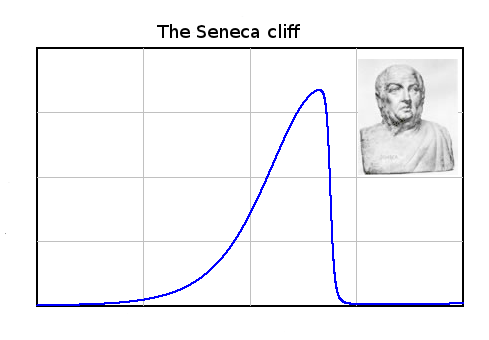
Could it be that the Seneca cliff is what we are facing, right now? If that is the case, then we are in trouble. With oil production peaking or set to peak soon, it is hard to think that we are going to see a gentle downward slope of the economy. Rather, we may see a decline so fast that we can only call it “collapse.”  We need to understand what factors might lead us to fall much faster than we have been growing so far.
We can take the Hubbert model [which is a bell curve] as a first step for the description of an economic system based on the exploitation of a non renewable resource. The idea underlying the model is that exploitation starts with the best, highest return resources. Then, depletion slowly forces the industry to move to lower return resources. Profits fall and the capability of the industry to invest in new extraction falls as a consequence. This slows down growth and, eventually, causes production to decline (Bardi et al. 2010). So, it is a very general model that could describe not just regional cases but whole civilizations. Most of the agrarian civilizations of the past were based on a depletable resource, fertile soil.
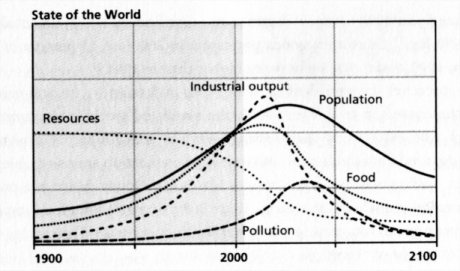
There are models more sophisticated than the Hubbert model that can tell us more about worldwide trends. One is the “World3” model used for “The Limits to Growth” study, first published in 1972. The model is based on assumptions not unlike those at the basis of the Hubbert model , but it considers the world’s economy as a whole. Here are the results of the “base case” scenario of the 2004 version.

Bardi then explains  of why the Hubbert oil depletion model  doesn’t have a Seneca cliff but the Limits to growth model does.  He says that perhaps what’s missing is pollution and the effects of pollution.  Pollution has a cost: money and resources must be spent to fight it; be it water or air poisoning or effects such as global warming.  The Fukushima disaster is a good example of pollution coming back to bite at the industry that produced it. It could be poisoning of the air or of water. It could be global warming and it could also be wars. Wars are great producers of pollution and a nuclear war would make the Seneca effect take place almost instantly.
Would technological progress save us from the Seneca cliff?  Actually, it could make the cliff steeper!
You might try other ways to modify the model, for instance increasing its complexity by adding more stocks. How about a “bureaucracy” stock that accumulates and then dissipates energy? Well, it will act just as the “pollution” stock; perhaps we might say that bureaucracy is a form of pollution. [When you add complexities like pollution or bureaucracy] the model becomes more similar to Tainter’s model where civilizations decline and collapse because of an increase in complexity that brings more problems than benefits.There are many ways to modify these models and the Seneca effect is not the only possible outcome. But, in general, the Seneca effect is a “robust” feature of this kind of model and it comes up for a variety of assumptions. You ignore the Seneca cliff at your own risk.
I defined as the “Seneca Cliff” the tendency of some systems to collapse after having peaked. Here I start from some considerations about whether the collapse could be smooth or an uneven process that we could define as “punctuated.” I am taking the Roman Empire as an example and showing that it did decline much faster than it grew. But the decline was surely far from smooth.

The idea of an impending collapse of our civilization is already bad enough in itself, but it has this little extra-twist that collapse may be given more speed by what I called the “Seneca Cliff,” from the words of the Roman Philosopher who had noted first that, “Fortune is slow, but ruin is rapid“.


The idea of the fast (or Seneca-like) collapse does not necessarily mean that collapse will be continuous or smooth.

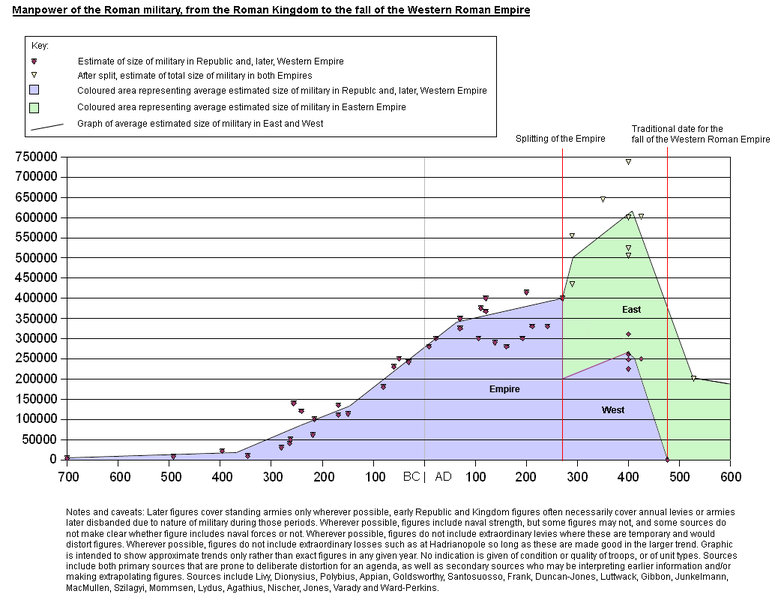
So, collapse may very well be “punctuated: a series of periods of temporary stability, separated by severe crashes. But it may still be much faster than the previous growth had been.  Consider the Roman empire – it grew for about 900 years and collapsed over the next 400.

this image is from Wikipedia.

It shows the size of the Roman military over the Empire’s span of existence. WIth all the uncertainties involved, also this image shows a typical “Seneca” shape for both the Western and the Eastern parts of the Empire. Decline is faster than growth, indeed.

Posted in 3) Fast Crash, By People, Scientists, Ugo Bardi | Tagged , , , | Comments Off on Ugo Bardi: Quite likely we’ll have a fast collapse, a “Seneca Cliff”

Survival: avoid disease and disability

If you want to have a shot at making it through the worst of the collapse stay healthy and avoid accidents.  Medicine will be less available as the depression grows worse and businesses fail. Below are some statistics about various diseases and disabilities.

Number of Americans Disease or disabling condition Estimated cost or comment Source Cost
178,600,000 Overweight or Obese $861 to $957 billion by 2030: 16-18% of health care costs American Heart Association 957,000,000,000
50,100,000 Medically attended injury and poisoning in noninstitutionalized population $406 Billion: $326 in lost productivity, $80 in medical treatment Journal of Epidemiology and Community health 406,000,000,000
38,284,000 Severe Disability under 65: 24,146,000. Over 65: 14,138,000. Total: 12.6% of Americans 2010 $357 Billion on programs for working age people with disabilities, 12% of federal outlays Census bureau 357,000,000,000
1,500,000 Autism Spectrum Disorder $200-400 Billion in 10 years Autism society 300,000,000,000
28,500,000 Diabetes – 8.3% of Americans $245 Billion Centers for Disease Control 245,000,000,000
5,000,000 Alzheimer’s $203 billion and $1.2 trillion by 2050 Centers for Disease Control 203,000,000,000
13,700,000 Cancer diagnosis (not all will die) $173 billion in 2020 173,000,000,000
80,000,000 Heart disease 17% of health cost now, $818 billion by 2030 $108.9 Billion Centers for Disease Control 108,900,000,000
128,000 Foodborne illness hospitalizations.  48 million cases/year $77.7 Billion Centers for Disease Control 77,000,000,000
795,000 Strokes $53.9 Billion Centers for Disease Control 53,900,000,000
7,500,000 Mental Retardation $51.2 Billion in 2003 51,200,000,000
68,000,000 High Blood Pressure $93.5 Billion Centers for Disease Control 47,500,000,000
15,000,000 Chronic Obstructive Pulmonary disease $38.8 Billion in 2006 Centers for Disease Control 38,800,000,000
1,148,200 HIV infection and over 13 years old $36.4 Billion in 2006 Centers for Disease Control 36,400,000,000
600,000 Heart Failure $34.4 Billion Centers for Disease Control 34,400,000,000
31,000,000 Chronic Kidney Disease (CKD) $34 Billion Centers for Disease Control 34,000,000,000
2,600,000 Falls of elderly over 65 $30 Billion Centers for Disease Control 30,000,000,000
8,000,000 Gout $20 Billion  Centers for Disease Control 20,000,000,000
1,300,000 Rheumatoid arthritis $19.3 Billion in 2010 American College of Rheumatology 19,300,000,000
19,000,000 new STD infections/year (Gonorrhea, Chlamydia, Syphilis) $17 Billion Centers for Disease Control 17,000,000,000
5,000,000 Fibromyalgia $13 Billion Centers for Disease Control 13,000,000,000
800,000 Cerebral Palsy $11.5 Billion in 2003 11,500,000,000
25,000,000 Ear Infection $3 Billion Centers for Disease Control 3,000,000,000
20,000 Hemophilia $3 Billion assuming $150,000/yr/person Centers for Disease Control 3,000,000,000
14,000,000 Vision impairment $2.5 Billion in 2003 2,500,000,000
1,400,000 Inflammatory Bowel Disease (ulcerative colitis and Crohn’s disease) $2.2 Billion Centers for Disease Control 2,200,000,000
48,000,000 Hearing Loss $2.1 Billion in 2003 2,100,000,000
450,000 Pulmonary Embolism $1.5 Billion 1,500,000,000
25,000 Amyotrophic Lateral Sclerosis $1.25 Billion Centers for Disease Control 1,250,000,000
4,500,000 Bitten by dogs, 800,000 get medical care $489 million or $29,396 per claim in 2011 Centers for Disease Control 489,000,000
73,000 Escherichia coli O157 $405 million Centers for Disease Control 405,000,000
10,000 group A streptococcal pharyngitis in children $381 million 381,000,000
10,528 Tuberculosis (TB) 2.1 million at $2,000 per case (but up to $250,000 per person if drug resistant) World Health Organization $2,100,000
650,043,728 Clearly many Americans have multiple diseases and disabilities Total cost not too meaningful since the overweight/obese cost includes many of these diseases, many diseases not included, etc.   3,250,727,100,000
Posted in Advice | Comments Off on Survival: avoid disease and disability

Grid has too many owners, forget about increasing the size and strength

Summary of The New York Times article below: There are too many commercial and government players. with too many conflicting interests, plus regulatory hurdles, as well as too much money required to maintain, improve, or expand the grid.

What this means: There’s no point to building more wind, nuclear, solar etc., because without a grid strong and large enough to contain the increased amount of generated electricity, the unstable electrical load will crash the grid and create blackouts. The grid needs to be enormous and national in scale to balance the electrical load because fluctuations in wind and other intermittent resources can bring the grid down. Currently the absolute maximum of wind power the grid could sustain now is about 30%, and every time you add wind power, you need to add more natural gas peaker power plants to quickly fire up when the wind dies down, which increases our reliance on natural gas, a finite resource.

Matthew L. Wald. July 12, 2013.Ideas to Bolster Power Grid Run Up Against the System’s Many Owners. New York Times

Bill Richardson often denigrated America’s power transmission network as a “third-world grid” when he was President Bill Clinton’s energy secretary, but the more current description of it is “balkanized,” with 500 separate owners.

Marc L. Spitzer, a former member of the Federal Energy Regulatory Commission, said even that analogy was not harsh enough.

“To call the U.S. grid balkanized would insult the Macedonians,” he said.

When President Obama presented his plans last month for executive action that would cut emissions of greenhouse gases, one item on his list was strengthening the power grid. It was on the lists of President George W. Bush and Mr. Clinton, too. But for the most part, experts say the grid is not being changed, at least not on a scale big enough to make much difference.

Their view is reflected in what they say is a largely hypothetical three-year effort by hundreds of engineers to redraw the grid for the eastern two-thirds of the United States. Engineers in the project, which is now drawing to a close, have proposed a basic redesign for beefing up the Eastern Interconnection, the part of the grid that stretches from Nova Scotia to New Orleans.

The redesign would reduce carbon dioxide emissions by replacing coal with wind energy and give the United States something it has never had, a grid designed for shipping bulk amounts of electricity across the continent. The planning, which cost $16 million, shows a substantial carbon emissions reduction.

But the project is covered with footnotes that assert that it does not represent the position of the participants.

“Our work goes into the general knowledge base of the kind of answers you would get when you ask certain policy questions,” said David Whiteley, the executive director of the Eastern Interconnection Planning Collaborative, which carried out the study. Christopher Russo, an energy consultant at Charles River Associates, which helped with the redesign, called it “a technical road map” of thousands of miles of high-capacity transmission lines, and calculations of electricity supply and load and the paths between them.

“We said, ‘Here’s what we could do,’ ” he said. “We haven’t said how we would pay for it.”

Still, drawing a sketch is a step forward. The grid is divided into regions that cover a state or a compact area (like New England) or slightly larger units, like PJM, which once stood for Pennsylvania-Jersey-Maryland but now extends through West Virginia, Ohio and the Chicago area. Almost all planning is done within those regions, as if they were islands. Federal officials say there is not even a regulatory mechanism for planning a line that does more than connect two regions.

“Given the history of this particular industry and its complexity, it is just not going to happen, at least not any time soon,” said James J. Hoecker, a former member of the Federal Energy Regulatory Commission, which has some jurisdiction over transmission lines. One problem, he said, is “resource nationalism,” in which individual states want to use local resources, whether they are coal or yet-to-be-built offshore wind, rather than importing from neighbors in a way that could be more economical.

For now, engineers in the grid redesign project have determined that conducting business as usual between 2010 and 2030 would require $18.5 billion in new transmission lines in the United States, while a system designed to integrate renewables like wind energy on a large scale would cost $115.2 billion. In some places, however, renewables could cut electricity costs by allowing the replacement of high-cost generators with lower-cost ones.

The technology, the engineering skill and even the money are all available, experts say, but the ability to reach agreement on such a grid is not. Dozens of experts said in interviews that there were simply too many players, both commercial and governmental, and too many conflicting interests.

Some of the players have a stake in cleaner or cheaper electricity, but others do not. “There are participants who have a vested interest in the high price of electricity, not the low price of electricity,” said Douglas Gotham, an industry analyst at Purdue University.

At the Illinois Citizens Utility Board, a state-chartered organization that represents consumer interests in regulatory proceedings, David Kolata, the executive director, said new lines could lower costs for customers. But, he said, “for every winner, you get just as many losers, perhaps even more losers.”

The hurdles are particularly acute with wind. Electricity can be made from natural gas almost anywhere, because a superb gas network, built under federal regulation over the last 60 years, will move the gas to wherever it is most convenient to burn it. Energy from coal can also be made almost anywhere. But to make electricity from wind, the generator has to be where the resource is, and for wind, that means places with few major power lines.

In Kansas, for example, sites are available where the wind is so strong that over the course of a year, a wind machine will produce half of its theoretical maximum capacity — an excellent output. But wind machines are more common in eastern locations where energy production is only one-third of the theoretical maximum.

“You could expect 40 or 50 percent more energy” with wind machines in western Kansas, said Michael Skelly, the president of Clean Line Energy Partners, a company that is trying to build, piecemeal, elements of the current plan.  The company is planning four large projects but faces significant regulatory hurdles.

The existing grid also makes it difficult to predict the energy output from wind projects. At a single wind farm, energy production can range from zero to 100 percent. But with hundreds of wind farms networked together, production would almost never be zero. Utility planners could in fact derive a minimum likely capacity, an important statistic as more resources are poured into building wind farms.

However, wind energy works only if it is widely shared. Already, there are times in the Pacific Northwest and the Midwest when wind production exceeds demand in the regions to which it can be easily sent. Electricity is a supply chain with a time lag even shorter than the one for sushi. If the power cannot be sent somewhere instantly, it is useless.

For now, there is simply no momentum for a transmission system that would connect the best sites for renewable energy with the biggest areas of demand. “There’s no overall transmission planning for the entire interconnection,” said Vladimir S. Koritarov, deputy director of the Center for Energy, Environmental and Economic Systems Analysis at Argonne National Laboratory.

There is some hope for individual projects, although experts say they are the equivalent of building Interstate highways one route at a time.

Posted in Electric Grid, Wind | Comments Off on Grid has too many owners, forget about increasing the size and strength

Paul Chefurka: A really nasty oscillating decline, wirth steep falls & desperate partial recoveries

Approaching the Limits to Growth” is the name of my site, given before I was convinced we were already at the limits. I now recognize that we are past them, and that there was really no way to avoid ending up in this situation.

I don’t favor any outcome over any other. I used to think a big, resounding, monolithic global CRASH! was inevitable, but I’ve grown up a lot since then… I think it’s more probable we’ll see a really nasty oscillating decline, with steep falls and desperate partial recoveries. That’s because the global economy could lose its cohesion early in the game, so that the collapse of one region will have less chance of cascading into others. But that could only happen after the major  trade/communication links have been snapped, and getting to that point is going to be vastly uncomfortable.

I no longer see any point in singling out individual aspects of the human experience for special attention or criticism. Population growth, climate change, global corporatism, chemical pollution, resource depletion, species extinctions, ocean overfishing and acidification, global financial instability, mounting social disparities and injustices are all merely symptoms of a system that has been out of control for centuries (despite our earnest attempts to convince ourselves otherwise.) We have no choice left – or perhaps we never really had any other choice – but to ride the dragon until the human overshoot corrects itself, as overshoots always do.

The silver lining I see is that all the pressures coming from this process of correction can be useful goads toward personal self-development. “In all matters, strive to do the right thing.” What does this mean to each of us? What does mindful living in the midst of the whirlwind entail, what does it require of us in terms of personal growth, in the development of wisdom and self-awareness? How might each of us resolve our alienation – from each other, from our societies, from nature, from our own place in the universe?  How may we find the re-connections that are essential if we are to emerge from this tumultuous, careless human adolescence into individual and collective adulthood? These are deep questions for dark times.

Posted in By People, Paul Chefurka | Comments Off on Paul Chefurka: A really nasty oscillating decline, wirth steep falls & desperate partial recoveries

Peak fossil fuels means global warming less than projected

This Science article states we could emit CO2 at the same rate we are now for another 50 years before going over the 2 degrees Celsius level we need to avoid a runaway greenhouse.  Since we are at peak world fossil fuels now (oil since 2005, coal right now energy-content-wise) or within the 10-20 years (coal, natural gas) — the decline of which will likely create enough war and social unrest to prevent extraction of most other fossil fuels, there’s an excellent chance we are on the cusp of a permanent decline in fossil fuel emissions, as well as a reduction of damage in the 9 planetary boundaries, since fossil fuels are the master resource that make the damage we’re doing to the planet possible.

H. Damon Matthews Science 26 April 2013: Vol. 340 no. 6131 pp. 438-439   DOI: 10.1126/science.1236372

Irreversible Does Not Mean Unavoidable

Understanding how decreases in CO2 emissions would affect global temperatures has been hampered in recent years by confusion regarding issues of committed warming and irreversibility. The notion that there will be additional future warming or “warming in the pipeline” if the atmospheric concentrations of carbon dioxide were to remain fixed at current levels has been misinterpreted to mean that the rate of increase in Earth’s global temperature is inevitable, regardless of how much or how quickly emissions decrease. Further misunderstanding may stem from recent studies showing that the warming that has already occurred as a result of past anthropogenic carbon dioxide increases is irreversible on a time scale of at least 1000 years. But irreversibility of past changes does not mean that further warming is unavoidable.

The climate responds to increases in atmospheric CO2 concentrations by warming, but this warming is slowed by the long time scale of heat storage in the ocean, which represents the physical climate inertia. There would indeed be unrealized warming associated with current CO2 concentrations, but only if they were held fixed at current levels.

If emissions decrease enough, the CO2 level in the atmosphere can also decrease.

My comment: The CO2 level in the atmosphere will go down from now on because we’re at peak oil, coal, and natural gas production — or will be soon.

This potential for atmospheric CO2 to decrease over time results from inertia in the carbon cycle associated with the slow uptake of anthropogenic CO2 by the ocean. This carbon cycle inertia affects temperature in the opposite direction from the physical climate inertia and is of approximately the same magnitude.

Because of these equal and opposing effects of physical climate inertia and carbon cycle inertia, there is almost no delayed warming from past CO2 emissions. If emissions were to cease abruptly, global average temperatures would remain roughly constant for many centuries, but they would not increase very much, if at all. Similarly, if emissions were to decrease, temperatures would increase less than they otherwise would have.

Thus, although the CO2-induced warming already present on our planet—the cumulative result of past emissions—is irreversible, any further increase in CO2-induced warming is entirely the result of current CO2 emissions. Warming at the end of this century and beyond will depend on the cumulative emissions we emit between now and then. But future warming is not unavoidable: CO2 emissions reductions would lead to an immediate decrease in the rate of global warming.

Why, then, are many different near-term projections of CO2-induced warming very similar? These modeled estimates are similar because even socioeconomic scenarios that produce very different cumulative emissions by the end of this century are not very different over the next two decades (figs. S1 and S2). The climate system physics implies that further increases in warming could in principle be stopped immediately, but human systems have longer time scales. Carbon-emitting infrastructure is designed to benefit human-kind for many decades; each year’s additional infrastructure implies added stock intended to last and emit CO2 for many decades. It is this dependence on CO2-emitting technology that generates a commitment to current and near-future emissions.

The strong dependence of future warming on future cumulative carbon emissions implies that there is a quantifiable cumulative amount of CO2 emissions that we must not exceed if we wish to keep global temperature below 2°C above preindustrial temperatures. Several recent analyses have suggested that total CO2 emissions of ∼1000 Pg C (∼3700 Pg CO2; 1 Pg = 1015 g) would give us about even odds of meeting the 2°C target (912). To meet such a target given historical emissions would mean that the world has roughly half of the allowable emissions budget remaining. This is equivalent to 50 years of emissions at current levels and carries the implication that the longer we delay before beginning to decrease emissions, the faster the rate of decrease must be to stay within this total allowable budget.

Given the irreversibility of CO2-induced warming, every increment of avoided temperature increase represents less warming that would otherwise persist for many centuries. Although emissions reductions cannot return global temperatures to pre-industrial levels, they do have the power to avert additional warming on the same time scale as the emissions reductions themselves. Climate warming tomorrow, this year, this decade, or this century is not predetermined by past CO2 emissions; it is yet to be determined by future emissions. The climate benefits of emissions reductions would thus occur on the same time scale as the political decisions that lead to the reductions.

Posted in CO2 and Methane, Coal, Global Warming, Oil | Comments Off on Peak fossil fuels means global warming less than projected

Stephen Hawking: Escape to another planet before we go extinct

The only method of propulsion we have to escape the planet is, you guessed it, fossil fuels, and they don’t come anywhere near to getting us to the speed of light necessary to get to even the closest star. Nor will a space elevator do that — even if it could be built, it’s absolutely ridiculous to think we could survive on the Moon or Mars.  Even Biosphere II was a failure, and that was right here on Earth.   The idea of abandoning Earth is absurd, ridiculous, sad — pure science-fiction.  But you can’t talk about extinction, or get a book published if you don’t offer some hope.

Stephen Hawking believes we won’t survive another 1,000 years unless we escape Mother earth.  He believes people will become extinct by then if we don’t.  “I believe that the long-term future of the human race must be in space, since it will be difficult enough to avoid disaster on planet Earth in the next hundred years, let alone the next thousand, or million. The human race shouldn’t have all its eggs in one basket, or on one planet.  In the recent past, humankind’s survival has been nothing short of “a question of touch and go” (he cites the Cuban Missile Crisis in 1963 as an example of how narrowly we escaped extinction).  There are about 22,600 stockpiled nuclear weapons world-wide, 7,770 of which are still operational (Federation of American Scientists). Since there’s no global nuclear non-proliferation treaty, the threat of a nuclear holocaust still exists.  In fact Hawking says, since “the frequency of such occasions [of nuclear warfare] is likely to increase in the future, we shall need great care and judgment to negotiate [all of these incidents] successfully.”

Annalee Newitz, author of “Scatter, Adapt, and Remember: How Humans Will Survive a Mass Extinction” says that “we’re going to have to use all our technological know-how to make dramatic changes to the planet we live on—and then to find ways of escaping it to build cities on the moon and on other planets. Ultimately, our future is among the stars.”

What is the actual situation we’re in?

We’re about to drastically cut our carbon emissions totally against our will, because we’re at peak oil, coal, and natural gas (without which the tarsands can’t be mined in Canada).

According to articles in nature, science, and the International Energy Agency (as well as many other peer-reviewed and government sources), we reached the peak of world oil production in 2005 and have been on a plateau ever since then.

We are at, or near peak coal according to Richard Heinberg and David Fridley in the 18 November 2010 issue of Nature: “The end of cheap coal” which I review at energyskeptic in “Peak Coal is already here or likely by 2020 — if true — IPCC 100 year projections too high?”

We’re also probably at or near peak natural gas due to how expensive it is to drill for it (a financial crash would end the current fracking in the USA), much of it is “stranded” (too far from cities to lay million-dollar-per-mile pipelines), and so on.

Nor are there any alternative solutions to fossil fuels given that we face a liquid fuel crisis since 97% of transportation runs on oil (tractors to plant and harvest crops, trucks to deliver crops, etc). There aren’t enough plants to make biofuels (see energyskeptic “Peak Soil: Why Cellulosic and other Biofuels are Not Sustainable and a Threat to America’s National Security”).

Electrical generation of any kind is not a “fix”. Wind, solar, and other “alternatives” depend on fossil fuels throughout their life cycle. See the energy section of energyskeptic for details.

What are the real “solutions” to our quandary?

At this point it’s time for people to get more realistic about what’s required to cope with the die-off ahead. To offer the false hope of escaping to another planet or harming our planet even more by geoengineering (there are real downsides that aren’t discussed in this book, let alone that these “fixes” aren’t feasible without lots of fossil fuels, which are starting to decline).

It’s probably too late to do anything, but governments could help a great deal by setting one-child per women incentives, and drastically lowering immigration levels so that countries that continue to grow their population and exacerbate the world-wide “Tragedy of the Commons” can’t solve their dilemma by exporting excess people.

Which at this point is a bit like war — the Roman Empire partly fell from excess immigration of the “Barbarians” who were fleeing the Huns, and sought out the much improved standard of living in the Roman Empire. 99% of them were not “invading” — they were immigrating there peacefully to live a better lifestle. Read more about this in The Fall of Rome: And the End of Civilization.

The carrying capacity of the USA without fossil fuels is 100 million people. It is considered racist to even mention lowering the number of immigrants, mainly because right-wing think tanks have made it politically incorrect, since the wealthy are the only ones who benefit from lower labor costs. Well, of course it’s a bit more complicated than that, if you’re interested in learning more, this very important article is free on the internet: Roy Beck and Leon Kolankiewicz. “The Environmental Movement’s Retreat from Advocating U.S. Population Stabilization”. The Journal of Policy History (Penn State University Press); Vol. 12, No. 1 January 1, 2000

———————-

There are more and more books about the true nature of our situation, and in the required happy bit about the “solutions” the author says we can always move to another solar system.  But wait — it’s not so easy.  Aside from all rockets being driven now by fossil fuels, which we won’t have much of in the future, where would we go?

Red Dwarf stars are 75% of the stars in our galaxy, but they’re much smaller and cooler than our sun.

“The habitable zone around low-mass stars is considerably closer to the star than for sun-like stars, due to the lower temperature … Such proximity produces new hazards: susceptibility to stellar activity and coronal mass ejections, tidal forces, stronger magnetic forces, etc.”

So habitable planets would have to be much closer than Earth is to the Sun.

But a planet close enough to sustain life would have such extreme tides that the oceans would evaporate, because “stars with a mass less than a third of that of our sun have habitable zones so close in that this tidal heating would evaporate any planet’s water, the researchers found (arxiv.org/abs/1203.5104)”

Light from the planet’s star would then split the water vapor into hydrogen, which would escape into space, and oxygen, which could go on to form the greenhouse gas carbon dioxide. Planets blanketed in CO2 would heat up further, developing into uninhabitable hothouses like Venus, the team concludes.

Read more about it at:

Rory Barnes. Habitability of planets orbiting cool stars.

6 April 2012. Tides turn some habitable planets hellish. New Scientist.
Tides evoke the sea, but they may dry out what would otherwise be habitable planets around small stars, making them hostile to life.

Rory Barnes of the University of Washington in Seattle and his colleagues calculated what would happen to Earth-like planets orbiting the most common type of star in the galaxy: red dwarfs.

These stars are much cooler and fainter than the sun, meaning the habitable zones around them – in which planets can have liquid water on their surface – are much closer in. Any planets orbiting in those zones feel very strong gravitational tugs from the star.

Unless such a planet travels on a perfectly circular orbit, the strength of the star’s pull varies at different points along its path. This squeezes and stretches the planet, heating it up.

Stars with a mass less than a third of that of our sun have habitable zones so close in that this tidal heating would evaporate any planet’s water, the researchers found (arxiv.org/abs/1203.5104).

Light from the planet’s star would then split the water vapor into hydrogen, which would escape into space, and oxygen, which could go on to form the greenhouse gas carbon dioxide. Planets blanketed in CO2 would heat up further, developing into uninhabitable hothouses like Venus, the team concludes.
Posted in Cambridge Centre Study of Existential Risk, What to do | Comments Off on Stephen Hawking: Escape to another planet before we go extinct

Science book review of Vaclav Smil’s “Approaching the Limits”

Steven W. Running  Science 15 March 2013:
Vol. 339 no. 6125 pp. 1276-1277
DOI: 10.1126/science.1235886

Approaching the Limits

Harvesting the Biosphere What We Have Taken from Nature by Vaclav Smil MIT Press, Cambridge, MA, 2012. 315 pp. $29, £19.95. ISBN 9780262018562.

One of the foundational principles of biology is that a population cannot grow forever in a finite ecosystem—a progressive system feedback of starvation, predation, and disease limits uncontrolled growth.

The global human population has now nearly tripled since 1950, and economic activity increased tenfold, leading many to suggest that humanity is heading toward a population and consumption overshoot (resource depletion and correction, as economists would say).

In Harvesting the Biosphere, Vaclav Smil traces the historical development of human consumption of biological resources and evaluates whether we could be approaching important global limits. Smil (an economist at the University of Manitoba) has written several books on global energy and other resource issues; here, he focuses on human consumption of the plant and animal life and whether current trends are sustainable.

One cannot assume that all of global NPP is potentially available for human use. Some regions of the Amazon or Siberia, for example, are too remote for harvest. More important, do we really want to plow and clear the whole world? Most of us want to preserve some natural systems for biodiversity, ecosystem services (such as water and air purification), recreation, or aesthetic beauty. Human settlements and infrastructure, termed impervious surfaces, presently cover only 0.44% of Earth’s continental surface, whereas agriculture and grazing lands cover about 40%. Although global NPP currently appears stable, Smil suggests the great potential for pollution, exhaustion of soil nutrients, and irrigation depletion to substantially reduce the future NPP available for humanity. In addition, bioenergy is emerging as a massive new demand on NPP. Should fossil fuels become scarce, expensive, or unwanted, biofuels could, if allowed by policy and economic strategies, consume all remaining available NPP (2).

The future limits of HANPP become an urgent policy issue when one considers the 40% increase in global population expected over the next three or four decades and the expansion in living standards aspired to by the under-developed world. Smil expects that current policies will lead to a2-3 fold increase in HANPP demand in the next half century, and he rightfully asks if this increase is possible.

Scholars around the world have been asking roughly this same question since 1972, when the landmark Limits to Growth book appeared (3). More recent analyses—such as the global human footprint, planetary boundaries, and Gaia—address the question from various angles. Each has indicated that another half-century of the current trajectory of human development, consumption, and economic aspirations does not appear possible (47).

Smil’s final recommendations echo others: global population must be stabilized at or below 9 billion; agriculture has to become sustainable, no longer relying on fossil-fuel–based fertilizers and mining groundwater for irrigation; meat consumption must be moderated; and food storage and processing must be improved and wastage minimized. Crucially, the rich nations have to share global resources more equitably with emerging countries, as simply growing more does not appear possible.

Full of recent references and statistics, Harvesting the Biosphere adds to the growing chorus of warnings about the current trajectory of human activity on a finite planet, of which climate change is only one dimension. One can quibble with some assumptions or tweak Smil’s calculations, but the bottom line will not change, only the time it may take humanity to reach a crisis point.

Systems ecology teaches that the human population and consumption trajectories need a stronger feedback control than currently exists. Either we are smart enough to craft that feedback mechanism ourselves, or the Earth system will ultimately provide it.

Unfortunately, the tragedy of the commons suggests that collective international actions to voluntarily reduce consumption are contrary to human nature.

References

1. P. M. Vitousek, et al. Human Appropriation of the Products of Photosynthesis. Nearly 40% of potential terrestrial net primary productivity is used directly, co-opted, or foregon because of human activities. Bioscience 36, 368 (1986).

2. W. K. Smith et al, Global Bioenergy capacity as constgrained by observed biospheric productivity rates.  Bioscience 62, 911 (2012).

3. D. H. Meadows et al., The Limits to Growth: A Report for the Club of Rome’s Project on the Predicament of Mankind (Universe, New York, 1972).

4. www.footprintnetwork.org.

5. J. Lovelock. The Vanishing Face of Gaia: A Final Warning (Basic, New York, 2010).

6. J. Randers. 2052: A Global Forecast for the Next Forty Years (Chelsea Green, White River Junction, NH, 2012).

7. A. Wijkman, et al. Bankrupting Nature: Denying Our Planetary Boundaries (Routledge, London, ed. 2, 2012)

Posted in Agriculture, Books | Comments Off on Science book review of Vaclav Smil’s “Approaching the Limits”

China is working on cyber attacks of our infrastructure and stealing secrets

Stone, R. March 1, 2013.  A Call to Cyber Arms. Science, Vol. 339 no. 6123 pp. 1026-1027

China’s extensive cyber research activities and allegations over cyber espionage have put the United States on high alert.

XI’AN, CHINA—The leaflet posted in the school of information engineering here at Xi’an Jiaotong University was brief but enticing, offering computer-savvy graduates a hefty stipend and the chance to serve their motherland. “I was curious,” says Liu, who asked that only his surname be used in this article. It was the spring of 2007, and Liu, then 24 years old, was wrapping up a master’s degree in computer algorithms. Encouraged by his supervisor, Liu called the number on the leaflet; that summer, he joined an elite corps of the People’s Liberation Army (PLA) that writes code designed to cripple command-and-control systems of enemy naval vessels.

PLA writings call the electromagnetic spectrum “the fifth domain of battle space,” putting cyberspace on an equal footing with ground, air, sea, and space. Cyber conflicts “threaten national security and the very existence of the state,” two scholars with the Academy of Military Sciences wrote in China Youth Daily in 2011. State media regularly tout PLA activities in cyber defense, a catchall term encompassing everything from surveillance and espionage to weapons such as electromagnetic pulse generators that disable computer networks and malware designed to take down power grids or contaminate water supplies. Augmenting PLA efforts is a legion of civilian researchers and hackers whose efforts ostensibly are directed at repelling electronic intruders. In 2011, more than 8.5 million computers in China “were attacked by rogue programs every day,” a 48% increase over the previous year, says Li Yuxiao, a cyber law expert at Beijing University of Posts and Telecommunications.

But evidence is accumulating that China can dish it out, too. In a report issued last week, the U.S. computer security firm Mandiant tracked one especially adept group of hackers, sometimes called the Comment Crew or Comment Group, to a neighborhood in Shanghai housing Unit 61398, a bureau of the PLA General Staff Department’s Third Department. According to Mandiant, other computer security analysts, and U.S. State Department sources, hackers in China have gathered gigabytes of data on industrial secrets, military hardware, and government strategy for political negotiations.

This is not a unilateral arms buildup. Another heavyweight in the cyber arena is Russia; hackers took down Georgian government servers in advance of Russia’s invasion of that former Soviet republic in August 2008. The United States, too, has gone all-in on cyber warfare. In 2009, it established the U.S. Cyber Command in Fort Meade, Maryland, to conduct “full-spectrum military cyberspace operations.” The Defense Department’s operational needs “will require the integration of cyber and electronic warfare at unprecedented levels,” said Regina Dugan, then-director of the U.S. Defense Advanced Research Projects Agency, in a statement released by DARPA before the Senate took up the 2013 defense authorization. According to U.S. Defense Secretary Leon Panetta, the Pentagon spends about $3 billion a year on cyber security.

Now that Pandora’s box is open, the United States fears that it, too, may someday be on the receiving end of an effective attack. In his State of the Union speech on 12 February, U.S. President Barack Obama declared that unidentified enemies are “seeking the ability to sabotage our power grid, our financial institutions, [and] our air traffic control systems.” That day, he signed an executive order to strengthen cyber defenses and called on Congress to pass legislation that would “give our government a greater capacity to secure our networks and deter attacks.” Last week, the U.S. Department of Energy announced $20 million in funding for the development of technologies to strengthen the cyber security of delivery systems for electricity, oil, and gas.

A one-two punch featuring a cyber attack on critical infrastructure and a physical strike against U.S. targets could leave the country reeling from a “cyber Pearl Harbor,” Panetta warned in a speech last October. “It would paralyze and shock the nation and create a new, profound sense of vulnerability,” he said.

Raising an army

In a conflict in the Pacific, the USS Blue Ridge, the U.S. Navy’s command ship in the region, would be a ripe target for a cyber strike.

At Dalian University of Technology in northeast China, a pair of researchers funded by the science ministry and the National Natural Science Foundation of China published a report in Safety Science in July 2011 on vulnerabilities in the western U.S. power grid.

China so far has shown only some of its cards. Chinese hackers have allegedly used computer network exploitation techniques such as spearphishing, in which malware is embedded in target computers, to harvest data from a long list of Fortune 500 companies, think tanks, and government agencies. Since 2006, the Mandiant report documents, the Shanghai-based hacking group it tracked has pilfered hundreds of terabytes of data from 141 organizations, including 115 in the United States. Information technology and aerospace firms were targeted most frequently. Mandiant said it believes the activity it observed “represents only a small fraction of the cyber espionage” committed by the Shanghai outfit.

Delays and cost overruns in the U.S. F-35 fighter jet program “may be the result of cyber espionage, as could the rapid development of China’s J-20 stealth fighter,” Lewis testified before the U.S. Congress last April. “Cyber espionage is the most pressing threat we face,” he asserted.

Related articles

Electric Grid

Posted in Cyber, CyberAttacks | Tagged , | Comments Off on China is working on cyber attacks of our infrastructure and stealing secrets

Ground water declining at an alarming rate in Iraq, Iran, Syria, and Turkey

[ Lack of water in this region is destabilizing and thus could affect oil production as desperate populations migrate, civil wars, and social unrest unfold.  Alice Friedemann   www.energyskeptic.com  author of “When Trucks Stop Running: Energy and the Future of Transportation”, 2015, Springer]

22 Feb 2013. Drying out the cradle of civilization. Science vol 339 p.889

Figure

New satellite data paint a picture of humans draining the region’s meager water resources at an alarming rate. By measuring subtle changes in the pull of gravity over parts of Turkey, Syria, Iraq, and Iran from 2003 through 2009, NASA’s twin GRACE satellites have revealed a dramatic loss of about 90 cubic kilometers of ground water (reds are largest losses), as reported last week in Water Resources Research. Farmers and other water users struck by a 2007 drought apparently had to withdraw water from wells faster than rain could replenish it.


Posted in Groundwater, Peak Water | Comments Off on Ground water declining at an alarming rate in Iraq, Iran, Syria, and Turkey