Poverty is Increasing

4 Apr 2013. 21 Statistics About The Explosive Growth Of Poverty In America That Everyone Should Know. TheEconomicCollapseBlog.com

A few of the 21 stats:

Fottrell, Q. December 23, 2015. Most Americans have less than $1,000 in savings. MarketWatch.com

Approximately 62% of Americans have less than $1,000 in their savings accounts and 21% don’t even have a savings account, according to a new survey of more than 5,000 adults conducted this month by Google Consumer Survey for personal finance website GOBankingRates.com. “It’s worrisome that such a large percentage of Americans have so little set aside in a savings account,” says Cameron Huddleston, a personal finance analyst for the site. “They likely don’t have cash reserves to cover an emergency and will have to rely on credit, friends and family, or even their retirement accounts to cover unexpected expenses.

This is supported by a similar survey of 1,000 adults carried out earlier this year by personal finance site Bankrate.com, which also found that 62% of Americans have no emergency savings for things such as a $1,000 emergency room visit or a $500 car repair. Faced with an emergency, they say they would raise the money by reducing spending elsewhere (26%), borrowing from family and/or friends (16%) or using credit cards (12%). And among those who had savings prior to 2008, 57% said they’d used some or all of their savings in the Great Recession, according to a U.S. Federal Reserve survey of over 4,000 adults released last year. Of course, paltry savings-account rates don’t encourage people to save either.

In the latest survey, 29% said they have savings above $1,000 and, of those who do have money in their savings account, the most common balance is $10,000 or more (14%), followed by 5% of adults surveyed who have saved between $5,000 and just shy of $10,000; 10% say they have saved $1,000 to just shy of $5,000.

Some age groups are less likely to have savings than others. Some 31% of Generation X — who are roughly aged 35 to 54 for the purpose of this survey — while being older and presumably more experienced with money than their younger cohorts, actually report a savings account balance of zero, which is the highest percentage of all age groups. Around 29% of millennials — aged 18 to 34 — and 28% of baby boomers — aged 55 to 64 — said they have no money in their savings account. Baby boomers (17%) and seniors aged 65 and up (20%) have the most money saved of any age group while less than 10% of millennials and approximately 16% of Generation X have $10,000 or more saved.

Posted in Poverty | Tagged , , | Comments Off on Poverty is Increasing

Natural Gas Facts and Statistics

Impurities can also be present in large proportions, including carbon dioxide (CO2), helium, water, nitrogen and hydrogen sulfide (H2S), but also mercury. All of these impurities, especially CO2 and H2S, must be removed from the natural gas stream before transport and commercialization. CO2 and H2S can corrode pipelines, are highly toxic and are significant sources of air pollution. Gases with high levels of H2S and CO2 are also called sour gases.

Impurities can also be present in large proportions, including carbon dioxide (CO2), helium, water, nitrogen and hydrogen sulfide (H2S), but also mercury. All of these impurities, especially CO2 and H2S, must be removed from the natural gas stream before transport and commercialization. CO2 and H2S can corrode pipelines, are highly toxic and are significant sources of air pollution. Gases with high levels of H2S and CO2 are also called sour gases.

SBC. October 2014. Factbook Natural Gas Factbook. SBC Energy Institute

  • 83% of natural gas comes from conventional reservoirs: 2.9 trillion cubic meters
  • 13% of reservoirs account for 70% of global reserves
  • The number of discoveries of giant fields has fallen since 1972
  • 17% comes from unconventional resources: .6 tcm and 43% of that (2.6 tcm) was produced in the US. In 2013, shale gas accounted for 39% of total natural gas output in the US
  • At 3.5 trillion cubic meters (tcm) world-wide production in 2013, reserves will last from Rystad’s 2014 estimate 60.4 tcm for 17 years, or 58 years if OPEC’s estimate of 200 tcm reserves is correct. Page 24  
  • Technically recoverable resources (the volume of natural gas recoverable with current exploration and production technology and no regard to cost) are 855 tcm and would last 244 years @ 3.5 tcm/year (if we can get them).
  • Conventional
  • Conventional reservoirs tend to require less technology to be developed and to yield higher recovery rates. However, reservoirs located in deep water or Arctic environments, and those containing a high level of sour gas may also be very challenging to develop.

We are counting on shale gas, but we’re drilling the best “sweet” spots, and even so, it declines rapidly:

shale gas declines fast graph


Due to the properties of the source rock, shale-gas wells usually exhibit early production peaks and then enter rapid decline – typically 50% over 3 years. In addition, shale-gas plays concentrations of recoverable generally have lower resources – typically around 0.04-0.6 bcm/km2, compared with an average of 2 bcm/km2 in the case of conventional resources. Consequently, shale-gas production requires more wells.

Conventional Tight Gas Shale Gas Coalbed Methane
Proved reserves (tcm) 60.4 78.0 4.9 0.98
USA reserves   (tcm) 3.2 10.4 0.8
Technically recoverable resources (tcm) 519.0 2.3 210.0 48.0
Current Production bcm/y 2831.0 215.0 266.0 71.0
USA Production   bcm/y 211.8 133.2 242.3 52.8
Cost of production per Mbtu $0.2 – 9 (a) $3 – 9 (b) $2-10 © $3-8 (d)
Recovery Factor % 60-80 30-50 8-30 50-85

Sources:

(a) Source: IEA (2013), “World Energy Outlook 2013”; Rystad databases (accessed May 2014); BP (2013), “BP Statistical World Energy Review 2013”
(b) Rystad databases (accessed May 2014); IEA (2013), “Resources-to-Reserves 2013”; Schlumberger (2011), “Basic Petroleum Geochemistry for Source Rock Evaluation”
(c) Schlumberger (2011), “Shale Gas: A Global Resource”; Schlumberger (2006), “Producing Gas from Its Source”; Rystad databases (accessed May 2014); IEA (2013), “Resources-to-Reserves 2013”
(d) Schlumberger (2009), “Coalbed Methane: Clean Energy for the World”; Rystad databases (accessed May 2014); IEA (2013), “World Energy Outlook”

The slide below is especially scary because it shows that USA conventional reserves are only 26%:

world reserves by 4 types of NG Rystad database April 2014


And the United States is producing its reserves at a very rapid rate:

NG production world-wide Rystad database

Proved reserves are based on figures from the Organization of the Petroleum Exporting Countries (OPEC) and Rystad (P90 for the latter). They correspond to those quantities of natural gas which, by analysis of geological and engineering data, can be estimated with reasonable certainty to be commercially recoverable, from a given date forward, from known reservoirs and under current economic conditions, operating methods, and government regulations.

Like CO2, methane is a potent greenhouse gas (GHG). However, it has a higher global warming potential (GWP) than CO2. According to the IPCC, methane GWP would be 28 to 84 times higher than CO2 GWP over 100-year and 20-year horizons, respectively.

While abundant, the largest conventional gas resources are concentrated in a small number of countries. In the 2000s, it was thought that Russia, Iran and Qatar owned more than 70% of known conventional gas resources, but recent discoveries of conventional reservoirs in East Africa and the Mediterranean Sea have opened up new gas frontiers, reducing the concentration of natural gas reserves.

According to OPEC, natural gas production was led by North America, Russia, and the Middle East; of this, 83% came from conventional reservoirs.

Raw natural gas collected at the wellhead needs to be processed to meet pipeline quality standards, to ensure safe and clean operations, and to extract valuable natural gas liquids (NGLs). As of 2013, there are close to 2, 000 gas-processing plants operating worldwide, with a global capacity of around 7.6 billion cubic meter (bcm) per day.

About 21% and 10% of all produced natural gas is now traded internationally via, respectively, pipelines and LNG. As a rule of thumb, the longer the shipping distance, the more economically attractive LNG tends to become compared with pipelines. Growth in the LNG trade has been made possible by the expansion of LNG infrastructure: there are now 29 countries with import facilities and 19 with export facilities, trading 237 million tons per annum (Mtpa) of LNG. With new export and regasification facilities under construction, the expansion is expected to continue. Meanwhile, floating liquefaction and regasification concepts have garnered attention as a way of reducing development time, increasing flexibility and lowering capital costs. The first floating storage and regasification units (FSRU) have been commissioned. Four floating liquefaction (FLNG) projects have achieved a final investment decision. Nevertheless, many gas fields are too small or remote to justify pipelines or LNG investment. In order to tap these resources, known as stranded gas, two alternative technologies are being considered: compressed natural gas (CNG) and gas-to-liquids (GTL).

The buildings segment still accounts for 22% of direct natural gas demand and this share is expected to remain stable in the next few decades. Thermal applications are dominant: space heating, water heating and cooking account for 54%, 22% and 11% of natural gas demand in the buildings sector, respectively. The use of natural gas in buildings varies significantly, depending on climate, urbanization patterns, or building design and insulation.

In industry, natural gas is used as a heat source, but also as a chemical feedstock. Direct natural gas consumption represents around 18% of final energy consumption in industry. The chemicals and petrochemicals sectors are by far the most important consumers (accounting for 44% of total industry demand for gas). This is because natural gas is largely used as a source of heat in refineries and as feedstock for producing ammonia and methanol. Other than for chemicals, the bulk of industrial gas demand comes from small-scale industrial consumers using natural gas in small-to medium-scale boilers to generate heat. Any switch from coal to gas in the industrial sector is likely to be relatively limited and subject to the development of carbon pricing.

Conventional gas refers to resources accumulated in a reservoir in which buoyant forces keep hydrocarbons in place below a sealing cap rock. Reservoir and fluid characteristics typically permit natural gas to flow readily into a wellbore. The term unconventional reservoirs, in which gas might throughout a reservoir at the basin scale, and in which buoyant forces are insufficient to expel gas from the reservoir, meaning that intervention is required. Conventional gas reservoirs can either be isolated (non-associated) or associated with oil. Associated gas can be in form of a gas cap (free gas) or it can exist in solution within the oil (solution gas). Natural gas was long considered an unwanted byproduct of oil and was only considered as a commercial prospect when deposits were located close to markets or gas infrastructure.

Coalbed methane is generated during the formation of coal and is contained to varying degrees within all coal microstructure. Because of coal’s porous nature and its many natural cracks and fissures, coal can store more gas than a conventional reservoir of similar volume. However, production from CBM wells can be difficult because of the low permeability of most coal seams. As a result, technologies such as directional drilling and hydraulic fracturing are used to open access to larger areas, enhancing well productivity. Finally, CBM production is often associated with extensive production of water. Water must be removed in order to reduce pressure within the reservoir, making lifting and surface separation more complex and costly. CBM production is advanced in the U.S., Canada and Australia.

Pipelines

Pipelines are the backbone of gas transportation, with a global network of 1. 4 million kilometers

Globally, more than 89% of natural gas is transported along a 1.4 million km pipeline grid. One-third of this network are lines transporting large pressure, large-diameter (6’’-48’’) pipelines. The other two-thirds comprise thinner pipelines at production sites, called gathering lines, and the medium- and low-pressure distribution grids that supply end-customers. Pressure is required to maintain the gas flow. As a result, compression stations are located every 80-160 kilometers along the transport grid. Each station contains one or several compressor units (up to 16). These are classified by their horsepower (up to 50,000-80,000) and gas capacity (up to 90 Mcm/d). Compressors can use a motor (reciprocating) or a turbine (known as centrifugal). Gas-filtering, but also cooling and heating facilities are often included in the station to maintain gas temperature. Gas transport pipelines are usually made of carbon steel and protected against corrosion by external coating and cathodic protection systems.

Pipeline costs vary significantly according to capacity, length and their physical environment, but are dominated by the costs of labor and materials.

Before liquefaction, natural gas must be cleaned to remove contaminants, which might freeze during liquefaction or corrode pipelines. Heavier hydrocarbons are also extracted to meet gas specifications.

LNG

Several liquefaction projects are in development in the U.S., but most are awaiting final investment decisions. Sabine Pass is the only project under construction as of 2014.

Australia is the third largest LNG exporter (22.2 mtpa, or 10% of world exports) after Qatar (77.2 mtpa) and Malaysia (24.7 mtpa) but ahead of Indonesia (17 mtpa). However, Australia, where 53% (63.8 mtpa) of the liquefaction capacity under construction worldwide is located, is expected to take over Qatar as the largest LNG exporter by 2020.

Natural gas prices: for distances up to 9,000 km, LNG tends to require more energy than pipelines, making it more exposed to price increases (i.e. the break-even point between pipeline and LNG may occur over a longer distance than when a pipelines system is used).

Many gas fields are too small or too remote to justify investment in pipelines or LNG facilities. In some environments, the use of pipelines is simply not practical. A possible alternative is compressed natural gas, which is already being used for local gas distribution onshore, but whose application offshore, although conceptually CNG’s main benefit is that it requires relatively little infrastructure, so capital requirements are low : compression is a common feature of most gas-production units and less costly than liquefaction; offloading requires simple buoys. However, CNG has a lower energy density than LNG (typically around one-third, depending on the pressure). As a result, investments in CNG carriers are greater and operating costs are also higher (notably fuel costs).

If the US ever needs to import LNG because shale gas gets too expensive to drill, there are very few regasification plants:

US and south america regasification plants


LNG is very expensive as well
LNG cost breakdown


NG vs coal power plants


energy demands by fuel in buildings and homes


Aluminum, pulp & paper, cement, iron & steel, and chemicals & petrochemicals are the main energy-intensive industries and together account for more than 50% of industrial energy demand

Aluminum, pulp & paper, cement, iron & steel, and chemicals & petrochemicals are the main energy-intensive industries and together account for more than 50% of industrial energy demand


Natural gas plays an important role as a feedstock for producing ammonia, methanol and other hydrocarbon-based products (e.g. olefins, such as ethylene and propylene, using natural gas liquids2). Ammonia is one of the most extensively produced chemicals in the world, helping to create over 500 million tons of nitrogen fertilizer per year. Similarly, methanol is a widespread chemical product, with around 100 million tons used every year as anti-freeze, solvent or fuel. In recent decades, natural gas has become the primary feedstock in ammonia and methanol production. Low natural gas prices and progress in plant design encouraged its use, leading to gains in energy efficiency. Steam methane reforming represents around 77% of hydrogen produced as a basis for ammonia; 75% of methanol production comes from natural gas. In both cases, the remainder is mainly made up of coal

June 2014: The Middle East has 43.2% of the total natural gas deposits in the world (80.3 trillion cu/m) according to the BP Statistical Review of World Energy June 2014 report. Qatar has 24.7 trillion cu/m with Saudi Arabia next in line containing 8.2 trillion cu/m in the region. he International Energy Agency (IEA) has, however, stated that the demand for natural gas will exceed its production from Middle East countries by the year 2019.

25 Jan 2013. Rush to Natural Gas has Coal-fired utilities Seeing Red. Wall Street Journal.

Electricity from Natural Gas is now 30%, up 12% from 10 years ago (18%). From coal:  now 37%, down 13% from 10 years ago (50%)

U.S. electricity in trillions of kWh (kilowatt hours):

  • Coal 1.7 Trillion
  • Natural Gas 1.0 Trillion
  • Nuclear .79 Trillion

Some prefer coal power plants, where coal can be stockpiled. Gas is hard to store in bulk near power plants, making plants dependent on natural gas pipelines that simetimes have delivery issues.

Only 3 states buy gas under contracts longer than 3 years (OR, CO, OK).

More than you wanted to know about Natural gas. Below are excerpts. You’d be far better off reading in pdf format where all the pictures and graphs are): SBC. October 2014. Factbook Natural Gas Factbook. SBC Energy Institute. 87 pages

Natural gas is not solely methane. It is composed of a mixture of hydrocarbon components, including methane but also ethane, propane, butane and pentane– commonly known as natural gas liquids (NGLs)– and of impurities such as carbon dioxide (CO2), hydrogen sulfide (H2S), water and nitrogen. The composition is highly variable and depends on the resource’s location. In some fields, contaminants, especially those that characterize sour gas (CO2 or H2S), represent a high proportion of the natural gas mixture, making exploitation harder and more expensive. Sometimes, NGLs – hydrocarbons that are in gaseous form in the reservoir, but that become liquid under ambient conditions– account for a significant share of natural gas; a mix rich in NGLs, known as wet gas. In 2013, wet gas yields 9 million barrels of oil equivalent a day, contributing 10% to global liquid hydrocarbon supply. In all situations, natural gas must be processed to remove NGLs and contaminants.

Natural gas’s main drawbacks relative to other hydrocarbon fuels are its low volumetric energy density and gaseous nature, which makes it harder to handle than solid or liquid fuels. In order to be transported, natural gas needs to be conditioned in some way– either by compression or by liquefaction. This increases shipping costs and results in limited fungibility. The global-warming potential of its main constituent, methane, presents another problem. Similar to CO2, methane is a potent greenhouse gas. However, an equivalent quantity of methane emitted into the atmosphere would entail 84 and 28 more radiative forcings than CO2 over 20- and 100-year horizons, respectively. As a consequence, methane leaks from natural gas systems, if significant and not mitigated, could negate the climate benefit of natural gas compared with other fuels

Natural gas is an energy source that can be used as gaseous fuel, but also in non-gaseous forms– for instance, as electricity after conversion in a turbine or as a liquid after conversion in a gas-to-liquids plant.

Natural gas systems rely on a complex, infrastructure-intensive value chain for extracting, processing, transporting and distributing energy to end customers.

Natural gas resources are usually classified according to the properties of the reservoir in which they are trapped. Resources are referred to as conventional when accumulated in a reservoir whose permeability characteristics permit natural gas to flow readily into a wellbore; and as unconventional when buoyancy forces are insufficient and intervention is required to make the gas flow. Conventional reservoirs are broken down further into, respectively, the non-associated and associated categories, depending on whether gas is found in isolation or dissolved in oil.

There are four main types of unconventional reservoir: tight, shale, coalbed and methane hydrates. Tight and shale accumulations refer to low permeability formations. However, unlike in tight reservoirs, gas in shale rocks has remained in the rock where it formed, making exploration and production more difficult.

Coalbed methane (CBM) is generated during the formation of coal and is contained to varying degrees within all coal microstructure. The presence of this gas is well known from underground coal mining, where it presents a serious safety risk. It is called coal-seam methane in Australia, where it is an important resource. However, producing from CBM wells can be difficult because of the low permeability of most coal seams and the associated production of large volumes of water. In general, unconventional reservoirs tend to yield lower recovery rates than conventional reservoirs, and usually require more technology.

Two technologies have been instrumental in exploiting unconventional resources. Hydraulic fracturing, which involves creating cracks in the rock through which the gas can flow to the wells; and horizontal drilling, which enables wells to penetrate a greater length of the reservoir than is possible with vertical wells, increasing contact with the production zone.

Taken together, natural gas resources are abundant. Depending on data sources and the definition used for reserves, reserves amount to between 69 and 200 trillion cubic meters (tcm) and technically recoverable resources amount to up to 855 tcm. Reserves would, therefore, last between 20 and 58 years, based on a figure for gas consumption in 2013 of 3.5 tcm. Technically recoverable resources, meanwhile, would last over 200 years. While abundant, the largest conventional gas resources are concentrated in a small number of countries. In the 2000s, it was thought that Russia, Iran and Qatar owned more than 70% of known conventional gas resources.

Unconventional resources are much more widespread and recent discoveries of conventional reservoirs in East Africa or the Mediterranean Sea have opened up new gas frontiers, reducing the concentration of natural gas reserves.

According to the OPEC, natural gas production reached 3.5 tcm in 2013, led by North America, Russia, and the Middle East; of this, 83% came from conventional reservoirs. However, while conventional reservoirs continue to dominate production, output from unconventional accumulations grew 9 times faster than conventional production in 2013, reaching 0.6 tcm. Production from shale reservoirs in the U.S. has been the main driver of growth and now represents 43% of global unconventional gas production. Going forward, natural gas production is expected to continue to increase, driven by unconventional resources and new conventional resources (associated and non-associated gas). For instance, Rystad forecasts that natural gas production will reach 4.6 tcm by 2035.

Complex infrastructure is needed to get natural gas to end-users – processing plants, transport & distribution grids, and storage units

Raw natural gas collected at the wellhead needs to be processed to meet pipeline quality standards, to ensure safe and clean operations, and to extract valuable natural gas liquids (NGLs). As of 2013, there are close to 2, 000 gas-processing plants operating worldwide, with a global capacity of around 7.6 billion cubic meter (bcm) per day. More than half of capacity is located in North America, but the Middle East and Asia, where utilization rates (i.e. gas processing throughput / gas-processing capacity) are much higher than in the U.S., are expected to take over as market drivers.

The low energy density of natural gas has long been an impediment to long- distance transportation, and most natural gas is still consumed close to production centers. However, long-distance trade has increased steadily in recent decades. Along with pipelines, which have been in use since the 19th century, LNG is playing a growing role in long-distance shipping. About 21% and 10% of all produced natural gas is now traded internationally via, respectively, pipelines and LNG. As a rule of thumb, the longer the shipping distance, the more economically attractive LNG tends to become compared with pipelines. Growth in the LNG trade has been made possible by the expansion of LNG infrastructure: there are now 29 countries with import facilities and 19 with export facilities, trading 237 million tons per annum (Mtpa) of LNG. With new export and regasification facilities under construction, the expansion is expected to continue. Meanwhile, floating liquefaction and regasification concepts have garnered attention as a way of reducing development time, increasing flexibility and lowering capital costs. The first floating storage and regasification units (FSRU) have been commissioned. Four floating liquefaction (FLNG) projects have achieved a final investment decision. Nevertheless, many gas fields are too small or remote to justify pipelines or LNG investment. In order to tap these resources, known as stranded gas, two alternative technologies are being considered: compressed natural gas (CNG) and gas-to-liquids (GTL).

The former is already in use onshore, but its application offshore is still at an early deployment phase. The latter is technically mature but still in its commercial infancy, with only four plants operating worldwide and subject to the development of economically viable small-scale modular systems.

Underground storage vessels include depleted oil and gas fields, aquifers and salt formations; the choice depends on local geology and how the storage facility will be used. Flexibility in storage capacity has become an important parameter because of growth in the use of natural gas in power generation and because of the limited flexibility of production from unconventional gas reservoirs. As a result, salt caverns have become popular; although they are relatively expensive, their flexibility is unrivalled.

natural gas needs to be pressurized, odorized and controlled to be safely delivered to end-customers. Except for a few large customers, most end- users are supplied through low-pressure networks.

Local distribution involves smaller delivery volumes than long-distance transmission, and delivery over shorter distances to many more locations. As a consequence, distribution lines make up the majority of installed pipelines. Ensuring safety is the main challenge faced by distribution-grid operators.

natural gas plays a major role in all end-use sectors, except for transport. Power generation is the main driver of natural gas consumption, representing 40% of gas demand globally, up from 35% in 1990.

For many years, the use of natural gas in commercial and residential buildings was the backbone of natural gas demand. The buildings segment still accounts for 22% of direct natural gas demand and this share is expected to remain stable in the next few decades. Thermal applications are dominant: space heating, water heating and cooking account for 54%, 22% and 11% of natural gas demand in the buildings sector, respectively. The use of natural gas in buildings varies significantly, depending on climate, urbanization patterns, or building design and insulation.

In industry, natural gas is used as a heat source, but also as a chemical feedstock. Direct natural gas consumption represents around 18% of final energy consumption in industry. The chemicals and petrochemicals sectors are by far the most important consumers (accounting for 44% of total industry demand for gas). This is because natural gas is largely used as a source of heat in refineries and as feedstock for producing ammonia and methanol. Other than for chemicals, the bulk of industrial gas demand comes from small-scale industrial consumers using natural gas in small-to medium-scale boilers to generate heat. Any switch from coal to gas in the industrial sector is likely to be relatively limited and subject to the development of carbon pricing.

1785 First commercial use of manufactured gas1 fuel for lighting.

1812 First gas company founded in London.

1885 Bunsen burner invented: ability to create a flame safe enough for cooking and heating applications 1936 First industrial gas turbine developed independently from jet engine.

1970s First combined-cycle power plants with a power output around 200 MW.

2000s Major development programs for compressed natural gas vehicles 1800 1850 1900 1950 2000 MANUFACTURED GAS CONVENTIONAL GAS & UNCONVENTIONAL GAS 1785 1821 First well specifically intended to obtain natural gas drilled in Fredonia, New York. 1872 First long-distance natural gas pipeline in the U. S. completed in Pennsylvania. 1915 1947 Hydraulic fracturing first used in U.S. 1951 First production of natural gas from coal beds. 2014 1995 Hydraulic fracturing and horizontal drilling led to successful exploitation of shale gas in Barnett, Texas. 1959 First use of depleted reservoirs for natural gas Methane Pioneer shipped the first cargo of LNG from storage. the U.S. to the U.K. 1992 World’s largest gas field, South Pars/North Field fully delineated. Note: 1Manufactured

Organic matter, such as the remains of recently living organisms ( e.g. plants, algae, animals, plankton…), is the origin of all the hydrocarbons generated in the earth. A very small portion of this organic matter is deposited in poorly oxygenated aqueous environments (seas, deltas, lakes…), where it is protected from the action of aerobic bacteria and is mixed with sediments to form the source rock.

Over time, the weight of gradually accumulating organic material and debris causes source rock to subside to great depths, where its organic content entrapped in a mud-like substance known as kerogen, is subject to increasing temperature and pressure.

These conditions lead to the thermal cracking of kerogen’s long molecular chains into smaller and lighter hydrocarbon molecules1. During the catagenis phase (50-150°C), kerogen bounds are gradually cracked into oil or into wet gas depending on the kerogen type. As temperatures rise in proportion with depth, hydrocarbon molecules become lighter as depth beneath the surface increases. During a last stage, known as metagenesis, additional heat and chemical changes eventually convert most of the remaining kerogen into methane and carbon residues. Hydrocarbon molecules are then expelled from the source rock during a “primary migration” phase, mainly as a consequence of high pressures. Hydrocarbons will then set off on a“secondary migration phase, making their way upward through rocky layers. If stopped by an impermeable layer of rock, also referred to as seal, hydrocarbons may accumulate in the pores and fissures of a reservoir rock. Otherwise, they may escape from the surface or solidify into bitumen.

Methane [CH4] is the chief constituent of most natural gas, but it may also contain lesser amounts of ethane [C2H6], propane [C3H8], butane [C4H10] and pentane [C5H12], commonly known as natural gas liquids (NGLs).

Impurities can also be present in large proportions, including carbon dioxide (CO2), helium, water, nitrogen and hydrogen sulfide (H2S), but also mercury.  All of these impurities, especially CO2 and H2S, must be removed from the natural gas stream before transport and commercialization. CO2 and H2S can corrode pipelines, are highly toxic and are significant sources of air pollution. Gases with high levels of H2S and CO2 are also called sour gases.

Components heavier than methane, known as natural gas liquids (NGLs), represent 10% of global liquid hydrocarbon supply

Hydrocarbon components of natural gas that are heavier than methane are called natural gas liquids (NGLs). They can be extracted in a processing plant2 and commercialized as liquid fuels. Natural gas that is rich in NGLs is usually called wet gas or rich gas, as opposed to dry gas or lean gas. Liquefied petroleum gas (LPG), to make a further distinction, is a subset of NGLs, comprising propane and butane. LPG can be liquefied through pressurization (i.e. without requiring cryogenic refrigeration), and used as a liquid fuel.

In 2012, supply of NGLs amounted to 9 million barrels a day, representing about 10% of world liquid hydrocarbon production. While total liquid supply has increased at a 1% compound average annual growth rate (CAGR) since 1980, NGLs production has more than doubled with a CAGR of 3.1%.

In some fields, contaminants can be found in very high concentrations. This increases investment needs and production costs to the extent that production may even be rendered uneconomic. Natural gas rich in hydrogen sulfide (H2S) or carbon dioxide (CO2) is called sour gas or acid gas. CO2 and H2S are both extremely corrosive and H2S is also toxic. When these gases are present, special equipment is needed (e.g. special alloys for tubing and piping) to ensure that the natural gas can be safely transported and processed, prior to being sold.

20-40% of global recoverable gas resources could be considered, to varying degrees, to be sour gas, especially in the Middle East and Central Asia, but also in North America, Australia and Russia. Even if sour gas fields have a long history of successful development in several places, lowering the costs of sour-gas operation is essential if its potential is to be fully tapped. This could be through innovation in gas-separation technologies used in processing plants or more advanced deployment of capture and re-injection, including enhanced oil recovery.

Natural gas’s volatility and low energy density make handling it difficult

VOLUMETRIC ENERGY DENSITY OF CHEMICAL FUELS1 ? Natural gas’s main drawback relative to other MJ/liter hydrocarbon fuels is its low volumetric energy density, i.e. energy stored per unit of volume. This becomes especially challenging when natural gas is used as a Diesel  transport fuel. In addition, its gaseous nature makes it volatile and harder to handle than solid fuels like coal or Gasoline liquid fuels such as crude oil.35 ? As a consequence, natural gas needs to be“packaged” in some way in order to increase its energy density and to allow for safe and economic transport and storage. Two main conditioning technologies are used: 1) compression, in which natural gas is pressurized, and 2

liquefaction, in which cryogenic refrigeration turns natural gas into a liquid. Compression is by far the most common handling technology, but liquefaction, which results in Liquefied natural gas 22 greater energy density, is also a mature technology and common in long-distance transport2. Finally, natural gas can Methanol also be converted into liquid fuels in a process known as gas-to-liquids (GTL)3.

Whatever the technology, gas conditioning incurs high handling costs and has limited flexibility. Unlike oil, for instance, which is fungible, natural gas relies on a heavy infrastructure pressurized or storage caverns or cryogenic carrier).

Without such infrastructure, natural gas would be flared or vented

Like CO2, methane is a potent greenhouse gas (GHG). However, it has a higher global warming potential (GWP) than CO2. According to the IPCC, methane GWP would be 28 to 84 times higher than CO2 GWP over 100-year and 20-year horizons, respectively.

Conventional reservoirs tend to require less technology to be developed and to yield higher recovery rates. However, reservoirs located in deep water or Arctic environments, and those containing a high level of sour gas may also be very challenging to develop.

Conventional gas refers to resources accumulated in a reservoir in which buoyant forces keep hydrocarbons in place below a sealing cap rock. Reservoir and fluid characteristics typically permit natural gas to flow readily into a wellbore. The term unconventional reservoirs, in which gas might throughout a reservoir at the basin scale, and in which buoyant forces are insufficient to expel gas from the reservoir, meaning that intervention is required. Conventional gas reservoirs can either be isolated (non-associated) or associated with oil. Associated gas can be in form of a gas cap (free gas) or it can exist in solution within the oil (solution gas). Natural gas was long considered an unwanted byproduct of oil and was only considered as a commercial prospect when deposits were located close to markets or gas infrastructure.

Coalbed methane is generated during the formation of coal and is contained to varying degrees within all coal microstructure. Because of coal’s porous nature and its many natural cracks and fissures, coal can store more gas than a conventional reservoir of similar volume. However, production from CBM wells can be difficult because of the low permeability of most coal seams. As a result, technologies such as directional drilling and hydraulic fracturing are used to open access to larger areas, enhancing well productivity. Finally, CBM production is often associated with extensive production of water. Water must be removed in order to reduce pressure within the reservoir, making lifting and surface separation more complex and costly. CBM production is advanced in the U.S., Canada and Australia.

Methane hydrates could considerably increase natural gas resources but are still at a very early development phase Four production methods are under investigation for methane-hydrate recovery: 1) depressurization, which has emerged as the preferred solution, involves lowering the water level in the well; 2) thermal stimulation, which involves warming the formation; 3) chemical inhibition, which exploits the ability of certain organic or ionic compounds to destabilize gas hydrates; and 4) CO2 injection.

The industry does not expect any large-scale commercial production to happen before 2030 because of the considerable technology and environmental barriers faced. Besides, the development of methane hydrates has been affected by the shale-gas revolution. The latter has resulted in new– and less concentrated– gas resources, and in lower gas prices in most regions.

Conventional reserves in Russia and the Middle East, and unconventionals in North America make the largest contributions to natural gas reserves

Natural gas resources are relatively concentrated geographically: 13% of discovered reservoirs account for 70% of global reserves

Giant gas fields– with recoverable totals that exceed 100 bcm– hold more than 70% of global reserves but account for just 13% of the total number of fields.

The number of fields discovered each year increased steadily between 1950 and 1982, and has remained high ever since. But growth in the size of discoveries slowed down after 1972 as the number of giant discoveries fell.

Resources in unconventional reservoirs are expected to account for an increasing share of natural gas production

According to natural gas continue to increase, albeit at a slower pace, reaching 4.6 tcm/y by 2035. Shale reservoirs would make the single-largest contribution accounting incremental 2035, unconventional gas production could account for 27% of the natural gas mix2. Nevertheless, forward- looking projections of this type are sensitive to numerous parameters, such as advances in technology, global or regional economic growth, policies and incentives, and the availability alternative should remember that, just 10 years ago, a supply shortage was widely predicted for North America.

In 2013, shale gas accounted for 39% of total natural gas output in the U. S., the leading producer, with 90% of global shale-gas supply U.S.

Between 2007 and 2012, natural gas production from shale in the United States more than quadrupled3.

Natural gas production profiles in conventional formations vary significantly, according to field size, location and management. Larger fields are generally characterized by longer production plateaus than smaller fields. Offshore reserves are recovered more quickly than onshore ones: offshore production increases more rapidly and settles at a higher plateau. One-third of reserves are generally produced during the plateau.

Due to the properties of the source rock, shale-gas wells usually exhibit early production peaks and then enter rapid decline – typically 50% over 3 years. In addition, shale-gas plays concentrations of recoverable generally have lower resources – typically around 0.04-0.6 bcm/km2, compared with an average of 2 bcm/km2 in the case of conventional resources. Consequently, shale-gas production requires more wells.

The ramp-up of CBM production is slower than the ramp-up of conventional and shale-gas production. This is because of the large quantity of water, naturally occurring or introduced during fracking, that must be extracted in order to reduce pressure within the formation sufficiently to allow gas to flow to the wellbore. Natural gas production then increases as the volume of water produced decreases.

Complex infrastructure is needed to get natural gas to end-users – processing plants, transport & distribution grids, and storage units

Processing is an essential step in turning raw natural gas into a commercial product and extracting natural gas liquids (NGLs)

Natural gas collected at the wellhead must usually be processed to meet the pipeline-quality standards defined by each system (energy content, water content…) and to ensure safe and clean operation, both of the grid and of end-appliances. The type of gas processing required depends on the composition of the raw gas and on the pipeline system’s quality specifications. Although it is less complex than crude-oil refining, natural-gas processing is a crucial stage in the natural gas value chain. In addition to its primary purpose, cleaning,

Gas-processing plants are located all over the world, since they are usually sited close to production centers. However, it is worth noting that, as of 2013, 50% of processing capacity was concentrated in North America, which accounts for only 24.9% of world production. Iran, Algeria and Indonesia have processing capacities that correspond to their respective shares of production.

As of 2013, there were 1,954 gas-processing plants operating in the world, with a global capacity of 7,657 mcm/d. In 2012, these plants operated at an average utilization rate of 57%, processing a throughput of natural gas of 4. 432 mcm/d.

Despite the emergence of significant global LNG flows, gas trade remains dominated by regional pipeline trade

MAJOR TRADE MOVEMENTS BY PIPELINE (2012) AND LNG

Pipelines are the backbone of gas transportation, with a global network of 1. 4 million kilometers

Globally, more than 89% of natural gas is transported along a 1.4 million km pipeline grid. One-third of this network are lines transporting large pressure, large-diameter (6’’-48’’) pipelines. The other two-thirds comprise thinner pipelines at production sites, called gathering lines, and the medium- and low-pressure distribution grids that supply end-customers. Pressure is required to maintain the gas flow. As a result, compression stations are located every 80-160 kilometers along the transport grid. Each station contains one or several compressor units (up to 16). These are classified by their horsepower (up to 50,000-80,000) and gas capacity (up to 90 Mcm/d). Compressors can use a motor (reciprocating) or a turbine (known as centrifugal). Gas-filtering, but also cooling and heating facilities are often included in the station to maintain gas temperature. Gas transport pipelines are usually made of carbon steel and protected against corrosion by external coating and cathodic protection systems.

North America, TransCanada Alaska will connect Alaska to Alberta and the U. S., while an 804 km pipeline is planned from Arizona to the northwest of Mexico.

Pipeline costs vary significantly according to capacity, length and their physical environment, but are dominated by the costs of labor and materials.

Before liquefaction, natural gas must be cleaned to remove contaminants, which might freeze during liquefaction or corrode pipelines. Heavier hydrocarbons are also extracted to meet gas specifications.

Vessel design is dictated largely by the high energy density and extremely low temperature of LNG. LNG carriers must be double-hulled, with water ballast. On-board storage tanks require special alloys to ensure effective insulation.

Several liquefaction projects are in development in the U.S., but most are awaiting final investment decisions. Sabine Pass is the only project under construction as of 2014.

Australia is the third largest LNG exporter (22.2 mtpa, or 10% of world exports) after Qatar (77.2 mtpa) and Malaysia (24.7 mtpa) but ahead of Indonesia (17 mtpa). However, Australia, where 53% (63.8 mtpa) of the liquefaction capacity under construction worldwide is located, is expected to take over Qatar as the largest LNG exporter by 2020.

Natural gas prices: for distances up to 9,000 km, LNG tends to require more energy than pipelines, making it more exposed to price increases (i.e. the break-even point between pipeline and LNG may occur over a longer distance than when a pipelines system is used).

Many gas fields are too small or too remote to justify investment in pipelines or LNG facilities. In some environments, the use of pipelines is simply not practical. A possible alternative is compressed natural gas, which is already being used for local gas distribution onshore, but whose application offshore, although conceptually CNG’s main benefit is that it requires relatively little infrastructure, so capital requirements are low : compression is a common feature of most gas-production units and less costly than liquefaction; offloading requires simple buoys. However, CNG has a lower energy density than LNG (typically around one-third, depending on the pressure). As a result, investments in CNG carriers are greater and operating costs are also higher (notably fuel costs).

Small-scale gas-to-liquid (GTL) conversion systems may provide an alternative means of transporting and monetizing stranded gas

Despite its discovery in the early 20th Century, and past use on a relatively large scale by Germany and South Africa, the gas-to-liquids (GTL) process is still in its commercial infancy. As of 2013, there were four commercial GTL plants operating worldwide. The largest, Shell’s Pearl GTL, started operation in 2010 in Qatar, with a capacity of 140,000 bbl/day.

Concerns have lead to project cancellations (Shell in Louisiana andTalisman’s exit from Montney in Canada). Pearl’s costs were estimated to have tripled compared with its initial budget, rising to $18-19 bn. Despite a favorable price spread between oil and gas, capital costs are still too high (e.g. $80,000 per bbl/d of capacity for Pearl) and energy efficiency too low (as a rule-of-thumb, only a tenth of the energy in natural gas used in the GTL process is converted into useable products) to justify GTL on large-scale.

Small-scale, modular GTL systems seem to be the key to GTL becoming more widespread. These would have the ability to monetize stranded gas and associated gas resources that are currently flared, notably those offshore. Small-scale GTL also obviates the construction of an on-site reforming unit, reducing capital costs1. As a general estimate, if 50% of the gas that is flared were to be used as GTL feedstock, it would produce around 7 mbbl/d of additional liquid fuels. R,D&D efforts (catalyst…) remain crucial in reducing costs and improving efficiency.

Aquifers are porous, permeable, underground rock formations that act as natural water reservoirs and can be used to store gas when overlaid by an +impermeable cap rock. However, aquifers require more cushion gas1 (50-80%) than depleted fields and more investment in injection infrastructure. They are +usually, therefore, utilized only when there are no depleted fields nearby. They usually have high delivery rates and are used for balancing seasonal variations (summer/winter) in supply and demand.

Salt formations, whether bedded salt or salt domes, can be used to store gas due tosalt’s natural insulation properties. They are usually more expensive + than the alternatives, since– unless abandoned mines are used– a cavern has to be created. However, they require a small proportion of cushion gas1 +

However, recently, natural gas storage needs have radically evolved, as natural gas trade has become more liquid and as natural gas’s role in power generation has grown:  Storage provides a means of hedging against natural gas price volatility, especially in the most liquid markets, North America and Western Europe; Storage requirements are also affected by natural gas’s increasing share of power generation. Indeed, many countries now use open-cycle gas turbines in peaker mode to balance supply from intermittent renewables. This variability from the procurement. transfers unpredictability and power sector into natural gas In both cases, the flexibility of storage capacity has become essential, generating new momentum behind salt caverns, which provide unrivalled flexibility, albeit at a high cost.

Natural gas needs to be depressurized, odorized and monitored to be safely delivered to end-customers through a dense network of small pipelines for a few customers, such as power stations or large industrial plants, which are connected directly to the high-pressure transmission system (up to 75 bar), most end-customers are supplied by the low-pressure gas network (up to 1 bar, and ~20 mbar at the meter)2. Unlike long-distance transportation, distribution is characterized by smaller volumes transported to many more locations, over shorter distances. As a consequence, distribution accounts for most of the pipelines installed

Historically, natural gas has played a crucial role in increasing oil- recovery rates

Oil’s natural flow results in low primary recovery factors, typically 5- 15%2. Various techniques are therefore used to improved recovery rates. These include a number of artificial-lift techniques. One of the most common, especially in mature offshore wells, involves injecting natural gas through the tubing-casing annulus in a producing oil well. Injected gas creates bubbles in the produced fluid, making the liquid less dense and allowing pressure in the formation to lift the column of fluid3.

New techniques have been developed to cope with more complex offshore environments (e.g. new valves or auto-gas lift to meet the safety and pressure requirements of deepwater oil fields). Natural gas can also be injected to maintain sufficient pressure in reservoirs. Also known as gas flooding, this involves “pushing” oil towards the wellbore. Natural gas injection, usually into the gas cap, is the preferred method of disposing of or storing associated gas when it has no economic value or to balance continuous supply rate with seasonal variations in demand. Gas can be injected as part of enhanced recovery. This differs from gas flooding because it changes the make-up of the reservoir. Various gases can be injected: natural gas, produced from the same or a neighboring field, exhaust gas from a nearby industrial plant/power plant, nitrogen, once separated, and carbon dioxide. The latter is the most popular and serves at the same time as a means of sequestering anthropogenic sources of a greenhouse gas.

Natural gas’s role in the global energy mix is growing

Natural gas demand is currently divided among three main generation; residential buildings; and industry. The power sector is fastest-growing driver demand (40%). Electricity is followed by industry (23%), where natural gas can be used as fuel or as a chemical feedstock, and by demand from commercial and residential buildings (22%). Transport is the only end-use sector in which natural gas does not yet play a central role.

Gas power-generation technologies are attractive because of their considerable flexibility and high degree of efficiency

There are two dominant gas power generation technologies: open-cycle gas turbine (OCGT) and combined cycle gas turbine (CCGT). Both are based on the same principle: compressed air is ignited by natural gas combustion. This spins a turbine, whose high-speed rotations drive an electric generator. However, unlike OCGT, CCGT makes use of waste heat from the gas turbine:

exhaust gas is captured to boil water into steam in order to feed an additional turbine. CCGT has contributed 73% of gas-turbine capacity additions since 1990.CCGT’s efficiency and relatively low capital costs– combined with its high degree of flexibility and economic competitiveness with coal, even when utilization rates are high– have strongly influenced growth in the use of natural gas in power generation. However, for peaking uses, which require a very high degree of flexibility, OCCT is still favored.

Natural gas power plants tend to be an important source of flexibility for power systems because of the flexibility of natural gas turbines. System operators use gas-fired power plants to match supply and demand by adjusting their output upwards or downwards1. As a consequence, natural gas power plants are typically operated as mid-merit plants (i.e. running ~50% of the time) or peaking plants (i.e. running less than 20% of the time), as opposed to baseload plants, such as nuclear or coal units, which are used virtually all year-long to leverage their relatively low operating costs and amortize their relatively high initial investment.

Overall, buildings represent 22% of the world’s direct natural gas demand. When natural gas used to generate electricity and commercial heat for buildings is added, the share rises to almost 29%. The direct use of natural gas in buildings is predominantly for thermal end-uses. Space and water heating represent 54% and 22% of natural gas use in buildings, respectively, and heat for cooking 11%. Within buildings, the commercial sector represents 30% of total gas consumption and the residential sector 70%.

The chemicals and petrochemicals sector is by far the most important consumer of natural gas in industry (44% of all industrial demand). In this industry, natural gas is not only used as a fuel, but also as a feedstock for producing ammonia, methanol and other chemicals. In other energy intensive industries2, natural gas continues to play a secondary role e.g. in the iron & steel sector, coal accounts for 74% of the energy mix, compared with 7% in the case of natural gas). Therefore, with the exception of the chemicals & petrochemicals industry, the bulk of industrial gas demand comes from a wide range of industrial consumers who use natural gas in small-to-medium-scale boilers to generate heat.

Natural gas is a crucial feedstock for the petrochemicals and fertilizer industries

Natural gas plays an important role as a feedstock for producing ammonia, methanol and other hydrocarbon-based products (e.g. olefins, such as ethylene and propylene, using natural gas liquids2). Ammonia is one of the most extensively produced chemicals in the world, helping to create over 500 million tons of nitrogen fertilizer per year. Similarly, methanol is a widespread chemical product, with around 100 million tons used every year as anti-freeze, solvent or fuel. In recent decades, natural gas has become the primary feedstock in ammonia and methanol production. Low natural gas prices and progress in plant design encouraged its use, leading to gains in energy efficiency. Steam methane reforming represents around 77% of hydrogen produced as a basis for ammonia; 75% of methanol production comes from natural gas. In both cases, the remainder is mainly made up of coal

CNG refueling stations require lower investment costs than LNG refueling stations and result in lower GHG emissions (because CNG processes are less energy intensive). It would also be easier to refit vehicles to run on CNG or as bi-fuel vehicles.

The liquefaction process also incurs an energy penalty and regular vehicle use is required to minimize fuel losses arising from boil-off.

Conversion is costly and incurs significant energy losses (especially for drop-in gasolines and diesels, which could be used without modification to the existing system).

natural-gas vehicles have a poorer range and their fuels require expensive conditioning. Finally, the impact on global warming of using natural gas for powering vehicles remains uncertain and highly system-specific. Indeed, well-to-wheel analysis depends heavily on whether or not there is methane leakage at any stage in the process (see slide 17).


Posted in Natural Gas | Comments Off on Natural Gas Facts and Statistics

Humans are a ‘plague on Earth’: Sir David Attenborough warns that negative effects of population growth will come home to roost

22 Jan 2013. Humans are a ‘plague on Earth’: Sir David Attenborough warns that negative effects of population growth will come home to roost. The Independent.

TV naturalist Sir David Attenborough has warned that human beings have become a “plague on the Earth”.

The 86-year-old broadcaster said the negative effects of climate change and population growth would be seen in the next 50 years.

He told the Radio Times: “It’s coming home to roost over the next 50 years or so.

“It’s not just climate change. It’s sheer space, places to grow food for this enormous horde.

“Either we limit our population growth or the natural world will do it for us, and the natural world is doing it for us right now.

“We keep putting on programmes about famine in Ethiopia – that’s what’s happening. Too many people there. They can’t support themselves – and it’s not an inhuman thing to say. It’s the case.

“Until humanity manages to sort itself out and get a co-ordinated view about the planet, it’s going to get worse and worse.”

Sir David, whose landmark series are being repeated on BBC2, also said that his style of presenting would soon be extinct.

He told the magazine: “I’m not sure there’s any need for a new Attenborough. The more you go on, the less you need people standing between you and the animal and the camera waving their arms about.

“It’s much cheaper to get someone in front of a camera describing animal behaviour than actually showing you (the behaviour). That takes a much longer time.

“But the kind of carefully tailored programmes in which you really work at the commentary, you really match pictures to words, is a bit out of fashion now… regarded as old hat.”

Posted in Overpopulation | Comments Off on Humans are a ‘plague on Earth’: Sir David Attenborough warns that negative effects of population growth will come home to roost

UK Government: Food, energy, water & the climate. A perfect storm of global events?

John Beddington. December 12, 2012.  Food, Energy, Water and Climate change: A perfect storm of global events?  Government Office For Science. Kingsgate House. 66-74 Victoria street. London

SUMMARY

There is an intrinsic link between the challenge we face to ensure food security through the 21st century and other global issues, most notably climate change, population growth and the need to sustainably manage the worlds rapidly growing demand for energy and water. It is predicted that by 2030 the world will need to produce 50% more food and energy, together with 30% more available fresh water, whilst mitigating and adapting to climate change. This threatens to create a “perfect storm” of global events.

Science and technology can make a major contribution, by  providing practical solutions. Securing this contribution requires that high priority be attached both to research and to facilitating the real word deployment if existing and emergent technologies. On food, we need a new, “greener revolution”. Techniques and technologies from many disciplines, ranging from biotechnology and engineering to newer fields such as nanotechnology, will be needed. On water, managing and balancing supply and demand for water across sectors requires a range of policy and technology solutions. Meeting the demand for energy, while mitigating and adapting to climate change, will require a mix of behavioral change and technological solutions.

THE DRIVERS BEHIND THE PERFECT STORM SCENARIO

After 20 years if low food commodity prices, the price shock of 2007/08 brought agriculture, food production and food security sharply back into the limelight.  Wheat and maize prices peaked at around triple their early 2005 levels, with an even higher peak in rice prices (IMF 2008). High commodity prices quickly fed through into increased costs to consumers in developed and developing countries alike (FAO 2008), escalating to civil unrest in some, ranging from strikes in Italy to riots in Haiti

Whilst food prices have now stabilized we should avoid being complacent (current stocks of cereals are at a 40 year low, which implies continued uncertainty). The predicted increase in demand for food, energy and water in the next 20 years, driven by the growing population coming out of poverty will ultimately put pressure on food prices. This is described below.

Population increase and urbanization.  Global population is set to increase to around 9 billion by mid-century, rising at a rate of 6 million people per month, with Africa’s population alone projected to double from 1 billion to 2 billion  (UNPD 2006) during this period. This continued population increase combines with other transformational change, particularly in the developing world as people move from rural livelihoods to cities, cities that will need to be serviced with food, water and energy. Half the world’s population now live in cities, a figure projected to rise to 60% by 2030 (UNPD 2007). It is estimated that there will be 29 cities with greater than 10 million inhabitants in 2025, up from 19 today. Half of these new “megacities” will be in Asia.

Economic changes.  Population increase will be coupled to increasing prosperity. Economic advances projected for the developing world will help lift millions out of poverty, but in other respects will add to the challenges. As incomes rise in developing and middle income countries, people eat more meat and dairy products causing rapid growth in demand for agriculture commodities to feed livestock. Strong growth in demand over the past few decades has been driven particularly by rising consumption in China and Brazil, and the future trend is likely to be strongly influenced also by the extent of income growth in India and sub-Saharan Africa, where per captia meat consumption is still low  (FAO 2003)

Rising demand for food, energy, water and land.  The FAO projects total crop and livestock demand and production will rise by around 40% between 2008 and 2030 ie a yearly increase of 1.5% (figure 1). However, this overall figure conceals a larger increase in meat demand (FAO 2006, UNPD 2006). The World Bank predicts a 50% rise in cereals demand compared with an 85% increase for meat between 2000 and 2030 (World Bank 2008). Other assessments predict a doubling of meat demand by 2050 (Beintema 2008). The overall projected rate of demand growth is lower than in previous decades (FAO 2006, IPCC 2007), but must be met within the greater constraints on land water and energy use outlined below.

Energy demand is projected to increase by 45% between 2006 and 2030, based on the IFA’s reference scenario (IFA 2008) Biofuels for transport and biomass for heat and electricity will be used to meet some of this demand, leading to greater competition for land and crops between energy and food markets (Mitchell 2008). The majority of this energy demand rise is predicted taking place in the non-OECD, notably China and India, proportionally, through the use of coal (Figure 2)

Today, 1.2 billion people live in areas already affected by water scarcity, and this figure is projected to increase as global water demand rises (IWMI 2007). Water demand is a function of population, incomes, diets and the extent of irrigated agriculture, leading to a wide range of projections into the 2020s and the 2050s (IWMW 2007, Shen 2008, Shiklomanoc 2000). It has been estimated based on mid-range population scenarios, that demand for water for agriculture could rise by over 30% by 2030, while modelling based in the IPCC’s SRES scenarios suggest that total global water demand will rise by 35- 60% between 2000 and 2025 (Chatres 2008, Shen 2008). Figure 3 shows the predicted global water withdrawal levels between 1995 and 2025.

Agriculture is by far the largest user of water world-wide, at around 70% of total supplies (FAO 2007). The agriculture sector will increasingly need to compete with the world growing cities for water. As a result, it is unlikely that water will remain a free commodity in the future. It seems inevitable that demand for land will progressively increase, both for food production and linked to the urbanisation and enrgy trends noted above (IWMI 2007) This growing competition and concern can be illustrated by increased purchaces of land in the developing world by some countries with hot and dry climates, such as Egypt, Libya, Saudi Arabia and China. Multinational companies are also investing in agricultural land. The challenge for global agriculture is to grow more food on not much more land, using less water, fertiliser and pesticides than we have historically done.

Climate Change

The backdrop against which these demands must be met is one of rising global temperatures, impacting on our water, food and ecosystems in all regions, and with extreme weather events becoming both more severe and more frequent. rising sea levels and flooding will hit hardest in the mega-deltas, which are important for food production and will impact too on water quality for many. Oceans will become warmer, more acidic, less diverse and over exploited. The ocean acts as a reservoir for carbon dioxide, but the resulting increase in acidity, seriously impact ocean food webs and ecosystems, on which many of the worlds poor are dependent (Figure 4). Continued over-fishing is expected to further pressure these delicate resources.

Even since the last report of the Intergovernmental Panel on Climate Change (IPCC) in 2007, new evidence suggests that climate change is impacting the real world faster than the models predicted, and global greenhouse gas emissions are continuing to rise at the high end of projections. For example, in 2007 the IPCC concluded that large parts of the Arctic were likely to be ice-free in the summer by the end of the 21st century. Record lows in sea ice extent in 2007 and 2008, combined with other evidence on ice thinning and age, have caused scientist to radically review these estimates, with some analyses now suggesting the Arctic may be near ice free by 2030 (Figures 5 & 6). This has major implications not just for the Arctic region alone but for the world as a whole, as strong positive feedbacks effects are expected to drive climate changes even faster.

The need is both to mitigate climate change and to adapt to that which it is to late already to avoid is clear. It has been suggested that global greenhouse gas emissions must be reduced by at least 50-60% by 2050 compared to current levels. The UK’s target to reduce emissions by 80% on that timescale means that all sectors must make a major contribution, achieving steps changes in past performance.

THE CONTRIBUTION OF SCIENCE AND TECHNOLOGY

Science and technology has long been a major driver for UK and global prosperity, and has helped meet the ever in creasing demand for energy, food, and commodities. Global food production has more than doubled in the past 40 years, despite an 8% increase in the use of land for agriculture since the 1960′s (IPCC 2007). Much of the success over this period can be attributed to technological and process innovations, such as the introduction of chemical pesticides, fertilizers, irrigation and crop improvement though breeding. Science and technology must play a leading role in meeting increasing demand over the coming decades in a sustainable manner. Scientific evidence also underpins the range of domestic policies and international agreements needed. On food, we need a new, “greener revolution”. Important areas for focus include: crop improvement to increase yields and tolerance to stresses such as droughts; smarter use of water and fertilizers:new pesticides and their effective management to avoid resistance problems: introduction of non-chemical approaches to crop protection: reduction of post harvest losses; and more sustainable livestock and marine production. Techniques and technologies from many disciplines, ranging from biotechnology and engineering to newer field such as nanotechnology, will be needed. On water, managing and balancing supply and demand for water across sectors requires a range of policy and technological solutions. Agriculture water use efficiency can be improved through the development of drought resistance crops and the use of low cost and efficient drip irrigation systems by small farmers. Solutions for water storage, such as underground reservoirs, will be needed, particularly in areas where climate is expected to radically alter river flow patterns through melting of glaciers and changes in precipitation. In the home, recycling of domestic “grey water”  will be needed to reduce consumption.

Meeting demand for energy while mitigating climate change will require a mix of behavioral change and technological solutions. Renewable, carbon capture and storage and nuclear energy technologies are the options to de-carbonize electricity generation – which the Climate Change Committee estimates must be largely achieved within around two decades, but innovative technologies and processes will also be needed to radically reduce emissions from transport, buildings and industry, and increase the efficiency of energy use throughout the economy.

CONCLUSIONS

The growing global population coming out of poverty will create an increased demand for food which will need to be produced on not much more land, using less water, fertilizers and pesticides than we have historically done. Through the 21st century this is achievable, but must be tackled coherently with other global challenges of climate change and energy, food and water security. It is predicted that by 2030 the world will need to produce around 50% more food and energy, together with 30% more fresh water, whilst mitigating and adapting to climate change. This threatens to create a “Perfect Storm” of global events (Figure 7) The Key questions for policy makers and scientists are these:

  • Can 9 billion people be fed equitably, healthily and sustainably?
  • Can we cope with future demands on water
  • Can we provide enough energy to supply the growing population coming out of poverty
  • Can we do all this whilst mitigating and adapting to climate change?

These issues are inextricably linked. Science has contributed greatly in the past to finding solutions, and it can do so into the future if the investments are made. A new greener revolution can be built on the foundations of the first green revolution, but we will need to fully explore the range of science and technology opportunities at our disposal in the 21st century in order to overcome the greater constraints. The vital contribution from science will not happen by default.

REFERENCES

Beintema N, Bossio D, Dreyfus F, Fernandez M, Gurib-Fakim A, Hurni H, Izac AM, Jiggins, J Kranjac-Berisavljevic G, Leakey R, Ochola W, Osman-Elasha B, Plencovich C, Roling N, Rosegrant M, Rosenthal E, Smith L, 2008, Global Summary for Decision Makers, International Assessment of Agricultural Knowledge, Science and Technology for Development (IAASTD), http://www.agassessment.org, accessed 29/01/08

Chatres C, 2008, Invest in water for farming or the world will go hungry, Daily Monitor: Uganda

FAO, 2003, World agriculture towards 2015/2030, Rome, Italy: FAO

FAO, 2006, World agriculture towards 2030/2050, Rome, Italy: FAO

FAO Global Perspective Studies Unit, 2007, State of Food and Agriculture 2007, Rome,

Italy: FAO

FAO, 2008, Crop Prospects and Food Situation, 3, July 2008, Rome, Italy: FAO

IEA, 2008, World Energy Outlook 2008, Paris, France: International Energy Agency

IMF, 2008, IMF primary commodity prices, Washington, D.C.: IMF available at http://www.imf.org/external/np/res/commod/index.asp

IPCC, 2007, Climate Change 2007: Impacts, Adaptation and Vulnerability. Contribution of Working Group II to the Fourth Assessment Report of the Intergovernmental Panel on Climate Change, M.L. Parry, O.F. Canziani, J.P.

IWMI, 2007, Water for Food, Water for Life: A Comprehensive Assessment of Water Management in Agriculture, Ed. David Molden, London, UK: Earthscan

IWMI, 2007, Water for Food, Water for Life, ed David Molden, London: Earthscan, and

Colombo: IWMI

Mitchell, D, 2008, A Note on rising food prices, World Bank Policy Research Working paper

Series, No. 4682, New York, NY: World Bank.

Shen Y, Oki T, Utsumi, N, Kanae S, Hanasaki N, 2008, Projection of future world water resources under SRES scenarios: water withdrawal, Hydrological Sciences 53 (1) p.11-33

Shiklomanov, I. 2000. Appraisal and Assessment of World Water Resources. Water International 25 (1): 11–32.

UNPD, 2006, World population projections, the 2006 revision, New York, NY: United Nations Population Division

UNPD, 2007, World urbanisation prospects, the 2007 revision, New York, NY: United Nations Population Division

World Bank, 2008, Annual World Development Report, New York, NY: World Bank


Posted in Interdependencies | Tagged | Comments Off on UK Government: Food, energy, water & the climate. A perfect storm of global events?

Why is modern concrete falling apart?

Here’s more information from Courland’s book “Concrete Planet” and other information I found on the web since I wrote Enough energy after Peak Oil to rebuild and repair concrete infrastructure?

Lawrence Berkeley National laboratory has been trying to figure out why Roman cement was so much better than today’s Portland cement: “The ancient Roman recipe is very different than the modern one for concrete, Jackson noted. Most modern concrete is a mix of Portland cement – limestone, sandstone, ash, chalk, iron, and clay, among other ingredients, heated to form a glassy material that is finely ground – mixed with so-called “aggregates.” These are materials such as sand or crushed stone that are not intended to chemically react. If reactions do occur in these aggregates, they can cause unwanted expansions in the concrete.” (Roberts 2017).

It appears there’s very little testing of projects later on to see how they stood up over time to wear and tear.

It wasn’t until 1987 that engineers discovered the so-called “high strength” concrete used since 1930 was far worse than the concrete before then — buildings, roads, and other structures were falling apart over twice as fast as pre-1930 concrete structures.

This happened because “High Strength” (Portland) concrete gets strong much faster than pre-1930 concrete, greatly speeding up the time it takes to build a structure.

Why and how does “high strength” modern concrete crack and erode (which lets water in, eventually rusting out the rebar inside, ruining the structure)?

  • Annual freeze and thaw cycle, freezing of trapped water
  • Expansion of aggregates
  • Erosion by fast-flowing water
  • Vibrations and loads on bridges
  • Wind pressure sways and oscillates concrete buildings – cracks result
  • Deterioration by surface wear: Abrasion, Erosion, and Cavitation
  • Cracking:from crystallization of salts in pores, drying shrinkage, thermal contraction
  • Radiant heat
  • Deterioration by Frost Action
  • Fire
  • Chemical: carbonatation, chlorides, sulfates Corrosion of steel, Alkali-silica reaction, Sulfate attack, Delayed ettringite formation, Acid attack

Concrete statistics

  • 40 tons of concrete for every person on the planet, plus 1 ton per person per year added (7.5 billion cubic meters of concrete made per year)
  • 100 million years from now, crushed and recrystallized concrete will leave a rust-colored layer of sediment
  • First skyscraper 1891 Monadnock Building in Chicago, the tallest brick masonry structure and commercial building, the first to use aluminum for staircases. 17 stories, 214 feet high.  The word skyscraper comes from the name for the tallest sail on clipper ships (page 228).
  • 1891 also first concrete street (in Bellefontaine, Ohio).
  • American Interstate Highway System (1956-1992) largest use of concrete in any civil engineering project until then.
  • Then steel frames possible, the end of brick masonry buildings.
  • We might all be living in concrete homes now if Edison hadn’t messed up so badly (chapter 7)
  • US dams are on average 52 years old, it could cost over $52 billion to rehabilitate them

Concrete and Earthquakes

  • “Concrete lobbyists twisted the data [after the 1906 San Francisco earthquake and fire] to prove that reinforced concrete had stood up well…because of this deception, many people around the world would die in the course of the following century to buildings that they thought were immune to collapse from the violent movements of the earth”. Page 305, more details on pages 313-317.
  • Brick on the other hand, had a bad reputation, but recent research has shown that well-built brick structures did well in the 1906 earthquake (page 315).

Concrete and Fire

  • Concrete is not fireproof, but you’re less likely to be injured than in a wood structure, and have more time to escape
  • Brick, on the other hand, is born in fire, and immune to all but “insanely high temperatures”, this is why bred and pizza ovens are made of brick – if they were concrete they’d fall apart.

A world without concrete: Smaller and shorter buildings, more brick buildings, dams made of earth or huge blocks of stone, road surfaces rough except after recently applied newt layer of asphalt, lots of potholes

Vaclav Smil. 2013. Making the Modern World: Materials and Dematerialization.

While this material provides shelter and enables transportation and energy and industrial production, its accumulation also presents considerable risks and immense future burdens. These problems arise from the material’s vulnerability to premature deterioration that results in unsightly appearance, loss of strength, and unsafe conditions that sometimes lead to catastrophic failures, and whose prevention requires expensive periodic renovations and eventually costly dismantling. Concrete, both exposed and buried, is not a highly durable material and it deteriorates for many reasons (AWWS, 2004; Cwalina, 2008; Stuart, 2012). Exposed surfaces are attacked by moisture and freezing in cold climates, bacterial and algal growth in warm humid regions (biofouling recognizable by blackened surfaces), acid deposition in polluted (that is now in most) urban areas, and vibration. Buried concrete structures (water and sewage pipes, storage tanks, missile silos) are subjected to gradual or instant overloading that creates cracks, and to reactions with carbonates, chlorides, and sulfates filtering from above. Poor-quality concrete can show excessive wear and develop visible cracks and surficial staining due to efflorescence in a matter of months. Alternations of freezing and thawing damage both the horizontal surfaces (roads, parking) that collect standing water, as well as vertical layers that collect water in pores and cracks. While concrete’s high alkalinity (pH of about 12.5) limits the corrosion of the reinforcing steel embedded in the material, as soon as that cover is compromised (due to cracks or defoliation of external layers) the expansive corrosion process begins and tends to accelerate. Chloride attack (on structures submerged in seawater, from deicing of roads, in coastal areas from NaCl present in the air in much higher concentrations than inland) and damage by acid deposition (sulfate attack in polluted regions) are other common causes of deterioration, while some concretes exhibit alkali-silica and alkali-carbonate reactions that lead to cracking. Unsightly concrete blackened by growing algae embedded in the material’s pores is a common sight in all humid (especially when also warm) environments. Given the unprecedented rate of post-1990 global concretization, it is inevitable that the post-2030 world will face an unprecedented burden of concrete deterioration.

This challenge will be particularly daunting in China, the country with by far the highest rate of new concrete emplacement, where the combination of poor concrete quality, damaging natural environment, intensive industrial pollutants, and heavy use of concrete structures will lead to premature deterioration of tens of billions of tons of the material that has been poured into buildings, roads, bridges, dams, ports, and other structures during the past generation. Because maintenance and repair of deteriorating concrete have been inadequate, the future replacement costs of the material will run into trillions of dollars. To this should be added the disposal costs of the removed concrete: some concrete structures have been recycled but the separation of the concrete and reinforcing metal is expensive. The latest report card on the quality of American infrastructure gives poor to very poor grades to all sectors where concrete is the dominant structural material: with an estimated investment of at least $3.6 trillion needed by 2020 in order to prevent further deterioration (ASCE, 2013).

Transposed to post-2030 China, this reality implies the need for an unprecedented rehabilitation and replacement of nearly 100 Gt of concrete emplaced during the first decade of the twenty-first century, at a cost of many tens of trillions of dollars.

The construction of the US Interstate Highway System was a major component of this rising demand (USGS, 2006). About 60% of these multi-lane highways are paved in concrete whose standard thickness is 28 cm and hence 1 km of a four lane highway (each lane is 3.7 m wide) requires about 4150 m3. This adds up to roughly 10,000 t of concrete for every kilometer and the entire system of 73,000 km embodies about 730 Mt of concrete in driving lanes, with more emplaced in shoulders, medians, approaches, and overpasses.

Global compilations of CO2 emissions from the cement industry show its contribution almost 5% in 2010 (CDIAC, 2013).

Concrete (particularly its reinforced form) is now by far the most important manmade material both in terms of global annual production and cumulatively emplaced mass.

Roman concrete from Swift’s Big Roads

Like modern concrete, the Roman variety consisted of cement, water, and filler. Mixed, the first two ingredients form a binding paste; the filler, usually sand, gravel, or shale, is added for volume. The only complex part of the mix is the cement, which is derived, in part, from calcium carbonate, a compound found the world over in limestone; heating it in a kiln burns away the compound’s carbon and much of its oxygen, leaving behind calcium oxide, also known as quicklime. Adding quicklime to water sparks a chemical reaction—heat, gas, and a sticky gunk called slaked lime, which the Romans stored wet, in jars, until they were ready to mix it with sand to create mortar. If the job called for a denser, harder, less porous material, they held back on the sand and substituted pozzolan, or volcanic ash, which they possessed in abundance; the result was a gray concrete of such exceptional strength and durability that it wasn’t matched until modern times. Over centuries of trial and error, the Romans came to understand that concrete has great compressive strength, meaning it can bear weight placed on top of it, but little tensile strength—it can’t be pulled or twisted. They learned that it is susceptible to cracking because it shrinks as it hardens, and does so faster near its surface than in its depths, and that cracks exposed to the elements can spell its end; water seeping into a fissure expands when it freezes, scouring the crack, forcing it open, and over time reducing the concrete to rubble. Ancient engineers found that by adding horsehair to the mix they could better regulate its shrinkage, and that a dab of blood or animal fat helped it weather the freeze-thaw cycle; combined with calcium oxide, the fats created a primitive soap, and its bubbles formed microscopic air pockets that enabled the mass to withstand temperature shifts. The ancients used their expertise to build monuments, libraries and public baths, shops and houses, and roads and aqueducts traversing leagues of rolling countryside.

What set it apart from the competition was its mixture of slaked lime and clay—the latter replaced the Roman pozzolan—which together were fired in a kiln, then ground into a powder. Mixed with water, it proved fast-setting and strong. Years later, Aspdin’s son William used more limestone in the mix and cooked it in much hotter ovens. This yielded hard, dry nodules called “clinker,” which he then ground. The resulting powder was what goes by the Portland name today. By the close of the 19th century, concrete was in use around the world. Spurred by demand for fireproof buildings and a cheap alternative to stone and brick, reinforced concrete—poured around steel dowels, or “rebar,” to increase its tensile strength—had been fashioned into thousands of hotels, offices, and factories. But much was still unknown about the stuff. Engineers understood that adding filler to the mix in the form of aggregate—crushed rock, gravel, whatever— didn’t compromise strength. That because aggregate was cheaper than cement, it made sense to add a lot of it. But the specifics were sketchy. Was coarse aggregate stronger than fine? What made the stronger mix—more cement or less water? Should cement be measured by weight or volume? Measuring its strength eluded them, too.

1918 paper sharing insights he’d gleaned from “about fifty thousand tests” on concrete mixtures. The most important: water, more than any other ingredient, determined concrete’s strength. “One pint more water than necessary,” he wrote, “… reduces the strength to the same extent as if we should omit two to 3 pounds of cement from a one-bag batch.” He concluded that “the following rule is a safe one to follow: Use the smallest quantity of water that will produce a plastic or workable concrete.”

Research on roads from Swift’s Big Roads

It behooved the bureau to nail down what mixes and thicknesses of pavement lasted longest, and at the same time to establish the maximum loads that pavement should bear, a number on which the states had never achieved consensus.

On the plains west of Chicago, the bureau and its partners built a chain of six looping test tracks, each a quilt-work of paving types, thicknesses, and base layers, 836 test sections in all.

Then they moved a company of army Transportation Corps soldiers into a barracks at the complex, put them behind the wheels of 126 trucks—everything from pickups to big semi rigs, all loaded with concrete blocks—and sent them around the loops. Nineteen hours a day they drove, every day for two years, maintaining a steady thirty-five miles per hour on the straightaways, thirty in the curves. They racked up more than seventeen million miles. Along the way, the strain the trucks caused was measured by electric gauges, until three hundred million pieces of data had been recorded on punched paper tape.

What they learned filled six volumes and came down to this: The thicker the pavement and subgrade, the better. And: Trucks wear out roads in a predictable fashion.

A small piece of road survives — Loop 1– a mile or so west of Ottawa, Illinois. This was the only loop on which trucks didn’t roll; Loop 1 was intended merely as a venue to study the effects of weather. More than 50 years later, some of its test sections have devolved to loose gravel, and waist-high weeds sprout from the joints in its concrete. But here and there, the pavement looked almost new.

Further reading

If you’re interested in the wood based society we’re returning to and what it’s capable of, read John Perlin’s outstanding “A Forest Journey: The Role of Wood in the Development of Civilization”.

To see how fast the world would crumble if we weren’t around (or there were far fewer of us): Alan Weisman “The World Without Us” and How long will concrete last if it isn’t maintained?

Hamilton, Andrea. 6 march 2014. Concrete conservator. Nature.

Roberts, G. July 3, 2017. New Studies of Ancient Concrete Could Teach Us to Do as the Romans Did. Berkeley Lab, UC Berkeley experiments show how natural chemistry strengthened ancient concrete. newscenter.lbl.gov

Swift, Earl. 2012. The Big Roads: The Untold Story of the Engineers, Visionaries, and Trailblazers Who Created the American Superhighways.


Posted in Concrete, Infrastructure & Collapse | Tagged , , | 1 Comment

How long will concrete last if it isn’t maintained?

As energy grows scarcer and is devoted to growing food and other life-support services, our infrastructure will crumble.

Bob Holmes. 12 Oct 2006. Imagine Earth without people. NewScientist.com

Lack of maintenance will spell an early demise for buildings, roads, bridges and other structures. Though modern buildings are typically engineered to last 60 years, bridges 120 years and dams 250, these lifespans assume someone will keep them clean, fix minor leaks and correct problems with foundations. Without people to do these seemingly minor chores, things go downhill quickly.

Consider the city of Pripyat near Chernobyl in Ukraine, abandoned after the nuclear disaster 20 years ago and still deserted.

“From a distance, you would still believe that Pripyat is a living city, but the buildings are slowly decaying,” says Ronald Chesser, an environmental biologist at Texas Tech University in Lubbock who has worked extensively in the exclusion zone around Chernobyl. “The most pervasive thing you see are plants whose root systems get into the concrete and behind the bricks and into doorframes and so forth, and are rapidly breaking up the structure. You wouldn’t think, as you walk around your house every day, that we have a big impact on keeping that from happening, but clearly we do. It’s really sobering to see how the plant community invades every nook and cranny of a city.”

With no one to make repairs, every storm, flood and frosty night gnaws away at abandoned buildings, and within a few decades roofs will begin to fall in and buildings collapse.

“For many thousands of years there would still be some signs of the civilizations that we created. It’s going to take a long time for a concrete road to disappear. It might be severely crumbling in many places, but it’ll take a long time to become invisible.”

Roman concrete: has lasted 2,000 years.  Lawrence Berkeley National Lab scientists have recently made some progress in understanding how the Romans made their concrete, which even did well in ocean water and could be made at lower temperatures than concrete now (Yang).

Yang, Sarah. 4 June 2013. To improve today’s concrete, do as the Romans Did. University of California, Berkeley.

Posted in Concrete, Infrastructure & Collapse | Tagged , | Comments Off on How long will concrete last if it isn’t maintained?

What is global EROI now? A Review of 2012 EROI of Global Energy Resources

[ FYI the USDA recently updated the numbers on the energy balance of corn ethanol in 2015 Energy Balance for the Corn-Ethanol Industry.  Todd “Ike” Kiefer has written a rebuttal that can be found here. Past articles of his include one critical of the Navy’s efforts to promote biofuels entitled Energy Insecurity: The False Promise of Liquid Biofuels (discussed here).

Alice Friedemann   www.energyskeptic.com  author of “When Trucks Stop Running: Energy and the Future of Transportation, 2015, Springer]

Jessica Lambert, Nov 2012. Charles Hall, et. al. EROI of Global Energy Resources Preliminary Status and Trends.  State University of New York, College of Environmental Science and Forestry

This 41 page pdf is full of graphs, how EROI is calculated, and other information that is quite interesting.  If you’re new to the concept of EROI, this is a good paper to read, and if you’re familiar with it, this is a good source of “where we are now” as we approach the energy cliff.  The concept of EROI is essential to understanding why we’re headed for collapse.  There’s an assumption that alternative energy resources like solar and wind can fill in for oil because people have no idea how huge the scale and quality of energy from oil is (especially as a transportation fuel). Also see Nature magazine’s Hydrocarbons and the evolution of human culture  Alice Friedemann

Some key findings of this paper:

  • The energy and material resources available to a society determines the growth and decline of a civilization.
  • Only if there’s a surplus of energy can a division of labor, with artisans, specialists, and cities exist.  Even more energy is needed to reach high levels of wide-spread wealth (a middle-class), education, health care, and culture.
  • Fluctuations in the availability of cheap high-quality energy (oil) are far better at predicting and explaining booms and busts than what kind of political or economic system a country has. Four of the five recessions since 1970 can be explained by increased oil prices. A recession results in declining oil prices, leading to more consumption, a boom period, leading to higher energy consumption and energy prices, constraining growth (again).
  • High energy prices mean society has to divert resources away from discretionary spending to pay for the higher-priced energy
  • Fossil fuels supply more than 75% of the total energy used globally.
  • The Energy Returned on Investment (EROI) has declined for all fossil fuel resources except coal since the 1950s. In the United States, the EROI of production iwas 30:1 in the 1970s and less than 10:1 now.  Global EROI has gone from 30:1 in 1995 to around 18:1 in 2006.
  • Although coal production has gone up, the quality of the coal has been declining since 1998.
  • EROI of renewable energy is very low:

EROI              Source

  • 2:1                 Biofuels are less than 2 to 1, negative or break-even
  • 18:1               Wind (perhaps)
  • 7:1                 Photovoltaic solar
  • Most renewable and nonconventional energy alternatives have substantially lower EROI values than conventional fossil fuels.
  • Declining EROI, at the societal level, means that an increasing proportion of energy output is diverted to getting the energy needed to run an economy with less discretionary funds available for “non-essential” projects.
  • The declining EROI of traditional fossil fuel energy sources and this eventual effect on the world economy are likely to result in a myriad of unforeseen consequences.
  • For civilization as we know it to exist, the minimum EROI is:

Minimum EROI required   Activity

  • 1.1  : 1             Extract oil
  • 1.2  : 1             Refine Oil
  • 3    :  1             Transportation
  • 5    :  1             Grow Food
  • 7-8 :  1             Support Family of Workers
  • 10  :  1             Education
  • 12  :  1             Health Care
  • 14  :  1             Arts and other culture     Source: (Lambert)

Explanation: If oil EROI is 1.1 we can pump it up and see it.  If it’s 1.2 : 1, you can both extract and refine it. To deliver the oil, you’d need at least a 3 to 1 EROI to build and maintain trucks, roads, and bridges. If the product is grain, not oil, then an EROI of about 5:1 because you need to add in the energy to grow and process the grain.  And so on.   Murphy et al., 2010 report that just prior to the financial collapse of 2008, the annual global increase of each conventional fossil fuel (oil, gas, and coal) was greater than the total annual production of all non-conventional, solar-based (i.e., wind turbines and photovoltaics) energy. This means that energy derived from nonconventional energy sources is not displacing fossil fuel use, it’s just contributing to annual global energy growth.

Energy and GDP (dotted line) & population (not shown) are directly related. Below you can see that the global use of hydrocarbons for fuel by humans has increased nearly 800-fold since 1750 and about 12-fold in the twentieth century. The most general result has been an enormous increase in the ability of humans to do all kinds of economic work, as represented by the increase in GDP.   Source: (Hall):GDP and energy 1830-2000


Net Energy Cliff


Figure 7: The “Net Energy Cliff” (figure adapted from Lambert and Lambert, in preparation and Murphy et al. 2010) As EROI approaches 1:1 the ratio of the energy gained (dark gray) to the energy used (light gray) from various energy sources decreases exponentially. High EROI fuels allow a greater proportion of that fuel’s energy to be delivered to society (e.g. a fuel with an EROI of 100:1 (horizontal axis) will delivers 99% of the useful energy (vertical axis) from that fuel to society. Conversely, lower EROI fuel delivers substantially less useful energy to society (e.g. a fuel with an EROI of 2:1 will deliver 50% of the energy from that fuel to society).

Therefore, large shifts in high EROI values (e.g. from 100 to 50:1) may have little or no impact on society while small variations in low EROI values (e.g. from 5 to 2.5:1) may have a far greater and potentially more “negative” impact on society (concept courtesy of Euan Mearns).

Most alternative renewable energy sources appear, at this time, to have a considerably lower EROI values than any of the nonrenewable fossil fuels. But wind and photovoltaic energy are touted as having environmental benefits which may be substantial. These benefits may in fact have larger initial carbon footprints than originally suggested. Factors such as the oil, natural gas and coal employed in the creation, transport and implementation of wind turbine and PV panels may not be adequately represented in some cost-benefit analysis nor have the energy costs pertaining to intermittency.

References (the report has 208 references, good, up-to-date material to read if you want to know more)

Hall, C.; Klitgaard, K. Energy and the Wealth of Nations: Understanding the Biophysical Economy; Springer Publishing Company: New York, USA, 2011.

Lambert, J.; Lambert, G. Life, Liberty, and the Pursuit of Energy: Understanding the Psychology of Depleting Oil Resources; Karnak Books: London, UK, In preparation.

Murphy, D.; Hall, C. Year in review—EROI or energy return on (energy) invested. Ann. N.Y. Acad. Sci. 2010, 1185, 102–118.

Posted in EROEI Energy Returned on Energy Invested | Comments Off on What is global EROI now? A Review of 2012 EROI of Global Energy Resources

Peak Coal already happened or likely soon, so worst IPCC scenarios may never happen

[ The good news is that The IPCC has greatly exaggerated the amount of coal reserves we actually have

The scientists below find that the Intergovernmental Panel on Climate Change (IPCC) has greatly exaggerated coal reserves, so the IPCC scenario that business as usual leads to an RPC 8.5 scenario is highly unlikely to happen. Rutledge argues we’ll more likely see scenarios from RCP 2.6 to RCP 4.5.

Tad Patzek, a professor at the University of Texas, Austin, estimates carbon emissions from global coal production will decline by 50% by 2050. He estimates that 36 of the 40 different  Intergovernmental Panel on Climate Change (IPCC) scenarios are far too high, with “20 of the 40 IPCC scenarios resulting in carbon emissions in the year 2100 that are 20 to 100 times the base-case here. The real problem [in 2050] will be an insufficient supply of fossil energy, not an overabundance.   Most of the IPCC scenario writers accepted the common myth of 200–400 years of coal supply, and now their “eternal” (100 years plus) growth of carbon dioxide emissions is a commonly accepted social myth,” says Patzek. “The IPCC carbon estimates used by all major decision makers, are based on economic [growth] unconstrained by geophysics,” says Patzek.

Further proof: Just like oil, coal production also follows Hubbert’s Curve.  In Patzek’s study “A global coal production forecast with multi-Hubbert cycle analysis,” he modified Hubbert’s method to allow for several bell curves to take into account coal mines all over the world and the different technologies they use.  Other studies back his results up, as you can see in the papers cited below.

The remaining coal is of poor quality with low energy content.  Just as we got the easiest, shallowest oil, so did we get the easiest, highest energy coal. More than half of the remaining coal reserves are poor quality soft coal (i.e. lignite), with an energy content only a third of anthracite.  Remaining coal is often deep or thin-seamed. According to Richard Heinberg “In terms of the energy it yields, domestic coal production peaked in the late 1990s (more coal is being mined today in raw tonnage, but the coal is of lower and steadily declining energy content).”

Below are 9 studies, sometimes of them with excerpts. A link to the article is in the title if you want to read more.

Alice Friedemann   www.energyskeptic.com  author of “When Trucks Stop Running: Energy and the Future of Transportation”, 2015, Springer and “Crunch! Whole Grain Artisan Chips and Crackers”. Podcasts:  KunstlerCast 253, KunstlerCast278, Peak Prosperity]

Rutledge, Dave. 22 April 2014. Coal and the IPCC and 2011  Estimating long-term world coal production with logit and probit transforms. International Journal of Coal Geology 85: 23-33.

The IPCC assumes a maximum coal production of 3,500 Gt by 2100, 5 times as high as my estimate. The World Coal Association reported the highest amount of reserves at 1038 Gt. The United Nations World Energy Council and British Petroleum estimate of world coal reserves is 890 Gt. Steve Mohr’s 2010 Hubbert linearization based on individual countries gave 702 Gt, and Patzek and Gregory Croft’s global multi-cycle Hubbert analysis gave 630 Gt.

I argue that future fossil-fuel CO2 emissions without any climate policy at all are likely to fall between those of the policy scenarios RCP 2.6 and RCP 4.5.

In the IPCC’s business-as-usual scenario, Representative Concentration Pathway (RCP) 8.5, coal accounts for half of future carbon-dioxide emissions through 2100, and two-thirds of the emissions through 2500. The IPCC’s coal burn is enormous, twice the world reserves by 2100, and seven times reserves by 2500. Coal so dominates that it is not an exaggeration to say that the IPCC and climate-change research programs depend on this massive coal burn for their existence. Without the threat of coal, the IPCC could close up shop and the research program funding would drop to a small fraction of what is spent on research in weather forecasting.

American Coal Reserves

Bituminous coal from the Illinois Basin reached peak coal production in 1977, yet stimates of Illinois’ proven reserves are still high—second only to Montana in the United States—even though coal production has declined to a little more than half of what was produced there 20 years ago (Patzek). Anthracite coal in the Central Appalachian Basin in 1917. Abot 60% of the original estimated coal reserves are in just 3 states, of which Wyoming produces 90% of this coal from the Powder River Basin (PRB). At the rate coal is being produced from 16 coal mines in the PRB, it’s likely peak coal production will be reached in 2015 (Stricker).

Coal is the bulwark of US energy production making up about a third of all energy produced and about half of its electricity generation capacity, over the last decade. Current energy policy in the Unites States assumes that there is at least a century of coal remaining within the nation that can be produced at the current rate of consumption. This assumption is based on the large reported coal reserves and resources. We show that, in coal-producing regions and nations, historically reported reserves are generally overestimated by a substantial magnitude. We demonstrate that a similar situation currently exists with US reserves. We forecast future US coal production, in both raw tonnage and energy, using a multi-cyclic logistic model fit to historical production data. Robustness of the model is validated using production data from regions within the US, as well as outside, that have completed a full production cycle. Results from the model indicate maximum raw tonnage coal production will occur in a time window between the years 2009 and 2023, with 2010 being the most likely year of such a maximum. Similarly, energy production from coal will reach a maximum in the years between 2003 and 2018, with 2006 being the most likely year of maximum occurrence. The estimated energy ultimate recoverable reserves (URR) from the logistic model is 2750 quadrillion BTU (2900 EJ) with 1070 quadrillion BTU (1130 EJ) yet to be mined, while the estimated raw tonnage URR is 124 billion short tons (112 Gt) with 52 billion short tons yet (47 Gt) to be mined. This latter value is merely a fifth of the long held estimate of 259 billion short tons (235 Gt) (Reaver)

Patzek, T., et al. 15 May 2010. A global coal production forecast with multi-Hubbert cycle analysis. Energy 35: 3109-22

Reaver, G.F., et al. 9-1-2014. Imminence of peak in US coal production and overestimation of reserves. Intl Journal of Coal Geology 131:90-105

Stricker, G.D., et al. 2009. Depletion of coal reserves and its effect on carbon dioxide emissions. 34th International Technical Conference on coal utilization and fuel systems: proceedings, coal Utilization and fuel systems.

Oil Limits and Climate Change – How They Fit Together  April 11, 2014.  Gail Tverberg. Our Finite World

Tverberg shows why fossil fuel use (and thus anthropogenic carbon emissions) will be at a little less than 40% of 2010 levels in 2030 — far lower than the best case IPCC projections RCP 2.6 scenario. This is because fossil fuels will be declining exponentially soon, and not just geologically, but for economic and political reasons as well.

November 2013.  Peak Coal in America.  This article makes the case we’ve got only 20 years of coal left, not 200 years.

Paige, S. Oct 29, 2013. Peak Oil May Keep Catastrophic Climate Change in Check. Scientists suggest that the highest possible pollution rates are unlikely. Scientific American.

Geological Society of America. Rutledge, D. 2013. Projections for Ultimate Coal production from production histories through 2012. Engineering and Applied Science, Cailfornia Institute of Technology

Rutledge shows evidence for the largest possible coal production leading to an RPC of 4.5, and lower than that if there are any societal disruptions like the fall of the Soviet Union.  But the IPCC is projecting an RPC of 8.5 because they optimistically assume there are no resource limitations and don’t have a realistic understanding of proven reserves.

Despite many government programs to encourage alternative energy sources, the fraction of the world’s primary energy that is provided by fossil fuels has not budged from 85% since 1990. This is because rising wind, solar and biofuels have been offset by the decline in the share of nuclear energy. During the time the Kyoto Agreement was in effect from 1997 to 2012, world coal production rose 66%.

It is now clear that estimates of coal production are too high.  In spite of a history of reserves over-estimation, RCP 8.5 (where RCP stands for representative concentration pathway) is the most commonly used for climate calculations which assumes  a multiple of the reserves will be available for production.

[Rutledge shows that a more realistic range of ultimate coal production worldwide is 667-785 Gt, including the cumulative production through 2012 of 334 Gt leaving 333-450 Gt left to be mined. This compares with World Energy Council reserves plus cumulative production of 1,165 Gt.

Time estimates should be regarded as tentative because historical events like the collapse of the Soviet Union have changed the trends in the past. If the current trends continue, 90% of the coal would be produced by 2067.

Richard Heinberg and David Fridley. 18 November 2010. The end of cheap coal. Nature, vol 468 p 367-9 

Below are excerpts from this paper:

New forecasts suggest that coal reserves will run out faster than many believe. Energy policies relying on cheap coal have no future.

We believe that it is unlikely that world energy supplies can continue to meet projected demand beyond 2020.

A spate of recent studies suggests that available, useful coal may be less abundant than has been assumed — indeed that the peak of world coal production may be only years away. One pessimistic study concluded that global energy derived from coal could peak as early as 2011.

In terms of energy output, US coal production peaked in the late 1990s (volume continued to increase, but the coal was of lower energy content).

Resources are exaggerated

A lot of coal is so difficult to get at it will probably remain in the ground.  Much of China’s coal, over 90%, is from mines as much as 1,000 meters deep.   We strongly suspect that the current reserves figures are too optimistic.

One way to estimate future production is to look at past production trends. This method was pioneered by geophysicist King Hubbert. Applying Hubbert analysis to coal, Chinese academics Tao and Li  forecast that China’s production will peak and begin to decline long as early as 2025. A forecast by the Energy Watch Group, used a lower reserves figure of 114.5 billion tonnes to forecast a peak of production in 2015, with a rapid production decline commencing in 2020. During and after the period when production peaks, resource quality will dwindle and mining costs will rise, pushing up coal prices.

Coal consumption is accelerating fast, notably in China. This renders meaningless reserves-lifetime figures calculated on the basis of flat demand. A 2009 report from China’s Energy Research Institute forecast that coal demand would rise by 700 million to 1 billion tonnes by 2020, reducing the reserves lifetime to about 33 years. If coal demand grows in step with projected Chinese economic growth, the reserves lifetime would drop to just 19 years.

2013 Geological Society of America. Will Realistic Fossil Fuel Burning scenarios prevent catastrophic climate change?  Tans, Pieter, National Oceanic and Atmospheric Administration, Earth Systems Research Laboratory.

Future emissions scenarios in the international assessments of climate change are driven almost entirely by demographic and socio-economic factors, with potential resource limitations assumed to be overcome by technological innovation. This session calls those scenarios into question. We consider it more realistic to expect future emissions to remain near the low end of the range considered by the International Panel on Climate Change, with the lower emissions forced on us rather than by a deliberate policy choice. A low emissions scenario will not prevent human-caused climate change, but will prevent worse outcomes that we may be able to predict better after we have experienced the 21st century. The reasons are fundamental: 1. The longevity of the CO2 enhancement in the atmosphere and oceans is thousands of years. 2. CO2 removal strategies require much energy. 3. The impact of enhanced greenhouse gases on the Earth energy balance is known accurately.

Patzek, Tadeusz W. et al. 15 May 2010. A global coal production forecast with multi-Hubbert cycle analysis. Energy 35: 3109-22 

The most important conclusion of this paper is that the peak of global coal production from the existing coalfields is imminent [Patzek writes in 2012 that coal peaked energy-wise in 2011], and coal production from these areas will fall by 50% in the next 40 years. The CO2 emissions from burning this coal will also decline by 50%. Thus, current focus on carbon capture and geological sequestration may be misplaced. Instead, the global community should be devoting its attention to conservation and increasing efficiency of electrical power generation from coal.

The current paradigms of a highly-integrated global economy and seamless resource substitution will fail in a severely energy constrained world. e destination is downhill from the coal mine]

The global peak of coal production from existing coalfields is predicted to occur close to the year 2011. The peak coal production rate is 160 EJ/y, and the peak carbon emissions from coal burning are 4.0 Gt C (15 Gt CO2) per year. After 2011, the production rates of coal and CO2 decline, reaching 1990 levels by the year 2037, and reaching 50% of the peak value in the year 2047.  Most of the IPCC scenario writers accepted the common myth of 200 to 400 years of coal supply, and now their “eternal” (100 years plus) growth of carbon dioxide emissions in turn is a part of the commonly accepted social myth.

The estimated CO2 emissions from global coal production will decrease by 50% by the year 2050. Between the years 2011 and 2050, the average rate of decline of CO2 emissions from the peak is 2% per year, and this decline increases to 4% per year thereafter.

Two IPCC scenarios peak in the year 1990, 3 in 2020, 3 in 2030, 3 in 2040, 13 in 2050, while in the 16 remaining scenarios coal production simply grows exponentially until the year 2100. Twenty out of the 40 IPCC scenarios result in carbon emissions in the year 2100 that are 20 to 100 times the base-case here. The real problem 40 years from 2009 will be an insufficient supply of fossil energy, not its overabundance, as the IPCC economists would have it.

Summary of coal production and CO2 emissions by largest coal-producing countries on the Earth.

Country EJ peak year (a) Ultimate Coal Production (EJ) Peak coal rate (EJ/Year) Ultimate CO2 emissions (Gt) Peak CO2 rate (Gt/y)
China 2011 4015.6 75.8 365 6.9
USA (b) 2015 2756.7 26.8 250.5 2.4
Australia 2042 1714.5 23.5 155.8 2.1
Germany/Poland 1987 1104.4 14.9 100.4 1.4
FSUc 1990 1070.3 20.3 97.3 1.8
India 2011 862.6 13.6 78.4 1.2
UK 1912 753 7.7 68.4 0.7
S. Africa 2007 478.6 6.8 43.5 0.6
Mongolia 2105 279.2 3.2 25.4 0.3
Indonesia 2012 135.5 5.8 12.3 0.5
Global ultimate/peak 2011 13,170.50 160 1197 15
(a) The peak of coal ton production and Energy (EJ) peak aren’t always the same
(b) Excluding Alaskan coal
(c) Former Soviet Union, excluding Russian Far East coal


Leslie Glustrom. March 18, 2013. The US Coal Industry—How Much Longer? NYU Coal Finance Workshop. Clean Energy Action, Boulder, CO

Glustrom estimates that we only have 10 years left for the coal industry, and maybe even less 3 to 5 years even, certainly not 20 years.

Charlie Hall: Leslie Glustrom’s presentation shows that although the enormous powder river formation indeed holds a lot of coal (hundreds of years at current rates), the depth of the seam deepens greatly from East (where the present mines are) to West so that the overburden (miner’s term for ecosystem) increases from 20 feet to 800 feet and that in 20 years you would have to mine 10 tons of overburden per ton of coal, which she does not think we will do due to the cost of the electricity needed to do that. I think she was talking about EROI without understanding that she was.

Below shows 2005 coal deliveries by region (red = Powder River Basin in Wyoming)
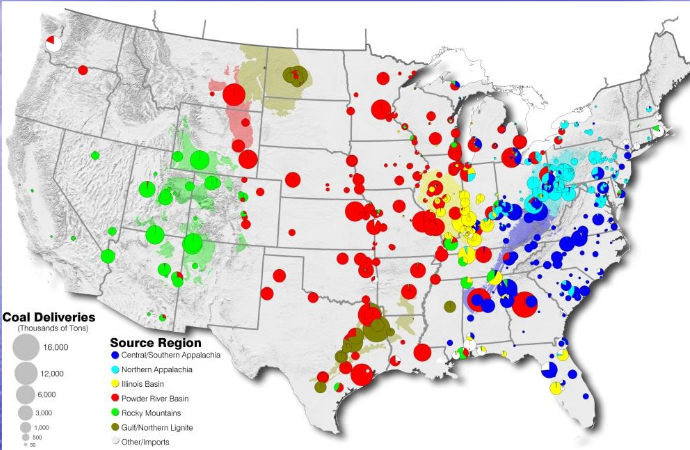
2005 Coal Deliveries to power plants by region. Red is Powder River

coal tons by rail mile


Most U.S. coal is buried too deeply to mine at a profit and the EIA has never analyzed their estimated recoverable reserves for economic recoverability. As a result our coal deposits are better classified as resources rather than reserves. And the current financial distress of U.S. coalmining companies weakens their ability to take on the investments they need to continue coal production

Powder River Basin, WY: coal powers 16 million U.S. households (over half of US coal comes from Wyoming)

  • Black Thunder Mine Remaining Life: About 8 Years, Life Extension: About 7 Years, Current Overburden: 282 Feet, Expansion Overburden: 400+ Feet
  • North Antelope/Rochelle Mine Remaining Life: About 6 Years, Life Extension: 10 Years, Current Overburden: 211 Feet, Expansion Overburden: 340+ Feet

Aug. 21, the federal government offered about 148 million tons of coal in Wyoming’s Powder River Basin for “lease” and no coal company bid to buy this coal — even though these coal “leases” are widely seen as essentially giving the public’s coal away.

In 2012 EIA US coal estimated recoverable “reserves” 258 Billion tons (table 15 EIA annual coal report)

A Key Source of the Confusion About US Coal Supplies — the EIA Has Been Publishing Reserve Data as Though They Contain Estimates of Economic Recoverability — When They Don’t

In 1997, the EIA acknowledged that its “Estimated Recoverable Reserves” did not include an estimate of economic recoverability stating: “The usual understanding of the term “reserves” as referring to quantities that can be recovered at a sustainable profit cannot technically be extended to EIA’s estimated recoverable reserves because economic and engineering data to project mining and development costs and coal resource market values are not available

Source: http://www.eia.doe.gov/cneaf/coal/reserves/chapter1.html

70% of the Coal In the Powder River Basin is Not Surface Accessible (Source: US DOE, DOI and DOA Inventory of Federal Coal Resources August 2007).

Signs that coal is peaking: costs are way up

  • The cost of Eastern coal mining production has nearly doubled since 2005 ($42/ton) to $80/ton in 2012.
  • Powder River Basin Mine production costs have bone from $7/ton to $13/ton from 2004 to 2012
  • The cost of Eastern coal mining production has nearly doubled since 2005 ($42/ton) to $80/ton in 2012.
  • Powder River Basin Mine production costs have bone from $7/ton to $13/ton from 2004 to 2012
  • US coal costs went up 8.75% a year from 2004-2011
  • Michigan delivered coal costs went up 10.81%/year 2004-2011
  • Ohio delivered coal costs went up 8.19%/year 2004-2011
  • Colorado delivered coal costs went up 8.53%/year 2004-2011
  • West Virginia coal peaked in 1947
  • Colorado coal peaked in 2004
  • Wyoming probably peaked in 2008

Losses are way up

  • Peabody $1 billion losses 2012 Q4
  • Arch coal $700 million losses 2012 Q2 & Q4
  • Alpha Natural resources $2 billion in losses 2012 Q2

As reported in Quarterly Earnings Reports and Annual 10-K Reports to the Securities and Exchange Commission

#1 Peabody (“BTU”) $418 Million Term Loan

  • $ 912 Million Term Loan Facility
  • $650 Million due 2016 (7.375%) $1.52 Billion due 2018 (6%)
  • $650 Million due 2020 (6.5%) $1.34 Billion due 2021 (6.25%)
  • $247 Million due 2026 (7.875%)
  • Others due later …….

Total over $6 Billion in Debt….  From Peabody 2012 10-K Annual Report, page F-35

Alpha Natural Resources (“ANR”)

  • $536 Million due 2015 (3.25%)
  • $287 Million due 2015 (2.375%)
  • $540 Million due 2016 (Term loan)
  • $500 Million due 2018 (9.75%)
  • $800 Million due 2019 (6%)
  • $700 Million due 2021 (6.25%)

Total over $3 Billion in Debt

ANR Poses Imminent Danger to Stockholders…”From Alpha Natural Resources 2012 10-K Annual Report

Geology’s War on Coal
By Leslie Glustrom
303-245-8637 or lglustrom@gmail.com
June 2, 2014
 
 
As the Environmental Protection Agency moves ahead with limits on carbon pollution from the nation’s coal plants, you’ll hear a lot of industry outrage about “Obama’s War on Coal.” Don’t believe it.
 
The truth is, the US coal industry is already in dire straits—and it is due primarily to geology—not politics.
 
Coal is a quintessential non-renewable substance; the easily accessible deposits have been mined over the last 150 years and the planet isn’t making any more on a time scale that matters to humans.
 
As a result, the US coal industry is in serious financial distress—right now—months, and likely years, before any EPA carbon regulations actually go into effect.
 
Importantly, even if the EPA were to be eliminated tomorrow (not something I advocate), the US coal industry would still likely be largely winding down in the next decade or so—the result of geology, not politics.
 
As the remaining coal has become more difficult and expensive to mine, coal prices to electric utilities have increased significantly over the last decade, but these price increases have not been enough to keep coal company profit margins healthy.
 
 In addition, the large profit margins that were available for coal sales in China in recent years are no longer buoying the coal industry as China’s economy slows and China has made impressive commitments to developing its own wind and solar resources and strong opposition has mounted to exporting of US coal to Asian countries.
 
The truth about the US coal industry can be found by reading the coal company’s own financial statements filed as “10-K” reports annually with the Securities and Exchange Commission (“SEC”) as well as quarterly “10-Q” reports, all available from the coal company’s websites.
 
Here are some facts you can learn from reviewing the current finances of the US coal companies:
 
Fact #1: The top 4 US coal companies are currently running in the red and reporting large losses:  
·         #1 US coal producer, Peabody, reported a loss from continuing operations in 2013 of $286 million (and as additional loss from discontinued operations of $226 million (see page 43, Peabody 2013 10-K) and a loss from continuing operations of $44.3 million for 2014 Quarter 1 (Q1).
·         #2 US coal producer, Arch Coal Inc, reported a loss of $641 million for 2013 (see page 57, Arch 2013 10-K) and $124 million in losses for 2014 Q1.
·         #3 US coal producer, Alpha Natural Resources, reported over $1 billion in losses for 2013 (see page 57 Alpha Natural 2013 10-K) and a net loss of over $55 million for 2014 Q1.
·         #4 US coal producer, Cloud Peak reported a net income of $52 million for 2013 but a net loss of $15 million for 2014Q1. (See page 3, Cloud Peak 2014 Q1 10-Q).
 
Fact #2-Coal Company stock prices have plummeted in recent years. This can be followed on any financial website (e.g. Reuters Finance) using the three letter ticker abbreviation for the coal companies.  Before the EPA had even announced its carbon regulations for existing coal plants:
·         #1 Peabody (“BTU”)’s stock price had lost about 81% of its value falling from a peak of $88.69/share in June 2008 to $16.16/share on Friday May 30, 2014.
·         #2 Arch Coal (“ACI”)’s stock price had lost 95% of its value falling from a peak of $77.40/share in June 2008 to $3.56 on Friday May 30, 2014.
·         #3 Alpha Natural Resources (“ANR”)’s stock price had lost about 97% of its value falling from a peak of $108.73 in June 2008 to $3.88 on Friday May 30, 2014.
·         #4 Cloud Peak (“CLD”)’s stock price has been the most stable but still has dropped about 21% from a 2010 peak of $23.56 to $18.47 on Friday May 30, 2014.
 
Fact #3—It is very likely that the US is past peak coal production, with the peak occurring in 2008 of 1.171 billion tons while 2013 coal production fell below 1 billion tons for the first time since 1993. It is unlikely that coal production in any US coal region will increase enough in the coming years to surpass the 2008 production.
 
Fact #4—The costs to produce coal by the coal companies are rising regularly as the coal becomes less accessible. Even in the big, strip mines of Wyoming, the amount of dirt (“overburden”) that needs to be moved is increasing and driving up production costs. Instead of making the capital investments needed to mine this coal, the coal companies are slashing their capital expenditure budgets making it unlikely that coal production will be increasing in the future. 
 
When asked why coal production in Wyoming was not increasing as coal prices rose, Peabody CEO Greg Boyce described the situation as follows during Peabody’s third quarter conference call in 2013:
“…people are going to have to start spending real cash to repair equipment that’s been parked, replace engines, rear motors and the like. That will provide a bit of an increment, but then in reality, people have not spent capital to replace equipment that ultimately reached the end of its useful life or spent capital to overcome the annual increase in stripping ratio that naturally occurs in the Powder River Basin.
Fact #5—The largest US coal mines are beginning to play out. What used to the be largest US coal mine—the Black Thunder in Wyoming—produced about 10% of the country’s coal. Now the owner of the Black Thunder mine, Arch Coal, says that the mine is likely to start playing out by 2020. (See page 15, Arch 2013 10-K).  The third largest US coal mine, the Cordero Rojo owned by Cloud Peak, plans to take about a 25% production cut in 2015 due to rising costs of production and declining profit margins.
 
Scapegoating is an age old human tendency when times are difficult. It is important that the US not allow the coal industry to scapegoat the current President and EPA for their current financial distress which has been driven largely by geology, not politics.
 
The good news is that the US is blessed with abundant low-carbon renewable resources and the costs of harvesting these wind, solar and other renewable resources are falling.
 
Our energy future is bright—but if and only if we look to the future and not the past to keep us strong. The US is blessed with many fine minds working hard to create a cleaner and more abundant, sustainable and resilient energy future for our country and planet—but to get there we have to not be taken in by the efforts of the US coal industry to turn a geology problem into a political football.
 
 
Leslie Glustrom is a long-time coal industry watcher. She is the author of several reports on US coal cost and supply issues, including “Warning: Faulty Reporting of US Coal Reserves.” She is the former Director of Research and Policy for the non-profit, Clean Energy Action.

References

2010 Survey of Energy Resources. 2010. World energy Council. http://go.nature.com/hde5r7

2050 China Energy and CO2 Emissions Report (in Chinese). 2009. science Press

Campbell, C. J. & Laherrère, J. H. March 1998. The end of Cheap oil. Scientific American.

Coal Reserves of the Matewan Quadrangle, Kentucky. 2003. A Coal Recoverability Study. us bureau of Mines Circular 9355. USGS.

Energy Information Administration. Annual Energy Outlook 1998 (Doe/eia, 1997).

Heinberg, Richard. Feb 15, 2011. #225: Earth’s Limits: Why Growth Won’t Return. RichardHeinberg.com

Höök, M., et al. 2010. Global Coal production outlooks based on a logistic model. Fuel 89, 3546–3558

Luppens, J. et al. 2008. Assessment of Coal Geology, Resources, and Reserves in the Gillette Coalfield, Powder River Basin, Wyoming. open-File report 2008-1202 USGS.

Mohr, S. H. et al. 2009. Forecasting coal production until 2100. Fuel 88, 2059–2067

Patzek T. W. and Croft, G. 2010. “A Global Coal Production Forecast with Multi-Hubbert Cycle Analysis,” Energy35; pp 3109-3122

Rutledge, D. 2007. Hubbert’s Peak, The Coal Question, and Climate Change. http://rutledge.caltech.edu

Strategic Analysis of the Global Status of Carbon Capture and Storage. 2009. Global CCs institute, 2009.

Tao, Z. & Li, M. 2007. What is the Limit of Chinese Coal Supplies: A STELLA model of Hubbert Peak.  Energy Pol. 35, 3145–3154

Ward, K. October 13, 2012. Coal’s decline forewarned Minable seams running out, experts say. West Virginia Gazette.

Zittel, W. et al. March 2007. Coal: Resources and Future Production. Energy Watch Group, Paper no. 1/07; http://go.nature.com/jngfsa

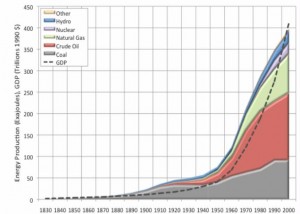
 

Posted in But not from climate change: Peak Fossil Fuels, Climate Change, CO2 and Methane, Coal, Global Warming, Peak Coal, Planetary Boundaries, Runaway Greenhouse | Tagged | Comments Off on Peak Coal already happened or likely soon, so worst IPCC scenarios may never happen

Up to 9% of Methane lost in leaks erodes green credentials of natural gas

Jeff Tollefson. 2 Jan 2013. Methane leaks erode green credentials of natural gas.  Losses of up to 9% show need for broader data on US gas industry’s environmental impact. Nature, volume 493
Scientists are once again reporting alarmingly high methane emissions from an oil and gas field, underscoring questions about the environmental benefits of the boom in natural-gas production that is transforming the US energy system.

The researchers, who hold joint appointments with the National Oceanic and Atmospheric Administration (NOAA) and the University of Colorado in Boulder, first sparked concern in February 2012 with a study suggesting that up to 4% of the methane produced at a field near Denver was escaping into the atmosphere. If methane — a potent greenhouse gas — is leaking from fields across the country at similar rates, it could be offsetting much of the climate benefit of the ongoing shift from coal- to gas-fired plants for electricity generation.

Industry officials and some scientists contested the claim, but at an American Geophysical Union (AGU) meeting in San Francisco, California, last month, the research team reported new Colorado data that support the earlier work, as well as preliminary results from a field study in the Uinta Basin of Utah suggesting even higher rates of methane leakage — an eye-popping 9% of the total production. That figure is nearly double the cumulative loss rates estimated from industry data — which are already higher in Utah than in Colorado.

A study published in April by scientists at the EDF and Princeton University in New Jersey suggests that shifting to natural gas from coal-fired generators has immediate climatic benefits as long as the cumulative leakage rate from natural-gas production is below 3.2%; the benefits accumulate over time and are even larger if the gas plants replace older coal plants.

Posted in Climate Change, Natural Gas | Comments Off on Up to 9% of Methane lost in leaks erodes green credentials of natural gas

Professor Tad Patzek on Oil in the Arctic

[Shell spent 10 years and $7 billion before withdrawing from exploring the arctic because the oil and gas reserves they found were too meager.  The company needed “a multi-billion barrel discovery” to “justify going ahead,” Shell chief executive Ben van Beurden said in an investor call last January. Instead, the Berger J well yielded reserves “not sufficient to warrant further exploration,” according to a company statement (full article here). ]

Tad Patzek. 29 Dec 2012. Oil in the Arctic. LifeItself blog.

Tad Patzek is a Professor and Chairman of the Petroleum and Geosystems Engineering Department at The University of Texas at Austin.

Here are some of the difficulties with drilling and operating offshore oil and gas wells in the Arctic, west and north of Alaska:

  1. Gas vs. oil. Natural gas is not oil.  Gas price and remoteness of the Arctic make offshore gas production and transport unprofitable.
  2. Long distances and no infrastructure.  Literally everything one needs to drill, complete and produce a well must be brought from Portland, Seattle, or Vancouver.  This means that dozens of extra supply and support ships and barges must be deployed in the Arctic.  Because of the long distances, weather, and lack of airport and storage infrastructure, [helicopters can’t supply offshore ships and oil platforms].
  3. Fragility of supply chains. Long and complicated supply chains are costly to maintain and [vulnerable] to extreme weather. When a few elements in a long chain fail, they cannot be repaired quickly and easily.  Germans discovered this fact by 1942, when their invasion of the Soviet Union started to falter not because of lack of military superiority, but because of difficulties with supplies during the long and cold Russian winters. Americans have discovered similar problems with military supplies in Afghanistan.
  4. Ice at water surface and on seafloor. The Arctic wells will be drilled in relatively shallow water, 150 ft or so.  Sea water can freeze all the way to the bottom through the sinking of very salty, cold brine that forms the downward racing “brinicles.” This BBC documentary shows sea water freezing rather nicely.  Therefore, wellheads, BOPs, pipes and other seafloor infrastructure must all be dug into the seafloor and hidden from ice scraping it from above. They still may be enveloped in ice generated by the cold brine raining down from the surface ice cover. Wellheads and BOPs in pits may make it difficult or impossible to access them with ROVs and capping stacks if something goes wrong.
  5. Oil transport. [If] the offshore wells are successfully completed and produce [oil] through the sufficiently sturdy production platforms that can withstand waves, wind, and ice floes year around:  How will this oil be exported year-around?  Transport by tanker will be difficult, and probably impossible through winter, late fall, and early spring.  Laying 150 miles of pipeline beneath the sea bottom, followed by another 200 plus miles of pipeline onshore to attach to the trans-Alaska pipeline will be exceedingly costly and difficult.
  6. Cost and time. Since 2008, Shell has spent nearly US $3.5 billion dollars on plans to explore for oil in the Beaufort and Chukchi Seas on three drill sites, yet in the four years that ensued, no wells were drilled and no permanent infrastructure was built.  Shell probably pays 250 million dollars per year to maintain its ability to operate in the Arctic. Some 30 offshore wells were drilled in the U.S. part of the Beaufort Sea in the 1980s and early ’90s, and five in the Chukchi.  None of the wells previously drilled far from the coast produced oil or gas, because there was no cheap way to maintain and export their production.
  7. Environmental risks. The Arctic Ocean is no Gulf of Mexico with its strong loop current dispersing spills and lots of active bacteria eating hydrocarbons year-around.  The delicate Arctic Ocean is home to about 240 species of fish, 12 marine mammals (4 kinds of whales, polar bears, the walrus, and 6 species of ice-associated seals). Several additional species (e.g. Sperm Whales, Blue Whales, Fin Whales, Humpback Whales, Killer Whales, and Harbor Porpoise) are spotted either occasionally or regularly. There are 64 species of seabirds that breed in the Arctic. About 50 million seabirds nest on Alaska’s coast each summer, nesting in more than 1600 seabird colonies along the coast.
  8. Accidents. If a serious accident occurs in September, oil may continue spilling into the ocean for another 8 months, endangering most of the sea life within the spill domain. In bad weather and rough seas, ships can break down, collide, sink, or run ashore.  The more support ships that are involved, the higher the risk.  Probability of a serious ship mishap is much higher than that of a drilling accident. Please remember that historically most of the largest marine spills have been caused by ship accidents, not by drilling.
  9. Repairs and spare parts. The Arctic supply chains will have to make provisions for all key spare parts to be stored on support barges next to drill sites. Otherwise, these parts would be unavailable for prolonged periods of time, stopping all work. One could introduce multiple redundancies of all important systems.  For example, one could have “two of each,” thus doubling or tripling operational costs and increasing risks of ship breakdowns and collisions. “Two of each” would require 2 times more people for 24/7 operations in 12-hour shifts. If, because of exposure, shifts are shorter, the number of personnel will increase correspondingly.  Locals do not work shifts longer than 8 hours.
  10. Lack of appropriate people.  There are about 4700 native inhabitants of the North Slope Borough, including women, children, and elders. They cannot all work on offshore drilling and production. New workers, imported from the south,  are likely to be unprepared for the severe conditions in the Arctic. Even such routine operations as crew rotations will be risky and costly during the Arctic winter night.

In summary, drilling for oil, and producing and transporting oil in the Arctic requires a complex system with compounding fragilities of many elements of the system. Such compounded fragility makes this system unstable to disturbances. Some of the disturbances can be relatively small, but still can cause large disruptions. For example, an electrical system failure on just one support barge can cause all drilling work to stop.

We, engineers, have dealt with complex, fragile systems for decades, but – I submit – the Arctic drilling/production/transportation system presents qualitatively new challenges, because of its finely interlocked elements. At best, most small failures of parts of this complex system will grind the whole operation to a halt. At worst, corners will be cut and accidents will happen.

As Mr. Taleb has taught us, a small disturbance in a fragile, complex system may result in a catastrophic loss of integrity of that system.  Such catastrophic events will have frequencies that are much higher than those predicted with standard risk management tools.  We used to call these events “Black Swans,” but today we know better.  The highly disruptive catastrophic events are one of the basic features of every fragile complex system.

Posted in Arctic | Tagged , , | Comments Off on Professor Tad Patzek on Oil in the Arctic