Part 1. How long do civilizations last?

This is most, but not all of Kemp’s BBC article, which you ought to read in its entirety at the link in the title below.  I disagree with him when he says that:

“The collapse of our civilization is not inevitable. We will only march into collapse if we advance blindly. We are only doomed if we are unwilling to listen to the past. The energy cliff need not be terminal if renewable technologies continue to improve and energy efficiency measures are speedily implemented.” 

Nope, renewables aren’t renewable and dependent on fossils for their entire life-cycle. We are utterly dependent on fossils for transportation, manufacturing, construction, petrochemicals, and more, and used them to deplete fresh water (aquifers), topsoil, fisheries, take over 75% of the earth’s land, and reduce biodiversity, all of which we depend on to live.  When fossils begin to decline at 6% exponentially a year globally, it’s all over in about 16 years.  At least we won’t have the energy to destroy the resources we depend on to the degree we are today, or turn the planet into a hothouse earth.  I suspect that Kemp was required to throw a few softball optimistic statements in by his editor.

Alice Friedemann   www.energyskeptic.com  author of “When Trucks Stop Running: Energy and the Future of Transportation”, 2015, Springer and “Crunch! Whole Grain Artisan Chips and Crackers”. Podcasts: Derrick Jensen, Practical Prepping, KunstlerCast 253, KunstlerCast278, Peak Prosperity , XX2 report

Kemp, L. 2019. Are we on the road to civilization collapse? Studying the demise of historic civilizations can tell us how much risk we face today says collapse expert Luke Kemp. Worryingly, the signs are worsening. BBC.

Collapse can be defined as a rapid and enduring loss of population, identity and socio-economic complexity. Public services crumble and disorder ensues as government loses control of its monopoly on violence.

Virtually all past civilisations have faced this fate. Some recovered or transformed, such as the Chinese and Egyptian. Other collapses were permanent, as was the case of Easter Island. Sometimes the cities at the epicenter of collapse are revived, as was the case with Rome. In other cases, such as the Mayan ruins, they are left abandoned as a mausoleum for future tourists. 

What can this tell us about the future of global modern civilisation? Are the lessons of agrarian empires applicable to our post-18th Century period of industrial capitalism?

I would argue that they are. Societies of the past and present are just complex systems composed of people and technology. The theory of “normal accidents” suggests that complex technological systems regularly give way to failure. So collapse may be a normal phenomenon for civilisations, regardless of their size and stage.

We may be more technologically advanced now. But this gives little ground to believe that we are immune to the threats that undid our ancestors. Our newfound technological abilities even bring new, unprecedented challenges to the mix.

And while our scale may now be global, collapse appears to happen to both sprawling empires and fledgling kingdoms alike. There is no reason to believe that greater size is armour against societal dissolution. Our tightly-coupled, globalised economic system is, if anything, more likely to make crisis spread.

If the fate of previous civilisations can be a roadmap to our future, what does it say? One method is to examine the trends that preceded historic collapses and see how they are unfolding today.

While there is no single accepted theory for why collapses happen, historians, anthropologists and others have proposed various explanations, including:

CLIMATIC CHANGE: When climatic stability changes, the results can be disastrous, resulting in crop failure, starvation and desertification. The collapse of the Anasazi, the Tiwanaku civilisation, the Akkadians, the Mayan, the Roman Empire, and many others have all coincided with abrupt climatic changes, usually droughts.

ENVIRONMENTAL DEGRADATION: Collapse can occur when societies overshoot the carrying capacity of their environment. This ecological collapse theory, which has been the subject of bestselling books, points to excessive deforestation, water pollution, soil degradation and the loss of biodiversity as precipitating causes.

INEQUALITY AND OLIGARCHY: Wealth and political inequality can be central drivers of social disintegration, as can oligarchy and centralisation of power among leaders. This not only causes social distress, but handicaps a society’s ability to respond to ecological, social and economic problems.

The field of cliodynamics models how factors such as equality and demography correlate with political violence. Statistical analysis of previous societies suggests that this happens in cycles. As population increases, the supply of labour outstrips demand, workers become cheap and society becomes top-heavy. This inequality undermines collective solidarity and political turbulence follows.

COMPLEXITY: Collapse expert and historian Joseph Tainter has proposed that societies eventually collapse under the weight of their own accumulated complexity and bureaucracy. Societies are problem-solving collectives that grow in complexity in order to overcome new issues. However, the returns from complexity eventually reach a point of diminishing returns. After this point, collapse will eventually ensue.

Another measure of increasing complexity is called Energy Return on Investment (EROI). This refers to the ratio between the amount of energy produced by a resource relative to the energy needed to obtain it. Like complexity, EROI appears to have a point of diminishing returns. In his book The Upside of Down, the political scientist Thomas Homer-Dixon observed that environmental degradation throughout the Roman Empire led to falling EROI from their staple energy source: crops of wheat and alfalfa. The empire fell alongside their EROI. Tainter also blames it as a chief culprit of collapse, including for the Mayan. 

EXTERNAL SHOCKS: In other words, the “four horsemen”: war, natural disasters, famine and plagues. The Aztec Empire, for example, was brought to an end by Spanish invaders. Most early agrarian states were fleeting due to deadly epidemics. The concentration of humans and cattle in walled settlements with poor hygiene made disease outbreaks unavoidable and catastrophic. Sometimes disasters combined, as was the case with the Spanish introducing salmonella to the Americas.

RANDOMNESS/BAD LUCK: Statistical analysis on empires suggests that collapse is random and independent of age. Evolutionary biologist and data scientist Indre Zliobaite and her colleagues have observed a similar pattern in the evolutionary record of species. A common explanation of this apparent randomness is the “Red Queen Effect”: if species are constantly fighting for survival in a changing environment with numerous competitors, extinction is a consistent possibility.

Studies suggest that the EROI for fossil fuels has been steadily decreasing over time as the easiest to reach and richest reserves are depleted. Unfortunately, most renewable replacements, such as solar, have a markedly lower EROI, largely due to their energy density and the rare earth metals and manufacturing required to produce them.  This has led much of the literature to discuss the possibility of an “energy cliff” as EROI declines to a point where current societal levels of affluence can no longer be maintained.

That’s not all. Worryingly, the world is now deeply interconnected and interdependent. In the past, collapse was confined to regions – it was a temporary setback, and people often could easily return to agrarian or hunter-gatherer lifestyles. For many, it was even a welcome reprieve from the oppression of early states. Moreover, the weapons available during social disorder were rudimentary: swords, arrows and occasionally guns.

Today, societal collapse is a more treacherous prospect. The weapons available to a state, and sometimes even groups, during a breakdown now range from biological agents to nuclear weapons. New instruments of violence, such as lethal autonomous weapons, may be available in the near future. People are increasingly specialised and disconnected from the production of food and basic goods. And a changing climate may irreparably damage our ability to return to simple farming practices.

Think of civilisation as a poorly-built ladder. As you climb, each step that you used falls away. A fall from a height of just a few rungs is fine. Yet the higher you climb, the larger the fall. Eventually, once you reach a sufficient height, any drop from the ladder is fatal.

With the proliferation of nuclear weapons, we may have already reached this point of civilisational “terminal velocity”. Any collapse – any fall from the ladder – risks being permanent. Nuclear war in itself could result in an existential risk: either the extinction of our species, or a permanent catapult back to the Stone Age.  

While we are becoming more economically powerful and resilient, our technological capabilities also present unprecedented threats that no civilisation has had to contend with. For example, the climatic changes we face are of a different nature to what undid the Maya or Anazasi. They are global, human-driven, quicker, and more severe.

Posted in Collapsed & collapsing nations, Interdependencies, Scientists Warnings to Humanity | Tagged , | 1 Comment

Book review: the stranger in the woods. The extraordinary story of the last true hermit

Preface.  On March 16, 2020 it was announced that the residents of most San Francisco Bay Area counties were expected to shelter in place for a few weeks to stop the Covid-19 pandemic.   Three weeks?  You can do it, Christopher Knight lived as a hermit for 27 years in the Maine woods, an amazing mental and physical feat – winters are brutal.  Being completely alone for 27 years may have never even been done before since most hermits were fed by the their society, often revered and sought out by local people eager for wisdom. Psychologists diagnosed Knight with autism and schizoid personality disorder, but the author, Michael Finkel, doesn’t think he fits any category, and is simply a real outlier on the human spectrum.  This book is far more than an odd biography of an eccentric hermit, it is profound, and I enjoyed the history of hermits and what they learned from their experience, especially Chris Knight, who’s also very likeable, bright, and has a good sense of humor.

Alice Friedemann www.energyskeptic.com  author of “When Trucks Stop Running: Energy and the Future of Transportation”, 2015, Springer, Barriers to Making Algal Biofuels, and “Crunch! Whole Grain Artisan Chips and Crackers”. Podcasts: Derrick Jensen, Practical Prepping, KunstlerCast 253, KunstlerCast278, Peak Prosperity , XX2 report

***

Michael Finkel. 2018. The Stranger in the Woods. The Extraordinary Story of the Last True Hermit. Vintage

The trees are mostly skinny where the hermit lives, but they’re tangled over giant boulders with deadfall everywhere like pick-up sticks. There are no trails. Navigation, for nearly everyone, is a thrashing, branch-snapping ordeal, and at dark the place seems impenetrable. This is when the hermit moves. He waits until midnight, shoulders his backpack and his bag of break-in tools, and sets out from camp. A penlight is clipped to a chain around his neck, but he doesn’t need it yet. Every step is memorized. He threads through the forest with precision and grace, twisting, striding, hardly a twig broken. On the ground there are still mounds of snow, sun-cupped and dirty, and slicks of mud—springtime, central Maine—but he avoids all of it. He bounds from rock to root to rock without a bootprint left behind. One print, the hermit fears, might be enough to give him away. Secrecy is a fragile state, a single time undone and forever finished. A bootprint, if you’re truly committed, is therefore not allowed, not once. Too risky. So he glides like a ghost between the hemlocks and maples and white birches and elms until he emerges at the rocky shoreline of a frozen pond.

Motion-detecting floodlights and cameras are scattered around the Pine Tree grounds, installed chiefly because of him, but these are a joke. Their boundaries are fixed—learn where they are and keep away.

Then he climbs a slope to the parking lot and tests each vehicle’s doors. A Ford pickup opens. He takes a rain poncho, unopened in its packaging, and a silver-colored Armitron analog watch. It’s not an expensive watch.

People have sought out solitary existences at all times across all cultures, some revered and some despised. Confucius, who died in 479 B.C., seems to have spoken in praise of hermits—some, he said, as recorded by his disciples, had achieved great virtue. In the third and fourth centuries A.D., thousands of hermits, devout Christians known as the Desert Fathers and Desert Mothers, moved into the limestone caves on both banks of the Nile River in Egypt. The nineteenth century brought Thoreau; the twentieth, the Unabomber. None of these hermits remained secluded as long as Knight did, at least not without significant help from assistants, or without being corralled into a monastery or convent, which is what happened to the Desert Fathers and Mothers. There might have existed—or, it’s possible, currently exist—hermits more completely hidden than Knight, but if so, they have never been found.

Capturing Knight was the human equivalent of netting a giant squid. His seclusion was not pure, he was a thief, but he persisted for twenty-seven years while speaking a total of one word and never touching anyone else. Christopher Knight, you could argue, is the most solitary known person in all of human history.

He began his three-page note with a description of one of his attempts to practice speaking. He had approached a half dozen of his fellow inmates, many of whom were young and hardened, and tried to initiate a conversation. The topic he had chosen to discuss with them was the pleasing synchronicity of the summer solstice and the supermoon. “I thought it of at least trivial interest,” he wrote. “Apparently not. You should have seen the blank looks I got.” Many of the people he attempted to talk with simply nodded and smiled and thought him “stupid or crazy.” Or they just stared at him unabashedly, as if he were some oddity on display.

Soon he essentially stopped talking. “I am retreating into silence as a defensive mode,” he mentioned. Eventually, he was down to uttering just five words, and only to guards: yes; no; please; thank you. “I am surprised,” he wrote, “by the amount of respect this garners me. That silence intimidates puzzles me. Silence is to me normal, comfortable.

He shared only brief details about his time in the woods, but what he did reveal was harrowing. Some years, he made it clear, he barely survived the winter. In one letter, he said that to get through difficult times, he tried meditating. “I didn’t meditate every day, month, season in the woods. Just when death was near. Death in the form of too little food or too much cold for too long.” Meditation worked, he concluded.

The media was apparently clamoring to view a real live hermit, and Knight, by growing out his beard wildly, had provided the character they envisioned. His facial hair served not just as a calendar but also as a mask, absorbing the stares of others while allowing him a little privacy in plain sight. “I can hide behind it, I can play to stereotypes and assumptions. One of the benefits of being labeled a hermit is that it permits me strange behavior.

You can take virtually all the hermits in history and divide them into three general groups to explain why they hid: protesters, pilgrims, pursuers. Protesters are hermits whose primary reason for leaving is hatred of what the world has become. Some cite wars as their motive, or environmental destruction, or crime or consumerism or poverty or wealth. These hermits often wonder how the rest of the world can be so blind, not to notice what we’re doing to ourselves. “I have become solitary,” wrote the eighteenth-century French philosopher Jean-Jacques Rousseau, “because to me the most desolate solitude seems preferable to the society of wicked men which is nourished only in betrayals and hatred.

Across much of Chinese history, it was customary to protest a corrupt emperor by leaving society and moving into the mountainous interior of the country. People who withdrew often came from the upper classes and were highly educated. Hermit protesters were so esteemed in China that a few times, tradition holds, when a non-corrupt emperor was seeking a successor, he passed over members of his own family and selected a solitary. Most turned down the offer, having found peace in reclusion.

The first great literary work about solitude, the Tao Te Ching, was written in ancient China, likely in the sixth century B.C., by a protester hermit named Lao-tzu. The book’s eighty-one short verses describe the pleasures of forsaking society and living in harmony with the seasons. The Tao Te Ching says that it is only through retreat rather than pursuit, through inaction rather than action, that we acquire wisdom. “Those with less become content,” says the Tao, “those with more become confused.” The poems, still widely read, have been hailed as a hermit manifesto for more than two thousand years.

Around a million protester hermits are living in Japan right now. They’re called hikikomori—“pulling inward”—and the majority are males, aged late teens and up, who have rejected Japan’s competitive, conformist, pressure-cooker culture. They have retreated into their childhood bedrooms and almost never emerge, in many cases for more than a decade. They pass the day reading or surfing the web. Their parents deliver meals to their doors, and psychologists offer them counseling online. The media has called them “the lost generation” and “the missing million.

Pilgrims—religious hermits—are by far the largest group. The connection between seclusion and spiritual awakening is profound. Jesus of Nazareth, after his baptism in the River Jordan, withdrew to the wilderness and lived alone for forty days, then began attracting his apostles. Siddhartha Gautama, in about 450 B.C., according to one version of the story, sat beneath a pipal tree in India, meditated for forty-nine days, and became Buddha. Tradition holds that the prophet Muhammad, in A.D. 610, was on a retreat in a cave near Mecca when an angel revealed to him the first of many verses that would become the Koran.

In Hindu philosophy, everyone ideally matures into a hermit. Becoming a sadhu, renouncing all familial and material attachments and turning to ritual worship, is the fourth and final stage of life. Some sadhus file their own death certificates, as their lives are considered terminated and they are legally dead to the nation of India. There are at least four million sadhus in India today.

During the Middle Ages, after the Desert Fathers and Mothers of Egypt died out, a new form of Christian solitary emerged, this time in Europe. They were called anchorites—the name is derived from an ancient Greek word for “withdrawal”—and they lived alone in tiny dark cells, usually attached to the outer wall of a church. The ceremony initiating a new anchorite often included the last rites, and the cell’s doorway was sometimes bricked over. Anchorites were expected to remain in their cells for the rest of their lives; in some cases, they did so for over forty years. This existence, they believed, would offer an intimate connection with God, and salvation. Servants delivered food and emptied chamber pots through a small opening.

Virtually every large town across France, Italy, Spain, Germany, England, and Greece had an anchorite. In many areas, there were more females than males. A woman’s life in the Middle Ages was severely bound, and to become an anchorite, unburdened by social strictures or domestic toil, may have felt paradoxically emancipating. Scholars have called anchorites the progenitors of modern feminism.

Pursuers are the most modern type of hermits. Rather than fleeing society, like protesters, or living beholden to higher powers, like pilgrims, pursuers seek alone time for artistic freedom, scientific insight, or deeper self-understanding. Thoreau went to Walden to journey within, to explore “the private sea, the Atlantic and Pacific Ocean of one’s being.

“Not till we have lost the world,” wrote Thoreau, “do we begin to find ourselves.” “Thoreau,” said Chris Knight, offering his appraisal of the great transcendentalist, “was a dilettante.” Perhaps he was. Thoreau spent two years and two months, starting in 1845, at his cabin on Walden Pond in Massachusetts. He socialized in the town of Concord. He often dined with his mother. “I had more visitors while I lived in the woods than at any other period in my life,” he wrote. One dinner party at his place numbered twenty guests.

Thoreau’s biggest sin may have been publishing Walden. Knight said that writing a book, packaging one’s thoughts into a commodity, is not something a true hermit would do. Nor is hosting a party or hobnobbing in town. These actions are directed outward, toward society. They all shout, in some way, “Here I am!” Yet almost every hermit communicates with the outside world. Following the Tao Te Ching, so many protester hermits in China wrote poems—including poet-monks known as Cold Mountain, Pickup, Big Shield, and Stonehouse—that the genre was given its own name, shan-shui.

Saint Anthony was one of the first Desert Fathers, and the inspiration for thousands of Christian hermits who followed. Around A.D. 270, Anthony moved into an empty tomb in Egypt, where he stayed alone for more than a decade. He then lived in an abandoned fort for twenty years more, subsisting only on bread, salt, and water delivered by attendants, sleeping on the bare ground, never bathing, devoting his life to intense and often agonizing piety.

For much of his time in the desert, the biography adds, Anthony was inundated by parishioners seeking counsel. “The crowds,” Anthony said, “do not permit me to be alone.

Even the anchorites, locked up by themselves for life, were not separate from medieval society. Their cells were often in town, and most had a window through which they counseled visitors. People realized that speaking with a sympathetic anchorite could be more soothing than praying to a remote and unflinching God. Anchorites gained widespread fame as sages, and for several centuries, much of the population of Europe discussed great matters of life and death with hermits.

In the forest, Knight never snapped a photo, had no guests over for dinner, and did not write a sentence. His back was fully turned to the world. None of the hermit categories fit him properly. There was no clear why. Something he couldn’t quite feel had tugged him away from the world with the persistence of gravity. He was one of the longest-enduring solitaries, and among the most fervent as well. Christopher Knight was a true hermit. “I can’t explain my actions,” he said. “I had no plans when I left, I wasn’t thinking of anything. I just did it.

He still remained hungry. He wanted more than vegetables, and even if he did stick with gardens, the Maine summer, as every local knows, is that rare lovely guest who leaves your house early. Once it ended, Knight understood, for the next eight months the gardens and cornfields would lay fallow beyond snacking. Knight was realizing something almost every hermit in history has discovered: you can’t actually live by yourself all the time. You need help. Hermits often end up in deserts and mountains and boreal woodlands, the sorts of places where it’s nearly impossible to generate all your own food.

To feed themselves, several Desert Fathers wove reed baskets, which their assistants sold in town, using the proceeds to buy rations. In ancient China, hermits were shamans and herbalists and diviners. English hermits took jobs as toll collectors, beekeepers, woodcutters, and bookbinders. Many were beggars.

In eighteenth-century England, a fad swept the upper class. Several families felt their estate needed a hermit, and advertisements were placed in newspapers for “ornamental hermits” who were slack in grooming and willing to sleep in a cave. The job paid well, and hundreds of hermits were hired, typically on seven-year contracts, with one meal a day included. Some would emerge at dinner parties and greet guests. The English aristocracy of this period believed hermits radiated kindness and thoughtfulness, and for a couple of decades it was deemed worthy to keep one around.

To commit a thousand break-ins before getting caught, a world-class streak, requires precision and patience and daring and luck. It also demands a specific understanding of people. “I looked for patterns,” Knight said. “Everyone has patterns.” Knight perched at the edge of the woods and meticulously observed the families of North Pond, quiet breakfasts to dinner parties, visitors to vacancies, cars up and down the road, like some Jane Goodall of the human race. Nothing he saw tempted him to return.

He wasn’t a voyeur, he insisted. His surveillance was clinical, informational, mathematical. He did not learn anyone’s name. All he sought was to understand migration patterns—when people went shopping, when a cabin was unoccupied. He watched the families move about and knew when he could steal.

After that, he said, everything in his life became a matter of timing. The ideal time to steal was deep in the night, midweek, preferably when it was overcast, best in the rain. A heavy downpour was prime. People stayed out of the woods when it was nasty, and Knight wished to avoid encounters. Still, he did not walk on roads or trails, just in case, and he never launched a raid on a Friday or Saturday,

He liked to vary his methods, and he even varied how often he varied them.

He didn’t want to develop any patterns of his own, though he did make it a habit to embark on a raid only when freshly shaved or with a neatly groomed beard, and wearing clean clothing, to reduce suspicion on the slight chance that he was spotted.

Sometimes, if he was headed far or needed a load of propane or a replacement mattress—his occasionally grew moldy—it was easier to travel by canoe. He never stole one. Canoes are difficult to hide, and if you steal one, the owner will call the police. It was wiser to borrow; there was a large selection around the lake.

When he arrived at his chosen cabin, he’d make sure there were no vehicles in the driveway, no sign of someone inside—all the obvious things. This wasn’t sufficient. Burglary is a dicey enterprise, a felony offense, with a low margin for error. One mistake and the outside world would snatch him back. So he crouched in the dark and waited. Two hours, three hours, four hours, more. He needed to be sure no one was nearby, no one was watching, no one had called the police. This was not difficult for him; patience is his forte.

He never risked breaking into a home occupied year-round—too many variables—and he always wore a watch so he could monitor the time. Knight, like a vampire, did not want to stay out past sunrise.

He noticed when several cabins left out pens and paper, requesting a shopping list, and others offered him bags of books, hanging from a doorknob. But he was fearful of traps, or tricks, or initiating any sort of correspondence, even a grocery list. So he left everything untouched, and the trend faded away.

As the residents of North Pond invested in security upgrades, Knight adapted. He knew about alarms from his one paying job, and he used this knowledge to continue stealing—sometimes disabling systems or removing memory cards from surveillance cameras, before they became smaller and better hidden.

A burglary report filed by one police officer specifically noted the crime’s “unusual neatness.” The hermit, many officers felt, was a master thief. It was as if he were showing off, picking locks yet

The crime scenes themselves were so clean that the authorities offered their begrudging respect. “The level of discipline he showed while he broke into houses,” said Hughes, “is beyond what any of us can remotely imagine—the legwork, the reconnaissance, the talent with locks, his ability to get in and out without being detected.” A burglary report filed by one police officer specifically noted the crime’s “unusual neatness.” The hermit, many officers felt, was a master thief. It was as if he were showing off, picking locks yet stealing little, playing a strange sort of game.

It was always best, Knight believed, for a home owner to have no clear evidence that he or she had been robbed. Then he’d load everything into a canoe, if it was a canoe-borrowing trip, and paddle to the shore closest to his camp and unload. He’d return the canoe to the spot he’d taken it from, sprinkle some pine needles on the boat to make it appear unused, then haul his loot up through the Jarsey, between the elephant rocks, to his site.

Each raid brought him enough supplies to last about two weeks, and as he settled once more into his room in the woods—“back in my safe place, success”—he came as close as he could to experiencing joy.

The price of sociability is sometimes our health. Knight quarantined himself from the human race and thus avoided our biohazards. He stayed phenomenally healthy. Though he suffered deeply at times, he insists he never once had a medical emergency, or a serious illness, or a bad accident, or even a cold.

Poison ivy: leaves of three, let it be”—and so ably memorized where each patch grew that even at night he didn’t brush against it. He says he was never once afflicted.

Lyme disease, a bacterial illness transmitted through tick bites that can cause partial paralysis, is endemic to central Maine, but Knight was spared that as well. He brooded about Lyme for a while, then came to a realization: “I couldn’t do anything about it, so I stopped thinking about it.

At first, Knight worried about everything: snowstorms might bury him, hikers could find him, the police would capture him. Gradually, methodically, he shed most of his anxiety.

But not all. Being too relaxed, he felt, was also a danger. In appropriate doses, worry was useful, possibly lifesaving. “I used worry to encourage thought,” he said. “Worry can give you an extra prod to survive and plan. And I had to plan.

He never stole homemade meals or unwrapped items, for fear someone might poison him, so everything he took came sealed in a carton or can. He ate every morsel, scraping the containers clean. Then he deposited the wrappers and cartons in his camp’s dump, stuffed between boulders at the boundary of his site.

As long as it was food, it was good enough.” He spent no more than a few minutes preparing meals, yet he often passed the fortnight between raids without leaving camp, filling much of the time with chores, camp maintenance, hygiene, and entertainment.

His chief form of entertainment was reading. The last moments he was in a cabin were usually spent scanning bookshelves and nightstands. The life inside a book always felt welcoming to Knight. It pressed no demands on him, while the world of actual human interactions was so complex

The reading selection offered by the cabins was often dispiriting. With books, Knight did have specific desires and cravings—in some ways, reading material was more important to him than food—though when he was famished for words, he’d subsist on whatever the nightstands bestowed, highbrow or low.

Nor did he spend any nights away from his camp. “I have no desire to travel. I read. That’s my form of travel.

He claimed that he did not speak to himself aloud, not a word. “Oh, you mean like typical hermit behavior, huh? No, never.

He acknowledged, forthrightly, that a couple of cabins were enticing because of their subscriptions to Playboy. He was curious. He was only twenty years old when he disappeared, and had never been out on a date. He imagined that finding love was something like fishing. “Once I was in the woods, I had no contact, so there was no baited hook for me to bite upon. I’m a big fish uncaught.

It wasn’t reading or listening to the radio that actually occupied the majority of Knight’s free time. Mostly what he did was nothing. He sat on his bucket or in his lawn chair in quiet contemplation. There was no chanting, no mantra, no lotus position. “Daydreaming,” he termed it. “Meditation. Thinking about things. Thinking about whatever I wanted to think about.

He was never once bored. He wasn’t sure, he said, that he even understood the concept of boredom. It applied only to people who felt they had to be doing something all the time, which from what he’d observed was most people.

Hermits of ancient China had understood that wu wei, “non-doing,” was an essential part of life, and Knight believes there isn’t nearly enough nothing in the world anymore.

He began observing the mushroom when its cap was no bigger than a watch face. It grew unhurriedly, wearing a Santa’s hat of snow all winter, and eventually, after decades, expanded to the size of a dinner plate, striated with black and gray bands. The mushroom meant something to him; one of the few concerns Knight had after his arrest was that the police officers who’d tromped through his camp had knocked it down. When he learned that the mushroom was still there, he was pleased.

Even in the warm months, Knight rarely left his camp during the daytime. The chief exception to this came at the tail end of each summer, as the cabin owners were departing and the mosquitoes died down, when Knight embarked on a brief hiking season.

The chief problem with environmental noise one can’t control is that it’s impossible to ignore. The human body is designed to react to it.

The body responds immediately, even during sleep. People who live in cities experience chronically elevated levels of stress hormones. These hormones, especially cortisol, increase one’s blood pressure, contributing to heart disease and cellular damage. Noise harms your body and boils your brain. The word “noise” is derived from the Latin word nausea.

All of Knight’s survival tactics were focused on winter. Each year, just as the cabins were shutting down for the season, often with food left behind in the pantry, Knight embarked on an intensified streak of all-night raids.

His first goal was to get fat. This was a life-or-death necessity. Every mammal in his forest, mouse to moose, had the same basic plan. He gorged himself on sugar and alcohol—it was the quickest way to gain weight, and he liked the feeling of inebriation.

He filled plastic totes with nonperishable food. He took warm clothes and sleeping bags. And he stockpiled propane, hauling the potbellied white tanks from barbecue grills all around North and Little North Ponds. The tanks were vital—not for cooking (cold food still nourishes) or heat (burning gas in a tent can create enough carbon monoxide to kill you) but for melting snow to make drinking water. It was a fuel-intensive task; Knight required ten tanks per winter. When each tank was finished, he buried it near his site. He never returned an empty.

The supply-gathering process was a race against the weather. With the first significant snowfall of the season, typically in November, all operations shut down. It is impossible to move through snow without making tracks, and Knight was obsessive about not leaving a print. So for the next six months, until the spring thaw in April, he rarely strayed from his clearing in the woods. Ideally, he wouldn’t depart from his camp at all the entire winter.

The blackflies can swarm so thickly in central Maine that you can’t breathe without inhaling some; every forearm slap leaves your fingers sticky with your own blood. Many North Pond locals find peak insect season more challenging than the severest cold snap.

It’s natural to assume that Knight just slept all the time during the cold season, a human hibernation, but this is wrong. “It is dangerous to sleep too long in winter,” he said. It was essential for him to know precisely how cold it was, his brain demanded it, so he always kept three thermometers in camp:

When frigid weather descended, he went to sleep at seven-thirty p.m. He’d cocoon himself in multiple layers of sleeping bags and cinch a tie-down strap near his feet to prevent the covers from slipping off.

Once in bed, he’d sleep six and a half hours, and arise at two a.m. That way, at the depth of cold, he was awake.

At extreme temperatures, it didn’t matter how well wrapped he was—if he remained in bed much longer, condensation from his body could freeze his sleeping bag. His core temperature would plunge, and the paralyzing lethargy of an extreme chill would begin to creep over him, starting at his feet and hands, then moving like an invading army to his heart. “If you try and sleep through that kind of cold, you might never wake up.

The first thing he’d do at two a.m. was light his stove and start melting snow. To get his blood circulating, he’d walk the perimeter of his camp. “Out of the tent. Turn left. Fifteen paces. Turn left. Eight paces. To my winter toilet. Do my business. Twenty paces back. A big triangle. Around again. And again. I like to pace.” He’d air out his sleeping bags, wicking away moisture. He did this every bitter-cold night for a quarter century. If it had snowed he’d shovel his site, pushing the snow to the camp’s perimeter, where it accumulated in great frozen mounds, walling him in.

His feet never seemed to fully thaw, but as long as he had a fresh pair of socks, this wasn’t really a problem. It is more important to be dry than warm.

By dawn, he’d have his day’s water supply. No matter how tempted he was to crawl back into his covers, he resisted. He had complete self-control. Naps were not permitted in his ideology, as they ruined his ability to achieve deep, rejuvenating sleep.

A short distance from his camp, Knight kept what he called his upper cache. Buried in the ground, so well camouflaged with twigs and leaves that you could walk right over it and never know, were two metal garbage bins and one plastic tote. They contained camping gear and winter clothes, enough so that if someone found his site, Knight could instantly abandon it and start anew. His commitment to isolation was absolute.

Knight was sensitive about being thought of as insane. “The idea of crazy has been attached to me,” he acknowledged. “I understand I’ve made an unusual lifestyle choice. But the label ‘crazy’ bothers me. Annoys me. Because it prevents response.” When someone asks if you’re crazy, Knight lamented, you can either say yes, which makes you crazy, or you can say no, which makes you sound defensive, as if you fear that you really are crazy. There’s no good answer. If anything, Knight thought of himself, in the grand tradition of Stoicism, as the opposite of crazy—as entirely clearheaded and rational.

When he learned that the bundles of magazines buried at his site were regarded by some locals as an eccentric habit, he was infuriated. Those bundles were a sensible recycling of reading material into floorboards.

It’s possible that Knight believed he was one of the few sane people left. He was confounded by the idea that passing the prime of your life in a cubicle, spending hours a day at a computer, in exchange for money, was considered acceptable, but relaxing in a tent in the woods was disturbed. Observing the trees was indolent; cutting them down was enterprising. What did Knight do for a living? He lived for a living.

Knight insisted that his escape should not be interpreted as a critique of modern life. “I wasn’t consciously judging society or myself. I just chose a different path.” Yet he’d seen enough of the world from his perch in the trees to be repulsed by the quantity of stuff people bought while the planet was casually poisoned, everyone hypnotized into apathy by “a bunch of candy-colored fluff” on a billion and one little screens. Knight observed modern life and recoiled from its banality.

Posted in (Auto)biography, Real Estate | Tagged , | 2 Comments

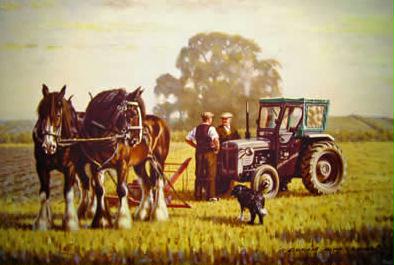
Replacing diesel tractors with horses or oxen – what will that be like?

Preface. Since fossil fuels are finite, at some point increasing numbers of farmers with diesel vehicles and equipment will want to replace them with horses, which can do the work of six people.  Below is what  energy expert Vaclav Smil has to say about that.

In the past crops were harvested by hand and a 2 person team (one cutting the other bundling) could harvest up to 2 acres a day after the invention of ghe grain cradle in the early 1800s.  One person could probably pick 30 to 100 bushels of corn a day from 2 acres when the yield was around 20 to 40 bushels per acre. By 1945 there were more tractors than horses in the U.S. Now large combines can cut and clean grain while simultaneously holding and transporting well over 10 tons. With the addition of grain carts, tractors, and semi-trucks, these relatively short-distance tasks of harvesting crops can be completed without interruption. Even with current corn yields capable of reaching over 200 bu/acre, these machines can harvest the same amount of acres in 10 to 15 minutes as what pre-1940s hand- harvesting accomplished over an entire day. But this has led to soil compaction that can lower crop production for decades or for even over a century. DeJong-Hughes J, Daigh A (2022) Upper Midwest soil compaction guide. University of Minnesota Extension.

Alice Friedemann  www.energyskeptic.com  Author of Life After Fossil Fuels: A Reality Check on Alternative Energy; When Trucks Stop Running: Energy and the Future of Transportation”, Barriers to Making Algal Biofuels, & “Crunch! Whole Grain Artisan Chips and Crackers”.  Women in ecology  Podcasts: WGBH, Jore, Planet: Critical, Crazy Town, Collapse Chronicles, Derrick Jensen, Practical Prepping, Kunstler 253 &278, Peak Prosperity,  Index of best energyskeptic posts

***

Vaclav Smil. 2017. Energy and Civilization A History. MIT Press.

During the 1890s a dozen powerful American horses needed some 18 tonnes of oats and corn per year, about 80 times the total of food grain eaten by their master.

Only a few land-rich countries could provide so much feed. Feeding 12 horses would have required about 15 ha of farmland. An average U.S. farm had almost 60 ha of land in 1900, but only one-third of it was cropland. Clearly, even in the United States, only large grain growers could afford to keep a dozen or more working animals; the 1900 average was only three horses per farm.

Even in land-rich agricultures with extraordinary feed production capacities the substitution trend could not have continued much beyond the American achievements of the late 19th century. Heavy gang plows and combines took animal-drawn cultivation to its practical limit. Besides the burden of feeding large numbers of animals used for relatively short periods of field work, much labor had to go into stabling, cleaning, and shoeing the animals. Harnessing and guiding large horse teams were also logistical challenges. There was a clear need for a much more powerful prime mover—and it was soon introduced in the form of internal combustion engines.

The simplest way of transporting loads is to carry them. Where roads were absent people could often do better than animals: their weaker performance was often more than compensated for by flexibility in loading, unloading, moving on narrow paths, and scrambling uphill. Similarly, donkeys and mules with panniers were often preferred to horses: steadier on narrow paths, with harder hooves and lower water needs they were more resilient. The most efficient method of carrying is to place the load’s center of gravity above the carrier’s own center of gravity—but balancing a load is not always practical.

In relative terms, people were better carriers than animals. Typical loads were only about 30% of an animal’s weight (that is, mostly just 50–120 kg) on the level and 25% in the hills. Men aided by a wheel could move loads far surpassing their body weight. Recorded peaks are more than 150 kg in Chinese barrows where the load was centered right above the wheel’s axle.

The superiority of horses could be realized only with a combination of horseshoes and an efficient harness. Performance in land transport also depended on success in reducing friction and allowing higher speeds. The state of roads and the design of vehicles were thus two decisive factors. The differences in energy requirements between moving a load on a smooth, hard, dry road and on a loose, gravelly surface are enormous. In the first case a force of only about 30 kg is needed to wheel a 1 t load, the second instance would call for five times as much draft, and on sandy or muddy roads the multiple can be seven to ten times higher. Axle lubricants (tallow and plant oils) were used at least since the second millennium BCE.

The roads in ancient societies were mostly just soft tracks that seasonally turned into muddy ruts, or dusty trails.  Roads in continental Europe were in similarly bad shape, and coach horses harnessed in teams of four to six animals lasted on average less than three years.

The stabling of the animals in mews and the provision and storage of hay and straw made an enormous demand on urban space. At the end of Queen Victoria’s reign, London had some 300,000 horses. City planners in New York were thinking about setting aside a belt of suburban pastures to accommodate large herds of horses between the peak demands of rush-hour transport. The direct and indirect energy costs of urban horse-drawn transport—the growing of grain and hay, feeding and stabling the animals, grooming, shoeing, harnessing, driving, and removal of wastes to periurban market gardens—were among the largest items on the energy balance of the late 19th-century cities.

The importance of horses, both in cavalry units and harnessed to heavy wagons and field artillery, persisted in all major Western conflicts of the early modern era (1500–1800), as well in the epoch-defining Napoleonic Wars. Large armies projected far from their home base had to rely on animals to move their supplies: pack animals (donkeys, mules, horses, camels, llamas) were used in difficult terrain;

Opening the road to Russia to Napoleon: that is how Philip Paul, Comte de Ségur (1780–1873), one of Napoleon’s young generals and perhaps the most famous chronicler of the disastrous Russian invasion, described the Prussian contribution. By this treaty, Prussia agreed to furnish many goods: 22,046 tons of rye, 264 tons of rice, two million bottles of beer,  44,092 tons of wheat, 71,650 tons of straw, 38,581 tons of hay, six million bushels of oats, 44,000 oxen, 15,000 horses, 300,600 wagons with harness and drivers, each carrying a load of 1700 pounds; and finally, hospitals provided with everything necessary for 20,000 sick.

When in 1900 a Great Plains farmer held the reins of six large horses while plowing his wheat field, he controlled—with considerable physical exertion, perched on a steel seat, and often enveloped in dust—no more than 5 kW of animate power. A century later his great-grandson, sitting high above the ground in the air-conditioned comfort of his tractor cabin, controlled effortlessly more than 250 kW of diesel engine power.

The mechanization of field work has been the main reason behind the rising labor productivity rise and the reduction of agricultural populations: a strong early 20th-century Western horse worked at a rate equal to the labor of at least six men, but even early tractors had power equivalent to 15–20 heavy horses, and today’s most powerful machines working on Canadian prairies rate up to 575 horsepower.

American draft horses reached their highest number in 1915, at 21.4 million animals, but mule numbers peaked only in 1925 and 1926, at 5.9 millio.

Replacing the existing American field machinery by draft animals would require horse and mule stock at least ten times as large as its record numbers from the early 20th century. Some 300 Mha, or twice the total area of U.S. arable land, would be needed just to feed the animals, and masses of urbanites would have to leave the cities for farms.

In single-cropping regimes of northern Europe draft horses would do only 60–80 days of strenuous field work during the fall and spring plowing and the summer harvesting, but most of them were used extensively for transport. A typical working day ranged from just five hours for oxen in many African locations to more than ten hours for water buffaloes in Asian rice fields and for horses during European or North American grain harvests.

A typical draft is 15% of animal’s body weight but for horses it is up to 35% during brief exertions (about 2 kW) and even more during a few seconds of supreme effort (Collins and Caine 1926). The combination of large mass and relatively high speed makes horses the best draft animals, but most horses could not work steadily at the rate of one horsepower (745 W), and usually delivered between 500 and 850 W.

Horses are the most powerful draft animals. Unlike cattle, whose body mass is almost equally divided between the front and the rear, horses’ fronts are notably heavier than their rears (ratio of about 3:2), and so the pulling animal can take a better advantage of inertial motion than cattle. Except in heavy, wet soils, horses can work in fields steadily at speeds of around 1 m/s, easily 30–50% faster than oxen.

Horses also have better endurance (working 8–10 hours a day compared to 4–6 hours for cattle) and they live longer, and while both oxen and horses started working at 3–4 years of age, oxen lasted usually just for 8–10 years, while horses carried on commonly for 15–20 years.

A horse’s leg anatomy gives the animal a unique advantage by virtually eliminating the energy costs of standing. The horse has a very powerful suspensory ligament running down the back of the cannon bone and a pair of tendons (superficial and deep digital flexors) that can “lock” the limb without engaging muscles. This allows the animals to rest, even to doze, while standing, with hardly any metabolic cost, and to spend little energy while grazing. All other mammals need about 10% more energy when standing as compared to lying down.

Besides speeding up plowing and harvesting, animal labor also made it possible to lift large volumes of irrigation water from deeper wells. Animals were used to operate such food-processing machines as mills, grinders, and presses at rates far surpassing human capabilities. Relief from long hours of tiresome labor was no less important than the higher output rates, but more animal work required more cultivated land to grow feed crops.

In North America and in parts of Europe, the upkeep of horses at times claimed up to one-third of all agricultural area.

An average 19th-century European or American horses annual useful labor equal to about six working farmers, and the land used for its feeding (including all the nonworking animals) could have grown food for about six people. Strong, well-fed horses could perform tasks beyond human capacity and endurance.

American farmers were advised to feed their working horses 4.5 kg of oats and 4.5 kg of hay a day (Bailey 1908), which translates to about 120 M J/day. With an average power of 500 W, a horse would do about 11 MJ of useful work during six hours, and while an average male human would contribute less than 2 MJ, though he could not maintain steady exertion above 80 W and managed only brief peaks above 150 W, a horse could work steadily at 500 W and have brief peak pulls in excess of 1 kW, an effort that would require the exertions of a dozen men.

Horses could drag logs and pull out stumps when humans converted forests to cropland, break up rich prairie soils by deep plowing, or pull heavy machinery. There were additional energy costs of animal labor beyond maintaining a breeding herd and providing adequate feeding for field labor; these additional energy costs appeared above all in the making of harnesses and shoes and the stabling of the animals. But there were also additional benefits derived from the recycled manure and from milk, meat, and leather. Manure recycling has been important in all intensive traditional agricultures as the source of scarce nutrients and organic matter. In largely vegetarian societies, meat (including horsemeat in parts of Europe) and milk were valuable sources of perfect protein. Leather was used in making a large number of tools essential in farming and in traditional manufactures. And, of course, the animals were self-reproducing.

In Chinese cities, high shares of human waste (70–80%) were recycled. Similarly, by the 1650s virtually all of Edo’s (today’s Tokyo) human wastes were recycled (Tanaka 1998). But the usefulness of this practice is limited by the availability of such wastes and their low nutrient content, and the practice entails much repetitive, heavy labor. Even before storage and handling losses, the annual yield of human wastes averaged only about 3.3 kg N/capita (Smil 1983). The collection, storage, and delivery of these wastes from cities to the surrounding countryside created large-scale malodorous industries, which even in Europe persisted for most of the 19th century before canalization was completed. Barles (2007) estimated that by 1869, Paris was generating annually about 4.2 Mt N, about 40% from horse manure and about 25% from human wastes;

The recycling of much more copious animal wastes—which involved cleaning of stalls and sties, liquid fermentation or composting of mixed wastes before field applications, and the transfer of wastes to fields—was even more time-consuming. And because most manures have only about 0.5% N, and pre-application and field losses of the nutrient had commonly added up to 60% of the initial content, massive applications of organic wastes were required to produce higher yields.

Every conceivable organic waste was used as a fertilizer in traditional farming: pigeon, goat, sheep, cattle, all other dung, composts made of straw, lupines, chaff, bean stalks, husks, and oak leaves.

Any theoretical estimates of nitrogen in recycled wastes are far removed from its eventual contribution. This is because of very high losses (mainly through ammonia volatilization and leaching into groundwater) between voiding, collection, composting, application, and eventual nitrogen uptake by crops. These losses, commonly of more than two-thirds of the initial nitrogen, further increased the need to apply enormous quantities of organic wastes. Consequently, in all intensive traditional agricultures, large shares of farm labor had to be devoted to the unappealing and heavy tasks of collecting, fermenting, transporting, and applying organic wastes.

Scale of traditional recycling (and hence the energies devoted to gathering, handling and applying the waste biomass) had to be so large because the organic materials applied to field or plowed in (as green manures) had very low nitrogen content: human and animal wastes are largely water, as are green manures; only oil cakes (residues after pressing edible oils) have relatively high nitrogen content. For comparison, urea, the leading modern synthetic fertilizer, contains 46% of nitrogen.

The performance of the best twine-binding harvester was soon surpassed with the introduction of the first horse-drawn combines, marketed by California’s Stockton Works during the 1880s. Housers, the company’s standard combines after 1886, cut two-thirds of California’s wheat by 1900, when more than 500 machines were working in the state’s fields. The largest ones needed up to 40 horses and could harvest a hectare of wheat in less than 40 minutes—but they tested the limits of animal-powered machinery because harnessing and guiding up to 40 horses was an enormous challenge.

At its beginning, a farmer (80 W) working in a field was aided by about 800 W of draft power (two oxen); by its end, a farmer combining his Californian wheat field had at his disposal 18,000 W (a team of 30 horses).

In 1800 New England farmers (seeding by hand, with ox-drawn wooden plows and brush harrows, sickles, and flails) needed 150–170 hours of labor to produce their wheat harvest. By 1900 in California, horse-drawn gang-plowing, spring-tooth harrowing, and combine harvesting could produce the same amount of wheat in less than nine hours. In 1800 New England farmers needed more than seven minutes to produce a kilogram of wheat, but less than half a minute was needed in California’s Central Valley in 1900, roughly a 20-fold labor productivity gain in a century.

Naturally, these huge advances were only partially due to much higher efficiencies resulting from better machinery. The other principal reason for the rapidly rising energy returns of human labor was the substitution of horse power for human muscles. American inventors produced a vast range of efficient implements and machines, but they had only limited success in displacing draft animals as farming prime movers.

During the first two decades of the twentieth century the numbers of American horses and mules stayed around 25 million. Growing enough feed for their maintenance and work required about one quarter of America’s cultivated land

In 1910 America had 24.2 million farm horses and mules (and only 1,000 small tractors); in 1918 the draft animal herd peaked at 26.7 million and the number of tractors rose to 85,000. With an average daily need of 4 kg of grain for working animals and 2 kg of concentrate feed for the rest, the annual feed requirements were roughly 30 Mt of oats and corn. With grain yields of about 1.5 t/ha, this would have required planting at least 20 Mha to feed grains. To supply roughage, working horses needed at least 4 kg/day of hay, while the rest could be maintained with about 2.5 kg/day, requiring an annual total of roughly 30 Mt of hay. With average hay yields of about 3 t/ha, at least 10 Mha of hay had to be harvested. Land devoted to horse feed had to be no less than about 30 Mha, compared to around 125 Mha of annually harvested land, which means that America’s farm horse herd (working and nonworking animals) required almost 25% of the country’s cultivated land. The USDA’s (1959) calculation came up with a nearly identical total of 29.1 Mha.

In early 19th-century Europe the typical ratio of human/animal power capacity rose to around 1:15, but on the most productive American farms it was well above 1:100 during the 1890s. Human labor became a negligible source of mechanical energy, and the value of farmers’ work shifted mostly to management and control, tasks of low-power needs but high-output rewards.

Posted in Farming & Ranching, Life Before Oil, Muscle Power, Peak Food, Vaclav Smil | Tagged , , , | 1 Comment

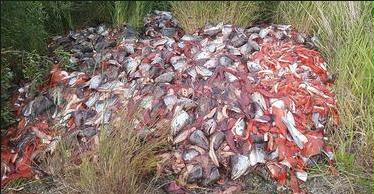
Fish scraps could power some cruise ships by 2021

Preface.  Some black humor for those following energy descent.

Alice Friedemann   www.energyskeptic.com  author of “When Trucks Stop Running: Energy and the Future of Transportation”, 2015, Springer and “Crunch! Whole Grain Artisan Chips and Crackers”. Podcasts:  KunstlerCast 253, KunstlerCast278, Peak Prosperity]

***

CNN Wire. November 20, 2018. Fish scraps could power some cruise ships by 2021.  

“As the appetite for ocean travel rapidly grows, there’s been growing concern about its environmental impact.

Fish scraps might be part of the solution, according to a Norwegian cruise operator.

Hurtigruten, known for its trips through Norway’s fjords and to the Arctic, will power a fleet of ships partly through liquified biogas — which is produced as dead fish and other organic waste decompose, the company said in a press release.

A 2017 report by German environmental association Nature And Biodiversity Conservation Union (NABU) found that a midsize cruise ship can use well over 100 tons of fuel a day, producing as much particulate as a million cars.”

Posted in Far Out | Tagged , , | 1 Comment

Using manure for fertilizer in the future – it won’t be easy

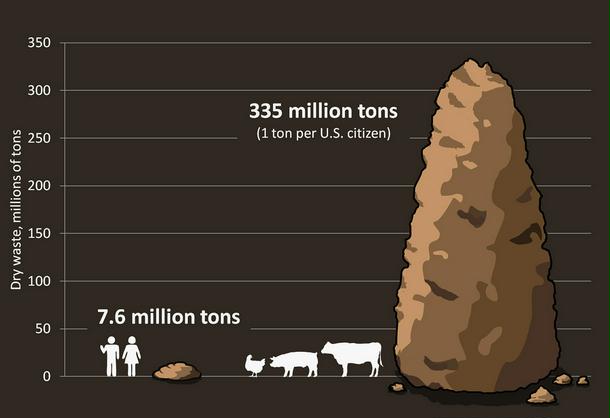
Animals produce 44 times more manure than humans in the U.S.

Preface. At John Jeavons Biointensive workshop back in 2003, I learned that phosphorous is limited and mostly being lost to oceans and other waterways after exiting sewage treatment plants.  He said it can be dangerous to use human manure without proper handling, and wasn’t going to cover this at the workshop, but to keep it in mind for the future.

Modern fertilizers made with the Nobel-prizing winning method of using natural gas as feedstock and energy source can increase crop production up to 5 times, but at a tremendous cost of poor soil health and pollution (see Peak soil).  Fossil fuels will inevitably decline some day, and force us back to organic agriculture and using crop wastes, animal and human manure again.

Below are excerpts from three sources.

The first is about North Korea. Despite tremendous efforts to use all manure, this country is a barren, destroyed landscape that can grow little food, which McKenna describes here: Inside North Korea’s Environmental Collapse.

The second section describes what it was like to live over a century ago when human and animal manure was routinely collected.

The third Below is a NewScientist book review of The Wastewater Gardener: Preserving the planet, one flush at a time by Mark Nelson.

Alice Friedemann   www.energyskeptic.com  author of “When Trucks Stop Running: Energy and the Future of Transportation”, 2015, Springer and “Crunch! Whole Grain Artisan Chips and Crackers”. Podcasts:  KunstlerCast 253, KunstlerCast278, Peak Prosperity]

Park, Y. 2015. In order to live: A North Korean girl’s journey to freedom. Penguin.

“One of the big problems in North Korea was a fertilizer shortage. When the economy collapsed in the 1990s, the Soviet Union stopped sending fertilizer to us and our own factories stopped producing it. Whatever was donated from other countries couldn’t get to the farms because the transportation system had also broken down. this led to crop failures that made the famine even worse. So the government came up with a campaign to fill the fertilizer gap with a local and renewable source: human and animal waste. Every worker and schoolchild had a quota to fill.  Every member of the household had a daily assignment, so when we got up in the morning, it was like a war. My aunts were the most competitive.

“Remember not to poop in school! Wait to do it here!” my aunt in Kowon told me every day. Whenever my aunt in Songnam-ri traveled away from home and had to poop somewhere else, she loudly complained that she didn’t have a plastic bag with her to save it.

The big effort to collect waste peaked in January so it could be ready for growing season. Our bathrooms were usually far from the house, so you had to be carefu lneighbors didn’t steal from you at night. Some people would lock up their outhouses to keep the poop thieves away. At school the teachers would send us out into the streets to find poop and carry it back to class.  If we saw a dog pooping in the street, it was like gold. My uncle in Kowon had a big dog who made a big poop—and everyone in the family would fight over it.

Our problems could not be fixed with tears and sweat, and the economy went into total collapse after torrential rains caused terrible flooding that wiped out most of the rice harvest…as many as a million North Koreans died from starvation or disease during the worst years of the famine.

When foreign food aid finally started pouring into the country to help famine victims, the government diverted most of it to the military, whose needs always came first. What food did get through to local authorities for distribution quickly ended up being sold on the black market”

Vaclav Smil. 2015. Energy and Civilization A History. MIT Press. 

“In Chinese cities, high shares of human waste (70–80%) were recycled. Similarly, by the 1650s virtually all of Edo’s (today’s Tokyo) human wastes were recycled. But the usefulness of this practice is limited by the availability of such wastes and their low nutrient content, and the practice entails much repetitive, heavy labor. Even before storage and handling losses, the annual yield of human wastes averaged only about 3.3 kg N/capita. The collection, storage, and delivery of these wastes from cities to the surrounding countryside created large-scale malodorous industries, which even in Europe persisted for most of the 19th century before canalization was completed. By 1869, Paris was generating annually about 4.2 Mt N, about 40% from horse manure and about 25% from human wastes…

The recycling of much more copious animal wastes—which involved cleaning of stalls and sties, liquid fermentation or composting of mixed wastes before field applications, and the transfer of wastes to fields—was even more time-consuming. And because most manures have only about 0.5% N, and pre-application and field losses of the nutrient had commonly added up to 60% of the initial content, massive applications of organic wastes were required to produce higher yields.  Every conceivable organic waste was used as a fertilizer in traditional farming: pigeon, goat, sheep, cattle, all other dung, composts made of straw, lupines, chaff, bean stalks, husks, and oak leaves.

Any theoretical estimates of nitrogen in recycled wastes are far removed from its eventual contribution. This is because of very high losses (mainly through ammonia volatilization and leaching into groundwater) between voiding, collection, composting, application, and eventual nitrogen uptake by crops. These losses, commonly of more than two-thirds of the initial nitrogen, further increased the need to apply enormous quantities of organic wastes. Consequently, in all intensive traditional agricultures, large shares of farm labor had to be devoted to the unappealing and heavy tasks of collecting, fermenting, transporting, and applying organic wastes.

Barnett, A. August 2, 2014. Excellent excrement. Why do we waste human waste? We don’t have to. NewScientist.

Below is a review of The Wastewater Gardener: Preserving the planet, one flush at a time, by Mark Nelson, Synergetic Press.

Would you dine in an artificial wetland laced with human waste? In The Wastewater Gardener, Marc Nelson makes an inspiring case for a new ecology of water

Rainforest destruction, melting glaciers, acid oceans, the fate of polar bears, whales and pandas. You can understand why we get worked up about them ecologically. But wastewater?

The problem is excrement. Psychologically, we seem to be deeply averse to the stuff and want to avoid contact whenever possible – we don’t even want to think about it, we just want it out of the way.

The solution, a universal pipe-based waste network, works well until domestic and industrial chemicals and other non-biological waste are mixed in. Treating the resulting toxic soup, as Mark Nelson explains in The Wastewater Gardener, is not only a major technological challenge, but also uses enormous amounts of one of the planet’s most limited resources: fresh water.

Each adult produces between 7 and 18 ounces of faeces per day. With our current population, that’s a yearly 500 million tonnes. Centralized sewage systems use between 1000 and 2000 tons of water to move each ton of faeces, and another 6000 to 8000 tons to process it.

Even then, this processed waste often ends up in waterways, affecting wildlife and communities downstream, and it eventually finds its way to the ocean. There it contributes to the process of eutrophication, which creates dead zones, killing coral reefs and other sea creatures.

But it doesn’t have to be like that. As head of Wastewater Gardens International, Nelson has traveled the world, developing and promoting artificial wetlands as the most logical way to use what we otherwise flush away.

Except that, as Nelson points out, with 7 billion-plus people, there really is no “away”. Besides, what the public purse pays to detox and dump can be put to profitable work, fertilising greenery for urban spaces and fruits and vegetables for domestic and commercial use, for example.

Less than 3% of Earth’s water is fresh, and only a tiny portion of that is easily available to us. Most of the water that standard sewage systems use to move human waste is drinkable. Diminishing water resources mean alternatives are pressingly needed. Wastewater gardens, where marsh plants are used to filter lavatory output and allow cleaned water to enter natural watercourses, are very much part of that solution.

Nelson clearly understands the yuck factor and goes to great lengths to show that having a shallow vat of human-waste-laced water nearby is far less vile than we might imagine, especially when it is covered by gravel and interlaced with plant roots. Restaurants with tables dotted between ponds containing the ever-filtering artificial wetlands provide convincing proof.

Constructed wetlands can take on big jobs, too: a mixture of papyrus, lotus and other plants have successfully and beautifully detoxified water from Indonesian batik-dying factories. This water had killed cows downstream and caused running battles between farmers and factory workers.

The Wastewater Gardener is not a “how to” story, but more a “how it was done” account. Nelson tells how these wetlands started to become mainstream in less than 30 years. With humility and humour, he recounts how, as a boy from New York City, he acquired hands-on ranching knowledge in New Mexico, then studied under American ecology guru, Howard Thomas Odum.

And stories of his experiences everywhere from urban Bali and the Australian outback to Morocco’s Atlas mountains and Mexico’s Cancún coast illustrate the gravelly, muddy evolution of his big idea. An inspiring read, not just for the smallest room.

Posted in Life Before Oil, Soil, Waste, Water Pollution | Tagged , , , , , , | 8 Comments

North Korea’s less-known military threat: Biological weapons

Preface.  Oh no! North Korea is developing bioweapons probably.  Here are some excerpts from the New York Times article.

Alice Friedemann   www.energyskeptic.com  author of “When Trucks Stop Running: Energy and the Future of Transportation”, 2015, Springer and “Crunch! Whole Grain Artisan Chips and Crackers”. Podcasts: Practical Prepping, KunstlerCast 253, KunstlerCast278, Peak Prosperity , XX2 report

***

“Pound for pound, the deadliest arms of all time are not nuclear but biological. A single gallon of anthrax, if suitably distributed, could end human life on Earth.

Even so, the Trump administration has given scant attention to North Korea’s pursuit of living weapons — a threat that analysts describe as more immediate than its nuclear arms. President Trump did not broach the subject of biological weapons during his meeting with Mr. Kim in Singapore.

“North Korea is far more likely to use biological weapons than nuclear ones,” said Andrew C. Weber, a Pentagon official in charge of nuclear, chemical and biological defense programs under President Obama. “The program is advanced, underestimated and highly lethal.”

The North may want to threaten a devastating germ counterattack as a way of warding off aggressors. If so, its bioweapons would act as a potent deterrent.

But experts also worry about offensive strikes and agents of unusual lethality, especially the smallpox virus, which spreads person-to-person and kills a third of its victims.

Germ production is small-scale and far less expensive than creating nuclear arms. Deadly microbes can look like harmless components of vaccine and agricultural work. And living weapons are hard to detect, trace and contain.

Last century, most nations that made biological arms gave them up as impractical. Capricious winds could carry deadly agents back on users, infecting troops and citizens.  But today, analysts say, the gene revolution could be making germ weapons more attractive. They see the possibility of designer pathogens that spread faster, infect more people, resist treatment, and offer better targeting and containment. If so, North Korea may be in the forefront.

Several North Korean military defectors have tested positive for smallpox antibodies, suggesting they were either exposed to the deadly virus or vaccinated against it.

Smallpox claimed up to a half billion lives before it was declared eradicated. Today, few populations are vaccinated against the defunct virus.

Starting three years ago, Amplyfi, a strategic intelligence firm, detected a dramatic increase in North Korean web searches for “antibiotic resistance,” “microbial dark matter,” “cas protein” and similar esoteric terms, hinting at a growing interest in advanced gene and germ research.

Federal budgets for biodefense soared after the attacks but have declined in recent years.

“The level of resources going against this is pitiful,” said Mr. Weber, the former Pentagon official. “We are back into complacency.”

Dr. Robert Kadlec, the assistant secretary for preparedness and response at the Department of Health and Human Services, said, “We don’t spend half of an aircraft carrier on our preparedness for deliberate or natural events.”

Posted in Biowarfare, Pandemic Fast Crash | Tagged , , | Comments Off on North Korea’s less-known military threat: Biological weapons

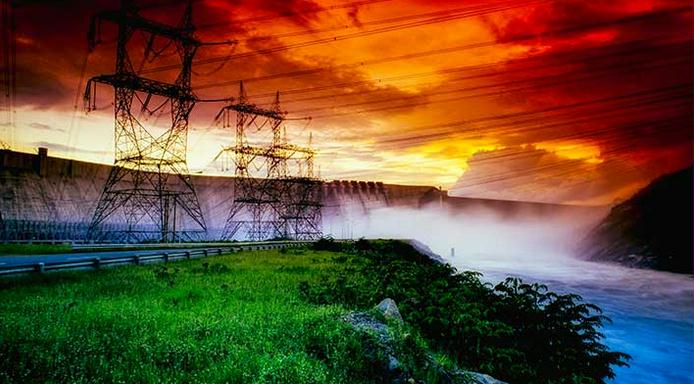
Hydropower dams and the ways they destroy the environment

Preface. Hydropower comprises 71% of renewable energy worldwide.  Nations like the U.S. and Europe have dams that have reached the end of their lifespan — more are being torn down than built. In the U.S. 546 dams were removed between 2006 and 2014.

Imagine the potential harm the Pebble mine in Alaska might do to the largest run of sockeye salmon in the world (Cornwall 2020).

This post summarizes eight articles on the damage wreaked by hydropower dams, which are not renewable because they only last 30-200 years.

Destructive hydropower in the news:

2023 The more than 100 hydroelectric projects constructed in the Amazon over the last 50 years have enabled methylmercury levels in fish and humans to rise. Dams built for these projects slow down water flow and allow natural inorganic mercury to settle on the bottom of riverbeds. There, microbes convert it into methylmercury, the most toxic form of the heavy metal, which can make its way up the food chain and cause neurological and behavioral disorders in animals and humans. Symptoms in people include headaches, insomnia, memory loss, tremors, neuromuscular effects and cognitive and motor dysfunction. Artisanal miners in the region also use methylmercury to separate gold from other substances, which contaminates water, soil, and the plants and animals that depend on them. Deforestation in the Amazon leaves ground bare and allows mercury-laden runoff to seep into rivers. Hundreds of new hydro dams are already planned for the Amazon Basin (Langlois J. Why Are Purple Martins Declining in the United States? Smithsonian)

2021 Brazilian hydropower plants are legally required to breed fish in their reservoirs to compensate for damage to local fisheries, which often means importing exotic species. Golden mussels can hitch a ride in the guts of these fish or the water used to transport them. According to Brazil’s Ministry of Mines & Energy, 79 new Amazonian hydroelectric dams are in the planning stages–each one a potential site of a new mussel introduction (Moutinho S. A golden menace: An invasive mussel is devastating ecosystems as it spreads through South American rivers, threatening the Amazon basin. Science 374: 390-393)

Alice Friedemann  www.energyskeptic.com Women in ecology  author of 2021 Life After Fossil Fuels: A Reality Check on Alternative Energy best price here; 2015 When Trucks Stop Running: Energy and the Future of Transportation”, Barriers to Making Algal Biofuels, & “Crunch! Whole Grain Artisan Chips and Crackers”.  Podcasts: Crazy Town, Collapse Chronicles, Derrick Jensen, Practical Prepping, KunstlerCast 253, KunstlerCast278, Peak Prosperity

***

2021 Greenhouse gas emissions from reservoirs higher than previously expected

A study in Global Biogeochemical Cycles shows emissions of carbon dioxide, methane, and other greenhouse gases from the world’s water reservoirs are around 29% higher than previous studies, roughly equivalent to 1.07 gigatons of carbon dioxide. Though small compared to the 36 gigatons of greenhouse gas (ghg) emissions from fossil fuels and other industrial sources each year, it’s still more greenhouse gas than the entire country of Germany, the globe’s sixth largest emitter, produces annually. It is also roughly equal in weight to 10,000 fully-loaded U.S. aircraft carriers.

Decomposing plant matter near the bottom of reservoirs fuels the production of methane, a ghg that is 34 times more potent than carbon dioxide over the course of a century and comparable to rice paddies or biomass burning in terms of overall emissions. It accounts for roughly 40% of emissions from water reservoirs. The highest rates of ghg emissions from reservoirs occur in the tropics and subtropics. An estimated 83% of methane emissions occurred within tropical climate zones, where the majority of ongoing and planned new reservoir construction projects are anticipated to occur in coming decades.

Cornwall W. 2020. A dam big problem. A string of catastrophic failures has raised alarm about dams meant to contain muddy mine wastes. Science 369: 906-909.

The dam, a 40-meter wall of rocks and dirt, gave way without warning, unleashing a torrent of mud. Within a day, some 21 million cubic meters of gray goo and water—the tailings waste left behind by 16 years of copper and gold mining at the Mount Polley mine in western Canada—escaped from a holding pond behind the dam, buried a creek, and poured into Quesnel Lake, home to one-third of British Columbia’s legendary Fraser River sockeye salmon.  Since then, in 2015, a tailings dam in Brazil collapsed, unleashing a mammoth mud spill that killed 19 people, contaminated 668 kilometers of river, and reached the Atlantic Ocean. In 2018, a dam failed at a major mine in Australia; and last year, a dam disintegrated at a decommissioned Brazilian iron mine, releasing a torrent that killed 270 people.

There are 3500 to 21000 tailings dams, many at risk of failure.  Engineers fear more catastrophes await, as the world confronts a swelling volume of muddy mine tailings, contained by more and larger dams. Some rise to nearly the height of the Eiffel Tower and hold back enough waste to fill Australia’s Sydney Harbor. “The consequences of a failure are getting much bigger,” says Priscilla Nelson, a geotechnical engineer at the Colorado School of Mines.

Service RF. 2020. Red Alert. Researchers are working to find new uses for red mud, the caustic byproduct of aluminum production. Science 369: 910-911

Aluminum has a dark side: red mud. This brownish red slurry, a caustic mishmash of metal- and silicon-rich oxides, often with a dash of radioactive and rare earth elements, is what’s left after aluminum is extracted from ore. And it is piling up. Globally, some 3 billion tons of red mud are now stored in massive waste ponds or dried mounds, making it one of the most abundant industrial wastes on the planet. Aluminum plants generate an additional 150 million tons each year.

Even when red mud remains contained, its extreme alkalinity can leach out, poison groundwater, and contaminate nearby rivers and ecosystems.

Workers extract the aluminum from bauxite with a combination of treatments, including caustic chemicals, heat, and electricity.

Researchers are looking for ways to use this toxic sludge, but so far it isn’t ideal to make cement, bricks, or extract scandium or other metals economically because the caustic waste destroys key components in their smelters. There are 700 patents on possible uses for red mud, but only 3% of it is recycled.  One major reason is that many schemes envision using red mud to make commodities that are already cheap and produced with methods that have been optimized over a century or more. In addition, red mud isn’t easy to handle.

McGinn, M. 2019. Why some hydropower plants are worse for the climate than coal. Salon

Hydropower can release more greenhouse gases than coal- or oil-burning power plants under certain conditions.  According  to a new study published in Environmental Science Technology, hundreds of active hydropower plants are making a worse impact on the climate than fossil fuels.

Scientists have known for a while now that hydropower facilities release greenhouse gases — mostly methane, but also CO2 and nitrous oxide. But the way they’ve historically calculated a facility’s climate impact has obscured methane’s heat-trapping potency. The new study, which looks at data from thousands of hydropower plants to compare their long- and short-term climate impacts, found that hundreds of active facilities around the world are worse for the climate than coal.

Thieme, M. 2019. Hydropower is hurting wildlife. The Hill.

A new study published in the scientific journal Nature shows that infrastructure and other development has fragmented and disrupted two-thirds of Earth’s longest rivers, mainly with 60,000 dams.  Dams fragment aquatic habitats and block fish migration. Populations of freshwater species have already experienced an 83% decline since 1970, and will probably deplete them further as more dams are built, affecting the tens of millions who depend on fish.

Dams trap sediment and nutrients, keeping them from traveling downriver to fertile deltas that are home to 500 million people. Sediment supply build up deltas is critical in an era of rising sea levels, while nutrients ensure that deltas remain among the most productive agricultural regions in the world.

Moran, E. F. et al. 2018. Sustainable hydropower in the 21st century, Proceedings of the National Academy of Sciences.

Before developing countries build more dams, they need to take the following into account when estimating the cost

  • Deforestation
  • Loss of biodiversity, especially fish species
  • Social consequences, such as the displacement of thousands of people and the financial harm done
  • That climate change, especially drought, and evaporation from higher temperatures, which will lead to less water stored for agriculture and electricity
  • The cost of removing a dam is extremely high, so high dams wouldn’t be built if this cost were included.  Many new dams in Brazil and other nations will have a short lifespan — just 30 to 50 years

Hadfield, P. 2014. River of the dammed“. NewScientist.

Dams typically last 60 to 100 years, but whether Three Gorges can last this long is questionable given the unexpectedly high amounts of silt building up. Since fossil fuels are finite, as is uranium, to keep the electric grid up many see building more dams for hydropower as absolutely essential. Hydropower is also one of the few energy resources that can balance variable wind and solar as well. In addition, climate change is likely to lead to a state of permanent drought and dams could help cope with water shortages.  But dams have a dark side and we should proceed with caution as you’ll see from some of the damage done from the three gorges dam ]

Three Gorges dam stats:

  • 13 cities, 140 towns and 1350 villages drowned under the rising water of the Three Gorges dam requiring 1.3 million people to move
  • Required  27 million cubic metres of concrete to build the 2-kilometer-long dam.
  • Provides 2% of China’s electricity
  • 32 turbines, each weighing as much as the Eiffel tower
  • Trash litters the water — discarded plastic bottles, bags, algae and industrial crud — because garbage that used to be flushed downriver and out to sea is now trapped and backing up in the Yangtze’s numerous tributaries. It covers a massive area despite 3000 tonnes being collected a day.
  • The fish population has crashed:  lower water levels, slower flow, and pollution have crashed the Yangtze’s fish population and also decreasing the productivity of fisheries in the South China Sea.
  • Drinking water is being affected because the dam is allowing more seawater than before to intrude into the Yangtze estuary.

Silt will drastically shorten the lifespan of Three Gorges

All dams eventually are rendered useless in 30 to 200 years.  But Three Gorges is silting faster than expected. Far more silt is entering the river and being carried far further than predicted by the models, resulting in silt buildup to depths of up to 60 meters, almost two-thirds the maximum depth of the reservoir itself. The dam continues to accumulate silt at the rate of around 200 million cubic meters a year.

As a result, one of the two navigation channels that pass on either side of an island in the reservoir has been completely blocked, forcing ship traffic in both directions to follow a single channel.

Worse yet, silt is building up at the dam wall. A lot of it has to be cleared by dredgers to make sure it doesn’t interfere with the turbines that generate  China’s electricity and the massive locks that allow ships to travel through.

The only way to slow the process is to build more dams upstream to trap the silt. Many were already being planned. If they are all built, the Yangtze will become a series of dams instead of a river.

Erosion

The filling of the reservoir has also destabilized some of the steep slopes lining the dam. Landslides are common, blocking roads and threatening villages.

This reduces the flow downstream, bringing forward the start of the Yangtze’s natural low-water period. The result is that the Yangtze’s once bountiful floodplain is now drying up. “China’s two largest freshwater lakes – Poyang and Dongting – now find themselves higher than the river,” says Patricia Adams of Probe International, a Canadian environmental foundation that has written a number of critical reports about the Three Gorges dam. “The effect of that is that their water is flowing into the river and essentially draining these very important flood plains.

Like all deltas, the mouth of the Yangtze is a tug of war between deposition and erosion. Between 1050 and 1990, according to a 2003 study, deposition won. During these 900 years the Nanhui foreland, which marks the south bank of the estuary, grew nearly 13 kilometers. But more recently, erosion began to dominate.

The dam has made things even worse by nearly halving the amount of silt entering the delta, leading to a threefold jump in the erosion rate. This could become a major problem for China’s largest city, Shanghai, which is only a meter above sea level, which is expected to rise up to 2 meters over the next century.

List of Serious Problems from The Guardian

  • The dam reservoir has been polluted by algae and chemical runoff that would normally have floated away had the dam not been built. Algae and pollution are building up.
  • The weight of the extra water is being blamed for earthquake tremors, landslides and erosion of hills and slopes.
  • Because of the project’s instability and unpredictability, scientists are calling on the government to: establish water treatment plants, warning systems, shore up and reinforce riverbanks, boost funding for environmental protection and increase benefits to the displaced.
  • Some scientists are advocating the reestablishment of ecosystems that were destroyed by the project and are suggesting the additional movement of hundreds of thousands of residents to safer ground.
  • Before the project, there were 1,392 fresh reservoirs of water that have become “dead water”, destroying drinking water of over 300,000 people.
  • Boat traffic on the Yangtze River has been negatively affected as the depths and shallows of the river have been completely transformed and thousands of boats regularly run aground.
  • The design of the project has resulted in damage to the Yangtze River in that water no longer pushes mud and silt downstream but stagnates it above the dam.
  • While the current problem is a drought over the past decade floods and droughts have come and gone, the flow control mechanism of the dam project doesn’t seem operational; it does not affect water levels in any way.

Rogner, H.H., et al. 2012. Global Energy Assessment:  Toward a Sustainable Future. Cambridge University Press, International Institute for Applied Systems Analysis  423–512.

Ecosystem impacts usually occur downstream from hydropower sites and range from changes in fish biodiversity and in the sediment load of the river to coastal erosion and pollution.

GHG emissions associated with hydropower are one or two orders of magnitude lower than those from fossil-generated electricity, but can be non-negligible in cases where sites inundate large areas of biomass and consequent CH 4 releases to the atmosphere.

Large hydropower projects requiring large reservoirs and extensive relocation of communities increasingly encounter public resistance and, as a result, face higher costs.

Population density is a major constraint for future development. If a project requires resettlement, the high costs and uncertainty make planning quite difficult.

most of the suitable sites for large hydropower implementation in OECD countries have already been developed

Posted in CO2 and Methane, Dams, Hydropower | Tagged , , , , | Comments Off on Hydropower dams and the ways they destroy the environment

Book review of Wrigley’s “Energy and the English Industrial revolution”

Preface. I’ve made a strong case in my book “When trucks stop running” and this energyskeptic website that we will eventually return to wood and a 14th century lifestyle after fossil fuels are depleted.

So if you’re curious about what that lifestyle will be like, and how coal changed everything, this is the book for you.

One point stressed several times is that in all organic economies a steady state exists.  Or as economists put it, that there were just three “components essential in all material production; capital, labor, and land. The first two could be expanded as necessary to match increased demand, but the third could not, and rising pressure on this inflexible resource arrested growth and depressed the return to capital and the reward of labor.”

Then along came coal (and today oil and natural gas), which for a few centuries removed land as a limiting factor (though we’re awfully close the Malthusian limits as well, population is growing, cropland is shrinking as development builds over the best farm land near cities, which exist where they do because that was good crop land).

In today’s world, energy set the limits to growth, but in the future land once again will.  So will the quality of roads, how many forests exist whose wood can be gotten to towns and cities, and so on.  So if you’re in a transition town group or in other ways trying to make the future better, perhaps this book will give you some ideas.

If this world is too painful to contemplate, read some books about the Amish, which would be an ideal society for me minus the religious side of it.

Alice Friedemann   www.energyskeptic.com  author of “When Trucks Stop Running: Energy and the Future of Transportation”, 2015, Springer and “Crunch! Whole Grain Artisan Chips and Crackers”. Podcasts: Practical Prepping, KunstlerCast 253, KunstlerCast278, Peak Prosperity , XX2 report

***

A. Wrigley. 2010. Energy and the English Industrial revolution. Cambridge University Press.

Wood uses: brewing, lime burning, salt production, dye industries, brick and tile making, glassmaking, alum boiling, sugar and soap production, smithying, and a wide range of metal processing trades.

Glass manufacture, brickmaking, beer brewing, textile dyeing, metal smelting and working, lime burning, brewing, brickmaking, sugar refining, bleaching and dyeing, and the production of salt.

All industrial production depended upon vegetable or animal raw materials. This is self-evidently true of industries such as woollen textile production or shoemaking but is also true of iron smelting or pottery manufacture, although their raw materials were mineral, since production was only possible by making use of a source of heat and this came from burning wood or charcoal.

Thus the production horizon for all organic economies was set by the annual cycle of plant growth.

The total quantity of energy arriving each year on the surface of the earth from the sun is enormous, far exceeding the amount of energy expended each year across the world today, but in organic economies human access to this superabundant flow of energy was principally through plant photosynthesis.

Plant growth was the sole source of sustenance for both people and animals, whether herbivores, carnivores, or omnivores. Plant photosynthesis is the food base of all living organisms. This is as true of a pride of lions as of a herd of antelopes. Photosynthesis, however, is an inefficient process. Estimates of its efficiency in converting the incoming stream of energy from the sun normally lie only in the range between 0.1 and 0.4 per cent of the energy arriving on a given surface. Moreover, insufficient or excessive rainfall and very high or low temperature may prohibit or greatly limit plant growth over large areas.

The truism concerning the fixed supply of land may obscure the underlying point which makes it so telling. The key variable, which translates the observation about the land constraint into an immediate reality, is the process of photosynthesis in plants. This was the bottleneck through which men and women, in common with all other animate creatures, gained access to the energy without which life is impossible. Every living thing is constantly expending energy in order simply to remain alive. This is as true of mankind as of any other animal species. Additional energy was needed if a man or woman was to make an active contribution to production. To be economically active in the past, whether in wielding an axe, thrusting a shuttle, or pushing a wheelbarrow, required additional energy inputs over and above what was needed simply to sustain life. The useful energy secured might be in the form of food for the individual or fodder for draught animals, or it might consist of the production of a wide range of organic raw materials needed for manufacture, but in every case the basic problem was the same. A fixed supply of land meant an upper limit to the quantity of energy which could be tapped as long as the dominant means of securing it was from the conversion, by plant photosynthesis, of a tiny fraction of the flood of energy reaching the earth in the form of sunlight.

Unless this restriction could be overcome, no exercise of ingenuity could do more than alleviate the problem; a solution was out of reach. The problem was finally overcome by breaking free from dependence upon photosynthesis, or more accurately by finding a way of gaining access to the photosynthesis of past geological ages. 

Better transportation enabled larger and larger tracts of the country to enjoy the benefits afforded by access to cheap and abundant energy derived from burning coal. Each reduction in the cost of transporting coal from the pithead to a distant center widened the range of activities which were no longer constrained by the energy limitations of organic economies. When coal could be substituted for other energy sources, expansion could occur without simultaneously creating a matching rise in the pressure on the land. Access to the store of the products of past photosynthesis could relieve pressure on the current supply.

Shoemakers, weavers, carpenters, blacksmiths, brewers, framework knitters, printers, and basket makers were all dependent on animal or vegetable raw materials. The great bulk of this demand was met from plants grown on English soil, or from animals fed by those plants.

In an organic economy plant photosynthesis was by far the most important source of energy, both mechanical and thermal. Wind and water power added little to what was secured via photosynthesis.9

The writings of the classical economists provide an illuminating, in many respects a definitive, account of the reasons why it had seemed impossible to secure prolonged expansion of production at a rate which would allow the living standards of the mass of the population to rise progressively. There were, they argued, three factors involved in all material production: labor, capital, and land. The supply of the first two could, in favorable circumstances, expand as required. The supply of the third was fixed. This created a tension which must grow steadily greater in any period of expansion. More people meant more mouths to feed. An expansion in woolen textile production meant raising more sheep and therefore devoting more land to sheep pasture. A rise in iron output involved cutting down more wood to feed the furnaces and implied an increase in the area to be committed to forest. Each type of production was in competition with every other for access to the products of the land. Such pressures in turn must mean either taking land of inferior fertility into agricultural use, or working existing farmland more intensively, or, more probably, both simultaneously. The result must be a tendency for the return to both labor and capital to fall. Growth must slow and eventually come to a halt. Improvements in production techniques and institutional change might for a time offset the problems springing from the fixed supply of land. This might delay but could not indefinitely postpone the inevitable. In short, the very fact of growth, because of the nature of material production in an organic economy, must ensure that growth would grind to a halt. And this impasse was reached not because of human deficiencies, or of failure in political, social, or economic structures but for an ineluctable physical reason, the fixed supply of land.

If the wages of the bulk of the population must in the long run necessarily drift towards a conventional minimum, comforts and luxuries will be limited and hence the inducement to invest in their production will be slight. Such demand as there might be for any but the most basic of commodities will come from a tiny minority of the privileged and wealthy and will be met from the workshops of small groups of specialist craftsmen. In the absence of large-scale demand for standard industrial products there will be no large-scale production and therefore little incentive to introduce or invest in new techniques of production.

The great bulk of the labor force will be employed on the land and many of the rest in producing simple textiles and in basic construction.

Mechanical power was principally provided by human and animal muscle. Thermal energy came from burning wood or charcoal. The mechanical energy derived from muscle power was only a limited fraction of the calories consumed in food and fodder because men and women in common with all warm-blooded creatures must devote a large part of their food intake to basic body maintenance. For example, about 1,500 kilocalories are needed daily to keep a man alive even if no work is performed. Thus if the daily food intake is 2,500 kilocalories only 40 per cent of the energy consumed is available for productive work. It follows that the amount of useful work that each man could perform might vary substantially according to the prevailing levels of food intake per head. With a daily intake of 3,500 kilocalories a man could undertake double the amount of physical effort which he could perform if his intake was 2,500 (3,500 – 1,500 = 2,000: 2,500 – 1,500 = 1,000). The same basic point applies to draught animals just as to man. Ill-fed animals will use a high proportion of their food intake to stay alive, leaving only a small proportion of their energy intake to drag a plough or pull a cart.

A horse can carry out about six times as much work as a man and where horses or oxen were abundant the quantity of useful work which each man performed was in effect greatly magnified.  

Maize was cultivated in Mexico 75 years ago both by hand and oxen. Without the assistance of oxen 1,140 man hours were needed to till and cultivate a hectare of maize. Where oxen were used the number of man hours involved fell to 380, though in addition 200 hours of work by oxen was needed. Assigning large areas of land for animal pasture meant reducing the area which could be used for growing human food and therefore limited the size of the human population which could be supported, but, on the other hand, it could raise output per head in agriculture substantially by increasing the quantity of useful work which each man could perform.

Animal muscle power also normally provided the bulk of the energy needed in land transport,

Heat energy, like muscle energy, depended on plant photosynthesis. Burning wood provided the great bulk of the heat energy consumed. Many industrial processes required large quantities of heat energy. Glass manufacture, brickmaking, beer brewing, textile dyeing, metal smelting and working, lime burning, and many similar processes required much heat energy. Wood was the dominant, indeed in most organic economies virtually the sole source of heat energy. But on a sustained-yield basis an acre of woodland could normally produce only 1–2 tons of dry wood per annum. Two tons of dry wood yields the same amount of heat as one ton of coal. To produce a ton of bar iron in 17th-century England involved consuming about 30 tons of dry wood. If half the land surface of Britain had been covered with woodland, it would only have sufficed to produce perhaps 1¼ million tons of bar iron on a sustained-yield basis. Simple arithmetic, therefore, makes it clear that it was physically impossible to produce iron and steel on the scale needed to create a modern railway system, or to construct large fleets of steel ships, or to enable each family to have a car, if the heat energy needed to smelt and process the iron and steel came from wood and charcoal.

Because it was necessary to devote the bulk of the land surface to the production of so many other commodities, the effective ceiling on production was far lower than the notional figure of 1¼ million tons of bar iron just quoted.

In 2008 China produced 500 million tons of steel in her drive to transform her productive potential. No organic economy could have produced even a tiny fraction of this total.

Where demographic conditions push real incomes close to the subsistence minimum the bulk of demand will be for the four necessities of life: food, shelter, clothing, and fuel (it is convenient to express the situation in terms appropriate to market economies, but the effect is the same in economies where market exchange is limited; poor peasants, buying little for cash and selling only a fraction of what they produce, labor primarily to provide for basic wants). Lack of demand for comforts and luxuries will restrict the opportunity for the development of a wider range of secondary industries (manufactures) and discourage innovation and technological change.

A necessary condition for the escape from the constraints of an organic economy was success in gaining access to an energy source which was not subject to the limitations of the annual cycle of insolation and the nature of plant photosynthesis.

If societies thought and acted in terms of millennia rather than decades the limitations of coal as an energy source (and still more of oil and gas) would be evident, but in the short run coal offers a means of escape from the constraints of organic economies which photosynthesis does not.

Organic economies were essentially fungible in nature. A field may be tilled to grow wheat in a given year but the taking of the crop does not prevent the field being available to grow barley in the following year.

The nature of the land as a fungible guaranteed that a roughly similar level of production could be maintained year after year. It was in this respect a stable world. The potential for securing energy for human use was limited but could be maintained indefinitely.

A ton of coal, like a slice if cake, once consumed, cannot be consumed again. Fossil fuel deposits constitute a very large cake but if they remain the principal source of energy they will be exhausted in decades or at most centuries rather than millennia.

While the output of all cereal crops rose markedly between late medieval times and the early 19th century, oats outstripped other grains both in the percentage rise in total production and in the percentage rise in output per acre. The dominant use of oats was to feed horses. The energy output of a horse well supplied with oats was substantially greater than that of a largely grass fed animal. This was helpful not only in a farm context but also in the economy generally. There was a massive rise in the scale of road transport in the later seventeenth and eighteenth centuries, facilitated by the rapid increase in the mileage of turnpike roads, and therefore a parallel rise in the need to employ more horses. Ville has reported estimates, for example, showing that over the period 1681–1840 the annual rate of growth of goods traffic by road between London and the provinces was in excess of 1%, which would imply a roughly 6-fold cumulative growth over the period. Passenger traffic was rising even more rapidly. Between 1715 and 1840 the rate of growth probably exceeded 2% annually, implying that by the end of the period the traffic was twelve times larger than at the beginning.

In the later 18th century many new canals were built. Canal barges also depended on horses for motive power, thus adding further to the need for a plentiful supply of fodder. The fact that agriculture was able to meet the ‘fuel’ needs of a growing population of horses engaged in transport and industry is testimony to the absence of pressure arising from the need to meet human food requirements in England in the ‘long’ eighteenth century despite the very rapid growth of population in its latter half. England, it should be noted, remained largely self-sufficient in foodstuffs until the early decades of the 19th century, apart from those which could not be grown in a temperate climate.

The population of England increased substantially between 1600 and 1800 which meant, given the absence of any major change in employment in agriculture, that the proportion of the labor force working on the land fell sharply from about 70% to less than 40%. This implies that the proportion of the labor force engaged in secondary and tertiary activities doubled from 30 to over 60% during these two centuries and the absolute number increased far more dramatically since population was rising fast. In 1600 the population was 4.2 million; in 1800 8.7 million. If for simplicity we take the population as doubling and the percentage engaged outside agriculture as doubling also, this implies that the total employment in the secondary and tertiary sectors quadrupled over the period, a change which can fairly be termed sensational.

Without the striking gains in manpower productivity in agriculture which took place in early modern England it is very doubtful whether the industrial revolution would have occurred.

The four largest British industries by value added in 1801 were cotton, wool, building, and leather. Between them they accounted for 68% of the total of value added in British industry as a whole and they were of roughly equal size. The wool and hides which formed the raw material input of two of these four industries were very largely home produced in 1800.

In the mid-16th century, coal, though it already supplied a tenth of English energy consumption, was substantially less important than human and animal muscle power, and firewood was the prime source of heat energy. By 1700 about half of the total energy consumption of England came from coal. At the end of the 18th century the proportion exceeded 75%, and by 1850 was over 90%. Much coal was consumed for domestic purposes. Until the end of the 17th century it is likely that domestic heating and cooking accounted for more than half the total consumption, but by the early 19th century this figure appears to have declined to roughly one third of the total.

In 1700, when the English coal output is estimated at about 2.2 million tons, providing the same heat energy from wood on a sustained-yield basis would have required devoting 2 or 3 million acres to woodland. This assumption may well underestimate the area required but is unlikely to overestimate it. By 1800, 11 million acres of woodland would have been needed. This would have meant devoting more than a third of the surface area of the country to provide the quantity of energy in question.

The small Danish town of Odense, which had about 5,000 inhabitants in the later 18th century, received roughly 15,000 cartloads of firewood and 12,000 cartloads of peat each year to cover its domestic heating and industrial needs. A city a hundred times larger, like London towards the end of the 17th century, had lesser requirements due to a warmer climate, but even so would have needed  perhaps two million cartloads of firewood each year to cover heating needs in the absence of coal. This level of consumption is roughly equivalent to 1.5 tons of firewood per head of the population of London. It would have required setting aside a very large acreage to produce the firewood in question (approximately 1,250 square miles), and in addition still more land would have been required to provide fodder for the large number of horses needed to bring the firewood overland, either direct to London or to a suitable shipping point. In contrast, coal made only a minimal claim on land for its production and animal haulage was required only in getting the coal from the pithead to the coal wharf to deliver to the consumer.

By the end of the 17th century the switch to coal was largely complete in brewing, lime burning, salt production, dye industries, brick and tile making, glassmaking, alum boiling, sugar and soap production, smithying, and a wide range of metal processing trades. Summarizing his detailed description of the increasing use of coal in industrial processes, Hatcher wrote, By 1700 coal was the preferred fuel of almost all fuel-consuming industries,

As long as the mechanical energy needed in most industrial processes and many forms of transport was secured from human or animal muscle power, there was a comparatively low ceiling to the level of productivity per head that could be attained. The final step in the process by which the use of fossil fuel broke the bonds of the organic economy was taken with the discovery of ways of using the energy in steam to extend the breakthrough in the availability of heat energy to overcome the mechanical energy bottleneck also.

Switching to coal as an energy source produced two further benefits of great importance. The first relates to investment in transport facilities. The production of coal from a mine occupies very little ground yet can produce as much energy and an entire forest, making it worthwhile to spend a great deal of energy and money on good roads or rails to convey it to the nearest ocean, canal, or lake for delivery.  

In contrast, production of wood happens over huge areas. To produce an equivalent amount of energy from wood a very large acreage of woodland must be felled.  And then there’s not one road as with a coal mine, but hundreds of dendritic paths that eventually become roads near towns and cities.

Pack horses remained in widespread use in early modern England because road surfaces were often unsuitable for wagons. Keeping the roads in good order might involve expense not justified by easier traffic movement because the volume of traffic was too small to result in an adequate return on investment.

The rise in the volume of coal production created an incentive not only to invest in more efficient land transport but also to construct canals. A large proportion of the traffic on most canals consisted of coal. Much of the final cost of coal to the consumer, whether domestic or industrial, represented the cost of moving it from the pithead to the place of consumption. The market for coal expanded rapidly wherever its price fell because of canal construction. In later decades rail construction had a similar effect.

Without benefit of canal or rail transport the price of coal carried overland doubled within ten miles of the pithead, which meant that before canal and railway facilities existed much of the country had no access to coal at an economic price.

The size of accessible coal reserves in early modern England was a function of drainage technology since water accumulated in every mine and became an increasingly severe problem as the depth of working increased. Having reviewed the use of drainage passages where circumstances made it possible to use gravity to evacuate the water, and the use of wind, water, and horse power to combat the problem where pumping was unavoidable, Flinn concluded as follows: Gravity, wind-, water- and horse-power, then, were capable of only a very modest contribution to the drainage of mines. If drainage technology were to stand still at the point reached at the beginning of the 18th century, mining in Britain could scarcely have expanded and must probably have begun to show diminishing returns. At depths of between 90 and 150 feet the influx of water almost invariably created problems insoluble by the technology of the day, so that when seams of lesser depths were exhausted mining must cease. Most British coal-reserves, of course, lay at greater depths.

Coal had been very widely used as a source of heat energy. It overcame the bottleneck in providing heat energy which was inherent in dependence on wood. But without a parallel breakthrough in the provision of mechanical energy to solve the comparable problem associated with dependence on human or animal muscle to supply motive power in industry and transport, energy problems would have continued to frustrate efforts to raise manpower productivity.

By 1870 steam engines consumed an estimated 30% of UK coal production.

Growth led to an increased demand for food and raw materials. Both were obtained principally from the land. At some point in the growth process this must mean taking inferior land into cultivation or using existing land more intensively. The returns to labor and to capital would both decline as a result, and growth would grind to a halt. The two men were in agreement that the last case, when growth had petered out, might be as uninviting as that found in countries in which no improvements had taken place, even though, for an extended period in between, the speed of growth might bring substantial benefit to all members of society. The classical economists proved to be mistaken in their pessimism, if not in their logic. Negative feedback was indeed inescapable in organic economies and many cycles of growth followed by stagnation had occurred in earlier centuries,

The productivity of those employed in agriculture was the most important single determinant of the possibility of growth and change in all organic economies. Where it was low it was unavoidably necessary for the bulk of the population to live and work on the land if there was to be food for all. Where this was the case it was also inevitable that there was little demand for any but the bare necessities other than food – clothing, shelter, and fuel – and therefore little employment in secondary or tertiary activities. Low productivity might arise for many reasons. High population densities might result in fragmentation of holdings, reducing the amount of land available per head to a level well below the optimum. In some, though not all, types of agriculture a shortage of draught animals for whatever reason might produce a similar result. A list of this kind could be much extended. But frequently, where agricultural productivity was low, the problem lay elsewhere, with weakness of demand rather than inability to increase production. In an archetypal peasant society the first concern of each family is to cover its own needs rather than produce a surplus for sale, and this attitude makes excellent sense where the scale of demand outside the peasant sector is slight. A bad harvest focuses attention exclusively on the needs of the family. A good harvest, while relieving anxiety on this score, does not create much opportunity for profitable sale, since others will also enjoy a surplus and the market price will fall to a level which creates little incentive to make efforts to increase productive capacity.

Because virtually all raw material supply was animal or vegetable in character, everything hinged on increasing agricultural output. This was intensely difficult to achieve without incurring the penalty of declining marginal returns to labor and capital, but for a time more extensive and effective division of labor, which was facilitated by rural–urban exchange, could allow the basic problem to be side-stepped. In England the difficulty was further eased and eventually overcome by exploiting inorganic sources of raw materials and energy

Removing English urban totals from those for Europe suggests that in continental Europe as a whole urbanization was almost at a standstill between 1600 and 1800. The 18th century was, if anything, more sluggish than the 17th in this regard.

Between 1600 and 1700 England accounted for 33% of the European urban increase; between 1700 and 1750 57%; and between 1750 and 1800 70%. Over the two centuries taken together the comparable figure is 53%. Given that in 1600 the population of England amounted to only 5.8% of the European total, and in 1800 7.7%, this is extraordinary testimony to the exceptional character of the urban growth taking place in England at the time.

Those who work the land can count on a local demand for food to satisfy local need but any stimulus to produce beyond this level must come from those living elsewhere in towns and cities. Even in largely rural communities there will, of course, always be a proportion of the population who do not produce the food which they eat but if that fraction is modest and unchanging there will be little or no incentive to change current practice. Population growth in the rural counties of England was generally modest. The local demand for food therefore showed little growth. If, however, there is a substantial and steadily growing urban demand for food the situation is different. A rising trend in the volume of demand creates an incentive to invest and improve. It also stimulates specialization. Farmers in areas well suited to beef cattle, for example, may find that it pays them to reduce or abandon cereal culture in favor of cattle rearing, with the reverse taking place where the soils favor cereals. This in turn gives rise to inter-regional exchange of foodstuffs between areas with different agricultural specialisms.

In the later sixteenth and seventeenth centuries London grew so markedly that by the end of the period it had become the largest city in Europe. It grew from c.55,000 to c.575,000 between 1520 and 1700. The size and rapid growth of London provided a massive stimulus to the farming sector.

Poor transport facilities reduce the area which can respond to urban food price signals, acting in a fashion similar to the existence of tariff barriers in restricting trade. If transport is slow, uncertain, and expensive the limits to growth will be severe. However, there also exists the possibility that rising urban demand will encourage both rising agricultural productivity and improvement in transport facilities. When any of the three factors change this will encourage sympathetic change in the other two. It is ultimately idle to try to determine primacy among the three since they are so intimately intertwined,

The growth of London not only transformed the market prospects for farmers, because its inhabitants produced little or no food themselves, but disposed of much purchasing power. It also led to a steady increase in the demand for farm produce indirectly. There was a parallel, marked rise in the volume of road transport and therefore in the demand for fodder to ‘fuel’ the rising number of horses needed to pull carts and wagons.16 Urban growth, moreover, implies an increased demand for raw materials no less than for food, and, as Adam Smith noted, almost all the raw materials in question were vegetable or animal in nature, and were therefore produced in the countryside. A steadily rising proportion of the labor force no longer worked on the land. Most of them were engaged in secondary activities. Shoemakers, weavers, carpenters, blacksmiths, brewers, framework knitters, printers, and basket makers were all dependent on animal or vegetable raw materials. The great bulk of this demand was met from plants grown on English soil, or from animals fed by those plants.

The existence of a large and rising demand for food, fodder, and organic raw materials associated with dynamic urban growth brought major changes in the scale and character of the demand for agricultural products and thereby induced matching changes in their supply. And once in train there was feedback between the two. The expectation that such demand would grow made increased investment in agriculture appear prudent rather than hazardous. As a result the growth of the urban sector was not constrained by increasingly tight supplies of food and industrial raw materials. The ability of the agricultural sector to sustain hectic growth in urban populations and the raw material needs of the wide swathes of industry which still depended on home-produced organic products was an essential factor in facilitating the growth which took place.

Perhaps the most truly remarkable feature of these two centuries was that the number of men working on the land increased only marginally, yet the agricultural workforce continued to meet the food needs of a population which more than doubled. The area under cultivation increased only modestly, which necessarily implies a very marked increase in output per acre, but this is less striking than the fact that labor productivity in agriculture rose in parallel with the demand for food and industrial raw materials occasioned by the population increase. Because of the nature of an organic economy it is normally to be expected that the price paid for securing a large increase in output is an even larger proportional increase in the input of labor for reasons set out so forcefully by the classical economists. That this did not happen in England may be regarded as a necessary condition for the sweeping changes which are conventionally taken to comprise the industrial revolution.

Urban life implies dependence on the market to a degree which may not hold in the countryside. Urban growth connotes a change in occupational structure which is likely to cause average incomes to rise.37 And with experience of and exposure to urban norms forming part of the lives of a rising proportion of those still living in the countryside, it is not surprising that many of the features of the ‘consumer revolution’ should become visible countrywide rather than being found only in towns. Much the same changes occurred in the Netherlands a century earlier. Indirectly, and perhaps somewhat paradoxically, a sustained rise in agricultural productivity lay behind these changes.

When discussing the reasons why a population might never attain the maximum that might in theory be approached, he noted a feature of English agriculture which ensured that population growth would stop well short of this level: ‘With a view to the individual interest, either of a landlord or farmer, no laborer can ever be employed on the soil, who does not produce more than the value of his wages; and if these wages be not on an average sufficient to maintain a wife, and rear two children to the age of marriage, it is evident that both population and produce must come to a stand.’

A doubling in cereal output, for example, such as occurred in England between the late 16th and late 18th centuries, implies a commensurate increase in the volume of the crop to be harvested and transported to barns, and this in turn implies a substantial increase in the labor involved. No doubt there was a substantial increase in the expenditure of muscle energy in English agriculture as a direct result of the rising volume of output. Much of this increase, however, may have been secured from animal rather than human muscles. Bigger, better fed, and more numerous farm horses limited the need for greater human energy inputs.39 Again, one of the reasons for declining labor productivity as population increases in peasant agriculture is the increased subdivision of holdings. In early modern England, however, capitalist farming tended to increase the average size of farm units both by individual purchase and as a by-product of enclosure, and large farms employed fewer men per acre than small farms.

When Arthur Phillip, the first governor of the colony, took the first convict fleet out to Australia, the home government assumed that it would become self-sufficient in food within a couple of years. But it took decades, partly because of unfamiliarity with the new environment, imposing years of learning by trial and error, and also because most of the convicts were from towns and cities with no clue of how to farm.  Above all, it was due to a lack of draught animals, which for the most part died on the long sea voyage, about 6 months   The fact that gangs of convicts were yoked to carts to drag loads of bricks from brick fields to building sites might appear at first glance to reflect a brutal penal regime but in fact merely demonstrated the inescapable reality of an organic economy which lacked draught animals.

In the early years of the colony all its inhabitants, both convicts and their guardians, were at times gravely malnourished. The men were sometimes too weak from hunger to labor in the fields for more than a couple of hours a day.

I haven’t excerpted the myriad ways farms produced more food for growing cities in England or even more importantly oats to feed canal and farm horses, but without this increased production per unit of land the industrial revolution wouldn’t have happened. 

Human energy intake was broadly similar in the two countries, though somewhat lower in Italy than in England. Part of the difference may be related to the higher average temperatures in Italy, which would tend to reduce the calorie intake needed to sustain body temperature. The energy consumed by draught animals was more than twice as great in England as in Italy, probably a reflection of the greater suitability of the English climate and soils for grass growth and hence for pastoral production. Heat energy from the use of firewood was more widely employed in Italy (though accurate estimation is especially difficult for this energy source) but even in the 1560s England was deriving more heat energy per head of population from coal than Italy in the 1860s so that the combined total consumption of heat energy was not greatly different between the two. In neither country was wind or water a major energy source and it is notable that the absolute figures for the two countries are remarkably similar. The table makes it clear that human and animal muscle was the dominant source of mechanical energy in the two countries, and that in both countries firewood supplied most of the heat energy. Yet even in the 1560s coal was beginning to be a significant source of heat energy in England though its contribution was still dwarfed by that of firewood.

Accessible reserves of peat in the Netherlands  played a role similar to coal in England. As a result, the Netherlands in the 17th century was ‘energy-rich’ economy when compared to her neighbors, favoring the growth of energy-intensive industries such as brewing, brickmaking, sugar refining, bleaching and dyeing, and the production of salt.

Coal and wind power were the only two energy sources which increased in absolute terms, as a percentage of total energy consumption, and when expressed per head of population. Coal’s proportionate share in energy consumption rose from 10% to 90% of the total. The increase in wind power reflects the rapid expansion of the merchant fleet, which remained entirely wind-powered until the beginning of the nineteenth century. Coal consumption per head increased by a multiple of about 45 between Tudor (1485-1603) and Victorian (1837-1901) eras, an average annual rate of growth of approximately 1.3% a year, which implies almost a doubling every half-century.

Coal already dominated the energy picture in England as early as the end of the seventeenth century, and in the nineteenth century eclipsed all rival sources almost entirely. But this was not true in other European countries until a much later date. Belgium was the first continental country to dig coal on a substantial scale and remained the largest individual continental producer until the 1850s. In 1850–4 the average annual Belgian production was 6.8 million metric tons. In the same period the comparable figures for France and Germany were 5.3 and 6.5 millions respectively. These three countries were the largest continental producers. In the same period the average annual output in England and Wales was 61.4 millions. At the beginning of the nineteenth century the disparity was substantially greater. In the early 1850s the combined output of Belgium, France, and Germany was about 30% of the total for England and Wales. Half a century earlier the comparable figure was probably less than 20%. Expressed per head of population the contrast was even starker. In the 1850s the average output per head in the three continental countries combined was c.0.24 tons: the comparable figure for England and Wales was c.3.41 tons.

As already noted, one way of bringing home the degree to which England had moved away from the constraints associated with organic economies by 1800 is to convert coal production into the equivalent acreage of wood which would have been required to produce the same quantity of energy on a sustained-yield basis.

Using the production totals for England and Wales and the assumption that, on a sustained-yield basis, an acre of woodland can produce wood providing the same heat energy as a ton of coal, the acreages in question in 1750, 1800, and 1850 are 4.3, 11.2, and 48.1 million respectively. As a proportion of the land surface of the country these figures represent 13, 35, and 150% of the total area. Even the first figure of 13% would have represented a significant proportion of the land surface for which there were many other competing uses. The second would have been quite impractical, while the third is self-evidently impossible.

[my note: and would it take four generations for the forests to regrow to be exploited again?]

Before the steam engine arrived coal had shown that it could transform the thermal energy scene but muscle power remained by far the most important source of mechanical energy. Neither water nor wind power was of more than limited significance, except in the case of sailing ships. The steam engine meant that coal could be exploited to supply mechanical energy as readily as heat energy, thus overcoming the last remaining barrier to the application of fossil fuel energy to all the main productive processes.

Consider first inland transport. Most production in organic economies happened across large areas of land in nature. To produce the tens of thousands of bushels of wheat needed to feed a large town involved cultivating thousands of acres of arable land. To secure firewood to meet its needs for domestic heating similarly meant cutting and collecting wood from a very large area. Only when the carts and wagons carrying the wheat or wood neared the town did they become concentrated on a few roads bearing a large traffic. Their early miles on the way to the town were inevitably along roads which carried little traffic.  Since the bulk of the journey was on poor roads, transport costs per ton-mile were high. The continued use of pack horses rather than carts into the 18th century, and even in some areas into the 19th, reflected the existence of many road surfaces so rutted or muddy that wheeled traffic was impractical.

Local traffic was also normally light. A large investment in minor roads, whether in new construction or maintenance, was unlikely to produce savings large enough to repay the outlay. Yet roads which were of poor quality and in poor repair discouraged heavier usage, producing a vicious circle of neglect and little traffic.

Often, in the circumstances prevailing in organic economies, the high cost of transport was instrumental in limiting growth possibilities. It limited severely the possible gains to be achieved by the division of labor, since the size of the accessible market determined how far the division of labor could be carried. However, in relation to transport provision, as in relation to energy provision, the rising scale of coal production brought solutions to problems which had previously proved intractable.

The cost per ton-mile when coal was transported by water was taken to be only 5% of the price of land carriage. Where the potential savings from the transport of other goods very seldom appeared to justify constructing a canal to reduce costs, coal, because of the quantity produced, and because its production was a single mine and its consumption also often a large city or town, digging a canal between two points could be very profitable.

The creation of a railway network carried access to cheap coal a stage further. Advantages which were once confined to coalfield areas and to cities like London which could use coastal shipping to supply their fuel needs were extended to the bulk of the country by the mid-19th century. The canal network took shape only slowly. It took over 50 years to produce a national canal network in the later decades of the 18th century and early in the following century. Most canals were built to meet a local need and even on trunk canals the length of an average haul was only about twenty miles. Yet the cumulative impact of canal construction both in stimulating growth and in changing the location of industrial activity was marked.

Roads in the country were converted to wagon ways by laying down planks to reduce friction and enable a greater load to be transported with a smaller expenditure of energy. The results were striking. One horse on a wagonway could pull as much as two horses and two oxen on an unimproved road. Steps were taken to reduce the gradients on wagonways, which added to the gain from reducing friction. Further gains in productivity came in the course of the 18th century when cast-iron and later wrought-iron rails and flanged wheels were introduced to reduce friction still further. As a result, with the same expenditure of energy, a horse could produce still more ton-miles.

Adam Smith emphasized the importance of water transport in determining the possible scale and nature of economic growth in an organic economy. He stressed the benefit of access to water transport, especially for heavy and bulky goods.  He went on to give details of the number of men and animals, wagons and ships, needed to transport goods between Edinburgh and London by the two means of transport, together with the journey times of each type, and summarized his findings as follows:

200 tons of goods carried by the cheapest land-carriage from London to Edinburgh required the maintenance of 100 men for 3 weeks, and the maintenance of 400 horses and 50 great wagons.  The same quantity carried by ship requires only 6 to 8 men, with little wear and tear on the ship.

Smith then pointed out that if only land carriage were possible between the two cities only goods with a very high value to weight ratio would be exchanged between them, to the detriment of the prosperity of both.

Geological good fortune therefore made it possible for London to replace wood with coal even though the coalfield from which it was mined was almost 300 miles distant.

To satisfy London’s demand, however, implied the creation of a large fleet of vessels to satisfy this demand, which reflected the requirements both of domestic heating and of a range of industrial purposes. On the banks of the Thames, for example, glassworks and breweries were built to take advantage of access to a cheap source of heat. London’s population grew rapidly and its demand for coal grew roughly in parallel. At the beginning of the 17th century the annual import of coal to London was probably in the range 125,000 to 150,000 tons. By the end of the century it was approaching 500,000 tons. Over the same period the population of the capital rose from c.200,000 to c.575,000 people. Consumption per head therefore appears to have risen only very slightly, if at all, during the century. By the end of the 18th century London was importing a total of about 1.2 million tons of coal annually, almost exclusively from the same north-east ports. Since London’s population had risen to 950,000 by 1800, consumption per head had again changed only modestly, increasing by perhaps a quarter during the century. Yet the capital’s growth was so marked that the absolute tonnage of coal imported to London increased roughly 10-fold over the 17th and 18th centuries.

The first turnpike trust was created in 1663, but turnpike construction only increased markedly from early in the 18th century. By 1770 there were 15,000 miles of turn-pike roads and this figure had risen to 22,000 miles in the mid-1830s, managed by more than 1,100 turnpike trusts in England and Wales. Adopting the principle that the user should pay proved a most effective way of securing better road surfaces. The incentive to do so arose as the volume of current and prospective traffic increased. The results reflect the scale of the benefit. Journey times and costs per ton-mile both fell, while traffic volumes increased sharply. The reduction in journey times was dramatic. Between the 1750s and the 1830s journey times between major centers fell by 80%.  The result was a marked contrast in journey times between England and continental Europe. For example, in the 1760s French services travelled between 25 and 35 miles a day, whereas in England it was 50 to 80 miles a day. In both countries services quickened in the following decades but a marked difference in average speed continued.  The movement of goods was revolutionized as much or more than the movement of people by the improvements made to the road system. Much larger wagons could be used on turnpike roads. The biggest and most sophisticated road haulage operations centered on London. It has been estimated that the weekly output of the London road haulage industry rose from 13,000 ton-miles in 1715 to 80,000 in 1765, 275,000 in 1816, and 459,000 in 1840. Transport by canal barge was much cheaper per ton-mile than sending goods by turnpike road but the road might still be preferred for some goods.  For example, for the long-distance transport of cotton goods turnpike roads were often favored because they provided a regular and reliable service and were quicker.

High transport costs may be compared to high tariff barriers. Products from other places are denied access to a local market as effectively by the lack of cheap and reliable transport as by an arbitrary charge at an entry gate. Where roads are rutted in summer and muddy in winter movement is difficult, slow, and intermittently dangerous. Their condition may prohibit the use of carts and wagons. In such circumstances a village may have little option other than to satisfy from within its borders the bulk of its material needs. Poor transport facilities and a ‘peasant’ mentality go hand in hand. Conversely, if transport is relatively easy, cheap, and reliable, economic activity can be organized very differently. Movement along a spectrum of transport provision with difficult, expensive, and unreliable facilities at one extreme and dependable, cheap facilities at the other will produce a host of associated changes. Szostak, for example, suggested that in the early 18th century merchants would load their products on pack horses and travel through the country selling their goods directly at fairs and markets. By the end of the century, in contrast, travelling salesmen carrying samples sought orders which were fulfilled by dispatching goods by road carriers. Turnpike roads could accommodate regular wagon traffic and orders taken by the salesmen could be dealt with quickly and reliably. Aikin is quoted by Szostak as noting that the shift from loaded pack horses to travelers with samples took place between 1730 and 1770 in the Lancashire textile industry. Another linked change was the gradual transformation of fairs from a major point of contact between producer and retailer and final purchaser into chiefly social events. The retail shopkeeper assumed the role once played by the fair.

In his pioneering study of migration during the industrial revolution period, Redford laid stress upon the evidence that agricultural wages were highest near the new concentrations of industry and declined steadily with distance from these centers. In rural areas close to manufacturing, mining, or commercial centers people moved to the town from the country to better their lot. The increase in the prevailing wage level in agriculture which resulted in turn attracted agricultural laborers to move from more distant parishes to replace them. He insisted that ‘the motive force controlling the migration was the positive attraction of industry rather than the negative repulsion of agriculture’. As Chaloner remarked in his preface to the third edition of Labor migration, Redford insisted that ‘The rural population was attracted into the towns by the prospect of higher wages and better opportunities for employment, rather than expelled from the countryside by the enclosure movement.’

Expectation of life at birth declined substantially during the 17th century, reaching a nadir in the period 1661–90 when, for the sexes combined, it averaged only 33.8 years. By the beginning of the nineteenth century there had been a major change. In 1801–30 it averaged 40.8 years.

Although overall levels of mortality improved markedly, the improvement was not evenly spread among the different age groups. In the 17th century adult mortality had been very severe; infant and child mortality, in contrast, though crippling by the standards of the 21st century, had been relatively mild. During the ensuing century adult mortality improved sharply. Expectation of life at age 25 for the sexes combined rose by five years from 30 to 35 years between the end of the 17th and the end of the 18th century. At younger ages any improvement was very limited, with one exception. Mortality within the first month of life, often termed endogenous mortality, fell dramatically due to falling rates in maternal mortality and the rate of stillbirths. Deaths later in the first year of life were mainly caused by infectious disease, and were as high in the early 19th century as the past century

From the mid-16th century onwards England’s chance of escaping the Ricardian curse gradually improved as its dependence on the land as the prime source of energy was reduced by the steadily increasing use of coal. This in itself, however, was no guarantee of ultimate success. Put simply, coal use could overcome a barrier which had long appeared insuperable on the supply side, but without a matching change in demand a breakthrough might have proved elusive. Coal was mined and consumed on a substantial scale in parts of China from the 4th century onwards and may have reached a peak in the eleventh century, but it did not lead to a transformation of the economy. It is in this context that the demographic characteristics of a country assume importance.

Production only takes place in response to the existence of demand, immediate or potential. And it is less the absolute scale of demand than its structure which is important. Where poverty is widespread and severe the demand for products other than food, clothing, fuel, and housing will be slight. Rising real incomes rapidly alter the structure of aggregate demand because, although the absolute amount spent on the four basics will rise, the proportion spent on them falls.

If the rising level of energy consumption can be met not from the products of current plant photosynthesis but from the accumulated store of energy represented by past plant photosynthesis present in coal seams, the constraints present in all organic economies can be first eased, and then largely by-passed. In the course of the seventeenth and eighteenth centuries, the increasing resort to this alternative energy source gradually changed the growth prospects of the country. For a long time it was only a partial escape from the traditional constraints. As long as coal was only a source of heat energy the issue was doubtful. Once, however, the energy released by burning coal could also be converted into mechanical energy, future growth was no longer put at risk by the limitations on energy use imposed by dependence on the annual cycle of plant growth.

If coal was so important in the industrial revolution why were there not parallel developments to those taking place in England elsewhere in Europe or farther afield and perhaps at an earlier date? There can be no definitive answer to this question. It is reasonable to claim that without coal no industrial revolution was possible in the circumstances of an organic economy. The presence of coal measures, on the other hand, clearly carried no guarantee that it would be exploited. One consideration, however, should be borne in mind in this connection, since it strongly conditioned access to coal measures in the past. When pit drainage depended upon wind, water, and horse power it was impracticable to mine coal at depths greater than 100–150 feet. Most of the world’s richest coalfields are concealed fields covered by an overburden of rock, often many hundreds of feet thick. The great bulk of the Ruhr field, for example, existed as a geological fact but not as an economic possibility before steam drainage. Indeed the same was true of coal in the huge coalfield which extended, with some gaps, from the Pas-de-Calais in the west, through the Sambre–Meuse valley, to Aachen and the Ruhr. The coal in the concealed fields was inaccessible (and often unknown) at the beginning of the nineteenth century. The bulk of the reserves in British coalfields were similarly inaccessible before steam drainage but coal outcropped to the surface more widely than in many other countries, making initial exploitation simpler.

Whereas in the mid-16th century coal provided only 11% of energy consumed, by the mid-18th this figure had increased to 61%, and the overall scale of energy consumption per head in England dwarfed that of her neighbors, with the partial exception of the Netherlands. The presence of a cheap and abundant source of heat energy in the form of coal played a major part in facilitating expansion in a range of industries by holding down production costs as production volumes increased; brick making, glass manufacture, lime burning, brewing, dyeing, salt boiling, and soap and sugar manufacture all benefited. The traditional dependence upon wood as a heat source had vanished in almost all branches of industry apart from iron manufacture by the early eighteenth century. It is probable, if not conclusively demonstrable, that London would not have grown so freely but for the east coast coal shipments from northern England (Tyneside).

The classical economists provided a formal framework to describe something which was widely understood intuitively in all organic economies. They held that three components were essential in all material production; capital, labor, and land. The first two could be expanded as necessary to match increased demand, but the third could not, and rising pressure on this inflexible resource arrested growth and depressed the return to capital and the reward of labor.

Capital and labor remained as essential as ever if output was to expand, but for wider and wider swathes of the economy land was no longer a factor of central importance. Energy was still needed in every aspect of the production process and an adequate supply of raw materials remained essential, but the land could be by-passed in securing the first, and to an increasing degree the second. Land was losing its place in the trinity of factors determining production possibilities.

A coal miner who consumes in his own body about 3,500 calories a day, will, if he mines 500 pounds of coal, produce coal with a heat value 500 times the heat value of the food which he consumed while mining it. At 20% efficiency he expends about 1 horsepower-hour of mechanical energy to get the coal. Now, if the coal he mines is burned in a steam engine of even 1% efficiency it will yield about 27 horsepower-hours of mechanical energy. The surplus of mechanical energy gained would thus be 26 horsepower-hours, or the equivalent of 26 man-days per man-day. A coal miner, who consumed about one-fifth as much food as a horse, could thus deliver through the steam engine about 4 times the mechanical energy which the average horse in Watt’s day was found to deliver.

This is a very conservative estimate of the multiplier involved, since the average coal miner produced considerably more than 500 pounds of coal a day and the efficiency of steam engines commonly dwarfed the figure used in the illustration.

Conscious recognition of coal as the arbiter of industrial success came only in the later nineteenth century, symbolised when Jevons published The coal question, in which he wondered anxiously about the brevity of British industrial supremacy given that other parts of the world had much larger reserves of coal and were already beginning to take advantage of their good fortune. When the first edition of The coal question was published in 1865, little was known about the scale of the coal resources in other countries and Jevons was relatively optimistic about the future, but by the time of the third edition in 1906 it was clear that several countries, and especially China and the United States, possessed far larger reserves, and his tone changed: ‘When coalfields of such phenomenal richness are actively developed, countries in which there no longer remain any large supplies of easily and cheaply mined coal are likely to feel the effect of the resulting severe competition.’

The increase in the productive powers of an industrialized society were such that for the first time in human history the miseries of poverty, from which previously only a small minority were exempt, could be put aside for whole populations. Success in escaping from the constraints which affected all organic economies did not, however, mean a swift and uninterrupted move towards greatly improved material circumstances for all. The potential for such a change existed. Realizing it proved to be another matter. Economic structures which divided the benefits of increasing productive power very unevenly; political ineptitude, prejudice, or mismanagement; various kinds of discrimination; and the destruction of war – all were still capable of depriving much of the population of this benefit.

Organic economies necessarily operated within strict limits. The industrial revolution made it possible to escape them. But for the country in which an industrial revolution first took place the definitive release from poverty was long in arriving for much of the population. If the industrial revolution did indeed occur between c.1780 and c.1840, and if the possibility of abolishing the traditional concomitants of poverty is one of its defining characteristics, then the realization of the promise was long delayed for much of the population, as the social investigations of Mayhew, Booth, Rowntree, and others in the decades before and immediately after the First World War make clear.41 Many contemporaries were bitter about the sufferings of the urban poor where others were triumphalist about the achievements of the Victorian age.

From mid-Victorian times the level of real incomes was rising, and in most respects the circumstances of life for the bulk of the population were better in 1900 than they had been in 1850. Further progress for half a century was delayed and at times reversed by the effects of two world wars and the Great Depression. Only in the second half of the twentieth century was improvement in health, education, and general welfare widespread, substantial, and sustained.

Looking back over the last century-and-a-half it is perhaps unsurprising that progress was initially limited and spasmodic. In part this was due to ‘external’ factors, the impact of major wars and the great slump, but it reflected also the unfamiliarity of many both of the problems and of the opportunities which arose with the acquisition of unprecedented powers of production. The enormous and very rapid growth of cities and towns, for example, which reflected the changing importance of different sectors of the economy, posed massive problems which were initially difficult to resolve. Urban mortality was for many years much higher in cities than in small towns or the countryside, but limited progress in improving the health of the urban populations in many areas was unavoidable until the modes of transmission of many diseases were better understood. Cholera epidemics, for example, could not be eliminated until the importance of securing a supply of pure water had been appreciated. And even when the knowledge had been gained, the infrastructural investment needed to reduce and eventually overcome this problem took time. Securing educational provision for all children took place only over several decades. This was due in part to the nature of the politics of the day, but even without delay for this reason it could not have happened overnight. In other words, it is reasonable to suggest that the fact that the nature of the industrial revolution was so little understood at the time and that the changes which came in its train were so radical should lessen any surprise that its potential benefits were not realized instantly.

England was essentially self-sufficient in temperate zone foodstuffs until the end of the eighteenth century. The government in Westminster made the assumption that this was both the norm and highly desirable. It was periodically thrown into something approaching panic by the prospect of a seriously defective grain harvest, which gave rise to restrictions on the use of grain, notably the malting of barley to produce beer, and to desperate endeavors to secure supplies from overseas. The Netherlands imported Baltic grain on a large scale routinely, since there was no prospect of local self-sufficiency. The import of food was balanced by a large export trade in foodstuffs, notably fish (the scale of Dutch fish exports was remarkable, especially in the seventeenth century 19), but also dairy produce. During the later eighteenth century, exports of dairy produce grew rapidly and by the beginning of the nineteenth century accounted for half of all agricultural exports. 20 English agriculture improved its efficiency by an increasing regional specialization in, say, beef cattle, dairy produce, or barley for malting, but the specialisation was predominantly in relation to demand within the country. Dutch agriculture, reflecting a salient feature of the Dutch economy in its golden age, specialized, so to speak, internationally rather than just nationally.

The scale of peat production and consumption in the Netherlands was truly remarkable.  The quantity of energy from peat available per person in the Netherlands was 13.6 megajoules annually. The comparable English figure from coal is 7.5 megajoules, barely half the Dutch figure. It should occasion no surprise, therefore, that the Dutch industries which enjoyed a marked comparative advantage at this time, because they were all in need of heat energy on a large scale, were almost identical to the English industries whose prospects improved markedly with the availability of coal on a large scale and at a competitive price.  Peat was first exploited in the low-lying bogs of the alluvial areas which were close to navigable waterways. But exploitation of peat in the hoogveen, where the land was higher above sea level, depended upon a heavy prior capital expenditure on canal construction, without which the peat was economically inaccessible.

It took a quarter of a millennium for coal to change from supplying a tenth of the energy consumed in England and Wales to nine-tenths. Its increasing importance reduced the pressure on other energy sources, and notably on forest land.

Access to coal meant that the rate of growth could be maintained or even accelerated rather than having to slow down, as was otherwise unavoidable.

Using a 1 per cent per annum as an illustration, since even this very modest level of growth would mean that, over two centuries, output would expand roughly 8-fold.

In the Victorian period, harvest festival services were often held in parish churches in the autumn, with the church decorated with sheaves of corn and baskets of fruit. The harvest festival service was in a sense the celebration of acquisition of a store of energy which could be used to ‘fuel’ people and farm stock, or to provide the raw material for industries such as straw plaiting for the forthcoming year. Earlier the hay harvest had provided a similar food source for cattle and sheep and so, indirectly, for the production of wool and hides. To hold a celebration once the harvest had been safely gathered in was highly appropriate. For many generations the stock of energy acquired in the wake of a season of plant growth had provided the basis for both life and work between one harvest and the next. At the level of the local community it exemplified dependence upon the annual cycle of insolation and its conversion into a form which was useful to man by photosynthesis.

The mining of coal was not subject to a similar annual rhythm. It was a store which could be drawn down at any time and in any required quantity, at least for a period of centuries. The local parish church in a mining community was not decorated annually with coal, and indeed might well celebrate the getting in of the harvest in the traditional fashion, but the new mineral source of energy had come to dwarf older sources by the Victorian age even though its significance was not celebrated in a comparable fashion.

The plea in the Lord’s Prayer, ‘Give us this day our daily bread’, may well seem quaint in an age when in advanced economies superabundant nutrition is a greater threat than malnourishment. For a large majority of the population of England and other industrialized countries, homes are warm and dry even in midwinter; and they are rarely over-run with vermin, a state of affairs beyond attainment for most families in earlier times. Literacy was once the privilege of a tiny minority of the population and formal education played no part in the upbringing of most children. Today school and other types of formal education form a major part of the lives of children for anything between a dozen and twenty years. A list of this sort could be greatly extended, and all such changes can be said to have been made possible by the creation of wealth and plenitude of resources which lie downstream from the industrial revolution.

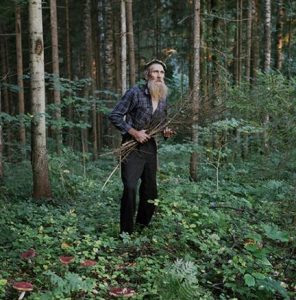


Posted in Agriculture, Energy Books, Farming & Ranching, Life Before Oil, Limits To Growth | Tagged , , , | 5 Comments

Ugo Bardi: “Energy Dominance,” what does it mean? Decoding a Fashionable Slogan

Preface.  A very good article about energy and war, explains a lot about how the world really works.

Alice Friedemann   www.energyskeptic.com  author of “When Trucks Stop Running: Energy and the Future of Transportation”, 2015, Springer and “Crunch! Whole Grain Artisan Chips and Crackers”. Podcasts: Practical Prepping, KunstlerCast 253, KunstlerCast278, Peak Prosperity , XX2 report

***

Ugo Bardi. 2019.Energy Dominance,” what does it mean? Decoding a Fashionable Slogan. Cassandra’s legacy.

“Now, I know for a fact that American energy dominance is within our grasp as a nation.” Ryan Zinke, U.S. Secretary of the Interior (source)

“All Warfare is Based on Deception” Sun Tzu, “The Art of War”

Over nearly a half-century, since the time of Richard Nixon, American presidents have proclaimed the need for “energy independence” for the US, without ever succeeding in attaining it. During the past few years, it has become fashionable to say that the US has, in fact, become energy independent, even though it is not true. And, doubling down on this concept, there came the idea of “energy dominance,” introduced by the Trump administration in June 2017.  It is now used at all levels in the press and in the political debate.

No doubt, the US has good reasons to be bullish on oil production. Of the three major world producers, it is the only one growing: it has overtaken Saudi Arabia and it seems to be poised to overtake Russia in a few years. (graphic source).

This rebound in the US production after the decline that started in the early 1970s is nearly miraculous. And the miracle as a name: shale oil. A great success, sure, but, if you think about it, the whole story looks weird: the US is trying to gain this “dominance” by means of resources which, once burned, will be forever gone. It is like people competing at who is burning their own house faster. What sense does it make?

Art Berman keeps telling us that shale oil is an expensive resource that could be produced at a profit only for market conditions that are unrealistic to expect. So far, much more money has been poured into shale oil production than it has returned from the sales of shale oil. “Energy dominance” seems to be just an elaborate way to lose money and resources. Again, what sense does that make?

But there is a logic in the term “energy dominance.” It has to do with the way slogans are used in politics: a slogan is not just a compact way of expressing a certain political concept, it is often a coded message that hides much more than it says. So, we know that “bringing democracy” to a foreign country means to bomb it to smithereens. “Make America great again” means subsidizing the fossil fuel industry. “The Indispensable Country” means, “The American Empire.” And more.

There is nothing wrong in using coded slogans: you only have to know how to decode them. So, “energy dominance” has to be decoded and turned into “military dominance.” Then, things start making sense.

One quick note before you accuse me of being a conspiracy theorist: I am reasonably sure that there is no “control room” in a dark basement of the Pentagon or of the White House deciding long-term economic and military objectives. The decision mechanism of modern states is collective and networked. It is akin to that of anthills: there is nobody in charge, plenty of people push in different directions and, eventually, the giant structure may start moving in a certain direction.

So, the fact that so much money has been directed toward the exploitation of shale oil and gas doesn’t mean that someone at the top decided that it was the thing to be done. It is simply, that investors tend to direct their financial resources where they think they’ll have returns, and that may well be the result of a collective hallucination. Investing in shale oil is, basically, a Ponzi scheme but if Ponzi schemes exist there is a reason for them to exist. Even if investing in something doesn’t generate overall profits, it moves money, benefits contractors, raises the GDP, and the more money is invested the more expectations of profits grow. And so it goes until the bubble bursts, but that may take time.

But there is more than that in this story: it is the military side. We all know that wars are won by the side that can pour more resources into the fight. It was in this way that the first and the second world war were won: the allies could produce more energy in the form of oil, coal, and gas. And, with these energy sources, they could produce more stuff: planes, tanks, cannons, bombs, bullets, and more stuff that was thrown at the Germans until they gave up. Matthieu Auzeannau gives us plenty of examples of this mechanism in his book “Oil, Power, and War.” The Germans were always lacking enough oil to power their military machine and that’s why they were doomed from the beginning.

For the military, the lesson of the past world wars is that wars are won by the side which has the largest oil supply. And they remember it. So, if you want to attain military dominance, energy independence is not enough, you need to attain energy dominance.

Everything makes sense also in view of some recent results on the statistical patterns of wars. Wars, it seems, are correlated to the thermodynamic phenomenon of entropy dissipation in complex systems. The more energy there is to dissipate, the faster it is dissipated. And if this dissipation is really fast, it may take the shape of a war — war is the fastest way to destroy (dissipate) accumulated resources. But, in order to dissipate resources, you need to accumulate them first, and that’s the role of shale oil in the current situation.

Which means that shale oil is not a natural resource, it is a military resource. As such, it doesn’t matter if it brings a profit or not for the investors. What matters is how it can be used to maintain and expand that gigantic social and economic structure that we call “Globalization” (another slogan that can be decoded as “the global empire”).

As long as the production of shale oil increases, we face the risk of a new, major world war. We can only hope that the shale bubble bursts by itself first. One more good reason why a Seneca Collapse of oil production would be good for all of us.

Posted in Over Oil, Ugo Bardi | Tagged , | 1 Comment

California’s central valley aquifers may be gone in 2030s, Ogallala 2050-2070

Preface. Clearly the human population isn’t going to reach 10 billion or more. California grows one-third of the nation’s food, the 10 high-plains states over the Ogallala about a quarter of the nations food, and exports a great deal of food other nations as well.

Alice Friedemann  www.energyskeptic.com  Author of Life After Fossil Fuels: A Reality Check on Alternative Energy; When Trucks Stop Running: Energy and the Future of Transportation”, Barriers to Making Algal Biofuels, & “Crunch! Whole Grain Artisan Chips and Crackers”.  Women in ecology  Podcasts: WGBH, Planet: Critical, Crazy Town, Collapse Chronicles, Derrick Jensen, Practical Prepping, Kunstler 253 &278, Peak Prosperity,  Index of best energyskeptic posts

***

AP (2023) Warning about aquifer’s decline sets up big fight in Kansas. The Associated Press.

Kansas water experts are sounding an alarm decades in the making: Farmers and ranchers in the state’s western half must stop pumping more water out of a vast aquifer than nature puts back each year or risk the economic collapse of a region important to the U.S. food supply.

Kansas produces more than 20% of the nation’s wheat and has about 18% of the cattle being fed in the U.S. The western third of Kansas, home to most of its portion of the Ogallala, accounts for 60% of the value of all Kansas crops and livestock. That’s possible because of the water.

Kansas produces more than 20% of the nation’s wheat and has about 18% of the cattle being fed in the U.S. The western third of Kansas, home to most of its portion of the Ogallala, accounts for 60% of the value of all Kansas crops and livestock. That’s possible because of the water. Since widespread pumping began around 1940, much of the Ogallala has lost at least 30% of its available water and more than 60% in places in western Kansas.


December 15, 2016. Groundwater resources around the world could be depleted by 2050s.  American Geophysical Union.

Human consumption could deplete groundwater in parts of India, southern Europe and the U.S. in the coming decades, according to new research presented here today.

In the U.S., aquifers in California’s Central Valley, Tulare Basin and southern San Joaquin Valley, could be depleted within the 2030s.

Aquifers in the southern High Plains, which supply groundwater to parts of Texas, Oklahoma and New Mexico, could reach their limits between the 2050s and 2070s, according to the new research.

New modeling of the world’s groundwater levels finds aquifers—the soil or porous rocks that hold groundwater—in the Upper Ganges Basin area of India, southern Spain and Italy could be depleted between 2040 and 2060.By 2050, as many as 1.8 billion people could live in areas where groundwater levels are fully or nearly depleted because of excessive pumping of groundwater for drinking and agriculture, according to Inge de Graaf, a hydrologist at the Colorado School of Mines in Golden, Colorado.

“While many aquifers remain productive, economically exploitable groundwater is already unattainable or will become so in the near future, especially in intensively irrigated areas in the drier regions of the world,” said de Graaf, who will present the results of her new research today at the 2016 American Geophysical Union Fall Meeting.

Knowing the limits of groundwater resources is imperative, as billions of gallons of groundwater are used daily for agriculture and drinking water worldwide, said de Graaf.

Previous studies used satellite data to show that several of the world’s largest aquifers were nearing depletion. But this method can’t be used to measure aquifer depletion on a smaller, regional scale, according to de Graaf. In the new research, de Graaf and colleagues from Utrecht University in the Netherlands used new data on aquifer structure, water withdrawals, and interactions between groundwater and surrounding water to simulate groundwater depletion and recovery on a regional scale. The research team used their model to forecast when and where aquifers around the world may reach their limits, or when water levels drop below the reach of modern pumps.

Limits were considered “exceeded” when groundwater levels dropped below the pumping threshold for two consecutive years. The new study finds heavily irrigated regions in drier climates, such as the U.S. High Plains, the Indus and Ganges basins, and portions of Argentina and Australia, face the greatest threat of depletion.

Although the new study estimates the limits of global groundwater on a regional scale, scientists still lack complete data about aquifer structure and storage capacity to say exactly how  much groundwater remains in individual aquifers. “We don’t know how much water there is, how fast we’re depleting aquifers, or how long we can use this resource before devastating effects take place, like drying up of wells or rivers,” de Graaf said.

Hayes D, Hayes G (2015) Cowed: The Hidden Impact of 93 Million Cows on America’s Health, Economy, Politics, Culture, and Environment. W.W. Norton & Company.

The Ogallala is one of Earth’s largest aquifers, the water used in the 10 great Plains states that provides a third of all groundwater used to irrigate to grow a fifth of our food and 40% of the grain for grain-fed beef .  Over the last century, however, we’ve pumped out two-thirds of the total water, enough to fill Lake Erie.  Many geologists expect most of the Ogallala to run out of water in 25 to 30 years, and perhaps run out of “usable” water as soon as 2020.  The fossil water in the Ogallala is not renewable. Over the years, water levels have fallen by more than one hundred feet in parts of four states. The “tragedy of the commons” is writ large over the Ogallala. Like climate disruption, aquifer depletion is the type of problem that human minds aren’t well designed to handle: The problem spans generations, conditions are only gradually worsening, and most people find it in their short-term interest to behave in ways that benefit them but harm future generations. Underground water ignores property lines, so there’s no way to conserve the water under your land unless all your neighbors do the same. Therefore, it seems logical to pump out as much water as hard and fast as you can, because otherwise your neighbors will pump it out (Hayes).

Posted in Groundwater, Peak Water, Water Infrastructure | Tagged , , , , , | Comments Off on California’s central valley aquifers may be gone in 2030s, Ogallala 2050-2070