Book review of “The Soul of an Octopus”

Preface.  The octopus is an amazing creature, more than can be conveyed in the bits and pieces I’ve selected below.  The only downside to reading it is that you may not want to eat octopus anymore!

2018: A team of researchers bathed octopuses in MDMA and found that it makes the typically asocial animals more social. The experiment had a hypothesis that some neurotransmitter systems are shared across vertebrate and invertebrate species. In this case, the authors were studying a serotonin transporter binding site of MDMA that they believed octopuses share evolutionarily with humans — even though our lineages are separated by over 500 million years. Basically, they thought that MDMA would have a similar effect on octopus behavior to the effect it has on human behavior.   To find out more, do an internet search on psychedelic octopus

Alice Friedemann   www.energyskeptic.com  author of “When Trucks Stop Running: Energy and the Future of Transportation”, 2015, Springer and “Crunch! Whole Grain Artisan Chips and Crackers”. Podcasts: Practical Prepping, KunstlerCast 253, KunstlerCast278, Peak Prosperity , XX2 report

***

Sy Montgomery. 2016. The Soul of an Octopus: A Surprising Exploration into the Wonder of Consciousness. Atria books

Not just anyone can open up the octopus tank, and for good reason. A giant Pacific octopus—the largest of the world’s 250 or so octopus species—can easily overpower a person. Just one of a big male’s three-inch-diameter suckers can lift 30 pounds, and a giant Pacific octopus has 1,600 of them [48,000 pounds]. An octopus bite can inject a neurotoxic venom as well as saliva that has the ability to dissolve flesh. Worst of all, an octopus can take the opportunity to escape from an open tank, and an escaped octopus is a big problem for both the octopus and the aquarium.

The giant Pacific octopus is one of the fastest-growing animals on the planet. Hatching from an egg the size of a grain of rice, one can grow both longer and heavier than a man in three years.

Athena is about two and a half years old and weighs roughly 40 pounds. I reach to touch her head, which is silky and softer than custard. Her skin is flecked with ruby and silver, a night sky reflected on the wine-dark sea. As I stroke her with my fingertips, her skin goes white beneath my touch. White is the color of a relaxed octopus.  Later, Athena rises up from her lair like steam from a pot. She’s coming to Wilson so quickly it takes my breath away—much faster than she had come to see me earlier.

Octopuses can taste with their entire bodies, but this sense is most exquisitely developed in their suckers. Athena’s is an exceptionally intimate embrace. She is at once touching and tasting my skin, and possibly the muscle, bone, and blood beneath. Though we have only just met, Athena already knows me in a way no being has known me before.

Truman and George were laid-back octopuses, but Athena had earned her name, that of the Greek goddess of war and strategy. She was a particularly feisty octopus: very active, and prone to excitement, which she showed by turning her skin bumpy and red. Octopuses are highly individual.

At the Seattle Aquarium, one giant Pacific octopus was named Emily Dickinson because she was so shy that she spent her days hiding behind her tank’s backdrop; the public almost never saw her.

Another was dubbed Lucretia McEvil, because she constantly dismantled everything in her tank. George had been relaxed and friendly with his keeper, senior aquarist Bill Murphy. Some people find them very creepy and slimy,” he said, “but I enjoy it a lot. In some ways they’re just like a dog. I actually pet his head or scratch his forehead. He loves it.

Octopuses realize that humans are individuals too. They like some people; they dislike others. And they behave differently toward those they know and trust.

Occasionally an octopus takes a dislike to a particular person. At the Seattle Aquarium, when one biologist would check on a normally friendly octopus each night, she would be greeted by a blast of painfully cold salt water shot from the funnel. The octopus hosed her and only her.

Wild octopuses use their funnels not only for propulsion but also to repel things they don’t like, just as you might use a snow blower to clear a sidewalk.  One volunteer at the New England Aquarium always got this same treatment from Truman, who would shoot a soaking stream of salt water at her every time he saw her. Later, the volunteer left her position at the aquarium for college. Months later, she returned for a visit. Truman—who hadn’t squirted anyone in the meantime—instantly soaked her again.

A lion is a mammal like us; an octopus is put together completely differently, with three hearts, a brain that wraps around its throat, and a covering of slime instead of hair. Even their blood is a different color from ours; it’s blue, because copper, not iron, carries its oxygen.

Back home, I tried to replay my interaction with Athena. It was difficult. There was so much of her, everywhere. I could not keep track of her gelatinous body and its eight floaty, rubbery arms. I could not keep track of her continually changing color, shape, or texture. One moment, she’d be bright red and bumpy, and the next, she’d be smoother and veined with dark brown or white. Patches on different parts of her body would change color so fast—in less than a second—that by the time I registered the last change, she would be on to another.

Unconstrained by joints, her arms were constantly questing, coiling, stretching, reaching, unfurling, all in different directions at once. Each arm seemed like a separate creature, with a mind of its own. In fact, this is almost literally true. Three fifths of octopuses’ neurons are not in the brain but in the arms.

An octopus can also voluntarily control its skin texture—raising and lowering fleshy projections called papillae—as well as change its overall shape and posture. The sand-dwelling mimic octopus, an Atlantic species, is particularly adept at this. One online video shows the animal altering its body position, color, and skin texture to morph into a flatfish, then several sea snakes, and finally a poisonous lionfish—all in a matter of seconds.

Human eyes have three visual pigments, allowing us to see color. Octopuses have only one—which would make these masters of camouflage, commanding a glittering rainbow of colors, technically color-blind. How, then, does the octopus decide what colors to turn? New evidence suggests cephalopods might be able to see with their skin.

STRENGTH

I was impressed that she even recognized a face so unlike her own, and wondered whether Athena might like to taste my face as well as look at it. I asked Bill if that was ever allowed. “No,” he said emphatically, “we don’t let them near the face.” Why? Could she pull out an eye? “Yes,” Bill said, “she could.” Bill has gotten into futile tugs-of-war with octopuses who have grabbed the handles of cleaning brushes. “The octopus always wins. You have to know what you’re doing,” he said. “You cannot let her go near your face.” “I felt as if she wanted to pull me into the tank,” I told him. “She could pull you into the tank, yes,” he said. “She will try.

Octavia grabbed my left arm with three of her arms and my right arm with yet another of hers, and began to pull—hard. Her thorny red skin showed her excitement. Her suction was strong enough that I felt her drawing the blood to the surface of my skin. I would go home with hickeys that day. I tried to stroke her, but my hands were immobilized. She kept me at arm’s length, each arm was at least three feet long.

Scott was pulling with all his considerable strength on the tongs to keep Octavia from pulling me into the tank. I submitted to the tug-of-war. I had no choice. Though fairly fit for a person of my size (five foot five, 125 pounds), age (53), and sex (female), I didn’t have the upper-body strength to resist Octavia’s hydrostatic muscles. An octopus’s muscles have both radial and longitudinal fibers, thereby resembling our tongues more than our biceps, but they’re strong enough to turn their arms to rigid rods—or shorten them in length by 50 to 70%. An octopus’s arm muscles, by one calculation, are capable of resisting a pull one hundred times the octopus’s own weight. In Octavia’s case, that could be nearly 4,000 pounds.

William Wyatt Gill spent two decades in the South Seas, among octopuses much smaller than the giant Pacific; but even these species are strong enough to overwhelm a young, strong, fit man. He wrote that “no native of Polynesia doubts the fact” that octopuses are dangerous.

Octavia was using only a tiny fraction of her great strength. Compared to what she could do, this was just a playful tug.

Octopuses live fast and die young: Giant Pacific octopuses are probably among the longest-lived of the species, and they usually live only about three or four years. And by the time they arrive at the aquarium, they are usually at least a year old, sometimes more.

Dying Octopus

“I had no idea George was about to die,” Bill said. “Usually they change in body and behavior and coloration. They don’t stay as red. They’re whitish all the time. The intensity isn’t there. They’re less playful. It’s like old age in people. Sometimes they get age spots, white patches on their skin that seem to be sloughing off.

The bliss of stroking an octopus’s head is difficult to convey to most people, even to animal lovers. A friend asked, aren’t they slimy? Slime is a very specialized and essential substance, and there’s no denying that octopuses have slime in spades, almost everyone who lives in the water does.  Slime helps sea animals reduce drag while moving through the water, capture and eat food, keep their skin healthy, escape predators, protect their eggs.  Octopus slime is sort of a cross between drool and snot.  And it’s very useful. It helps to be slippery if you’re squeezing your body in and out of tight places. Slime keeps the octopus moist if it wants to emerge from the water, which some species of octopus do with surprisingly frequency in the wild.

How did the octopus get to be so smart?

  1. The event driving the octopus toward intelligence was the loss of the ancestral shell, which freed up mobility. An octopus, unlike a clam, does not have to wait for food to find it; the octopus can hunt like a tiger.
  2. A single octopus may hunt many dozens of different prey species, each of which demands a different hunting strategy, a different skill set, a different set of decisions to make and modify. Will you camouflage yourself for a stalk-and-ambush attack? Shoot through the sea with your siphon for a quick chase? Crawl out of the water to capture escaping prey?
  3. But losing the shell was a trade-off, now the octopus became a big packet of unprotected protein, so just about anything big enough to eat it will do so.
  4. From building shelters to shooting ink to changing color, the vulnerable octopus must be ready to outwit dozens of species of animals, some of which it pursues, others it must escape.
  5. How do you plan for so many possibilities? Doing so demands, to some degree, anticipating the actions—in other words, imagining the minds—of other individuals. The octopus must assess whether the other animal believes its ruse or not, and if not, try something different.
  6. In Jennifer’s book, she and her coauthors report that specific displays are directed at particular species under specific conditions. The Passing Cloud display, for instance, is used by an octopus to scare an immobile crab into moving and thus giving itself away. But to fool a hungry fish, an octopus is more likely to use a different strategy: to rapidly change color, pattern, and shape. Most fish have excellent visual memories for particular search images, but if the octopus changes from dark to pale, jets away, and then turns on stripes or spots, the fish can’t keep track of it.
  7. An octopus has to match with many different species of bird, whale, seal, sea lion, shark, crab, fish, and turtle, as well as other octopuses and human divers—all with different kinds of eyes, different lifestyles, different senses, different motives, different personalities, and different moods.

In the wild, over the course of about three weeks, a female giant Pacific octopus might lay between 67,000 and 100,000 eggs. In the wild, most female octopuses lay eggs only once, and then guard them so assiduously they won’t leave them even to hunt for food. The mother starves herself for the rest of her life. A deep-sea species holds the record for this feat, surviving four and a half years without feeding while brooding her eggs near the bottom of Monterey Canyon, nearly a mile below the surface of the ocean.

The octopus goes all the way back beyond the Cenozoic, the time when our ancestors descended from the trees; back the Mesozoic, when dinosaurs ruled the land; the Permian and the rise of the ancestors of the mammals; back, the Carboniferous’s coal-forming swamp forests; back past the Devonian, when amphibians emerged from the water;  past the Silurian, when plants first took root on land—all the way to the Ordovician, to a time before the advent of wings or knees or lungs, before the fishes had bony jaws, before blood pumped from a multichambered heart, to more than 500 million years ago

A giant Pacific octopus can regenerate up to one third of a lost arm in as little as six weeks. Unlike a lizard’s regenerated tail, which is invariably of poorer quality than the original, the regrown arm of an octopus is as good as new, complete with nerves, muscles, chromatophores, and perfect, virgin suckers.

Arms can have a personality

But the bold versus shy arms could be something quite different. While arms can be employed for specialized tasks—for example, as your left hand holds the nail while your right hand wields the hammer—each arm may have its own personality, almost like a separate creature. Researchers have repeatedly observed that when an octopus is in an unfamiliar tank with food in the middle, some of its arms may walk toward the food—while some of its other arms seem to cower in a corner, seeking safety. Each octopus arm enjoys a great deal of autonomy. In experiments, a researcher cut the nerves connecting an octopus’s arm to the brain, and then stimulated the skin on the arm. The arm behaved perfectly normally—even reaching out and grabbing food. The experiment demonstrated, as one colleague told National Geographic News, “there is a lot of processing of information

As science writer Katherine Harmon Courage put it, the octopus may be able to “outsource much of the intelligence analysis [from the outside world] to individual body parts.” Further, it seems “that the arms can get in touch with one another without having to go through the central brain.

Another problem is that, this time of year, most of the octopuses are missing from one to four arms. Lingcod, voracious predators that grow to 80 pounds, with eighteen sharp teeth, are spawning, and will bite and bully octopuses to evict them from their dens and claim the holes as their own. This is likely how our octopus lost her arm.

MATING

The Octopus Blind Date has been a regular event at the Seattle Aquarium for nine years—the jewel in the crown of Octopus Week, the biggest draw of the aquarium year.

Octopus Week might bring 6,000 visitors. “It’s funny to think they come to see two animals mate,” says Kathryn Kegel, thirty-one, the aquarium’s lead invertebrate biologist. But for her, too, even after working here seven years, it’s one of the most thrilling days of the year. “The matings I’ve seen are such a ball of arms, you can’t tell apart the individual animals.” She’s never missed a Blind Date during her tenure. She reckons there’s “about a fifty-fifty chance they’ll be interested.” They may do nothing. Or one might attack the other. If this happens, she and another diver will try to separate them—if they can. “There’s too many arms to do much about it, though,” she admits.

One year, the female killed the male and began to eat him. And once, one octopus managed to remove the barrier separating the two tanks, and the two mated the night before the Blind Date.

Although there are exceptions, most species of octopus usually mate in one of two familiar ways: the male on top of the female, as mammals usually do, or side by side. The latter is sometimes called distance mating, an octopus adaptation to mitigate the risk of cannibalism. (One large female Octopus cyanea in French Polynesia mated with a particular male twelve times—but after an unlucky thirteenth bout, she suffocated her lover and spent the next two days eating his corpse in her den.) Distance mating sounds like the ultimate in safe sex. The male extends his hectocotylized arm some distance to reach the female; in some species, this can be done while neither octopus leaves its adjacent den.

Pacific striped octopus lives in communities of up to forty animals. Males and females cohabit in dens, mate beak-to-beak, and produce not just one but many broods of eggs over their lifetimes.

In the ocean, not a tank

Three hours south of Sydney that they call Octopolis, where, at a depth of about 60 feet, they have found as many as 11 Octopus tetricus living within one or two yards of each other. These are fairly large octopuses, with arm spans of six feet or more, and distinctive, soulful white eyes that also give the species the nickname “the gloomy octopus.” Matthew told me, “I’ve had a couple of experiences where we were diving at this site and an octopus grabbed my hand, and took me to its den, five meters away.” Once, an octopus took him on what he called “a big circuit” around the area, a tour that lasted for ten or twelve minutes. Afterward, the octopus climbed all over Matthew and investigated him with his suckers, as if, having shown him around the neighborhood, he now wanted to explore his human guest in turn. The octopuses he met, Matthew told me, were “not aggressive—they’re curious.” Because he dives Octopolis regularly, Matthew is certain the octopuses there recognize him. Perhaps, he mused, they even look forward to his visits. He often brings them toys—bottles, plastic screw-apart Easter eggs, and GoPro underwater video cameras—all of which they dismantle with interest and sometimes drag into their dens.

To Keith’s amazement, after giving him a guided tour, the first octopus met up with a second octopus. Keith couldn’t decide which one to photograph. How can you decide which of your subjects is more photogenic, when both change color and shape before your eyes? Keith chose to stick with the first one, who crawled around the side of a rock. As Keith was photographing it, the second octopus traveled up and over a higher rock nearby, stood up tall on its arms, as if on tiptoe, and, with what looked like keen interest, leaned toward Keith and the other octopus he was photographing. “It actively positioned itself so it could observe me,” Keith said. “It was so amazing to be observed like that. In all my years photographing animals underwater—sharks, tuna, turtles, fish—I’ve never encountered anything that watched me like this. It was like a person watching a model at a fashion-photo shoot, or watching a pro football player at a game. Most of the time, fish observe you and notice you. But they don’t look at you like this, like they are watching and learning. It was one of the most incredible experiences of my life.

Keith points to a school of yellowfin goatfish, their chin whiskers equipped with chemoreceptors that let them taste and smell food hidden among coral and under sand. Right now these 11-inch fish sport electric yellow stripes over satiny white; but, like those of the octopus, their colors aren’t static. These fish are capable of a feat that earned their Mediterranean relatives an unenviable star turn at Roman feasts. Goatfish were presented to guests live, so that diners could watch them, in their death throes, change color.

Beneath us, emerald and turquoise parrot fish pluck algae from coral with their beaks—actually mosaics of tightly packed teeth. Each sleeps in its own private mucous cocoon, a slimy sleeping bag secreted from the mouth, to conceal its scent from predators. Parrot fish are sequential hermaphrodites: All are born female, and later transform themselves to males.

In the village of Papetoai, just a short drive from CRIOBE, there was once a temple dedicated to the octopus, the guardian spirit of the place. To Mooréa’s seafaring people, the supernaturally strong, shape-shifting octopus was their divine protector, its many reaching arms a symbol of unity and peace. Today, a Protestant church occupies that site. Built in 1827, the oldest church in Mooréa still honors the octopus. The eight-sided building nestles in the shadow of Mount Rotui, whose shape, to the people here, resembles the profile of an octopus.

Keith and I are the only foreigners to join the packed congregation of about 120 people. Almost everyone around us has a tattoo; many of the women wear elaborate hats made of bamboo and live flowers. The minister wears a long, waist-length garland of green leaves, yellow hibiscus, white frangipani, and red and pink bougainvillea; the women in the choir are adorned with headdresses of flowers and leaves.

Mythology

  1. Hawaii, where ancient myths tell us our current universe is really the remnant of a more ancient one—the only survivor of which is the octopus, who managed to slip between the narrow crack between worlds.
  2. On the Gilbert Islands, the octopus god, Na Kika, was said to be the son of the first beings, and with his eight strong arms, shoved the islands up from the bottom of the Pacific Ocean
  3. Pm the northwest coast of British Columbia and Alaska, the native people say the octopus controls the weather, and wields power over sickness and health

What goes on in Karma’s head—or the larger bundle of neurons in her arms—when she sees us? Do her three hearts beat faster when she catches sight of Bill, or Wilson, or Christa, or Anna, or me? Would she feel sad if we disappeared? What does sadness feel like for an octopus—or for anyone else, for that matter? What does Karma feel like when she pours her huge body into a tiny crevice of her lair? What does capelin taste like on her skin?

An octopus’s mouth is in its armpits. Octopuses generally grab prey with their suckers, then pass it from sucker to sucker, as if along a conveyor belt, until it reaches the mouth.

Christa places a second fish in the pillowy, white cups of another arm. Instantly Kali becomes exceptionally calm. Lying upside down at the surface, arms splayed, she gives us an extraordinary view of her shiny, black beak. This is the first time even Wilson has seen the beak inside a living octopus. It is a private and trusting moment, her sharing with us this surprising part of her, normally hidden inside at the confluence of her arms.

On his first few dives, Ken had not found a suitable octopus. Sometimes he saw no octopus at all. “Sometimes you just get skunked,” he said. But Ken was determined. It took him six dives, but finally he found the octopus that would be destined for Boston. He spotted her at a depth of about 75 feet, hiding in a rock formation, with just her suckers sticking out. Ken had touched her gently and she had jetted from her crevice—directly into his waiting monofilament net.

“The net is so soft you wouldn’t feel its abrasion on your face,” Ken told me. “You have to treat these animals with kid gloves. You can’t yank them to the surface. You don’t want to shock them.” The water temperature at that depth may be more than 15°F colder than the water at the surface, so he had transferred her from the net to a closed container in about 50 gallons of water, and hauled everything slowly to the surface.

Karma now rises to the top of the barrel when I slap the water, so calm in our presence she often turns nearly pure white when we play with her. She’s active, but not nearly as exuberant as Kali. She prefers to suck on us with her larger suckers, sometimes hard enough to give us hickeys that persist for twenty-four hours. When we try to interact with the tips of her arms she lets them slip from our hands. After twenty minutes or so she typically relaxes, holding us gently. But then she grabs us again, more emphatically, as if to remind us: I am strong enough to pull you in. I am gentle because I choose to be.

Miscellaneous

A friend who works with elephants told me of a woman who called herself an animal communicator, who was visiting an aggressive elephant at a zoo. After her telepathic conversation with the elephant, the communicator told the keeper, “Oh, that elephant really likes me. He wants to put his head in my lap.” What was most interesting about this interaction was the part the communicator may have gotten right: Elephants do sometimes put their heads in the laps of people. They do this to kill them. They crush people with their foreheads like you would grind out a cigarette butt with your shoe.

Marion Britt further demonstrated the positive power of interesting, gentle, loving interaction between keepers and the animals in their care. And she did it by directly handling the most fearsome animals in the aquarium—the 13-foot-long, 300-pound anacondas. “Before Marion,” says Wilson, “nobody would go into the tank with the anacondas.

South America’s top predators, anacondas readily hunt and kill adult deer, as well as 130-pound capybaras, and have been known to eat jaguars. I happen to have met one of the best-known biologists studying anacondas, Jesus Rivas, who has documented two predatory attacks by these powerful constricting snakes on his assistants in the field. Humans “are well within the predator-to-prey ratio” of anacondas, who can grow to 30 feet, he said. The only reason anacondas don’t attack humans more often is that, other than Rivas and his field team, people don’t venture where they know anacondas are found.

But Marion did. When she started at the aquarium as a twenty-four-year-old intern in Scott’s gallery in 2007, there were three anacondas—whom nobody could safely touch.

South America’s top predators, anacondas readily hunt and kill adult deer, as well as 130-pound capybaras, and have been known to eat jaguars. I happen to have met one of the best-known biologists studying anacondas, Jesus Rivas, who has documented two predatory attacks by these powerful constricting snakes on his assistants in the field. Humans “are well within the predator-to-prey ratio” of anacondas, who can grow to 30 feet, he said. The only reason anacondas don’t attack humans more often is that, other than Rivas and his field team, people don’t venture where they know anacondas are found.

By the time Marion stopped working at the aquarium, the two larger anacondas, Kathleen and Ashley, would slither up to her and curl up with their heads in her lap. And now, thanks to Marion, no more are snakes traumatized by head restraint whenever they need to be moved from their tank for their yearly veterinary checkup, or to treat an illness, or when the tank needs to be drained. The staff no longer dreads interacting with them. Clearly, the snakes are happier and healthier for it.

The rest of the staff has also learned to recognize when the snakes are not in the mood to be handled, and back off at these times to try another day.

“Just about every animal,” Scott says—not just mammals and birds—“can learn, recognize individuals, and respond to empathy.

Scott reads other fish cues just as fluently. When we visited the cichlids in their new home, he compared those who had just been moved to those who had been living there for weeks or months. The stripes on the new immigrants were paler. “And look at this one,” he said, pointing to a fish who was already at home in the tank. “See the sparkle in the eye? Now look at this other one. You don’t see the sparkle.” Scott can read the faces of fishes as easily as you or I read a person’s.

Every day, animals at the aquarium are being born and dying, arriving from collection expeditions or from U.S. Fish & Wildlife Service agents, or getting shipped to and from other aquariums throughout the United States and Canada. The comings and goings are always delicate, frequently surprising events. One morning I find Bill has been gifted with a 21-pound lobster caught off Nauset Beach in Orleans, Massachusetts—given by the anonymous winner of a raffle at Cap’n Elmer’s fish market to benefit Dana-Farber Cancer Institute. The lobster’s claws are so heavy he cannot lift them out of water. Another day, eighteen Amazon stingrays arrive in Freshwater, each as large as a bathmat. They had been living in a huge tank owned by a paraplegic man whose ground-floor apartment is being renovated; they have grown too large for him to keep.

Animal-keeping institutions aren’t all the same in the care they give sick inmates. When a friend of mine was working at a small zoo in the early ’80s, their kangaroo fell ill. She called a zoo in Australia for help. “What do you do when your kangaroo gets sick?” she asked. “Shoot it and go catch another one,” came the reply.

Posted in Natural History | Tagged , | 1 Comment

Rare: The High-Stakes Race to Satisfy Our Need for the Scarcest Metals on Earth by Keith Veronese

Preface.  This is a book review of Keith Veronese’s book “The High-stakes race to satisfy our need for the scarcest metals on earth” (well, the kindle notes, so a bit disjointed).

Capitalism believes there’s a solution for everything due to Man’s Inventive Brain, but when it comes to getting metals out of the earth, there are some very serious limitations.  In parts per billion, there’s only 4 of platinum, 20 of silver, and less than 1 part for many other important metals. Yet they are essential for cars, wind turbines, electronics, military weapons, oil refining, and more (see posts in peak critical elements, peak platinum group metals, peak precious metals, peak rare earth minerals, peak copper, peak lithium, and peak gold.

China controls the vast majority of rare earth metals, and the entire supply chain from mining to finished goods. Even if the U.S. mines rare earths, we’ll probably sell them to China.

The overwhelming majority of Earth’s crust is made of hydrogen and oxygen. The only metals present in large amounts within the crust are aluminum and iron, with the latter also dominating the planetary core. These four elements make up about 90% of the mass of the crust, with silicon, nickel, magnesium, sulfur, and calcium rounding out another 9% of the planet’s mass.

Our civilization is far more dependent on very rare elements than I’d realized, which are extremely scarce and being dissipated since so few are recycled (it’s almost impossible to recycle them though, the cost is too high, and many elements are hard to separate from one another).

So in addition to peak oil, add in peak metals to the great tidal wave of collapse on the horizon.

Alice Friedemann   www.energyskeptic.com  author of “When Trucks Stop Running: Energy and the Future of Transportation”, 2015, Springer and “Crunch! Whole Grain Artisan Chips and Crackers”. Podcasts: Practical Prepping, KunstlerCast 253, KunstlerCast278, Peak Prosperity , XX2 report

***

Keith Veronese. 2015. Rare: The High-Stakes Race to Satisfy Our Need for the Scarcest Metals on Earth. Prometheus books.

Scientifically, metals are known for a common set of properties. Almost all metals have the ability to transmit electricity and heat—very useful properties in the world of electronics. Most metals can be easily bent and molded into intricate shapes. As a nice bonus, most metals are resistant to all but the most extreme chemical reactions in the outside environment, with the added stability increasing their usefulness.

A very apparent exception to this stability, however, is the rusting of iron, a natural process that occurs as iron is exposed to oxygen and water over time in junkyards, barns, and elsewhere.

Is a particular metal hard to find because there is a limited amount, is it simply difficult to retrieve, or does technological demand outpace supply? The acquisition difficulty is likely due to a combination of all these reasons

Parts per billion

4          Platinum, a scarce, precious metal, exists in four parts per billion of Earth’s crust—only four out of a billion atoms within the crust are platinum. This is an extremely small amount. To put the amount of platinum on Earth in an easier-to-visualize light, imagine if one took all the platinum mined in the past several decades and melted it down; the amount of molten platinum would barely fill the average home swimming pool.

20        Silver, a metal many use on a daily basis to eat with, exists at only a 20-parts-per-billion value—20 out of every billion atoms on the planet are silver.

1          Osmium, rhenium, iridium, ruthenium, and even gold exist in smaller quantities, much less than one part per billion, while some are available in such small concentrations that no valid measurement exists.

On the extreme end of the scarcity spectrum is the metal promethium. The metal is named for the Greek Titan Prometheus, a mythological trickster who is known for stealing fire from the gods. Scientists first isolated promethium in 1963 after decades of speculation about the metal. Promethium is one of the rarest elements on Earth and would be very useful if available in substantial amounts. If enough existed on the planet, promethium could be used to power atomic batteries that would continue to work for decades at a time. Estimates suggest there is just over a pound of promethium within the crust of the entire planet. When the density of the metal is accounted for, this is just enough of the metal to fill the palm of a kindergartner’s hand.

This special attraction to iron explains why so many prized metals are hard to find. Earth’s molten core is estimated to be comprised of up to 90% iron, leading the elements to sink into the depths of Earth’s crust and continually move closer to the planet’s iron core over billions of years. At the same time, this drive to the core depletes the amount of the metals available in Earth’s crust. The pull poses a problem to mining efforts—a pull to the core prevents the formation of concentrated deposits that would be useful to mine, leading the metals to instead reside in the crust of our planet in spread-out, sparse amounts.

The mass of Earth is approximately 5.98 × 1024 kilograms. There is absolutely no easy (or useful) way to put a number of this magnitude into a reasonable context. I mean, it’s the entire Earth. I could say something silly, like the mass of the planet is equal to 65 quadrillion Nimitz-class aircraft carriers, each of which weighs 92 million kilograms a piece. This comparison might as well be an alien number, as it lends no concept of magnitude.

The overwhelming majority of Earth’s crust is made of hydrogen and oxygen. The only metals present in large amounts within the crust are aluminum and iron, with the latter also dominating the planetary core. These four elements make up about 90% of the mass of the crust, with silicon, nickel, magnesium, sulfur, and calcium rounding out another 9% of the planet’s mass.

Making up the remaining 1% are the 100+ elements in the periodic table, including a number of quite useful, but very rare, metals.

What is easier to understand are reports of the ages and proportion of metals and other elements that reside on the surface of the planet and just below. At the moment, Earth’s crust is the only portion of the planet that can be easily minded by humans.

Deposits of rare metals, including gold, are found under the surface of the planet’s oceans, but these deposits are rarely mined for a number of reasons. These metals often lie within deposits of sulfides, solid conjugations of metal and the element sulfur that occur at the mouth of hydrothermal vents. While technology exists that allows for the mining of deep-sea sulfide deposits, extremely expensive remotely operated vehicles are often necessary to recover the metals. Additionally, oceanic mining is a politically charged issue, as the ownership of underwater deposits can be easily contested. As technology advances, underwater mining for rare metals and other elements will become more popular, but, for the moment, due to cost and safety reasons, we are restricted to the ground beneath our feet that covers about one-third of the planet.

Earth’s crust varies in thickness from 25 to 50 kilometers along the continents, and so far, humankind has been unable to penetrate the full extent of the layer. The crust is thickest in the middle of the continent and slowly becomes thinner the closer one comes to the ocean. So what does it take to dig through the outer crust of our planet? It takes a massive budget, a long timescale, and the backing of a superpower, and even this might not be enough to reach the deepest depth. Over the course of two decades during the Cold War, the Soviet Union meticulously drilled to a depth of 12 kilometers into the crust of northwest Russia’s Kola Peninsula. No, this was not part of a supervillain-inspired plan to artificially create volcanoes but was rather an engineering expedition born out of the scientific head-butting that was common during the Cold War. The goal of this bizarre plot? To carve out a part of the already thin crust north of the Arctic Circle to see just how far humans could dig along and to see exactly how the makeup of the outer layer of the planet would change. Work on the Kola Superdeep Borehole began in 1970, with three decades of drilling leaving a 12-kilometer-deep hole in the Baltic crust, a phenomenal depth, yet it penetrated but a third of the crust’s estimated thickness. As they tore through the crust in the name of science and national pride, the team repeatedly encountered problems due to high temperatures. While you may feel cooler than ground-level temperatures in a basement home theater room or during a visit to a local cavern, as we drill deep into the surface, the temperature increases 15 degrees Fahrenheit for every 1.5 kilometers. At the depths reached during the Kola Borehole expeditions, temperatures well over 200 degrees Fahrenheit are expected. The extremely hot temperatures and increased pressure led to a series of expensive mechanical problems, and the project was abandoned.

The Kola Superdeep Borehole is the inspiration for the late 1980s and 1990s urban legend of a Soviet mission to drill a “Well to Hell,” with the California-based Trinity Broadcasting Network reporting the high temperatures encountered during drilling as literal evidence for the existence of hell. The Soviet engineers failed to reach hell, and they also failed to dig deep enough to locate rare earth metal reserves. At the moment, we simply lack the technology to breach our planet’s crust. The Kola Borehole fails to reach the midpoint of the crust, with at least twenty more kilometers of drilling to go at the time the project was shut down in 1992. Although Earth’s crust holds a considerable amount of desirable metals, if the metals are not in accessible, concentrated deposits, it is usually not worth the cost it would take for a corporation to retrieve them

The composition of metals within the planet’s crust is not uniform, unfortunately, further dividing the world’s continents into “haves” and “have nots” when it comes to in-demand metals.

Copper is very hard to isolate from the crust in a pure form. Bronze, a combination of copper with tin, was sufficient for our ancestors to make weapons and tools, but purer forms of copper and other metals are necessary for the varied number of modern uses. Copper is found within the mineral chalcopyrite. To isolate pure copper from chalcopyrite calls for a work-intensive process that involves crushing a large mass of chalcopyrite, smelting the mineral, removing sulfur, a gaseous infusion, and electrolysis before 99% pure, usable copper is obtained. Aluminum, a metal so common it is used to make disposable containers for soft drinks, undergoes a similar process before a form that meets standards for industrial use is obtained.

ROCKS INTO SMARTPHONES. The use of exotic metals has become commonplace to improve the activity of existing consumer goods. The piece of aluminum used as part of a capacitor within a smartphone is exchanged for a sliver of tantalum in order to keep up with processor demands, creating an enormous market for the rare metal. Rhodium, ruthenium, palladium, tellurium, rhenium, osmium, and iridium join the extremely well-known platinum and gold as some of the rarest metals on the planet that find regular uses in the medical industry. These rare metals play interesting roles in protecting the environment. A great example is the use of platinum, palladium, and rhodium in catalytic converters, a key component in every automobile built and sold in the United States since the 1970s. Each converter contains a little over five grams of platinum, palladium, or rhodium, but this meager amount acts as a catalyst that turns carbon monoxide into a water vapor and harmless emissions for hundreds of thousands of miles, with the metal unchanged throughout the process. An extremely recent and highly relevant example of a little-known metal that jumped to the forefront of demand is tantalum. Tantalum is in almost every smartphone, with a sliver in each of the nearly one billion smartphones sold worldwide each year.

Europium is used to create the color red in liquid-crystal televisions and monitors, with no other chemical able to reproduce the color reliably. As copper communication wires are replaced with fiber-optic cable, erbium is used to coat fiber-optic cable to increase the efficiency and speed of information transfer, and the permanently magnetic properties of neodymium lead to its extensive use in headphones, speakers, microphones, hard drives, and electric car batteries.

Conflict metals share a number of parallels with a much sought-after and contested resource: oil. These metals may serve to be the catalyst for a number of political and even military conflicts in the coming centuries. All our heavy metal elements, to which many of the rare metals belong, were born out of supernovas occurring over the past several billion years. These metals, if not recycled or repurposed, are finite resources. Inside the stories of these rare metals are human trials and political conflicts. In the past decade, the Congo has been ravaged by tribal wars to obtain tantalum, tungsten, and tin, with over five million people dying at the crossroads of supply and demand. Afghanistan and regions near the Chinese border are wellsprings for technologically viable rare metals due to the disproportionate spread of these high-demand metals in the planet’s crust. In an interesting move, the United States tasked geologists with estimating available resources of rare metals during recent military actions in Afghanistan. California, specifically the Mountain Pass Mine within San Bernardino County, was a leading supplier of rare earth metals in North America well into the 1990s. Mountain Pass, however, was shut down in the early 1990s after a variety of environmental concerns outweighed the additional cost of acquiring the rare earth metals mined there compared to overseas sources. Since the metals rarely form concentrated deposits, the places in the world that play home to highly concentrated deposits of in-demand metals become the target of corporations and governments.

The amount of europium, neodymium, ytterbium, holmium, and lanthanum is roughly the same as the amount of copper, zinc, nickel, or cobalt.  Simply put, the majority of the 17 are not rare; they are spread throughout the planet in reasonable amounts. The metals are in high demand and inordinately difficult to extract and process, and it is from a combination of these factors that the 17 derive their rarity.

RARE VERSUS DIFFICULT TO ACQUIRE.  While the 17 metals may be distributed throughout the planet, finding an extractable quantity is a challenge. The elements are spread so well that they appear in very small, trace quantities—a gram here, a milligram there—in deposits and are rarely, if ever, found in a pure form. Extracting and accumulating useful, high-purity quantities of these 17 metals is what lends them the “rare earth” name, as their scattered nature spreads them throughout the planet, but in tiny, tiny amounts.

To obtain enough of any one of these 17 to secure a pure sample, enormous quantities of ore must be sifted through and chemically separated through a series of complex, expensive, and waste-creating processes. The basics of chemical reactions act as a spanner in the works through processing, as the desired metal is lost through side-reactions along the way. Small losses in multiple steps add up quickly, further decreasing the amount of metal available for use.

Why expend so much effort to discover and refine these 17 rare metals? Many of them are necessary to fabricate modern electronics, metals woven into our everyday lives and used by brilliant scientists and engineers to fix problems and make electronics more efficient at the microscopic level. Think of the 17 rare earth metals like vitamins—you may not need a large amount of any one of them to survive, but you do need to meet a regular quota of each one. If not, your near future might resemble that of a passenger traveling in steerage from Europe to the New World as you develop scurvy from lack of vitamin C. Yes, we can make substitutes of one of the rare metals for a similarly behaving one on a case-by-case basis, but we need every metal from lanthanum to lutetium, and in sufficient amounts, if we want the remainder of the twenty-first and the upcoming twenty-second centuries to enjoy the progress we benefited from in the twentieth.

What is it about these 17 metals that make them useful? Reasons vary, but the 15 elements between lanthanum and lutetium huddled for shelter under the periodic table have a subatomic level of similarity—the 15 can hide electrons better than the rest of the elements on the periodic table.

When the new electron is added to its set (one electron for each element after lanthanide), another set of electrons is left unprotected to the positive pull of protons in the nucleus.

The extra “tug” from protons in the nucleus does not play a role as long as the atom is neutral, but should an electron become dislodged (as often occurs with metals) and an ion is formed, the ion will be smaller in size than normal due the extra pull. When metals form bonds with other atoms and elements, they often do so as ions, with this break from the norm giving the rare earth metals some of their interesting properties. Because of this phenomenon, ions of the rare earth metals from lanthanum to lutetium grow smaller in diameter from left to right across the row. This is the reverse of typical trends seen in the periodic table, as ions of elements typically become larger across the row. As seen in the rare earth metals, this alteration leads to making ions of these rare earth metals smaller; the electrons traveling along their unique path bestow on the elements interesting magnetic abilities, properties that make rare earth metals particularly sought after for use in electronics and a variety of military applications.

Minerals contain a variety of elements, with multiple metals often found in a single mineral deposit. Rocks with a consistently high concentration of a given metal, like magnetite, which has a large amount of iron, are often commonly traded.

Mineral deposits differ in the amount of usable metal they contain, with the concentration of metal, ease of extraction, and rarity playing a role in determining how mining operations proceed. Metals are found in a variety of purities, interwoven in a matrix of organic materials and often with other similar metals. Aluminum is found within bauxite deposits, tantalum and niobium are found with the coveted ore coltan, while cerium, lanthanum, praseodymium, and neodymium are found in the crystalline mineral monazite. Recovering a sample from the ground through hours of digging and manual labor is just the first step—before any of these metals can be used, an extensive process of purification is often necessary. This purification process is essential because high levels of purity are necessary for their efficient use. Five species of minerals dominate our concern in the hunt for rare earth metals: columbite, tantalite, monazite, xenotime, and bastnäsite. We can further reduce this to four species, since columbite and tantalite are often found together in the ore coltan. Coltan ore contains large deposits of tantalum and niobium, two of the most sought-after rare metals. Central Africa is home to large deposits of coltan, but the fractured nature of the nations in the region and opposing factions have taken the lives of thousands and disrupted countless more as rival groups swoop in to make money off of legal and illegal mining operations in the region. Raw monazite, xenotime, and bastnäsite are relatively inexpensive. You can buy a rock of the red-and-caramel-colored minerals on any one of a number of websites, with a fingertip-sized piece of monazite or bastnäsite available for the price of a steak dinner at a truck stop diner. Unlike the concentrated deposits of tantalum and niobium in coltan, samples of monazite, xenotime, and bastnäsite minerals hold small amounts of multiple rare earth metals within them.

Sizable deposits of monazite, xenotime, and bastnäsite are found in North America,

Searching for rare earth metals in monazite brings with it a major problem with the ore—most samples are radioactive. The naturally radioactive metal thorium is a large component of monazite, with the fear of environmental damage, additional economic cost, and employee health concerns acting as barriers to monazite mining operations. Once a sufficient quantity of any one of these minerals is obtained, there is a long road to tread before the desired metals are pulled from the rocks. Eighteen steps are necessary before monazite can begin to be purified into individual rare earth metals, while bastnäsite requires 24. Some of these steps are simple—crushing and subsequent heating of the raw mineral ore—while others are large-scale chemical reactions requiring highly trained professionals.

The minerals hold tiny amounts of several different rare metals within them. Until recently, carrying out mining operations solely to garner rare earth metals was considered much too expensive. But if the rare earth metals were a useful by-product of other mining and processing efforts, then so much the better. A great example of this phenomenon is carbonatite, a rock of interest but one less prized than coltan, bastnäsite, xenotime, or monazite. Carbonatite, is sought for the rich copper content within, with the added bonus of small amounts of rare earth metals that can be teased out as the mineral is broken down.

The light rare earth elements (LREEs) are lanthanum, cerium, praseodymium, neodymium, and samarium, while europium, gadolinium, terbium, dysprosium, holmium, erbium, thulium, ytterbium, lutetium, and yttrium make up the heavy rare earth elements (HREEs). As a general rule, an HREE is harder to find in substantial usable quantities than an LREE, making the heavy rare earth elements more valuable.

Overall, elements that have lower atomic masses (in day-to-day language, these elements weigh less per atom) are more abundant than atoms with higher atomic masses. Hydrogen atoms (a proton and an electron, so its atomic mass is just over one) and helium atoms (two protons, two electrons, and two neutrons for an atomic mass of four) are two of most abundant in the universe, while the number of elements at the other end of the periodic table with larger masses like gold (79 protons, 79 electrons, and an average of 118 neutrons for an atomic mass of just under 179) are far less abundant. This trailing phenomenon across the periodic table is part of the answer as to why there are fewer of the heavy rare earths on and within the planet (as well as the rest of the universe) than there are light rare earth elements.

At the moment, 90% of the world’s current supply of rare industrial metals originates from two countries. The export of raw supplies from these countries is increasingly coming under fire, with the countries championing a movement to convince corporations to move away from the quick monetary gain that exporting raw materials offers and moving toward making a profit by exporting finished consumer electronics. At present, we are seeing the beginning of territorial wars over a far more common resource, fresh water, in the United States and elsewhere in the world. If governments are experiencing difficulties sharing and parceling out water, as we see in ongoing disputes between Alabama, Georgia, and Florida over the Apalachicola-Chattahoochee-Flint River and Alabama-Coosa-Tallapoosa River basins, the quarrels possible over rights to desperately needed metals between non-civil or even warring nations could be frightening.

In the 1990s, a number of successful Chinese mining operations began, with their rich supply of high-quality rare earths flooding the global market and driving prices down to near-record lows.

China’s population is consuming rare earth metals at an astonishing rate. By the year 2016, the population of China is projected to consume one hundred and thirty thousand tons of rare earth metals a year, a number equivalent to the entire planet’s consumption in the beginning of this decade.

China holds one-third of the planet’s rare earth supply, but a vast number of mining and refining operations ongoing within its borders allow China to account for roughly 97% of the available rare earth metals market at any given time. Yes, other countries have rare earth metal resources, but they lack the infrastructure or means to put them to use. The addition of politics into the equation places China in an enviable position of power should a nation or group of nations interfere with the country’s interests on any level. Unhappy with the Japanese presence in the South China Sea? Prohibit exports to Japan.

Military weaponry relies on the same goods that require these rare-metal components, further indebting a sovereign nation.

Neodymium magnet motor can outwork an iron-based magnet motor of more than twice its size—but these benefits are not without a substantial price. Rare earth magnet components often cost ten or more times the price of their less efficient, more common counterparts, and any disruption in supply will only lead to a widening of the price gap. When faced with a long-term drop in the supply of rare earth metals, manufacturers will be forced to choose between passing the costs onto the consumer and in the process risk losing market share, or selecting cheaper, older parts and manufacturing methods—the same ones many of the rare earth metals helped replace—that would lead to inferior products and eliminate a number of technological advances.

There are over 30 pounds of rare earth metals inside of each Toyota Prius that comes off a production line, with most of that mass split between rare earth components essential to motors and the rechargeable battery. Of this 30, 10 to 15 pounds is lanthanum, with the lanthanum used as the metal component of nickel metal hydride (NiMH) batteries. As the first generation of hybrid automobiles reaches the end of its lifetime, owners will be forced to replace their battery or move on to a different car, with both alternatives bringing an uptick in rare earth metal consumption.

The amount of rare earth metals needed to create of a state-of-the-art wind turbine dwarfs that needed for an electric car, with 500 pounds of rare earth metals needed to outfit the motors and other interior components of a single energy-generating wind turbine.

Each of the 17 rare earth metals exhibits similar basic chemical and physical properties, with these similarities providing quite the challenge when it comes to separating them from one another in raw mineral ore. If you heat a mineral sample containing several of the rare earth metals to extremely high temperatures, it becomes difficult, if not impossible, to differentiate and physically separate each one because they share similar melting points. The rare earth elements are intricately bound to one another along with abundant elements like carbon and oxygen, making it impossible for industrious at-home refiners and large corporations to pick up a hundred pounds of raw mineral rocks and chip away for hours to separate the elements as one could do, in theory, with gold. Instead, concentrated acids and bases are needed to extract the individual elements, with chemists trying thousands of combinations before settling on the proper method to separate and purify a rare earth metal like cerium, a metal needed for use in pollution-eliminating catalytic converters, from a sample of bastnäsite or monazite.

Beryllium, an element now deemed vital to US national security due to its inclusion in next-generation fighter jets and drones.

Gadolinium is used to create the memory-storage components of hard drives.

Despite the eventual separation into praseodymium and neodymium, the use of didymium continues to evolve. Oil refineries use the mixture of two elements as a catalyst in petroleum cracking, a heat-intensive process necessary to break down carbon to carbon bonds present in extremely large molecules en route to the culling of octane for use in gasoline.

A myriad of weapons devices used by the United States and a handful of other countries rely on rare earth metals to operate. Neodymium and its neighbor on the periodic table, samarium, are relied on to manufacture critical components of smart bombs and precision-guided missiles, ytterbium, terbium, and europium are used to create lasers that seek out mines on land and under water, and other rare earth elements are needed to build the motors and actuators used for Predator drones and various electronics like jamming devices.

Each element from position 84 to the end of the periodic table at 118 is radioactive, and of these 36 elements, only 12 are available in large enough quantities to be useful to humans.

Deep in the interior of nuclear power plants the fuel rods are arranged in arrays within a cooling pool to maximize safety. The goal is to allow the heat generated from the billions of neutron additions to safely flow through the water—without the liquid, the heat created as a result of reactions ongoing within fuel rods would quickly overrun any containment units and lead to a meltdown. Water is chosen as the mediating material due to its ability to take on a substantial quantity of heat before evaporating.

Uranium fuel poses an ever-present danger during the reprocessing period since, once uranium and plutonium are separated from their metal housings and dissolved in acid, it is still theoretically possible (although extremely unlikely) for them to gather in localized hot spots within the processing tanks and reach dangerous critical mass. Even if the economic hurdles and safety issues are overcome, the inherent nature of reprocessing sites and the substantial quantity of nuclear fuel within their walls could leave them vulnerable to direct attacks from terrorist groups or the theft of still-fissionable nuclear material. It would be foolish to think an attack making use of nuclear material en route for reprocessing would not be devastating. Even if the attackers failed to turn stolen spent fuel into a high-power nuclear weapon, threats will forever loom from less scientifically advanced attacks stemming from the addition of radioactive waste into an existing explosive device or a strike on a nuclear reprocessing facility that would turn the entire site into an unconventional dirty bomb. Such an attack could exact minimal physical damage and still render the surrounding area unfit for habitation for many years. The psychological toll would be unlike any disaster seen in the Western Hemisphere, with hundreds of billions of dollars necessary to decontaminate and clean the area and tremendous upheaval as several generations would find their lives and homes severely impacted in a single attack. These fears are not merely the creation of a post-9/11 think tank but are a hypothetical plague that has occupied the highest office in the land for six decades. Presidents Gerald Ford and Jimmy Carter halted reprocessing of plutonium and spent nuclear fuel during their terms in office in an effort to stop the spread of national nuclear weapons programs and clandestine attempts to secure a nuclear device across the globe—a fear bolstered by ongoing tensions in India and Iran during the late 1970s.

President Ronald Reagan lifted this ban during his tenure, only to have his successor, George H. W. Bush, prevent New York’s Long Island Power Authority from teaming with the French government–owned corporation Cogema to process reactor fuel. President William J. Clinton followed Bush’s lead, while President George W. Bush went on to embrace nuclear reprocessing by forming the sixteen-country Global Nuclear Energy Partnership and encouraging private corporations to develop new reprocessing technology. This trend of “stop-start” policy on the matter reversed once again with President Barack Obama, who signaled what appears to be the death knell for commercial nuclear processing in the United States, at least for the first half of the twenty-first century. Fiscal concerns informed his decision to cancel plans to build a large-scale nuclear reprocessing facility in 2009 and a South Carolina reprocessing site in 2014.  At the moment, the United States does not reprocess reactor fuel previously used to generate power for public consumption; it instead chooses to focus recycling efforts on radioactive materials created in the course of scientific research. Regardless of one’s personal political views, the reticence of five presidents to pursue nuclear processing—Ford, Carter, G. H. W. Bush, Clinton, and Obama—should be a sign to those championing the cause of nuclear processing. Financial issues aside, concentrating large amounts of nuclear material in one area, no matter how secure, with hundreds, if not thousands, of workers coming in contact with the material makes the site ripe for thievery and attack. Acquisition of radioactive material by clandestine individuals is not isolated to action movie plots and Tom Clancy novels but is a plausible threat. A dirty bomb has yet to be detonated anywhere in the world, thankfully confining these radiological weapons to movies and novels, wherein the bombs play the role of an all-too abundant plot device and source of melodrama. The most feeble of dirty bombs needs only a sufficient source of radioactive waste and an explosive device to disperse the waste in order to render a location unfit for years.

Almost every step of a reprocessing effort creates additional radioactive waste. Liters upon liters of strong acids and harsh carcinogenic solvents are used en route to reclaiming metallic uranium and plutonium that can used in a new way. This “new” waste created in the dissolving states contains only a fraction of the radioactivity in a sample of reactor-grade uranium, but nevertheless, the radioactive waste must be locked away until the natural decay of radiation over time occurs.

In the process it is possible to create considerable quantities waste.

A metric ton of fuel rod waste contains four to five kilograms of recoverable rare metals, making the effort worthwhile in dire circumstances.

If you are devious and looking for a way to swindle people out of gold, tungsten sounds really great at this point, right? One big problem lies in the path for any would-be gold counterfeiter—tungsten metal is grayish-white, a very different hue than traditional yellow gold. A visual problem such as this can be rectified with willpower and a drill, leading gold-adulterers to hide tungsten metal within solid-gold objects to create a passable fake.  Reports of precious metal traders learning they were scammed by keen counterfeits of one-kilogram gold bars with newly drilled holes filled with tungsten prior to the transaction are popping up in China, Australia, and New York City, a sordid trend brought about in recent years by the astronomical run-up in the price for gold.8 The gold removed from the bar then enters the pocket of the driller, while the bar is passed along to an uninformed buyer at its normal face value. Tales of tungsten bars coated with twenty-four-carat gold also swirl, with purchasers learning of their exceptional misfortune when the top layer peels away like the gold foil covering a chocolate bar.

The cost of melting down zinc and a smidgen of copper (pennies have gone from being made entirely of copper up until 1982 to less than 3% copper currently), parceling it out into discs, stamping the visage of our 16th president on the face, and trucking rolls of the coin from the mint averages two per every penny created. In this case, the seigniorage is a net loss for the Treasury Department, as the department loses a little less than a cent on each newly minted penny, and the net loss continues with the nickel, with eleven cents’ worth of materials, wages, and machine upkeep going into creating each one.

All the gold-plated tungsten items are sold as fakes, but they improve upon techniques used in sordid deals of counterfeit bars. These commercially manufactured and advertised “fake” tungsten-core coins are currently seen as a blight by the coin-collecting and gold-trading community, but someone with an ultrasonic or x-ray fluorescence detector could always use one of these elaborately produced plated coins to test the device in question. If you are a pessimist, the fake coins may turn out to be useful if you lack the financial assets to hoard gold and live your life prepping for an imminent worldwide financial collapse or natural disaster. Gold is desired foremost among precious metals due to historical and traditional sentiment. In a rebooted world where those bargaining for goods lack any sort of detection devices, the look and feel of gold may be all you need. Corporations and nations seek out rare and scarce metals for their value, their ability to improve human life.

Thallium became so popular as a murder weapon that the chemical earned the name “inheritance powder” in the dawn of the Industrial Revolution due to the metal’s dubious link to convenient deaths benefiting wealthy heirs. When used for ill intent, thallium is dosed not as a spoonful of metal shavings but in the form of the crystalline thallium sulfate. By itself, thallium metal will not dissolve readily in water, making it difficult to hide this form of the poison in a drink. On the other hand, thallium sulfate retains the poisonous characteristics of thallium while behaving similarly to table salt, sodium chloride, bestowing upon the substance a crystalline appearance at room temperature while making the chemical far more concealable. This form is still quite potent, as less than a single gram of thallium sulfate is enough to kill an adult.  Availability mingled with potency and concealment combine to make thallium sulfate an excellent murder weapon. Prior to 1972, thallium sulfate sat on the shelves of supermarkets across the United States as the main ingredient in commercial rat killers. Thallium ends life by forcing the body to shut down as it takes the place of potassium in any number of the body’s cellular reactions and physiochemical processes. Once ingested, the poisonous compound thallium sulfate dissolves, separating the thallium atoms and allowing the metal to enter the bloodstream. The body then begins to incorporate thallium into molecular-level events needed to maintain proper working order, and that’s where trouble begins. Thallium atoms are remarkably similar in size to potassium atoms, and this is a problem for the human body. Potassium is a vital part of energy-manufacturing mechanisms and a gatekeeper for a number of cellular channels. Due to similarity between the size and charge of thallium and potassium, the body confuses the metals and allows thallium to substitute for potassium. Unfortunately, this substitution is a deadly one, leading to a shutdown of a number of delicate submicroscopic events that brings about death in a handful of weeks. Erosion of fingernails and hair loss are two prominent late-stage flags denoting thallium poisoning, with the first signs of hair loss showing as soon as a week after consumption of the poison.  If you are poisoned with thallium and do not die from acute kidney failure or its complications within a few weeks, your way of life will likely be changed forever, thanks to recurring dates with a dialysis machine.

Swiss scientists studying the exhumed body of Palestinian leader Yasser Arafat in November of 2010 found nearly 20 times the baseline amount of polonium in his bones, along with traces of the radioactive element in his clothes and the soil where he was laid to rest. Arafat died in 2004 from what is described as a stroke by his attending physician after a bout with the flu characterized by vomiting—a symptom that plagued Litvinenko immediately after his poisoning. The discovery of such a large concentration of polonium has changed the way historians and political scientists view Arafat’s death, this finding fostering a growing movement to paint it as murder by an unknown culprit. This is not the first intimation of foul play surrounding Arafat’s death: his former adviser Bassam Abu Sharif publicly accused Israeli intelligence operatives of poisoning the Palestinian figurehead’s medicine and placing thallium in his food and drinking water.

The title “wonder drug” is thrown around frequently in the pharmaceutical world, but a small-molecule drug that can effectively treat lung, ovarian, bladder, cervical, and testicular cancer with fewer side effects than radiotherapy? The integration of platinum atoms in a small molecule to create a drug yields a tool effective at treating a wide variety of cancers. Cis-diamminedichloroplatinum(II), which moonlights as the much-easier-to-say trade name cisplatin, is a simple molecule at the forefront of cancer treatment starring a single atom of platinum at its core. Structurally cisplatin is a quite simple molecule featuring chlorine, nitrogen, and hydrogen oriented at ninety-degree angles around a platinum core. Making cisplatin is not difficult; the reaction requires only four steps, with the difficulty of the synthesis on par with a typical lab session from an undergraduate student’s sophomore year. The high cost of the platinum materials, however, keep the metal out of the teaching labs of even the most wealthy universities due to perceived waste and the thought that a devious lab student might run off with a bottle of platinum tetrachloride in the hope of purifying the platinum metal within. The discovery of cisplatin’s important role in the war on cancer came about as many great scientific achievements do—by complete accident. In a 1965 study of Escherichia coli bacteria—the fecal matter component and model bacteria most often used by researchers—a trio of Michigan State University scientists observing the impact of electrical fields on bacteria noted that their cell samples quit replicating, an outcome that failed to correlate with their experimental logic. Like all good scientists, the researchers went into detective mode and began mentally dissecting every part of their experimental setup. Their in-depth look revealed that the platinum metal used in the electrodes to create their experimental electrical fields was being leached slowly into the bacteria’s growth medium, inadvertently dosing the bacteria with platinum and causing the E. coli to grow to phenomenal sizes and bypass the life checkpoints that would trigger a fission process to create new cells. While the trio did not come across any interesting happenings when they placed their precious E. coli in a variety of electrical fields, they did discover that platinum could prevent bacteria from reproducing. The finding was warmly received by the medical world and led to the incorporation of cisplatin in cancer treatment by the end of the next decade. Cisplatin brings about apoptosis in cancer cells shortly after reacting with the cell’s DNA. Once bound to DNA, the information-carrying molecule becomes cross-linked and thus unable to divide—a step necessary for the cell to undergo its form of reproduction: fission. If tumor cells cannot reproduce, the runaway train of unbounded growth is halted. Cisplatin’s effect on DNA can also have another cancer-fighting effect—the wholesale destruction of cancer cells. Cells can stimulate the repair of DNA after determining that it can no longer divide, however, once the repair efforts are unsuccessful—thanks to the presence of cisplatin—the cell starts its own self-destruction sequence—apoptosis—resulting in the destruction of the tumor cell. If apoptosis can be successfully triggered in enough cancer cells, the tumor will begin to shrink. Patients given cisplatin and two other drugs making use of similar platinum chemistry to achieve the same result—carboplatin and oxaliplatin—experience fewer side effects than those who are treated with radioactive materials, making the pharmaceutical a great option since it gained approval from the Federal Drug Administration in 1978. The popularity of platinum in cancer treatment led medical researchers to investigate the possibility of antitumor properties in rhodium and ruthenium, metals often used in conjunction with platinum in catalytic converters, but with little success due to unforeseen toxic effects not observed with cisplatin.

Tantalum is a corrosion-proof metal used to increase the efficiency of capacitors—a useful application that has allowed mobile devices to shrink in size or increase in processing power at a rapid pace in the past decade. Tantalum is found alongside the metals tin and tungsten,

Sadly, tantalum mining funded rebel factions during the Second Congo War (1998–2003), the bloodiest war since World War II, with five million people killed as a result of the fighting.

In a disturbing nod to the current strife surrounding tantalum, the metal’s name comes from the disturbing tale of the Greek mythological figure Tantalus. Tantalus’s life was awful—he lived in the deepest corner of the underworld, Tartarus, where he cut up and cooked his son Pelops as a sacrifice to the gods. His sins did not end there, however, as Tantalus forced the gods to unwittingly commit cannibalism by dining on Pelops’s appendages. To punish Tantalus for this gruesome gesture, the gods condemned him to a state of perpetual longing and temptation by placing him in a crystalline pool of water near a beautiful tree with low-hanging fruit. Whenever Tantalus raised his hands to grasp a piece of fruit to eat, the delicate branches would move to a position just of out of reach; whenever he dipped down for a drink, the water pulled back from his cupped hand. Mythological lore finishes this mental image of eternal temptation by suspending a massive stone above Tantalus. He was condemned to a world of immense desires constantly within reach but of which he was forever unable to partake, leaving him to perpetually starve against a backdrop of plenty.

Coal naturally contains uranium—one to four parts per million. This is not a lot of uranium, but it is a quantifiable amount of the radioactive material nonetheless. A heavy-duty train car like the BNSF Railway Rotary Open Top Hopper can carry a hundred tons of coal, with a hundred similar cars linked together for a total just over ten thousand tons. This run-of-the-mill train sounds a good bit more ominous with a quick calculation using the parts per million of the uranium in coal. After a few minutes of number crunching, the sensationalist could claim that the bituminous coal train is carrying between 20 to 80 pounds of uranium, and this hypothetical individual, in the midst of making a hysteria-inducing statement, would be correct. Although the movement of 80 pounds of uranium across the heartland of the United States resembles a plot point from a spy movie, black helicopters filled with FBI and Homeland Security agents will not be descending on the trains of North America anytime soon, because the uranium is safely split between millions of pieces of coal spread throughout the train. This is the same dispersal pattern we see with the distribution of rare earth metals in rocks and quarries. During World War II the United States and Germany did not destroy their coal mines to get a small allowance of uranium to use in the building of nuclear bombs—the coal by itself is far more valuable. Instead, these countries looked to well-known deposits featuring high concentrations of uranium to build their stockpiles.

Concentrated deposits of metals—often the only deposits worth mining—are created over millions of years.

The majority of the rare earth metals, including two of the most useful, niobium and tantalum, are found in igneous rock, leading to several theories that place the origin of rocks containing these metals in the slow release of rare earth element–rich magma from chambers deep below the surface of the earth. The formation could have taken place underground as small portions of magma exited the chamber and cooled slowly, or as the magma pushed through the surface and became the lava flows often associated with volcanic activity.

China’s available supply of rare metals rivals the material wealth of oil underneath the sands of Saudi Arabia and the Middle East. A crippling share of the planet’s supply of rare earth metals is in China—the United States Geological Survey estimates more than 96% of the available supply of these metals is centered within its boundaries, leaving the rest of the world to fend for crumbs under their borders or to rely on Chinese-manufactured products.

The minerals containing tantalum, niobium, and other rare metals likely accumulated over the course of a four-hundred-million-year span in the Middle Proterozoic period,

While we will never truly know how such substantial quantities of varied metals gathered in this section of Inner Mongolia, a number of theories are bandied about by geologists.

The shuffling of Earth’s tectonic plates and the movement of lava during the periods of geologic tumult that characterized formation of our planet’s landmasses is central to the most prominent theories, with the possibility that the movement of magma could have triggered hydrothermal vents that pelted the earth at Bayan Obo with metals brought from deep below the surface. The rare metals present at Bayan Obo, and throughout the world, are found in the repeating, organized forms of familiar chemical compounds. These molecules typically consist of two atoms of the metal joined by three atoms of oxygen, with variations of the number of metal and oxygen atoms present. This odd couple forms a very stable type of chemical compound, the oxide. Thanks to this combination of metal and oxygen, the molecules are readily taken into mineral deposits. This stroke of luck is not without its own problems, however: the metals must be separated from oxygen before we can use them.

Despite its vast mineral wealth, Bayan Obo is far from the only reason China rose to dominate the rare earth markets during the first decade of the 21st century. Selling at astonishingly low prices is the clever move that made China the undisputed source for rare earths. By taking advantage of the abundant supply at Bayan Obo, Chinese production of these metals all but ran the previous corporate leaders in the United States and Australia from the world market.  Within a decade and a half this economic plan guided countries and corporations to the cheap and available supply of Bayan Obo, soon putting each at the mercy of China’s economic and political policies. A brilliant yet simple tactic effectively yielding a sea change normally only brought about through the devastation of a war, but in this case it occurred without a single shot being fired. This brand of economic policy is convincing foreign corporations in Japan and the USA to open manufacturing plants and offices within China’s borders in hope of securing favor and a continuous supply of the rare metals they can rely on in manufacturing.  Corporations willing to make the jump into China’s metal market are also positioning themselves wisely in the event that China radically increases export taxes on its metal supply, an ever-looming possibility that could destabilize market sectors overnight.

Will we see a day when the dependence on China for rare earth metals ceases? Not likely. The supply of rare earth metals could last several decades if not longer if China exercises wisdom in domestic and foreign economic policy. The rest of the world has little recourse in the face of price increases, as any cache of commercially viable rare metals would likely cost more to retrieve than those sold by corporations inside China. Even if countries drew the political ire of China or simply decided to forge their own path by exploring and making use of a newly found untapped deposit of metals within their borders, it could take well over a decade and phenomenal expense before a semblance of self-sufficiency is actually achieved.

North America has a few rare earth metal mining sites, with the crown jewel being the oft-maligned Mountain Pass site deep in California’s Mojave Desert.  The Mountain Pass site looks nothing like the series of caves and tunnels often associated with coal or gold mining. Molycorp’s prize, a gem tucked in the middle of the California sprawl and seventy-five miles from the nearest city, is more rock quarry than classical mine, with this hole in the face of the earth growing larger, one transit ring at a time as rocks containing mineral ore are transferred from the bottom to the surface and then to processing plants.

Mountain Pass performed well as the United States’ key source of rare metals well into the late 1990s, when two factors led to the closure of the site. China’s meteoric rise as a rare earth manufacturer came at the expense of Mountain Pass’s supply. Chinese corporations flooded the market with inexpensive rare earth metals, softening the international market for rare earths to the extent that it was no longer cost effective to maintain Mountain Pass.

Mountain Pass came under intense public scrutiny in 1997 after a series of environmental incidents. Chief among these problems were seven spills that sent a total of three hundred thousand gallons of radioactive waste emanating from Mountain Pass across the Mojave Desert.  Cleanup of these spills cost Chevron 185 million dollars, sending the United States’ most fruitful rare earth metal mine into a death spiral.

The mine stayed dormant until the price of rare earths increased in the past decade, when Chevron sold the mine to Molycorp, which spent an estimated 500 million dollars to resume operations. A risky move, but one with an underlying sense of wisdom if Mountain Pass could return to its former glory.  Stating that keeping a corporation, its workers, and shareholders afloat in the rare earth mining industry is an arduous task would be an enormous understatement. Mining is a difficult if not damned industry, one where profit margins are eternally slim and political events can change the world stage in a handful of days, if not overnight. Before Molycorp and other mining entities can earn a single dollar, the corporations must find and acquire a mineral-rich site, tear the prized rocks from the crust of the earth, and then carry out 30-plus refining steps to isolate a single rare earth metal. The financial markets of the world continue to fluctuate the entire time, with minor changes bringing about a sea change in the mining world as commodity prices fluctuate wildly.

For example, what if the state-owned corporate entities of China are encouraged by the nation’s government to limit exports to North America and Europe? Prices soar the next morning, quickly eating up every kilogram a company has in its reserves. But what about the opposite scenario—a private mining corporation announces the discovery of an unexplored cache of bastnäsite in Scotland? Prices plummet, and corporations across the world are forced to limit mining and processing efforts to ensure a market glut years in the future will not kill the industry.

Gold, platinum, tantalum, and several other rare and valuable metals are used in small quantities in smartphones and computers, but the employee skill sets and time necessary to obtain and refine these metals often makes metal-specific recycling efforts cost prohibitive.

Why are jewelry-grade precious metals used in electronics? It’s a simple answer—using the metals makes your electronics faster, more stable, and longer lasting. For example, gold is a spectacular conductor. As an added benefit, the noble metal doesn’t corrode, so gold-plated electronics do not experience a drop-off in efficiency over time. Gold is plated on HDMI cables and a plethora of computer parts in a very thin layer—a thickness commonly between three and fifteen micrometers (there are a thousand micrometers in a millimeter, if it has been a while since you’ve darkened the halls of a chemistry or physics department). This very thin, very light superficial coating—thinner than a flimsy plastic grocery store bag—is enough to enhance the efficiency of signal transfer, making it worthwhile to use gold over cheaper metals with similar behavior, like copper or aluminum.

The amateur scientists looking to recover gold and platinum from computer parts are not too different from the elderly men and women clad in socks and sandals who wander along beaches combing the sands with a small shovel and metal detector in hand. There is one major difference between these two groups of treasure seekers, however. Those performing at-home recycling and recovery from computer parts know where their treasure lies; it’s just a matter of performing a series of chemical reactions to retrieve the desired precious metals.

A number of companies sell precious metal recycling and refining kits on the Internet, with prices starting as low as seventy dollars, provided the amateur recycler already owns a supply of protective equipment and personally manages chemical waste disposal. More expensive kits make use of relatively safer electrolysis reactions—similar to the hair-removal method touted in pop-up kiosks at shopping malls. This slightly safer method brings with it a much higher price tag, with retail starter kits beginning in the $600 range before rising to several thousand dollars. This high price is the cost of doing business for someone with time and (literally) tons of discarded computer equipment to refine,

While the “scorched-earth” hobbyist approaches used by Ron and Anthony are dangerous, the Third World equivalent is disturbingly post-apocalyptic. Venturing into mountains of discarded monitors, desktop towers, and refrigerators, children and teenagers fight over sun-and-rain-exposed electronic parts in search of any metals—

Once electronic waste is deposited in the landfills of poor villages, the waste will not stay there for long. Locals in Accra and numerous small towns spread across India and China learned of the possibilities for parts from abandoned computer monitors, televisions, and towers and, like the hobbyists mentioned earlier, took up efforts to retrieve the precious components. In a society where economic prosperity and annual average incomes are measured in the hundreds and not tens of thousands of dollars, the few dollars one might make during a twelve-hour foray through massive piles of rubbish is well worth the effort and risk. The electronics wastelands littered throughout developing countries could not exist, however, without complicit partners in the destination countries. How do these relationships begin?

TOOLS OF THE POOR. Those who choose to make a living by retrieving electronic waste from dumps, tearing the equipment down, and refining the rare metals found within them are exposed to many of the same hazards as our hypothetical hobbyists, but on a much higher scale. While inquisitive First World hobbyists like Anthony and Ron refine scrap for fun in their spare time, a recycler in the developing world performs the same work but for 12 to 14 hours a day and with minimal protective equipment due to the prohibitive cost of respirators, gloves, and goggles. They carry out these activities in an even more dangerous environment as well, exposing themselves to the physical hazards of landfills before the first step of metal recovery begins. Their tools are often crude. Workers place the metals in clay kilns or stone bowls and heat them over campfires. Heating the refuse loosens the solder present on many electronic parts—solder that is typically made of lead and tin. Children huddle over the fire as the scraps are heated to the point where the solder is liquefied and a desired component can be pulled away for further processing. The cathode-ray tubes in older computer monitors—an item not even contemplated for recovery by First World hobbyists because of the danger and minimal reward—are boons for profit-seeking recyclers in the developing world. Tube monitors contain large amounts of lead dust—as much as seven pounds of lead in some models—and at the end of these fragile tubes is a coveted coil of copper. While copper is not the most precious of metals, it is valuable due to its many applications, turning the acquisition of one of these intact copper coils into a windfall for a working recycler. Smashing a monitor to retrieve the coil often involves shattering the lead-filled cathode ray-tube, doing a phenomenal amount of environmental damage while covering the worker with millions of lead particulates. What is done with the unwanted scrap after the useful parts are plucked out is another problem altogether. In many situations, unwanted pieces are gathered into a burn pile and turned to ash, emitting harmful pollutants into the atmosphere. What remains in solid form is often deposited in waterways—Mother Nature’s trashcan—and coastal areas. There is rarely a municipal waste system in place to recover the unwanted scraps in these villages, and years of workers dumping broken and burnt leftovers into local streams has contaminated the soil and local water supply. Drinking water is already trucked into the recycling village of Guiyu from a nearby town due to an abundance of careless dumping. Cleaning the water system would likely be too costly and a losing battle if the landfill recyclers are unwilling to change their ways. The physiological impact of recycling electronic waste has been best studied among the inhabitants of China’s Guiyu village. Academic studies show children in Guiyu to have elevated levels of lead in their blood, leading to a decrease in IQ along with an increase in urinary tract infections and a sixfold rise in miscarriages.6 Many of the young workers flocking to the landfills feel compelled to sift through the electronic waste in order to provide for their elders under China’s one-child policy, a policy placing an undo financial burden on the current generation. In addition to complications from lead exposure, hydrocarbons released into the air during the burning of waste have led to an uptick in chronic obstructive pulmonary disease and other respiratory problems, as well as permanent eye damage. Fixing the long-term electronic waste problem in these villages is a complicated and costly proposition. Apart from a generation of children poisoned and possibly lost, this is a relatively new revenue source, with the oldest of the children involved just now entering their thirties. The area of Guiyu was once known for its rice production, but a decade of pollution stemming from electronic waste dumping and refining has rendered the area unfit for agriculture.

Tantalum is particularly coveted for its use in electronics. The metal is stable up to 300 degrees Fahrenheit, a temperature well within the range of most industrial or commercial uses of the element. It works as an amazing capacitor, allowing for the size of hardware to become smaller—an evergreen trend in the world of consumer electronics. Tantalum is also useful for its acoustic properties, with filters made with the metal placed in smartphone handsets to increase audio clarity by reducing the number of extraneous frequencies. The metal can also be used to make armor-piercing projectiles. A run-of-the-mill smartphone has a little over 40 milligrams of tantalum—a piece roughly half the size of a steel BB gun pellet when one accounts for the variation in density between the metals.

Ammonium nitrate is a small molecule used as a fertilizer that can also be incorporated into explosive devices. Karzai enacted the ban in the hope of making it more difficult for the Taliban and other groups to fashion homemade explosive devices used to kill NATO troops stationed in the region. Once denied access to ammonium nitrate, farmers in Afghanistan noted an astonishing drop-off in crop yields, yet they received little to no help from the Afghan government to transition away from the use of ammonium nitrate after the ban. Farmers harvesting a nine-hundred-pound-prune yield the previous year saw their yields plummet to one hundred and fifty pounds after Karzai’s ban.  A drop in yields of as little as 5 or 10% in a developed country would be very damaging to its financial bottom line, but in a country in which 36% of its people live at or below the poverty line, the absence of ammonium nitrate is downright devastating.  Farmers either had to raise the price of their produce or make the move to illegal opium farming to make a living. The allure of opium is, pardon the pun, intoxicating. Raw opium sells for several hundred dollars per pound, and with a probable harvest of roughly fifty pounds of poppies per acre, the attraction is strong for even the most pious of farmers.

While farmers suffered, the Taliban simply turned to a source not subject to Karzai’s ban to construct explosives: potassium chlorate, a chemical used in textile mills across the region. In addition, national and local government efforts to reduce environmental damage continually ran afoul of the Afghan people, including an environmentally conscious ban on the use of brick kilns and an effort to limit automobile traffic in the populous city of Mazar-e Sharif.  While their intentions were no doubt noble, the actions were shortsighted and resulted in decreased income for the vast numbers of the less well-off living and working in the city. These are excellent examples of the troubles such a developing country faces as it tries to advance its economy and infrastructure while at the same time doing minimal damage to the environment, a problem that continues to plague Afghanistan as the country tries to make the most of its vast resources. And when government mandates fail or a situation is in need of an immediate response, there is little money available to develop a solution. Erosion and deforestation are blights on the already parched earth of Afghanistan, turning more and more useful acreage into the desert that already covers the majority of the country. A 2012 initiative through Afghanistan’s National Environment Protection Agency set aside six million dollars to fight climate change and erosion, an embarrassingly small sum to dedicate to preserving the farmland that provides the livelihood for 79% of the country’s people.

Weak electrical system plagues the country as it lurches into the third decade of the twenty-first century. Blackouts limit the access of electricity in a significant portion of the country to a mere one to two hours a day, putting modern necessities like refrigeration out of reach. Industrial efforts are also stymied by breakdowns in the electrical system, with money lost and manufacturing forced to halt production due to frequent electrical outages.

Nine years into the United States’ war in Afghanistan, the Pentagon released the results of the US Geological Survey operation carried out to observe and catalog the potential rare earth resources in Afghanistan. The fabled 2010 report—already bolstered by rumors of a Pentagon memorandum christening Afghanistan the “Saudi Arabia of Lithium”—revealed a treasure trove of previously unknown mineral resources including gold, iron, and rare earth metals. Early speculation placed a one-trillion-dollar value on the accessible deposits, but there is a substantial problem—Afghanistan lacks sufficient modern mining technology to tackle retrieval efforts. Separate estimates made by Chinese and Indian interests dwarf the figure, placing the mineral wealth of Afghanistan closer to three trillion dollars.

The wealth reported in 2010 is likely a continuation of the work carried out by the US Geological Survey Mineral Resources Project, which aided members of Afghanistan’s sister group, the Afghanistan Geological Survey, from 2004 to 2007, to help the country’s government determine a workable baseline of their mineral wealth.18 While cynicism often reigns when we look at North American incursion into Afghanistan, this may not have been a solely profit-minded gesture, as the USGS also teamed up with the Afghan government to assess earthquake hazards as well as to catalog oil and gas resources in the country during the same time period.

The United States cannot produce useful quantities of eight of the 17 elements commonly labeled as rare earth metals—terbium, dysprosium, holmium, europium, erbium, thulium, ytterbium, and lutetium—because they simply do not exist within our borders.

According to the US Department of Defense, high-purity beryllium is necessary to “support the defense needs of the United States during a protracted conflict,” but procuring a supply is not easy. Making a case for the defense industry’s reliance on beryllium is easy. No fewer than five US fighter craft, including the F-35 Joint Strike Fighter that will be employed by the United States, Japan, Israel, Italy, and five other countries over the next several decades, rely on beryllium to decrease the mass of their frames in order to allow the nimble movements that make the planes even more deadly. Copper-beryllium alloys are a crucial component of electrical systems within manned craft and drones, along with x-ray and radar equipment used to identify bombs, guided missiles, and improvised explosive devices (IEDs). The metal also has a use far removed from such high-tech applications. Mirrors are fashioned out of beryllium and used in the visual and optical systems of tanks because it makes the mirrors resistant to vibrational distortion. High-purity beryllium is worth just under half a million dollars per ton when produced domestically, with Kazakhstan and Germany supplying the only significant amounts to the United States through import. In 2008 the Department of Defense approved the construction of a high-purity beryllium production plant in Ohio after coming to the conclusion that commercial domestic manufacturers could not supply enough of the processed metal for defense applications nor did sufficient foreign suppliers exist. While the plant in Ohio is owned by a private corporation, Materion, the Department of Defense is apportioned two-thirds of the plant’s annual output.

Lanthanum is the key component of nickel-metal hydride, with each Toyota Prius on the road requiring twenty pounds of lanthanum in addition to two pounds of neodymium. Like many of the rare earth metals, lanthanum is not as rare as the description would suggest; it is the separation and extraction of lanthanum that complicates matters and thereby results in the metal’s relative scarcity. With the Nissan Leaf and Tesla Motors’ Roadster becoming trendy choices for new car buyers, the need for lanthanum will remain and no doubt grow in the foreseeable future. The metal will become even more relevant as automobile manufacturers push the limits of battery storage, an effort that will require significantly more lanthanum for each car rolling off the assembly line.

In liquid fuel reactors, energetic uranium compounds are mixed directly with water, with no separation between nuclear fuel and coolant. Liquid fuel reactors can make use of lesser-quality uranium and appear to be safer at first glance because the plants do not need to operate under high pressure to prevent water from evaporating. On the downside, they pose an even larger contamination and waste storage problem than conventional solid fuel reactors. Since there is no separation between the cooling waters and uranium, much more waste is produced, waste that, in theory, must be stored for tens of thousands of years in geological repositories before the murky waters no longer pose a danger.

Thorium power plants would need constant maintenance and a highly skilled set of workers on around-the-clock watch to oversee energy production. This is not to say solid fuel nuclear power plants are worry-free, but the solid fuel plant is the comfortable dinner-and-a-movie alternative to taking a high-maintenance individual out for a night on the town. Why would molten salt plants need constant observation? Thorium molten salt reactors create poisonous xenon gas, a contaminant that must be monitored and removed to maintain safe and efficient energy generation. Because of this toxic by-product, a thorium molten salt reactor would not succeed with just a technician overseeing a thoroughly automated plant but would require a squad of highly educated and dedicated engineers analyzing data and making changes around the clock. Luckily, most of the world’s current power plant employees are quite educated, but the act of retraining each and every worker is a substantial barrier that prevents the switch to thorium fuel plants in North America.

No country currently possesses a functional thorium plant, but China is on the inside track thanks to an aggressive strategy that aims to begin electricity generation by the second half of this decade. India is committed to generating energy using thorium as well, aiming to make use of their own extensive thorium reserves to meet 30% of their energy needs by 2050.

NEODYMIUM AND NIOBIUM

Neodymium—one of the two elements derived from Carl Gustaf  Mosander’s incorrect, but accepted, discovery of didymium in 1841—is the most widely used permanent magnet, with the rare earth metal being found in hard drives and wind turbines as well as in lower-tech conveniences like the button clasp of a purse. Along with the rare earth metal neodymium, niobium metal magnets are becoming increasingly necessary in recreational items, in particular, safety implements, electronics, and the tiny speakers contained in the three-hundred-dollar pair of headphones

Niobe is known as the daughter of Tantalus (for whom the rare metal element tantalum is named). Like her father, she is a thorn in the side of the gods.

Niobe is lucky in one part of life—she is the mother of 50 boys and 50 girls, and she takes a considerable amount of pride from this fact. Her pride is too much for Apollo and Artemis to take—the mythological super couple are only able to bear a single boy and girl, and when Niobe gloats in their midst, Apollo and Artemis slay all 100 of Niobe’s offspring. Mass murder is not enough to quench the godly anger in this bummer of a story, as Apollo and Artemis take the scenario one step further and turn Niobe into stone.

Niobium, a metal typically used to make extremely strong magnets, is also quite stable and has the added bonus of mild hypoallergenic properties—a boon to the medical world in which niobium became an obvious choice for use in implantable devices, specifically pacemakers.

Magnetism and electricity go hand in hand in modern life—magnetic fields affect electrical fields and vice versa. This connection is used to create superconducting magnets, which run electrical current through metal coils to generate the strongest magnetic fields possible with our current understanding of technology. Using a wire made of a permanent magnet, like neodymium, turns the basic run-of-the-mill electromagnet into a superconducting one.

Greenland has long been hypothesized to have rich resources of the metals, but any and all attempts at commercial mining have been halted because uranium is commonly discovered during excavations of rare earth metals. Once Greenland’s parliament overturned legislation banning the extraction of uranium, the parliament also freed up the country for mining of treasure troves of rare earth metals.

While pearls can be grown and harvested in a few short years, polymetallic nodules grow a mere half an inch in diameter over the course of a million years—not exactly the timetable we see with renewable resources. Once the last manganese nodule is harvested and refined, that will be the end of underwater rare metal mining.

When nodule mining becomes a reality, the process will build upon the existing foundation put in place through the underwater mining of diamonds. The De Beers Corporation currently operates five full-time vessels for this purpose, with all five dedicated to sifting through shallow sediment beds off the coast of the African country of Namibia. The German-based company found underwater operations far more efficient than above-ground mining efforts, as a fifty-man crew armed with state-of-the-art technology can match the output of three thousand traditional mine workers.  Two methods used for underwater diamond mining are directly applicable to retrieving manganese nodules from the ocean floor. Drilling directly into the seabed is a possible retrieval option, with this avenue penetrating deep below the floor to bring up broken-up rock, sediment, and nodules through alien-looking, mile-long tubes. Once the debris is brought to the hull of a mining ship, chemical and physical processes are used sift to through the cargo, with any undesired rock and sediment returned to the bottom of the ocean floor. The second method shuns the use of drilling and instead uses a combination of conveyor belts and hydraulic tubes to cover larger areas than are accessible by drilling.


Posted in Infrastructure Books, Mining, Peak Critical Elements, Peak Platinum Group Elements, Peak Precious Elements, Peak Rare Earth Elements, Peak Resources | Tagged , , , | 1 Comment

Book review of Bryce’s “Power hungry: the myths of green energy and the real fuels of the future”

This image has an empty alt attribute; its file name is 0634fc17-aa35-4307-8f75-90b02c84f0f1

Preface.  This is a book review of: Robert Bryce. 2009. Power Hungry: The Myths of “Green” Energy and the Real Fuels of the Future.

This is a brilliant book, very funny at times, a great way to sharpen your critical thinking skills, and complex ideas and principles expressed so enough anyone can understand them.

I have two main quibbles with his book.  I’ve written quite a bit about energy and resources in “When trucks stop running” and energyskeptic about why nuclear power and natural gas cannot save us from the coming oil shortages — after all, natural gas and uranium are finite also.

This book came out in 2009. As far as Bryce’s promotion of nuclear power as a potential solution, perhaps he would have been less enthusiastic if he’d read the 2013 “Too Hot to Touch: The Problem of High-Level Nuclear Waste” by W. A. Alley et al., Cambridge University Press.  And also the 2016 National Research Council “Lessons Learned from the Fukushima Nuclear Accident for Improving Safety and Security of U.S. Nuclear Plants: Phase 2”.  As a result of this study, MIT (Massachusetts Institute of Technology) and Science Magazine concluded that a nuclear spent fuel fire at Peach Bottom in Pennsylvania could force up to 18 million people to evacuate. This is because the spent fuel is not stored under the containment vessel where the reactor is, which would keep the radioactivity from escaping, so if electric power were out for 12 to 31 days (depending on how hot the stored fuel was), the fuel from the reactor core cooling down in a nearby nuclear spent fuel pool could catch on fire and cause millions of flee from thousands of square miles of contaminated land.

Bryce on why the green economy won’t work:

There’s tremendous political appeal in “green jobs,” a “green collar economy,” and in what U.S. President Barack Obama calls a “new energy future.”  We’ve repeatedly been told that if we embrace those ideas, provide more subsidies to politically favored businesses, and launch more government-funded energy research programs, then we would resolve a host of problems, including carbon dioxide emissions, global climate change, dependence on oil imports, terrorism, peak oil, wars in the Persian Gulf, and air pollution. Furthermore, we’re told that by embracing “green” energy we would also revive our struggling economy, because doing so would produce more of those vaunted “green jobs.”

These claims ignore the hard realities posed by the Four Imperatives: power density, energy density, cost, and scale.

It may be fashionable to promote wind, solar, and biofuels, but those sources fail when it comes to power density. We want energy sources that produce lots of power (which is measured in horsepower or watts) from small amounts of real estate.

And that’s the key problem with wind, solar, and biofuels: They require huge amounts of land to generate meaningful amounts of power. If a source has low power density, it invariably has higher costs, which makes it difficult for that source to scale up and provide large amounts of energy at reasonable prices.

What follows are my kindle notes of what I found useful, so as usual, a bit disjointed as new topics come up with no segue.

Alice Friedemann   www.energyskeptic.com  author of “When Trucks Stop Running: Energy and the Future of Transportation”, 2015, Springer and “Crunch! Whole Grain Artisan Chips and Crackers”. Podcasts: Practical Prepping, KunstlerCast 253, KunstlerCast278, Peak Prosperity , XX2 report

***

Robert Bryce. 2009. Power Hungry: The Myths of “Green” Energy and the Real Fuels of the Future.

The deluge of feel-good chatter about “green” energy has bamboozled the American public and U.S. politicians into believing that we can easily quit using hydrocarbons and move on to something else that’s cleaner, greener, and, in theory, cheaper. The hard truth is that we must make decisions about how to proceed on energy very carefully, because America simply cannot afford to waste any more money on programs that fail to meet the Four Imperatives.

Energy is the ability to do work; power is the rate at which work gets done.  The more power we have, the quicker the work gets done.  We use energy to make power.

A 2007 study by Michigan State University determined that:  just 28% of American adults could be considered scientifically literate (ScienceDaily 2007).  In February 2009, the California Academy of Sciences released the findings of a survey which found that most Americans couldn’t pass a basic scientific literacy test (CAS 2009). The findings:

  • Just 53% of adults knew how long it takes for the Earth to revolve around the Sun.
  • Just 59% knew that the earliest humans did not live at the same time as dinosaurs.
  • Only 47% of adults could provide a rough estimate of the proportion of the Earth’s surface that is covered with water. (The academy decided that the correct answer range for this question was anything between 65 and 75%)
  • A mere 21% percent were able to answer those three questions correctly.

This centuries-long suspicion of science, which continues today with regular attacks on Charles Darwin and his theory of evolution, was recognized by British scientist and novelist C. P. Snow in the 1950s when he delivered a lecture called “The Two Cultures.”

A good many times I have been present at gatherings of people who, by the standards of the traditional culture, are thought highly educated and who have with considerable gusto been expressing their incredulity at the illiteracy of scientists. Once or twice I have been provoked and have asked the company how many of them could describe the Second Law of Thermodynamics. The response was cold: it was also negative. Yet I was asking something which is about the scientific equivalent of: Have you read a work of Shakespeare’s? 

These important laws — the first law of thermodynamics—energy is neither created nor destroyed—and the second law—energy tends to become more random and less available—are relegated to the realm of too much information.50 This apathy toward science makes it laughably easy for the public to be deceived, or for people to deceive themselves.

Energy is an amount, while power is a measure of energy flow. And that’s a critical distinction. Energy is a sum. Power is a rate. And rates are often more telling than sums.

When it comes to doing work, we insist on having power that is instantly available. We want the ability to switch things on and off whenever we choose. And that desire largely excludes wind and solar from being major players in our energy mix, because we can’t control the wind or the sun. Weather changes quickly.

Renewable energy has little value unless it becomes renewable power, meaning power that can be dispatched at specific times of our choosing. But achieving the ability to dispatch that power at specific times means solving the problem of energy storage. And despite decades of effort, we still have not found an economical way to store large quantities of the energy we get from the wind and the sun so that we can convert that energy into power when we want it.

Power density refers to the amount of power that can be harnessed in a given unit of volume, area, or mass.  Watts per square meter may be the most telling of these. Using watts per square meter allows us to make a direct comparison between renewable energy sources such as wind and solar and traditional sources such as oil, natural gas, and nuclear power.)

Energy density refers to the amount of energy that can be contained in a given unit of volume, area, or mass. Common energy density metrics include Btu per gallon and joules per kilogram.

When it comes to questions about power and energy, the higher the density, the better. For example, a 100-pound battery that can store, say, 10 kilowatt-hours of electricity is better than a battery that weighs just as much but can only hold 5 kilowatt-hours. Put another way, the first battery has twice the energy density of the second one. But both of those batteries are mere pretenders when compared with gasoline, which, by weight, has about 80 times the energy density of the best lithium-ion batteries.

Ever since Watt’s day, the world of engineering has been dominated by the effort to produce ever-better engines that can more quickly and efficiently convert the energy found in coal, oil, and natural gas into power. And that effort to increase the power density of our engines, turbines, and motors has resulted in the production of ever-greater amounts of power from smaller and smaller spaces.

Comparing the engine in the Model T with that of a modern vehicle.   In 1908, Henry Ford introduced the Model T, which had a 2.9-liter engine that produced 22 horsepower (HP), or about 7.6 HP per liter of displacement.  A century later, Ford Motor Company was selling the 2010 Ford Fusion. It was equipped with a 2.5-liter engine that produced 175 HP, which works out to 70 HP per liter.  So even though the displacement of the Fusion’s engine is about 14% less than the one in the Model T, it produces more than 9 times as much power per liter. In other words, over the past century, Ford’s engineers have made a 9-fold improvement in the engine’s power density.

But with both wind and solar, and with corn ethanol and other biofuels, engineers are constantly fighting an uphill battle, one that requires using lots of land, as well as resources such as steel, concrete, and glass, in their effort to overcome the low power density of those sources.

One of the biggest problems when it comes to energy transitions is that we’ve invested trillions of dollars in the pipelines, wires, storage tanks, and electricity-generation plants that are providing us with the watts that we use to keep the economy afloat. The United States and the rest of the world cannot, and will not, simply jettison all of that investment in order to move to some other form of energy that is more politically appealing.

The idea that hydrocarbons beget more hydrocarbons can also be seen by looking at the Cardinal coal mine in western Kentucky. The mine produces more than 15,000 tons of coal per day. And the essential commodity that facilitates the mine’s amazing productivity is electricity. The massive machines that claw the coal from the earth run on electricity provided by power plants on the surface that burn coal. In fact, about 93% of Kentucky’s electricity is produced from coal. To paraphrase Goodell, at the Cardinal Mine, the coal, in effect, is mining itself.

Hydrocarbons are begetting more hydrocarbons in the oil and gas business. Modern drilling rigs can bore holes that are five, six, or even eight miles long in the quest to tap new reservoirs of oil. And the energy they use to access that oil is … oil. Diesel fuel has long been the fuel of choice for drilling rigs around the world. On offshore drilling rigs, the power is often supplied by diesel fuel. But in some cases, the power is provided by natural gas that the rig itself produces. Thus, on those offshore platforms, the natural gas is, in effect, mining itself.

If we tried to make biodiesel from soybeans it wouldn’t provide anything close to the scale needed to keep diesel engines running.  Even if the U.S. converted all of the soybeans it produces in an average year into biodiesel, that would be less than 10% of America’s total diesel-fuel needs (4).

Multiplying global energy use (226 million barrels of oil equivalent in primary energy each day) by horsepower per barrel, we find that the world consumes about 6.8 billion horsepower—all day, every day. Therefore, roughly speaking, the world consumes about 1 horsepower per person. Of course, this power availability is not spread evenly across the globe. Americans use about 4.5 horsepower per capita, while their counterparts in Pakistan and India use less than 0.25.

In figure 10 Bryce shows this  energy use as lightbulbs, with India and Pakistan consuming the least: 1.5 lightbulbs, or 167 watts per capita.  China is at 7 light bulbs (673 watts/capita), and if everyone in the U.S. wore a giant chandelier with the lightbulbs representing their energy use, there’d be 33.5 lightbulbs (673 watts).

Power density and land area (I added material from Smil as well)

Extracts from:

Vaclav Smil. 2017. Energy transitions: history, requirements, prospects.

Robert Bryce. 2009. Power Hungry: The Myths of “Green” Energy and the Real Fuels of the Future.

Smil: The fact that wind, solar, and biomass have incredibly low energy density per square meter means that a fully renewable system to replace the 320 GW of fossil fueled electricity generation and 1.8 TW of coal, oil, and gas with biofuels would extend over 25 to 50% of the country’s territory, or 965,000 to 1.81 million square miles (250-470 Mha) with an average power density of just 0.45 W/m2, mainly due to the enormous area needed to produce liquid biofuels.

If we were to cultivate phytomass at 1 W/m2 to replace today’s 12.5 TW of fossil fuels would require 4,826,275 million square miles (12.5 million square kilometers), roughly the size of the U.S. and India.  If all of America’s gasoline demands were derived from ethanol, that would take an area 20% larger than the nation’s total arable land.  It would be worse elsewhere — the U.S. produces twice as much corn per acre than the rest of the world.

If the U.S. tried to generate 10% of electricity (405 Twh in 2012) it would require wood chips from forests growing in an area the size of Minnesota (84,950 square miles) since the power density is only 0.6 W/m2.

Currently the area used by fossil fuel production and extraction, hydro power, and nuclear generation takes up only 0.5% of the land (21,235 square miles, 5.5 Mha).  The low energy density of biofuels restricts facilities to small areas or the fossil fuel used to transport it to the biorefinery is more than the energy of what’s made (i.e. corn for ethanol needs to be less than 50 miles away)

Power density in watts per square meter

  • Rich middle eastern oil fields: > 10,000 W/m2
  • American oil fields: 1,000-2,000 W/m2
  • Natural gas 1,000 to 10,000 W/m2
  • Coal: 250-500 W/m2 (used to be much higher but the best coal mines were mined first, remaining mines have lower energy density coal) though it can be 1,000 to 10,000 W/m2 in bituminous thick coal seams
  • Fast growing trees in plantations: 1 W/m2 (arid) 1 W/m2 (temperate) 1.2 W/m2 tropical
  • Bioengineered trees that don’t exist yet: 2 W/m2 but not really, they’d be constrained by nutrients, fertilizer inputs, soil erosion, and 10 years or more between harvests
  • Harvesting mature virgin forests or coppiced beech or oak: 0.22-0.25 W/m2
  • Crop residues: 0.05 W/m2
  • ethanol: 0.25 W/m2
  • Biodiesel: 0.12 to 0.18 W/m2
  • Solar 2.7 W/m2 (Germany’s Waldpolenz)
  • Wind turbines: 2 to 10 W/m2.
  • hydropower: 3 W/m2 due to large reservoir size, Three gorges will be as high as 30 W/m2 though

Consumption.  Wind, solar, biomass take too much land to support today’s industries and cities

500 W/m2 to 1,000 W/m2 industrial facilities (especially steel mills and refineries), downtowns in northern cities in the winter, high-rise buildings.

Bryce: All About Power Density: A Comparison of Various Energy Sources in Horsepower (and Watts)

  • Nuclear: 56 Watts per square meter (W/m2). 300 Horsepower (HP)/acre (56 W/m2)
  • Average U.S. natural gas well @ 115,000 cubic feet per day: 53 W/m2. 287.5 hp/acre
  • Solar PV: 7 W/M2. 36 hp/acre
  • Wind turbines: 2 W/m2.  6.4 hp/acre
  • Biomass-fueled power plant: 4 W/M2. 2.1 hp/acre
  • Corn ethanol: 05 W/M2. 0.26 hp/acre

The Milford Wind Corridor is a 300-megawatt wind project that was built in Utah in 2009. The project was the first to be approved under the Bureau of Land Management’s new wind program for the western United States. To construct the wind farm, which uses 139 turbines spread over 40 square miles, the owners of the project installed a concrete batch plant that ran 6 days a week, 12 hours per day, for 6 months. During that time, the plant consumed about 14.3 million gallons of water to produce 44,344 cubic meters of concrete. Thus, each megawatt of installed wind capacity consumed about 319 cubic meters of concrete.

But those numbers must be adjusted to account for wind’s capacity factor—the percentage of time the generator is running at 100% of its designed capacity. Given that wind generally has a capacity factor of 33% or less, the deployment of 1 megawatt of reliable electric-generation capacity at Milford actually required about 956 cubic meters of concrete.

Peterson, a professor in the nuclear engineering department at the University of California at Berkeley, reported that when accounting for capacity factor, each megawatt of wind power capacity requires about 870 cubic meters of concrete and 460 tons of steel.

Each megawatt of power capacity in a combined-cycle gas turbine power plant (the most efficient type of gas-fired electricity production) requires about 27 cubic meters of concrete and 3.3 tons of steel. In other words, a typical megawatt of reliable wind power capacity requires about 32 times as much concrete and 139 times as much steel as a typical natural gas-fired power plant.

WIND POWER

Studies proving that wind power reduced carbon emissions, ignored the fact that all wind-power installations must be backed up with large amounts of dispatchable electric generation capacity. In Denmark’s case, that has meant having large quantities of available hydropower resources in Norway and Sweden that can be called upon when needed. But even with a perfect zero-carbon backup system, the Danes haven’t seen a reduction in carbon dioxide emissions.

That bodes ill for countries that don’t have the access to hydropower that Denmark has. Nearly every country that installs wind power must back up its wind turbines with gas-fired generators.

The Electric Reliability Council of Texas (ERCOT), which manages 85% of the state’s electric load, pegs wind’s capacity factor at less than 9%. In a 2007 report, the grid operator determined that just “8.7% of the installed wind capability can be counted on as dependable capacity during the peak demand period for the next year.” It added that “conventional generation must be available to provide the remaining capacity needed to meet forecast load and reserve requirements.”

By mid-2009, Texas had 8,203 megawatts (MW) of installed wind-power capacity. But ERCOT, in its forecasts for that summer’s demand periods, when electricity use is the highest, was estimating that just 708 MW of the state’s wind-generation capacity could actually be counted on as reliable. With total summer generation needs of 72,648 MW, the vast majority of which comes from gas-fired generation, wind power was providing just 1% of Texas’s total reliable generation portfolio.

It’s clear that wind power cannot be counted on as a stand-alone source of electricity but must always be backed up by conventional sources of electricity generation. In short, wind power does not reduce the need for conventional power plants.

Because wind cannot be called up on demand, especially at the time of peak demand, installed wind generation capacity does not reduce the amount of installed conventional generating capacity required. So wind cannot contribute to reducing the capital investment in generating plants. Wind is simply an additional capital investment.”

Wind power does not, and cannot, displace power plants, it only adds to them.

In September 2009, Jing Yang of the Wall Street Journal reported that “China’s ambition to create ‘green cities’ powered by huge wind farms comes with a dirty little secret: Dozens of new coal-fired power plants need to be installed as well.” Chinese officials are installing about 12,700 megawatts of new wind turbines in the northwestern province of Gansu. But along with those turbines, the government will install 9,200 megawatts of new coal-fired generating capacity in Gansu, “for use when the winds aren’t favorable.” That quantity of coal-fired capacity, Jing noted, is “equivalent to the entire generating capacity of Hungary.”

The obvious problem with the Chinese plan is that coal-fired plants are designed to provide continuous, baseload power. They cannot be turned on and off quickly. That likely means that all of the new coal plants being built in Gansu province to back up the new wind turbines will be run continuously in order to assure that the regional power grid doesn’t go dark.

In November 2009, Kent Hawkins, a Canadian electrical engineer, published a detailed analysis on the frequency with which gas-fired generators must be cycled on and off in order to back up wind power. Hawkins’ findings: The frequent switching on and off results in more gas consumption than if there were no wind turbines at all. His analysis suggests that it would be more efficient in terms of carbon dioxide emissions to simply run combined-cycle gas turbines on a continuous basis than to use wind turbines backed up by gas-fired generators that are constantly being turned on and off. Hawkins concluded that wind power is not an “effective CO2 mitigation” strategy “because of inefficiencies introduced by fast-ramping (inefficient) operation of gas turbines (Hawkins 2009).

DENMARK

Between 1999 and 2007, according to data from the Danish Energy Agency, the amount of electricity produced from the country’s wind turbines grew by about 136%, from 3 billion kilowatt-hours (kWh) to some 7.1 billion (kWh).   By the beginning of 2007, wind power was accounting for about 13.4% of all the electricity generated in Denmark.  And yet, over that same time period, coal consumption didn’t change at all. In 1999, Denmark’s daily coal consumption was the equivalent of about 94,400 barrels of oil per day.  By 2007, Denmark’s coal consumption was exactly the same as it was back in 1999.  In fact, Denmark’s coal consumption in both 2007 and 1999 was nearly the same as it was back in 1981.

The basic problem with Denmark’s wind-power sector is the same as it is everywhere else: It must be backed up by conventional sources of generation. For Denmark, that means using coal as well as the hydropower resources of its neighbors. As much as two-thirds of Denmark’s total wind power production is exported to its neighbors in Germany, Sweden, and Norway. In 2003, 84% of the wind power generated in western Denmark was exported, much of it at below-market rates.

The Danes are providing an electricity subsidy to their neighbors. And they are doing so because Denmark cannot use all of the wind-generated electricity it produces. The intermittency of the wind resources in western Denmark—located far from the main population center in Copenhagen—means that the country must rely on its existing coal-fired power plants. When excess electricity comes on-stream from the country’s wind turbines, the Danes ship it abroad, particularly to Sweden and Norway, because those countries have large amounts of hydropower resources that Denmark then uses to balance its own electric grid.

“Exported wind power, paid for by Danish householders, brings material benefits in the form of cheap electricity and delayed investment in new generation equipment for consumers in Sweden and Norway but nothing for Danish consumers.” (CEPOS 2009)

In 2007, the country’s total primary energy use, about 363,000 barrels of oil equivalent per day, was roughly the same as it was in 1981 (BP 2009). Denmark’s ability to keep energy consumption growth flat over such a long period is anomalous. But let’s be clear: That near-zero growth in energy consumption has been achieved in part by imposing exorbitant energy taxes and by maintaining near-zero growth in population.

Denmark is even more reliant on oil—as a percentage of primary energy—than the United States is. In fact, the Danes are among the most oil-reliant people on Earth. In 2007, Denmark got about 51% of its primary energy from oil. That’s far higher than the percentage in the United States (40%) and significantly higher than the world average of 35.6%. As stated above, Denmark is more coal dependent than the United States, getting about 26% of its primary energy from coal

Between 1990 and 2006, Denmark’s overall greenhouse gas emissions increased by 2.1 percent (EEA).

If Denmark’s huge wind-power sector were reducing carbon dioxide emissions, you’d expect the Danes to be bragging about it, right? Well, guess what? They’re not.

Denmark has become largely self-sufficient in oil and gas, not because it’s more virtuous or because it’s using more alternative energy, but be-cause it has fully committed to drilling in the North Sea.

Between 1981 and 2007, the country’s oil production jumped from less than 15,000 barrels per day to nearly 314,000 barrels per day—an increase of nearly 2,000 percent. The focus on sustained oil and gas exploration and production led to a corresponding increase in oil reserves, which jumped from about 500 million barrels to nearly 1.3 billion barrels. Denmark has had similar success with its natural gas production. In 1981, the country was producing no natural gas. By 2007, natural gas production was nearly 900 million cubic feet per day—enough to supply all of the country’s own consumption needs and to allow for substantial exports.

Hydrocarbons provide Denmark with 48 times as much energy as the country gets from wind power.

The September 2009 study by CEPOS said that Denmark’s wind industry “saves neither fossil fuel consumption nor carbon dioxide emissions.” The final page of the report even offers a warning for the United States: “The Danish experience also suggests that a strong US wind expansion would not benefit the overall economy. It would entail substantial costs to the consumer and industry, and only to a lesser degree benefit a small part of the economy, namely wind turbine owners, wind shareholders and those employed in the sector.”

Wind does not substitute for natural gas

The International Energy Agency, in its “Natural Gas Market Review 2009,” said that as renewable capacity is added, “gas-fired capacity will increase while its overall load factor may be reduced…. This switching will have an impact on the profitability of new investments.”

Though it is true that gas consumption declines during periods when the wind is providing lots of electricity, it’s not yet clear how large those savings will be. Nor is it clear that the savings in fuel costs will be enough to offset the capital costs incurred to install the needed gas storage capacity, pipelines, and generators. Furthermore, all of that gas- and power-delivery infrastructure—and the generators, in particular—must be staffed continually. The utilities cannot send workers home only when the wind is blowing. The generators must be available and staffed to meet demand 24/7.

Americans have been repeatedly told that electricity generated from wind costs less than electricity produced by other forms of power generation. That’s only true if you don’t count the investments that must be made in other power-delivery infrastructure that assures that the lights don’t go out.

The costs of all the new gas-related infrastructure that must be installed in order to accommodate increased use of wind power should be included in calculations about the costs of adding renewable sources of energy to the U.S. electricity grid. Those calculations should be done on a state-by-state basis.

Neodymium for wind power is used in neodymium-iron-boron magnets, which are powerful, lightweight, and relatively cheap—at least they are when compared to the magnets they replaced, which were made with samarium (another lanthanide) and cobalt. The Toyota Prius uses neodymium-iron-boron magnets in its motor-generator and its batteries. Analysts have called the Prius one of the most rare-earth-intensive consumer products ever made, with each Prius containing about 1 kilogram (2.2 pounds) of neodymium and about 10 kilograms (22 pounds) of lanthanum. And it’s not just the Prius. Other hybrids, such as the Honda Insight and the Ford Fusion, also have them.

China’s near-monopoly control of the green elements likely means that most of the new manufacturing jobs related to “green” energy products will be created in China, not the United States. Chinese companies have made it clear that—thanks to huge subsidies provided by the Chinese government—they are willing to lose money on their solar panels in order to gain market share.

Environmental activists in the United States and other countries may lust mightily for a high-tech, hybrid-electric, no-carbon, super-hyphenated energy future. But the reality is that that vision depends mightily on lanthanides and lithium. That means mining. And China controls nearly all of the world’s existing mines that produce lanthanides.

Given that energy efficiency results in increased energy use, it’s obvious that, although energy efficiency should be pursued, it cannot be expected to solve the dilemmas posed by the world’s ever-growing need for energy.

CLIMATE CHANGE & CARBON SEQUESTRATION

If we are going to agree that carbon dioxide is bad, then what?

  • Where are the substitutes for hydrocarbons? Hydrocarbons now provide about 88% of the world’s total energy needs. Replacing them means coming up with an energy form that can supply 200 million barrels of oil equivalent per day.
  • Increasing energy consumption equals higher living standards. Always. Everywhere. Given that last fact, how can we expect the people of the world—all 6.7 billion of them—to use less energy? The answer to that question is obvious: We can’t.

Three billion tons is a difficult number to comprehend, especially when it represents something that is widely dispersed the way carbon emissions are in the atmosphere. According to calculations done by Vaclav Smil, if that amount of carbon dioxide (remember, it’s just 10% of global annual carbon dioxide emissions) were compressed to about 1,000 pounds per square inch, it would have about the same volume as the total volume of global annual oil production (Smil 2006).

In 2008, global oil production was about 82 million barrels per day.  Thus, 10% of global carbon dioxide emissions in one day would be approximately equal to the daily volume of global oil production. So here’s the punch line: Getting rid of just 10% of global carbon dioxide per day would mean filling the equivalent of 41 VLCC supertankers every day. Each VLCC, or very large crude carrier, holds about 2 million barrels (Apache 2008).

Smil emphasized the tremendous difficulty of “putting in place an industry that would have to force underground every year the volume of compressed gas larger than or (with higher compression) equal to the volume of crude oil extracted globally by [the] petroleum industry whose infrastructures and capacities have been put in place over a century of development.” “Such a technical feat,” he said, “could not be accomplished within a single generation (Smil 2006)”.

ELECTRIC CAR

  • 1911: The New York Times declares that the electric car “has long been recognized as the ideal solution” because it “is cleaner and quieter” and “much more economical.”(NYT 1911)
  • 1915: The Washington Post writes that “prices on electric cars will continue to drop until they are within reach of the average family.”(WP 1915)
  • 1959: The New York Times reports that the “Old electric may be the car of tomorrow.” The story said that electric cars were making a comeback because “gasoline is expensive today, principally because it is so heavily taxed, while electricity is far cheaper” than it was back in the 1920s (Ingraham 1959)
  • 1967: The Los Angeles Times says that American Motors Corporation is on the verge of producing an electric car, the Amitron, to be powered by lithium batteries capable of holding 330 watt-hours per kilogram. (That’s more than two times as much as the energy density of modern lithium-ion batteries.) Backers of the Amitron said, “We don’t see a major obstacle in technology. It’s just a matter of time.” (Thomas 1967)
  • 1979: The Washington Post reports that General Motors has found “a breakthrough in batteries” that “now makes electric cars commercially practical.” The new zinc-nickel oxide batteries will provide the “100-mile range that General Motors executives believe is necessary to successfully sell electric vehicles to the public.”(Knight, J. September 26, 1979. GM Unveils electric car, New battery. Washington Post, D7.
  • 1980: In an opinion piece, the Washington Post avers that “practical electric cars can be built in the near future.” By 2000, the average family would own cars, predicted the Post, “tailored for the purpose for which they are most often used.” It went on to say that “in this new kind of car fleet, the electric vehicle could pay a big role—especially as delivery trucks and two-passenger urban commuter cars. With an aggressive production effort, they might save 1 million barrels of oil a day by the turn of the century.” (WP 1980)

Recharging the 53-kilowatt-hour battery pack in the Tesla takes about 4 hours, or 240 minutes. The total cost of refueling my Honda van: $44.32. Now, were I to buy 53 kilowatt-hours of electricity from the local utility, at an average cost of $0.10 per kWh, the total cost of the fuel would only be about $5.30—far less than the $44 I paid to refill my minivan. But then, my van doesn’t need recharging every night.

Diesel and gasoline vehicles are not overly reliant on rare earth elements such as neodymium and lanthanum.

BIOMASS

The power density of biomass production is simply too low: approximately 0.4 watts per square meter (Ausubel 2007). Even the best-managed tree plantations can only achieve power densities of about 1 watt per square meter.  For comparison, recall that even a marginal natural gas well has a power density of about 28 watts per square meter.

To replace just 10% of the coal-fired electricity capacity in the United States with wood-fired capacity would mean more than doubling overall U.S. wood consumption.

The wood requirements for the Georgia Power facility and the East Texas generation project are about the same: 1 million tons of wood per year.  Thus, both projects will require 10,000 tons of wood per year to produce 1 megawatt of electricity. The United States now has about 336,300 megawatts of coal-fired electricity generation capacity.  Let’s assume that we want to replace just 10% of that coal-fired capacity—33,630 megawatts—with wood-burning power plants. Simple math shows that doing so would require about 336.3 million tons of wood per year.  How much wood is that? According to estimates from the United Nations Environmental Program, total U.S. wood consumption is now about 236.4 million tons per year.  Given those numbers, if the United States wants to continue using wood for building homes, bookshelves, and other uses—while also replacing 10% of its coal-fired generation capacity with wood-fired generators— it will need to consume nearly 573 million tons of wood per year, or about 2.5 times its current consumption.

The problems with biomass-to-electricity schemes are the same ones that haunt nearly every renewable energy idea: power density and energy density.  Wood has only half the energy density of coal.

Combine that low energy density with the low power density of wood and biomass production, the challenges become even more apparent. The power density of the best-managed forests is only about 1 watt per square meter.  And when a particular energy source, in this case, wood, has low power density and low energy density, that leads to problems with the other two elements of the 4 Imperatives: cost and scale.

Tad Patzek, the head of the petroleum engineering department at the University of Texas at Austin, and Gregory Croft, a doctoral candidate in engineering at the University of California at Berkeley, have come to similar conclusions. Patzek and Croft have concluded that world coal production will peak in 2011. Furthermore, in a report that they completed in 2009, they projected that global coal production “will fall by 50% in the next 40 years” and that carbon dioxide emissions from coal combustion will fall by the same percentage (Patzek 2009). For Patzek and Croft, the implications of the looming peak in coal production makes it apparent that the world must focus increasing effort on energy efficiency.

The physical production limits on oil and coal may keep carbon dioxide emissions far below the projections put forward by the Intergovernmental Panel on Climate Change, which has said that carbon dioxide concentrations could reach almost 1,000 parts per million by 2099 (Rutledge 2009). In his analysis, Rutledge predicted that due to peak coal, global carbon dioxide concentrations will not rise much above 450 parts per million by 2065.

Though we cannot predict the future, we can look backward and see that the beginning of the latest economic recession—like many recessions before it—coincided with a major spike in oil prices. History shows that sharp increases in oil prices are often followed by recessions. Those oil price spikes also lead to sharp decreases in oil demand. For instance, in 1978, U.S. oil consumption peaked at 18.8 million barrels per day. But the high prices that came with the 1979 oil shock, the second big price spike in six years, sent U.S. consumption tumbling. In fact, it took two decades for U.S. oil demand to recover after the price shocks of the 1970s. It wasn’t until 1998, when U.S. consumption hit 18.9 million barrels per day, that the 1978 level of consumption was surpassed.  And it took two decades for oil demand to recover, even though oil prices were remarkably low. From the mid-1980s through the early 2000s, prices largely stayed under $20 per barrel, and they even fell as low as $9.39 per barrel in December 1998.

In 2007, the EPA admitted that increased use of ethanol in gasoline would increase emissions of key air pollutants like volatile organic compounds and nitrogen oxide by as much as 7%. In the documents the EPA released on October 13, 2010, announcing the approval of the 15% ethanol blends, the agency again acknowledged that more ethanol consumption will mean higher emissions of key pollutants.

One more example of the egregiousness of the ethanol scam: U. S. ethanol producers and blenders are now exporting record amounts of ethanol. Through the first nine months of 2010, the U. S. exported about 251 million gallons of the alcohol fuel—that’s more than double the export volume recorded in 2009. Among the countries getting U. S. ethanol exports:  Saudi Arabia and the United Arab Emirates. To summarize: In October, the Obama administration bailed out the ethanol industry because the industry had built too much capacity. Administration officials and the ethanol scammers justified the bailout by saying it will help the United States achieve energy independence and cut oil imports. But rather than reduce oil imports, the ethanol scammers are collecting about $7 billion per year in subsidies from U. S. taxpayers so that they can ship increasing amounts of American-made ethanol abroad (Furlow 2010). And in doing so, the ethanol scammers are consuming nearly 40% of all the corn grown in the United States.

References

Apache corporation. July 14, 2008. Topic report: tanker market review. apachecorp.com

Ausubel, J. 2007. The future environment for the energy business. APPEA Journel.

  1. 2009. Denmark’s total primary energy consumption in 1981 was 18.2 million tons of oil equivalent per year, or 365,000 barrels of oil equivalent per day. By 2007, the figure was 18.1 million tons of oil equivalent per year. BP Statistical review of world energy.

CAS. February 25, 2009. American adults flunk basic science. California academy of sciences

ScienceDaily. February 2007, 2007. Scientific literacy: how do Americans stack up?  sciencedaily.com

CEPOS. 2009. Wind energy: the case of Denmark. Danish center for political studies.

EEA. 2008. Greenhouse gas emission trends and projections in Europe 2008: tracking progress towards Kyoto targets. European Environment Agency.

Furlow, B. 2010. Senator Bingaman supports push to cut ethanol subsidies. New Mexico Independent.

Hawkins, K. November 13, 2009. Wind integration: incremental emissions from back-up generation cycling, part 1. MasterResource.org. http://www.masterresource.org/2009/11/wind-integration-incremental-emissions-from-back-up-generation-cycling-part-i-a-framework-and-calculator/comment-0age-1/#comment-3244

NYT. Novermber 12, 1911. Foreign trade in Electric vehicles. New York Times C8.

Thomas, B. December 17, 1967. AMC does a turnabout: starts running in black. Los Angeles Times, K10.

Patzek, T.W., Croft, G. D. 2009. A global coal production forecast with multi-Hubbert cycle analysis. Energy Journal.

Peterson, Per F. September 16, 2008. Issues for Nuclear Power Construction Costs and Waste Management.  http://www.ostp.gov/galleries/PCAST/PCAST%20Sep.%202008%20Peterson%20slides.pdf

Rutledge, D. 2009. Hubbert’s peak, the coal question, and climate change. http://www.its.caltech.edu/

Smil, V. 2006. Energy at the crossroads: background notes for a presentation at the global science forum conference on scientific challenges for energy research, Paris, May 17-18, 2006. http://home.cc.umanitoba.ca/~vsmil/pdf_pubs/oecd.pdf

WP. October 31, 1915. Prophecies come true. Washington Post, E18.

WP. June 7, 1980. Plug ‘Er In?”. Washington Post, A10.

Hydropower:  Over the past decade, more than 200 dams in the United States have been dismantled.

Posted in Energy Books, Other Experts | Tagged , , , , | 9 Comments

Book review of Heinberg’s “Afterburn: society beyond fossil fuels”

Preface. This book has 15 essays Heinberg wrote from 2011 to 2014, many of them available for free online.  These are some of my Kindle notes of parts that interested me, so to you it will be disjointed and perhaps not what you would have chosen as important — but it gives you an idea of what a great writer Heinberg is and hopefully inspires you to buy his book.

Alice Friedemann  www.energyskeptic.com  Author of Life After Fossil Fuels: A Reality Check on Alternative Energy; When Trucks Stop Running: Energy and the Future of Transportation”, Barriers to Making Algal Biofuels, & “Crunch! Whole Grain Artisan Chips and Crackers”.  Women in ecology  Podcasts: WGBH, Jore, Planet: Critical, Crazy Town, Collapse Chronicles, Derrick Jensen, Practical Prepping, Kunstler 253 &278, Peak Prosperity,  Index of best energyskeptic posts

***

Heinberg, R. 2015. Afterburn: Society Beyond Fossil Fuels. New Society Publishers.

The most obvious criticism that could be leveled at the book “The Party’s Over”, which came out in 2005, is the simple observation that, as of 2014, world oil production is increasing, not declining. However, the following passage points to just how accurate the leading peakists were in forecasting trends: “Colin Campbell estimates that extraction of conventional oil will peak before 2010; however, because more unconventional oil—including oil sands, heavy oil, and oil shale—will be produced during the coming decade, the total production of fossil-fuel liquids (conventional plus unconventional) will peak several years later. According to Jean Laherrère, that may happen as late as 2015.”

In the “Party’s Over”, I also summarized Colin Campbell’s view that “the next decade will be a ‘plateau’ period, in which recurring economic recessions will result in lowered energy demand, which will in turn temporarily mask the underlying depletion trend.

Economics 101 tells us that supply of and demand for a commodity like oil (which happens to be our primary energy source) must converge at the current market price, but no economist can guarantee that the price will be affordable to society. High oil prices are sand in the gears of the economy. As the oil industry is forced to spend ever more money to access ever-lower-quality resources, the result is a general trend toward economic stagnation. None of the peak oil deniers warned us about this.

Peakists within the oil industry are usually technical staff (usually geologists, seldom economists, and never PR professionals) and are only free to speak out on the subject once they’ve retired. The industry has two big reasons to hate peak oil. First, company stock prices are tied to the value of booked oil reserves; if the public (and government regulators) were to become convinced that those reserves were problematic, the companies’ ability to raise money would be seriously compromised—and oil companies need to raise lots of money these days to find and produce ever-lower-quality resources. It’s thus in the interest of companies to maintain an impression of (at least potential) abundance.

The problem is hidden from view by gross oil and natural gas production numbers that look and feel just fine—good enough to crow about. President Obama did plenty of crowing in his 2014 State of the Union address, where he touted “More oil produced at home than we buy from the rest of the world—the first time that’s happened in nearly 20 years.” It’s true: US crude oil production increased from about 5 million barrels per day (mb/d) to nearly 7.75 mb/d from 2009 through 2013, with imports still over 7.5 mb/d. And American natural gas production has been at an all-time high. Energy problem? What energy problem?

We’ll never run out of any fossil fuel, in the sense of extracting every last molecule of coal, oil, or gas. Long before we get to that point, we will confront the dreaded double line in the diagram, labeled “energy in equals energy out.” At that stage, it will cost as much energy to find, pump, transport, and process a barrel of oil as the oil’s refined products will yield when burned in even the most perfectly efficient engine (I use oil merely as the most apt example; the same principle applies for coal, natural gas, or any other fossil fuel). As we approach the energy break-even point, we can expect the requirement for ever-higher levels of investment in exploration and production on the part of the petroleum industry; we can therefore anticipate higher prices for finished fuels. Incidentally, we can also expect more environmental risk and damage from the process of fuel “production” (i.e., extraction and processing), because we will be drilling deeper and going to the ends of the Earth to find the last remaining deposits, and we will be burning ever-dirtier fuels. Right now that’s exactly what is happening.

Unless oil prices remain at current stratospheric levels, significant expansion of tar sands operations may be uneconomic.

Lower energy profits from unconventional oil inevitably show up in the financials of oil companies. Between 1998 and 2005, the industry invested $1.5 trillion in exploration and production, and this investment yielded 8.6 million barrels per day in additional world oil production. Between 2005 and 2013, the industry spent $4 trillion on E&P, yet this more-than-doubled investment produced only 4 mb/d in added production.


It gets worse: all net new production during the 2005–13 period was from unconventional sources (primarily tight oil from the United States and tar sands from Canada); of the $4 trillion spent since 2005, it took $350 billion to achieve a bump in their production. Subtracting unconventionals from the total, world oil production actually fell by about a million barrels a day during these years. That means the oil industry spent more than $3.5 trillion to achieve a decline in overall conventional production.

Daniel L. Davis described the situation in a recent article in the Financial Times: The 2013 [World Energy Outlook, published by the International Energy Agency] has the oil industry’s upstream [capital expenditure] rising by nearly 180% since 2000, but the global oil supply (adjusted for energy content) by only 14%. The most straightforward interpretation of this data is that the economics of oil have become completely dislocated from historic norms since 2000 (and especially since 2005), with the industry investing at exponentially higher rates for increasingly small incremental yields of energy.

The costs of oil exploration and production are currently rising at about 10.9% per year, according to Steve Kopits of the energy analytics firm Douglas-Westwood.  This is squeezing the industry’s profit margins, since it’s getting ever harder to pass these costs on to consumers. In 2010, The Economist magazine discussed rising costs of energy production, musing that “the direction of change seems clear. If the world were a giant company, its return on capital would be falling.”

The critical relationship between energy production and the energy cost of extraction is now deteriorating so rapidly that the economy as we have known it for more than two centuries is beginning to unravel.

The average energy profit ratio (a.k.a. Energy Returned on Invested) for US oil production has fallen from 100:1 to 10:1, and the downward trend is accelerating as more and more oil comes from tight deposits (shale) and deepwater. Canada’s prospects are perhaps even more dismal than those of the United States: the tar sands of Alberta have an EROEI that ranges from 3.2 : 1 to 5 : 1.  A 5-to-1 profit ratio might be spectacular in the financial world, but in energy terms this is alarming. Everything we do in industrial societies—education, health care, research, manufacturing, transportation—uses energy. Unless our investment of energy in producing more energy yields an averaged profit ratio of roughly 10 : 1 or more, it may not be possible to maintain an industrial (as opposed to an agrarian) mode of societal organization over the long run.

Our economy runs on energy, and our energy prospects are gloomy, how is it that the economy is recovering? The simplest answer is, it’s not—except as measured by a few misleading gross statistics.

Unemployment statistics don’t include people who’ve given up looking for work. Labor force participation rates are at the lowest level in 35 years.

Claims of economic recovery fixate primarily on one number: gross domestic product, or GDP. Is any society able to expand its debt endlessly? If there were indeed limits to a country’s ability to perpetually grow GDP by increasing its total debt (government plus private), a warning sign would likely come in the form of a trend toward diminishing GDP returns on each new unit of credit created. Bingo: that’s exactly what we’ve been seeing in the United States in recent years. Back in the 1960s, each dollar of increase in total US debt was reflected in nearly a dollar of rise in GDP. By 2000, each new dollar of debt corresponded with only 20 cents of GDP growth. The trend line looked set to reach zero by about 2015.

We won’t quickly and easily switch to electric cars. For that to happen, the economy would have to keep growing, so that more and more people could afford to buy new (and more costly) automobiles. A more likely scenario: as fuel gets increasingly expensive the economy will falter, rendering the transition to electric cars too little, too late.

Most nations have concluded that nuclear power is too costly and risky, and supplies of uranium, the predominant fuel for nuclear power, are limited anyway. Thorium, breeder, fusion, and other nuclear alternatives may hold theoretical promise, but there is virtually no hope that we can resolve the remaining myriad practical challenges, commercialize the technologies, and deploy tens of thousands of new power plants within just a few decades.


Many economists and politicians don’t buy the assertion that energy is at the core of our species-wide survival challenge. They think the game of human success-or-failure revolves around money, military power, or technological advancement. If we toggle prices, taxes, and interest rates; maintain proper trade rules; invest in technology research and development (R&D); and discourage military challenges to the current international order, then growth can continue indefinitely and everything will be fine. Climate change and resource depletion are peripheral problems that can be dealt with through pricing mechanisms or regulations.

Some policy wonks buy “it’s all about energy” but are jittery about “renewables are the future” and won’t go anywhere near “growth is over.” A few of these folks like to think of themselves as environmentalists (sometimes calling themselves “bright green”)—including the Breakthrough Institute and writers like Stewart Brand and Mark Lynas. A majority of government officials are effectively in the same camp, viewing nuclear power, natural gas, carbon capture and storage (“clean coal”), and further technological innovation as pathways to solving the climate crisis without any need to curtail economic growth.

Other environment-friendly folks buy “it’s all about energy” and “renewables are the future” but still remain allergic to the notion that “growth is over.” They say we can transition to 100% renewable power with no sacrifice in terms of economic growth, comfort, or convenience. Stanford professor Mark Jacobson3 and Amory Lovins of Rocky Mountain Institute are leaders of this chorus. Theirs is a reassuring message, but if it doesn’t happen to be factually true (and there are many energy experts who argue persuasively that it isn’t), then it’s of limited helpfulness because it fails to recommend the kinds or degrees of change in energy usage that are essential to a successful transition.

The general public tends to listen to one or another of these groups, all of which agree that the climate and energy challenge of the 21st century can be met without sacrificing economic growth. This widespread aversion to the “growth is over” conclusion is entirely understandable: during the last century, the economies of industrial nations were engineered to require continual growth in order to produce jobs, returns on investments, and increasing tax revenues to fund government services.


Anyone who questions whether growth can continue is deeply subversive. Nearly everyone has an incentive to ignore or avoid it. It’s not only objectionable to economic conservatives; it is also abhorrent to many progressives who believe economies must continue to grow so that the working class can get a larger piece of the proverbial pie, and the “underdeveloped” world can improve standards of living. But ignoring uncomfortable facts seldom makes them go away. Often it just makes matters worse. Back in the 1970s, when environmental limits were first becoming apparent, catastrophe could have been averted with only a relatively small course correction—a gradual tapering of growth and a slow decline in fossil fuel reliance. Now, only a “cold turkey” approach will suffice. If a critical majority of people couldn’t be persuaded then of the need for a gentle course correction, can they now be talked into undertaking deliberate change on a scale and at a speed that might be nearly as traumatic as the climate collision we’re trying to avoid? To be sure, there are those who do accept the message that “growth is over”: most are hard-core environmentalists or energy experts. But this is a tiny and poorly organized demographic. If public relations consists of the management of information flowing from an organization to the public, then it surely helps to start with an organization wealthy enough to be able to afford to mount a serious public relations campaign.

All animals and plants deal with temporary energy subsidies in basically the same way: the pattern is easy to see in the behavior of songbirds visiting the feeder outside my office window. They eat all the seed I’ve put out for them until the feeder is empty. They don’t save some for later or discuss the possible impacts of their current rate of consumption. Yes, we humans have language and therefore the theoretical ability to comprehend the likely results of our current collective behavior and alter it accordingly. We exercise this ability in small ways, where the costs of behavior change are relatively trivial—enacting safety standards for new automobiles, for example. But where changing our behavior might entail a significant loss of competitive advantage or an end to economic growth, we tend to act like finches.


Some business-friendly folks with political connections soon became alarmed at both the policy implications of—and the likely short-term economic fallout from—the way climate science was developing, and decided to do everything they could to question, denigrate, and deny the climate change hypothesis. Their effort succeeded: Especially in the United States, belief in climate change now aligns fairly closely with political affiliation. Most elected Democrats agree that the issue is real and important, and most of their Republican counterparts are skeptical. Lacking bipartisan support, legislative climate policy has languished. From a policy standpoint, climate change is effectively an energy issue, since reducing carbon emissions will require a nearly complete revamping of our energy systems. Energy is, by definition, humanity’s most basic source of power, and since politics is a contest over power (albeit social power), it should not be surprising that energy is politically contested. A politician’s most basic tools are power and persuasion, and the ability to frame issues. And the tactics of political argument inevitably range well beyond logic and critical thinking. Therefore politicians can and often do make it harder for people to understand energy issues than would be the case if accurate, unbiased information were freely available. So here is the reason for the paradox stated in the first paragraph: As energy issues become more critically important to society’s economic and ecological survival, they become more politically contested; and as a result, they tend to become obscured by a fog of exaggeration, half-truth, omission, and outright prevarication.

Who is right? Well, this should be easy to determine. Just ignore the foaming rhetoric and focus on research findings. But in reality that’s not easy at all, because research is itself often politicized. Studies can be designed from the outset to give results that are friendly to the preconceptions and prejudices of one partisan group or another. For example, there are studies that appear to show that the oil and natural gas production technique known as hydraulic fracturing (or “fracking”) is safe for the environment. With research in hand, industry representatives calmly inform us that there have been no confirmed instances of fracking fluids contaminating water tables. The implication: environmentalists who complain about the dangers of fracking simply don’t know what they’re talking about.


Renewable energy is just as contentious. Mark Jacobson, professor of environmental engineering at Stanford University, has coauthored a series of reports and scientific papers arguing that solar, wind, and hydropower could provide 100% of world energy by 2030. Clearly, Jacobson’s work supports Politician B’s political narrative by showing that the climate problem can be solved with little or no economic sacrifice.

If Jacobson is right, then it is only the fossil fuel companies and their supporters that stand in the way of a solution to our environmental (and economic) problems. The Sierra Club and prominent Hollywood stars have latched onto Jacobson’s work and promote it enthusiastically. However, Jacobson’s publications have provoked thoughtful criticism, some of it from supporters of renewable energy, who argue that his “100 percent renewables by 2030” scenario ignores hidden costs, land use and environmental problems, and grid limits. Jacobson has replied to his critics, well, energetically.

Here’s a corollary to my thesis: Political prejudices tend to blind us to facts that fail to fit any conventional political agendas. All political narratives need a villain and a (potential) happy ending. While Politicians A and B might point to different villains (government bureaucrats and regulators on one hand, oil companies on the other), they both envision the same happy ending: economic growth, though it is to be achieved by contrasting means. If a fact doesn’t fit one of these two narratives, the offended politician tends to ignore it (or attempt to deny it). If it doesn’t fit either narrative, nearly everyone ignores it. Here’s a fact that apparently fails to comfortably fit into either political narrative: The energy and financial returns on fossil fuel extraction are declining—fast.

The top five oil majors (ExxonMobil, BP, Shell, Chevron, Total) have seen their aggregate production fall by more than 25% over the past 12 years—but it’s not for lack of effort. Drilling rates have doubled. Rates of capital investment in exploration and production have likewise doubled. Oil prices have quadrupled. Yet actual global rates of production for regular crude oil have flattened, and all new production has come from expensive unconventional sources such as tar sands, tight oil, and deepwater oil. The fossil fuel industry hates to admit to facts like this that investors find scary—especially now, as the industry needs investors to pony up ever-larger bets to pay for ever-more-extreme production projects.


The past few years, high oil prices have provided the incentive for small, highly leveraged, and risk-friendly companies to go after some of the last, worst oil and gas production prospects in North America—formations known to geologists as “source rocks,” which require operators to use horizontal drilling and fracking technology to free up trapped hydrocarbons. The ratio of energy returned to energy invested in producing shale gas and tight oil from these formations is minimal. While US oil and gas production rates have temporarily spiked, all signs indicate that this will be a brief boom.

During the 1930s, the US-based National Association of Manufacturers enlisted a team of advertisers, marketers, and psychologists to formulate a strategy to counter government efforts to plan and manage the economy in the wake of the Depression. They proposed a massive, ongoing ad campaign to equate consumerism with “The American Way.” Progress would henceforth be framed entirely in economic terms, as the fruit of manufacturers’ ingenuity. Americans were to be referred to in public discourse (newspapers, magazines, radio) as consumers, and were to be reminded at every opportunity of their duty to contribute to the economy by purchasing factory-made products, as directed by increasingly sophisticated and ubiquitous advertising cues.

Veblen asserted in his widely cited book The Theory of the Leisure Class that there exists a fundamental split in society between those who work and those who exploit the work of others; as societies evolve, the latter come to constitute a “leisure class” that engages in “conspicuous consumption.” Veblen saw mass production as a way to universalize the trappings of leisure so the owning class could engage workers in an endless pursuit of status symbols, thus deflecting workers’ attention from society’s increasingly unequal distribution of wealth and their own political impotence.

The critics have insisted all along, consumerism as a system cannot continue indefinitely; it contains the seeds of its own demise. And the natural constraints to consumerism—fossil fuel limits, environmental sink limits (leading to climate change, ocean acidification, and other pollution dilemmas), and debt limits—appear to be well within sight. While there may be short-term ways of pushing back against these limits (unconventional oil and gas, geoengineering, quantitative easing), there is no way around them.


Consumerism is inherently doomed. But since consumerism now effectively is the economy (70% of US GDP comes from consumer spending), when it goes down the economy goes too. A train wreck is foreseeable. No one knows exactly when the impact will occur or precisely how bad it will be. But it is possible to say with some confidence that this wreck will manifest itself as an economic depression accompanied by a series of worsening environmental disasters and possibly wars and revolutions. This should be news to nobody by now, as recent government and UN reports spin out the scenarios in ever grimmer detail: rising sea levels, waves of environmental refugees, droughts, floods, famines, and collapsing economies. Indeed, looking at what’s happened since the start of the global economic crisis in 2007, it’s likely the impact has already commenced—though it is happening in agonizingly slow motion as the system fights to maintain itself.

World conventional crude oil production has been flat-to-declining since about 2005. Declines of output from the world’s supergiant oilfields will steepen in the years ahead. Petroleum is essential to the world economy and there is no ready and sufficient substitute. The potential consequences of peak oil include prolonged economic crisis and resource wars.

Other unconventionals, like extra-heavy oil in Venezuela and kerogen (also known as “oil shale,” and not to be confused with shale oil) in the American West, will be even slower and more expensive to produce.

Why no collapse yet? Governments and central banks have inserted fingers in financial levees. Most notably, the Federal Reserve rushed to keep crisis at bay by purchasing tens of billions of dollars in US Treasury bonds each month, year after year, using money created out of thin air at the moment of purchase.

Virtually all of the Fed’s money has stayed within financial circles; that’s a big reason why the richest Americans have gotten much richer in the past few years, while most regular folks are treading water at best.

What has the too-big-to-fail, too-greedy-not-to financial system done with the Fed’s trillions in free money? Blown another stock market bubble and piled up more leveraged bets. No one knows when the latest bubble will pop, but when it does the ensuing crisis may be much worse than that of 2008. Will central banks then be able to jam more fingers into the leaky levee? Will they have enough fingers?

ExxonMobil is inviting you to take your place in a fossil-fueled 21st century. But I would argue that Exxon’s vision of the future is actually just a forward projection from our collective rearview mirror. Despite its hi-tech gadgetry, the oil industry is a relic of the days of the Beverly Hillbillies. This fossil-fueled sitcom of a world that we all find ourselves trapped within may on the surface appear to be characterized by smiley-faced happy motoring, but at its core it is monstrous and grotesque. It is a zombie energy economy.


Oil and gas are finite resources, so it was clear from the start that, as we extracted and burned them, we were in effect stealing from the future. In the early days, the quantities of these fuels available seemed so enormous that depletion posed only a theoretical limit to consumption. We knew we would eventually empty the tanks of Earth’s hydrocarbon reserves, but that was a problem for our great-great-grandkids to worry about.

In a few years we will look back on late 20th-century America as a time and place of advertising-stoked consumption that was completely out of proportion to what Nature can sustainably provide. I suspect we will think of those times—with a combination of longing and regret—as a lost golden age of abundance, but also an era of foolishness and greed that put the entire world at risk.

Making the best of our new circumstances will mean finding happiness in designing higher-quality products that can be reused, repaired, and recycled almost endlessly and finding fulfillment in human relationships and cultural activities rather than mindless shopping. Fortunately, we know from recent cross-cultural psychological studies that there is little correlation between levels of consumption and levels of happiness. That tells us that life can in fact be better without fossil fuels. So whether we view these as hard times or as times of

Nations could, in principle, forestall social collapse by providing the bare essentials of existence (food, water, housing, medical care, family planning, education, employment for those able to work, and public safety) universally and in a way that could be sustained for some time, while paying for this by deliberately shrinking other features of society—starting with military and financial sectors—and by taxing the wealthy. The cost of covering the basics for everyone is still within the means of most nations. Providing human necessities would not remove all the fundamental problems now converging (climate change, resource depletion, and the need for fundamental economic reforms), but it would provide a platform of social stability and equity to give the world time to grapple with deeper, existential challenges. Unfortunately, many governments are averse to this course of action. And if they did provide universal safety nets, ongoing economic contraction might still result in conflict, though in this instance it might arise from groups opposed to the perceived failures of “big government.” Further, even in the best instance, safety nets can only buy time. The capacity of governments to maintain flows of money and goods will erode. Thus it will increasingly be up to households and communities to provide the basics for themselves while reducing their dependence upon, and vulnerability to, centralized systems of financial and governmental power. This will set up a fundamental contradiction. When the government tries to provide people the basics, power is centralized—but as the capacity of the government wanes, it can feel threatened by people trying to provide the basics for themselves and act to discourage or even criminalize them.

Theorists on both the far left and far right of the political spectrum have advocated for the decentralization of food, finance, education, and other basic societal support systems for decades. Some efforts toward decentralization (such as the local food movement) have led to the development of niche markets.

The decentralized provision of basic necessities is not likely to flow from a utopian vision of a perfect or even improved society (as have some social movements of the past). It will emerge instead from iterative human responses to a daunting and worsening set of environmental and economic problems, and it will in many instances be impeded and opposed by politicians, bankers, and industrialists. It is this contest between traditional power elites and growing masses of disenfranchised poor and formerly middle-class people attempting to provide the necessities of life for themselves in the context of a shrinking economy that is shaping up to be the fight of the century.

When Civilizations Decline

In his benchmark 1988 book The Collapse of Complex Societies, archaeologist Joseph Tainter explained the rise and demise of civilizations in terms of complexity. He used the word complexity to refer to “the size of a society, the number and distinctiveness of its parts, the variety of specialized social roles that it incorporates, the number of distinct social personalities present, and the variety of mechanisms for organizing these into a coherent, functioning whole.”


Civilizations are complex societies organized around cities; they obtain their food from agriculture (field crops), use writing and mathematics, and maintain full-time division of labor. They are centralized, with people and resources constantly flowing from the hinterlands toward urban hubs.

Thousands of cultures have flourished throughout the human past, but there have only been about 24 civilizations. And all—except our current global industrial civilization (so far)—have ultimately collapsed.

Tainter describes the growth of civilization as a process of investing societal resources in the development of ever-greater complexity in order to solve problems. For example, in village-based tribal societies an arms race between tribes can erupt, requiring each village to become more centralized and complexly organized in order to fend off attacks. But complexity costs energy. As Tainter puts it, “More complex societies are costlier to maintain than simpler ones and require higher support levels per capita.” Since available energy and resources are limited, a point therefore comes when increasing investments become too costly and yield declining marginal returns. Even the maintenance of existing levels of complexity costs too much (citizens may experience this as onerous levels of taxation), and a general simplification and decentralization of society ensues—a process colloquially referred to as collapse.

During such times societies typically see sharply declining population levels, and the survivors experience severe hardship. Elites lose their grip on power. Domestic revolutions and foreign wars erupt. People flee cities and establish new, smaller communities in the hinterlands. Governments fall and new sets of power relations emerge. It is frightening to think about what collapse would mean for our current global civilization.


Nevertheless, as we are about to see, there are good reasons for concluding that our civilization is reaching the limits of centralization and complexity, that marginal returns on investments in complexity are declining, and that simplification and decentralization are inevitable. Thinking in terms of simplification, contraction, and decentralization is more accurate and helpful, and probably less scary, than contemplating collapse. It also opens avenues for foreseeing, reshaping, and even harnessing inevitable social processes so as to minimize hardship and maximize possible benefits.

Some of the effects of declining energy will be nonlinear and unpredictable, and could lead to a general collapse of civilization. Economic contraction will not be as gradual and orderly as economic expansion has been. Such effects may include an uncontrollable and catastrophic unwinding of the global system of credit, finance, and trade, or the dramatic expansion of warfare as a result of heightened competition for energy resources or the protection of trade privileges.

Further stimulus spending would require another massive round of government borrowing, and that would face strong domestic political headwinds as well as resistance from the financial community (in the form of credit downgrades, which would make further borrowing more expensive).

Without increasing and affordable energy flows a genuine economic recovery (meaning a return to growth in manufacturing and trade) may not be possible.

The evidence for the efficacy of austerity as a path to increased economic health is spotty at best in “normal” economic times. Under current circumstances, there is overwhelming evidence that it leads to declining economic performance as well as social unraveling. In nations where the austerity prescription has been most vigorously applied (Ireland, Greece, Spain, Italy, and Portugal), contraction has continued or even accelerated, and popular protest is on the rise.

Austerity is having similar effects in states, counties, and cities in the United States. State and local governments cut roughly half a million jobs during 2009–10; had they kept hiring at their previous pace to keep up with population growth, they would instead have added a half-million jobs. Meanwhile, due to low tax revenues, local governments are allowing paved roads to turn to gravel, closing libraries and parks, and laying off public employees. It’s not hard to recognize a self-reinforcing feedback loop at work here. A shrinking economy means declining tax revenues, which make it harder for governments to repay debt. In order to avoid a credit downgrade, governments must cut spending. This shrinks the economy further, eventually resulting in credit downgrades anyway. That in turn raises the cost of borrowing. So government must cut spending even further to remain credit-worthy. The need for social spending explodes as unemployment, homelessness, and malnutrition increase, while the availability of social services declines. The only apparent way out of this death spiral is a revival of rapid economic growth. But if the premise above is correct, that is a mere pipedream.

Centralized provision of the basics. In this scenario, nations directly provide jobs and basic necessities to the general public while deliberately simplifying, downsizing, or eliminating expendable features of society such as the financial sector and the military, and taxing those who can afford it—wealthy individuals, banks, and larger businesses—at higher rates. This is the path outlined at the start of the essay; at this point it is appropriate to add a bit more detail. In many cases, centralized provision of basic necessities is relatively cheap and efficient. For example, since the beginning of the current financial crisis the US government has mainly gone about creating jobs by channeling tax breaks and stimulus spending to the private sector. But this has turned out to be an extremely costly and inefficient way of providing jobs, far more of which could be called into existence (per dollar spent) by direct government hiring. Similarly, the new US federal policy of increasing the public’s access to health care by requiring individuals to purchase private medical insurance is more costly than simply providing a universal government-run health insurance program, as every other industrial nation does. If Britain’s experience during and immediately after World War II is any guide, then better access to higher-quality food could be ensured with a government-run rationing program than through a fully privatized food system. And government banks could arguably provide a more reliable public service than private banks, which funnel enormous streams of unearned income to bankers and investors. If all this sounds like an argument for utopian socialism, read on—it’s not. But there are indeed real benefits to be reaped from government provision of necessities, and it would be foolish to ignore them. A parallel line of reasoning goes like this.


Immediately after natural disasters or huge industrial accidents, the people impacted typically turn to the state for aid. As the global climate chaotically changes, and as the hunt for ever-lower-grade fossil energy sources forces companies to drill deeper and in more sensitive areas, we will undoubtedly see worsening weather crises, environmental degradation and pollution, and industrial accidents such as oil spills. Inevitably, more and more families and communities will be relying upon state-provided aid for disaster relief. Many people would be tempted to view an expansion of state support services with alarm as the ballooning of the powers of an already bloated central government. There may well be substance to this fear, depending on how the strategy is pursued. But it is important to remember that the economy as a whole, in this scenario, would be contracting—and would continue to contract—due to resource limits.

In any case, it’s hard to say how long this strategy could be maintained in the face of declining energy supplies. Eventually, central authorities’ ability to operate and repair the infrastructure necessary to continue supporting

As central governments seek to maintain complexity at the expense of more dispersed governmental nodes (city, county, and state governments), then conflict between communities and sputtering national or global power hubs is likely. Communities may begin to withdraw streams of support from central authorities—and not only governmental authorities, but financial and corporate ones as well.

Communities that have to contend with declining tax revenues, competition from larger governments, and predatory mega-corporations and banks, then nonprofit organizations—which support tens of thousands of local charity efforts—face perhaps even greater challenges. The current philanthropic model rests entirely upon assumed economic growth: foundation grants come from returns on the foundation’s investments (in the stock market and elsewhere). As economic growth slows and reverses, the world of nonprofit organizations will shake and crumble, and the casualties will include tens of thousands of social services agencies, educational programs, and environmental protection organizations . . . as well as countless symphony orchestras, dance ensembles, museums, and on and on. If national government loses its grip, if local governments are pinched simultaneously from above and below, and if nonprofit organizations are starved for funding, from where will come the means to support local communities with the social and cultural services they need?

Local movements to support localization—however benign their motives—may be perceived by national authorities as a threat.

Complications

Scenarios are not forecasts; they are planning tools. As prophecies, they’re not much more reliable than dreams. What really happens in the years ahead will be shaped as much by “black swan” events as by trends in resource depletion or credit markets. We know that environmental impacts from climate change will intensify, but we don’t know exactly where, when, or how severely those impacts will manifest; meanwhile, there is always the possibility of a massive environmental disaster not caused by human activity (such as an earthquake or volcanic eruption) occurring in such a location or on such a scale as to substantially alter the course of world events. Wars are also impossible to predict in terms of intensity and outcome, yet we know that geopolitical tensions are building.

The success of governments in navigating the transitions ahead may depend on measurable qualities and characteristics of governance itself. In this regard, there could be useful clues to be gleaned from the World Governance Index, which assesses governments according to criteria of peace and security, rule of law, human rights and participation, sustainable development, and human development. For 2011, the United States ranked number 32 (and falling: it was number 28 in 2008)—behind Uruguay, Estonia, and Portugal but ahead of China (number 140) and Russia (number 148).

One wonders how many big-government centralists of the left, right, or center—who often see the stability of the state, the status of their own careers, and the ultimate good of the people as being virtually identical—are likely to embrace such a prescription.

History teaches us at least as much as scenario exercises can. The convergence of debt bubbles, economic contraction, and extreme inequality is hardly unique to our historical moment. A particularly instructive and fateful previous instance occurred in France in the late 18th century. The result then was the French Revolution, which rid the common people of the burden of supporting an arrogant, entrenched aristocracy, while giving birth to ideals of liberty, equality, and universal brotherhood. However, the revolution also brought with it war, despotism, mass executions—and an utter failure to address underlying economic problems. So often, as happened then, nations suffering under economic contraction double down on militarism rather than downsizing their armies so as to free up resources. They go to war, hoping thereby both to win spoils and to give mobs of angry young men a target for their frustrations other than their own government. The gambit seldom succeeds; Napoleon made it work for a while, but not long. France and (most of) its people did survive the tumult. But then, at the dawn of the 19th century, Europe was on the cusp of another revolution—the fossil-fueled Industrial Revolution—and decades of economic growth shimmered on the horizon. Today we are just starting our long slide down the decline side of the fossil fuel supply curve.

The world supply of uranium is limited, and shortages are likely by mid-century even with no major expansion of power plants. And, atomic power plants are tied to nuclear weapons proliferation.

None of this daunts Techno-Anthropocene proponents, who say new nuclear technology has the potential to fulfill the promises originally made for the current fleet of atomic power plants. The centerpiece of this new technology is the integral fast reactor (IFR). Unlike light water reactors (which comprise the vast majority of nuclear power plants in service today), IFRs would use sodium as a coolant. The IFR nuclear reaction features fast neutrons, and it more thoroughly consumes radioactive fuel, leaving less waste. Indeed, IFRs could use current radioactive waste as fuel. Also, they are alleged to offer greater operational safety and less risk of weapons proliferation.

Fast-reactor technology is highly problematic. Earlier versions of the fast breeder reactor (of which IFR is a version) were commercial failures and safety disasters. Proponents of the integral fast reactor, say the critics, overlook its exorbitant development and deployment costs and continued proliferation risks. IFR theoretically only “transmutes,” rather than eliminates, radioactive waste. Yet the technology is decades away from widespread implementation, and its use of liquid sodium as a coolant can lead to fires and explosions.

David Biello, writing in Scientific American, concludes that, “To date, fast neutron reactors have consumed six decades and $100 billion of global effort but remain ‘wishful thinking.’”

But we don’t have the luxury of limitless investment capital, and we don’t have decades in which to work out the bugs and build out this complex, unproven technology.

Degrading topsoil in order to produce enough grain to feed ten billion people? Just build millions of hydroponic greenhouses (that need lots of energy for their construction and operation). As we mine deeper deposits of metals and minerals and refine lower-grade ores, we’ll require more energy.

Governments are probably incapable of leading a strategic retreat in our war on nature, as they are systemically hooked on economic growth. But there may be another path forward. Perhaps citizens and communities can initiate a change of direction.

Wes Jackson of the Land Institute in Salina, Kansas, has spent the past four decades breeding perennial grain crops (he points out that our current annual grains are responsible for the vast bulk of soil erosion, to the tune of 25 billion tons per year).

Population Media Center is working to ensure we don’t get to ten billion humans by enlisting creative artists in countries with high population growth rates (which are usually also among the world’s poorest nations) to produce radio and television soap operas featuring strong female characters who successfully confront issues related to family planning. This strategy has been shown to be the most cost-effective and humane means of reducing high birth rates in these nations.

It’s hard to convince people to voluntarily reduce consumption and curb reproduction. That’s not because humans are unusually pushy, greedy creatures; all living organisms tend to maximize their population size and rate of collective energy use. Inject a colony of bacteria into a suitable growth medium in a petri dish and watch what happens. Hummingbirds, mice, leopards, oarfish, redwood trees, or giraffes: in each instance the principle remains inviolate—every species maximizes population and energy consumption within nature’s limits. Systems ecologist Howard T. Odum called this rule the Maximum Power Principle: throughout nature, “system designs develop and prevail that maximize power intake, energy transformation, and those uses that reinforce production and efficiency.”

In many countries, including the US, government efforts to forestall or head off uprisings appear to be taking the forms of criminalization of dissent, the militarization of police, and a massive expansion of surveillance using an array of new electronic spy technologies. At the same time, intelligence agencies are now able to employ up-to-date sociological and psychological research to infiltrate, co-opt, misdirect, and manipulate popular movements aimed at achieving economic redistribution. However, these military, police, public relations, and intelligence efforts require massive funding as well as functioning grid, fuel, and transport infrastructures. Further, their effectiveness is limited if and when the nation’s level of economic pain becomes too intense, widespread, or prolonged. A second source of conflict consists of increasing competition over access to depleting resources, including oil, water, and minerals. Among the wealthiest nations, oil is likely to be the object of the most intensive struggle, since oil is essential for nearly all transport and trade. The race for oil began in the early 20th century and has shaped the politics and geopolitics of the Middle East and Central Asia; now that race is expanding to include the Arctic and deep oceans, such as the South China Sea. Resource conflicts occur not just between nations but also within societies: witness the ongoing insurgencies in the Niger Delta, where oil revenue fuels rampant political corruption while drilling leads to environmental ravages felt primarily by the Ogoni ethnic group; see also the political infighting in fracking country here in the United States, where ecological impacts put ever-greater strains on the social fabric.

Lastly, climate change, water scarcity, high oil prices, vanishing credit, and the leveling off of per-hectare productivity and the amount of arable land are all combining to create the conditions for a historic food crisis, which will impact the poor first and most forcibly. High food prices breed social instability—whether in 18th-century France or 21st-century Egypt. As today’s high prices rise further, social instability could spread, leading to demonstrations, riots, insurgencies, and revolutions.

In the current context, a continuing source of concern must be the large number of nuclear weapons now scattered among nine nations. While these weapons primarily exist as a deterrent to military aggression, and while the end of the Cold War has arguably reduced the likelihood of a massive release of them in an apocalyptic fury, it is still possible to imagine several scenarios in which a nuclear detonation could occur as a result of accident, aggression, preemption, or retaliation. We are in a race—but it’s not just an arms race; indeed, it may end up being an arms race in reverse.

We can only hope that historical momentum can maintain the Great Peace until industrial nations are sufficiently bankrupt that they cannot afford to mount foreign wars on any substantial scale.


In his recent and important book Carbon Democracy: Political Power in the Age of Oil, Timothy Mitchell argues that modern democracy owes a lot to coal. Not only did coal fuel the railroads, which knitted large regions together, but striking coal miners were able to bring nations to a standstill, so their demands for unions, pensions, and better working conditions played a significant role in the creation of the modern welfare state. It was no mere whim that led Margaret Thatcher to crush the coal industry in Britain; she saw its demise as the indispensable precondition to neoliberalism’s triumph. Coal was replaced, as a primary energy source, by oil. Mitchell suggests that oil offered industrial countries a path to reducing internal political pressures. Its production relied less on working-class miners and more upon university-trained geologists and engineers. Also, oil is traded globally, so that its production is influenced more by geopolitics and less by local labor strikes. “Politicians saw the control of oil overseas as a means of weakening democratic forces at home,” according to Mitchell, and so it is no accident that by the late 20th century the welfare state was in retreat and oil wars in the Middle East had become almost routine. The problem of “excess democracy,” which reliance upon coal inevitably brought with it, has been successfully resolved, not surprisingly by still more teams of university-trained experts—economists, public relations professionals, war planners, political consultants, marketers, and pollsters. We have organized our political life around a new organism—“the economy”—which is expected to grow in perpetuity, or, more practically, as long as the supply of oil continues to increase.

Andrew Nikiforuk also explores the suppression of democratic urges under an energy regime dominated by oil in his brilliant book The Energy of Slaves: Oil and the New Servitude. The energy in oil effectively replaces human labor; as a result, each North American enjoys the services of roughly 150 “energy slaves.” But, according to Nikiforuk, that means that burning oil makes us slave masters—and slave masters all tend to mimic the same attitudes and behaviors, including contempt, arrogance, and impunity.

As power addicts, we become both less sociable and easier to manipulate. In the early 21st century, carbon democracy is still ebbing, but so is the global oil regime hatched in the late 20th century. Domestic US oil production based on hydraulic fracturing (“fracking”) reduces the relative dominance of the Middle East petro-states, but to the advantage of Wall Street—which supplies the creative financing for speculative and marginally profitable domestic drilling. America’s oil wars have largely failed to establish and maintain the kind of order in the Middle East and Central Asia that was sought. High oil prices send dollars cascading toward energy producers but starve the economy as a whole, and this eventually reduces petroleum demand.

Governance systems appear to be incapable of solving or even seriously addressing looming financial, environmental, and resource issues, and “democracy” persists primarily in a highly diluted solution whose primary constituents are money, hype, and expert-driven opinion management. In short, the 20th-century governance system is itself fracturing. So what comes next?

Posted in Energy Books, Peak Oil, Richard Heinberg | Tagged , , | 9 Comments

Why and how Jellyfish are taking over the world

This image has an empty alt attribute; its file name is jellyfish-hundreds.jpg

Preface.  The more climate change kicks in, the more we over-fish, pollute, acidify and warm the ocean, create vast dead zones, and trawl ocean bottoms, the better the jellyfish do. It is quite possible that the ocean ecosystem will shift to favor jellyfish over fish and other sea life.

We’ve already fished out 90% of all large fish in the ocean. Peak fish happened in 1996 (Pauly 2016). And it’s only a matter of time before we find the other 10% with sonar, radar, LORAN, GPS, and spotter aircraft.

The United Nations has predicted all commercial fish species will be extinct by 2048.  In 2002 we were fishing 72% of fish stocks faster than they could reproduce.  90 fish stocks around the world have had no recovery in population even 15 years after they collapsed.

Few small fish left, few big fish left – that opens up a lot of space for jellyfish to move in and take over.  We’re creating a feedback loop that favors jellyfish.

Even if we stopped overfishing, polluting, and so on, once we tip the ecosystem into one controlled by jellyfish, they will become the “new normal” and that will quite likely be impossible to change.

And they’re awfully hard to kill. Chemical repellents, biocides, nets, electric shocks, and introducing species that eat jellyfish won’t do it.  If you shoot, stab, slash, or chop off part of a jellyfish, it can regenerate lost body parts within two days.  Not even the past 5 major extinction events which killed up to 90% of all life on earth killed off the jellyfish.

More jellyfish articles:

Alice Friedemann  www.energyskeptic.com  Author of Life After Fossil Fuels: A Reality Check on Alternative Energy; When Trucks Stop Running: Energy and the Future of Transportation”, Barriers to Making Algal Biofuels, & “Crunch! Whole Grain Artisan Chips and Crackers”.  Women in ecology  Podcasts: WGBH, Planet: Critical, Crazy Town, Collapse Chronicles, Derrick Jensen, Practical Prepping, Kunstler 253 &278, Peak Prosperity,  Index of best energyskeptic posts

***

A book review of Lisa-ann Gershwin’s “Stung! On jellyfish blooms and the future of the ocean” by Alice Friedemann

Move aside Steven King, jellyfish are worse than any of your demons, worse than any Grade-B monster that’s graced the silver screen.  Unlike The Blob, which can be stopped by freezing, you can’t kill them.  Not with chemical repellents or biocides or nets or electric shocks or introducing species that eat jellyfish like the striped sea slug.  If you shoot, stab, slash, or chop off part of a jellyfish, it can regenerate lost body parts within two days.  Not even the past 5 major extinction events which killed up to 90% of all life on earth, killed off the jellyfish.

Meanwhile they’re on a rampage, doing millions of dollars in damage clogging intakes of nuclear, coal, and desalination plants, killing millions of farmed fish, and destroying fishing nets with their sticky icky bodies.

The more we over-fish, pollute, acidify and warm the ocean, create vast dead zones, and trawl ocean bottoms, the better the jellyfish do.

The oceans make the earth habitable for us.  They generate most of the oxygen we breathe, stabilize temperatures, drive climate and weather, and absorb a third of the CO2 we’re emitting.  Over 3 billion people depend on the oceans for their livelihoods; 2.6 billion depend on seafood as their main source of protein.

Most alarming of all, 40% of phytoplankton has died off globally since the 1950s – they’re not only at the base of the food chain, but they generate most of the oxygen we breathe, as well as absorb half of the carbon dioxide, and their increasing death rate will make the ocean get warmer even faster.

Why Jellyfish are taking over the world

Prolific, hard to kill, breed fast, and more – no wonder they’re so successful:

  • They’ve everywhere, spread around the world in ship ballast or sea currents.
  • Ubiquitous – from top to bottom of the ocean, from pole to pole, year-round.
  • Grow faster than other species to quickly take advantage of any food, and they’ll eat almost anything — copepods, fish eggs, larvae, flagellates. They eat past when they can keep consuming, spit food out, waste a great deal other creatures could have eaten.  Even when they’re full, their tentacles keep capturing prey.
  • If there’s no food, jellyfish can consume their own body mass and get smaller and smaller until they find food again, and rapidly return to normal.  Even when they grow smaller they can still reproduce.
  • Consume many times their body weight in high-value food but are of low-value themselves because they provide little energy, ounce for ounce, compared to the food they ate.  So they have few predators.
  • When 2 weeks old they can lay 10,000 eggs a day that hatch 12-20 hours later
  • They reproduce many ways: massive orgies, fission, fusion, cloning, hermaphroditism, external fertilization, self-fertilization, copulation.
  • If they lose a body part, they can regenerate it within 2 days.
  • They are the “Last Man Standing” in eutrophication zones because they need less oxygen
  • Many species can tolerate any salinity level, from fresh water to salt water
  • They’ve survived ice ages, hothouse climates, all five mass extinctions, predators, competitors, and us.
  • Jellyfish in the oceans have been known to live over 10 years
  • Many of them avoid predators by long vertical migrations from the deep sea to the surface at night and back down again by daylight

They can wait a long time for the right conditions to bloom

Just as plants have seeds which can endure many years waiting for optimum conditions to grow, jellyfish have a seed-like state called a polyp that waits for good conditions, and can clone themselves to create armies of ‘seeds’ waiting to burst into jellyfish blooms seemingly overnight. Polyps don’t “grow up” to become jellyfish.  They spawn what we think of as jellyfish – the medusa — which then mate sexually to produce polyps, which stick to rocks, shells, man-made structures, plastic, etc.  Both the polyps and the medusa could be considered “immortal” – when a polyp dies it’s clones live on, and there is one species of jellyfish, where after it dies, its pieces turn back into polyps (“Logically, it would seem that other species probably do it too, but we have yet to identify others,” according to Gershwin in a reply to this book review).

Jellyfish are at the top of the food chain

That seems so wrong– a primitive brainless blob?  But jellyfish eat much larger clams, crabs, starfish, snails, and fast, smarter fish and squid.

They’re also at the top because not much wants to eat them.

Worse yet, they outcompete other sea life by devouring the eggs and larvae of species that would have grown up to eat jellyfish larvae.  It’s a double whammy since these larvae never grow up, leaving a lot more food for jellyfish to consume. A jellyfish bloom can clear the water of all eggs, larvae, copepods, and small plankton in less than a day.  This makes it almost impossible for some overfished species to make a comeback.

We’re helping the jellyfish take over by overfishing

Many of the small fish that compete with jellyfish for the same food, such as anchovies and sardines, are being overfished and turned into farmed fish food, pet food, and fertilizer. We harvest a whopping 44% of these small fish at the base of the food chain, which are also what cod, snapper, tuna, and halibut feed on, which prevents the recovery of fish we’d much rather eat.

We’ve already fished out 90% of all large fish in the ocean.  And it’s only a matter of time before we find the other 10% with sonar, radar, LORAN, GPS, and spotter aircraft.

The United Nations has predicted all commercial fish species will be extinct by 2048.  In 2002 we were fishing 72% of fish stocks faster than they could reproduce.  90 fish stocks around the world have had no recovery in population even 15 years after they collapsed.

Few small fish left, few big fish left – that opens up a lot of space for jellyfish to move in and take over.  We’re creating a feedback loop that favors jellyfish.

Worse yet, overfishing can create trophic cascades when we remove keystone predators.  We’ve nearly driven 11 species of large sharks along the Atlantic coast into extinction.  They kept the ray population in check, but now that they’re gone, the ray population has exploded, and they’re devouring almost a million tons of scallops, clams, and oysters a year.  Fishermen only harvested 330 tons.  The Chesapeake used to famous for shellfish, now it’s best known for its jellyfish (p261-263).

You’ve probably heard of bycatch – all the unwanted and unintended dolphins, turtles, fish and so on that are discarded, most so mangle  they don’t survive when thrown back.  I was unaware that tropical shrimp are the worst of the worst because they’re obtained by bottom trawling and have a bycatch of 125 to 830% more than the shrimp captured.  In the Gulf of Mexico shrimp fishery 12,000,000 juvenile snappers and 6,000,000 pounds of sharks are discarded every year. Since most bycatch is unreported, these figures are probably too low.  Further destroying the fish are the thousands of miles of “ghost nets” – the nets lost from boats that drift aimlessly still catching fish.

Jellyfish even eat other jellyfish, so when we’ve caught most of the fish, or otherwise destroyed them by dredging, ocean warming and acidification, pollution, dead zones, etc., jellyfish will still survive.

Trawling and Sewage favor jellyfish

Sewage provides nourishment for jellyfish since they can get 10 to 40% of what they need by absorbing nutrients through their skin.  And there’s plenty of sewage for them. In just 7 days a 3,000 passenger cruise ship generates 210,000 gallons of sewage, a million gallons of gray water, 37,000 gallons of oil bilge water, 8 tons of solid waste.  In the USA, animal feedlots produce 500 million tons of manure a year, 3 times as much as humans.

Bottom-trawls weigh thousands of tons and rake the seafloor for sole, halibut, cod, haddock, plaice, rockfish, rays, skates, prawns and son on, destroying corals and sponges as trawls rake across miles of seafloor, crushing what isn’t scooped up.  The raking creates a fog of tiny particles. Fish can’t find their food in this dense fog of raked up particles or murky sewage, but guess who can….jellyfish, who just dangle their tentacles and it capture any food that drifts or swims into them.

Trawling dredges up toxic DDT, PCBs, hydrocarbons, mercury, radioactive particles, heavy metals, and plastics that add to eutrophication, destroy clams, scallops, bryozoans, tunicates, and other creatures.  These substances, which had been buried in the sediment and removed from the food chain are released back again, and incorporated into the muscle, bone, blood, and fat of sea organisms.

Jellyfish don’t have these tissues, so they’re not much affected.  Nor do they live long enough to store a high concentration of harmful toxins, or develop mutations or cancer.

Dredging creates many more areas for jellyfish polyps to attach to as pieces of plastic and other flotsam are dredged up, increasing the size of jellyfish blooms.

Jellyfish can take the heat

As climate change raises temperatures, the metabolic rate of all creatures rise, and they have to catch more food to stay alive.

The ocean has risen 1.8 F the past century, most of that the past 30 years, and may increase another 3.6 F over the next 100 years.  In the ocean heat is even harder on organisms because warmer water has less oxygen.  This means increased respiration which uses more energy and finding more food to eat.   A creature that can’t respire fast enough will suffocate.

Warmer oceans are a dream come true for jellyfish – they can grow fast very quickly while other species are struggling.  Phytoplankton blooms make even more food available.  Jellyfish rates of reproduction increases and they can reproduce longer too.

Climate change also means far more unpredictable weather, another advantage for jellyfish, since they respond quickly to change and bloom explosively to cope.  They’re the first to arrive and the last to leave.  And jellyfish can tolerate a wide range of temperatures.

Jellyfish can even increase CO2 levels because

  • Their goo and poo are preferred by bacteria that emit high amounts of CO2.
  • Jellyfish displace fish, whose fecal pellets would have sunk to the bottom and sequestered CO2

We’re tipping the ecosystem in their favor

The more we damage and stress the ocean, the more likely the sedentary polyps will feel compelled to produce the next generation, the getaway medusa jellyfish who can escape the eutrophication, warming temperatures, changes in salinity, pollution, acidification, oil spills, or whatever else we’ve thrown at them.  The medusa disperse to safer areas, and new areas, live to see another bloom, and eat and outcompete fish.

Dead zones, eutrophication, hypoxia favor jellyfish

Jellies can survive low oxygen conditions because they store oxygen in their tissues and breathe through their skin.  They can swim in the top layer of water above and form a wall of slime that keeps fish out.

They can cause eutrophication by eating so many copepods that phytoplankton blooms erupt, die, and tilt the balance towards flagellate-based organisms, which jellyfish eat but fish don’t.  And also their goo and poo favors microbes that respire a lot which generate CO2 and increase ocean acidification.  Jellyfish can survive low oxygen levels better than most creatures.

The more jellyfish, the more jellyfish

As we create conditions that favor larger jellyfish blooms, their concentrations grow more dense, so when they release sperm and eggs the odds of contact and fertilization are greater.

And the greater the density of jellyfish, the more likely prey will be unable to escape. Nor will the small predators of jellyfish larvae be able to do so – the dense numbers of parent medusae will eat the small predators before their own larva can be consumed.

Larger jellyfish blooms makes even larger jellyfish blooms more likely, ratcheting up their ascent to dominance in the oceans.

Farmed fish won’t keep fish around – jellyfish kill them too

Jellyfish harm salmon farms through their mucous, bacteria, and stinging.  The salmon waste and uneaten food also probably change the ocean to favor jellyfish and algal blooms.

Other jellyfish facts   

  • There are 1,500 known species of jellyfish, but probably quite a few more we haven’t identified yet
  • They have no heart, brains, ears, heads, feet, gills, or bones
  • They range from the size of a pea to 8 feet in diameter with tentacles that can be 200 feet long
  • Kinds of jellies: moon, comb, pink meanies, rainbow, box, fire, sea wasps, sea nettles, sea gooseberries,Venus’s girdles, lion’s manes, purple people eaters, blubbers, snotties, agua vivas, blue bottles, the long stingy stringy thingy, etc.
  • They’ve been here at least 565 million years practically unchanged, long before predators with shells or teeth evolved
  • The Box Jellyfish is the world’s most venomous animal that can kill within 2 minutes. There are other lethal jellyfish as well.

Conclusion – We’ve turned the tide in favor of Jellyfish

This is one of the best books you can read about the myriad ways we’re destroying the ocean, which Gershwin has to explain so that she can then explain how that relates to how those factors affect jellyfish.  Gershwin’s writing is witty and funny, making this grim topic easier to take.  The natural history of jellyfish is amazing and bizarre.  And despite this long book review, I’ve left out quite a bit, the story is far too complex to summarize — I hope you’ll read this book to learn more.

Even if we stopped overfishing, polluting, and so on, once we tip the ecosystem into one controlled by jellyfish, they will become the “new normal” and that will quite likely be impossible to change.

What a dismal future — an ocean of slimy, repulsive, stinging, sticky, lethal, spooky, scary, alien jellyfish.  Bye-bye fish, oysters, shrimp, scallops, lobsters, Beluga caviar, abalone, sharks, whales, seals, sea lions, penguins, dolphins, sea otters, polar bears.  Hello jelly-O.

The time when jellyfish rule is not far away, it could be in your lifetime, or your children’s lifetime.  The climate and chemistry of the ocean is becoming like the Ediacaran ocean 565 million years ago, when jellyfish ruled the oceans for over 100 million years as the top predators.

In the last chapter, Gershwin writes that in the end, jellyfish are “also outcompeting the human race, because we depend on the oceans’ fish for our own food.”

Gershwin wrote this book assuming she’d have advice at the end of actions you could take to bring back the fisheries and keep jellyfish from dominating the oceans, but she ends the book saying it’s too late to do anything.  Hold the presses — perhaps not, Lisa replied to this book review and said “I welcome thoughts that you or your readers may have toward saving the oceans and fixing the damage… the subject of my next book!”.

I like Gershwin’s honesty, and the willingness of the University of Chicago Press to publish her book, since most publishers won’t print a book that doesn’t have a happy ending (and also why our political and economic leaders deny or don’t talk about peak oil, climate change, and other insoluble problems.)

When will the fish, whales, dolphins, etc., return?

People have asked me when the fish would come back, since after all, they’re here now, they must have defeated the jellyfish in the past.  That’s why you need to read this 344 page book.  the ocean ecosystem is complex and Gershwin spends most of the book explaining how it works in order to then say how this relates to jellyfish.  I’ve only reported on jellyfish part of what she wrote.

One important concept I didn’t cover was on low versus high-energy food chains, since that’s a big part of why the ocean is tipping in favor of the jellyfish, who do better in a low-energy system like the Ediacaran oceans hundreds of millions of years ago (read pages 288-344).

We’re returning the oceans to an Ediacaran state — warm oceans favor jellyfish, low energy food chains favor jellyfish, low oxygen favors jellyfish, ocean acidification favors jellyfish, billions of jellyfish consuming most fish eggs, larva, and juveniles favors jellyfish, ability to catch food in murky water favors jellyfish, their ability to bloom and grow faster than any other creature, humans removing most of the jellyfish predators and competitors from overfishing, the amazing adaptability of jellyfish, their being at the top of the food chain, and the synergy of all of these and the dozens of other factors above.

When this becomes a stable state, how do you get back?

“The Earth without us” gave me great hope.  Because we’re at peak fossil fuels the climate change scenarios won’t be as bad as the worst forecasts (perhaps), without oil there will be only a billion people or less, who can’t do nearly as much harm without oil-powered vehicles and combustion engines.

A day will come when the earth cools, oceanic oxygen and pH levels go up, and fish and sea mammals will return.   If they’ve survived, that is.  The problem with an extinction like this 6th one we’re causing is that the hangover can last for millions of years before evolution refills the lost niches of extinct creatures, sigh.

Alice Friedemann

References

Pauly D, Zeller D (2016) Catch reconstructions reveal that global marine fisheries catches are higher than reported and declining. Nature communications.  Peak fish happened in 1996 at 130 million tonnes a year.

Miscellaneous notes, duplicate notes, too detailed notes, and random interesting facts of interest to me

San Francisco Bay

  • Has 234 invasive species with a new species introduced every 14 weeks for the past 50 years.  The Asian clam has affected the entire food web by filtering out such a huge number of phytoplankton.
  • “Jellyfish blooms are extremely common….it is clear something big is happening.”

Jellyfish blooms and outstanding wine years between 1900 and 2005 appear to be correlated due to warming temperatures on land and in the sea (pp 28-29).  Increasing jellyfish blooms along the French Riviera, Greek Isles, and other Mediterranean coasts will no doubt also start to correlate with decreasing tourism as more and more vacationers are stung by jellyfish (pp. 229-230)

CO2 stats (CO2now.org). 

  • 83% / 8.5 billion tons from burning fossil fuels 
  • 12% / 1.2 billion tons from deforestation
  •   5%  making cement
  • Where does it go?  47% atmosphere 27% plants 26% the oceans
  • China is building new coal power plants at up to 3 per week.

They’re replacing/competing with fish (anchovy, kilka, cod, sprat), shellfish, seals, and other seafood/creatures in many seas, such as: Black Sea, Sea of Azov, Mersin Bay in Turkey, Sea of Marmara, Aegean sea, Syria, Caspian, North Sea, Baltic, Mediterranean (esp Israel & Spain), Ligurian Sea, Tyrrhenian Sea, Ionian Sea (pp. 62-69)

Bering Sea: one-third of global & half of USA fish come from here

  • 800,000 square miles full of Alaskan king crab, salmon, walleye Pollock, cod, halibut, sole. Also whales, dolphins, seals, sea lions, walruses, polar bears, 80% of seabirds in the USA
  • By 1992 the Pollock fishery had collapsed in part of this region. At the same time and place, enormous blooms of jellyfish appeared
  • The walleye Pollock fishery is one of the biggest and most profitable, but it too is has been collapsing since 2007.
  • Overfishing and climate change led to killer whales so desperately hungry that they ate most of the sea otters in this area, which led to sea urchins devouring the kelp that millions of fish hid in, and with them the numbers of fish caught
  • Disappearing arctic ice has led to blooms of coccolithophores that blocked out the light for phytoplankton, diatoms, kelp, and other algae, reducing the zooplankton, killing off small fish and on up the food chain.  But jellyfish can eat anything, things fish don’t or can’t eat.

Jellyfish are sticky, like a thin piece of saran plastic wrap. They cause millions of dollars when they clog coal and nuclear power plants, desalination plants, and fishing nets:

  • In 1999 the equivalent of 50 trucks of jellyfish brought down a coal-fired station in the Phillipines that put 40 million people in the dark, that many initially feared was a coup.
  • The Diablo Canyon nuclear power plant was shut down in 2008 by invasions of sticky jellyfish (which the author points out even she was unable to do when she protested and was arrested in 1981 to try to shut this plant sitting on an earthquake fault down).
  • Table 1 in the appendix has 63 other incidents of jellyfish bringing down coal and nuclear power plants from Australia, Denmark, India, Germany, Gulf of Oman, Israel, Japan, Kuwait, Malaysia, New South Wales, Peru, Saudi Arabia, Scotland, South Korea, Sweden, United States (Florida, Maryland, San Luis Obispo.
  • Table 2 has 6 incidents of jellyfish clogging desalination plants in the unstable and war-prone Middle East from Saudi Arabia, Kuwait, Gulf of Oman, and Israel.
  • Table 3 has 22 incidents of jellyfish blooms interfering with fishing and trawling from  Norway, Blak Sea, Israel, Mediterranean sea, Bering Sea, Gulf of Mexico, Gulf of Oman, Persian gulf, Yangtze estuary China, japan, southern brazil, Northern Argentina, Namibian Benguela, UK & the Baltic, New South Wales Australia, Sweden Turkey, Texas & the Gulf of Maine, (USA)

Jellyfish harm salmon farms through their mucous, bacteria, and stinging.  The salmon waste and uneaten food also probably change the ocean to favor jellyfish and algal blooms.

  • New Zealand: 56,000 large salmon died when stinging jellyfish were pinned against netting and their stinging mucus was sucked into the vortex of circling salmon, blocking their ability to breathe, and the stinging further panicked the salmon, making them breathe and then suffocate even faster (p17)
  • Other  salmon killed by jellyfish: Australia: 25,000 salmon, Chile (120,000 & 45,000), Ireland (250,000), Scotland (many millions), Norway

Areas where jellyfish are taking over

  • Black sea (pp. 43-55) To give you an idea of the magnitude of the Mnemiopsis jellyfish invasion, the average biomass of the Aurelia jelly in the Black sea was 670,000 tons until 1962, then it rocketed to nearly 500 million tons by the late 1980s – jellyfish were consuming 62% of all copepods, fish eggs, fish larvae, invertebrate larvae – 62% of all available food.  Amazingly, this story has a happier ending than any other because another kind of jellyfish that preyed on the species clogging up the sea devoured virtually all of them. But it’s not likely the ecosystem will ever return to its past abundance.
  • Caspian Sea: this is the largest inland sea on the planet, 150,000 square miles, and overfishing, pollution, etc  has dramatically lowered the fisheries in Iran, Azerbaijan, and Russia.  Beluga Caviar is likely to be gone within this decade. Mnemiopsis jellyfish have spread across much of this sea.
  • Namibia Benguela fishery: 30,000 square nautical miles taken over by jellyfish (pp37-39)

People assume that if we stop fishing, or cut back on fishing quotas, that the fish will come back.  But they won’t.  Why not?

  • Warming oceans reduce oxygen levels, making it hard for fish to respire and survive
  • Heavy metals and pesticides accumulate in fish tissues and kill them
  • Vast dead zones don’t have enough oxygen for fish to breathe, and it kills them
  • Oceans are acidifying from carbon dioxide, leaching calcium carbonate out of coral and other marine life skeletons
  • Krill depend on sea ice, which is melting – krill abundance has declined 40% per decade since 1976. Many creatures depend on krill (i.e. penguins, Emperor’s are down 50% and Adelie’s 70% because of declining krill). 
  • Krill are also declining because we’re overharvesting them to make aquaculture feed
  • Krill are being replaced by copepods, which are mainly eaten by jellyfish since they’re too small for other sea life to survive on (120 times smaller than krill) 
  • Jellyfish thrive in all of the above conditions
  • Jellyfish eat the eggs of fish drifting in the water – fish that might have grown up and eaten them 
Posted in Books, Extinction Books, Fisheries, Jellyfish, Peak Food | Tagged , , | 4 Comments

Book review of Dirt: the erosion of civilization

Preface. On average civilizations collapsed after 800 to 2,000 years because they’d destroyed their topsoil, some of it caused by deforestation to grow more food, make metals, ceramics, glass and other objects requiring high heat, which fossils provide today.

Today, industrial agriculture is doing destroying and eroding soil far faster. Half the topsoil is gone already from the richest soils on the planet: Midwestern farmland.  This is because industrial farming techniques erode and compact the land much more than men and horses ever could in the past.  Monoculture crops of all kinds, especially corn and soy, have wide rows that enable soil to wash or blow away, and require more pesticides that kill the soil biota which could have provided natural immunity.  Above all, over half of farms are owned by clueless businessmen who lease the land to farmers who must make as much money as they can to earn a living.  Preserving the land for future generations is not a priority for them, this isn’t their land.

The bedrock of any civilization is food and water.  You’d think the top priority of nations would be ensuring farmers were taking good care of the land because this history of erosion is well-known and has been for centuries.

Related article: “Peak soil: Industrial agriculture destroys ecosystems and civilizations. Biofuels make it worse“.

Alice Friedemann  www.energyskeptic.com  Author of Life After Fossil Fuels: A Reality Check on Alternative Energy; When Trucks Stop Running: Energy and the Future of Transportation”, Barriers to Making Algal Biofuels, & “Crunch! Whole Grain Artisan Chips and Crackers”.  Women in ecology  Podcasts: WGBH, Jore, Planet: Critical, Crazy Town, Collapse Chronicles, Derrick Jensen, Practical Prepping, Kunstler 253 &278, Peak Prosperity,  Index of best energyskeptic posts

***

David R. Montgomery. 2007. Dirt: The Erosion of Civilizations.  University of California Press.

Both George Washington and Thomas Jefferson commented on how poorly American farmers treated their land.  Washington attributed it to ignorance, Jefferson to greed.  Since the principles of good land management were known for hundreds of years previously in Europe, Jefferson’s harsher view is no doubt the correct one.

Tobacco is partly to blame for the very early loss of topsoil in America.  It was a very lucrative crop, worth about 6 times more than any other crop, plus it could survive the long journey to Europe.  But tobacco crops expose the soil, which washes or blows away in storms.  If storms don’t ruin the soil, tobacco will — it uses 10 times more nitrogen and 30 times more phosphorous than the average food crop.

Tobacco exhausted the land after about five years, so to some extent it was responsible for the continual migration of settlers westward.   Slavery magnified this trend.  Running a farm with multiple, rotating crops requires a great deal of fine-tuned attention.  Slaves worked reluctantly, just hard enough to not get beaten, so it was easiest to train slaves to work in huge mono-culture tobacco (and soil-depleting cotton) fields.

Montgomery makes an interesting case for topsoil being the reason the South started the Civil War.   President Lincoln took the middle ground of allowing slavery where it already existed, rather than banning it as so many wanted, but would not allow slavery to expand to new states.  The largest slave owners made more money selling slaves than growing crops.  If Texas became a slave state, they could double their money, and so the wealthiest slave owners started the Civil war to protect as well as increase their wealth by fighting for the expansion of slavery into new states so they could sell slaves for more money.

To this day, much of the land in the South is still ruined.  Instead of the thick black topsoil described by early settlers, the soil is thin and clayey, and sometimes missing entirely.

Absentee ownership has played a large role in soil exhaustion from the Roman Empire to the present day.  Tenants being paid with a percentage of crops or money are far more concerned with maximizing the harvest than protecting soil fertility.

Mechanization worsens matters.  Like slavery, mechanization requires single crops.  When farms became mechanized, the need for profits to finance the machines becomes more important than the soil.  Increasing debt to pay for machines led to 4 out of 10 farms disappearing between 1933 and 1968.

Large corporate farms are a type of absentee ownership that is particularly likely to foster erosion.  Huge debts need to be paid off on large pieces of farm machinery. The financial pressure to produce as much as possible to earn money to pay off the debt trumps soil conservation.

Mechanized farms are less efficient and profitable than smaller traditional farms because they spend a lot more on equipment, fertilizer, and pesticides.  Larger farms do not bring economies of scale to food production.  Small farms grow 2 to 10 times as much per acre as do large farms.  And because small farms use far less agrichemicals, antibiotics, and fertilizer, they don’t pollute the air, water, and soil as much as large farms do.

Yet the trend continues toward large farms, we’ve gone from 7 million to 2 million farms, with 20% of farms producing almost 90% of food grown in America.

This is because the $10 billion a year in farm subsidies goes mainly go to the largest ten percent of farms, which receive two-thirds of the subsidies. Farm subsidies were meant to support struggling family farms, but now they’re used to actively encourage large farms.

Montgomery points out that “Good public policy would use public funds to encourage soil stewardship—and family farms—instead of encouraging large-scale monoculture”.

Half the fertilizer we dump on the soil is used to replace the soil nutrients lost from topsoil erosion.  “This puts us in the odd position of consuming fossil fuels—geologically one of the rarest and most useful resources ever discovered—to provide a substitute for dirt—the cheapest and most widely available agricultural input imaginable”.

“Enough American farms disappeared beneath concrete to cover Nebraska in the three decades from 1945 to 1975. Each year between 1967 and 1977, urbanization converted almost a million acres of U.S. farmland to nonagricultural uses”.

Within 200 years, America has lost one-third of its topsoil.  At the rate soil was being lost in the 1970’s, it would only take a century to lose the rest of the country’s remaining topsoil.  Yet despite congress being aware of this, the government cut support for agricultural conservation by over half in the 1970’s.  Congress doesn’t get it —they think “why spend taxpayer money to save soil when grain bins are bursting?”

It’s hard to imagine anything worse than allowing the land to lose its topsoil, but there is.  Montgomery writes about how eight major U. S. Companies sold industrial toxic wastes as fertilizer to make money and avoid spending millions to dispose of it properly.  Heavy metals stay in the soil for thousands of years, preventing or stunting plant growth.

In the last chapter, “Life Span of Civilizations”, Montgomery discusses what needs to be done to protect the remaining soil for future generations.  So do buy this book and use the last chapter as a basis for letters of what to do and write your local and national representatives.  Plus alert your favorite environmental groups – agriculture is the most ecologically destructive force on the planet.

Anyone who’s read this far is probably devoted to many causes, but unless your cause is to return to hunting and gathering, I urge you to make preservation of topsoil and reforming agriculture your main cause!

Posted in Agriculture, Peak Food, Soil | Tagged , , , , | 4 Comments

Why aren’t there battery powered airplanes or flying cars?

Preface.  Batteries are too heavy for airplanes to get off the ground. Though that hasn’t stopped people from trying: Norway’s new electric plane crashes during demo flight (Robitzski 2019)
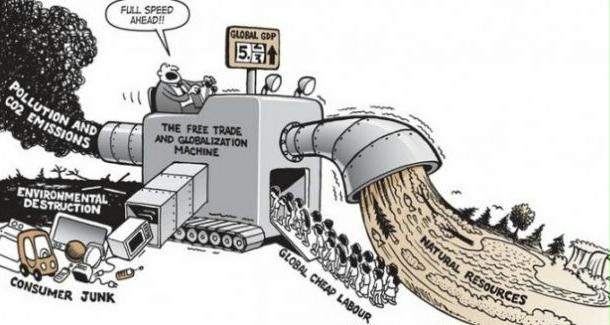
The two articles below explain why.

Alice Friedemann   www.energyskeptic.com  author of “When Trucks Stop Running: Energy and the Future of Transportation”, 2015, Springer and “Crunch! Whole Grain Artisan Chips and Crackers”. Podcasts: Derrick Jensen, Practical Prepping, KunstlerCast 253, KunstlerCast278, Peak Prosperity , XX2 report

***

Viswanathan, V., et al. 2018. Why Aren’t There Electric Airplanes Yet? It Comes Down to Batteries. Batteries need to get lighter and more efficient before we use them to power energy-guzzling airplanes. Smithsonian.

“…for a given weight, jet fuel contains about 14 times more usable energy than a state-of-the-art lithium-ion battery….the best batteries store about 40 times less energy per unit of weight than jet fuel.  That makes batteries relatively heavy for aviation. Airline companies are already worried about weight – imposing fees on luggage in part to limit how much planes have to carry.”

So what about a flying car (e-VTOL)?  

We looked at how much energy a small battery-powered aircraft of 2,200 pounds (1,000 kilograms, including a passenger) capable of vertical takeoff and landing would need.  While actually flying, the air vehicle would need 400 to 500 watt-hours per mile, about what an electric pickup truck would need, which is twice as much energy used as an electric car.

But taking off and landing require a lot more power, at least 8,000 to 10,000 watt-hours per trip, or half the energy in a compact electric car such as the Nissan Leaf.

So for an entire flight of 20 miles you’d need 800 to 900 watt-hours per mile  — half as much energy as a fully loaded semi-truck.  Using that much energy means these aren’t likely to take off.

“Aircraft designers also need to closely examine the power – or how quickly the stored energy is available. This is important because ramping up to take off in a jet or pushing down against gravity in a helicopter takes much more power than turning the wheels of a car or truck.

Therefore, e-VTOL batteries must be able to discharge at rates roughly 10 times faster than the batteries in electric road vehicles. When batteries discharge more quickly, they get a lot hotter.  Road vehicles’ batteries don’t heat up nearly as much while driving, so they can be cooled by the air passing by or with simple coolants. But an e-VTOL would generate an enormous amount of heat on takeoff that would take a long time to cool – and on short trips might not even fully cool down before heating up again on landing.

This huge amount of heat will shorten an e-VTOL batteries’ life, make them more likely to catch fire, and require specialized cooling systems that add additional weight and energy demands on the battery.

Schrope, M. 6 Nov 2010. Fly Electric. New Scientist.

A 200-seat airplane weighs about 115 tons at take off.

About a third, or 38 tons of that weight is the kerosene fuel.

The other 77 tons are the passengers, their luggage, and the airplane itself.

An electric, battery-powered airplane would require nearly 3,000 tons of lithium-ion batteries – the batteries would weigh 39 times more than the plane, passengers, and their luggage.

Nor would fuel cells do much better.

References.

Robitzski, D. 2019. Norway’s new electric plane crashes during demo flight. futurism.com

Posted in Batteries, Energy | Tagged , , | 4 Comments

How United Nations scientists are preparing for the end of capitalism

Source: arabisouri, The Inevitable End of Capitalism, steemkr.com

Preface. The article below was written by Nafeez Ahmed, who wrote one of my favorite books  “Failing States, Collapsing Systems: BioPhysical Triggers of Political Violence“.

Ahmed writes: “Most observers have no idea of the current biophysical realities – that the driving force of the transition to post-capitalism is the end of the age that made endless growth capitalism possible in the first place: the age of abundant, cheap energy. We have moved into a new, unpredictable and unprecedented space in which the conventional economic toolbox has no answers.  Capitalist markets will not be capable of facilitating the required changes – governments will need to step up, and institutions will need to actively shape markets to fit the goals of human survival.

I seriously doubt that governments have any plans now, because I just finished the book Raven Rock.  If the U.S. government abandoned plans to build bomb shelters for the 160 million in cities to survive in for two weeks (and then the radiation would supposedly be low enough to emerge), they certainly aren’t preparing for the Permanent Emergency of the energy crisis.  But governments may be forced to step up the the plate at some level of social disorder, and the best possible action they could take is rationing, which really ought to be thought out ahead of time. Oh well..

The solutions proposed in this article may slow down the Great Simplification a little — such as the promotion of walking and biking, self-sufficient food production and fewer imports, more public transport, and electrification of transport (though natural gas and coal are also finite).  But the recommendation that wood structures rather than concrete and steel needs to be reconsidered, since mowing down forests at a time when people will be going back to depending on wood to heat and cook with may not be a great idea. And no mention of international family planning.  Basically there are no solutions, but that is still not acceptable to say.

Alice Friedemann   www.energyskeptic.com  author of “When Trucks Stop Running: Energy and the Future of Transportation”, 2015, Springer and “Crunch! Whole Grain Artisan Chips and Crackers”. Podcasts: Derrick Jensen, Practical Prepping, KunstlerCast 253, KunstlerCast278, Peak Prosperity , XX2 report

***

Nafeez Ahmed. 9-12-2018. This is how UN scientists are preparing for the end of capitalism. As the era of cheap energy comes to an end, capitalist thinking is struggling to solve the huge problems facing humanity. So how do we respond?  Independent.

Capitalism as we know it is over. So suggests a new report commissioned by a group of scientists appointed by the UN secretary general. The main reason? We’re transitioning rapidly to a radically different global economy, due to our increasingly unsustainable exploitation of the planet’s environmental resources and the shift to less efficient energy sources.

Climate change and species extinctions are accelerating even as societies are experiencing rising inequality, unemployment, slow economic growth, rising debt levels, and impotent governments. Contrary to the way policymakers usually think about these problems these are not really separate crises at all.

These crises are part of the same fundamental transition. The new era is characterized by inefficient fossil fuel production and escalating costs of climate change. Conventional capitalist economic thinking can no longer explain, predict or solve the workings of the global economy in this new age.

Energy shift

Those are the implications of a new background paper prepared by a team of Finnish biophysicists who were asked to provide research that would feed into the drafting of the UN Global Sustainable Development Report (GSDR), which will be released in 2019.

For the “first time in human history”, the paper says, capitalist economies are “shifting to energy sources that are less energy efficient.” Producing usable energy (“exergy”) to keep powering “both basic and non-basic human activities” in industrial civilization “will require more, not less, effort”.

At the same time, our hunger for energy is driving what the paper refers to as “sink costs.” The greater our energy and material use, the more waste we generate, and so the greater the environmental costs. Though they can be ignored for a while, eventually those environmental costs translate directly into economic costs as it becomes more and more difficult to ignore their impacts on our societies.

And the biggest “sink cost”, of course, is climate change: “Sink costs are also rising; economies have used up the capacity of planetary ecosystems to handle the waste generated by energy and material use. Climate change is the most pronounced sink cost.”

Overall, the amount of energy we can extract, compared to the energy we are using to extract it, is decreasing “across the spectrum – unconventional oils, nuclear and renewables return less energy in generation than conventional oils, whose production has peaked – and societies need to abandon fossil fuels because of their impact on the climate.”

The UN

A copy of the paper, available on the website of the BIOS Research Unit in Finland, was sent to me by lead author Dr Paavo Järvensivu, a ‘biophysical economist’ – a rare, but emerging breed of economist exploring the role of energy and materials in fuelling economic activity.

I met Dr Järvensivu last year when I spoke at the BIOS Research Unit about the findings of my own book, Failing States, Collapsing Systems: BioPhysical Triggers of Political Violence.

The UN’s GSDR is being drafted by an independent group of scientists (IGS) appointed by the UN Secretary general. The IGS is supported by a range of UN agencies including the UN Secretariat, the UN Educational, Scientific and Cultural Organization, the UN Environment Programme, the UN Development Programme, the UN Conference on Trade and Development and the World Bank.

The paper, co-authored by Dr Järvensivu with the rest of the BIOS team, was commissioned by the UN’s IGS specifically to feed into the chapter on ‘Transformation: the Economy’. Invited background documents are used as the basis of the GSDR, but what ends up in the final report will not be known until it is released next year.

The BIOS paper suggests that much of the political and economic volatility we have seen in recent years has a root cause in this creeping ecological crisis. As the ecological and economic costs of industrial overconsumption continue to rise, the constant economic growth we have become accustomed to is now in jeopardy. That, in turn, has exerted massive strain on our politics.

But the underlying issues are still unacknowledged and unrecognised by policymakers.

More in, less out

“We live in an era of turmoil and profound change in the energetic and material underpinnings of economies. The era of cheap energy is coming to an end,” says the paper.

Conventional economic models, the Finnish scientists note, “almost completely disregard the energetic and material dimensions of the economy.”

The scientists refer to the pioneering work of systems ecologist Professor Charles Hall of the State University of New York with economist Professor Kent Klitgaard from Wells College. This year, Hall and Klitgaard released an updated edition of their seminal book, Energy and the Wealth of Nations: An Introduction to BioPhysical Economics.

Hall and Klitgaard are highly critical of mainstream capitalist economic theory, which they say has become divorced from some of the most fundamental principles of science. They refer to the concept of “energy return on investment” (EROI) as a key indicator of the shift into a new age of difficult energy. EROI is a simple ratio that measures how much energy we use to extract more energy.

“For the last century, all we had to do was to pump more and more oil out of the ground,” say Hall and Klitgaard. Decades ago, fossil fuels had very high EROI values – a little bit of energy allowed us to extract large amounts of oil, gas and coal.

But as I’ve previously reported, this is no longer the case. Now we’re using more and more energy to extract smaller quantities of fossil fuels. Which means higher production costs to produce what we need to keep the economy rolling. The stuff is still there in the ground – billions of barrels worth to be sure, easily enough to fry the climate several times over.

But it’s harder and more expensive to get out. And the environmental costs of doing so are rising dramatically, as we’ve caught a glimpse of with this summer’s global heatwave.

Riding blind

These costs are not recognised by capitalist markets. They literally cannot be seen. Earlier in August, billionaire investor Jeremy Grantham – who has a track record of consistently calling financial bubbles – released an update to his April 2013 analysis, The Race of Our Lives.

The new paper provides a bruising indictment of contemporary capitalism’s complicity in the ecological crisis. Grantham’s verdict is that “capitalism and mainstream economics simply cannot deal with these problems” – namely, the systematic depletion of planetary ecosystems and environmental resources:

“The replacement cost of the copper, phosphate, oil, and soil – and so on – that we use is not even considered. If it were, it’s likely that the last 10 or 20 years (for the developed world, anyway) has seen no true profit at all, no increase in income, but the reverse.”

Efforts to account for these so-called ‘externalities’ by calculating their actual costs have been well-meaning, but have had negligible impact on the actual operation of capitalist markets.

In short, according to Grantham, “we face a form of capitalism that has hardened its focus to short-term profit maximization with little or no apparent interest in social good.”

Yet for all his prescience and critical insights, Grantham misses the most fundamental factor in the great unraveling in which we now find ourselves: the transition to a low EROI future in which we simply cannot extract the same levels of energy and material surplus that we did decades ago.

Grantham’s blind eye is mirrored by the British economics journalist Paul Mason in his book Postcapitalism: A Guide to Our Future, who theorizes that information technology is paving the way for the emancipation of labor by reducing the costs of knowledge production – and potentially other kinds of production that will be transformed by AI, blockchain, and so on – to zero. Thus, he says, will emerge a utopian ‘postcapitalist’ age of mass abundance, beyond the price system and rules of capitalism.

It sounds peachy, but Mason completely ignores the colossal, exponentially increasing physical infrastructure for the ‘internet-of-things’. His digital uprising is projected to consume evermore vast quantities of energy (as much as one-fifth of global electricity by 2025), producing 14% of global carbon emissions by 2040.

Toward a new economic operating system

Most observers, then, have no idea of the current biophysical realities – that the driving force of the transition to postcapitalism is the end of the age that made endless growth capitalism possible in the first place: the age of abundant, cheap energy.

And so we have moved into a new, unpredictable and unprecedented space in which the conventional economic toolbox has no answers. As slow economic growth simmers along, central banks have resorted to negative interest rates and buying up huge quantities of public debt to keep our economies rolling. But what happens after these measures are exhausted? Governments and bankers are running out of options.

“It can be safely said that no widely applicable economic models have been developed specifically for the upcoming era,” write the Finnish scientists for the UN drafting process.

Having identified the gap, they lay out the opportunities for transition. But capitalist markets will not be capable of facilitating the required changes – governments will need to step up, and institutions will need to actively shape markets to fit the goals of human survival.

“More expensive energy doesn’t necessarily lead to economic collapse,” lead author Paavo Järvensivu says. “Of course, people won’t have the same consumption opportunities, there’s not enough cheap energy available for that, but they are not automatically led to unemployment and misery either.”

In this low EROI future, we simply have to accept the hard fact that we will not be able to sustain current levels of economic growth. “Meeting current or growing levels of energy need in the next few decades with low-carbon solutions will be extremely difficult, if not impossible,” the paper finds. The economic transition must involve efforts “to lower total energy use.”

Key areas to achieve this include transport, food and construction. City planning needs to adapt to the promotion of walking and biking, a shift toward public transport, as well as the electrification of transport. Homes and workplaces will become more connected and localized. Meanwhile, international freight transport and aviation cannot continue to grow at current rates.

As with transport, the global food system will need to be overhauled. Climate change and oil-intensive agriculture have unearthed the dangers of countries becoming dependent on food imports from a few main production areas. A shift towards food self-sufficiency across both poorer and richer countries will be essential. And ultimately, dairy and meat should make way for largely plant-based diets.

The construction industry’s focus on energy-intensive manufacturing, dominated by concrete and steel, should be replaced by alternative materials. The BIOS paper recommends a return to the use of long-lasting wood buildings, which can help to store carbon, but other options such as biochar might be effective too.

But capitalist markets will not be capable of facilitating the required changes – governments will need to step up, and institutions will need to actively shape markets to fit the goals of human survival. Right now, the prospects for this look slim. But the new paper argues that either way, change is coming.

Whether or not this system still comprises a form of capitalism is ultimately a semantic question. It depends on how you define capitalism.

“Capitalism, in that situation, is not like ours now,” said Järvensivu. “Economic activity is driven by meaning – maintaining equal possibilities for the good life while lowering emissions dramatically – rather than profit, and the meaning is politically, collectively constructed. Well, I think this is the best conceivable case in terms of modern state and market institutions. It can’t happen without considerable reframing of economic-political thinking, however.”


Posted in Crash Coming Soon, Organizations | Tagged , , , , , | 3 Comments

Pedro Prieto: many solar panels won’t last 25-30 years, EROI may be negative

Preface. Pedro Prieto and Charles Hall wrote the definitive book on the EROI of solar power, “Spain’s Photovoltaic Revolution. The Energy Return on Investment” and has built many commercial facilities himself and witnessed the failure of solar panels long before the supposed 25-30 years they were guaranteed to last.

This is being seen in England where there’s been a loss of 25% of power in the UK due to imperfections known as hot spots on solar panels:

Photovoltaics hot spots are areas of elevated temperature which can affect only part of the solar panel. They are a result of a localised decrease in efficiency and the main cause of accelerated PV ageing, often causing permanent damage to the solar panel’s lifetime performance. Dr. Dhimish discovered that of the 2580 panels he looked at, those that had hot spots generated a power output notably less than those that didn’t. He also discovered that location was a primary contributor in the distribution of hot spots (Solar power – largest study to date discovers 25% power loss across UK October 29, 2018 https://phys.org/news/2018-10-solar-power-largest-date-loss.html).

You may want to read my review of “Spain’s Solar Revolution” for background on what this post discusses, since what Pedro Prieto wrote assumes you’re familiar with the book.

Alice Friedemann   www.energyskeptic.com  author of “When Trucks Stop Running: Energy and the Future of Transportation”, 2015, Springer and “Crunch! Whole Grain Artisan Chips and Crackers”. Podcasts: Practical Prepping, KunstlerCast 253, KunstlerCast278, Peak Prosperity , XX2 report

Pedro writes:

“Our study concluded that, when analyzed what we called “extended boundaries energy inputs”, about 2/3 of the total energy inputs were other than those of the modules+inverters+metallic infrastructure to tilt and orient the modules.

So even if the cost of solar PV modules (including inverters and metallic infrastructure) were ZERO, our resulting EROI (2.4:1) would increase about just 1/3.

Without including the financial energy inputs (you can easily calculate them if most of the credits/leasing, were requested in contracts at 10 years term with interests of between 2 and 6%, even if you consider as energy input derived from the financial costs, only the interests (returning the capital, in theory would only return, in my opinion, the previous PREEXISTING financial (and therefore, energy) surplus, minus amortization of the principal, if any (when principal is tied to a physical preexisting good, which is not the case, I understand in most of the circulating money of today, but you know much better than me about this).

We also excluded most of the labor energy inputs, to avoid duplications with factors that were included and could eventually have some labor embedded on it. And that was another big bunch of energy input excluded from our analysis.

As I mentioned before, if we added only these two factors that were intentionally excluded, not to open up old wounds and trying to be conservative, plus the fact that we include only a small, well-known portion of the energy inputs required to stabilize the electric networks, if modern renewables had a much higher or even a 100% penetration,  it is more than probable that the solar PV EROI would have resulted in <1:1.

And I do not believe any society can make solar modules even with 25 to 30 years lifetime. There are certainly working modules that have lasted 30 years+ and still work. Usually in well cared and maintained facilities in research labs or factories of the developed world. But this far away from expected results when generalized to a wide or global solar PV installed plant. Dreaming of having them 100 or 500 years is absolutely unthinkable.

Modules have, by definition, to be exposed more than any other thing, to solar rays (to be more efficient). You just look even at stones exposed to sun rays from sunrise to sunset and to wind, rain, moisture, corrosion, dust, animal dung (yes, animal dung, a lot of it from birds or bee or wasp nests on modules) and see how they erode. Now think in sophisticated modules  exposed to hail, with glass getting brittle, with their tedlar, EVA and/or other synthetic components sealing the junctures between glass and metallic frames eroding or degrading with UV rays and breaking the sealed package protecting the cells inside, back panels with connection boxes, subject to vibration with wind forces and disconnecting the joints and finally provoking the burning of the connectors; fans in the inverter housings with their gears or moving parts exhausted or tired, that if not maintained regularly, end failing and perhaps, if in summer, elevating the temperature of the inverter in the housing and provoking the fuse or blown of some vital components, etc.

I have seen many examples of different manufacturers of all types of modules (single/mono, multi/poli, amorphous, thin film high concentration with lenses, titanium dioxide, etc.) in the test chambers, after claims of the promoters to the manufacturers. I have attended to some test fields of auditing companies contracted by promoters, detecting hot spots in internal solderings just from the factory to the customs.

I have seen a whole plant of the so marketed as a promising first US brand specialized in thin film (confidentiality does not permit me to name, as yet) having to return it because it did not comply specs. Now, as I mentioned, I am in contact with a desperate promoter, seeking for more new modules to be paid (the manufacturer is broke and has disappeared) that will last a little bit more than those contracted (not Chinese) about 6 years ago and having failed about 2/7 of the total, without a sensible replacement, because present modules in the market have more nominal output power than those originally contracted for and with different voltage and currents that do not permit unitary replacements in arrays or strings, being forced to a complex and costly manipulation to reconfigure arrays in whole with old modules and creating new arrays with new modules and adapting inverters to the new currents and voltages delivered (Maximum Power Point Tracking or MPPT)

We mentioned many other examples of real life affecting functionality of solar PV systems in our book. The reality, 2 years after the publication of the book, proved us very optimistic. And we have many of the PBAs or circuits or connectors, etc. in our own country. Imagine when you install a solar village in a remote area of Morocco, or Nigeria or Atacama in Northern Chile and the nearest replacement of a single broken power thysristor or IGBT that is stopping a whole inverter and the plant behind (not manufactured in the country) and about 2,000 Km -or more- from the plant and need to pass customs like the one in Santos (Brazil), where tens of thousands of containers are blocked since more than one week (plus the usual 6 to 10 weeks custom procedures) for a fire in a refinery close to the only motorway leaving the Santos port to Sao Paulo.

I even contacted some German University (Saarland) designers of a very simple and superb device, and even they came to Spain to test it in my plant in a common attempt  to commercialize it in a joint venture. The device was a flat sensor kinetic platform of about 30×30 cm., able to measure the number of hits of hail, per square meter, the size and the speed of them.

The reason was double: in one side, it could help to prevent double axis tracking plants to order from the control room of the plant to move the towers to flag position against the prevailing wind and hail fall to avoid breaking of the module glasses. On the other hand, it would be a good device, for instance to fixed plants, to be used as hail measure pattern, a sort of standard accepted device by all interested parties, to help insurance companies and manufacturers to see if the damaged modules were caused by hail below or above manufacturer specifications.

It happened that we had to abandon the project, for lack of interest of both the insurance companies and manufacturers. The first, now have a good alibi, when a promoter raises a claim of its destroyed modules, to state that the hail was below size and speed of the the manufacturer specs and that should be responsibility of the manufacturer. The manufacturer, in its turn, when claimed by the promoter, would also claim that the hail was much higher in size and speed than the specified one. The promoter, with his modules destroyed and a fully fooled face, is so caught in the middle of nowhere, with the hail already melted and the plant destroyed. This is real life, ladies and gentlemen.

100 or 500 years lifetime? ha, ha, ha.”


Posted in Pedro Prieto, Photovoltaic Solar | Tagged , , , | 7 Comments

Richard Heinberg: Our bonus decade

Preface.  Because of the bonus oil and gas fracking brought us starting in 2005, Heinberg says “I’ve titled this essay “Our Bonus Decade” because the past ten years were an unexpected (by us peakists, anyway) extra—like a bonus added to a paycheck. But bonus is a borrowed Latin word meaning “good.” In retrospect, whatever good we humans derived from the last ten years of reprieve may ultimately be outweighed by the bad effects of our collective failure to change course. During those ten years we emitted more carbon into the atmosphere than in any previous decade. We depleted more of Earth’s resources than in any previous decade. And humanity did next-to-nothing to reconfigure its dominant economic and financial systems. In short, we (that is, the big We—though not all equally) used our extra time about as foolishly as could be imagined.  Our bonus round of economic growth and relative normalcy will assuredly end at some point due to the combined action of these factors (energy, environment, economy, and equity).”

Heinberg doesn’t venture a date when oil will peak in production globally since “one can imagine a scenario in which governments and central banks again print immense amounts of money in order to keep drillers and frackers busy”.

But Heinberg and many others can forsee an end to the fracking bubble as early as 2020 since drillers are running out of sweet spots, and fracked oil and gas declines 85% within 3 years after, so the decline will be fast indeed, and it is the one bright spot, the main reason, that oil production was elevated very slightly above the 2005 plateau.

Alice Friedemann   www.energyskeptic.com  author of “When Trucks Stop Running: Energy and the Future of Transportation”, 2015, Springer and “Crunch! Whole Grain Artisan Chips and Crackers”. Podcasts: Practical Prepping, KunstlerCast 253, KunstlerCast278, Peak Prosperity , XX2 report

Richard Heinberg. October 29, 2018. Our Bonus Decade (originally here)

“The sense of security more frequently springs from habit than from conviction, and for this reason it often subsists after such a change in the conditions as might have been expected to suggest alarm. The lapse of time during which a given event has not happened, is, in this logic of habit, constantly alleged as a reason why the event should never happen, even when the lapse of time is precisely the added condition which makes the event imminent.”

–George Eliot, Silas Marner

It’s been ten years since the Global Financial Crisis (GFC) of 2008. Print, online, and broadcast news media have dutifully featured articles and programs commemorating the crisis, wherein commentators mull why it happened, what we learned from it, and what we failed to learn. Nearly all of these articles and programs have adopted the perspective of conventional economic theory, in which the global economy is seen as an inherently stable system that experiences an occasional market crash as a result of greed, bad policies, or “irrational exuberance” (to use Alan Greenspan’s memorable phrase). From this perspective, recovery from the GFC was certainly to be expected, even though it could have been impeded by poor decisions.

Some of us have a different view. From our minority perspective, the global economy as currently configured is inherently not just unstable, but unsustainable. The economy depends on perpetual growth of GDP, whereas we live upon a finite planet on which the compounded growth of any material process or quantity inevitably leads to a crash. The economy requires ever-increasing energy supplies, mostly from fossil fuels, whereas coal, oil, and natural gas are nonrenewable, depleting, and climate-changing resources. And the economy, rather than being circular, like ecosystems (where waste from one component is food for another, so all elements are continually recycled), is instead linear (proceeding from resource extraction to waste disposal), even though our planet has limited resources and finite waste sinks.

In the minority view of those who understand that there are limits to growth, the GFC (or something like it) was entirely to be expected, since whatever cannot be sustained must, by definition, eventually stop. Indeed, the crash requires less of an explanation than the recovery that followed. Instead of skidding into a prolonged and deepening depression, the global economy—at least as measured conventionally—has, in the past years, scaled new heights. In the US, the stock market is up, unemployment is down, and GDP is humming along nicely. Most other nations have also seen a recovery, after a fashion at least. We have enjoyed ten years of reprieve from crisis and decline. How was this achieved? What does it mean?

Let’s take a look back, through the lens of the minority view, at this most unusual decade.

Where We Were

The years leading up to 2008 saw (among other things, of course) soaring interest in the notion of peak oil. Many peak oil analysts were industry experts who studied depletion rates, production decline rates in existing oil wells and oilfields, and rates of oil discovery. They reached their conclusions by analyzing the available data using charts, equations, and graphs; and by extrapolating future production rates for oilfields and countries. They generally agreed that the rate of world oil production would hit a maximum sometime between 2005 and 2020, and decline thereafter.

However, some peak oilers were ecologists (I was among this group). Informed by the 1972 computer scenario study The Limits to Growth (LTG), these observers and commentators understood that many of Earth’s resources (not just fossil fuels) are being used at unsustainable rates. The “standard run” LTG scenario featured peaks and declines in world industrial output, food production, and population, all in the first half of the twenty-first century. The peak oil ecologists therefore saw the imminent decline in world petroleum output as a likely trigger event in the larger process of society’s environmental overshoot and collapse.

The two groups shared an understanding that oil is the lifeblood of modern industrial civilization. Petroleum is central to transport and agriculture; without it, supply chains and most food production would quickly grind to a halt. Moreover, there is a close historic relationship between oil consumption and GDP growth. Thus, peakists reasoned, when world oil production starts its inevitable down-glide, the growth phase of industrial civilization will be over.

World Oil Chart

In the years leading up to 2005, the rate of increase in world conventional crude oil production slowed; then output growth stopped altogether and oil prices started rising. By July 2008 the West Texas Intermediate (WTI) crude benchmark oil price briefly hit an all-time, inflation-adjusted high of $147 per barrel. High oil prices starve the economy of consumer spending. And, due to subprime mortgages, collateralized debt obligations, and other factors, the economy was set for a spill in any case. Within weeks, the foundations of the financial industry were giving way. Stock prices were tumbling and companies were going bankrupt by the dozen. Most of the US auto industry teetered on the brink of insolvency. The news media were filled with commentary about the possible demise of capitalism itself.

In sum, the financial crash of 2008 looked to some of us like not just another stock market “correction,” but the end of a brief and blisteringly manic phase of civilized human existence. It was confirmation that our diagnosis (that fossil-fueled industrialism was unsustainable even over the short term) and prognosis (that the peak in world oil production would trigger the inevitable collapse of oil-based civilization) were both correct.

Our expectation at that point was that oil production would decline, energy prices would rise, and the economy would shrink in fits and starts. Living standards would crumble. It would then be up to world leaders to decide how to respond—either with resource wars, or with a near-complete redesign of systems and institutions to minimize reliance on fossil fuels and growth.

But we were wrong.

Back From Death’s Door

Instead there was a recovery, in both world oil output growth and in overall economic activity. How so?

It turned out that most peakists had been unaware of a so-called revolution waiting to be unleashed in the American oil and gas industry. Although world conventional crude oil production (subtracting natural gas liquids and bitumen) remained flatlined roughly at the 2005 level, new sources of unconventional oil began opening up in the United States, especially in North Dakota and south Texas. Small-to-medium-sized companies began drilling tens of thousands of twisty wells deep into source rock, fracturing that rock with millions of gallons of water and chemicals, and then propping open newly formed cracks with tons of fine sand. These techniques released oil trapped in the “tight” rocks. It was an expensive process that came with significant environmental, health, and social costs; but, by 2015, five million barrels per day of “light tight oil” (LTO) were supplementing world liquid fuel supplies.

This development profoundly shifted the entire global energy narrative. Pundits began touting the prospect of US energy independence. Peak oil suddenly seemed a mistaken and antiquated idea.

Moreover, while fracking was revolutionizing the oil and gas industry, debt was resuscitating the financial system. Viewing the deflationary GFC as a mortal threat, central banks in late 2008 began deploying extraordinary measures that included quantitative easing and near-zero interest rates. At the same time, governments dramatically increased their rates of deficit spending. The hope of both central bankers and government policy makers was to use the infusion of debt to revive an economy that was otherwise on the brink of dissolution. The gambit worked: by 2010, US and world GDP were once again growing.

It turned out that the fracking revolution and the central bank debt free-for-all were closely linked. Fracking was so expensive that only wells in the best locations had any chance of making money for operators, even with high oil prices. But companies had bought leases to a lot of inferior acreage. Their only realistic paths to success were to make slick (if misleading) presentations to gullible investors, and to borrow more and more money at low interest rates to fund operations and pay dividends. In fact, the fracking business resembled a pyramid scheme, with most companies seeing negative free cash flow year after year, even as they drilled their best prospective sites.

US LIght Tight Oil production

In 2013, we at Post Carbon Institute (PCI) began publishing a series of reports about shale gas and tight oil (authored by geoscientist David Hughes), based on proprietary well-level drilling information. These reports documented the high geographic variability of drilling prospects (with only relatively small “sweet spots” offering the possibility of profit); and rapid per-well production declines, necessitating very high rates of drilling in order to grow or even maintain overall production levels. Given the speed at which sweet spots were becoming crowded with wells, it appeared to us that the time window during which shale gas and tight oil could provide such high rates of fuel production would be relatively brief, and that an overall decline in US oil and gas production would likely resume with a vengeance in the decade starting in 2020. These conclusions flew in the face of official forecasts showing high rates of production through 2050. However, our confidence in our methodology was bolstered as individual shale gas and tight oil producing regions began, one by one, to tip over into decline.

In sum, without low-interest Federal Reserve policies the fracking boom might never have been possible. For the world as a whole, a steady decline in energy resource quality has been hidden by massive borrowing. Indeed, since the GFC, overall global debt has grown at over twice the rate of GDP growth. Humanity consumes now, with the promise of paying later. But in this instance “later” will likely never come: the massive public and private debt that has been run up over the past few decades, and especially since the GFC, is too vast ever to be repaid (it’s being called “the everything bubble”). Instead, as repayments fall behind, banks will eventually be forced to cease further lending, triggering a deflationary spiral of defaults. If the fracking bubble hasn’t burst by that time for purely geological reasons, lack of further low-interest financing will provide the coup-de-grace.

US debt

While low-interest debt managed to fund a brief energy reprieve and to forestall overall financial collapse, it couldn’t paper over a deepening sense of malaise among much of the public. Income growth for US wage earners had been stagnant since the early 1980s; then, during the 2008-2018 decade, wage earners in the lowest percentiles continued to coast or even lost ground while high-income households saw dramatic improvements. This was partly a result of the way governments and central banks had structured their bailouts, with most of the freshly minted cash going to investors and financial institutions. This lopsidedness in the economic rebound was mirrored in many other countries. A recent US tax cut that was targeted almost exclusively at high-income households (with another similar cut apparently on the way) is only exacerbating the trend toward higher inequality. And economic inequality is fomenting widespread dissatisfaction with both the economic system and the political system. None of the bankers who contributed to the GFC via shady investment schemes went to jail, and a lot of people are unhappy about that, too.

Further, there was no “recovery” at all for the global climate during the past decade; quite the opposite. As humanity burned more fossil fuels and spewed more carbon dioxide into the atmosphere, the scale of climate impacts grew. Hurricanes, typhoons, droughts, and wildfires fed deepening poverty and, in some instances (e.g., Syria), simmering conflicts. Growing tides of refugees began migrating away from areas of crisis and toward regions of relative safety.

At the same time, technological trends drove further wedges among social groups: while automation helped tamp down wage growth, the pervasive use of social media inflamed political polarization. An expanding far-right political fringe in turn fed anti-immigrant and anti-refugee populism, and sought to exploit the disgruntlement of left-behind wage earners. All of this culminated in the ascendancy of Donald Trump as US president, joining fellow authoritarians in Russia, China, the Philippines, Hungary, Poland, and elsewhere. Globally, political systems have been destabilized to a degree not seen in decades.

Altogether, this was a deceptive, uneven, and unsettling “recovery.”

How We Used Our Bonus Decade

As already mentioned, humanity didn’t get a bonus decade with regard to climate change. While building millions of solar panels and thousands of wind turbines, we also increased our burn rate for oil, natural gas, and coal (global coal consumption maxed out in 2014 and has fallen a little since then, though it’s still above the 2008 rate). That’s because, as George Monbiot puts it, “while economic growth continues we will never give up our fossil fuels habit.” And policy makers are not willing to give up growth.

Here’s a thought experiment: If there had been no recovery (that is, if GDP had continued to plummet as it was doing in 2009), and if, as a result, demand for fossil fuels had cratered, there would no doubt have been a lot of human misery (which there may be anyway ultimately, just delayed), but there also would have been less long-term impact on the global climate and on ecosystems. As it was, atmospheric greenhouse gas concentrations rose, as did the average global temperature, with devastating effect on oceans, forests, and biodiversity.

At PCI, we spent the past decade adapting our message to shifting realities. We gave a lot of thought to the transition to a post-growth economic regime, resulting in my book, The End of Growth. We also spent many hours pondering societal strategies for surviving overshoot, and came to much the same conclusion as some of our colleagues who’ve been working on these issues for decades (including Dennis Meadows, co-author of The Limits to Growth): that is, with impacts on the way, building societal resilience has to be a top priority. We determined that it’s at the community scale that resilience-building efforts are likely to be most successful and most readily undertaken. Determined to help build community resilience, we co-published a three-book series of Community Resilience Guides, as well as the Community Resilience Reader; we also produced the “Think Resilience” video series.

We analyzed the prospects for US shale gas and tight oil production via David Hughes’s series of reports mentioned above (also in my book Snake Oil), and we assessed the prospects for a transition to renewable energy in a book, Our Renewable Future, I coauthored with PCI Fellow David Fridley. In that book, we concluded that while an energy transition is necessary and inevitable, transformations in virtual every aspect of modern society will need to be undertaken and economic growth has to be curtailed in order for it to happen. We at PCI did other things as well (including producing additional videos, books, and reports), but these are some of the highlights.

I’m proud of what we were able to accomplish with the participation of our followers, fellows, staff, and funders. But, I’m sorry to say, our efforts had limited reach. Our books and reports got little mainstream media attention. And while some communities have adopted resilience as a planning goal, and Transition and other initiatives have promoted resilience thinking through grassroots citizen networks, most towns and cities are still woefully ill-prepared for what’s coming.

I’ve titled this essay “Our Bonus Decade” because the past ten years were an unexpected (by us peakists, anyway) extra—like a bonus added to a paycheck. But bonus is a borrowed Latin word meaning “good.” In retrospect, whatever good we humans derived from the last ten years of reprieve may ultimately be outweighed by the bad effects of our collective failure to change course. During those ten years we emitted more carbon into the atmosphere than in any previous decade. We depleted more of Earth’s resources than in any previous decade. And humanity did next-to-nothing to reconfigure its dominant economic and financial systems. In short, we (that is, the big We—though not all equally) used our extra time about as foolishly as could be imagined.

Where We Stand Now

As discussed above, US tight oil and shale gas output growth can’t be expected to continue much longer. LTO production in the rest of the world never really took off and is unlikely to do so because conditions in other countries are not as conducive as they are in US (where land owners often also own rights to minerals beneath the soil). At the same time, conventional crude oil, whose global production rate has been on a plateau for the past decade, may finally be set to decline due to a paucity of new discoveries.

At the same time, the burden of debt that was shouldered during the past decade is becoming unbearable. US federal government borrowing has soared despite “robust” economic conditions, and interest payments on debt will soon exceed military spending. China’s debts have quadrupled during the decade, its annual GDP growth rate is quickly slowing, its oil production rate is peaking, and the energy profitability of its energy sector as a whole is declining fast.

But that’s not all that’s happening. Let’s step back and summarize:

(1) We peak oil analysts had assumed that energy resource depletion would be the immediate trigger for societal collapse.

(2) However, climate change is turning out to be a far greater threat than we depletionists had thought fifteen or twenty years ago, when the peak oil discussion was just getting underway. The impacts of warming atmosphere and oceans are appearing at a frightening and furious pace, and climate feedbacks could make future warming non-linear and perhaps even unsurvivable. At this point one has to wonder whether the mythic image of hell is a collective-unconscious premonition of global climate change.

(3) Ten years ago we learned that debt cycles and debt bubbles are a significant related factor potentially leading to, or hastening, civilizational collapse.

(4) Now we are all getting a rapid education in the ways inequality can lead to political polarization and social instability.

As a shorthand way of speaking about these four related factors, we at PCI have begun speaking of the “E4 crisis” (energy, environment, economy, and equity). It’s no longer helpful to focus on one factor to the exclusion of the others; it’s far more informative to look for ways in which all four are interacting in real time.

Our bonus round of economic growth and relative normalcy will assuredly end at some point due to the combined action of these factors. I don’t know when the dam will burst. Nor do I know for certain whether there will be yet another fake “recovery” afterward—the next one perhaps being even weaker and more unequally experienced than the current one. And I’m not about to offer a definitive forecast for the timing of the global oil peak: one can imagine a scenario in which governments and central banks again print immense amounts of money in order to keep drillers and frackers busy. Only two things can I say with confidence: the big trends all add up to overshoot, crisis, and decline; and building personal and community resilience remains the best strategy in response.

Posted in Crash Coming Soon, Richard Heinberg | Tagged , , | 7 Comments