Preface. This article appeared in the magazine Foreign Policy. Some key points:
Renewables to power the world would require 34 million metric tons of copper, 40 million tons of lead, 50 million tons of zinc, 162 million tons of aluminum, and no less than 4.8 billion tons of iron.
The batteries for power storage when the sun isn’t shining and the wind isn’t blowing will require 40 million tons of lithium requiring a 2,700 percent increase over current levels of extraction. Lithium is an ecological disaster. It takes 500,000 gallons of water to produce one ton of lithium. Most lithium is in dry areas, and mining companies are using up the groundwater, leaving nothing for farmers to irrigate their crops with, while chemical leaks from lithium mines have poisoned thousands of miles of rivers, killing entire freshwater ecosystems.
We’ll also need to replace 2 billion vehicles with electric vehicles, leading to even more mind-boggling amounts of materials.
Hickel J (2019) The limits of clean energy. If the world isn’t careful, renewable energy could become as destructive as fossil fuels. Foreign policy.
The conversation about climate change has been blazing ahead in recent months. Propelled by the school climate strikes and social movements like Extinction Rebellion, a number of governments have declared a climate emergency, and progressive political parties are making plans—at last—for a rapid transition to clean energy under the banner of the Green New Deal.
This is a welcome shift, and we need more of it. But a new problem is beginning to emerge that warrants our attention. Some proponents of the Green New Deal seem to believe that it will pave the way to a utopia of “green growth.” Once we trade dirty fossil fuels for clean energy, there’s no reason we can’t keep expanding the economy forever.
This narrative may seem reasonable enough at first glance, but there are good reasons to think twice about it. One of them has to do with clean energy itself.
The phrase “clean energy” normally conjures up happy, innocent images of warm sunshine and fresh wind. But while sunshine and wind is obviously clean, the infrastructure we need to capture it is not. Far from it. The transition to renewables is going to require a dramatic increase in the extraction of metals and rare-earth minerals, with real ecological and social costs.
We need a rapid transition to renewables, yes—but scientists warn that we can’t keep growing energy use at existing rates. No energy is innocent. The only truly clean energy is less energy.
In 2017, the World Bank released a little-noticed report that offered the first comprehensive look at this question. It models the increase in material extraction that would be required to build enough solar and wind utilities to produce an annual output of about 7 terawatts of electricity by 2050. That’s enough to power roughly half of the global economy. By doubling the World Bank figures, we can estimate what it will take to get all the way to zero emissions—and the results are staggering: 34 million metric tons of copper, 40 million tons of lead, 50 million tons of zinc, 162 million tons of aluminum, and no less than 4.8 billion tons of iron.
In some cases, the transition to renewables will require a massive increase over existing levels of extraction. For neodymium—an essential element in wind turbines—extraction will need to rise by nearly 35 percent over current levels. Higher-end estimates reported by the World Bank suggest it could double.
The same is true of silver, which is critical to solar panels. Silver extraction will go up 38 percent and perhaps as much as 105 percent. Demand for indium, also essential to solar technology, will more than triple and could end up skyrocketing by 920 percent.
And then there are all the batteries we’re going to need for power storage. To keep energy flowing when the sun isn’t shining and the wind isn’t blowing will require enormous batteries at the grid level. This means 40 million tons of lithium—an eye-watering 2,700 percent increase over current levels of extraction.
That’s just for electricity. We also need to think about vehicles. This year, a group of leading British scientists submitted a letter to the U.K. Committee on Climate Change outlining their concerns about the ecological impact of electric cars. They agree, of course, that we need to end the sale and use of combustion engines. But they pointed out that unless consumption habits change, replacing the world’s projected fleet of 2 billion vehicles is going to require an explosive increase in mining: Global annual extraction of neodymium and dysprosium will go up by another 70 percent, annual extraction of copper will need to more than double, and cobalt will need to increase by a factor of almost four—all for the entire period from now to 2050.
The problem here is not that we’re going to run out of key minerals—although that may indeed become a concern. The real issue is that this will exacerbate an already existing crisis of overextraction. Mining has become one of the biggest single drivers of deforestation, ecosystem collapse, and biodiversity loss around the world. Ecologists estimate that even at present rates of global material use, we are overshooting sustainable levels by 82 percent.
Take silver, for instance. Mexico is home to the Peñasquito mine, one of the biggest silver mines in the world. Covering nearly 40 square miles, the operation is staggering in its scale: a sprawling open-pit complex ripped into the mountains, flanked by two waste dumps each a mile long, and a tailings dam full of toxic sludge held back by a wall that’s 7 miles around and as high as a 50-story skyscraper. This mine will produce 11,000 tons of silver in 10 years before its reserves, the biggest in the world, are gone.
To transition the global economy to renewables, we need to commission up to 130 more mines on the scale of Peñasquito. Just for silver.
Lithium is another ecological disaster. It takes 500,000 gallons of water to produce a single ton of lithium. Even at present levels of extraction this is causing problems. In the Andes, where most of the world’s lithium is located, mining companies are burning through the water tables and leaving farmers with nothing to irrigate their crops. Many have had no choice but to abandon their land altogether. Meanwhile, chemical leaks from lithium mines have poisoned rivers from Chile to Argentina, Nevada to Tibet, killing off whole freshwater ecosystems. The lithium boom has barely even started, and it’s already a crisis.
And all of this is just to power the existing global economy. Things become even more extreme when we start accounting for growth. As energy demand continues to rise, material extraction for renewables will become all the more aggressive—and the higher the growth rate, the worse it will get.
It’s important to keep in mind that most of the key materials for the energy transition are located in the global south. Parts of Latin America, Africa, and Asia will likely become the target of a new scramble for resources, and some countries may become victims of new forms of colonization. It happened in the 17th and 18th centuries with the hunt for gold and silver from South America. In the 19th century, it was land for cotton and sugar plantations in the Caribbean. In the 20th century, it was diamonds from South Africa, cobalt from Congo, and oil from the Middle East. It’s not difficult to imagine that the scramble for renewables might become similarly violent.
If we don’t take precautions, clean energy firms could become as destructive as fossil fuel companies—buying off politicians, trashing ecosystems, lobbying against environmental regulations, even assassinating community leaders who stand in their way.
Some hope that nuclear power will help us get around these problems—and surely it needs to be part of the mix. But nuclear comes with its own constraints. For one, it takes so long to get new power plants up and running that they can play only a small role in getting us to zero emissions by midcentury. And even in the longer term, nuclear can’t be scaled beyond about 1 terawatt. Absent a miraculous technological breakthrough, the vast majority of our energy will have to come from solar and wind.
Reducing energy demand not only enables a faster transition to renewables, but also ensures that the transition doesn’t trigger new waves of destruction.
Preface. As oil declines and the energy crisis worsens, airplanes ought to be the first to go since they are 600 times less energy efficient than large cargo ships (30,000 / 50), 50 to 120 times less efficient than trains, and 7.5 to 15 times less efficient than trucks.
Though airplanes will continue to fly, because they use kerosene, which is a fraction of every crude barrel of oil, and much of it can’t be converted to diesel (trucks, rail, ships) or gasoline (cars). Though ships can burn just about anything, and since they carry 90% of all global trade, perhaps kerosene can keep them going a bit longer.
Kerosene is the fraction of choice for airplanes for a number of reasons. First, it has a much higher flash point than gas, commonly around 464°F. Second, kerosene has a freezing point of -57 F, which is not uncommon at the high altitudes planes fly at. In fact, it’s usually – 67 F — but the kerosene doesn’t freeze because the plane is flying through this cold air mass at hundreds of miles per hour. The speed of air over the wings creates friction, heating the surfaces (Page 2020).
United States air carriers burn through 17 billion gallons of jet fuel annually. The amount of fuel an airliner needs depends on many factors, including aircraft type, weight and direction of travel. Here are some price estimates for 2019 (Stewart 2019):
Los Angeles International to Tokyo Narita: This trans-Pacific hop uses an estimated 9,500 gallons of jet fuel at an estimated price of $19,190.
New York JFK to Los Angeles International: This popular transcon flight uses an estimated 5,325 gallons of jet fuel at an estimated price tag of $10,757. The return to New York uses slightly less fuel at 5,075 gallons with an estimated price of $10,252.
Chicago O’Hare to Miami International: Heading southbound, this flight operates using an estimated 2,350 gallons, with an estimated cost of $4,747. On the northbound return, the cost estimate soars to $7,201, using an estimated 3,565 gallons.
Denver International to San Francisco International Airport: This particular route can see significant variances in fuel quantity and pricing because of the variety of aircraft operating between the two cities. On average, aircraft fill up with an estimated 3,500 gallons of jet fuel, costing an estimated $7,070. However, price can vary from $4,040 on the low end to $14,140 on the high end.
It’s also been found that if airplanes flew in birdlike formations, the way geese fly in a V, up to 10% of their energy could be saved as well as emissions lowered (Khadilkar 2021).
Nygren, E., et al. 2009. Aviation fuel and future oil production scenarios. Energy Policy 37/10: 4003-4010
Jet fuel is extracted from the middle distillates fraction and competes with the production of diesel. Aviation fuel is almost exclusively extracted from the kerosene fraction of crude oil.
Today global oil production is roughly 81.5 million barrels per day (Mb/d), which is equivalent to an annual output of 3905.9 Mt.
Aviation fuels include both jet fuel for turbine engines and aviation gasoline for piston engines. The dominant fuel is jet fuel originating from crude oil as it is used in all large aircraft. Jet fuel is almost exclusively extracted from the kerosene fraction of crude oil, which distills between the gasoline fraction and the diesel fraction. The IEA estimated the world’s total refinery production in 2006 was 3861 million tonnes (Mt). The aviation fuel part was 6.3%, implying an annual aviation fuel production of 243 Mt (corresponding to about 5 Mb/d), including both jet fuel and aviation gasoline.
Figure 3 shows how the world’s refinery production is divided into different fractions.
Figure 3: Distribution of world refinery production in 2006. The total production was 3861 Mt. Source: International Energy Agency, 2008b. Key World Energy Statistics 2008 and previous editions, see also: http://www.iea.org/textbase/nppdf/free/2008/key_stats_2008.pdf
If the refinery would like to increase jet fuel production, diesel production must decrease. During the year the proportion between diesel and jet fuel production changes and the fuel most profitable at that moment is produced.
Swedish Environmental class-1, ultra-low sulphur, diesel is a prioritized product, which has the consequence that no jet fuel at all is manufactured. The kerosene fraction is blended directly into the diesel fraction to provide the correct viscosity properties. Having fewer products is a way to increase the efficiency of the refinery.
The conclusion to be drawn is that aviation fuel production is not a fixed percentage of refinery output. In 2006, aviation fuel was 6.3% of world refinery production. The kerosene fraction is an average of 8-10% of the crude oil, but all kerosene does not become jet fuel or diesel. Kerosene can also be used to decrease the viscosity of the heavy fractions of crude oil and is used as lamp oil in certain parts of the world.
The environmental parameters that define the operating envelope for aviation fuels such as pressure, temperature and humidity vary dramatically both geographically and with altitude. Consequently, aviation fuel specifications have developed primarily on the basis of simulated performance tests rather than defined compositional requirements. Given the dependence on a single source of fuel on an aircraft and the flight safety implications, aviation fuels are subject to stringent testing and quality assurance procedures. The fuel is tested in a number of certified ways to be sure of obtaining the right properties following a specification of the international standards from, for example, IATA guidance material, ASTM specifications and UK defense standards (Air BP, 2000). Tests are done several times before the fuel is finally used in an airplane.
Today, the increasing addition of biofuels to diesel is a problem for the aviation industry. One of the more common biodiesels is FAME (Fatty Acid Methyl Esther). FAME is not a hydrocarbon and no non-hydrocarbons are allowed in jet fuel, except for approved additives as defined in the various international specifications such as DEF STAN 91-91 and ASTM D 1655. Consequently, biofuels-contaminated jet fuel cannot be utilized due to jet fuel standards. The problem with FAME is that it has the ability to be absorbed by metal surfaces. Diesel and jet fuel are often transported in a joint transport system making it possible for FAME stuck in tanks, pipelines and pumps to desorb to the jet fuel. The limit for contamination of jet fuel with FAME is 5 ppm. FAME can be picked up in any point of the supply chain, making 5 ppm a difficult limit and therefore the introduction of biofuels to the diesel fraction has had a negative impact upon jet fuel supply security.
References
Ashby, M.F., 2015. Materials and sustainable development table A.14.
Khadilkar D (2021) Tight Flight: A birdlike formation would save fuel for planes. Scientific American.
Preface. Vaclav Smil doesn’t mention using plastic for heat, but in a letter to The Guardian, David Reed suggests:
“The effort of collecting, transporting and cleaning plastics for possible recycling has largely failed, created much more pollution and contributed massively to climate change. The idea of burning plastics and using the energy to heat our homes was proposed by the plastics company Dow more than 30 years ago: it suggested treating all plastics as “borrowed oil”. At that time, ordinary domestic waste had a calorific value of low-grade coal, so the suggestion was that this waste should be burned in efficient plants with heat recovery and treatment of the gases produced, perhaps even trapping the carbon dioxide produced, rather than trying to recycle the complex (and dirty) mix of plastics. Today, with higher use of more complex plastics, this makes even more sense. Mixed plastics cannot really be recycled: they are long-chain molecules, like spaghetti, so if you reheat and reprocess them, you inevitably end up with something of lower performance; it’s called down-cycling.”
While this could be polluting if not done right, people will certainly turn to burning plastic and anything else they can get their hands on at some point of energy decline. Better to do it correctly now in an incinerator than in backyards in the future as well as to protect our land and waterways from plastic pollution right now.
Thermal recycling processes require temperatures of between 300 °C and 900 °C (572 °F to 1,650 °F), consuming a whole lot of energy (Nakaji 2021).
Fracked shale oil and gas have created a boom in plastics in the U.S., with billions of dollars invested in new plants to take advantage of this very temporary bonanza (of the 8 major tight oil basins, only the Permian is not in decline). Fracked oil is too light to be used as a transportation fuel.
2022-4-6 Ethane to outpace growth in all other U.S. petroleum product consumption through 2023. U.S. Energy Information Administration: Ethane mainly serves as a petrochemical feedstock to produce ethylene, which is used to make plastics and resins. Consumption of ethane has grown every year since 2010 in the U.S. More is now consumed than jet fuel or propane. Consumption of ethane, which we estimate using product supplied, grew by 50,000 barrels per day (b/d) in 2021, according to data from our March 2022 Petroleum Supply Monthly. We forecast in our March 2022 Short-Term Energy Outlook (STEO) that by 2023, U.S. consumption of ethane will grow by another 340,000 b/d.
Polyethylene (PE) is by far the most important thermoplastic (it accounted for 29% of the world’s aggregate plastic output, or roughly 77 Mt, in 2010), polypropylene (PP) comes next (with about 19% or 50 Mt in 2010), followed by polyvinyl chloride (PVC, about 12% or 32 Mt in 2010).
In 2010, packaging consumed almost 40% of the total (mostly as various kinds of PE and PP), construction about 20% (mostly for plastic sheets used as vapor barriers in wall and ceiling insulation), the auto industry claimed nearly 8% (interior trim, exterior parts), and the electrical and electronic industry took about 6% (mostly for insulation of wires and cables).
All of these products begin as ethane. In North America and the Middle East ethane is separated from natural gas, and low gas prices and abundant supply led to surplus production for export and favored further construction of new capacities: in 2012 Qatar launched the world’s largest LDPE plant and, largely as a result of shale gas extraction, new ethylene capacities are planned in the USA (Stephan, 2012). The dominant feedstock for ethane in Europe, where prices of imported natural gas are high, is naphtha derived by the distillation of crude oil.
Plastics have a limited lifespan in terms of functional integrity: even materials that are not in contact with earth or water do not remain in excellent shape for decades. Service spans are no more than 2–15 years for PE, 3–8 years for PP, and 7–10 years for polyurethane; among the common plastics only PVC can last two or three decades and thick PVC cold water pipes can last even longer (Berge, 2009).
Some products made out of plastic:
Transparent or opaque bags (sandwich, grocery, or garbage)
sheets (for covering crops and temporary greenhouses),
wraps (Saran, Cling)
squeeze bottles (for honey)
HDPE garbage cans
containers (for milk, detergents, motor oil)
HDPE for house wraps (Tyvek) and water pipes
PEX for water pipes and as insulation for electrical cables
UHMWPE for knee and hip replacements.
massive LDPE water tanks
indoor–outdoor carpeting
lightweight fabrics woven from PP yarn and used particularly for outdoor apparel
insulated wires, water, and sewage pipes to food wraps and her car’s interior and body undercoating
disposable and surgical gloves
flexible tubing for feeding
breathing and pressure monitoring, catheters
blood bags
IV containers
sterile packaging
trays
basins
bed pans and rails
thermal blankets
lab ware
construction (house sidings, window frames)
outdoor furniture
water hoses
office gadgets
toys
References
Nakaji Y et al (2021) Low-temperature catalytic upgrading of waste polyolefinic plastics into liquid fuels and waxes. Applied Catalysis B: Environmental.
Preface. Venezuela is experiencing a double whammy of drought and low oil prices, which has lead to blackouts and inability to import food, due to their oil production peaking in 1997. If you want to know how collapse will unfold in the United States and elsewhere, read the posts from the categories and posts below. Mexico may be next as you can read here.
Crude oil is fouling waterways, contributing to deforestation, poisoning farmland and killing wildlife at an ever-greater rate.
The collapse of Venezuela’s once prolific oil industry has triggered an economic and humanitarian crisis that accelerated in 2019 after U.S. President Donald Trump implemented strict sanctions cutting the Maduro regime off from international energy markets. It isn’t only Venezuela’s economy and people which have suffered from a foundering hydrocarbon sector and corroding energy infrastructure, tremendous damage has occurred to the environment. Oil spills, leaking pipelines and storage facilities, noxious discharges from ramshackle intermittently operating refineries and toxic tar like slicks are commonplace in Venezuela. The OPEC member’s collapsing petroleum industry, along with precious metals and other mining, is a key culprit of the significant environmental damage occurring in the near-failed state. This is particularly worrying when it is considered that Venezuela is ranked as the eleventh most biodiverse country globally. Two organizations which provide regular reports and updates regarding the substantial environmental degradation occurring because of the petrostate’s oil industry are the Venezuelan Observatory of Environmental Human Rights and the Venezuelan Observatory of Political Ecology.
The Maracaibo Basin contains 15% of Venezuela’s copious oil reserves, which at 304 billion barrels are the largest globally, and is responsible for around two-thirds of the OPEC member’s hydrocarbon production. As a result, the lake contains thousands of drilling platforms, miles of pipelines which in many cases are unmapped and scores of storage facilities as well as other industry infrastructure. Most facilities are more than half a century old and heavily corroded because of their age and an endemic lack of crucial maintenance. The OVDHA estimates up to 1,000 barrels of crude (Spanish) are being discharged into Lake Maracaibo every day due to ongoing low-level leaks from heavily corroded petroleum pipelines, storage tanks and other decaying infrastructure.
With Venezuela in shambles, criminals and insurgents run large stretches of the nation’s territory. But some of them are stepping to take over the role the government used to play, and bring drinking water to residents in the arid scrublands, teach farming workshops and offer medical checkups. They mediate land disputes, fine cattle rustlers, settle divorces, investigate crimes and punish thieves.
Many residents — hungry, hunted by local drug gangs and long complaining of being abandoned by their government — have welcomed the Marxist guerrillas of Colombia, also known as the National LIberation Army (ELN) for the kind of protection and basic services the state is failing to provide.
By some estimates, guerrilla fighters from across the border now operate in more than half of Venezuela’s territory, according to the Colombian military, rights activists, security analysts and dozens of interviews in the affected Venezuelan states. Organized and well-armed, the ELN quickly displaced the local gangs that terrorized villages. The guerrillas imposed harsh penalties for robbery and cattle rustling, mediated land feuds, trucked in drinking water, offered basic medical supplies and investigated murders in a way the state never did, residents said.
It was hardly a charitable undertaking, though. In return for bringing stability, the ELN took over the smuggling and drug trafficking routes in the area, much as they have in parts of Colombia. They also began taxing shopkeepers and ranchers.
Colombian guerrillas have used the Venezuelan countryside as a haven for decades, and neglected Caracas shantytowns have long been home to organized crime. But rarely have criminal organizations exerted such territorial and economic control — and the government so little — as they do now. Venezuela is sleepwalking into fragmentation by armed groups.
Before the ELN took control, criminals fought brutally over the smuggling routes, terrorized neighborhoods, sprayed houses with bullets, and demolished villages. Most residents fled to Colombia, but are coming back now that it is safer.
The dismantling of Venezuela’s environmental institutions and the collapse of its oil sector have generated a chain reaction of unsustainable natural resource extraction. Illegal land grabbing, deforestation and an out-of-control gold rush in protected rainforest areas have created a perfect storm combining environmental degradation with a humanitarian crisis. Massive sediment loads from mining are decimating reservoirs and hydropower generation capacity, while mercury from gold extraction pollutes rivers and sickens people.
Throughout the 20th century, Venezuela, considered among the most biodiverse countries in the world, was a pioneer of sustainable policies. But starting in 1999, the government of Hugo Chávez began to systematically dismantle the country’s environmental protections, despite its progressive, pro-Indigenous rhetoric. “Eco-socialism” replaced functioning institutions, causing an avalanche of ecological disasters that mocked Venezuela’s commitments under the Paris agreement.
The devastation has accelerated under Nicolás Maduro, Chávez’s successor. Since becoming president, Maduro has overseen the total unraveling of Petróleos de Venezuela (PDVSA), Venezuela’s state oil company. PDVSA’s legal revenue from oil exports plummeted from $73 billion in 2011, to $22 billion in 2016, to $743 million in 2020.
The lack of infrastructure maintenance causes massive crude oil and pollutant spills with no remediation plans. Critical coastal marine and terrestrial environments are severely affected. The most important oil production regions, especially Lake Maracaibo, the northern Monagas state and the Orinoco oil belt, are degenerating into a mosaic of polluted wastelands.
To compensate for the losses in oil revenue, Maduro decreed 12 percent of the Venezuelan Amazon — an area bigger than Portugal — as a “mining development region”. This unique rainforest ecosystem, rich in biodiversity, also contains vast reserves of coltan, iron, bauxite, diamonds and, most importantly, gold.
According to Mongabay and Global Forest Watch, illegal mining, logging and collection of firewood for cooking accounted for over 3.2 million lost acres of rainforest between 2001 and 2018, one of the highest deforestation rates in tropical America. RAISG’s 2018 report and SOSOrinoco’s mining footprint map place Venezuela at the top of the list of Amazonian countries with the highest number of illegal mines. Hundreds of mining sectors have been detected, including 59 illegal gold mining clusters in Canaima National Park, a UNESCO World Heritage site, and other protected areas, which are home to 27 Indigenous communities.
Violence and disease plague the mining areas. Roughly 50 percent of reported malaria cases in Latin America are in Venezuela. Of 398,000 reported new cases in 2019, 70 percent were in southern Venezuela. Mining sites are exploited by state and nonstate groups, including the Colombian National Liberation Army (ELN) and the Revolutionary Armed Forces of Colombia (FARC), promoting violence, slave and child labor, prostitution and disintegration of Indigenous social structures.
2019. Venezuela’s Water System is Collapsing. New York Times.
In Venezuela, a crumbling economy and the collapse of even basic state infrastructure means water comes irregularly — and drinking it is an increasingly risky gamble. Scientists found that about a million residents were exposed to contaminated supplies. This puts them at risk of contracting waterborne viruses that could sicken them and threatens the lives of children and the most vulnerable.
The risks posed by poor water quality are particularly threatening for a population weakened by food and medication shortages.
Electrical breakdowns and lack of maintenance have gradually stripped the city’s complex water system to a minimum. Water pumps, treatment plants, chlorine injection stations and entire reservoirs have been abandoned as the state ran out of money and skilled workers
Outside Caracas, the breakdown of the water infrastructure is even more profound, leaving millions without regular supplies and forcing communities to dig wells and rely on untreated rivers.
The New York Times interviewed dozens of Venezuelan farmers. Nearly all have slashed their planting area this year and some are leaving their fields fallow – steps that are likely to deplete what is left of the food supply and lead even more Venezuelans to join the estimated four million who have already fled the country.
Farmers said they have tried to produce in spite of scarce inputs, price controls, crime, inflation and collapsing demand. But this year’s harvest is only half of 2018’s because of the gasoline shortage and other problems such as lack of seeds and fertilizer.
In Venezuela’s vast plains further east, sugar cane rots just yards from a refining mill and rice fields are left barren for the first time in 70 years because farmers don’t have fuel to transport their produce to distribution centers or seeds and fertilizers to plant new crops.
Venezuela’s main agricultural association, Fedeagro, estimates the area planted with the country’s main crops, corn and rice, will shrink by about 50% this year.
On a visit to Pueblo Llano last month, 150 cars waited outside the closed gas station for the sixth straight day. Many of the drivers slept in their cars to prevent robberies, braving the frigid weather at an altitude of 7,500 feet. During the day, they walked backed to their farmsteads, a trip that in some cases took hours. “While I’m sitting here in line, my produce is rotting in the fields,” said farmer Richard Rondón as he gave away summer squash as long as his arm from the back of his pickup truck to people passing by. “I got nothing to harvest with.”
The shortage has hamstrung the time-sensitive rice and corn harvest in the state of Portuguesa. In May, it prevented farmers from planting a new crop before the rainy season.
At the once-busy beach resort of Patanemo, tourism has evaporated over the last two years as Venezuela’s economic crisis has deepened and deteriorating cellphone service left visitors too afraid of robbery to brave the isolated roads. In some regions, travel requires negotiating roads barricaded by residents looking to steal from travelers.
These days, its Caribbean shoreline flanked by forested hills receives a different type of visitor: people who walk 10 minutes from a nearby town carrying rice, plantains or bananas in hopes of exchanging them for the fishermen’s latest catch.
With bank notes made useless by hyperinflation, and no easy access to the debit card terminals widely used to conduct transactions in urban areas, residents of Patanemo rely mainly on barter. In visits to three villages across Venezuela, Reuters reporters saw residents exchanging fish, coffee beans and hand-picked fruit for essentials to make ends meet in an economy that shrank 48% during the first five years of President Nicolas Maduro’s government.
Residents of the town of Guarico this year found a different way of paying bills – coffee beans for anything from haircuts to spare parts for agricultural machinery. The transactions are based on a reference price for how much coffee fetches on the local market, Linares said. In April, one kilo (2.2 pounds) of beans was worth the equivalent of $3.00. In El Tocuyo, another town in Lara state, three 100 kilo sacks of coffee buy 200 liters (53 gallons) of gasoline.
It is just one of a growing number of rural towns slipping into isolation as Venezuela’s economy implodes amid a long-running political crisis.
From the peaks of the Andes to Venezuela’s sweltering southern savannahs, the collapse of basic services including power, telephone and internet has left many towns struggling to survive.
Venezuela’s crisis has taken a heavy toll on rural areas, where the number of households in poverty reached 74% in 2017 compared with 34% in the capital of Caracas. Residents rarely travel to nearby cities, due to a lack of public transportation, growing fuel shortages and the prohibitive cost of consumer goods.
Walking for hours, making oil lamps, bearing water. For Venezuelans today, suffering under a new nationwide blackout that has lasted days, it’s like being thrown back to life centuries ago.
El Avila, a mountain that towers over Caracas, has become a place where families gather with buckets and jugs to fill up with water, wash dishes and scrub clothes. The taps in their homes are dry from lack of electricity to the city’s water pumps. “We’re forced to get water from sources that obviously aren’t completely hygienic. But it’s enough for washing or doing the dishes,” said one resident, Manuel Almeida.
Because of the long lines of people, the activity can take hours of waiting.
Elsewhere, locals make use of cracked water pipes. But they still need to boil the water, or otherwise purify it. “We’re going to bed without washing ourselves,” said one man, Pedro Jose, a 30-year-old living in a poorer neighborhood in the west of the capital.
Some shops seeing an opportunity have hiked the prices of bottles of water and bags of ice to between $3 and $5 — a fortune in a country where the monthly minimum salary is the equivalent of $5.50.
Better-off Venezuelans, those with access to US dollars, have rushed to fill hotels that have giant generators and working restaurants.
For others, preserving fresh food is a challenge. Finding it is even more difficult. The blackout has forced most shops to close.
“We share food” among family members and friends, explained Coral Munoz, 61, who counts herself lucky to have dollars.
For Kelvin Donaire, who lives in the poor Petare district, survival is complicated. He walks for more than an hour to the bakery where he works in the upmarket Los Palos Grandes area. “At least I’m able to take a loaf back home,” Donaire said.
Many inhabitants have taken to salting meat to preserve it without working refrigerators.
Others, more desperate, scour trash cans for food scraps. They are hurt most by having to live in a country where basic food and medicine has become scarce and out of reach because of rocketing hyperinflation.
The latest blackout this week also knocked out communications. According to NetBlocks, an organization monitoring telecoms networks, 85% of Venezuela has lost connection.
In stores, cash registers no longer work and electronic payment terminals are blanked out. That’s serious in Venezuela, where even bread is bought by card because of lack of cash. Some clients, trusted ones, are able to leave written IOUs.
With Caracas’s subway shut down, getting around the city is a trail, with choices between walking for miles, lining up in the out-sized hope of getting on one of the rare and badly overcrowded and dilapidated buses or managing to get fuel for a vehicle. Pedro Jose said bus tickets have nearly doubled in price.
As night casts Caracas into darkness, families light their homes as best they can. “We make lamps that burn gasoline, or oil, or kerosene — any type of fuel,” explained Lizbeth Morin, 30.
It’s hard to understand how bad a country is doing with figures like inflation rate, unemployment rate, and their minimum wage. A better way to understand a nation’s living standards is how many calories a person could afford to buy a day earning a minimum wage if they spent all of their money on food — that is — the food with the most calories, which in Venezuela has sometimes been pasta or flour, and today is the yucca plant.
Venezuelans could by 57,000 calories in 2012 with one day’s wages, and several dozen eggs.
But today a person can afford just 900 calories or 2 eggs. It would take a Venezuelan 6 weeks to be able to afford one Big Mac earning minimum wage.
Since the average person needs 2,000 calories a day, as well as calories to feed their family, and also housing, clothing, medicine, and so on, it’s not surprising that the average Venezuelan lost 24 pounds last year, and that Venezuela probably has the highest murder rate in the world.
The result is that at least 10% of Venezuelans have emigrated, nearly 3 million people. If that many proportionally left the U.S. we’d have 30 million people fleeing to Canada and Mexico and elsewhere.
…”Venezuela’s murder rate, meanwhile, now surpasses that of Honduras and El Salvador, which formerly had the world’s highest levels, according to the Venezuelan Violence Observatory. Blackouts are a near-daily occurrence, and many people live without running water. According to media reports, schoolchildren and oil workers have begun passing out from hunger, and sick Venezuelans have scoured veterinary offices for medicine. Malaria, measles, and diphtheria have returned with a vengeance, and the millions of Venezuelans fleeing the country — more than 4 million, according to the International Crisis Group — are spreading the diseases across the region, as well as straining resources and goodwill.”
…”Thanks to their geology, Venezuela’s oil fields have enormous decline rates, meaning the country needs to spend more heavily than other petrostates just to keep production steady. “
2017-10-22 Oil Quality Issues Could Bankrupt Venezuela. The next few weeks for Venezuela will be crucial, as it struggles to meet a huge stack of debt payments. Reports that the nation’s oil production is experiencing deteriorating quality raises a new cause for concern for the crumbling South American nation.Reuters reported that its oil shipments are “soiled with high levels of water, salt or metals that can cause problems for refineries”, which has led to $200 million in cancellations of oil contracts, making Venezuela even less able to make debt payments, since oil is the only source of revenue barely keeping the nation afloat. Many experienced oil workers have fled the country to find food and escape violence. Because of these problems, and Trump imposed sanctions, U.S. imports have dropped from roughly 700,000 barrels per day to 250,000 bpd.
2017-2-27 ASPO Peak Oil Review: A new survey shows that 75% of Venezuelans may have lost an average of 19 pounds in the last year as widespread food shortages continue. Nearly a third of the population are now eating two meals a day or less. The survey also shows that the average shopper spends 35 hours a month waiting in line to buy food and other necessities. A sense of hopelessness has engulfed the country, and most no longer have an incentive or the strength to protest against the government and its policies as was happening two years ago. Government roundups of opposition politicians continue. Venezuela is clearly well on its way to becoming a failed state.
Food Producers Alert They Have Only 15 Days Left of Inventory amid Rampant Inflation
“Despair and violence is taking over Venezuela. The economic crisis sweeping the nation means people have to withstand widespread shortages of staple products, medicine, and food. So when the Maduro administration began rationing electricity this week, leaving entire cities in the dark for up to 4 hours every day, discontent gave way to social unrest.
On April 26, people took to the streets in three Venezuelan states, looting stores to find food.
Maracaibo, in the western state of Zulia, is the epicenter of thefts: on Tuesday alone, Venezuelans raided pharmacies, shopping malls, supermarkets, and even trucks with food in seven different areas of the city.
Although at least nine people were arrested, and 2,000 security officers were deployed in the state, Zulia’s Secretary of Government Giovanny Villalobos asked citizens not to leave their homes. “There are violent people out there that can harm you,” he warned.
In Caracas, the Venezuelan capital, citizens reported looting in at least three areas of the city. Twitter users reported that thefts occurred throughout the night in the industrial zone of La California, Campo Rico, and Buena Vista. The same happened in Carabobo, a state in central Venezuela.
Supermarkets employees from Valencia told the PanAm Post that besides no longer receiving the same amount of food as before, they must deal with angry Venezuelans who come to the stores only to find out there’s little to buy.
Purchases in supermarkets are rationed through a fingerprint system that does not allow Venezuelans to acquire the same regulated food for two weeks.
Due to the country’s mangled economy, millions must stand in long lines for hours just to purchase basic products, which many resell for extra income as the country’s minimum wage is far from enough to cover a family’s needs.
On Wednesday, the Venezuelan Chamber of Food (Cavidea) said in a statement that most companies only have 15 days worth of stocked food.
According to the union, the production of food will continue to dwindle because raw materials as well as local and foreign inputs are depleted.
In the statement, Cavidea reported that they are 300 days overdue on payments to suppliers and it’s been 200 days since the national government last authorized the purchase of dollars under the foreign currency control system.
The latest Survey of Living Conditions (Encovi) showed that more than 3 million Venezuelans eat only twice a day or less. The rampart inflation and low wages make it increasingly more difficult for people to afford food.
“Fruits and vegetables have disappeared from shopping lists. What you buy is what fills your stomach more: 40 percent of the basic groceries is made up of corn flour, rice, pasta, and fat”.
But not even that incomplete diet Venezuelans can live on because those food products are hard to come by. Since their prices are controlled by the government, they are scarce and more people demand them.
The survey also notes the rise of diseases such as gastritis, with an increase of 25 percent in 2015, followed by poisoning (24.11 percent), parasites (17.86 percent), and bacteria (10.71 percent).
The results of this study are consistent with the testimony of Venezuelan women, who told the PanAm Post that because “everything is so expensive” that they prefer to eat twice a day and leave lunch for their children. That way they can make do with the little portions they can afford.”
Preface. With world peak oil production in 2018 so far (Peak oil is here!) it looks like peak sand won’t be the main factor in the fall of our fossil-fueled civilization. After all, oil makes all materials and activities possible, including sand. But still, interesting to know that so many limits to growth are being reached at roughly (see posts in category Peak Everything.)
Sand Primer:
Without sand, there would be no concrete, ceramics, computer chips, glass, plastics, abrasives, paint and so on
We can’t use desert sand because it’s too round, polished by the wind, and doesn’t stick together. You need rough edges, so desert sand is worthless
Good sand is getting so rare there’s an enormous amount of illegal mining in over 70 countries. In India the Sand Mafia is one of the most powerful, will kill for sand. It’s easy to steal sand and sell there.
This has led to between 75%-90% of beaches in the world receding and a huge amount of environmental damage.
By 2100 all beaches will be gone
Australia is selling sand to nations that don’t have any more (like the United Arab Emirates, who used all of their ocean sand to make artificial islands)
Sand is a big business, sales are $70 Billion a year
concrete is 40% sand
most construction sand comes from rivers, lakes and shorelines
How Much Sand is needed?
200 tons Average house
3,000 tons Hospital or other large building
30,000 tons per kilometer of highway
12,000,000 tons Nuclear Power Plant (that’s equal to nearly 250 miles of highway)
Half of all sand is trapped behind the 845,000 dams in the world.
Zhong X et al (2022) Increasing material efficiencies of buildings to address the global sand crisis. Nature sustainability.
here is a rapidly unfolding sand supply crisis in meeting growing material needs for infrastructure. We find a ~45% increase in global building sand use from 2020 to 2060 under a middle-of-the-road baseline scenario
Buildings provide the basic human needs for shelter and social infrastructure and form the foundations of societies. The construction of buildings is also highly material-intensive and consumes a large amount of metallic (for example, steel and copper) and non-metallic minerals (mainly concrete, brick and glass).
prominent commentaries have pointed to severe global sand crises impacting regions as diverse as Cambodia, California, the Middle East and China. Sand over-exploitation has commonly driven ecosystem destruction/collapse in shoreline erosion, biodiversity loss, less food production, and disaster resilience degradation, This will get worse as sand extraction and new buildings grow.
The use of sand and gravel has seen the fastest increase in use across all solid materials used by humans and now represents the largest share of material use (~68–85% by mass), surpassing fossil fuels and biomass. Sand is used mostly for making concrete or glass (with concrete comprising over 95% of this use in the building sector) and requires chloride-free supplies (to prevent corrosion of other building materials) along with specific physical properties in terms of both size and shape. For example, desert sand is too smooth to be used as a binding agent for concrete and sea sand is too high in chloride levels for most construction purposes. Most construction sand is extracted from rivers, lakes and shorelines.
In a rapidly growing market this has led to over-exploitation and degradation. Even when regulated, illegal sand mining and trade has been reported in ~70 countries, often involving highly organized gangs or ‘mafias’ operating with the complicity of regulators. The livelihoods of an estimated 3 billion people living along rivers are remarkably threatened by long-term, unsustainable sand exploitation, along with deep impacts on ecology and land availability.
We explore how building sand use might be reduced by 5 to 23% with these 6 strategies: (1) more intensive use, (2) building lifetime extension, (3) reductions in concrete content by lightweight design, (4) timber framing, (5) component reuse and (6) natural sand substitution by alternatives (7) reduce the floor area, (8) international cooperation
Glaciers grind rocks into silt, sand and gravel. Greenland hopes that there’s enough sand for them to become a sand exporter, if the environmental damage isn’t too high.
That won’t be easy. Nearly all sand is mined within 50 miles of its destination because it costs too much to move it more than that. So Greenland would have to find a way to make moving sand profitable.
A way to find the sand is required as well, since much of what the glacier produces is a fine silt that isn’t suitable for concrete.
Then if sand is found, an energy intensive process begins. A pipe is extended to the sea floor and sucks up water and sand. Huge amounts of sand would need to be extracted into large bulk carriers, and new ports,and loading facilities built. The distance to the nearest large cities is considerable longer than 50 miles. Boston is 2250 miles and London 1900 miles away.
Today 75 to 90% of the world’s natural sand beaches are disappearing, due partly to massive legal and illegal mining, rising sea levels, increasing numbers of severe storms, and massive erosion from human development along coastlines. Many low-lying barrier islands are already submerged.
The sand and gravel business is now growing faster than the economy as a whole. In the United States, the market for mined sand has become a billion-dollar annual business, growing at 10% a year since 2008. Interior mining operations use huge machines working in open pits to dig down under the earth’s surface to get sand left behind by ancient glaciers. But as demand has risen — and the damming of rivers has held back the flow of sand from mountainous interiors — natural sources of sand have been shrinking.
One might think that desert sand would be a ready substitute, but its grains are finer and smoother; they don’t adhere to rougher sand grains, and tend to blow away. As a result, the desert state of Dubai brings sand for its beaches all the way from Australia.
And now there is a global beach-quality sand shortage, caused by the industries that have come to rely on it. Sand is vital to the manufacturing of abrasives, glass, plastics, microchips and even toothpaste, and, most recently, to the process of hydraulic fracturing. The quality of silicate sand found in the northern Midwest has produced what is being called a “sand rush” there, more than doubling regional sand pit mining since 2009.
But the greatest industrial consumer of all is the concrete industry. Sand from Port Washington on Long Island — 140 million cubic yards of it — built the tunnels and sidewalks of Manhattan from the 1880s onward. Concrete still takes 80 percent of all that mining can deliver. Apart from water and air, sand is the natural element most in demand around the world, a situation that puts the preservation of beaches and their flora and fauna in great danger. Today, a branch of Cemex, one of the world’s largest cement suppliers, is still busy on the shores of Monterey Bay in California, where its operations endanger several protected species.
The huge sand mining operations emerging worldwide, many of them illegal, are happening out of sight and out of mind, as far as the developed world is concerned. But in India, where the government has stepped in to limit sand mining along its shores, illegal mining operations by what is now referred to as the “sand mafia” defy these regulations. In Sierra Leone, poor villagers are encouraged to sell off their sand to illegal operations, ruining their own shores for fishing. Some Indonesian sand islands have been devastated by sand mining.
To those of us who visit beaches only in summer, they seem as permanent a part of our natural heritage as the Rocky Mountains and the Great Lakes. But shore dwellers know differently. Beaches are the most transitory of landscapes, and sand beaches the most vulnerable of all.
Yet the extent of this global crisis is obscured because so-called beach nourishment projects attempt to hold sand in place and repair the damage by the time summer people return, creating the illusion of an eternal shore.
Before next summer, endless lines of dump trucks will have filled in bare spots and restored dunes. Virginia Beach alone has been restored more than 50 times. In recent decades, East Coast barrier islands have used 23 million loads of sand, much of it mined inland and the rest dredged from coastal waters — a practice that disturbs the sea bottom, creating turbidity that kills coral beds and damages spawning grounds, which hurts inshore fisheries.
It is time for us to understand where sand comes from and where it is going. Sand was once locked up in mountains and it took eons of erosion before it was released into rivers and made its way to the sea. As Rachel Carson wrote in 1958, “in every curving beach, in every grain of sand, there is a story of the earth.” Now those grains are sequestered yet again — often in the very concrete sea walls that contribute to beach erosion.
We need to stop taking sand for granted and think of it as an endangered natural resource. Glass and concrete can be recycled back into sand, but there will never be enough to meet the demand of every resort. So we need better conservation plans for shore and coastal areas. Beach replenishment — the mining and trucking and dredging of sand to meet tourist expectations — must be evaluated on a case-by-case basis, with environmental considerations taking top priority. Only this will ensure that the story of the earth will still have subsequent chapters told in grains of sand.
Stop illegal sand mining in India http://www.washingtonpost.com/world/asia_pacific/indias-illegal-sand-mining-fuels-boom-ravages-rivers/2012/05/19/gIQA3HzdaU_story.html
———————————————————————————–
Below is a table from CRYSTALLINE SILICA PRIMER, Industrial Minerals, U.S. Department of the Interior http://minerals.usgs.gov/minerals/pubs/commodity/silica/780292.pdf about how sand is used (see Table 2 for even more uses):
Table 1. Silica In Commodities And End-Product Applications
Commodity/form of silica/major commercial applications
Zircon / Quartz / Ceramics, refractories, zirconia production
In Heavy Industry
Foundry molds and cores for the production of metal castings are made from quartz sand. The manufacture of high-temperature silica brick for use in the linings of glass- and steel-melting furnaces represents another common use of crystalline silica in industry. The oil and gas industry uses crystalline silica to break up rock in wells. The operator pumps a water-sand mixture, under pressure, into the rock formations to fracture them so that oil and gas may be easily brought to the surface. More than 1 million tons of quartz sand were used annually for this purpose during the 1970’s and early 1980’s when oil-well drilling was at its peak. Quartz sand is also used for filtering sediment and bacteria from water supplies and in sewage treat ment. Although this use of crystalline silica has increased in recent years, it still represents a small proportion of the total use.
High-Tech Applications
Historically, crystalline silica, as quartz, has been a material of strategic importance. During World War II, communications components in telephones and mobile military radios were made from quartz. With today’s emphasis on military command, control, and communications surveillance and with modern advances in sophisticated electronic systems, quartz-crystal devices are in even greater demand. In the field of optics, quartz meets many needs. It has certain optical properties that permit its use in polarized laser beams. The field of laser optics uses quartz as windows, prisms, optical filters, and timing devices. Smaller portions of high-quality quartz crystals are used for prisms and lenses in optical instruments. Scientists are experimenting with quartz bars to focus sunlight in solar-power applications. Quartz crystals possess a unique property called piezoelectricity. A piezoelectric crystal converts mechanical pressure into electricity and vice versa. When a quartz crystal is cut at an exact angle to its axis, pressure on it generates a minute electrical charge, and likewise, an electrical charge applied to quartz causes it to vibrate more than 30,000 times per second in some applications. Piezoelectric quartz crystals are used to make electronic oscillators, which provide accurate frequency control for radio transmitters and radio-frequency telephone circuits. Incoming signals of interfering frequencies can be filtered out by piezoelectric crystals. Piezoelectric crystals are also used for quartz watches and other time-keeping devices
(It’s 2014 but 2011 is the most recent data available, only a third of those queried responded, stats for sand vs gravel are not broken out, no information about ecological damage or theft, a pretty inept, incomplete report overall, but for what it’s worth): A total of 810 million metric tons (Mt) of construction sand and gravel was produced in the United States in 2011. This was a slight increase of 5 Mt from the revised production of 2010, the first increase in annual production since 2006, following 4 consecutive years of decreases. The slight improvement came in response to increased demand from certain State economies experiencing the boom in natural gas and oil production and from some construction segments.
As sand and gravel became less available owing to resource constraint or economic conditions in some locales, builders began to crush bedrock to produce a manufactured sand and gravel often referred to as crushed stone
Of the 810 Mt of construction sand and gravel produced in 2011, 60% was reported or estimated without a breakdown by end use (tables 4–5). Of the remaining 327 Mt, 44% was used as concrete aggregate; 25% was used for road base and coverings and road stabilization; 13%, for asphaltic concrete aggregate and other bituminous mixtures; 12%, for construction fill; about 1% each, for concrete products, plaster and gunite sands, and snow and ice control; and the remainder was used for golf course maintenance, filtration, railroad ballast, road stabilization, roofing granules, and many other miscellaneous uses.
The high cost of transportation limit foreign trade to mostly local transactions across international boundaries. U.S. imports and exports were equivalent to less than 1% of domestic consumption.
Preface. This article raises many objections to nuclear power. Theoretically it could be cheaper, but the exact opposite has happened, it keeps getting more expensive. For example the only new reactors being built in the U.S. now are at Georgia Power’s Vogtle plant (Amy 2021). Costs were initially estimated at $14 billion; the latest estimate is $27 billion. The first reactors at the plant, built in the 1970s, took a decade longer to build than planned, and cost 10 times more than expected. The two under construction now were expected to be running 2016, but it’s now unlikely that they’ll be ready in 2022, or later, in the latest delay unit 4 won’t be ready until 2023 (Surran 2021).
The authors also point out that reactors are vulnerable to catastrophes from extreme weather, earthquakes, volcanoes, tsunamis; from technical failure; and unavoidable human error. Climate change has led to severe droughts that shut down reactors as the surrounding waters become too warm to provide the vital cooling function.
Commentators from Greenpeace to the World Bank agree that climate change is an emergency, threatening civilization and life on our planet. Any solution must involve the control of greenhouse gas emissions by phasing out fossil fuels and switching to alternative technologies that do not impair the human habitat while providing the energy we require to function as a species.
This sobering reality has led some prominent observers to re-embrace nuclear energy. Advocates declare it clean, efficient, economical, and safe. In actuality it is none of these. It is expensive and poses grave dangers to our physical and psychological well-being. According to the US Energy Information Agency,the average nuclear power generating cost is about $100 per megawatt-hour. Compare this with $50 per megawatt-hour for solar and $30 to $40 per megawatt-hour for onshore wind. The financial group Lazard recently said that renewable energy costs are now “at or below the marginal cost of conventional generation” — that is, fossil fuels — and much lower than nuclear.
In theory these high costs and long construction times could be brought down. But we have had more than a half-century to test that theory and it appears have been solidly refuted. Unlike nearly all other technologies, the cost of nuclear power has risen over time. Even its supporters recognize that it has never been cost-competitive in a free-market environment, and its critics point out that the nuclear industry has followed a “negative learning curve.” Both the Nuclear Energy Agency and International Energy Agency have concluded that although nuclear power is a “proven low-carbon source of base-load electricity,” the industry will have to address serious concerns about cost, safety, and waste disposal if it is to play a significant role in addressing the climate-energy nexus.
But there are deeper problems that should not be brushed aside. They have to do with the fear and the reality of radiation effects. At issue is what can be called “invisible contamination,” the sense that some kind of poison has lodged in one’s body that may strike one down at any time — even in those who had seemed unaffected by a nuclear disaster. Nor is this fear irrational, since delayed radiation effects can do just that. Moreover, catastrophic nuclear accidents, however infrequent, can bring about these physical and psychological consequences on a vast scale. No technological system is ever perfect, but the vulnerability of nuclear power is particularly great. Improvements in design cannot eliminate the possibility of lethal meltdowns. These may result from extreme weather; from geophysical events such as earthquakes, volcanoes, and tsunamis (such as the one that caused the Fukushima event); from technical failure; and from unavoidable human error. Climate change itself works against nuclear power; severe droughts have led to the shutting down of reactors as the surrounding waters become too warm to provide the vital cooling function.
Advocates of nuclear energy invariably downplay the catastrophic events at Fukushima and Chernobyl. They point out that relatively few immediate deaths were recorded in these two disasters, which is true. But they fail to take adequate account of medical projections. The chaos of both disasters and their extreme mishandling by authorities have led to great disparity in estimates. But informed evaluations in connection with Chernobyl project future cancer deaths at anywhere from several tens of thousands to a half-million.
Studies of Chernobyl and Fukushima also reveal crippling psychological fear of invisible contamination. This fear consumed Hiroshima and Nagasaki, and people in Fukushima painfully associated their own experiences with those of people in the atomic-bombed cities. The situation in Fukushima is still far from physically or psychologically stable. This fear also plagues Chernobyl, where there have been large forced movements of populations, and where whole areas poisoned by radiation remain uninhabitable.
The combination of actual and anticipated radiation effects — the fear of invisible contamination — occurs wherever nuclear technology has been used: not only at the sites of the atomic bombings and major accidents, but also at Hanford, Wash., in connection with plutonium waste from the production of the Nagasaki bomb; at Rocky Flats, Colo., after decades of nuclear testing; and at test sites in Nevada and elsewhere after soldiers were exposed to radiation following atomic bomb tests.
Nuclear reactors also raise the problem of nuclear waste, for which no adequate solution has been found despite a half-century of scientific and engineering effort. Even when a reactor is considered unreliable and is closed down, as occurred recently with the Pilgrim Point reactor in Plymouth, or closes for economic reasons, as at Vermont Yankee, the accumulated waste remains at the site, dangerous and virtually immortal. Under the 1982 Nuclear Waste Policy Act, the United States was required to develop a permanent repository for nuclear waste; nearly 40 years later, we still lack that repository.
Finally there is the gravest of dangers: plutonium and enriched uranium derived from nuclear reactors’ contributing to the building of nuclear weapons. Steps can be taken to reduce that danger by eliminating plutonium as a fuel, but wherever extensive nuclear power is put into use there is the possibility of its becoming weaponized. Of course, this potential weaponization makes nuclear reactors a tempting target for terrorists.
There are now more than 450 nuclear reactors throughout the world. If nuclear power is embraced as a rescue technology, there would be many times that number, creating a worldwide chain of nuclear danger zones — a planetary system of potential self-annihilation. To be fearful of such a development is rational. What is irrational is to dismiss this concern, and to insist, after the experience of more than a half-century, that a “fourth generation” of nuclear power will change everything.
Advocates of nuclear power frequently compare it to carbon-loaded coal. But coal is not the issue; it is already making its way off the world stage. The appropriate comparison is between nuclear and renewable energies. Renewables are part of an economic and energy revolution: They have become available far more quickly, extensively, and cheaply than most experts predicted, and public acceptance is high. To use renewables on the necessary scale, we will need improvements in energy storage, grid integration, smart appliances, and electric vehicle charging infrastructure. We should have an all-out national effort — reminiscent of World War II or, ironically, the making of the atomic bomb — that includes all of these areas to make renewable energies integral to the American way of life. Gas and nuclear will play a transitional role, but it is not pragmatic to bet the planet on a technology that has consistently underperformed and poses profound threats to our bodies and our minds.
Above all, we need to free ourselves of the “nuclear mystique” : the magic aura that radiation has had since the days of Marie Curie. We must question the misleading vision of “Atoms for Peace,” a vision that has always accompanied the normalization of nuclear weapons. We must free ourselves from the false hope that a technology designed for ultimate destruction could be transmogrified into ultimate life-enhancement.
References
Amy J (2021) Georgia nuclear plant cost tops $27B as more delays unveiled. Associated Press.
Preface. This is yet another article with an energy generation idea that will probably never work out and become commercial. But it gives hope and dreams to ordinary people who think what a cool idea, and who will never check in ten years to see if it happened. It’s soothing to think that scientists are constantly coming up with Something. No need to worry about peak oil and other existential threats.
Now jump forward 100 years to after peak oil, which began sometime, let’s say, between 2020 and 2030. After the population has declined about 90%, the survivors will be 80-90% farmers in 2120. Are they going to have the energy or know-how to run high-tech depositors of 10-nanometer thick iron?
Or take this press release, Rice
device channels heat into light, where engineers propose to use carbon
nanotube film to create a device to recycle waste heat from industry and solar
cells.
Really? After a
hard day of farming and trying to find wood and chop it to cook dinner and heat
their home, the farmers are going create nanolayers and nanotubes?
Many are calling the time after peak oil “The Great Simplification”, so whatever proposals are made need to be low-tech. It’s only the unfathomably large abundance of cheap oil that’s allowed this mirage to appear and an extra 6 billion people to be born.
David Grossman. July 30, 2019. Could Rust Be a New Source of Renewable Energy? Using kinetic energy, it’s got the potential to be more efficient than solar panels. Popular Mechanics.
It’s been known for a long time that
combining metals and salt water conducts electricity quite well.
This has spurred the idea of research into
whether the kinetic energy of moving salt water could be transformed into
electricity. At its best, this electrokinetic effect can generate electricity
with around 30 percent efficiency, much higher than solar panels.
It occurred to scientists at Caltech and
Northwestern that a really cheap and abundant metal to try would be iron rust.
But not just any rust. Rusty metal at
the junkyard has too thick and uneven a layer to use
The rust required needs to be an extremely
thin evenly spread film made in a laboratory using a very high tech process
called physical vapor deposition which creates films a just 10 nanometers
thick, thousands of times thinner than a human hair.
But don’t think you’ll be driving a boat
anytime soon that magically moves across the salty ocean. A more practical
application, if this passive electrical energy can ever be made to work, is for
buoys floating in the ocean, or perhaps tidal energy.
Preface. This is clearly a pipedream. Surely the authors know this, since they say that the energy needed to run direct air capture machines in 2100 is up to 300 exajoules each year. That’s more than half of global energy consumption today. It’s equivalent to the current annual energy demand of China, the US, the EU and Japan combined. It is equal to the global supply of energy from coal and gas in 2018.
That’s a showstopper. This CO2 chomper isn’t going anywhere. It simply requires too much energy, raw
materials, and an astounding, impossibly large-scale rapid deployment of 30% a
year to be of any use.
Reaching 30 Gt CO2/yr of CO2 capture – a similar scale to
current global emissions – would mean building some 30,000 large-scale DAC
factories. For comparison, there are fewer than 10,000 coal-fired power
stations in the world today.
The cement and steel used in DACCS facilities would
require a great deal of energy and CO2 emissions that need to be subtracted
from whatever is sequestered.
Nor can the CO2 be stored in carbon capture sorbents –
these are between the research and demonstration levels, far from being
commercial, and are subject to degradation which would lead to high operational
and maintenance costs. Their manufacture
also releases chemical pollutants that need to be managed, adding to the energy
used even more. Plus sorbents can require a great deal of high heat and fossil
fuel inputs, possibly pushing up the “quarter of global energy” beyond that.
As far as I can tell the idea of sorbents, which are far
from being commercial and very expensive to produce, is only being proposed
because there’s not enough geological storage to put CO2.
By the time all of the many technical barriers were overcome, oil would probably be declining, rendering the point of a DACCS facility moot. A decline of 4-8% a year of global oil production will reduce CO2 emissions far more than DACCS. Within two decades we’ll be down to 10% of the oil and emissions we once had.
Carbon capture in the news
2020 Carbon Capture: Silver Bullet or Mirage? Fossil fuels emitted 36.7 billion tons of CO2 last year. A new project that would remove 4,000 tons of CO2 was recently announced. Well whoop-de-do, only 9.2 million more of these plants to go. Clearly this doesn’t scale up, and for it to take off, there needs to be a clear financial incentive.
Evans, S. 2019. Direct CO2 capture machines could use ‘a
quarter of global energy’ in 2100. Carbonbrief.org
This article is a summary of: Realmonte, G. et al. 2019. An inter-model assessment of the role of direct air capture in deep mitigation pathways, Nature Communications.
Machines that suck
CO2 directly from the air using direct air capture (DAC) could cut the cost of
meeting global climate goals, a new study finds, but they would need as much as
a quarter of global energy supplies in 2100 to limiting warming to 1.5 or
2C above pre-industrial levels.
But the study also highlights the “clear risks” of
assuming that DAC will be available at scale, with global temperature goals
being breached by up to 0.8C if the technology then fails to deliver.
This means policymakers should not see DAC as a “panacea”
that can replace immediate efforts to cut emissions, one of the study authors
tells Carbon Brief, adding: “The risks of that are too high.
DAC should be seen as a “backstop for challenging
abatement” where cutting emissions is too complex or too costly, says the chief
executive of a startup developing the technology. He tells Carbon Brief that
his firm nevertheless “continuously push back on the ‘magic bullet’ headlines”.
Negative emissions The 2015 Paris Agreement set a goal of
limiting human-caused warming to “well below” 2C and an ambition of staying
below 1.5C. Meeting this ambition will require the use of “negative emissions
technologies” to remove excess CO2 from the atmosphere, according to the
Intergovernmental Panel on Climate Change (IPCC).
This catch-all term of negative emissions technologies
covers a wide range of approaches, including planting trees, restoring
peatlands and other “natural climate solutions”. Model pathways rely most
heavily on bioenergy with carbon capture and storage (BECCS). This is where biomass, such as wood pellets, is burned to
generate electricity and the resulting CO2 is captured and stored. The
significant potential role for BECCS raises a number of concerns, with land
areas up to five times the size of India devoted to growing the biomass needed
in some model pathways.
Another alternative is direct air capture, where machines
are used to suck CO2 out of the atmosphere. If the CO2 is then buried
underground, the process is sometimes referred to as direct air carbon capture
and storage (DACCS).
Today’s new study explores how DAC could help meet global
climate goals with “lower costs”, using two different integrated assessment
models (IAMs). Study author Dr Ajay Gambhir, senior research fellow at the
Grantham Institute for Climate Change at Imperial College London, explains to
Carbon Brief:
“This is the first inter-model comparison…[and] has the
most detailed representation of DAC so far used in IAMs. It includes two DAC
technologies, with different energy inputs and cost assumptions, and a range of
energy inputs including waste heat. The study uses an extensive sensitivity
analysis [to test the impact of varying our assumptions]. It also includes
initial analysis of the broader impacts of DAC technology development, in terms
of material, land and water use.
The two DAC technologies included in the study are based
on different ways to adsorb CO2 from the air, which are being developed by a
number of startup companies around the world.
One, typically used in larger industrial-scale facilities
such as those being piloted by Canadian firm Carbon Engineering, uses a
solution of hydroxide to capture CO2. This mixture must then be heated to high
temperatures to release the CO2 so it can be stored and the hydroxide reused.
The process uses existing technology and is currently thought to have the lower
cost of the two alternatives.
The second technology uses amine adsorbents in small,
modular reactors such as those being developed by Swiss firm Climeworks. Costs
are currently higher, but the potential for savings is thought to be greater,
the paper suggests. This is due to the modular design that could be made on an
industrial production line, along with lower temperatures needed to release CO2
for storage, meaning waste heat could be used.
Delayed cuts
Overall, despite “huge uncertainty” around the cost of
DAC, the study suggests its use could allow early cuts in global greenhouse gas
emissions to be somewhat delayed, “significantly reducing climate policy costs”
to meet stringent temperature limits.
Using DAC means that global emissions in 2030 could
remain at higher levels, the study says, with much larger use of negative
emissions later in the century.
The use of DAC in some of the modelled pathways delays
the need to cut emissions in certain areas. The paper explains: “DACCS allows a
reduction in near term mitigation effort in some energy-intensive sectors that
are difficult to decarbonise, such as transport and industry.
Steve Oldham, chief executive of DAC startup Carbon
Engineering says he sees this as the key purpose of CO2 removal technologies,
which he likens to other “essential infrastructure” such as waste disposal or
sewage treatment.
Oldham tells Carbon Brief that while standard approaches
to cutting CO2 remain essential for the majority of global emissions, the
challenge and cost may prove too great in some sectors. He says:
“DAC and other negative emissions technologies are the
right solution once the cost and feasibility becomes too great…I see us as the
backstop for challenging abatement.
Comparing costs
Even though DAC may be relatively expensive, the model
pathways in today’s study still see it as much cheaper than cutting emissions
from these hard-to tackle sectors. This means the models deploy large amounts
of DAC, even if its costs are at the high end of current estimates.
It also means the models see pathways to meeting climate
goals that include DAC as having lower costs overall (“reduce[d]… by between 60
to more than 90%”). Gambhir tells Carbon Brief:
“Deploying DAC means less of a steep mitigation pathway
in the near-term, and lowers policy costs, according to the modelled scenarios
we use in this study.
Gambhir tells Carbon Brief:
“Large-scale deployment of DAC in below-2C scenarios will
require a lot of heat and electricity and a major manufacturing effort for
production of CO2 sorbent. Although DAC will use less resources such as water
and land than other NETs [such as BECCS], a proper full life-cycle assessment
needs to be carried out to understand all resource implications.
Deployment risk There are also questions as to whether
this new technology could be rolled out at the speed and scale envisaged, with
expansion at up to 30% each year and deployment reaching 30 GtCO2/yr towards
the end of the century. This is a “huge pace and scale”, Gambhir says, with the
rate of deployment being a “key sensitivity” in the study results.
Prof Jennifer Wilcox, professor of chemical engineering
at Worcester Polytechnic Institute, who was not involved with the research,
says that this rate of scale-up warrants caution. She tells Carbon Brief:
“Is the rate of scale-up even feasible? Typical rules of
thumb are increase by an order of magnitude per decade [growth of around 25-30%
per year]. [Solar] PV scale-up was higher than this, but mostly due to
government incentives…rather than technological advances.
If DAC were to be carried out using small modular
systems, then as many as 30m might be needed by 2100, the paper says. It
compares this number to the 73m light vehicles that are built each year.
The study argues that expanding DAC at such a rapid rate
is comparable to the speed with which newer electricity generation technologies
such as nuclear, wind and solar have been deployed.
The modelled rate of DAC growth is “breathtaking” but
“not in contradiction with the historical experience”, Bauer says. This rapid
scale-up is also far from the only barrier to DAC adoption.
The paper explains: “[P]olicy instruments and financial
incentives supporting negative emission technologies are almost absent at the
global scale, though essential to make NET deployment attractive.
Carbon Engineering’s Oldham agrees that there is a need
for policy to recognise negative emissions as unique and different from
standard mitigation. But he tells Carbon Brief that he remains “very very
confident” in his company’s ability to scale up rapidly.
(Today’s study includes consideration of the space
available to store CO2 underground, finding this not to be a limiting factor
for DAC deployment.)
Breaching limits
The paper says that the challenges to scale-up and
deployment on a huge scale bring significant risks, if DAC does not deliver as
anticipated in the models. Committing to ramping up DAC rather than cutting
emissions could mean locking the energy system into fossil fuels, the authors
warn.
This could risk breaching the Paris temperature limits,
the study explains:
“The risk of assuming that DACCS can be deployed at
scale, and finding it to be subsequently unavailable, leads to a global
temperature overshoot of up to 0.8C.
Gambhir says the risks of such an approach are “too
high”:
“Inappropriate interpretations [of our findings] would be
that DAC is a panacea and that we should ease near-term mitigation efforts
because we can use it later in the century.
Bauer agrees:
“Policymakers should not make the mistake to believe that
carbon removals could ever neutralise all future emissions that could be
produced from fossil fuels that are still underground. Even under pessimistic
assumptions about fossil fuel availability, carbon removal cannot and will not
fix the problem. There is simply too much low-cost fossil carbon that we could
burn.
Nonetheless, Prof Massimo Tavoni, one of the paper’s
authors and the director of the European Institute on Economics and the
Environment (EIEE), tells Carbon Brief that “it is still important to show the
potential of DAC – which the models certainly highlight – but also the many
challenges of deploying at the scale required”.
The global carbon cycle poses one final – and
underappreciated – challenge to the large-scale use of negative emissions
technologies such as DAC: ocean rebound. This is because the amount of CO2 in
the world’s oceans and atmosphere is in a dynamic and constantly shifting
equilibrium.
This equilibrium means that, at present, oceans absorb a
significant proportion of human-caused CO2 emissions each year, reducing the
amount staying in the atmosphere. If DAC is used to turn global emissions
net-negative, as in today’s study, then that equilibrium will also go into
reverse.
As a result, the paper says as much as a fifth of the CO2
removed using DAC or other negative emissions technologies could be offset by
the oceans releasing CO2 back into the atmosphere, reducing their supposed
efficacy.
Preface. The Himalayan glaciers that supply water to a billion people are melting fast, already 30% has been lost since 1975.
Adding to the crisis are the 400 dams under construction or planned for Himalayan rivers in India, Pakistan, Nepal, and Bhutan to generate electricity and for water storage. The dams’ reservoirs and transmission lines will destroy biodiversity, thousands of houses, towns, villages, fields, 660 square miles of forests, and even parts of the highest highway of the world, the Karakoram highway. The dam projects are at risk of collapse from earthquakes in this seismically active region and of breach from flood bursts from glacial lakes upstream. Dams also threaten to intensify flooding downstream during intense downpours when reservoirs overflow (IR 2008, Amrith 2018).
Since the water flows to 16 nations, clearly these dams could cause turmoil and even war if river flows are cut off from downstream countries. Three of these nations, India, Pakistan, and China, have nuclear weapons.
It’s already happening. After a terrorist attack that killed 40 Indian police officers in Kashmir, India decided to retaliate by cutting off some river water that continues on to Pakistan, adding an extra source of conflict between two nuclear-armed neighbors. Pakistan is one of the most water-stressed countries in the world with seriously depleted underground aquifers and less storage behind their 2 largest dams due to silt (Johnson 2019).
But here’s some good news: Glaciers in the Himalayas have 37% more ice than thought. this is good news for the 250 million people living near the Himalayas (NS 2022).
But the glaciers of the Andean mountains have reached “peak water” much sooner than expected because glaciers are 27% thinner than previously estimated (NS 2022).
Nov 21, 2019. Maybe It Will Destroy Everything’: Pakistan’s Melting Glaciers Cause Alarm. NPR.org …pollution and global warming are causing the Ultar glacier to melt and form unstable lakes that could burst their icy banks at any moment. Already this summer, much of Harchi valley farms in Pakistan were destroyed in glacial floods. More than 3,000 glaciers have formed unstable lakes. At least 30 are at risk of bursting, which can trigger ice avalanches and flash floods that bring down water, debris and boulders.
According to a study published today in the journal Science Advances, rising temperatures in the Himalayas have melted nearly 30% of the region’s total ice mass since 1975.
These disappearing glaciers imperil the water supply of up to a billion people throughout Asia.
Once nicknamed Earth’s ‘Third Pole’ for its impressive cache of snow and ice, the Himalayas may now have a bleak future ahead. Four decades of satellite data, including recently declassified Cold War-era spy film, suggest these glaciers are currently receding twice as fast as they were at the end of the 20th century.
Several billion tons of ice are sloughing off the Himalayas each year without being replaced by snow. That spells serious trouble for the peoples of South Asia, who depend on seasonal Himalayan runoff for agriculture, hydropower, drinking water, and more. Melting glaciers could also prompt destructive floods and threaten local ecosystems, generating a ripple effect that may extend well beyond the boundaries of the mountain’s warming peaks.
The study’s sobering findings come as the result of a massive compilation of data across time and space. While previous studies have documented the trajectories of individual glaciers in the Himalayas, the new findings track 650 glaciers that span a staggering 1,250-mile-wide range across Nepal, Bhutan, India, and China. They also draw on some 40 years of satellite imagery, which the scientists stitched together to reconstruct a digital, three-dimensional portrait of the glacier’s changing surfaces—almost like an ultra-enhanced panorama.
When a team of climatologists analyzed the time series, they found a stark surge in glacier shrinkage. Between 1975 and 2000, an average of about 10 inches of ice were shed from the glaciers each year. Post-Y2K, however, the net loss doubled to around 20 inches per year—a finding in keeping with accelerated rates of warming around the globe.
While previous studies have had difficulty disentangling the relative contributions of rising temperatures, ice-melting pollutants, and reduced rainfall to the boost in glacier melt, the latter two simply aren’t enough to explain the alarming drop in ice mass in recent years.
References
Amrith SS (2018) The race to dam the Himalayas. Hundreds of big projects are planned for the rivers that plunge from the roof of the world. New York Times.
IR (2008) Mountains of concrete: Dam building in the Himalayas. International Rivers.
Preface. There are many reasons why people might want a bunker, but peak oil, peak food, peak everything for that matter were not mentioned in Rushkoff’s “Survival of the Richest” or the articles below. When billionaires and millionaires emerge they’ll have no skills to survive. You can’t run from the “end of the world” to a bunker or anywhere else. A bunker will just be a very fancy tombstone or place for the locals to look for food and other goodies when they run out.

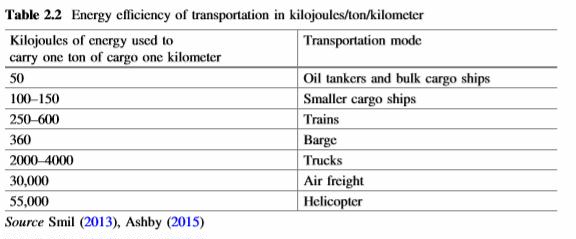
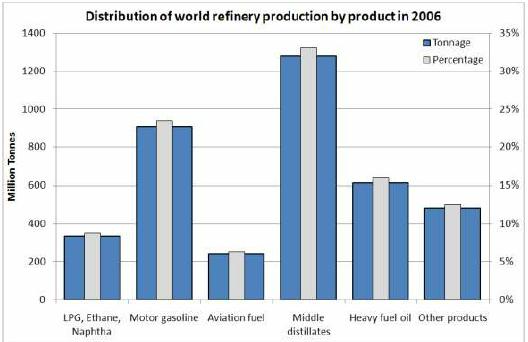
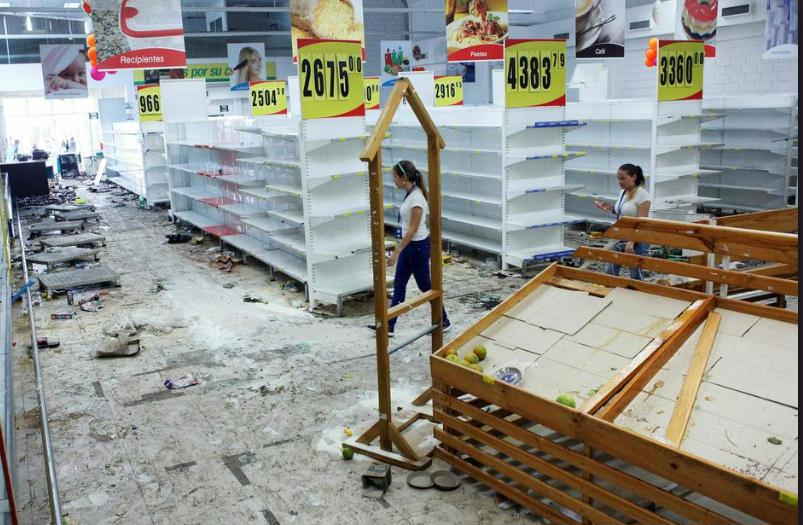
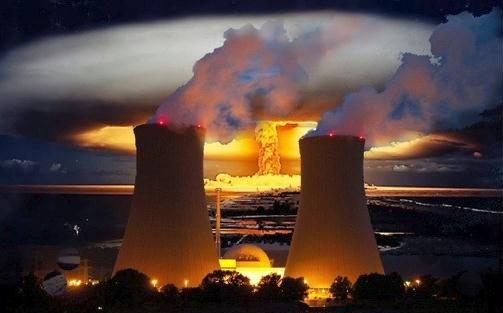

 Source: Cohen L (2018)