How burning biomass made us human

campfire-neanderthal

[ This is a book review of Wrangham’s “Catching Fire: How cooking made us human”.

Fire enabled us to have larger brains from the increased calories in cooked food, held carnivores at bay, killed bacteria, and gave us many other advantages.

But it was burning coal, oil, and natural gas that briefly allowed us to become Homo Giganticus, conquering more than half of the world’s land mass for our crops and animals, driving hundreds of thousands, if not millions of species extinct already or within the next few hundred years.  Fossil fuels exploded the human population from 1 billion to 7.5 billion people, each of us equivalent to hundreds of locusts, devouring the majority of the bounty created by solar energy to grow plants and animals.

We stand on the precipice of descent now that the peak of conventional oil, 90% of our oil supplies — over half of it from just 500 giant oil fields discovered over 50 years ago — is behind us (2005).  Within 50 years or less, those who survive will go back to the past (there’ll still be a trickle of oil, coal, and natural gas obtainable in politically stable areas that haven’t drained their reserves so much that a technologically simpler society can’t reach them.  Once again we will rely on muscle and biomass power as we always have, and always will after the extremely brief age of fossils, which some scientists propose to name the Anthropocene.  We’re more than on the way in some places: biomass is over half of Europe’s renewable power

Since agriculture was invented, the energy that came from using trees to build and burn to melt metals out of ores, ceramics, glass, bricks, steel, and other objects requiring heat.  Biomass in the past is what made civilizations rise to never-before-seen heights, and then fall after deforestation and consequent topsoil loss that drastically lowered crop production (1).

And hundreds of thousands of years before that, burning biomass enabled us to become human (2).  Our brains never could have gotten as large eating raw food all day.

Alice Friedemann   www.energyskeptic.com  author of “When Trucks Stop Running: Energy and the Future of Transportation”, 2015, Springer and “Crunch! Whole Grain Artisan Chips and Crackers”. Podcasts: Practical Prepping, KunstlerCast 253, KunstlerCast278, Peak Prosperity , XX2 report ]

Richard Wrangham. 2009. Catching Fire: How cooking made us human.  

I’ve always loved creation myths.  How we came to be is a question all cultures ask and religions try to answer.  The Iroquois believed we were created by the Sky People. The Australian Aborigines by the Sun Mother, the African Bushmen that we emerged from the depths of the earth, and the Christian Bible believes in a God that made the universe in seven days and humans began with Adam and Eve.

It was only with the invention of science, which is basically a method of testing reality, that we have finally solved our true origin mystery of how the universe began and our own evolutionary history.  Wrangham adds to this evolving story by making the case that we couldn’t have evolved our large brains without fire.

Fire played a role in our evolution in many ways.  We could have never become the “Naked Ape” without fire, or we would have died of cold at night.

Becoming a naked ape opened a new niche. We became the best creature on earth at running long distances, and more importantly, could do this mid-day in heat that would kill furry creatures from overheating, and catch them (2).

Fire also kept dangerous animals at bay, killed bacteria so they didn’t sicken or kill us, made otherwise indigestible or poisonous food edible, reduced spoilage, dried our clothes, and signaled friends.  Cooked food tastes much better than raw food –just ask Koko the gorilla, who signed that she preferred cooked over raw food.  Children can be weaned earlier and grow faster. All of the above led to longer lives, which greatly shaped human societies.

A new and major finding of this book is that of all the ways fire has helped us, the most important may be cooked food, which has more usable calories that our body can digest fully than raw food, and that cooked food can be consumed much faster. So instead of spending over six hours a day chewing fruit and leaves like our chimpanzee relatives do, we only spend about an hour a day chewing.

Not only that, but you get more calories from cooked food than raw food.  This was only discovered recently when tests were done on people who’ve had their large intestines removed.  Food was taken out after the small intestine, which is where most of our ability to get nutrition takes place. After that, the bacteria in our large intestine steals most of the remaining food for themselves.

When you ask people what’s essential to survival, they’ll usually say food, water, and shelter.  But by the end of this book, most will add fire to the list.  And the soon to be 9 billion of us depend on fire far more than our ancestors did to stay alive, we are utterly dependent on the “fire” of the fossil fuels we burn to power transportation, the electric grid (coal and natural gas provide two-thirds of our electricity in the U.S.), heat and cool our homes, cook with, to make every product around us — try to think of anything in your life that doesn’t depend on energy.
For example, your body can digest 94% of the protein in cooked eggs, but only 65% raw.  This is because heat increases the digestibility of protein.  Besides heat, proteins are more digestible if denatured in acids like lemon juice – think of ceviche, pickling, marinades, salt, or drying.

If you’re a food geek, you’ll love all the details Wrangham has about what cooking does to food, why we get more calories from cooked than raw food, or the minutiae of your digestive system.  Perhaps you’ll even become a better cook learning how heat breaks down starches and protein, at what temperatures meat is most tender, food safety, and so on.

Wrangham makes the case we’re adapted and dependent on cooked food in the first few chapters showing how we’ve lost the ability to survive on raw food alone.  Although more studies need to be done, the current scientific consensus is that a strict diet of raw food does not provide an adequate energy supply.  Dieters take note!  Yes, there are raw food consumers who are alive and well, so you’ll need to read the details to find out why their food is quite different from what our ancestors would have found in the wild.

Rumors that tribal people like the Inuit ate their food raw turned out not to be true.  Certainly some food is eaten raw, especially the softer organs like liver or stomach, but most of the calories the Inuit eat are cooked.  Women use twigs in summer, and seal oil or blubber to boil meat in the winter.

All species of mammals digest cooked food easier.  Farmers like to give cooked swill to their animals because they gain weight much faster.  That’s why your pets get so fat, all pet food is cooked.

Our anatomy shows that we’ve adapted to cooked food.  We have weak jaws, and really small mouths and lips compared to our closest relatives, the chimpanzees, who need big mouths, lips, and strong jaws to digest leaves and fruit.

We use 20% of our energy to fuel our brains, which are only 2.5% of our body weight.  The average primate uses 13% and mammals 8 to 10% of their energy to fuel their brains.

That energy came from smaller guts, because with cooked food we didn’t need to have a large digestive system.  Birds also evolved a small gut system, but they put their extra energy into wing muscles.  We used the extra energy for brain power, because social intelligence helped people survive longer.

The shorter gut, bigger brain theory is far from proven, so stay tuned to whether this ends up being completely, or partially true, as an explanation of how we evolved.

The average human diet is two-thirds starchy food.  The finer the flour, the more it’s digested, and modern white flour is basically a starchy powder, which is why so many Americans are overweight.  Worse yet, these calories are empty since wheat and corn flour has been stripped of protein, essential fatty acids, vitamins, and minerals.

The scientific human origin story unfolds like a mystery novel as each riddle is solved. One riddle that needs to be figured out is when humans first used fire. Unfortunately the evidence of the most ancient fires hasn’t survived, but archeologically there is good evidence of fires going back for 790,000 years.

Another riddle is when did we first control fire?  We couldn’t have depended on cooked food until we could make fire from scratch, which probably happened first in a place where both flint and pyrite rocks existed.  When struck together, they make excellent sparks and this method is used by hunter gatherers from the Arctic to Tierra del Fuego.

We can also look at the skeletons of our ancestors going back 2 million years to see what and when changes in our anatomy happened.  We know from the Grant’s study of finches in the Galapagos and other research that evolution can happen very fast.   It’s likely that we evolved quickly once we became dependent on cooked food.

There have only been three times in the past 2 million years when evolution was so fast that our ancestor species names changed.  Atello and Wheeler believe that cooking was responsible for the transition from Homo erectus to homo heidelbergensis 800,000 years ago, but Wrangham believes this transition was much earlier, when Homo erectus emerged over 1.5 million years ago, and explains why and alternative theories for the other times we evolved quickly.

Years ago         Species    Brain size  (cubic inches)      Weight (lbs)

2,300,000     Homo habilis                    37                   70- 81

1,800,000     Homo erectus                   53                123-145

800,000        Homo heidelbergensis       73

200,000        Homo sapiens                  85

It’s the social ramifications of eating cooked food that may be of the most interest.  A division of labor between men and women dramatically changed how we lived and related to one another, freed up time to pursue cultural activities, and made a much higher standard of living possible.

But the dark side is that men used their larger size to get out of the most boring chores.  In 98% of all societies, past and present, women do most or all of the cooking.  Even in the most egalitarian societies that have ever existed, like the Vanatina of the South Pacific, women did the cooking, washing dishes, fetching water and firewood, sweeping, and so on.  Meanwhile the men sat on verandahs chewing betel nuts.

It may have all started as a protection racket – men protected women from being robbed of their food by hungry groups of men in exchange for women cooking their meals.

Bonobo females form fighting alliances to protect themselves from male bullying, but in all other great ape species, including ours, women lose out to men.  Although Wrangham says that women can try to use their cooking as a form of empowerment by threatening to leave or not cooking if their husband is too abusive.

In Inuit societies, wives made warm, dry hunting clothes, and spent many hours cooking.  A man didn’t have time to hunt, make clothes, and cook, so a wife was essential to survival.  Desperate bachelors often tried to steal other men’s wives, usually killing the husband.  So men killed strangers on sight to prevent their wives from being stolen.

In the Tiwi culture, old men got the young wives, so 90% of men’s first marriages were to widows as old as sixty.  But the young men didn’t mind, because the wives cooked for them.  In most societies, bachelors are miserable.

In the end, Wrangham unravels far more than some of the riddles of the mystery of our creation, but also why we are getting so fat today, and the way that cooking and eating created how humans live and how men and women relate to each other.

References

(1) John Perlin. 2005. A Forest Journey: The Story of Wood and Civilization.

(2) Jared Diamond. 2006.The Third Chimpanzee: The Evolution and Future of the Human Animal“.

(3) Nina Jablonski.  2006. Skin, A Natural History.  University of California Press.


Posted in Energy Books, Evolution, Health, Wood | Tagged , , , , | Comments Off on How burning biomass made us human

North American freshwater mussels are going extinct

Stokstad, E. 2012. Nearly Buried, Mussels Get a Helping Hand. Science Vol. 338, Issue 6109, pp. 876-878

[excerpts]

Freshwater mussels are in trouble. They are the most endangered group of organisms in the United States, with most of their river and stream habitats devastated by dams, pollution, and invasive species such as the zebra mussel.

Thirty-five species have been declared extinct, others are likely gone, and more than 70 species are teetering on the brink. “It’s the biggest conservation crisis in the U.S. that no one talks about,” says Paul Johnson, who directs the Alabama Aquatic Biodiversity Center in Marion.

Lab studies show that mussels are sensitive to a number of common but poorly regulated water contaminants, such as the surfactants in the common herbicide glyphosate. In a detailed field study, it was found that the absence of juveniles was highly correlated with ammonia—likely from fertilizer or manure—in the sediment where the mussels burrow. Spikes in ammonia concentrations may be responsible for widespread declines of freshwater mussel populations, especially in agricultural areas. Some ecologists suspect that the current level permitted in surface water by the U.S. Environmental Protection Agency is dangerous for mussels.

The accelerating disappearance of mussels “really is a strong statement about what we’ve done to rivers,” Bringolf says. In the Mississippi River Basin alone, perhaps less than 10% of the original habitat of endangered mussels remains unaltered by dams.

North America is home to a record diversity of freshwater mussels with dazzling reproductive strategies and key ecological roles. But can they withstand the hard knocks of a modern world?

North American has the world’s greatest number of mussel species — 297– more than two-thirds of which are concentrated in the southeastern United States. Some rivers have more species of mussels than are found in all of Europe.

North America owes its astounding freshwater biodiversity in large part to unique geology, which has provided a stable environment that enabled mussels to thrive and diversify for 60 million years. Historically, expansive shoals of mussels served as habitat for other aquatic organisms. By filtering water, mussels move nutrients through the food web, supporting nearby terrestrial ecosystems as well.

People have also long benefited from mussels. Massive middens hint at the untold numbers harvested by Native Americans for food.

What has caused serious harm is widespread fragmentation and loss of habitat. Mining and deforestation, which polluted streams and clogged them with sediment, were already problems by the late 19th century. The worst trouble started in the early 1900s, when engineers built locks and dams in large numbers. These efforts culminated in the gargantuan dams constructed across the southeastern United States by the Tennessee Valley Authority (TVA) in the 1930s and ’40s. Most mussel species can’t live in the slow, muddy water and silty bottoms of the reservoirs formed by these dams. Nor can half the fish species that mussels need as hosts for their larvae.

The Snuffbox mussel

Every spring, a freshwater mussel called the snuffbox emerges from gravel stream bottoms for a violent bout of reproductive deception. The females have spent months buried in the sediment, brooding thousands of larvae that require a certain host to mature. Now the mussels lie on the streambed, their shells open wide. Playing dead, they wait for just the right fish to approach.

That fish, the logperch, spends its days hunting for insect larvae and fish eggs, rummaging under small stones and empty shells. When a logperch pokes its snout inside a snuffbox (Epioblasma triquetra), the mussel snaps shut. The fish is trapped between the serrated edges. For other fishes, this mistake would be fatal, but the logperch has a reinforced skull. As the fish struggles, the mussel pumps out its larvae, which clamp their tiny shells onto the filaments of the logperch’s gills. Then the mussel lets go. After several weeks of hitchhiking, the juvenile mussels drop from the gills and settle into their new habitat.

This aggressive tactic is just one of the remarkable behaviors that freshwater mussels use to reproduce and spread upstream. Other species attract their fish hosts with lures that resemble fish eggs, crayfish, or even swimming minnows. “It’s some of the most amazing mimicry in the world,” says restoration biologist Jess Jones of the U.S. Fish and Wildlife Service (FWS) in Blacksburg, Virginia.

The snuffbox was put on the U.S. endangered species list this past February; biologists estimate its population has declined by 90% over the past century. This month, FWS added another eight mussel species to its list.


Posted in Biodiversity Loss | Tagged , | Comments Off on North American freshwater mussels are going extinct

Corruption and economic instability in the news

[ I can’t keep up with the flood of news about corruption, fraud and economic instability, which is just a symptom of the real problem: the end of growth. In a credit/debit system, lenders won’t lend if they think the money won’t be repaid. That hasn’t been a problem for the last 100 years as we exponentially produced more oil, coal, and natural gas.  But that ended in 2005 when peak conventional oil was reached and it is likely we’ve reached global peak coal as well.  

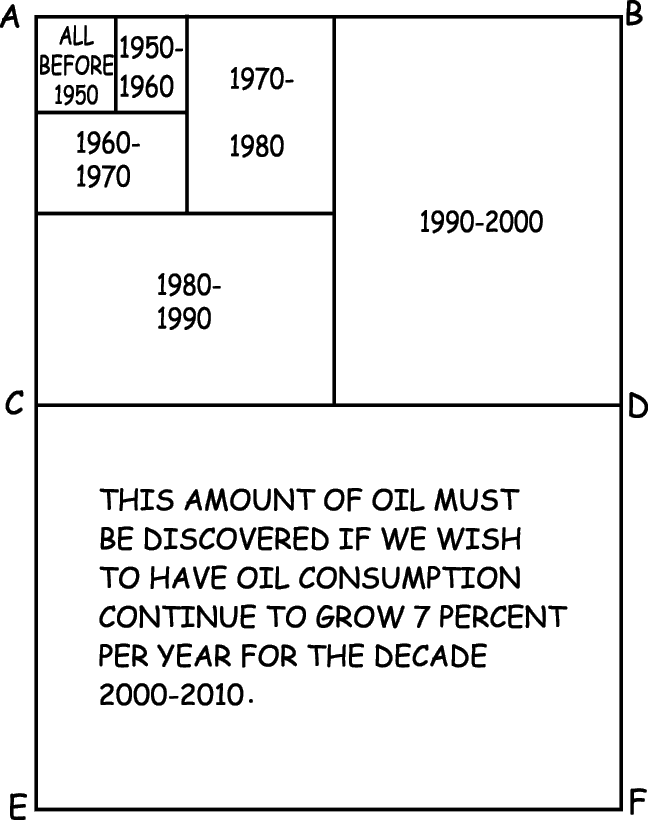
If we have another crash, there goes to the credit for oil companies to explore and drill for more oil, and there goes the ability of the rest of society to grow businesses and repay creditors. It’s already happening, only 2.4 billion barrels of oil were found in 2016 but we burn 30 billion barrels a year. In fact, we’ve been using more oil than’ we’ve found for decades. This is why the financial system is included in the Fast Crash category, even though it’s obviously peak energy and resources limiting growth.  Also, to most people it will appear that the financial system was at fault, not lack of energy.

Below are links to just a few of the “crash coming” articles I run across, just like I did long before 2008. This time we’ll be in much worse shape since the central banks can’t keep printing money forever.

Alice Friedemann   www.energyskeptic.com  author of “When Trucks Stop Running: Energy and the Future of Transportation”, 2015, Springer and “Crunch! Whole Grain Artisan Chips and Crackers”. Podcasts: Derrick Jensen, Practical Prepping, KunstlerCast 253, KunstlerCast278, Peak Prosperity , XX2 report ]

Fraud, corruption, and economic instability

Crash coming   Also see posts in category Crash Coming Soon

Wall Street

Banks

2016-04-09 Wells Fargo “Admits Deceiving” U.S. Government, Pays Record $1.2 Billion Settlement

Fracked oil and gas “tight” bubble

Housing Bubble

Auto loan bubble

Student debt bubble

2016-04-07 Shocking statistic: Over 40% of student borrowers don’t make payments

Debt

Distribution of Wealth

Tax Havens

Money

Unemployment

2016-12-2 What ‘are so many of them doing?’ 95 million not in US labor force

Capital controls and the war on cash

Negative interest rates

Helicopter money to keep economy going

2016-04-07 JPM, ECB Hint at Arrival of “Helicopter Money” in Europe Following Next “Significant Downturn”

Economists are idiots

The new astrology. By fetishizing mathematical models, economists turned economics into a highly paid pseudoscience

Defense Department

2015-04-21 F35, The jet that ate the pentagon ($1.5 trillion so far)

Pensions

China

China produces 99% of some of the rare earth metals essential for computers, cars, wind, solar, and electronic gadgets.  And cheap products that the U.S. and other nations depend on.  If their financial system crashes, it will take the world down with it.


Posted in ! About Corruption, Economic Decline, Other Experts | Tagged , , , , | 2 Comments

Millions of Americans have tropical diseases they’re unaware of

MacKenzie, D. December 14, 2013. America’s hidden epidemic. NewScientist.

Increasing climate change and poverty are likely to increase the numbers of people with these diseases.

An estimated 330,000 US citizens, and possibly as many as a million, carry the parasite that causes Chagas disease. It is a chronic, silent infection that leads to lethal heart or gut damage in 40 per cent of cases. It is the most common parasitic disease in the Americas, and it can be treated – if the doctor is aware of it. Most US doctors aren’t.

Then there are intestinal worms, a chronic infestation that spreads in faeces and drains energy and nutrients from children across Africa. Cases aren’t supposed to occur in rich countries. Yet Toxocara canis, an intestinal worm that can cause asthma and epilepsy, is carried by 21 per cent of black people in the US – compared with 31 per cent of people in central Nigeria.

Under the radar

Diseases commonly associated with tropical climates and impoverished countries are hurting the US too. There is inadequate research to provide confident numbers, but the best estimates suggest that millions of US citizens are affected.

Parasitic worms

Toxocariasis 1.3-2.8 million cases
Strongyloidiasis 68,000–100,000
Ascariasis 4 million
Cysticercosis 41,000–169,000
Schistosomiasis 8,000

Protozoan parasites

Chagas disease 330,000
Toxoplasmosis 1.1 million
Trichomoniasis 7.4 million

Virus

Dengue fever 110,000-200,000 (acute cases annually)

Posted in Disease, Poverty | Tagged , , | Comments Off on Millions of Americans have tropical diseases they’re unaware of

Germany’s “Energiewende” may need to be rescued with nonrenewable coal power

[ Below is my summary of The Energiewende is Running Up Against Its Limits (October 24, 2016) by Jeffrey Michel at the Energy Collective. Wealthy, well-educated Germany has tried harder and longer than most nations to make a transition to renewables. If Germany can’t pull it off, that doesn’t bode well for other nations.

Alice Friedemann   www.energyskeptic.com  author of “When Trucks Stop Running: Energy and the Future of Transportation”, 2015, Springer and “Crunch! Whole Grain Artisan Chips and Crackers”. Podcasts: Practical Prepping, KunstlerCast 253, KunstlerCast278, Peak Prosperity , XX2 report ]

Germany’s “energiewende” is a plan to switch from fossil fuels (coal, natural gas) to renewable, sustainable energy.  But this goal will be even harder to reach after the decision to abandon nuclear power, adding another 22% required from renewable generation. South Germany, where most of the industry lies, doesn’t have enough solar or wind to power their region, so a massive expansion of the grid will be required to get power from elsewhere, which may prove to be too expensive:

Posted in National Super Grid, Renewable Integration | Tagged , , , , | 1 Comment

Are biofuels a sustainable and viable energy strategy?

Preface. In 2000, Melanie Kenderine at the U.S. Department of energy stated that: “This nation has abundant biomass resources (grasses, trees, agricultural wastes) that have the potential to provide power, fuels, chemicals and other bio-based products” (136).

That’s a good point — biofuels are the only sustainable choice after fossil fuels are gone for transportation, but they’re ALSO the only sustainable source to generate electricity, to cook and heat with, make and provide the feedstock for half a million products now made out of natural gas, oil, and coal, and the heat source for manufacturing to make new wind turbines and solar panels.  Steel and cement are essential, the backbone of our infrastructure, but require high heat, which electricity is not efficient at generating.

But is there enough biomass to do all of that? The main reason past civilizations fell with just millions, not billions of people, was because they’d run out of wood for their war ships, iron, glass, brick, ceramics, construction and so on (plus deforestation leads to the erosion of topsoil essential for growing food).

Both papers below explain why biomass can’t scale up to provide more than a small fraction of energy in the future for transportation, let alone all the other needs.

Nearly all heavy-duty trucks run on diesel exclusively because there is no other kind of engine powerful enough to do the hard work required.  Diesel engines can’t burn ethanol, diesohol, or gasoline, and most engine warranties allow zero to at most 20% biodiesel to be mixed in with petroleum-derived diesel. So making ethanol out of biomass does nothing to keep trucks running, and biodiesel scales up even less than ethanol.  Both ethanol and biodiesel have a break-even energy return on invested at best, many researchers have found a negative return.

If we scale up biofuels then we crash civilization in other ways– eroded topsoil, exhausted aquifers, pollution from pesticides, eutrophied waterways from fertilizer runoff.

Alice Friedemann   www.energyskeptic.com  author of “Life After Fossil Fuels: A Reality Check on Alternative Energy”, 2021, Springer; “When Trucks Stop Running: Energy and the Future of Transportation”, 2015, Springer, Barriers to Making Algal Biofuels, and “Crunch! Whole Grain Artisan Chips and Crackers”. Podcasts: Collapse Chronicles, Derrick Jensen, Practical Prepping, KunstlerCast 253, KunstlerCast278, Peak Prosperity , XX2 report

***

Gomiero, Tiziano. June 30, 2015. Are Biofuels an Effective and Viable Energy Strategy for Industrialized Societies? A Reasoned Overview of Potentials and Limits. Sustainability 2015, 7, 8491-8521.

Excerpts from this 31 page article follow.

For our industrial society to rely on “sustainable biofuels” for an important fraction of its energy, most of the agricultural and non-agricultural land would need to be used for crops, and at the same time a radical cut to our pattern of energy consumption would need to be implemented, whilst also achieving a significant population reduction.

Some scholars questioned the energy efficiency of biofuels, claiming that it was an unproductive enterprise (e.g., [2–13]), a point already made in the 1970s by energy experts such as Prof. David Pimentel [2], and Prof. Vaclav Smil [4].

Biofuels, in fact, call for the adoption of those very same agricultural practices that for decades have been blamed for being highly energy inefficient and water consuming, and for contaminating the environment and threatening biodiversity and soil health [2–5,14–17].

Other works highlighted that, contrary to current belief, biofuel production may cause net CO2 emission, in particular when tropical forests and pristine land are converted to plantations and crops for biofuel production [18–20].

The interest in biofuel as a potential sustainable and renewable energy source is still high, as is attested by numerous scientific journals recently created in its name, and the number of funded research projects that focus on this topic. Private investments and public subsidies are still poured into this sector. Since the crisis, however, the focus shifted from first-generation biofuels (or the use of fuel crops) to second-generation biofuels, i.e., the use of cellulosic ethanol (crop residues, woody biomass), and then to third-generation biofuels, i.e., oil from algae.

Palm oil is also becoming of high interest for the biofuel market, and  there is a risk that palm oil plantations may further increase the displacement of native forests in tropical countries (as happened for sugarcane plantations in Brazil), or replace other food crops, without providing any benefits to farmers. After the plantation is discontinued (20–25 years), the soil is then ruined and cannot easily serve for further agricultural activities.

Findings from different experts, however, diverge considerably. Some authors claim that biofuels may represent an efficient alternative to oil, some of them referring to fuel crops, while others only refer to cellulosic ethanol. Other authors claim that biofuels and biomass in general are instead an inefficient alternative to fossil fuels. So, how is it possible that highly respected scholars can reach such opposing conclusions?

We have to face the fact that data-gathering systems rely on different approaches and methodologies, involving different focuses, models, assumptions and scale of analysis. To begin with, a major problem arises with the choice of system boundaries, the “boundary dilemma” as Smil [32] (p. 275) put it. The choices over where to make our system end can lead to large differences in the results [12,28,32]. Borrion et al. [34], in their extensive review of environmental LCA of lignocellulosic ethanol conversion, conclude that results strongly depend on system boundary, functional unit, data quality and allocation methods chosen. The authors also make an important remark stating that “The lack of available data from commercial second generation ethanol plant and the uncertainties in technology performance have made the LCA study of the lignocellulosic ethanol conversion process particularly difficult and challenging.” [34] (p. 4648).

Assessments are scale dependent (and of course value laden, a matter which scientists often prefer not to confront). This means that before the assessment exercise takes place we have to frame properly the context in which we are operating. To put it simply, do cars pollute? It depends on how many cars we are talking about, the performance of their engines, their average speed, the quality of the fuel, etc. New “clean” engines on many new cars may cause more pollution than old dirty engines on few old cars; scale matters. But the scale has to be decided before carrying out the assessment. There is a very telling example concerning the calculation of biofuel efficiency presented by Shapouri et al. [36] vs. Giampietro et al. [26], on how to account for co-products. I quote [3] (p. 33)

Prof. David Pimentel was also a co-author of the paper [12]), as it is explained very clearly: “Shapouri et al. reported a net energy return of 67% after including the co-products, primarily dried distillers grain (DDG) used to feed cattle. These co-products are not fuel!

Giampietro et al. (1997) observed that although the by-product DDG may be considered as a positive output in the calculation of the output/input energy ratio in ethanol production, in a large-scale production of ethanol fuel, the DDG would be many times the commercial livestock feed needs each year in the U.S. (Giampietro et al. 1997).

It follows then that in a large-scale biofuel production, the DDG could become a serious waste disposal problem and increase the energy costs.” For issue of scale was also pointed out by Smil [4], in his assessment of the program PROALCOL, launched by the Brazilian government. Apart from a number of problems identified by Smil [4], (e.g., soil erosion, land conversion, productivity-related issues, economic viability), the author stressed that in order to achieve the production of ethanol from sugarcane forecast by the government, the process would have to also produce each year more than 150 million m3 of vinhoto, the residue of the process. Such a byproduct can be dried up and used as feed, but that is a highly energy-intensive process. The liquid may be used as fertilizer, but it requires logistics for concentrating it, transporting it around the country, etc. So the usual solution is dumping the fluid into the nearest water bodies, and in that context, vinhoto is a very serious pollutant.

For more examples on how the scale issue matters, I refer the reader to [12,37].

On the energy analysis of biofuels, a fierce debate surrounds the issue of providing an accurate EROI estimate for biofuels, but this really has to do with a few decimals below or above one, as the EROI for biofuels is between 0. 8 and 1.6.

This issue should not be a matter of concern, as fossil fuels, which fuel industrial societies, generate an EROI of 20–30 or more [12,27,29]. The fact that there are cases where biofuels can be produced at higher EROI does not really change the judgment over the low performance of biomass.

The power density of the energy source, that is to say the rate of energy flux per unit of area (W/m2), is a key indicator [4–7]. Concerning power density, fossil fuels perform from 300 to 3000 times better than the best biofuel.

See also Smil [7] (p. 265), for data about the power density of various kinds of biomass energy production.

Giampietro and colleagues [12,26] argue that developed societies, in order to sustain their level of metabolism, require an energy throughput in the energy sector ranging from 10,000 to 20,000 MJ per hour of labor. The fact that the range of values achievable with biofuel are just 250–1600 MJ per hour of labor says it all. Of course, we may argue that this is a positive outcome, as it allows the creation of more jobs and reduce unemployment. Nevertheless, if wages in those jobs have to be comparable to those in other sectors of society, the cost of energy will skyrocket

On the biophysical side, one of these indicators is energy density. The final cost of energy in economic terms is, of course, another key issue. Biofuels can be produced only thanks to subsidies. A number of qualitative indicators are also highly relevant such as: the level of contamination produced, the reliability of the supply, and the level of risk involved [5–7,12,13,29].

It should be clear, therefore, that to perform a sound and effective assessment of an energy source is far from being a simple task, and requires the adoption of a number of different indicators related to different criteria and scales. The narrative about biofuels, instead, has been and still is, dangerously simplistic.

At present, the energetic discourse on biofuels is focused on the EROI, but, as we have seen, the EROI is just part of the story. The main problem with biofuels is that they have a power density that is simply too low and this requires handling an enormous quantity of biomass, costing society a lot of working time and capital. Those characteristics make biofuels unable to supply energy to match the metabolic rate of energy consumption of developed countries [5,6,12,26,32].

For our industrial society to rely on “sustainable biofuels” for an important fraction of its energy, it would require a complete reshaping of its metabolism:

  • cropping most of the agricultural and non-agricultural land, affecting food supply and food affordability, increasing the impact on natural resources (water, soil health, pollution, loss of biodiversity);
  • implementing an amazing occupational shift by sending millions of people back to the fields, which will increase the cost of energy (or at least drastically reduce the wages of those working in the sector);
  • cutting our pattern of energy consumption, given the reduced flow of net energy;
  • a consistent reduction of population size and consumption would be required;
  • dealing with a continuous risk of running out of energy due to climate extremes, pests, etc.;
  • such a massive amount of biomass may not be sustainable in the long term, and in the short run, it would require increasing amounts of input.

In summary, for a society (as for any living organism) the energetic supply is a matter of vital importance. The key factors being: (1) the quality of the energy source (fossil fuels are much better than biomass as most of the work has already been done by the Earth’s ecosystems and geological forces over hundreds of millions of years); and (2) the overall efficiency of the supply process (extraction, transformation, etc.), that is to say, the net energy supplied to society at the proper rate of delivery, able to match the rate of energy demand. If the supply of energy cannot match the rate of metabolic energy consumption, society will reduce its metabolism accordingly.

Subsidies: Are They the Key for Biofuel Sustainability?

Pimentel, Smil and Youngquist, were critical towards the real efficiency of biomass as an energy source, and posed important questions concerning its economic efficiency and environmental impact (e.g., soil, water, use of agrochemicals). Youngquist claims that ethanol policy in the USA is a mere political issue, with politicians granting subsidies for inefficient ethanol production in order to secure the votes from Corn Belt electors: “The answer is that it is an example of politics overriding reason. The political block of the corn belt states holds votes crucial to elections, and companies which produce ethanol in the United States have been some of the largest contributors to political campaign funds in recent years” [43] (pp. 243–244).

Subsidies are still the main driving force shaping biofuel policy and trade, and ultimately they keep all this going. Even with oil at 100US$/barrel, biofuels were still not competitive and needed subsidies (and that can also be expected, as a lot of fossil fuel is required to carry out intensive agriculture) [12,44,45].

Koplow and Steenblik [45], estimate that in 2008, in the USA, total support towards ethanol production ranged between 9.0 and 11.0 billion US$, with subsidies between 2009 and 2012 accounting for about 50% (up to 80% in 2007) of the ethanol market price. These figures are likely an underestimate, given the many faces economic support can take (from tax exemption to price premium), rendering precise subsidy assessment a difficult task [44,45].

According to the IEA, biofuel subsidies amounted to about US$22 billion in 2010, and are projected to increase to up to US$67 billion per year in 2035 [44]. Note that fossil fuel benefits from subsidies, too. Fossil-fuel subsidies are estimated at between US$45–75 billion a year in OECD countries and at US$409 billion in 2010 in non-OECD countries [44]. Some authors (e.g., [46]) back subsidy policy of biofuels on the basis that “In any case, the size of the support of biofuels is small (the authors are referring to the figure of US$ 20 billion they present earlier), in relation to the cost of fossil fuel consumption subsidies amounted to $312 billion worldwide in 2009”. This reasoning is evidently flawed. The comparison refers to the total value, but has to be done on a per-unit basis instead. According to the BP Statistical Review of World Energy [47], in 2009 fossil fuel consumption amounted to about 10,000 Mt oil equivalent (3809 Mt oil, 2690 Mtoe gas, 3547 Mtoe coal), while biofuel amounted to about 52 Mt oil equivalent.

Subsidies turn out to be 3.1 million US$ per Mt oil eq. in the case of fossil fuels (US$ 3/t), and 423 million US$ per Mt oil eq. in the case of biofuels (US$423/t), 136 times more. We may well wonder what are we doing with biofuels!

Who benefits most from these subsidies? In the USA, federal and state subsidies for ethanol production, that total more than US$7 per bushel of corn, have been always mainly paid to large corporations [9,45,49]. It thus seems that those who will gain from subsidies are large corporations that sell the fossil-fuel-derived inputs, and the losers are the farmers, the consumers and the tax payers! And the environment, of course.

The USA population, 310 million in 2009, will reach 440 million by 2050 (US Census Bureau, 2009). According to Nowak and Walton [73], the rate of rural land lost to development in the 1990s was about 0.4 million ha per year and the authors warn that if this rate continues until 2050, USA will have lost an additional 44 million ha of rural countryside. Such areas will be lost mostly at the expense of agriculture or conservative land programs. Brown [74] points out that the USA, with its 214 million motor vehicles, paved an estimated 16 million ha of land (in comparison to the 20 million ha that US farmers plant in wheat). About 13% of U.S. land area is currently dedicated to highways and urbanization, so adding other 150 million people will dramatically affect both the demand for food, as well as the demand for space (e.g., urbanization and highways).

Promoting the extensive cultivation of species suitable for biofuel production would increase two of the major causes of biodiversity loss on the planet, namely the clearing and conversion of yet more natural areas for monocultures, and the invasion by non-native species.

“Carbon Debt”: Biofuels and Increasing Carbon Emissions

The belief that burning biomass is carbon neutral has been questioned. Such an idea is founded upon the rather simplistic reasoning that CO2 released in the burning is picked up again by plants, giving a net release of zero. There are a number of reasons why this is not so. Displacing tropical ecosystems in favor of plantations causes the loss of aboveground biomass, and also the release of a huge amount of carbon stored in the soil (about 50% of the total carbon in tropical forests is stored in the soil). Plantations will never store as much biomass as native ecosystems, and that leads to net carbon emissions. Converting grasslands into fuel crops will cause the net emission of the carbon stored in the native ecosystem.

Estimates concerning the “carbon debt” (the carbon that is lost in land use change) have been already published (e.g., [18,19]:

  • the conversion of rainforests, peatlands, savannas. Brazil and Southeast Asia may create a “biofuel carbon debt” by releasing 17 to 420 times more CO2 than the annual GHGs reductions that these biofuels would provide by displacing fossil fuels;
  • in the USA, corn-based ethanol will nearly double GHG emissions over 30 years, while cropping grasslands to produce biofuels (e.g., with switchgrass), will increase GHG emissions by 50%. Some USA public institutions concluded that much worse problems may be caused by fuel crops than by fossil fuels, due to corn ethanol and biodiesel made from soybean oil causing a large amount of land conversion to create a high “carbon debt” [88,89];
  • in a meta-analysis carried out by Piñeiro et al. [90] on 142 soil studies, the authors conclude that soil C sequestered by setting aside former agricultural land was greater than the C credits generated by planting corn for ethanol on the same land for 40 years, and that C releases from the soil after planting corn for ethanol may, in some cases, completely offset C gains attributed to biofuel generation for at least 50 years.

It has been suggested that agricultural intensification may help reduce the expansion of plantations into pristine ecosystems. However, recent analysis found that using high-yielding oil palm crops to intensify productivity and then preserving the remaining biodiversity may not work either. Carrasco et al. [95], for example, argue that using high-yielding oil palm crops could actually lead to further tropical deforestation. That is because palm oil will become cheaper on the global food markets and will outcompete biofuels grown in temperate regions. That in turn will increase the planting of oil palm in tropical regions. In fact, paradoxically, while developed countries are claiming to import biofuels from tropical regions in order to reduce their CO2 emission, they are actually contributing to an amplification of the problem, and concurring to fuel the process of tropical deforestation [18,19,44,96,97]. Houghton [98] warns that, between 1990 and 2010, forest degradation and deforestation accounted for 15% of anthropogenic carbon emissions and argues that we have to work to stop this trend. The author is rather critical about the international biofuel trade, which, he claims, is driven by distortions generated by the high subsidies in place in the USA and the EU, and is not going to work towards halting deforestation.

The greater availability of crop residues and weed seeds translates to increased food supplies both for invertebrates and vertebrates, which play important ecological functions in agro-ecosystems, influencing, among other things: soil structure, nutrients cycling and water content, and the resistance and resilience against environmental stress and disturbance [57,115–120].

When compared to corn grain, it takes 2 to 5 times more cellulosic biomass to obtain the same amount of starch and sugars. This means that 2 to 5 times more biomass has to be produced and handled in order to obtain the same starches as for corn grain [9].

Tilman et al. [21] suggest that all 235 million hectares of grassland available in the USA, plus crop residues, can be converted into cellulosic ethanol, recommending that crop residues, like corn stover, can be harvested and utilized as a fuel source. I have already mentioned residues; as for the use of grassland, this cannot be considered an empty space. There are tens of millions of livestock (cattle, sheep, and horses) grazing on that land, as well as all the wild fauna and flora living in those ecosystems [122];

Some energy analysts consider the biofuel “solution” so completely unrealistic that it should not even be worth any attention (e.g., [4,6,10,12]). Pimentel in his edited book on renewable energies [10], closes the work with chapter 20, on algae, consisting of two pages, summary and references included [126] (pp. 499–500). Pimentel claims that properly accounting for all the costs and assuming a realistic energy production level would lead to an estimated algal oil barrel cost of 800 US$.

References

  1. HLPE (High Level Panel of Experts). Biofuels and Food Security; A report by the High Level Panel of Experts on Food Security and Nutrition of the Committee on World Food Security; FAO, Rome, Italy, 2013. http://www.fao.org/fileadmin/user_upload/hlpe/hlpe documents/HLPE_Reports/HLPE-Report-5_Biofuels_and_food_security.pdf (accessed on 5 February 2015).
  2. Pimentel, D.; Moran, M.A.; Fast, S.; Weber, G.; Bukantis, R.; Balliett, L.; Boveng, P.; Cleveland, C.; Hindman, S.; Young, M. Biomass energy from crop and forest residues. Science 1981, 212, 1110–1115.
  3. Pimentel, D.; Patzek, T.; Cecil, G. Ethanol production: Energy, economic, and environmental losses. Rev. Environ. Contam. Toxicol. 2007, 189, 25–41.
  4. Smil, V. Biomass Energies; Plenum Press: New York, NY, USA, 1983.
  5. Smil, V. Energy at the Crossroads; The MIT Press: Cambridge, MA, USA, 2003. 6. Smil, V. Energy: Myths and Realities; The AEI Press: Washington, DC, USA, 2010.
  6. Smil, V. Power Density Primer, 2010.http://www.vaclavsmil.com/wpcontent/uploads/docs/smil-article-power-density- primer.pdf
  1. Ulgiati, S. A comprehensive energy and economic assessment of biofuels: When green is not enough. Crit. Rev. Plant Sci. 2001, 20, 71–106.
  2. Pimentel, D.; Patzek, T. Ethanol production using corn, switchgrass, and wood: Biodiesel production using soybean and sunflower. Nat. Resour. Res. 2005, 14, 65–76.
  3. Pimentel, D. (Ed.) Biofuels, Solar and Wind as Renewable Energy Systems: Benefits and Risks; Springer: New York, NY, USA, 2008.
  4. Patzek, T. Thermodynamics of agricultural sustainability: The case of US maize agriculture. Crit. Rev. Plant Sci. 2008, 27, 272–293.
  5. Giampietro, M.; Mayumi, K. The Biofuel Delusion: The Fallacy of Large Scale Agro-Biofuels Production; Earthscan: London, UK, 2009.
  6. MacKay, D.J.C. Sustainable Energy—Without the Hot Air; UIT Cambridge Ltd.: Cambridge, UK 2009.http://www.withouthotair.com/download.html (accessed on 20 December 2014).
  1. MEA (Millenium Ecosystem Assessment). Ecosystems and Human Well-Being: Biodiversity Synthesis; World Resources Institute: Washington, DC, USA, 2005.http://www.millenniumassessment.org/documents/document.354.aspx.pdf
  1. IAASTD (International Assessment of Agricultural Knowledge, Science and Technology for Development). Agriculture at the Crossroad; Synthesis Report; Island Press: Washington, DC, USA, 2009. http://apps.unep.org/publications/pmtdocuments/Agriculture %20at%20a%20crossroads%20-%20Synthesis%20report-2009Agriculture_at Crossroads_Synthesis_Report.pdf (accessed on 24 November 2014).
  2. WBGU (German Advisory Council on Global Change). Future Bioenergy and Sustainable Land Use; Earthscan: London, UK, 2009. http://www.wbgu.de/fileadmin/templates/ dateien/veroeffentlichungen/hauptgutachten/jg2008/wbgu_jg2008_en.pdf
  3. Gomiero, T.; Pimentel, D.; Paoletti, M.G. Is there a need for a more sustainable agriculture? Crit. Rev. Plant Sci. 2011, 30, 6–23.
  4. Fargione, J.; et al. Land clearing and the biofuel carbon debt. Science 2008, 319, 1235–1238.
  5. Searchinger, T.D.;.; et al. Fixing a critical climate accounting error. Science 2009, 326, 527–528.
  6. Robertson, G.P.; Dale, V.H.; Doering, O.C.; Hamburg, S.P.; Melillo, J.M.; Wander, M.M.; Parton, W.J.; Adler, P.R.; Barney, J.N.; Cruse, R.M.; et al. Sustainable biofuels redux. Science 2008, 322, 49–50.
  7. Tilman, D.G.; Hill, J. M.; Lehman, C. Carbon-negative biofuels from low-input high-diversity grassland biomass. Science 2006, 314, 1598–1600.
  8. Tilman, D.G.; Socolow, R. ; Foley, J.A.; Hill, J.; Larson, E.; Lynd, L.; Pacala, S.; Reilly, J.; Searchinger, T.; Somerville, C.; et al. Beneficial biofuels—The food, energy, and environment trilemma. Science 2009, 325, 270–271.
  9. EU (European Union). Environment Committee Backs Switchover to Advanced Biofuels. 2015. http://www.europarl.europa.eu/news/en/news-room/content/ 20150223IPR24714/html/Environment-Committee-backs-switchover-to-advanced- biofuels (accessed on 25 March 2015).
  10. EIA (Energy Information Administration). U.S. Ethanol Exports in 2014 Reach Highest Level since 2011. http://www.eia.gov/todayinenergy/detail.cfm?id=20532
  11. EIA (Energy Information Administration). U. S. Ethanol Imports from Brazil down in 2013.http://www.eia.gov/todayinenergy/detail.cfm?id=16131(accessed on 15 March 2015).
  1. Giampietro, M.; Ulgiati, S.; Pimentel, D. Feasibility of large- scale biofuel production: Does an enlargement of scale change the picture? BioScience 1997, 47, 587–600.
  2. Hall, C.A.S.; Lambert, J.G.; Balogh, S.B. EROI of different fuels and the implications for society. Energy Policy 2014, 64, 141–152.
  3. Hall, C.A.S.; Dale, B.E.; Pimentel, D. Seeking to understand the reasons for different Energy Return on Investment (EROI) Estimates for Biofuels. Sustainability 2011, 3, 2413–2432.
  4. Hall, C.A.S.; Cleveland, C. J.; Kaufmann, R. Energy and Resource Quality; Wiley-Interscience: New York, NY, USA, 1986.
  5. Brody, S. Bioenergetics and Growth; Reinhold: New York, NY, USA, 1945.
  6. World Bank, 2015. Energy Use (kg of Oil Equivalent Per Capita). http://data.worldbank.org/indicator/EG.USE.PCAP.KG.OE
  7. Smil, V. Energy in Nature and Society: General Energetics of Complex Systems; The MIT Press: Cambridge, MA, USA, 2008.
  8. Ridley, C.E.; Clark, C.M.; LeDuc, S.D.; Bierwagen, B.G.; Lin, B.B.; Mehl, A.; Tobias, D.A. Biofuels: Network analysis of the literature reveals key environmental and economic unknowns. Environ. Sci. Technol. 2012, 46, 1309–1315.
  9. Borrion, A.L.; McManus, M.C.; Hammond, G.P. Environmental life cycle assessment of lignocellulosic conversion to ethanol: A review. Renew. Sustain. Energy Rev. 2012, 16, 4638–4650.
  10. Searchinger, T.; Edwards, R.; Mulligan, D.; Heimlich, R.; Plevin, R. Do biofuel policies seek to cut emissions by cutting food? Science 2015, 15, 1420–1422.
  11. Shapouri, H.; Duffield, J.; McAloon, A.; Wang, M. The 2001 Net Energy Balance of Corn- Ethanol (Preliminary); U.S. Department of Agriculture: Washington, DC, USA, 2004. http://www.biomassboard.gov/pdfs/net_energy_balanced.pdf
  1. Giampietro, M. Multi-Scale Integrated Analysis of Agro-Ecosystems; CRC Press: Boca Raton, FL, USA, 2004.
  2. Georgescu-Roegen, N. Energy and economic myths. Southern Econ. J. 1975, 41, 347–381.
  3. Georgescu-Roegen, N. The Entropy Law and the Economic Process; Harvard University Press: Cambridge, MA, USA, 1971.
  4. Brown, L.R. Food or fuel: New Competition for the World’s Cropland. Worldwatch Paper 35, Worldwatch Institute, Washington D.C., USA, 1980. http://www.fastonline.org/CD3WD_40/JF/424/19–414.pdf
  5. Lockeretz, W. Crop residues for energy: Comparative costs and benefits for the farmer, the energy facility, and the public. Energy Agric. 1981, 1, 71–89.
  6. Pimentel, D. Ethanol fuels: Energy security economics and the environment. J. Agric. Environ. Ethics 1991, 4, 1–13.
  7. Youngquist, W. GeoDestinies: The Inevitable Control of Earth Resources over Nations and Individuals; National Book Company: Portland, OR., USA, 1997.
  8. Gerasimchuk, I.; Bridle, R.; Beaton, C.; Charles, C. State of Play on Biofuel Subsidies: Are Policies Ready to Shift? The International Institute for Sustainable Development, Winnipeg, Manitoba, Canada, 2012. http://www.iisd.org/gsi/sites/default/files/bf_stateplay_2012.pdf (accessed on 10 March 2015). 45. Koplow, D.; Steenblik, R. Subsidies o ethanol in the United States. In Biofuels, Solar and Wind as Renewable Energy Systems: Benefits and Risks; Pimentel, D., Ed.; Springer: Berlin, Germany; Heidelberg, Germany, 2008; pp. 79–108. 46. Valentine, J.; Clifton-Brown, J.; Hastings, A.; Robson, P.; Allison, G.; Smith, P. Food vs. fuel: The use of land for lignocellulosic “next generation” energy crops that minimize competition with primary food production. GCB Bioenergy 2012, 4, 1–19. 47. BP. Statistical Review of World Energy. 2015. http://www.bp.com/en/global/ corporate/about-bp/energy-economics/statistical-review-of-world-energy/2013- in-review.html (accessed on 10 March 2015).
  9. Myers, N.; Kent, J. Perverse Subsidies: How Tax Dollars can Undercut the Environment and the Economy; Island Press: Washington, DC, USA, 2001.
  10. Peterson, E.W.F. A Billion Dollars a Day: The Economics and Politics of Agricultural Subsidies; Wiley- Blackwell: Hoboken, NJ, USA, 2009.
  11. Von Braun, J. The food crisis isn’t over. Nature 2008, 456, 701. 51. Mitchell, D. A Note on Rising Food Prices. The World Bank Development Prospects Group July 2008http://www-wds.worldbank.org/servlet/WDSContentServer/ WDSP/IB/2008/07/28/000020439_20080728103002/Rendered/PDF/WP4682.pdf (accessed on 17 July 2014). 52. FAO (Food and Agriculture Organization). Soaring Food Prices: Facts, Perspectives, Impacts and Actions Required.http://www.fao.org/fileadmin/user_upload/ foodclimate/HLCdocs/HLC08-inf-1-E. pdf
  1. International Monetary Fund. Reaping the Benefits of Financial Globalization. 2007.http://www.imf.org/external/np/res/docs/2007/0607.htm
  1. Trostle, R. Global Agricultural Supply and Demand: Factors Contributing to the Recent Increase in Food Commodity Prices. http://www.ers.usda.gov/PUBLICATIONS/ WRS0801/WRS0801.PDF
  2. Gallagher, E. The Gallagher Review of the Indirect Effects of Biofuels Production.http://www.renewablefuelsagency.org/_db/_documents/Report_of_the_Gallagher review.pdf (accessed on 5 March 2015).
  1. UNEP (United Nations Environmental Programme). The Environmental Food Crisis the Environment’s Role in Averting Future Food Crises a UNEP Rapid Response Assessment.http://www.grida.no
  1. Gomiero, T.; Paoletti, M. G.; Pimentel, D. Biofuels: Ethics and concern for the limits of human appropriation of ecosystem services. J. Agric. Environ. Ethics 2010, 23, 403–434.
  2. Alexandratos, N.; Bruinsma, J. World Agriculture towards 2030/2050: The 2012 Revision.http://www.fao.org/docrep/016/ap106e/ap106e.pdf
  1. Bardgett, R.D.; van der Putten, V.H. Belowground biodiversity and ecosystem functioning. Nature 2014, 515, 505–551. 60. UN (United Nations). World Population Prospects: The 2012 Revision. Population Division, Department of Economic and Social Affairs, United Nations, New York, 2013. http://esa.un.org/wpp/Documentation/pdf/WPP2012_HIGHLIGHTS.pdf
  2. FAO (Food and Agriculture Organization). Global Agriculture towards 2050. High Level Expert Forum—How to Feed the World in 2050. Office of the Director, Agricultural Development Economics Division, FAO, Rome, 2009.http://www.fao.org/fileadmin/ templates/wsfs/docs/Issues_papers/HLEF2050_Global_Agriculture.pdf
  1. FAO (Food and Agriculture Organization). The State of Food and Agriculture 2008.http://www.fao.org/docrep/011/i0100e/i0100e00.htm (accessed on 10 February 2009).
  1. Montgomery, D.R. Soil erosion and agricultural sustainability. PNAS 2007, 104, 13268–13272.
  2. Brown, L.R. Outgrowing the Earth; Earthscan: London, UK, 2005.
  3. Smil, V. Feeding the World: A Challenge for the Twenty- First Century; MIT Press: Cambridge, MA, USA, 2008.
  4. Eide, A. The Right to Food and the Impact of Liquid Biofuels (Agrofuels). http://www.fao.org/ docrep/016/ap550e/ap550e.pdf (accessed on 10 February 2009).
  5. ActionAid. Biofuels and Lad Grabs 2015. http://www.actionaid.org/eu/what-wedo/biofuels-and-land-grabs (accessed on 5 March 2015).
  6. Oxfam. Biofuels. 2015.http://www.oxfam.org.uk/media-centre/pressreleases/tag/biofuels
  1. Cotula, L.; Dyer, N.; Vermeulen, S. Fuelling exclusion? The Biofuels Boom and Poor People’s Access to Land. International Institute for Environment and Development, London, UK, 2008.http://pubs.iied.org/pdfs/12551IIED.pdf
  1. Creutzig, F.; Corbera, E.; Bolwig, S.; Hunsberger, C. Integrating Place- Specific Livelihood and Equity Outcomes into Global Assessments of Bioenergy Deployment. Environ. Res. Lett. 2013, 8, doi:10.1088/1748-9326/8/3/035047.
  2. Obidzinski, K.; Andriani, R.; Komarudin, H.; Andrianto, A. Environmental and social impacts of oil palm plantations and their implications for biofuel production in Indonesia. Ecol. Soc. 2012, 17, Article 25.
  3. Oxfam. Biofuelling Poverty—EU Plans Could be Disastrous for Poor People. Oxfam, 29 October 2007. http://www.oxfam.org/en/node/217 (accessed on 5 March 2015).
  4. FAO; IFAD; and WFP. The State of Food Insecurity in the World 2014.Strengthening the Enabling Environment for Food Security and Nutrition. http://www.fao.org/3/a-i4030e.pdf (accessed on 5 March 2015).
  5. Nowak, D.J.; Walton, J.T. Projected Urban Growth (2000–2050) and Its Estimated Impact on the US Forest Resource. http://www.fs.fed.us/ne/newtown_square/publications/ other_publishers/OCR/ne_2005_nowak001.pdf (accessed on 10 February 2015).
  6. Brown, L.R. Plan B: Rescuing a Planet under Stress and a Civilization in Trouble. http://www.earth-policy.org/Books/PB3/index.htm (accessed on 5 February 2015).
  7. Bindraban, P.S.; Bulte, E.H.; Conijn, S.G. Can large-scale biofuels production be sustainable by 2020? Agric. Syst. 2009, 101, 197–199.
  8. Crutzen, P.J.; Mosier, A.R.; Smith, K.A.; Winiwarter, W. N2O release from agro-biofuel production negates global warming reduction by replacing fossil fuels. Atmos. Chem. Phys. Discuss. 2007, 7, 11191–11205.
  9. Haberl, H.; Sprinz, D.; Bonazountas, M.; Cocco, P.; Desaubies, Y.; Henze, M.; Hertel, O.; Johnson, R.K.; Kastrup, U.; Laconte, P.; et al. Correcting a fundamental error in greenhouse gas accounting related to bioenergy. Energy Policy 2012, 45, 18–23.
  10. Primack, R.B. A Primer of Conservation Biology, 4th ed.; Sinauer Associates: Sunderland, MA, USA, 2008.
  11. Robertson, G.P.; Gross, K.L.; Hamilton, S.K.; Landis, D.A.; Schmidt, T.M.; Snapp, S.S.; Swinton, S.M. Farming for ecosystem services: An ecological approach to production agriculture. Bioscience 2012, 64, 404–415.
  12. Gomiero, T.; Pimentel, D.; Paoletti, M.G. Environmental impact of different agricultural management practices: Conventional vs. organic agriculture. Crit. Rev. Plant Sci. 2011, 30, 95–124.
  13. Cal-IPC. Arundo donax: Distribution and Impacts. California Invasive Plant Council, 2011. http://www.cal- ipc.org/ip/research/arundo/
  14. Chapin, F.S., III; Zavaleta, E.S.; Eviner, V.T.; Naylor, R.L.; Vitousek, P.M.; Reynolds, H. L.; Hooper, D.U.; Lavorel, S.; Sala, O.E.; Hobbie, S.E.; et al. Consequences of changing biodiversity. Nature 2000, 405, 234–242.
  15. GISP. Biofuel Run the Risk of Becoming Invasive Species. The Global Invasive Species Programme, May 2008. http://www.issg.org/pdf/publications/GISP/ Resources/BiofuelsReport.pdf (accessed on 5 March 2015).
  16. Smith, A.L.; Klenk, N.; Wood, S.; Hewitt, N.; Henriques, I.; Yana, N.; Bazely, D.R. Second generation biofuels and bioinvasions: An evaluation of invasive risks and policy responses in the United States and Canada. Renew. Sustain. Energy Rev. 2013, 27, 30–42.
  17. Heikkinen, N.; ClimateWire. 49 plants that could make biofuel less troublesome.http://www.scientificamerican.com/article/49-plants-that-could-make-biofuel- less-troublesome/ (accessed on 2 February 2015).
  1. IUCN (International Union for Conservation of Nature). Guidelines on Biofuels and Invasive Species.http://cmsdata.iucn.org/downloads/iucn_guidelines_on_biofuels and_invasive_species_.pdf (accessed on 2 February 2015).
  1. Searchinger, T.D. Biofuels and the need for additional carbon. Environ. Res. Lett. 2010, 5, 024007.
  2. Babcock, B.A. Measuring Unmeasurable Land-Use Changes from Biofuels.

http://www.card.iastate.edu/iowa_ag_review/summer_09/article2.aspx

  1. EPA (Environmental Protection Agency). Emissions from Land Use Change Due to Increased Biofuel Production—Satellite Imagery and Emissions Factor Analysis.

http://www.epa.gov/OMS/renewablefuels/rfs2-peer-review-land-use.pdf

  1. Piñeiro, G.; Jobbágy, E.G.; Baker, J.; Murray, B.C.; Jackson, R.B. Set-asides can be better climate investment than corn ethanol. Ecol. Appl. 2009, 19, 277–282.
  2. Sims R.; Schaeffer, R.; Creutzig, F.; Cruz-Núñez, X.; D’Agosto, M.; Dimitriu, D.; Figueroa Meza, M.J.; Fulton, L.; Kobayashi, S.; Lah, O.; et al. Transport. In Climate Change 2014: Mitigation of Climate Change. Contribution of Working Group III to the Fifth Assessment Report of the Intergovernmental Panel on Climate Change; Edenhofer, O., Pichs-Madruga, R., Sokona, Y., Farahani, E., Kadner, S., Seyboth, K., Adler,A., Baum, I., Brunner, S., Eickemeier, P., et al. Eds.; Cambridge University Press: Cambridge, UK; New York, NY, USA, 2014; pp. 599–670.
  3. Wicke, B.; Sikkema, R.; Dornburg, V.; Faaij, A. Exploring land use changes and the role of palm oil production in Indonesia and Malaysia. Land Use Policy 2011, 28, 193–206.
  4. Miyamoto, M.; Parid, M.M.; Aini, Z.N.; Michinaka, T. Proximate and underlying causes of forest cover change in Peninsular Malaysia. For. Policy Econ. 2014, 44, 18–25.
  5. Carlson, K.M.; Curran, L.M.; Asner, G.P.; McDonald Pittman, A.; Trigg, S.N.; Adeney, J.M. Carbon emissions from forest conversion by Kalimantan oil palm plantations. Nat. Clim. Chang. 2013, 3, 283–287.
  6. Carrasco, L.R.; Larrosa, C.; Milner-Gulland, E.J.; Edwards, D.P. A double-edged sword for tropical forests. Science 2014, 346, 38–40.
  7. Laurance, W.F.; Sayer, J.; Cassman, K.G. Agricultural expansion and its impacts on tropical nature. TREE 2014, 29, 107–116.
  8. Wilcove, D.S.; Koh, L. P. Addressing the threats to biodiversity from oil-palm Agricultura. Biodivers. Conserv. 2010, 19, 999–1007.
  9. Houghton, R.A. The emissions of carbon from deforestation and degradation in the tropics: Past trends and future potential. Carbon Manag. 2013, 4, 539–546.
  10. Dwivedi, P.; Wang, W.; Hudiburg, T.; Jaiswal, D.; Parton, W.; Long, S.; DeLucia, E.; Khanna, M. Cost of abating Greenhouse Gas emissions with cellulosic ethanol. Environ. Sci. Technol. 2015, 49, 2512–2522.
  11. Lindstrom, L.J. Effects of residue harvesting on water runoff, soil erosion and nutrient loss. Agric. Ecosyst. Environ. 1986, 16, 103–112.
  12. Smil, V. Crop residues: Agriculture’s largest harvest. BioScience 1999, 49, 299–308.
  13. Lal, R. World crop residues production and implications of its use as a biofuel. Environ. Int. 2005, 31, 575–584.
  14. Wilhelm, W.W.; Doran, J.W.; Power, J.F. Corn and soybean yield response to crop residue management under no-tillage production systems. Agron. J. 1986, 78, 184–189.
  15. Wilhelm, W.W.; Johnson, J.M.F.; Karlen, D. L.; Lightle, D.T. Corn stover to sustain soil organic carbon further constrains biomass supply. Agron. J. 2007, 99, 1665–1667.
  16. Rasmussen, P. E.; Goulding, K.W.T.; Brown, J.R.; Grace, P.R.; Janzen, H.H.; Körschens, M. Long-term agroecosystem experiments: Assessing agricultural sustainability and global change. Science 1998, 282, 893–896.
  17. Pimentel, D.; Harvey, C.; Resosudarmo, P.; Sinclair, K.; Kurz, D.; McNair, M.; Crist, S.; Shpritz, L.; Fitton, L.; Saffouri, R.; et al. Environmental and economic costs of soil erosion and conservation benefits. Science 1995, 267, 1117–1123. 108. Blanco- Canqui, H.; Lal, R.; Post, W.P.; Owens, L.B. Changes in long-term no-till corn growth and yield under different rates of stover mulch. Agron. J. 2006, 98, 1128–1136. 109. Kenney, I.; Blanco-Canqui, H.; Presley, D.R.; Rice, C.W.; Janssen, K.; Olson, B. Soil and crop response to stover removal from rainfed and irrigated corn. Glob. Chang. Biol. Bioenergy 2014, 7, 219–230.
  18. Linden, D.R.; Clapp, C.E.; Dowdy, R.H. Long-term corn grain and stover yields as a function of tillage and residue removal in east central Minnesota. Soil Tillage Res. 2000, 56, 167–174.
  19. Liska, A.J.; Yang, H.; Milner, M.; Goddard, S.; Blanco-Canqui, H.; Pelton, M.P.; Fang, X.X.; Zhu, H.; Suyker, A. E. Biofuels from crop residue can reduce soil carbon and increase CO2 emissions. Nat. Clim. Chang. 2014, 4, 398–401.
  20. Barber, S.A. Corn residue management and soil organic matter. Agron. J. 1979, 71, 625–627.
  21. Karlen,D. L.; Hunt, P.G.; Campbell, R.B. Crop residue removal effects on corn yield and fertility of a Norfolk sandy loam. Soil Sci. Soc. Am. J. 1984, 48, 868–872.
  22. Lal, R. Soil carbon management and climate change. Carbon Manag. 2014, 4, 439–462.
  23. Lal, R. Carbon sequestration. Philos. Trans. R. Soc. Lond. B Biol Sci. 2008, 27, Article 363.
  24. Gomiero, T. Alternative land management strategies and their impact on soil conservation. Agriculture 2013, 3, 464–483.
  25. Coleman, D.C.; Crossley, D.A., Jr.; Hendrix, P.F. Fundamentals of Soil Ecology, 2nd ed.; Academic Press: Amsterdam, The Netherlands, 2004. 118. Lavelle, P.; Spain, A.V. Soil Ecology; Kluwer: Amsterdam, The Netherlands, 2002.
  26. Brussaard, L.; de Ruiter, P.C.; Brown,
  1. Coleman, D.C.; Crossley, D.A., Jr.; Hendrix, P.F. Fundamentals of Soil Ecology, 2nd ed.; Academic Press: Amsterdam, The Netherlands, 2004.
  2. Lavelle, P.; Spain, A.V. Soil Ecology; Kluwer: Amsterdam, The Netherlands, 2002.
  3. Brussaard, L.; de Ruiter, P.C.; Brown, G. G. Soil biodiversity for agricultural sustainability. Agric. Ecosyst. Environ. 2007, 121, 233–244.
  4. Heemsbergen, D.A.; Berg, M.P.; Loreau, M.; van Hal, J.R.; Faber, J.H.; Verhoef, H.A. Biodiversity effects on soil processes explained by interspecific functional dissimilarity. Science 2004, 306, 1019–1020.
  5. Bardgett, R.; van der Putten, W.H. Belowground biodiversity and ecosystem functioning. Nature 2014, 515, 505–511.
  6. Stephen, J.D.; Mabee, W.E.; Saddler, J.N. Will second-generation ethanol be able to compete with first-generation ethanol? Opportunities for cost reduction. Biofuels Bioprod. Bioref. 2011, 6, 159–176.
  7. Pimentel, D.; Marklein, A.; Toth, M.A.; Karpoff, M.N.; Paul, G.S.; McCormack, R.; Kyriazis, J. ; Krueger, T. Food Versus Biofuels: Environmental and Economic Costs. Hum. Ecol. 2009, 37, 1–12.
  8. Herrero, M.; Havlík, P.; Valin, H.; Notenbaert, A.; Rufino, M.C.; Thornton, P.K.; Blümmel, M.; Weiss, F.; Grace, D.; Obersteiner, M. Biomass use, production, feed efficiencies, and greenhouse gas emissions from global livestock systems. PNAS 2013, 110, 20888–20893.
  9. Sayre, R. Microalgae: The potential for carbon capture. Bioscience 2010, 60, 723–727.
  10. Biello, D. Energy: The false promises of biofuels. Sci. Am. 2011, 305, 59–65.
  11. Pimentel, D. A brief discussion on algae for oil production: Energy issues. In Biofuels, Solar and Wind as Renewable Energy Systems: Benefits and Risks; Pimentel, D., Ed.; Springer: New York, NY, USA, 2008; pp. 499–500.
  12. La Monica, M. Why the Promise of Cheap Fuel from Super Bugs Fell Short. http://www.technologyreview.com/news/524011/why-the- promise-of-cheap-fuel-from-super-bugsfell-short/ (accessed on 5 February 2015).
  13. Xiao, N.; Chen, Y.; Chen, A.; Feng, L. Enhanced Bio-hydrogen production from protein wastewater by altering protein structure and amino acids acidification Type. Sci. Rep. 2014, 4, 3992, doi:10.1038/srep03992.
  14. Ghirardi, M.L.; Posewitz, M.C.; Maness, P.C.; Dubini, A.; Yu, J.; Seibert, M. Hydrogenases and hydrogen photoproduction in oxygenic photosynthetic organisms. Annu. Rev. Plant Biol. 2007, 58, 71–91.
  15. Volgusheva, A.; Styring, S.; Mamedov, F. Increased photosystem II stability promotes H2 production in sulfur-deprived Chlamydomonas reinhardtii. PNAS 2013, 110, 7223–7228.
  16. Dubinic, A.; Ghirardi, M.L. Engineering photosynthetic organisms for the production of biohydrogen. Photosynth Res. 2015, 123, 241–253.
  17. Hwang, J.-H.; Kim, H.-C.; Choi, J.-A.; Abou-Shanab, R.A.I.; Dempsey, B. A.; Regan, J.M.; Kim, J.R., Song, H.; Nam, I.-J.; Kim, S.-N.; et al. Photoautotrophic hydrogen production by eukaryotic microalgae under aerobic conditions. Nat. Commun. 2014, doi:10.1038/ncomms4234.
  18. Blankenship, R.; Tiede, D.; Barber, J.; Brudvig, G.; Fleming, G.; Ghirardi, M.; Gunner, M.; Junge, W.; Kramer, D.; Melis, A.; et al. Comparing photosynthetic and photovoltaic efficiencies and recognizing the potential for improvement. Science 2011, 332, 805–809.
  19. Odum, H.T. Environment, Power, and Society; WILEY: New York, NY, USA, 1971.
  20. House 106-147. May 24, 2000. National energy power: ensuring adequate supply of natural gas and crude oil. U.S. House of Representatives.

Searchinger, Tim; Heimlich, Ralph. 2015. Avoiding bioenergy competition for food crops and land. World Resources Institute, part 9 of “Creating a Sustainable Food Future”.

Excerpts from this 44 page report:

What is the role of bioenergy in a sustainable food future? The answer must recognize the intense global competition for land, and that any dedicated use of land for bioenergy inherently comes at the cost of not using that land for food, feed, or sustained carbon storage.

The world needs to close a 70% gap between the crop calories that were available in 2006 and the calorie needs anticipated in 2050. During the same period, demand for meat and dairy is projected to grow by more than 80%, and demand for commercial timber and pulp is likely to increase by roughly the same percentage.

Yet three-quarters of the world’s land area capable of supporting vegetation is already managed or harvested to meet human food and fiber needs. Much of the rest contains the world’s remaining natural ecosystems, which need to be conserved and restored to store carbon and combat climate change, to protect freshwater resources, and to preserve the planet’s biological diversity.

A growing quest for bioenergy exacerbates this competition for land. In the past decade, governments have pushed to increase the use of bioenergy—the use of recently living plants for energy (biodiesel, ethanol, cellulosic fuels)—by using crops for transportation biofuels and increasingly by harvesting trees for power generation. Although increasing energy supplies has provided one motivation, the belief that bioenergy use will help combat climate change has been another. However, bioenergy that entails the dedicated use of land to grow the energy feedstock will undercut efforts to combat climate change and to achieve a sustainable food future.

Would cellulosic biofuels avoid this competition for food? Cellulosic biofuels (sometimes referred to as “second generation”) may use crop residues or other wastes, but most plans for these biofuels rely on planting and harvesting fast-growing trees or grasses. At least some direct competition with food is still likely because such trees and grasses grow best and are most easily harvested on relatively flat, fertile lands—the type of land already dedicated to crops.

The push for bioenergy is extending beyond transportation biofuels to the harvest of trees and other sources of biomass for electricity and heat generation.

Some organizations have advocated for a bioenergy target of meeting 20% of the world’s total energy demand by the year 2050, which would require around 225 exajoules of energy in biomass per year. That amount, however, is roughly equivalent to the total amount of biomass people harvest today—all the crops, plant residues, and trees harvested by people for food, timber, and other uses, plus all the grass consumed by livestock around the world.

The world will still need food for people, fodder for livestock, residues for replenishing agricultural soils, wood pulp for paper, and timber for construction and other purposes. To meet these needs at today’s level while at the same time meeting a 20% bioenergy target in 2050, humanity would need to at least double the world’s annual harvest of plant material in all its forms. Those increases would have to come on top of the already large increases needed to meet growing food and timber needs.

Today, the best estimates are that agriculture and some kind of forestry use three-quarters of all the world’s vegetated land, and agriculture consumes around 85% of the freshwater people withdraw from rivers, lakes or aquifers. Seen in this context of land and water scarcity, the quest for bioenergy at a meaningful scale—even assuming large future increases in efficiency—is both unrealistic and unsustainable.

Even assuming large increases in efficiency, the quest for bioenergy at a meaningful scale is both unrealistic and unsustainable.

Why does a small share of energy require such vast amounts of biomass? Although photosynthesis is an effective means of producing food, wood products, and carbon stored in vegetation, it is an inefficient means of converting the energy in the sun’s rays into a form of non-food energy useable by people.

Fast-growing sugarcane on highly fertile land in Brazil, for example, converts only around 0.5 percent of incoming solar radiation into sugar, and only around 0.2 percent ultimately into ethanol. For maize grown in Iowa, the energy conversion rate is around 0.3 percent into biomass and 0.15 percent into ethanol. Even assuming highly optimistic estimates of future yields and conversion efficiencies, fast-growing grasses on productive U.S. farmland would only do slightly better, converting around 0.7 percent of sunlight into biomass and around 0.35 percent into ethanol. Such low conversion efficiencies explain why it takes a large amount of productive land to yield a small amount of bioenergy.

Is bioenergy nevertheless good for climate? Burning biomass, whether directly as wood or in the form of ethanol or biodiesel, emits carbon dioxide, just like burning fossil fuels. In fact, burning biomass directly emits at least a little more carbon dioxide than fossil fuels for the same amount of generated energy. But most calculations claiming that bioenergy reduces greenhouse gas emissions relative to burning fossil fuels do not include the carbon dioxide released when biomass is burned. They exclude it based on the theory that this release of carbon dioxide is matched and implicitly “offset” by the carbon dioxide absorbed by the plants growing the biomass feedstock. Yet if those plants were going to grow anyway, simply diverting them to bioenergy does not remove any additional carbon from the atmosphere and therefore does not offset emissions from burning that biomass.

In 2010, biofuels provided roughly 2.5% of the energy in the world’s transportation fuel (the fuel used for road vehicles, airplanes, trains, and ships).  On a net basis, these 108 billion liters of biofuel provided roughly half a percent of global delivered energy.  These liters came overwhelmingly from food crops: ethanol distilled mainly from maize, sugarcane, sugar beets, or wheat (88.7 billion liters), and biodiesel refined from vegetable oils (19.6 billion liters).

The United States, Canada, and Brazil accounted for about 90% of ethanol production, while Europe accounted for about 55% of biodiesel production.10 Overall, excluding feed byproducts, about 3.3 exajoules (EJ)11 of energy in crops were grown around the world for biofuels in 2010, using 4.7% of the energy content of all crops.

WHAT ABOUT FAST-GROWING GRASSES OR TREES FOR CELLULOSIC BIOFUELS?

Some biofuel proponents suggest that switching biofuels away from food crops to various forms of “cellulose”— sometimes referred to as “second generation” biofuels— would avoid competition with food. Cellulose forms much of the harder, inedible structural parts of plants, and researchers are devoting great effort to find ways of converting cellulose into ethanol more efficiently. In theory, almost any plant material could fuel this ethanol, including crop residues and much garbage. Such “waste” would not compete with food and, in a later section, we discuss the merits, demerits, and potential for its use. Yet the potential for wastes to provide energy on a large scale is sufficiently limited that virtually all plans for future large-scale biofuel production assume that most of the biomass for bioenergy would come from fast-growing trees and grasses planted for energy.

For these reasons, most studies of sustainable bioenergy— including biofuel—potential assume that bioenergy crops will not be grown on existing cropland. But yields on poorer, less fertile land tend to be substantially lower. More fundamentally, using less fertile land for bioenergy still uses land. Land that can grow bioenergy crops reasonably well will typically grow other plants well, too—if not food crops, then trees and shrubs that provide carbon storage, watershed protection, wildlife habitat, and other benefits. In Appendix A, we address various claims of the availability of such non-croplands for bioenergy. We argue that studies that find large bioenergy potential systematically “double count” land for biofuels that is already producing vegetation meeting other important human needs.

Unfortunately, growing trees and grasses well requires fertile land, resulting in potential land competition with food production. In general, growing grasses and trees on cropland generates the highest yields but is unlikely to produce more biofuel per hectare than today’s dominant ethanol food crops (i.e. 1 hectare of maize produces 1,600 gallons of ethanol).  For cellulosic ethanol production to match this figure, the grasses or trees must achieve almost double the national cellulosic yields estimated by the U.S. Environmental Protection Agency (EPA), and two to four times the perennial grass yields farmers actually achieve today.  Although there are optimistic projections for even higher yields, they are unrealistically predicated on small plot trials by scientists—sometimes only a few square meters. Scientists can devote greater attention to crops than can real farmers, and field trials for all types of crops nearly always produce far higher yields than those that farmers achieve in practice.

Some of the bioenergy literature calls for the use of “marginal” or “degraded” lands, relying on studies that use large-scale maps. However, these areas that appear to be unused and available for bioenergy using a coarse satellite map often turn out to be in some use upon closer examination. If millions of potentially productive hectares were truly both unused and not storing carbon, it should be easy to identify them specifically, but thus far no closer examinations have done so.

The International Energy Agency (IEA), among others, has suggested a goal of supplying 20% of the world’s energy use in the year 2050 from bioenergy. Since the Organisation for Economic Co-operation and Development (OECD) projects global primary energy use in 2050 to be 900 EJ per year, a 20% target equates to 180 EJ per year. How much plant material would that require? To get a sense of how much, consider that in 2000 the total amount of energy in all the crops, plant residues, and wood harvested by people for all applications (e.g., food, construction, paper) and in all the biomass grazed by livestock around the world was roughly 225 EJ.  This amount of energy could in theory be liberated by perfect combustion of this biomass. But combustion is not perfect. Factoring in relative energy conversion efficiencies, this 225 EJ of biomass would optimistically replace about 180 EJ of primary energy from fossil fuels.  Thus, it would take the entirety of human plant harvests in the year 2000 to meet a 20 percent bioenergy target in the year 2050.

Posted in Biofuels, EROEI Energy Returned on Energy Invested | Tagged , , , , | Comments Off on Are biofuels a sustainable and viable energy strategy?

Pessimism and Optimism versus Ignorance

optimism-pessimism-an-inconvenient-truth-a-reassuring-lie

Below are my thoughts about whether views based on scientific evidence can be labeled optimistic or pessimistic.

Skeptical energy news:

2017-2-7 Renewable Lies And The Deception Of Dutch Commuters

Alice Friedemann   www.energyskeptic.com  author of “When Trucks Stop Running: Energy and the Future of Transportation”, 2015, Springer and “Crunch! Whole Grain Artisan Chips and Crackers”. Podcasts: Practical Prepping, KunstlerCast 253, KunstlerCast278, Peak Prosperity , XX2 report ]

When it comes to scientific topics like peak oil and climate change, most people’s opinions are based on optimism, pessimism, or ignorance. Only a small minority of people are scientifically literate in America with half the population not believing in evolution, a third not believing in climate change, and only a few percent fully understanding how much current civilization is dependent on fossil fuels, especially oil, and don’t understand why oil can’t be replaced with something else (which is covered at energyskeptic, especially in menu item “Energy” and in my book “When Trucks Stop running“.)

Scientifically literate means understanding the scientific method, how we know what we know, and what good evidence is, though even scientists may not know much outside of their own field since they are so busy with research, grad students, getting grants, and publishing.

If a point of view is based on solid scientific evidence, it shouldn’t be labeled as pessimistic or optimistic. That is a logical fallacy.  Criticism of technology should be based on science, not gossip and name-calling. For instance, this article blames lobbyists for attacks on Elon Musk and Tesla (These Are the Lobbyists Behind the Site Attacking Elon Musk and Tesla).  Both the lobbyists and the author are using political, not scientific arguments.  In general, this can be blamed somewhat on the 2008 economic downturn. Science reporters were among the first to be let go.

I have issues with electric cars but try to use scientific evidence by explaining why it is so hard to develop a battery that is cheap, long-lasting, durable, and light-weight enough due to principles of science here, why heavy duty trucks can’t run on batteries here, and why there may not be enough lithium here.

I have done a great deal of research on nutrition, especially grain nutrition, so I was startled to see a book called “Grain Brain” that claims “carbs are destroying your brain. And not just unhealthy carbs, but even healthy ones like WHOLE GRAINS can cause dementia, ADHD, anxiety, chronic headaches, depression, and much more”.  And beyond that, the reference citations looked very scientific, but as you can see in my book review of Grain Brain, the papers cited did NOT back up what he was saying, especially the few peer-reviewed papers (most references were junk science), and almost no recent evidence was offered to support his claims.

As far as peak oil, the limits to growth, energy returned on energy invested (EROEI, EROI) and other controversial or taboo topics such as overpopulation and carrying capacity, I find I am usually dismissed by people who label themselves as optimists because they think I am a pessimist, regardless of the evidence.

An optimist voicing an opinion not backed up with good scientific evidence is not an optimist, they’re ignorant.  And likely to remain that way — an optimist doesn’t want to see “pessimistic” ideas, and doesn’t seek them out.

And who has the time to properly research complex topics? Consider what it took for me to become aware of peak  everything, climate change, carrying capacity, overpopulation, soil erosion, exponential growth, and a hundred other related topics:

  • In high school I decided that my purpose in life was to get a big picture view of how the world worked across every field possible, from anthropology to zoology (see my energyskeptic booklist)
  • I suspect this is a rare goal because I haunted the non-fiction sections of the best bookstores in Berkeley and San Francisco and usually had those sections to myself
  • I wanted the most trustworthy books, but how could I know which ones were telling the truth? So I pursued critical thinking skills by subscribing to scientific and skeptical magazines.
  • I read books on the philosophy of science. Even though I’d majored in biology with a chemistry/physics minor I hadn’t fully grasped that science isn’t just “facts”, it’s a process, a method of understanding the world, the most successful one ever invented that’s constantly revised and fine-tuned as new evidence appears
  • It also took me a while to figure out that peer-reviewed evidence is best, and that some peer-reviewed evidence is better than others (i.e. an article about health based on 20,000 people over decades beats a mouse study)
  • Yet I still make mistakes, misinterpret, think I understand something but don’t, aren’t critical enough…so I value it when energyskeptic.com readers catch my errors and let me know
  • My career was in systems analysis which greatly enhanced my analytical skills
  • Loving books –over 99% of what I’ve read the past 44 years is non-fiction.  This gave me a “big picture view” and a BS-meter to evaluate new information with
  • Willing to continue research despite having cherished notions crushed – it’s like finding Santa doesn’t exist over and over again when you read about the state of the world.  And I continued despite the very negative feedback from friends and family who thought I was being pessimistic about Peak Oil and Hubbert’s Peak — see “Telling Others
  • Having the time to read. I don’t have children, and during my 30 year as a systems engineer/analyst, I read books as I walked 10 miles a day to and fro from work
  • Delving deeply into important topics. I spent 3 years reading soil science textbooks and journals before I knew enough to write “Peak Soil
  • Nearly all articles about windmills, solar, and so on in press releases and media are positive, because there’s money to be made by getting investors or research grants, and readers prefer to read positive stories. It is very difficult to find the articles that present the obstacles and roadblocks to a technology. Negative results are often not published. People are highly unlikely to stumble on them unless they are looking for them.  And pessimistic podcasts, news reports, books, and articles don’t sell, so who can blame the media for not publishing them?

I wouldn’t have found out about peak oil as soon as I did if I hadn’t read my Grandpa Pettijohn’s autobiography “Memories of an Unrepentant Field Geologist” in 2000.  I discovered he was a friend of M. King Hubbert, who predicted there would be a peak in world oil production around 2000 (and hey, it was 2000!), and accurately predicted the peak of oil in the lower 48 states in the early 70s (and it did in 1971), which has led to 16 years of investigation since then.  It helped that I was no stranger to the energy crisis — I’d been involved in an alt tech group during the first 1973 energy crisis.

I should have found out about Peak Oil a long time before 2000 — after all, I haunted the non-fiction section of bookstores.  But they never carried Gever’s 1991 “Beyond Oil: The Threat to Food and Fuel in the Coming Decades”, Youngquist’s 1997 “Geodestinies”, and other books.  Nor would my research have gotten so far so quickly if I hadn’t learned about important books and articles on forums like energyresources.

A lot of what I write about are the barriers and obstacles to alternative energy resources that you seldom see elsewhere, and it is very hard for me to find this information. This is because 99.99% of what you see is positive, often a breakthrough of some sort. Negative news or lack of positive results doesn’t sell to the public and is often not published in scientific journals, a problem that has lately been recognized and will hopefully be remedied.  The bad news is usually buried at the end of 400-page department of energy papers, or critiques within the hydrogen, solar, or wind journal articles about the issues of approaches of other researchers in their field.

Since our entire civilization is fossil-fuel based, you would think that would be a major topic in school.  But very few people know how powerful oil is and difficult to substitute (see my energy overview here).  I am often accused of being in the pay of the oil industry.  I understand — I would have thought the same when I was younger when I believed that evil oil and coal companies were preventing renewable energy from replacing fossil fuels so they could make even more money.

And why would anyone even doubt good news?  Since what I’m saying is not in the mainstream news  it sounds crazy, and citations of scientific journals doesn’t impress most people because they don’t know the difference between good and bad evidence.  Hardly anybody follows “breakthroughs” to see how they panned out years later. There have been millions of battery breakthroughs since 1900 yet batteries still aren’t much better than they were 210 years ago.

The energy crisis is a LIQUIDS FUEL crisis. Electricity solves nothing because diesel fuel is used almost 100% of the time in the transportation that matters — heavy-duty trucks, such as the tractors that grow and harvest food, ships carrying 90% of cargo world-wide, and locomotives.

Even if you think the scientists will come up with something, time is running out.  It would take 50 years or more to replace a billion combustion engines and the pipelines and 160,000 U.S. service stations with some other liquid fuel. Which won’t come from biomass for many reasons.  Electricity will only solve the problem if we can make electric trucks.  But that is far from happening and unlikely to ever happen due to laws of physics and thermodynamics (see “Who Killed the Electric Car“), issues with catenary (overhead wire) trucks, all-electric battery trucks, hydrogen fuel cell trucks, and other posts about electric trucks.

It is also highly unlikely that an 80 to 100% renewable electric grid is even possible, which I explain in three chapters of “When trucks stop running” about the electric grid and energy storage (and within energyskeptic), i.e. we don’t have a grid that can handle intermittent power, wind is seasonal, solar is seasonal, a national grid is a bad idea, best wind and solar locations near existing grid already taken, natural gas essential to balance wind/solar is finite, and so is biomass, utility-scale battery energy storage too expensive and there aren’t enough physical minerals on earth to build them except for sodium-sulfur, hydro-power (and pumped hydro storage) and geothermal locations are mostly built out with few locations left), very few compressed air sites in salt domes available (most are in 3 gulf states, and there’s only one west of the Mississippi), and so on.

Overly optimistic projects can lead to an enormous waste of resources, as Bent Flyvbjerg points out in “Mega delusional: The curse of the megaproject“.  The consequences are huge: they can damage a national economy. Global spending on megaprojects is about $6 to 9 trillion a year, many if not most of which go way beyond optimistic cost forecasts and deliver far less benefits as well. What drives this enthusiasm for repeated failures?

  • The rapture engineers and technologists get from building large and innovative projects that push the limits
  • Politicians love constructing monuments to themselves and their causes and these grand schemes are media magnets that give politicians more exposure.
  • Businesses make money, and lots of jobs are created for unions, contractors, engineers, architects, consultants, construction and transportation workers, bankers, investors, landowners, lawyers and developers
  • If it doesn’t work out, the taxpayer pays.
  • The public is tricked into approval by all the job creation, new services, and perhaps environmental benefits.  But this only happens if the project is done right.  Conventional megaprojects have terrible records in both cost and benefit.
  • Psychological factors keep the illusions flowing, such as uniqueness bias in terms of technology and design where managers to see their projects as firsts, so they don’t bother to learn from other projects.
  • Also there can be a lock-in at an early stage.   Former California State Assembly member Willie Brown described the cost overruns on the San Francisco Transbay Terminal as:  “The idea is to get going. Start digging a hole and make it so big there’s no alternative to coming up with the money to fill it in.”
  • A false sense of control is common and ignorance of potential “black swans” can bring on failure.
  • Last but far not least is the optimism bias which plagues cost estimates.
  • Reverse evolution: The projects that get chosen look the best on paper by underestimating costs and overestimating benefits.

I can’t avoid being called a pessimist, because conversation is a soundbite, shorter than a twitter. You’ve got 10 seconds to present a tiny piece of evidence lacking nuance, when it could take at least a semester to understand the many complex issues of the energy crisis.

And in the end, who wants to know that the end of oil will end of our way of life and our hundreds of energy slaves serving our every whim?

Though I must admit I’m perplexed that people don’t want to understand because this is a life and death issue. Many people have chosen college majors that will NOT be useful in a muscle and biomass based energy world, as all civilizations were before fossil fuels.  There is limited time left to move to a sustainable region of the country and gain skills like growing food, etc.  Although it’s obvious we ought to cut back on our consumption of goods and conserve energy, most Americans are doing the opposite.  As soon as oil prices went down, people started buying gas guzzling cars and light trucks, so the cafe standards have gone DOWN, not UP since 2014!  There is nothing more important than conserving oil, since unnecessary passenger cars and light trucks are sucking up 63% of the transportation oil, hastening the day when trucks, ships, and locomotives won’t have any fuel to run on.

I’ve pursued these grim topics because energy resources and the other many factors in the coming decline and fall of civilization connect the dots between almost every book I’ve ever read.  The systems analyst in me is fascinated by all the connections and inter-dependencies.  I’ve seen lists of “250 reasons why the Roman Empire failed”.  Our far more complex society will collapse for even more reasons, though ultimately mainly because of lack of oil, the master resource that makes all other resources available, including more oil.

Collapse will be a “death by a thousand cuts” — cuts that are already visible in our failing infrastructure, gulf dead zones, 6th extinction, climate change, pollution, eroded topsoil, empty aquifers.

Let’s hope wars over the remaining oil don’t bring collapse on even sooner than necessary.  There are still plenty of nuclear weapons in the world.


Posted in 2) Overshoot, Critical Thinking | Tagged , , , , | 5 Comments

Department of Energy algal biofuels roadmap: A summary

Preface. If you really want to get into the weeds about the details of why algal fuels have failed to produce biofuels, read this 140 page paper.

Alice Friedemann  www.energyskeptic.com Women in ecology  author of 2021 Life After Fossil Fuels: A Reality Check on Alternative Energy best price here; 2015 When Trucks Stop Running: Energy and the Future of Transportation”, Barriers to Making Algal Biofuels, & “Crunch! Whole Grain Artisan Chips and Crackers”.  Podcasts: Crazy Town, Collapse Chronicles, Derrick Jensen, Practical Prepping, KunstlerCast 253, KunstlerCast278, Peak Prosperity

USDOE. May 2010.  National Algal Biofuels Technology Roadmap. Workshop December 9-10, 2008 College Park, Maryland, U.S. Department of Energy Office of Energy Efficiency.

The term algae can refer to microalgae, cyanobacteria (the so called “blue-green algae”), and macroalgae (or seaweed). Under certain conditions, some microalgae have the potential to accumulate significant amounts of lipids (more than 50% of their ash-free cell dry weight).

A scalable, sustainable and commercially viable system has yet to emerge.

Harvesting & Dewatering

Some processes for the conversion of algae to liquid transportation fuels require pre-processing steps such as harvesting and dewatering. Algal cultures are mainly grown in water and can require process steps to concentrate harvested algal biomass prior to extraction and conversion. These steps can be energy-intensive and can entail siting issues.

Focusing on biofuels as the end-product poses challenges due to the high volumes and relative low values associated with bulk commodities like gasoline and diesel fuels.

Conversion to fuels and products is predicated on a basic process decision point: 1) Conversion of whole algal biomass; 2) Extraction of algal metabolites; or 3) Processing of direct algal secretions. Conversion technology options include chemical, biochemical, and thermochemical processes, or a combination of these approaches.

Three major components can be extracted from algal biomass: lipids (including triglycerides and fatty acids), carbohydrates, and proteins. While lipids and carbohydrates are fuel precursors (e.g., gasoline, biodiesel and jet fuel), proteins can be used for co-products (e.g., animal/fish feeds). Most challenges in extraction are associated with the industrial scale up of integrated extraction systems. While many analytical techniques exist, optimizing extraction systems that consume less energy than contained in the algal products is a challenge due to the high energy needs associated with both handling and drying algal biomass as well as separating out desirable products.

As global petroleum supplies diminish, the United States is becoming increasingly dependent upon foreign sources of crude oil. The United States currently imports approximately two-thirds of its petroleum, 60% of which is used for producing transportation fuels. The rising energy demand in many rapidly developing countries around the world is beginning to create intense competition for the world’s dwindling petroleum reserves.

Advanced biofuels must demonstrate GHG emissions across their life cycle that are at least 50% less than GHG emissions produced by petroleum-based transportation fuels. Significant acreage and productivity will be required for biomass production to generate sufficient feedstock to meet the RFS mandates.

Harvesting is a process step that is highly energy- and capital-intensive.

Extraction of oil droplets from the cells and purification of the oil are also cost-intensive steps.

Low nighttime and winter temperatures limited productivity

One serious problem encountered was that the desired starting strain was often outgrown by faster reproducing, but lower oil producing, strains from the wild.

The costs of these resources can vary widely depending upon such factors as land leveling requirements, depth of aquifers, distance from CO2 point sources, and other issues. Detailed techno-economic analyses underlined the necessity for very low-cost culture systems, such as unlined open ponds (Benemann and Oswald, 1996). In addition, biological productivity was shown to have the single largest influence on fuel cost. Different cost analyses led to differing conclusions on fuel cost, but even with optimistic assumptions about CO2 credits and productivity improvements, estimated costs for unextracted algal oil were determined to range from $59 – $186 per barrel.

Also from 1968-1990, DOE sponsored the Marine Biomass Program, a research initiative to determine the technical and economic feasibility of macroalgae cultivation and conversion to fuels, particularly to substitute natural gas (SNG) via anaerobic digestion (Bird and Benson, 1987). Primary efforts were focused on open ocean culture of California kelp. Similar to the findings of the Aquatic Species Program, researchers concluded that algal-derived SNG would not be cost-competitive with fossil fuel gas.

Based on the information provided at the Workshop, it was determined that a great deal of RD&D is still necessary to reduce the level of risk and uncertainty associated with the algae-to-biofuels process so it can be commercialized.

Overcoming barriers to algal biofuels: technology goals process step R&D challenges

  • Algal Biology
  • Algal Cultivation
  • Harvesting and Dewatering
  • Extraction and Fractionation
  • Fuel Conversion
  • Co-products
  • Distribution and Utilization

The ability of an algal species to secrete fuel precursors may be attractive because it could reduce or skip the cell harvesting step. However, there may be practical problems to consider, such as, if the desired product is volatile, then collection of the atmosphere above the culture will be necessary to isolate it, which will necessitate the use of closed bioreactors. Also to be considered is whether secretion actually makes the product more readily available. For example, although there are algae known to secrete long-chain hydrocarbons (e.g., Botryococcus braunii), they are still associated with the cells in a lipid biofilm matrix, and thus are not free to form an organic hydrocarbon phase in solution. Even if sustainable secretion could be achieved, it is not clear what the effect of a lipid emulsion in an algal culture would be. For example, an abundance of exported lipids could unfavorably alter fluidics properties or provide a carbon source favoring growth of contaminants. Finally, secretion of either intermediates or products into the growth medium could make these compounds vulnerable to contaminating microbes for catabolism.

In some species, addition of supplemental carbon results in increased lipid accumulation, even under mixotrophic conditions where the substrate is not known to be transported into the cell. If the carbon source is utilized by the cell, growth in both light and dark periods is possible, and high cell densities can be achieved. A potential disadvantage of the addition of external carbon sources is the possibility of increased contamination by undesired microbes living off the carbon source.

Many algae are photosynthetic organisms capable of harvesting solar energy and converting CO2 and water to O2 and organic macromolecules such as carbohydrates and lipids. Under stress conditions such as high light or nutrient starvation, some microalgae accumulate lipids such as triacylglycerols (TAG) as their main carbon storage compounds. Certain microalgal species also naturally accumulate large amounts of TAG (30-60% of dry weight), and exhibit photosynthetic efficiency and lipid production at least an order of magnitude greater than terrestrial crop plants. Cyanobacteria and macroalgae, as a general rule, accumulate mostly carbohydrates, with lipid accumulation in macroalgae typically being less than 5% of total dry weight, although concentrations approaching 20% lipid have been reported in some species. Lipids and carbohydrates, along with biologically produced hydrogen and alcohols, are all potential biofuels or biofuel precursors.

When algae are cultivated photosynthetically, the efficiency of photosynthesis is a crucial determinate in their productivity, affecting growth rate, biomass production, and potentially, the percent of biomass that is the desired fuel precursor. Though theoretical biomass productivity values in the range of 100-200 g/ m2/day have been presented, there is no current consensus on the true maximum productivity of algae.

Carbon partitioning in algae is less understood and research on how algal cells control the flux and partitioning of photosynthetically fixed carbon into various groups of major macromolecules (i.e., carbohydrates, proteins, and lipids) is critically needed.

Regardless of the cultivation practices used to maximize light exposure, there remains limitations of algal photosystems regarding light utilization. The majority of light that falls on a photosynthetic algal culture at greater than laboratory scale is not utilized. In high cell density cultures, cells nearer to the light source tend to absorb all the incoming light, preventing it from reaching more distant cells.

Further, the majority of light that falls on algae isn’t used.  At high density, the algae closest to the light absorbs all of it, so the light doesn’t reach more distant cells. Even when exposed to high light, algal photosystems have built-in strategies to prevent the over-absorption of light energy, which can lead to oxidative damage. And a large majority of absorbed incident light is dissipated as heat and could be considered “wasted.” (DOE).

Other abundant polysaccharides, for example alginate found in many brown algae, are considered less suitable for ethanol fermentation because the redox balance favors formation of pyruvate as the end product

Another important consideration in algal strains is the composition and structure of the polysaccharide cell wall. These structures can be an important source of carbohydrates, but like those from plants, must typically be broken down into simpler sugars before conversion into biofuels.

Cell walls can also be a technical barrier, for example, when trying to access DNA for genetic manipulations, or efficiently extracting biofuel precursors from cells in mass culture. As mentioned above, many algal cell walls from different groupings are cellulose based.

The regulation of the synthesis of fatty acids and TAG in algae is relatively poorly understood. This lack of understanding may contribute to why the lipid yields obtained from algal mass culture efforts fall short of the high values (50 to 60%) observed in the laboratory.

It could be a challenge to extrapolate information learned about lipid biosynthesis and regulation in laboratory strains to production strains. Similarly, it will be difficult to use information regarding lipid biosynthesis in plants to develop hypotheses for strain improvement in algae. As an example, the annotation of genes involved in lipid metabolism in the green alga Chlamydomonas reinhardtii has revealed that algal lipid metabolism may be different from that in plants, as indicated by the presence and/or absence of certain pathways and by the size of the gene families that relate to various activities. Thus, de novo fatty acid and lipid synthesis should be studied in order to identify key genes, enzymes and new pathways, if any, involved in lipid metabolism in algae.

Oxidative Stress and Storage Lipids

Under environmental stress conditions (such as nutrient starvation), some algal cells stop division and accumulate TAG as the main carbon storage compound.

Under high light stress, excess electrons that accumulate in the photosynthetic electron transport chain induce over-production of reactive oxygen species, which may in turn cause inhibition of photosynthesis and damage to membrane lipids, proteins, and other macromolecules.

Four biological challenges limiting biohydrogen production in algae have been identified: (a) the O2 sensitivity of hydrogenases, (b) competition for photosynthetic reductant at the level of ferredoxin, (c) regulatory issues associated with the over production of ATP, and (d) inefficiencies in the utilization of solar light energy

Photobioreactor issues

s have suffered from problems of scalability, especially in terms of mixing and gas exchange (both CO2 and O2). Though photobioreactors lose much less water than open ponds due to evaporation, they do not receive the benefit of evaporative cooling and so temperature must be carefully maintained.

Photobioreactors are unlikely to be sterilizable and may require periodic cleaning due to biofilm formation,

In heterotrophic cultivation, algae are grown without light and are fed a carbon source, such as sugars, to generate new biomass. This approach takes advantage of mature industrial fermentation technology, already widely used to produce a variety of products at large scale. Heterotrophic cultivation presents a different set of advantages and challenges compared with photoautotrophic methods. Optimal conditions for production and contamination prevention are often easier to maintain, and there is the potential to utilize inexpensive lignocellulosic sugars for algal growth. Heterotrophic cultivation also achieves high biomass concentrations that reduces the extent and cost of the infrastructure required to grow the algae.

Heterotrophic cultivation is expensive and is likely to compete with other biofuel technologies for feedstock  and availability of suitable feedstocks such as lignocellulosic sugars. Because these systems rely on primary productivity from other sources, they could compete for feedstocks with other biofuel technologies.

It should be noted that, especially in open systems, monocultures are inherently difficult to maintain and require significant investment in methods for detection and management of competitors, predators, and pathogens.

Scale-Up Challenges

The inherent difficulties of scaling up from laboratory to commercial operations present both technical and economic barriers to success.

Systems for large-scale production of biofuels from algae must be developed on scales that are orders of magnitude larger than all current worldwide algal culturing facilities combined. In certain cultivation systems, it will be challenging to maintain algal monocultures on this scale; it may become necessary to understand and manage the communities that will be present. Some members of the community will be of positive value, such as those that can scavenge and recycle nutrients or synthesize essential vitamins. Others will compete for shared resources, and still others will cause culture disruption. One of the more worrisome components of large-scale algae cultivation is the fact that algal predators and pathogens are both pervasive and little understood.

Fungal and viral pathogens are common, although current understanding of their diversity and host range is very limited. Wilson et al., (2009) point out that though there may be between 40,000 and several million phytoplankton species, there have only been 150 formal descriptions of phycoviruses. Chytrid fungi have also been known to cause the collapse of industrial algal cultivation ponds, but very little is known about host specificity and even less is known about host resistance mechanisms. Important questions concerning this threat to large-scale algal cultures include: Nutrient sources and water treatment/recycling are technically trivial and inexpensive at small scales and yet represent major technical and economic problems at commercial scales. Tapping into existing agricultural or municipal waste streams will lower nutrient costs but could introduce unacceptable pathogens, chemical compounds, or heavy metals into the biomass stream

Are agricultural or municipal waste streams—a potentially significant source of nutrients for algal cultivation—actually a liability because of significant reservoirs of algal pathogens and predators?

To what extent will local “weedy” algae invade and take over bioreactors and open ponds?

Continuous monitoring will be necessary in open systems since seasonal variation in competitors, predators, and pathogens is expected.

From a productivity standpoint, supplemental CO2 has long been known to increase algal growth rate, and this area is receiving new attention from the search for renewable, sustainable fuels. New approaches are split between using algae to scrub CO2 from emission gasses and a focus on better understanding the mechanisms of biological CO2 concentration from ambient air siting requirements for efficient algal cultivation may rarely coincide with high-volume point sources of CO2.

Nutrient Sources, Sustainability, and Management

Nutrient supplies for algal cultivation have a sizeable impact on cost, sustainability, and production siting. The primary focus is the major nutrients – nitrogen, phosphorous, iron, and silicon (in the case of diatoms). Nitrogen, phosphorous, and iron additions represent a significant operating cost, accounting for 6-8 cents per gallon of algal fuel in 1987 U.S. dollars. This calculation takes into account a 50% rate of nutrient recycle. Phosphorous appears to be an especially important issue as there have been calculations that the world’s supply of phosphate is in danger of running out (Abelson, 1999).

Because synthetic nitrogen fixation processes utilize fossil fuels (particularly natural gas), costs are tied to fossil fuel prices, and the very large required energy inputs should be accounted for in life cycle analyses.

The final fuel product from algal oil contains no nitrogen, phosphorous, or iron; these nutrients end up primarily in the spent algal biomass. From a sustainability perspective, nutrient recycle may prove to be more valuable than using the spent biomass for products such as animal feed. If the biomass residues are, for example, treated by anaerobic digestion to produce biogas, then most of the nutrients will remain in the digestor sludge and can be returned to the growth system (Benemann and Oswald, 1996). The processes through which these nutrients are re-mobilized and made available for algal growth are not well understood.

Energy to carefully control nutrient levels. Limitation of a key nutrient will have serious impacts on biomass productivity, too much of a nutrient may prove toxic. Unused nutrients pose a problem for waste water discharge. Although economics dictate that the bulk of water derived from the harvesting step must be returned to the cultivation system (where remaining nutrients can feed subsequent algal growth), a certain amount of “blowdown” water must be removed to prevent salt buildup. If this blowdown water contains substantial nitrogen and phosphorous, disposal will become a problem due to concerns of eutrophication of surface waters.

Finding inexpensive sources of nutrients will be important

A potential problem with this approach however is the impact on facility siting. Wastewater treatment facilities, for example, tend to be near metropolitan areas with high land prices and limited land availability, and it is not practical to transport wastewater over long distances.

One of the main advantages of using algae for biofuels production is their ability to thrive in water unsuitable for land crops, such as saline water from aquifers and seawater. At the same time, however, water management poses some of the largest issues for algal biofuels. If not addressed adequately, water can easily become a “show-stopper,” either because of real economic or sustainability problems

With large cultivation systems, water demands will be enormous. For example, a hypothetical 1 hectare (ha), 20 cm deep open pond will require 530,000 gallons to fill. In desert areas, evaporative losses can exceed 0.5 cm per day, which is a loss of 13,000 gallons per day from the 1 ha pond. Though the water used to initially fill the pond can be saline, brackish, produced water from oil wells, municipal wastewater, or other low quality water stream, the water being lost to evaporation is fresh water, and continually making up the volume with low-quality water will concentrate salts, toxins, and other materials in the culture. This can be prevented by adding fresh water—a costly and often unsustainable option—or by disposing of a portion of the pond volume each day as “blowdown.” The amount of blowdown required for salinity control is dependent upon the acceptable salt level in the culture and the salinity of the replacement water.

live cells could adversely affect biodiversity of neighboring ecosystems or result in the dissemination of genetically modified organisms. Sterilization of blowdown water, however, would be a very costly and energy-intensive proposition.

An advantage of closed photobioreactors over open ponds is a reduced rate of evaporation. The added cost of such systems must be balanced against the cost savings and sustainability analysis for water usage for a given location. Note however that evaporation plays a critical role in temperature maintenance under hot conditions through evaporative cooling. Closed systems that spray water on the surfaces or employ cooling towers to keep cultures cool will lose some if not possibly all of the water savings of such systems under these conditions.

Water recycling is essential, but the amount that can be recycled depends on the algal strain, water, process, and location. Some actively growing algal cultures can double their biomass on a daily basis, meaning that half the culture volume must be processed daily. This is an enormous amount of water (260,000 gallons per day in the 1 ha example above). To contain costs, it is desirable to recycle most of that water back to the culture. However, accumulated salts, chemical flocculants used in harvesting, or biological inhibitors produced by the strains themselves could impair growth if recycled to the culture. Furthermore, moving around such large volumes of water is very energy-intensive and can impose a significant cost.

Treatment may be essential for water entering and exiting the process. Incoming water (surface water, groundwater, wastewater, or seawater) may be suitable as is, or may require decontamination, disinfection, or other remediation before use. The blowdown water exiting the process will also most likely require treatment. Disposal of the spent water, which could contain salts, residual nitrogen and phosphorous fertilizer, accumulated toxics, heavy metals (e.g., from flue gas), flocculants, and residual live algal cells, could pose a serious problem, and treatment (e.g., desalination, activated charcoal filtration, etc.) of the recycled stream could be cost-prohibitive.

Understanding the long-term effects of drawing down saline aquifers, including the geology of these aquifers and associations with freshwater systems

Downstream Processing: Harvesting and Dewatering

Conversion of algae in ponds, bioreactors, and off-shore systems to liquid transportation fuels requires processing steps such as harvesting, dewatering, and extraction of fuel precursors (e.g., lipids and carbohydrates). These energy-intensive processes are only now being recognized as critically important. Cultures with as low as 0.02 – 0.07% algae (~ 1 gm algae/5000 gm water) must be concentrated to slurries containing at least 1% algae given the known processing strategies. The final slurry concentration will depend on the extraction methods employed and will impact the required energy input. As the desired percentage of dry biomass increases, energy costs climb steeply. Final slurry concentration also impacts plant location because of transportation, water quality, and recycling issues. A feasible algae-to-fuel strategy must, therefore, consider the energy costs and siting issues associated with harvesting and dewatering.

Harvesting Flocculation and Sedimentation

Microalgae and cyanobacteria remain in suspension in well-managed high growth rate cultures due to their small size (~1 to 30 µm). This facilitates the transport of cells to the photoactive zone through pond or bioreactor circulation. Their small sizes, however, make harvesting more difficult. Flocculation leading to sedimentation occurs naturally in many older cultures. In managed cultures, some form of forced flocculation usually involving chemical additives, is required to promote sedimentation at harvest.

Chemical flocculant recovery techniques are required to minimize cost and control water effluent purity. • The effect of residual flocculant or pH manipulation in recycled water on culture health and stability and lipid production must be understood and controlled. Likewise, the presence of flocculant in further downstream extraction and fuel conversion processes must be understood and controlled. • The environmental impact of flocculant or pH manipulation in released water effluent, and fuel conversion and use must be considered. • Bioflocculation, electroflocculation, and electrocoagulation must be scaled-up with cost and energy analysis.

Filtration

Solid/liquid filtration technologies are well studied, and filtration without prior flocculation can be used to harvest and dewater algae. Microalgae and cyanobacteria present unique filtration challenges because most strains considered for energy feedstocks have cell diameters less than 10 µm. Filtration is conceptually simple but potentially very expensive.

Centrifugation is widely used in industrial suspension separations and has been investigated in algal harvesting. The efficiency is dependent on the selected species (as related to size). Centrifugation technologies must consider large initial capital equipment investments, operating costs, and high throughput processing of large quantities of water and algae. The current level of centrifugation technology makes this approach cost-prohibitive for most of the envisioned large-scale algae biorefineries. Significant cost and energy savings must be realized before any widespread implementation of this approach can be carried out.

Drying is required to achieve high biomass concentrations. Because drying generally requires heat, methane drum dryers and other oven-type dryers have been used. However, the costs climb steeply with incremental temperature and/or time increases. Air-drying is possible in low-humidity climates, but will require extra space and considerable time.

Seaweeds immediately following harvest can have stones, sand, litter, adhering epifauna and other forms of debris that should be removed before further processing. Screening for debris is considered mandatory, with the degree of screening dependent on the mode of culture and end-use.

A critical gap is the energy requirements of these processes are not only largely unknown but unbounded. This has important implications for plant design to answer simple questions like “What percentage of the total plant energy requirements or what percentage of that made available by algae must be directed toward harvesting and dewatering?”. Ultimately, a unit operations analysis of energy input for a range of dry weight content based on extraction needs is required with consideration of capital equipment investments, operations, maintenance, and depreciation. The cost of harvesting and dewatering will depend on the final algae concentration needed for the chosen extraction method. This will likely be a significant fraction of the total energy cost of any algae-to-fuel process and a significant fraction of the total amount of energy available from algae. A quick and preliminary energy balance example shown below provides some food for thought regarding harvesting and dewatering technologies.

Preliminary Look at Energy Balance

The energy content of most algae cells is of the order of 5 watt-hours/gram if the energy content of lipids, carbohydrates, and proteins and the typical percentage of each in algae are considered. It is possible to estimate the energy requirements in watthours/gram of algae for harvesting, de-watering, and drying as a function of the volume percentage of algae in harvested biomass. The energy requirements for flocculation and sedimentation and the belt filter press are expected to be minimal. However, based on the latent heat of vaporization of water at 0.54 watt-hours/gram, energy balance can become an issue in systems that propose to take algal biomass and concentrate / dry it to enable downstream processing and extraction because of the high volumes of water that must be evaporated away. In spite of gaps in data precluding more detailed analyses, algal biofuel production schemes at scale will likely need to implement innovative technologies and integrated systems in order to overcome this challenge.

Extraction of Products from Algae

While relatively limited volumes of bioproducts are currently produced from algal feedstocks, algal biomass suffers from a lack of well-defined and demonstrated industrial-scale methods for extracting and separating of oils and lipids required for enabling biofuel production. Existing extraction techniques are mainly suitable for analytical- and laboratory-scale procedures, or for the recovery/removal of high-value products. To produce algal biofuels as competitive bulk commodity, extraction techniques employed must be efficient and effective.

Extraction depends on identifying the particular biological component for extraction, which is dependent on the algal species and growth status. Additionally, different harvest process operations (operations could affect extraction processes, as well as the fuel conversion process. While many terrestrial feedstocks can be removed from their environment at total solids >40%, microalgae and cyanobacteria may be cultivated as single cells suspended in water at concentrations below 1% solids.

A shortfall of relevant information on efficient extraction of lipids and oils at larger-scale is limiting the algal-based biofuel development. Laboratory-scale comparisons of extraction of lipids from microalgae and macroalgae have been carried out, but these techniques often rely on freeze dried, pulverized biomass. While considerable knowledge exists for the separation of plant biomass lipid extracts and preparation for conversion to biodiesel, little is known about the scale-up separation challenges for extracted algal lipids.

Current Practices for Lipid Extraction

The basis for lipid extraction from algal biomass is largely in the realm of laboratory-scale processes that serve analytical rather than biofuel production goals.

Mechanical Disruption (i.e., Cell Rupture) Algal biofuel schemes that rely on the accumulation of intra-cellular lipids need an extracting solvent that can (1) penetrate through the matrix enclosing the lipid material, (2) physically contact the lipid material, and (3) solvate the lipid. As such the development of any extraction process must also account for the fact that the tissue structure and cell walls may present formidable barriers to solvent access. This generally requires that the native structure of the biomass must be disrupted prior to extraction. Effective mechanical disruption can help offset the need to use elevated temperature and pressure processes that force the solvent into contact with desired biopolymers. Different methods can be used to disrupt the cell membrane prior to the application of the extraction solvents. Mechanical disruption can include cell homogenizers, bead mills (or bead-beating), ultrasounds, and autoclaving (Mata et al., 2010). Non-mechanical methods include process such as freezing, application of organic solvents, osmotic shock, and acid, base, and enzyme reactions (Mata et al., 2010). The use of microwaves to disrupt cells and increase efficiencies of vegetable lipid and oil extraction is a promising development (Cravotto et al., 2008; Virot et al., 2008), though applications outside of analytical labs are unclear.

Organic Co-solvent Mixtures. The concept of like dissolves like is the basis behind the earliest and well-known co-solvent extraction procedure. After the extraction reaction is complete, water (which is not miscible with chloroform) is added to the co-solvent mixture until a two-phase system develops in which water and chloroform separate into two immiscible layers. The lipids mainly separate to the chloroform layer and can then be recovered for analysis. Chloroform will extract more than just the saphonifiable lipids (i.e., the unsaponifiable lipids such as pigments, lipoproteins, and other lipid and non-lipid contaminants). Consequently, other combinations of co-solvents have been proposed for the extraction of lipids: hexane/isopropanol for tissue; dimethyl sulfoxide/petroleum ether for yeast; hexane/ethanol for microalgae; and hexane/ isopropanol for microalgae. The hexane system has been promoted because hexane and alcohol will readily separate into two separate phases when water is added, thereby improving downstream separations.

To avoid the use of elevated temperature and pressure to push the solvent into contact with the analyte (at the cost of a very high input of energy), disruption of the cell membrane may be necessary.

All the preceding co-solvent systems, however, remain largely bench-scale methods that are difficult to scale up to industrial processes due to the actual solvent toxicity and the low carrying capacity of the solvents (i.e., it is only efficient on biomass samples containing less than 2% w/w lipids).

Challenges

Presence of Water Associated with the Biomass

The extraction process is affected by the choice of upstream and downstream unit operations and vice versa. The presence of water can cause problems at both ends at larger scales. When present in the bulk solution, water can either promote the formation of emulsions in the presence of ruptured cells or participate in side reactions. At the cellular level, intracellular water can prove to be a barrier between the solvent and the solute.

In this context, the issue of solvent access to the material being extracted is as important as the miscibility of the analyte in the solvent. This is a principal motivation behind the application of extraction techniques at elevated temperatures and pressures.

Separation of Desired Extracts from Solvent Stream Extraction processes can yield undesirable components, such as chlorophyll and non-transesterifiable lipids. Very little information is available on this critical step that is necessary before converting the algal biocrude into finished fuels and products.

Energy Consumption and Water Recycle

For sustainable biofuels production, the following benchmark can be considered: the extraction process per day should consume no more than 10% of the total energy load, as Btu, produced per day.

Attractive targets for this effort, however, are the liquid transportation fuels of gasoline, diesel, and jet fuel. These fuel classes were selected as the best-value targets because 1) they are the primary products that are currently created from imported crude oil for the bulk of the transportation sector, 2) they have the potential to be more compatible than other biomass-based fuels with the existing fuel-distribution infrastructure in the U.S., and 3) adequate specifications for these fuels already exist.

All of the petroleum feedstock that enters a conventional petroleum refinery must leave as marketable products, and this conservation law must also hold true for the algae biorefineries of the future if they are to achieve significant market penetration.

Gasification of the algal biomass may provide an extremely flexible way to produce different liquid fuels, primarily through Fischer-Tropsch Synthesis (FTS) or mixed alcohol synthesis of the resulting syngas. The synthesis of mixed alcohols using gasification of lignocellulose is relatively mature (Phillips, 2007; Yung et al., 2009), and it is reasonable to expect that once water content is adjusted for, the gasification of algae to these biofuels would be comparatively straightforward. FTS is also a relatively mature technology where the syngas components (CO, CO2, H2O, H2, and impurities) are cleaned and upgraded to usable liquid fuels through a water-gas shift and CO hydrogenation

The key roadblocks to using FTS for algae are thought to be similar to those for coal, with the exception of any upstream process steps that may be a source of contaminants which will need to be removed prior to reaching the FT catalyst. FTS tends to require production at a very large scale to make the process efficient overall. However, the most significant problem with FTS is the cost of clean-up and tar reforming. Tars have high molecular weight and can develop during the gasification process. The tars cause coking of the synthesis catalyst and any other catalysts used in the syngas cleanup process and must be removed.

Supercritical processing is a recent addition to the portfolio of techniques capable of simultaneously extracting and converting oils into biofuels. Supercritical fluid extraction of algal oil is far more efficient than traditional solvent separation methods, and this technique has been demonstrated to be extremely powerful in the extraction of other components within algae. This supercritical transesterification approach can also be applied for algal oil extracts. Supercritical fluids are selective, thus providing high purity and product concentrations. Additionally, there are no organic solvent residues in the extract or spent biomass. Extraction is efficient at modest operating temperatures, for example, at less than 50°C, ensuring maximum product stability and quality. Additionally, supercritical fluids can be used on whole algae without dewatering, thereby increasing the efficiency of the process.

The clear immediate priority, however, is to demonstrate that these supercritical process technologies can be applied in the processing of algae, either whole or its oil extract, with similar yields and efficiencies at a level that can be scaled to commercial production. In particular, it must be demonstrated that this process can tolerate the complex compositions that are found with raw, unprocessed algae and that there is no negative impact due to the presence of other small metabolites.

Anaerobic Digestion of Whole Algae

The production of biogas from the anaerobic digestion of macroalgae, such as Laminaria hyperbore and Laminaria saccharina, is an interesting mode of gaseous biofuel production, and one that receives scant attention in the United States. The use of this conversion technology eliminates several of the key obstacles that are responsible for the current high costs associated with algal biofuels, including drying, extraction, and fuel conversion, and as such may be a cost-effective methodology.

It is estimated that industrial-scale ultrasonic devices can allow for the processing of several thousand barrels per day, but will require further innovation to reach production levels sufficient for massive and scalable biofuel production.

Biochemical (Enzymatic) Conversion

Chemical processes give high conversion of triacylglycerols to their corresponding esters but have drawbacks such as being energy-intensive, difficulty in removing the glycerol, and require removal of alkaline catalyst from the product and treatment of alkaline wastewater.

Although enzymatic approaches have become increasingly attractive, they have not been demonstrated at large scale mainly due to the relatively high price of lipase and its short operational life caused by the negative effects of excessive methanol and co-product glycerol. These factors must be addressed before a commercially viable biochemical conversion process can be realized.

Other important issues that need further exploration are developing enzymes that can lyse the algal cell walls; optimizing specific enzyme activity to function using heterogeneous feedstocks; defining necessary enzyme reactions (cell wall deconstruction and autolysin); converting carbohydrates into sugars; catalyzing nucleic acid hydrolysis; and converting lipids into a suitable diesel surrogate.

Catalytic Cracking

The transesterification catalysts presented above are very strong and relatively mature in the field of biofuel production. Although very effective and relatively economical, these catalysts still require purification and removal from the product stream, which increases the overall costs.

All of the processes that take place in a modern petroleum refinery can be divided into two categories, separation and modification of the components in crude oil to yield an assortment of end products. The fuel products are a mixture of components that vary based on input stream and process steps, and they are better defined by their performance specifications than by the sum of specific molecules. As noted in chapter 8, gasoline, jet fuel, and diesel must meet a multitude of performance specifications that include volatility, initial and final boiling point, autoignition characteristics (as measured by octane number or cetane number), flash point, and cloud point. Although the predominant feedstock for the industry is crude oil, the oil industry has begun to cast a wider net and has spent a great deal of resources developing additional inputs such as oil shale and tar sands. It is worth noting that the petroleum industry began by developing a replacement for whale oil, and now it is apparent that it is beginning to return to biological feedstocks to keep the pipelines full.

A major characteristic of petroleum-derived fuels is high energy content which is a function of a near-zero oxygen content. Typical biological molecules have very high oxygen contents as compared to crude oil. Conversion of biological feedstocks to renewable fuels, therefore, is largely a process of eliminating oxygen and maximizing the final energy content. From a refinery’s perspective, the ideal conversion process would make use of those operations already in place: thermal or catalytic cracking, catalytic hydrocracking and hydrotreating, and catalytic structural isomerization. In this way, the feedstock is considered fungible with petroleum and can be used for the production of typical fuels without disruptive changes in processes or infrastructure.

Various refiners and catalyst developers have already begun to explore the conversion of vegetable oils and waste animal fats into renewable fuels. Fatty acids are well suited to conversion to diesel and jet fuel with few processing steps. This process has already provided the renewable jet fuel blends (derived from oils obtained from jatropha and algae) used in recent commercial jet test flights. On the other hand, straight chain alkanes are poor starting materials for gasoline because they provide low octane numbers, demanding additional isomerization steps or high octane blendstocks. Algal lipids can be processed by hydrothermal treatment (basically, a chemical reductive process). Referred to as hydrotreating, this process will convert the carboxylic acid moiety to a mixture of water, carbon dioxide, or carbon monoxide, and reduce double bonds to yield hydrocarbons. Glycerin can be converted to propane which can be used for liquefied petroleum gas. The primary barrier to utilizing algae oils to make renewable fuels is catalyst development. Catalysts in current use have been optimized for existing petroleum feedstocks and have the appropriate specificity and activity to carry out the expected reactions in a cost-effective manner. It will be desirable to tune catalysts such that the attack on the oxygen-bearing carbon atoms will minimize the amount of CO and CO2 lost, as well as the amount of H2 used. Refinery catalysts have also been developed to function within a certain range of chemical components found within the petroleum stream (e.g., metals, and sulfur and nitrogen heteroatoms) without becoming poisoned. Crude algal oil may contain high levels of phosphorous from phospholipids, nitrogen from extracted proteins, and metals (especially magnesium) from chlorophyll. It will be necessary to optimize both the level of purification of algal lipid as well as the tolerance of the catalyst for the contaminants to arrive at the most cost-effective process.

Co-products

The “guiding truth” is that if biofuel production is considered to be the primary goal, the generation of other co-products must be correspondingly low since their generation will inevitably compete for carbon, reductant, and energy from photosynthesis. Indeed, the concept of a biorefinery for utilization of every component of the biomass raw material must be considered as a means to enhance the economics of the process.

The market for microalgal animal feeds, estimated to be about 300 million US$, is quickly growing. However, it is important to note that since the flue gas from coal-fired power plants that will be used to supply carbon dioxide to the cultures will contain significant amounts of lead, arsenic, cadmium and other toxic elements, the resulting non-oil algal biomass is very likely to be unsuitable for use as an animal feed, particularly given the fact that algae are known to be effective at metal absorption.

Distribution and Utilization

Distribution and utilization are challenges associated with virtually all biofuels. Although the biofuel product(s) from algal biomass would ideally be energy-dense and completely compatible with the existing liquid transportation fuel infrastructure, few studies exist that address outstanding issues of storing, transporting, pipelining, blending, combusting, and dispensing algal biomass, fuels intermediates, biofuels, and bioproducts.

Being intermediate steps in the supply chain, distribution and utilization need to be discussed in the context of earlier decision points, such as cultivation and harvesting. In turn, these logistics through end-use issues influence siting, scalability, and the ultimate economics and operations of an integrated algal biofuels refinery. As a variety of fuel products – ethanol, biodiesel, higher alcohols, pyrolysis oil, syngas, and hydroreformed biofuels – are being considered from algal biomass resources, the specific distribution and utilization challenges associated with each of these possible opportunities is discussed.

Distribution

Lowering costs associated with the delivery of raw biomass, fuel intermediates, and final fuels from the feedstock production center to the ultimate consumer are common goals for all biofuels. In all cases, biofuels infrastructure costs can be lowered in four ways: • Minimizing transport distance between process units; • Maximizing the substrate energy-density and stability; • Maximizing compatibility with existing infrastructure (e.g. storage tanks, high capacity; delivery vehicles, pipelines, dispensing equipment, and end-use vehicles);

Distribution is complicated by the fact that several different fuels from algae are being considered. Ethanol, biodiesel, biogas, renewable gasoline, diesel, and jet fuels are all possible products from algal biomass. Each of these different fuels has different implications for distributions. Some of these fuels appear to be more compatible with the existing petroleum infrastructure. Specifically, jet-fuel blends from a variety of oil-rich feedstocks, including algae, have been shown to be compatible for use in select demonstration flights. It is also anticipated that gasoline and diesel range fuels from algae will not require significant distribution system modifications during or after processing in the refinery.

First, the stability of the algal biomass under different production, storage, and transport scenarios is poorly characterized, with some evidence suggesting that natural bacterial communities increase the rate of algae decomposition. In the context of a variety of culturing and harvesting conditions differing in salinity, pH and dewatering levels, it is difficult to predict how these factors will influence biomass storage and transport, and the quality of the final fuel product.

Second, an issue that impacts oleaginous microalgae feedstocks is that the transport and storage mechanisms of algal lipid intermediates have not yet been established. It is conceivable that these “bio-crudes” will be compatible with current pipeline and tanker systems. However, it is known that the presence of unsaturated fatty acids causes auto-oxidation of oils, which carries implications for the producers of algae and selection for ideal lipid compositions. It is also known that temperature and storage material have important implications for biodiesel stability. Thus, materials and temperature considerations similar to plant lipids may be possibly taken into account for the storage of algae lipids.

Third, depending on whether it will be dewatered/ densified biomass and/or fuel intermediates that are to be transported to the refinery, conforming to existing standards (e.g., container dimensions, hazardous materials and associated human health impacts, and corrosivity) for trucks, rails, and barges is critical to minimizing infrastructure impacts. The optimal transport method(s) should be analyzed and optimized for energy-inputs and costs, within the context of where the algae production and biorefinery facilities are to be sited. These have been challenging issues for lignocellulosic feedstocks and can be expected to influence the economics of algal biofuels as well.

Considerable infrastructure investments need to be made for higher ethanol blends to become even more attractive and widespread. One issue is that ethanol is not considered a fungible fuel; it can pick up excessive water associated with petroleum products in the pipeline and during storage, which causes a phase separation when blended with gasoline. One possible way to address this is to build dedicated ethanol pipelines; however, at an estimated cost of $1 million/mile of pipeline, this approach is not generally considered to be economically viable. Another possibility is to distribute ethanol blends by rail, barge, and/or trucks. Trucking is currently the primary mode to transport ethanol blends at an estimated rate of $0.15/ton/kilometer. This amount is a static number for low levels of ethanol in the blends (5% to 15%); as the ethanol content in the blend increases, the transport costs will also increase due to the lower energy density of the fuel.

The last remaining hurdle to creating a marketable new fuel after it has been successfully delivered to the refueling location is that the fuel must meet regulatory and customer requirements. Such a fuel is said to be “fit for purpose.” Many physical and chemical properties are important in determining whether a fuel is fit for purpose; some of these are energy density, oxidative and biological stability, lubricity, cold-weather performance, elastomer compatibility, corrosivity, emissions (regulated and unregulated), viscosity, distillation curve, ignition quality, flash point, low-temperature heat release, metal content, odor/taste thresholds, water tolerance, specific heat, latent heat, toxicity, environmental fate, and sulfur and phosphorus content. Petroleum refiners have shown remarkable flexibility in producing fit-for-purpose fuels from feedstocks ranging from light crude to heavy crude, oil shales, tar sands, gasified coal, and chicken fat, and are thus key stakeholders in reducing the uncertainty about the suitability of algal lipids and carbohydrates as a feedstock for fuel production.

Failure of a fuel to comply with even one of the many allowable property ranges within the prevailing specifications can lead to severe problems in the field. Some notable examples included: elastomer compatibility issues that led to fuel-system leaks when blending of ethanol with gasoline was initiated; cold weather performance problems that crippled fleets when blending biodiesel with diesel was initiated in Minnesota in the winter;

Algal Blendstocks to Replace Middle-Distillate Petroleum Products

Petroleum “middle distillates” are typically used to create diesel and jet fuels. The primary algae-derived blendstocks that are suitable for use in this product range are biodiesel (oxygenated molecules) and renewable diesel (hydrocarbon molecules). The known and anticipated end-use problem areas for each are briefly surveyed below.

Oxygenates: Biodiesel

Biodiesel is defined as “mono-alkyl esters of long chain fatty acids derived from vegetable oils or animal fats” (ASTM International, 2009b). Biodiesel has been demonstrated to be a viable fuel for compression-ignition engines, both when used as a blend with petroleum-derived diesel and when used in its neat form (i.e., 100% esters).

The primary end-use issues for plant-derived biodiesel are: lower oxidative stability than petroleum diesel, higher emissions of nitrogen oxides (NOx), and cold-weather performance problems. The oxidative-stability and cold-weather performance issues of biodiesel preclude it from use as a jet fuel. The anticipated issues with algae-derived biodiesel are similar, with added potential difficulties including: 1) contamination of the esters with chlorophyll, metals, toxins, or catalyst poisons (e.g., sulfur and phosphorus) from the algal biomass and/or growth medium; 2) undesired performance effects due to different chemical compositions; and 3) end-product variability.

Hydrocarbons: Renewable Diesel and Synthetic Paraffinic Kerosene

The hydrocarbon analog to biodiesel is renewable diesel, which is a non-oxygenated, paraffinic fuel produced by hydrotreating bio-derived fats or oils in a refinery. Algal lipids can be used to produce renewable diesel or synthetic paraffinic kerosene (SPK), a blendstock for jet fuel. These blendstocks do not have oxidative-stability problems as severe as those of biodiesel, and renewable diesel actually tends to decrease engine out NOx emissions. Nevertheless, unless they are heavily isomerized (i.e., transformed from straight- to branchedchain paraffins), renewable diesel and SPK will have cold-weather performance problems comparable to those experienced with biodiesel. Also, as was the case with algal biodiesel, contaminants and end-product variability are concerns.

Resources and Siting

The development and scale-up of algal biofuels production, as with any biomass-based technology and industry, needs to be analyzed from a site location, as well as from a resource availability and use perspective. Critical requirements—such as suitable land and climate, sustainable water resources, supplemental CO2 supply, and other nutrients—must be appropriately aligned in terms of their geo-location, characteristics, availability, and affordability. To achieve success regarding both technical and economic performance without adverse environmental impacts, the siting and resource factors must also be appropriately matched to the required growth conditions of the particular algae species being cultivated and the engineered growth systems being developed and deployed. The sustainability and environmental impacts of national algae production capacity build-up and operation over time will be important complementary aspects of the siting and resources issues that will also need careful consideration and analysis

Integration with wastewater treatment can play an additional important role in the sourcing of nutrients from both the input wastewater and from possible nutrient recycling from residual algal biomass.

Exhibit 9.2 provides a simple high-level overview of the major resource and environmental parameters that pertain to the algae biofuels production inputs of climate, water, CO2, energy, nutrients, and land. These parameters are of greatest importance to siting, facilities design, production efficiency, and costs. For each parameter, a variety of conditions may be more or less cost-effective for the siting and operation of algal biomass production. Additional resources include materials, capital, labor, and other inputs associated with facilities infrastructure and conducting operations and maintenance.

Heterotrophic production can be characterized as more of an industrial operation with a significant upstream logistics trail associated with the sourcing of the needed biomass derived input feedstocks, whereas photoautotrophic production, in terms of cultivation and harvesting, is more akin to agriculture and serves as the point of origin for the biomass feedstock supply for the downstream value chain. Resource issues for the heterotrophic approach are more largely associated with the upstream supply of organic carbon feedstock derived from commodity crops, selected organic carbon-rich waste streams, and lignocellulosic biomass, thereby sharing many of the same feedstock supply issues with first- and second-generation biofuels. Use of sugars from cane, beets, other sugar crops, and from the hydrolysis of starch grain crops can, after sufficient scale-up of production and demand, lead to the problem of linking biofuel production with competing food and feed markets.

Severe weather will affect water supply and water quality in open systems.

Equally important for photoautotrophic microalgae growth with both open and closed cultivation systems is the availability of abundant sunlight. A significant portion of the United States is suitable for algae production from the standpoint of having adequate solar radiation (with parts of Hawaii, California, Arizona, New Mexico, Texas, and Florida being most promising). The more northern latitude states, including Minnesota, Wisconsin, Michigan, and the New England states, would have very low productivity in the winter months. Growth of algae is technically feasible in many parts of the United States, but the availability of adequate sunlight and the suitability of climate and temperature are key siting and resource factors that will determine economic feasibility.

Preferred Geographic Regions for Algae Production

Exhibit 9.4 GIS-based scoping conducted by Sandia National Laboratories to provide a preliminary high-level assessment identifying preferred regions of the United States for photoautotrophic microalgae production based on the application of selected filter criteria on annual average climate conditions, the availability of non-fresh water, and the availability of concentrated sources of CO2. The climate criteria used to narrow down the geographical regions were: annual average cumulative sun hours = 2800, annual average daily temperature = 55°F, and annual average freeze-free days = 200.

Projections of annual average algae biomass production from the PNNL study show clear patterns relating climate to total biomass growth, with the higher growth regions having gross qualitative similarity to Exhibit 9.4 and the southern tier states showing greatest productivity potential based on the modeling assumptions used. In Exhibit 9.4 (a), the lack of attractiveness of the Gulf Coast region from southeast Texas to northwest Florida is attributed to the lower annual average solar insolation available,

a) Regions with annual average climate conditions meeting selected criteria: = 2800 hour annual sunshine, annual average temperature = 55° F, and = 200 freeze-free days

b) Fossil-fired power plant sources of CO2 within 20 miles of municipal wastewater facilities in the preferred climate region

High annual production for a given species grown photoautotrophically outdoors, however, will require that suitable climatic conditions exist for a major part of the year. Therefore, a critical climate issue for both open and closed photobioreactor systems is the length of economically viable growing season(s) for the particular strains of algae available for productive cultivation. For outdoor ponds, the conventional crop analogy for this is the length of time between the last killing frost in the spring and the first killing frost in the fall. For closed photobioreactors, the conventional crop analog is the greenhouse and the limiting energy and cost needed to maintain internal temperature throughout the seasons.

The primary geographical location factors for determining length of growing season are latitude and elevation, which have major influence on the hours and intensity of available sunlight per day and the daily and seasonal temperature variations. Areas with relatively long growing seasons (for example, 240 days or more of adequate solar insolation and average daily temperatures above the lower threshold needed for economically viable growth) are the lower elevation regions of the lower latitude states of Hawaii, Florida, and parts of Louisiana, Georgia, Texas, New Mexico, Arizona, and California. Other local climate and weather conditions will also have influence.

Water Requirements

Precipitation affects water availability (both surface and groundwater) at a given location within a given watershed region. Areas with higher annual average precipitation (more than 40 inches), represented by specific regions of Hawaii, the Northwest, and the Southeast, are desirable for algae production from the standpoint of long-term availability and sustainability of water supply.

Evaporative loss can be a critical factor to consider when choosing locations for open pond production. Evaporation is a less important concern for selecting locations of closed photobioreactors, although evaporative cooling is often considered as a means to reduce culture temperature. The southwestern states (California, Arizona, and New Mexico) and Hawaii have the highest evaporation rates in the United States, with more than 60 inches annually.

Severe Weather Events and Elements

Severe weather events, such as heavy rain and flooding, hail storms, dust storms, tornadoes, and hurricanes pose serious concerns in the inland regions of the central states, Southwest, Southeast, and coastal areas. These weather events can contaminate an open system environment or cause physical damage to both open and closed systems, and need to be taken into account when looking at prospects for algae production in both inland and coastal regions of the United States.

The marine environment can also be highly corrosive to materials and usually demands both the use of higher quality and more costly materials and greater maintenance.

Water General Water Balance and Management Needs

One of the major benefits of growing algae is that, unlike most terrestrial agriculture, algal culture can potentially utilize non-fresh water sources having few competing uses, such as saline and brackish ground water, or “coproduced water” from oil, natural gas, and coal-bed methane wells (Reynolds, 2003; USGS, 2002). However, for open pond systems in more arid environments with high rates of evaporation, salinity and water chemistry will change with evaporative water loss, thereby changing the culture conditions. This will require periodic blowdown of ponds after salinity build-up, periodic addition of non-saline make-up water to dilute the salinity buildup, the application of desalination treatment to control salinity build-up, or highly adaptive algae that can thrive under widely varying conditions. Open algal ponds may have to periodically be drained and re-filled, or staged as a cascading sequence of increasingly saline ponds each with different dominant algae species and growth conditions. The relatively flat national water withdrawal trend over the past 25 years, following the more than doubling of water demand over the 30 years prior to that, reflects the fact that fresh water sources in the Untied States are approaching full allocation. Growing demand for limited fresh water supplies in support of development and population increase has thus far been offset by increased conservation and by the increased re-use of wastewater. Many of the nations’ fresh ground water aquifers are under increasing stress, and the future expansion of fresh water supplies for non-agricultural use must increasingly come from the desalination of saline or brackish water sources and from the treatment and reuse of wastewater, all of which have increasing energy demand implications

Implementing water desalination would impose additional capital, energy, and operational costs. Disposal of high salt content effluent or solid byproducts, from pond drainage and replacement, or from desalination operations, can also become an environmental problem for inland locations.

Analysis of U.S. Water Supply and Management

Total combined fresh and saline water withdrawals in the United States as of the year 2005 were estimated at 410,000 million gallons per day (Mgal/d), or 460,000 acre-feet per year.  Saline water (seawater and brackish coastal water) withdrawals were about 15% of the total. Almost all saline water, about 95%, is used by the thermoelectric-power industry in the coastal states to cool electricity-generating equipment. In 2005, nearly one-half of the total U.S. withdrawals (201,000 Mgal/d) were for thermoelectric-power generation, representing 41% of all freshwater, 61% of all surface water, and 95% of all saline-water withdrawals in 2005.

Withdrawals for irrigation of crops and other lands totaled 128,000 Mgal/d and were the second-largest category of water use. Irrigation withdrawals represented 31% of all water withdrawals, and 37% of all freshwater withdrawals (Kenny et al., 2009). At the national scale, total combined fresh and saline water withdrawals more than doubled from about 180 billion gallons per day in 1950 to over 400 billion gallons per day in 1980. Total withdrawals since the mid-1980s have remained relatively flat at slightly over 400 billion gallons per day, with the majority (85%) being fresh (Hutson et al., 2004; Kenny et al., 2009). The stress on fresh water supplies in the United States is not restricted to the more arid western half of the country, but is also becoming a local and regional concern at various locations throughout the eastern half of the country, where a growing number of counties are experiencing net fresh water withdrawals that exceed the sustainable supply from precipitation (DOE, 2006b; Hightower et al., 2008; ). Climate change is also recognized as a factor that could have major effect on all sectors of water resources supply and management in the future (USGS, 2009).

Scoping Out Water Requirements for Algae Production

Water use and consumption for algae-based biofuels will depend on the cultivation approach (photoautotrophic/ heterotrophic), with water use in upstream organic carbon feedstock production needing to be part of the heterotrophic assessment. Water use will also depend on the type of growth systems used for photoautotrophic microalgae (open vs. closed vs. hybrid combination), whether evaporative cooling is used for closed systems, and the site-specific details of climate, solar insolation, and weather conditions (cloud cover, wind, humidity, etc.). Also a complicating factor for evaporative water loss in open systems will be the degree of salinity of the water used for cultivation and the local latitude, elevation, ambient temperature variations, solar insolation, humidity, and wind conditions. A significant source of water demand with inland algae production operations could be for the replacement of water continuously lost to evaporation from open cultivation systems.

This will be of greatest impact and concern in water-sparse locations, which also tend to be in the more arid and higher solar resource regions like the Southwest.

The evaporation estimates suggest that water loss on the order of several tens of gallons of water per kilogram of dry weight biomass produced, or several hundreds of gallons of water per gallon of algal biofuel produced, could be a consequence of open system operation in the more arid and sunny regions of the country.

Evaporative water loss associated with algae cultivation can be significantly reduced if closed systems are used.

Unfortunately, quantitative information remains limited on U.S. brackish and saline groundwater resources in terms of their extent, water quality and chemistry, and sustainable withdrawal capacity.

Depth to groundwater is pertinent to the economics of resource development. Along with geological data, depth information determines the cost of drilling and operating (including energy input requirements for pumping) a well in a given location (Maxwell et al., 1985). Suitable aquifers located closer to the surface and nearer to the cultivation site would provide a more cost-effective source of water for algae production than deeper sources located longer distances from the cultivation site. The location, depth, and chemical characterization of saline aquifers in the United States are areas of investigation in need of greater investment. The maps of saline groundwater resources are based on incomplete data that was largely developed by the USGS prior to the mid-1960s.

Carbon Dioxide The Carbon Capture Opportunity in Algae Production Efficient algae production requires enriched sources of CO2 since the rate of supply from the atmosphere is limited by diffusion rates through the surface resistance of the water in the cultivation system. Flue gas, such as from fossil fuel-fired power plants, would be a good source of CO2.

However, algae production does not actually sequester fossil carbon, but rather provides carbon capture and reuse in the form of fuels and other products derived from the algae biomass. Any greenhouse gas abatement credits would come from the substitution of renewable fuels and other co-products that displace or reduce fossil fuel consumption. In addition, at some large scale of algae production, parasitic losses from flue gas treatment, transport, and distribution could require more energy input than the output energy displacement value represented by the algae biofuels and other co-products.

Likely Stationary CO2 Emission Sources

Major stationary CO2 emission sources that could potentially be used for algae production are shown in Exhibit 9.5. The sources shown (NATCARB, 2008) represent over half of the more than 6 billion metric tons of CO2 emitted annually in the United States (EPA, 2009; EIA, 2008 and 2009). Power generation alone (mainly using coal) represents over 40% of the total, or more than 2 billion metric tons per year (EIA, 2008 and 2009).

Barriers to Viable CO2 Capture and Utilization

The degree to which stationary CO2 emissions can be captured and used affordably for algae production will be limited by the operational logistics and efficiencies, and the availability of land and water for algae cultivation scale-up within reasonable geographic proximity of stationary sources.

As an example, a recent analysis suggests that for algae production to fully utilize the CO2 in the flue gas emitted from a 50-MWe semi-base load natural-gas-fired power plant would require about 2,200 acres of algae cultivation area (Brune et al., 2009). The CO2 generated by the power plant can only be effectively used by the algae during the photosynthetically active sunlight hours. As a result, the greenhouse gas emissions offset will be limited to an estimated 20% to 30% of the total power plant emissions due to CO2 off-gassing during non-sunlight hours and the unavoidable parasitic losses of algae production (Brune et al., 2009). Larger coal-fired base-load generators that typically output a steady 1,000 to 2500 MWe of power would each require many tens of thousands of acres of algae production and large volumes of water to provide a similar effective offset of 20% to 30% of the CO2 emitted.

The distance for pumping flue gas to algae cultivation systems will become a limiting factor that requires capture and concentration of CO2 from the flue gas for longer distance transport and distribution.

Photoautotrophic algae will only utilize CO2 during daylight hours when photosynthesis is active. The rate of effective CO2 uptake will also vary with the algae species, biomass growth rate, and details of growth system and incident light conditions. Therefore, the requirements for CO2 supply to enhance algae production, and the matching of CO2 source availability with algal cultivation facilities, is not a simple issue. In addition, it will be necessary to provide a CO2 source that is suitably free of materials potentially toxic to algae.

One outcome of a hypothetical algae production scale-up scenario is the limited quantity of CO2 that would likely be available from stationary industrial point sources (e.g., Exhibit 9.5) within practical transport distances of suitable algae production sites in a given geographical region. This can be expected to constrain the extent to which algal biofuels production can be affordably scaled up within any given region unless other factors drive the investment in expanding the nation’s CO2 pipeline infrastructure.

CATEGORY CO2 EMISSIONS

(Million Metric Ton/Year)

NUMBER OF SOURCES
Ag Processing 6.3 140
Cement Plants 86.3 112
Electricity Generation 2,702.5 3,002
Ethanol Plants 41.3 163
Fertilizer 7.0 13
Industrial 141.9 665
Other 3.6 53
Petroleum and Natural

Gas Processing

90.2 475
Refineries/Chemical 196.9 173
Total 3,276.1 4,796


Land Factors for Evaluating Land for Algal Production

Land availability will be important for algae production because either open or closed systems will require relatively large areas for implementation, as is expected with any photosynthesis-based biomass feedstock. Even at levels of photoautotrophic microalgae biomass and oil productivity that would stretch the limits of an aggressive R&D program (e.g., target annual average biomass production of 30 to 60 g/m2 per day with 30% to 50% neutral lipid content on a dry weight basis), such systems would require in the range of roughly 800 to 2600 acres of algae culture surface area to produce 10 million gallons of oil feedstock,

Land availability is influenced by various physical, social, economic, legal, and political factors, as illustrated in Exhibit 9.6.

Physical characteristics, such as topography and soil, could limit the land available for open pond algae farming. Soils, and particularly their porosity and permeability characteristics, affect the construction costs and design of open systems by virtue of the need for pond lining or sealing. Topography would be a limiting factor for these systems because the installation of large shallow ponds requires relatively flat terrain. Areas with more than 5% slope could well be eliminated from consideration due to the high cost that would be required for site preparation and leveling.

Exhibit 9.5 Major stationary CO2 sources in the United States (NATCARB, 2008a) CATEGORYCO2 EMISSIONS NUMBER OF SOURCES (Million Metric Ton/Year) Ag Processing 6.3 140 Cement Plants 86.3 112 Electricity Generation 2,702.5 3,002 Ethanol Plants 41.3 163 Fertilizer 7.0 13 Industrial 141.9 665 Other 3.6 53 Petroleum and Natural Gas Processing 90.2 475 Refineries/Chemical 196.9 173 Total 3,276.1 4,796

Contributing to productivity limits per unit of illuminated surface area is the fact that algal cells nearest the illuminated surface absorb the light and shade their neighbors farther from the light source. Optimizing light utilization in algae production systems includes the challenge of managing dissipative energy losses that occur when incident photons that cannot otherwise be effectively captured and used by the algae in photosynthesis are instead converted to thermal (heat) energy in the culture media and surrounding cultivation system structures. Depending on the algae strain and culture system approach used, the dissipative heat loading can be a benefit in moderating culture temperatures and improving productivity under colder ambient conditions, or can lead to overheating and loss of productivity during hotter ambient conditions.

Relatively large-scale commercial algae production with open ponds for high-value products can serve as a baseline reference, but currently reflect lower biomass productivities in the range of 10 – 20 g/m2 per day. This is significantly lower than the more optimistic target projections for biofuel feedstock of 30 – 60 g/m2 per day.

Land use and land value affect land affordability. By reviewing the more recent economic analyses for algae biomass and projected oil production, the cost of land is often not considered or is relatively small compared to other capital cost. Land that is highly desirable for development and other set-asides for publically beneficial reasons may not be seen as suitable for algae production. The same applies to land highly suited for higher-value agricultural use. Beyond economics, this also avoids the perception and potential conflict of food and feed production versus fuel.

Land cover categories such as barren and scrubland cover a large portion of the West and may provide an area free from other food-based agriculture where algae growth systems could be sited (Maxwell et al., 1985). The availability and sustainability of water supplies in the West will also be a key consideration,

Integration with Water Treatment Facilities

Inevitably, wastewater treatment and recycling must be incorporated with algae biofuel production. The main connections of algae production and wastewater treatment are the following: • Treatment technology is needed to recycle nutrients and water from algae biofuel processing residuals for use in algae production. • Imported wastewater provides nutrients and water to make-up inevitable losses. The imported wastewater would be treated as part of the algae production. • Algae-based wastewater treatment provides a needed service. • Algae-based wastewater treatment can be deployed in the near-term and provides workforce training

For large-scale algae biofuel production, nutrients from wastewater (municipal and agricultural) would be captured by algae and then recycled from the oil extraction residuals for additional rounds of algae production. Nutrient recycling would be needed since wastewater flows in the United States are insufficient to support large-scale algae production on the basis of a single use of nutrients. Inevitable nutrients losses during algae production and processing could be made up with wastewater nutrients, which can also help supplement and off-set the cost of commercial fertilizers for algae production. Supply and cost of nutrients (nitrogen, phosphorus, and potassium) be a key issue for achieving affordable and sustainable scale-up of algae biofuels production.

The major classes of wastewaters to be treated are municipal, organic industrial (e.g., food processing), organic agricultural (e.g., confined animal facilities), and eutrophic waters with low organic content but high nutrient content (e.g., agricultural drainage, lakes, and rivers). Despite a seeming abundance of wastewater and waste nutrients, recycling of nutrients and carbon at algae production facilities will be needed if algae are to make a substantial contribution to national biofuel production. Even with internal recycling, importation of wastes and/or wastewater will still be needed in dedicated algae biomass production facilities to make up for nutrient losses (Brune et al., 2009).

Closed photobioreactors are not emphasized in this wastewater treatment discussion since they are likely to be economical only when also producing high-value products (>$100/kg biomass), which is unlikely when wastewater contaminants are present.

As with other algae production systems, harvesting is a crucial step in wastewater treatment systems. The standard method is chemical addition to achieve coagulation and flocculation, followed by algae separation in dissolved air flotation units or sedimentation clarifiers. The cost of chemical addition ($0.10 – $0.17 per m3 treated) (Maglion, 2008) is high for biofuel production. Nonchemical flocculation processes (bioflocculation and autoflocculation) are far less costly, but research is needed to improve the reliability of these processes

The removal of trace contaminants (e.g., endocrine disrupting compounds such as human hormones and antibiotics from animal facilities) is an area in need of study.

any heavy metals contaminating the algal biomass likely would remain in the waste from biofuel processing, potentially increasing the cost of waste disposal or recycling.

For algae-based treatment of low-organic content wastewaters, CO2 addition or slow atmospheric absorption is essential since inorganic carbon generation from decomposition of organic matter would not be significant.

Co-location of Algal Cultivation Facilities with CO2-Emitting Industries

It is important to point out that amongst the numerous barriers to co-location of algal cultivation facilities with industrial CO2 sources identified at the Workshop and subsequent discussions with electric utilities, an overriding theme was that electric utilities primarily view algae cultivation as a means of CO2 capture as opposed to a method for producing biofuels and co-products.

fossil fired power plants, it is also relevant to other CO2-intensive industries (e.g., cement manufacturing, fossil fuel extraction/refining, fermentation-based industries, some geothermal power production, etc.). The emissions from many of these facilities have higher CO2 concentrations compared to power plant flue gas, which typically ranges from about 5% to about 15%, depending on the type of plant and fuel used.

An important policy question to consider is the value of CO2 absorption by algae in any carbon-credit or cap and trade framework, in that the carbon will be re-released to the atmosphere when algal-derived fuels are combusted. While algae biofuels can be expected to result in a net reduction of overall GHG emissions, the process of capturing flue-gas CO2 to make transportation fuels may not rigorously be considered carbon sequestration.

The quantitative breakdown, introduced earlier in Exhibit 9.5, shows that fossil-fired power plants represent the majority of CO2 emissions from stationary sources.

but, as with baseload coal-fired plants, would also emit CO2 during periods of darkness when it cannot be utilized by the algae through photosynthesis. During those times, the CO2 would be emitted to the atmosphere if not captured and sequestered by other means

Barriers to Co-Location of Algae Production with Stationary Industrial CO2 Sources

  1. Need for nutrient sources: While stationary industrial sources of concentrated CO 2 can potentially provide ample carbon for photosynthesis-driven algal growth, in most cases there will not be a complementary nutrient (N, P, K) supply. Therefore nutrients must be brought in from other sources, or in some cases algal cultivation could be co-located with both stationary CO2 sources and nutrient sources such as wastewater treatment facilities and agricultural waste streams.
  2. Land availability: Suitable and affordable vacant land may not be available adjacent to or near major power plants
  3. Emissions from ponds are at ground level: Regulatory requirements from power plants and other stationary sources are governed by the Clean Air Act, and are based upon point-source emissions from high elevations. The use of flue gas to cultivate algae will involve non-point source emissions at ground level.
  4. Capital costs and operational costs: There exists a need to evaluate capital costs and parasitic operational losses (and costs) for infrastructure and power required to capture and deliver industrial CO2 to ponds and grow/harvest algae. These costs and losses must be minimized and compared to other approaches for the capture and sequestration or reuse of carbon. Current estimates are that approximately 20% – 30% of a power plant’s greenhouse gas emissions can be offset by algae biofuel and protein production. Although often referred to as a “free” resource, the capture and delivery of concentrated CO2 from stationary industrial sources as a supplement to enhance and optimize algae production will not be “free”.
  5. Too much CO 2 near plants for realistic absorption: Large power plants release too much CO 2 to be absorbed by algal ponds at a realistic scale likely to be possible near the power plant facility. The same generally holds true for other stationary industrial sources of CO2 (cement plants, ethanol plants, etc.). Also, CO2 is only absorbed during periods when sunlight is available and photosynthesis is active in the algae.
  6. Maintaining cultivation facilities during utility outages.
  7. Resistance from electric utilities: Electric utilities are not in the fuels business and regulated public utility commissions will be constrained in entering the fuel production arena. Their fundamental objective will be to capture CO2 as opposed to producing biofuels and co-products.

Significant investment is expected to be required to overcome the various technical and economic challenges along each of these pathways, as discussed throughout the Roadmap.

Exhibit 10.4 Scoping the content for Systems Techno-Economic Modeling and Analysis: Key topic areas and issues for the overall algal biofuels supply chain

Algal biofuels remain an emerging field at a relatively immature stage of development.

Siting -Land -Land (cost, location, tilt, geology, soil) – Solar Insolation – Temperatures – Climate/Weather Policy

Algae -Species -Species – Characteristics – Requirements – Performance – GMOs Biology Feedbacks Resources – CO2 / Flue Gas Conditioning- Water or Treatment- Nutrients (NPK) Design Feedbacks Cultivation -Autotrophic -Autotrophic – Heterotrophic – Open systems – Closed systems – Hybrid systems Nutrient Feedbacks Carbohydrates Broader Environment & Economy Conversion Biofuels

Co-Gen Energy Feedbacks Capital Construction, Operations, Monitoring, Maintenance, Replacement Market Externalities: Cost of Energy, Cost of Petroleum & Conventional Fuels, Demand & Price for Co-Products vs. their alternatives, etc.

Other chapters of this Roadmap point out the lack of availability of detailed information about the characteristics of algae themselves and the characteristics (energy requirements and costs) of the systems and processes that are shown in the process flow diagram of Exhibit 10.8. A substantial number of barriers are enumerated and designated as goals to be achieved.

An example of this type of analysis is presented in Exhibit 10.8. Exhibit 10.8 represents a mass and energy balance systems level view of an algal biomass and algal lipid cultivation and extraction system. Inputs to

The value of this kind of systems mass and energy balance assessment is that it can help assess the overall viability of a given algal biomass production system and show what steps in the process are most energy intensive, thus highlighting areas for research and development. The development of mass and energy based systems models can help evaluate different proposed processes for overall viability and examine the sensitivity of different assumptions in individual processes to the overall system.

Geographic Information System (GIS) Visualization and Analysis tools

  • Land and water resources (characteristics, availability, etc.) • Climatic characteristics (temperature, precipitation, solar insolation, etc.) • Water evaporation loss (function of climate, etc.) • CO2 resources (point source emitters, pipelines) • Fuel processing, transport, storage infrastructure • Other infrastructure and environmental features

Several critical resource factors will impact large-scale, sustainable production of microalgae biomass. These include climate and the adequate availability of water, efficiency of water use, availability of suitable land, and availability of supplemental CO2 and other nutrient (N, P, K) supplies.

Producing biofuels that are highly compatible, or totally fungible, with the existing hydrocarbon fuel handling, distribution, and end-use infrastructure would result in easier and more widespread market acceptance. The same would apply to co-products and their potential markets. These and related issues should be an integral part of techno-economic modeling, analysis and LCA for algae, with the appropriate models, tools, and data sets developed and leveraged to provide the necessary assessment

page 102. Recent analysis suggests an upper theoretical limit on the order of ~38,000 gal/ac-yr (263158 acres or 411 square miles)and perhaps a practical limit on the order of ~4,350 – 5,700 gal/ac-yr, based on the expected losses, photosynthetic efficiency, and other assumptions made in the analysis (which include the availability of high solar insolation consistent with lower latitudes and/or high percentage of clear weather conditions, 50% oil content, etc.).  So making 10 billion gallons of algal biofuel to replace 5% of our oil would require about 2,700 to 3,600 square miles of flat land with a very optimistic 50% oil content algae in a sunny area.   to 1754385 to  2298850 acres

  • The average annual insolation is generally the dominant and rate-limiting factor for autotrophic algal productivity, and this factor varies widely across the country among inland, coastal, and offshore sites. This variation will determine the spatial surface area of cultivation systems needed to achieve a set amount of product; it will affect the amount of CO2 that can be captured; and it will affect the amount of culture that will need to be processed on a daily basis. The daily, seasonal, and annual variation in solar insolation, as well as other climate-related factors such as temperature and weather (cloud cover, precipitation, wind, etc.) will also affect both the productivity and reliability of production.
  • Availability, cost, and sustainability of suitable water supplies for algae production will be a key input factor for inland cultivation, and will be heavily dependent on geographical location and local conditions. Areas of the country with the highest solar resource best suited for algae growth also tend to be more arid and subject to more limited water supplies. Under large commercial algae industry build-up scenarios, the amount of water required nationally could begin to approach the same order of magnitude as large scale agriculture, particularly with open systems subject to evaporative loss. Capture and re-use of non-fresh water, in particular, can potentially help fill this need, but will be dependent on the geographical location, availability, and affordable accessibility of such water sources.
  • The supply, availability, and cost of organic carbon feedstock needed as input for heterotrophic microalgae production will play a major role in the commercial viability and extent to which national production capacity can expand using the heterotrophic approach. Sugar from commodity crops and other organic carbon materials from industrial or municipal waste streams can provide bridge feedstock in the near term, but major sustainable scale-up of national production capacity will demand the use of sugars and other suitable organic carbon source materials derived originally from lignocellulosic biomass. As with cellulosic ethanol, the logistics and costs associated with producing, transporting, and appropriately processing lignocellulosic biomass materials in the form of woody and herbaceous energy crops, waste materials from agriculture and forest industries, and municipal waste streams will be location-dependent. The affordability of generating organic carbon feedstock from such materials will also depend on technical advances and processing improvements needed to reduce the cost of lignocellulosic material deconstruction into simple sugars and other organic carbon compounds suitable for feeding heterotrophic microalgae.
  • The supply, availability, and cost of other nutrients (i.e., N, P, K) required as inputs for algae growth will also play a role in commercial viability and extent of industrial build-up. Commercial fertilizer costs are tied closely to the cost of energy supplies (natural gas and petroleum), and can be an appreciable factor in operational costs for algae (Massingale et al., 2008) to the same extent as for large scale commercial agriculture (Huang, 2009; Malcolm et al., 2009). In the absence of nitrogen fixation, algae can require as much, if not more, nitrogen than conventional biomass crops on a mass balance basis (Alexander et al., 2008). Under large commercial algae industry build-up scenarios, the amount of nutrients required nationally could begin to approach the same order of magnitude as large scale agriculture, where recent cost and supply issues have had negative impacts on the industry (Huang, 2009). The capture and reuse of nutrients from various agricultural and municipal waste streams (Woertz et al., 2009) can potentially help supply nutrients for algae production scale-up, but this will be dependent on the geographical location, availability, and affordable accessibility of such nutrient sources.
  • CO2 availability and cost of delivery will play a major role in autotrophic microalgae cultivation scalability and operating expense. As noted here and in chapter 9, it will be advantageous to co-locate cultivation facilities with stationary industrial CO2 sources, but this will not be feasible in all instances and thus, it may be necessary to transport CO2 over some distance. Even in the case of co-location, the size of an autotrophic algae facility will require extensive pipeline infrastructure for CO2 distribution, adding to the cost. The quality of the CO2 source will also play a role for algal growth, and some sources are likely to require more cleanup than others (especially if there are plans for animal feed as a co-product and/or if the CO2 source stream includes contaminants that inhibit algae growth). Algae can be effective at capturing and concentrating heavy metal contaminants (Aksu, 1998; Mehta and Gaur, 2005), such as are present in some forms of flue gas. This could impact the suitability of residual biomass for co-products like animal feed,
  • Land prices and availability can also impact the cost of biofuel production at inland and coastal sites. For offshore sites, the right of access and use, and the associated logistics, risks, and costs of offshore marine operations will have a major impact on costs of production. Cost of site preparation and infrastructure facilities for offshore, coastal, and inland sites will all be location-dependent. It is reasonably straightforward to calculate the impact of the cost of land, and perhaps also for offshore sites, on the overall cost of total algal biomass and intermediate feedstock fraction (e.g., lipids, carbohydrates, proteins, other) production, but for each approach it will likely be an optimum minimum and range of size for a commercial production facility. If it is necessary to distribute the facility over a number of smaller parcels of land or offshore sites, it may not be possible to get the most benefit of economies of scale. The key tradeoffs will be between the cost of overall production (capital and operating costs) versus the matching of affordable production scale to the sustainable and affordable supply of the required input resources with the required output product processing and distribution infrastructure and markets.
  • As in traditional agriculture, the temperature during the growing season will restrict the ability to cultivate specific strains for extended durations. For open systems operating at inland sites in the summer, water evaporation rates will provide some level of temperature control, but evaporation will also add to operating cost (for water replacement and/or for salt management with brackish or saline water.

Conversely, closed systems operating inland can overheat, requiring active cooling that can add prohibitively to the cost of operations. Waste heat and energy from co-located industries or the CO2 source may allow active thermal management for growth during periods of suboptimal (high or low) temperature, but applying this heat or energy to extensive algal cultivation systems will provide the same engineering problems and costs as transporting and distributing CO2.

Life Cycle Analysis (LCA) is a “cradle-to-grave” analysis approach for assessing the resource use and environmental impacts and tradeoffs of industrial systems and processes. LCA is important for assessing relative GHG emissions and other resource utilization (e.g., water, energy) impacts among different approaches to algal biofuels production, and in comparison with fuels based on other renewable and non-renewable feedstocks. LCA is considered to be a key element of the scope of TE modeling and analysis within the context of this roadmap.

The term “life cycle” refers to the major activities in the course of the product’s life-span, from manufacture, use, and maintenance, to final disposal, including the raw material acquisition required to manufacture the product (EPA, 1993). Exhibit 10.11 illustrates the typical life cycle stages considered in an LCA and the typical inputs/ outputs measured.

Algae Production Costs and Uncertainties

Data gathering and validation of technical and economic system performance for an industry that has yet to be commercially realized is one of the biggest challenges for techno-economic analysis.

While most citable sources are quite dated, they also present a wide variability in approach to final costs (from per gallon of algal oil to per kg of “raw” biomass) and illustrate a general lack of demonstrated operating parameters and widely varying basic assumptions on a number of parameters from algal productivity to capital depreciation costs, operating costs, and co-product credits. These shortcomings of the existing literature and modeling knowledge base present a challenge in designing scaled up systems.

The algal biofuels industry is still in its infancy. More specifically, given the current state of this industry, the business strategies of many existing companies are focused on one or more aspects of algae, but not necessarily producing transportation biofuels from cultivated algal biomass at scale.

Posted in Algae | Tagged , , , , , | 2 Comments

Richard Heinberg: “An Order of Chaos Please”

[ Richard Heinberg’s article comes after my comments below:

It really matters who is in power when the energy crisis hits, because some leaders will soften collapse more than others. Surely right-wing / libertarian “everyone for themselves” leaders will have the most unfair rationing plans, and allocate more of the remaining oil to themselves (as has happened in North Korea). In 1980 the Department of Energy gave agriculture the top priority. But under libertarian Koch-brothers creature VP Mike Pence (their 3rd choice for president in 2012) or other right-wing leaders, will the military go to the top of the priority list so they can invade oil producing countries?

And of course it will be “Drill Baby Drill!” offshore California and Florida, on federal land, national parks, perhaps a a Manhattan project to drill in the Arctic and build nuclear reactors in the tar sands, since only 29% of them can be obtained with declining natural gas and water.

More benevolent, cooperative leaders who see the role of government as distributing resources fairly to everyone, as in Scandinavian countries (also the happiest nations on earth), are more likely to give agriculture top priority, distribute food more widely and fairly, build refugee camps in cities, teach people new skills, resettle some of them, and build infrastructure for a muscle/biomass powered civilization that existed for most of human history until fossil fuels arrived and we mushroomed from 1 to 7 billion people (though meanwhile wasting energy/money on useless electricity generation contraptions). 

Is there seriously anyone think Trump and VP Mike Pence would be more fair and do as much as possible to lessen suffering as Clinton?  And there are many reasons to think Republicans are more likely to start WW III than Clinton as well.

I’ve read hundreds of muckraking books about the financial and political system the past 40 years. The most important book of the past 10 years is Jane Mayer’s “Dark Money”, and “White Trash” and “The making of Donald Trump” are interesting as well.

After reading “Dark Money” it’s hard not to conclude there has already been a sneaky right-wing coup in many states (and now at the Federal level as well with VP Pence and at least 2 supreme court appointments), largely due to billions spent by the Koch brothers and their wealthy right-wing partners and tax-deductible “charities” to create gerrymandered districts, win state level races for the house, senate, governors, judges, and other  races, defeat state initiatives and promote their own initiatives that benefit their corporations, not to mention infiltrating 100 universities, including the Ivy leagues with donations that support economic and legal professors teaching their free market, no taxes, no regulations, get rid of government ideologies.  Well, there would still be a government, but its only duty would be to protect their businesses and private property.

This hidden right-wing influence via dark money (thanks Citizens United!) is how the Tea Party began. It was not a popular uprising at all.

The un-elected rich also spent a great deal of money on propaganda to convince Republicans that Obamacare was a bad thing (initially they liked it).  They also brought government to a stand-still, have prevented Obama from appointing a Supreme court judge, and promise to do the same if Clinton is elected, hope to send women back to the dark ages by not allowing them to have control over their own bodies and futures by undoing Roe vs Wade, prevented blacks and other voters likely to vote democratic from doing so…and too many other things to list.  All of it so they can grow even richer.

This matters a great deal because no matter who is elected, we are going to enter hard times as energy and natural resources decline at the same time as population is still growing. If the carrying capacity of the U.S. is about 100 million people without fossil fuels according to several scientists, and half of Americans own guns, millions have military training, 80% of people live within 200 miles of the coasts but 80% of calories come from the corn and wheat belts of the interior: that doesn’t bode well.  And Republicans brains are wired to deny science and reality.

In a collapse, just about everyone will wish their leaders and culture were more like Fidel Castro and Cuba, because in a collapse, only the most brutal and the most cooperative survive.

There are already three examples of what happens when oil is suddenly cut off:

  1. Japan (brutal). This is why they started started WW II
  2. North Korea (brutal)
  3. Cuba (cooperative). Castro helped in many ways, such as preventing middle-men from profiting off of the disaster (i.e. truckers who tried to sell produce in Havana at 10 times what they paid farmers had their trucks confiscated). Oxen were quickly bred to replace tractors, organic farming instigated on a massive basis not only in the country but in cities too, and so on. Yes there was suffering, but not the millions of deaths as happened in North Korea.

Venezuela now seems to be in collapse with their own unique descent from a mix of bad leadership and culture.

Russia also had a downturn, and an article by Dmitry Orlov called “How Russians survived the collapse of the Soviet Union” explains why the Soviet culture was far better prepared than American culture to cope in a collapse. 

If your local and state leaders have been bought and paid for by the right-wing, they are enabling their selfish psychopathic libertarian owners achieve their goal of no taxes and no regulations to grow richer. How do you think that will end up? Stalin, Hitler, Mao and Pol Pot come to mind.

After reading “White Trash” I learned that many of the rich see most of us as disposable white trash (and have since America was founded and on back to Europe). And that very few of us have ever had a chance of getting rich, not even the first settlers who came to America. This is because early on, wealthy Americans already owned most of the land and had economies of scale that soon put middle-class and poor farmers out of business, especially if they had free slave labor, and so their property continued to grow.  Now just 3% of Americans own 85% of non-government land. Seven million farms existed in 1920, now there are million farms, with just a few percent of them that own thousands of acres producing more than half of the food using economies of scale industrial techniques and equipment dependent on fossil fuels, and continue to drive smaller farms bankrupt. Care for a feudal society anyone?

It really will matter who is in power as collapse accelerates. It wouldn’t surprise me if the goal of the right-wing rich is to continue to live their lives as before by keeping the lion’s share of energy and natural resources that’s still left, just as North Korean leaders have done. And like Japan, start WW III byinvading the Middle East and Central/South America, where three-fourths of the remaining oil reserves are.

Alice Friedemann   www.energyskeptic.com  author of “When Trucks Stop Running: Energy and the Future of Transportation”, 2015, Springer and “Crunch! Whole Grain Artisan Chips and Crackers”. Podcasts: Practical Prepping, KunstlerCast 253, KunstlerCast278, Peak Prosperity , XX2 report ]

Richard Heinberg. November 4, 2016. An Order of Chaos Please.  resilience.org

George Packer explains why our current scorched-earth politics have historical roots, some of which have to do with economic and demographic trends, some with the personalities and tactics of significant players, of whom Packer singles out three sowers of discord on the political right: Newt Gingrich, Andrew Breitbart, and Donald Trump, in an article in the current New Yorker,Hillary Clinton and the Populist Revolt”.  Terry Gross interviewed Packer on the November 3 edition of “Fresh Air,” and the podcast is worth listening to. To summarize just a little of Packer’s article and interview:

Gingrich, who will forever be remembered as having led the impeachment of then-President Bill Clinton for lying about an extramarital affair, while he himself was having an affair about which he lied repeatedly, introduced take-no-prisoners tactics to Congress, twice shutting down the government and raising partisan demonization to a dark art form. Breitbart upended traditional journalism with his eponymous alt-right website, helping create a political discourse in which facts and arguments no longer matter. Trump has more recently built on these dubious achievements, capitalizing on the disappointments and resentments of white wage-class Americans who were on the losing end of Washington’s and Wall Street’s giddy flings with globalization and financialization. Gingrich and Breitbart birthed a politics of destruction; now Trump stands Samson-like between the pillars of the temple.

The Trump phenomenon couldn’t have taken off if it weren’t for the fact that millions of Americans are already living a nightmare—at least, compared to how life was for them and their parents a few decades ago. Packer wrote revealingly of the declining prospects of wage-class Americans in his 2013 book The Unwinding, describing through observation, interview, and analysis the experiences of people caught up in cultural and economic decay. Starting in the 1980s, the Democratic Party—which previously represented the interests of labor unions and the wage-earning class—deserted that constituency in favor of urban professionals and various identity groups (African Americans, Latinos, liberated women, and gays). Meanwhile the Republican Party adopted a southern strategy, playing on white resentments lingering since the Civil War, cultivating the support of evangelical Christians, and making inroads among the languishing working class.

Packer doesn’t mention that American civilization was destined to unravel anyway. To understand why, we need an education in history and archaeology (read Joseph Tainter’s The Collapse of Complex Societies), an understanding of the implications of fossil fuel depletion (my own book The Party’s Over is not a bad place to start), and a little background in boom-bust economic cycles (try Turchin and Nefedov’s Secular Cycles, or David Graeber’s Debt). A small library of books has been written since the turn of the millennium describing the inevitability of civilizational decline or collapse due both to social pressures from unsustainable debt levels, increasing inequality, and rampant corruption; and to deeper infrastructural issues having to do with resource depletion, pollution (in the form of climate change), and the essential unsustainability of economic growth. Several authors, myself among them, have been warning that America risks coming apart. The current election cycle enables, or forces, us to watch the spectacle as it unfolds.

Of course, events will transpire differently depending on who wins. If Hillary Clinton is the victor, then we can anticipate a crisis of legitimacy, along with various manifestations of simmering rebellion. If Democrats fail to take the Senate, Washington will enter a (probably short) era of continual and complete gridlock, with full-time hearings and investigations. Republicans have already promised to block Clinton’s Supreme Court nominees, and Trump has warned of a constitutional crisis if Clinton is elected. In the best-case scenario (from the standpoint of maintaining the status quo), the Democrats do take the Senate, in which case there is at least the possibility of two more years of some increasingly bizarre and dysfunctional version of business-as-usual, until the mid-term election—when the Senate could very well flip back to Republican hands, particularly if there’s an economic recession (there will be an unusually large number of Democratic senate seats up for grabs then). If that happens, gridlock and witch-hunting would begin in earnest.

If Donald Trump wins, America won’t be great again—not by a long shot. Instead we will be treated to a different crisis of legitimacy: over half the country (including powerful members of the Republican party) will continue to regard the new leader with utter contempt, as they already do, and he will be nagged and hobbled by the Trump University fraud lawsuit and possibly other, more devastating legal challenges. It would be a non-stop train wreck with horrifying casualties, but the TV ratings would be fabulous. Trump has demonstrated a tendency to mow his critics aside and grab attention and power in any way possible; if he becomes president we’ll see how those tendencies play out on the world stage.

The government of the United States of America has developed increasing numbers of tics, limps, and embarrassing cognitive lapses during the past ten or 15 years, but it has managed to go on with the show. Yet as dysfunction snowballs, a maintenance crisis becomes inevitable at some point. When the crunch comes (most likely as a result of the next cyclical economic downturn, which is already overdue and could be much worse than that of 2008), we will reap the fruits of a system that is simply no longer capable of acting cooperatively to solve problems. The trials of legitimacy that both Clinton and Trump face mean that—regardless which is elected—the country will be less able to address existing threats (e.g., climate change) let alone new ones that may arise, such as a serious recession or a major natural disaster. Crisis will demand action, but how can action be mobilized with the country so politically polarized and the government itself in paralysis? The details of what emerges from here on will depend on all sorts of current unknowables. But those who think life in America can’t get any worse may have a few surprises in store. And we probably won’t have long to wait before that chain of surprises begins unreeling.

The nightmare of the election itself will end soon. But we may not like what we wake up to. Increasingly, it’s up to communities to build resilience—not just to climate change, but to the whole cascading chain of social, economic, and political impacts from the bursting of the fossil-fueled growth bubble.

Posted in GOVERNMENT, Human Nature, Richard Heinberg | Tagged , , , , , , | Comments Off on Richard Heinberg: “An Order of Chaos Please”

Dams: last 100-200 years, make floods worse, an environmental disaster, most will soon be past their lifespan

Failing Dams in the news:

Within the next 20 years, 85% of U.S. dams that cost taxpayers $2 trillion dollars will have outlived their average 50-year lifespan, putting lives, property, the environment, and the climate at risk unless they are repaired and upgraded.  Thousands of aging dams should be repaired or destroyed, at a cost of billions.

Dams only last 100-200 years

  • Dams don’t last because all dams fill up with sediment at a rate of between half a percent and one percent of the dam’s storage capacity.
  • Usually this sediment can’t be removed, even if it can, it’s very expensive — $3 per cubic meter or more

More water can evaporate from a dammed reservoir than they store

  • This is due to evaporation, which consumes 5 to 15% of the fresh water in reservoirs
  • This is why the Rio Grande and Colorado rivers don’t reach the sea anymore
  • It would be better to keep the water in clean aquifers than dammed reservoirs, but farming irrigation is depleting groundwater faster than it can accumulate

Dams are an environmental disaster

  • By restraining sediment, dams accelerate erosion below
  • Precious topsoil crumbles into rivers and either gets trapped by dams or flows out to sea
  • Dams pollute and alter the chemistry and biology of rivers. They warm the water and lower the oxygen levels which favors invasive species and algae blooms while blocking and killing native species both down and upstream
  • Rivers have more endangered species than any other ecosystem, with many important species, such as pacific salmon and southern freshwater mussels facing extinction almost entirely because of dams
  • Dams also pollute the air – only 2% generate clean power, the rest worsen climate change because of methane releases – up to 4% of human total warming from the 52,000 large dams (over 50 feet high) and 25% of human-caused methane emissions, and even more than that if the smaller dams were taken into account

Dams can make floods worse

  • Dams initially designed for flood control may actually make floods more destructive because people have moved into downstream floodplains
  • Upstream watersheds can no longer absorb and control extreme storms
  • Mild rainstorms in October 2005 & may 2006 caused 408 over-toppings, breaches, and damaged dams in just 3 states alone
  • Only half of dams even have emergency action plans

Dams fail eventually

  • As they age, they crack, rot, leak, and eventually collapse
  • There’s very little money to maintain public or private dams.
  • The American Society of Civil Engineers gave U.S. dams and water infrastructure a grade of D
  • It would cost up to $36.2 billion to fix NON-federal dams
  • Cash-strapped states are doing almost nothing – dozens of states have only one full-time employee per 500 to 1,200 dams to check on their safety
  • Owners of old dams litigate and lobby against safety rules, or walk away – 11% of dams are abandoned now

There are

  • 2.5 million dams in the United States
  • 79,000 of these are so large they need to be monitored
  • Worldwide there are 800,000 substantial dams

California

  • The world’s 8th largest economy
  • generates 13% of U.S. wealth.
  • Needs another $6 billion in dams to store water because high temperatures, low rainfall, and a growing population have created a water crisis
  • 1,253 dams are risky enough to be regulated
  • 50 times that many unregistered small dams
  • $200 million dollars is the cost of removing 4 dams on the Klamath rive

Large Dam history in North America:

  • 13% for flood control
  • 11% for irrigation
  • 10% for water supply
  • 11% for hydropower
  • 24% for some other single purpose such as recreation or navigation
  • 30% for a mix of these purposes.

Today, the primary reason is drinking water storage and, to a far lesser extent, hydropower and irrigation.

References

James G. Workman. 9 Oct 2007. How to Fix Our Dam Problems. Thousands of aging dams should be repaired or destroyed, at a cost of billions. A cap-and-trade policy could speed the process and help pay the bills. Issues in Science and Technology. National Academies of Sciences.

Posted in Dams | Comments Off on Dams: last 100-200 years, make floods worse, an environmental disaster, most will soon be past their lifespan