Preface. This is the Fund for Peace Fragile States Index. The “Download data in excel” column has years 2006 to 2023.
In 2007, there were 17 nations, of 180, more stable than the USA, in 2023, 38 states more stable. Continue reading
Preface. This is the Fund for Peace Fragile States Index. The “Download data in excel” column has years 2006 to 2023.
In 2007, there were 17 nations, of 180, more stable than the USA, in 2023, 38 states more stable. Continue reading

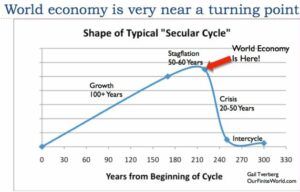
Preface. I have no idea who wrote post, Ya tenemos fecha para el cenit de la civilización. mayo 23, 2024 at https://futurocienciaficcionymatrix.blogspot.com/
This is the English translation from google. The rough peaking date for civilization is around 2025-2026 given: 1) peak oil soon , but still on a plateau until the Permian fracked oil peaks (likely 2) same for peak copper in 2025-6 (essential for all renewable contraptions to replace oil, vehicles, batteries etc), and 3) at some point (date not specified here) the tremendous debt-supply bubble will burst. If the images from the article have vanished, go to the original article to see them.
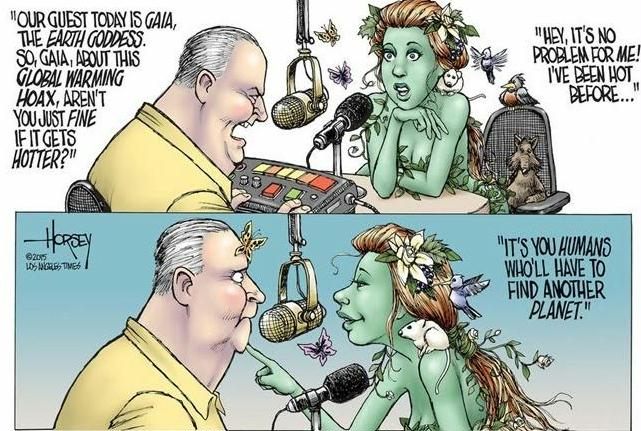
Preface. The idea that we can go to Mars is touted by NASA, Elon Musk, and so many others that this dream seems just around the corner. If we destroy our planet with climate change, pollution, biodiversity loss, soil erosion, aquifer depletion and more, no problem! We can go to Mars. Or float around in space on hoverchairs like in the movie Wall-E, where people have escaped after Earth became a giant garbage dump from rampant consumerism, corporate greed, and environmental disasters.
NASA has known since 1991 that human space travel was not possible due to the radiation. My husband, Jeffery Kahn, was a science writer at Lawrence Berkeley National Laboratory (LBNL) and published a story in 1991 about this NASA funded research (LBNL is also where the standards were set for worker exposure to radiation on earth). NASA hit the roof and demanded the story be taken down and top level administrators had it deleted. Years later, physicist Dr Howard S. Matis put it back up: 1991 Lawrence Berkeley National Laboratory’s Research Review Article: COSMIC-RAY QUESTIONS: Studies at LBL’s Bevalac are aimed at resolving uncertainties about radiation risks to space travelers.

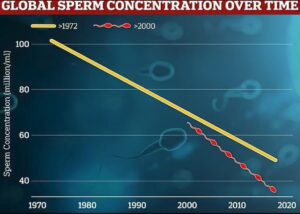
Preface. I’ve been seeing this issue in science news for years now. Scientific data has accumulated long enough to be sure that this is definitely something to worry about as the excellent article below explains. And it’s not only happening in humans, but dogs and other species too.

Preface. The energyskeptic website and my books explain why we can’t run transportation, mining, agriculture, concrete, blast furnace steel and other essential sectors that are highly dependent on fossil fuels with electricity, biofuels, hydrogen, coal-to-liquids or anything else. So a contraption that generates electricity does nothing to solve the polycrises (Climate change is just one of them) and reduce the need for fossil fuels.
Worse yet, why leave toxic radioactive waste on the ground for thousands of future generations? Sure it could be stored underground. But it won’t be, there is no independent well funded agency working on doing this, which was mandated in 2010 after Yucca mountain was shut down for political reasons.
Thorium reactors have been around for decades and never become commercial, so I am not excited about the teeny-tiny lab scale 2 MW thorium reactor China built in 2025.
I highly recommend you read Ramana’s book “Nuclear is not the solution” to get up to speed on nuclear power. Below is an excerpt from his book on Thorium.
P.S. One of the reasons I took comments off of my website was the hate mail and troll comments I got whenever I published anything negative about nuclear power. They have one a strong well-funded lobby, and are trying to weaken regulations, may have already captured the Nuclear Regulatory council, and are trying to revoke the ban against testing of the new nuclear weapons being developed in the $2 trillion dollar upgrade that Obama started in 2010 (WH 2010). Currently Lawrence Livermore National Laboratory has ways of testing nuclear weapons that doesn’t require setting them off!
Alice Friedemann www.energyskeptic.com Author of Life After Fossil Fuels: A Reality Check on Alternative Energy; When Trucks Stop Running: Energy and the Future of Transportation”, Barriers to Making Algal Biofuels, & “Crunch! Whole Grain Artisan Chips and Crackers”. Women in ecology Podcasts: WGBH, Financial Sense, Jore, Planet: Critical, Crazy Town, Collapse Chronicles, Derrick Jensen, Practical Prepping, Kunstler 253 &278, Peak Prosperity, Index of best energyskeptic posts
***
“…If I had a dollar for every time I have been told about so-called thorium reactors in response to any of my criticisms of nuclear energy, I would be pretty rich.
One of the arguments made in favor of these mythical beings is that they cannot be used to make nuclear weapons. I use the term “mythical” because there is no commercial thorium reactor in existence, and there are several serious technical problems with the thorium cycle that are yet to be solved. But even if one were to be built, it is a fallacy to think they cannot be used to produce materials for nuclear weapons.
Thorium itself, unlike uranium, cannot be used as reactor fuel because it is not fissile; it cannot sustain a chain reaction. Therefore, most so-called thorium reactors actually involve a fissile isotope of uranium, uranium-233, produced when the thorium-232 isotope absorbs a neutron and undergoes a series of nuclear decays. Uranium-233 is not found in nature, because it is unstable. The isotope uranium-233 can be used to make nuclear weapons. In some respects, it is superior to both isotopes commonly used in nuclear weapons, uranium-235 and plutonium-239 because less uranium-233 is needed to start a chain reaction. A weapon made of uranium-233 is less likely than one made of plutonium to go off in advance of when the designers want it to. Thus, uranium-233 has some very desirable properties for those who wish to make nuclear weapons.
At the same time, uranium-233 does have a property that makes it less desirable. When uranium-233 is produced in reactors, it usually comes out in conjunction with another isotope of uranium, uranium-232, which is radioactive and emits high energy gamma rays. This is the main reason for nuclear weapons designers not preferring uranium-233.”
(2011) Safe nuclear does exist, and China is leading the way with thorium. Telegraph, March 20. Available at: http://www.telegraph.co.uk/finance/comment/ambroseevans_pritchard/8393984/Safe-nuclear-does-exist-and-China-is-leading-the-way-with-thorium.html.
(2011) Managing nuclear spent fuel: Policy lessons from a 10-country study. Bulletin of the Atomic Scientists, June 27. Available at: http://www.thebulletin.org/web-edition/features/managing-nuclear-spent-fuel-policy-lessons-10-country-study.
(2012) The thing about thorium: Why the better nuclear fuel may not get a chance. Forbes Energy Source, February 16. Available at: http://www.forbes.com/sites/energysource/2012/02/16/the-thing-about-thorium-why-the-better-nuclear-fuel-may-not-get-a-chance/ (accessed April 15, 2012).
Madrigal A (2011) The thorium dream: An investigation of the new nuclear power. The Atlantic, November 11. Available at: http://www.theatlantic.com/technology/archive/2011/11/the-thorium-dream-an-investigation-of-the-new-nuclear-power/248312/
WH (2010) Fact Sheet: An Enduring Commitment to the U.S. Nuclear Deterrent. The White House.

Preface. Who cares about electric cars? Civilization ends when trucks stop running. Trucks can’t run on batteries because they’re too heavy, with 63 times less energy density than diesel.
If all U.S. transportation were to be electrified, the existing electric grid would need to double (Groom 2021, NREL 2021) and add hundreds of thousands of square miles of solar PV and wind turbines built. That is not likely to happen, there are 15,000 wind and solar projects waiting to be approved in utility queues, because they often need more transmission and substations so they do not crash the grid. Plus the electric grid is falling apart, will be increasingly affected by climate change, and since wind and solar construction depends on fossil fuels for every step of their life cycle, their construction will be constrained by energy shortages due to peak crude oil likely happening by 2030-2035. Or sooner.
In the news:
Naranjo et al (2022) found that electric cars are not zero emission, and less clean than conventional cars when you look at their entire life cycle of manufacturing, charging, operating, and disposal of electric vehicles. Over their lifespan, they will produce more of every major category of pollutants than conventional cars, including an increase in fine particulate matter formation (26%), human carcinogenic (20%) and non-carcinogenic toxicity (61%), terrestrial ecotoxicity (31%), freshwater ecotoxicity (39%), and marine ecotoxicity (41%) relative to petrol vehicles. There’s also a lot of ecological damage done by mining lithium (Agusdinata 2018) that needs to be considered. Timmers (2016) found that since electric vehicles are 24% heavier than their conventional cars, “non-exhaust emissions” like “tire wear, brake wear, road surface wear and resuspension of road dust” are higher.
Edwards PN (2021) Climate change is an infrastructure problem – map of electric vehicle chargers shows one reason why. The Conversation. Most of America’s 107,000 gas stations can fill several cars every five or 10 minutes at multiple pumps. Not so for the 43,000 public EV charging stations, with about 106,000 outlets charging just 1 vehicle at a time, and even fast-charging outlets take an hour to provide 180-240 miles’ worth of charge (and can shorten battery life); most take much longer. On top of that, chargers are very unevenly distributed; almost a third of all outlets are in California, with many gaps, such as 550 miles between Reno and Salt Lake City. “Range anxiety” about longer trips is one reason electric vehicles still make up fewer than 1% of U.S. passenger cars and trucks. And charging an electric car can cost more than a gasoline car (LaReau 2021).
2022-4-6 Car Shipping Giant Bans Used EVs After Felicity Ace Sinking. Automotive transport companies are beginning to implement policies restricting or outright banning EVs out of concerns for the fire risks posed by batteries after 4,000 cars worth $500 million were lost due to a fire
Feng K (2020) Can we evacuate from hurricanes with electric vehicles? Transportation research part D: Transport and environment. Six of nine main power authorities in Florida would be short of power during the evacuation process. The power outage in mid-Florida may induce cascading failure throughout Florida’s power network.
Peterson R (2021) The use of electric cars in short-notice evacuations: A case study of California’s natural disasters. In California, the two main natural disasters are earthquakes and wildfires. This study found that both short-notice events have the potential to knock out the power grid with no warning, making it difficult, if not impossible, to charge a Battery Electric Vehicle (BEV). And these stalled cars will lead to increased delays for everyone else as well as accidents
Alice Friedemann www.energyskeptic.com Author of Life After Fossil Fuels: A Reality Check on Alternative Energy; When Trucks Stop Running: Energy and the Future of Transportation”, Barriers to Making Algal Biofuels, & “Crunch! Whole Grain Artisan Chips and Crackers”. Women in ecology Podcasts: WGBH, Jore, Planet: Critical, Crazy Town, Collapse Chronicles, Derrick Jensen, Practical Prepping, Kunstler 253 &278, Peak Prosperity, Index of best energyskeptic posts
***
The battery did it. They are still too expensive, with the average cost of an EV in the USA of just under $60,000. Thanks to the unfair distribution of wealth, with 37% of people unable to come up with $400 cash for an emergency a minority of people can afford to buy one (Straughan 2024, FD 2024, Jones 2023). And eventually by limits of copper, lithium, cobalt, graphite, and nickel (Michaux 2022a, 2022b).
Especially for heavy-duty trucks, without which civilization would crash within a week. Long-haul truck batteries only last for 500,000 miles, which at average driving distances of 80,600 miles a year, a new battery would be needed after 6.2 years (Short 2022). The largest cost of an HD BEV truck is the battery, from 55% to 70% (Stinson 2021, Beaty 2021).
Nor are there battery charging stations for long-haul trucks to charge at besides a few demonstration government subsidized stations. It takes several hours to charge a truck because ultra-fast 1 to 3.5 MW charging is far from working yet. Indeed, long-haul electric trucks are also far from commercial and still in prototype and development stages of technology (citations will be in my new book “Showstoppers”).
And they aren’t likely to get better any time soon. Sorry to ruin the suspense so quickly, guess I’ll never be a mystery writer.
The big advances in battery technology happen rarely. It’s been more than 200 years and we have maybe 5 different successful rechargeable batteries,” said George Blomgren, a former senior technology researcher at Eveready (Borenstein).
And yet hope springs eternal. A better battery is always just around the corner:
So is an electric car:
Lithium-ion batteries appear to be the winner for all-electric cars given Elon Musk’s new $5 billion dollar li-ion battery factory in Nevada. Yet Li-ion batteries have a very short cycling life of 5 to 10 years (depending on how the car is driven), and then they’re at just 70% of initial capacity, which is too low to drive, and if a driver persists despite the degraded performance, eventually the batteries will go down to 50% of capacity, a certain end-of-life for li-ion (ADEME).
One reason people are so keen on electric cars is because they cost less to fuel. But if electricity were $0.10 per kWh, to fill up a 53 kWh Tesla battery takes about 4 hours and costs $5.30. 30 days times $5.30 is $159. I can fill up my gas tank in a few minutes for under $40. I drive about 15 miles a day and can go 400 miles per fill up, so I only get gas about once a month. I’d have to drive 60 miles a day to run the cost up to $159. If your electricity costs less than ten cents, it won’t always. Shale gas is a one-time-only temporary boom that probably ends around 2020. Got a dinkier battery than the Tesla but go 80 miles or less at most? Most people won’t consider buying an electric car until they go 200 miles or more.
The lead-acid battery hasn’t changed much since it was invented in 1859. It’s hard to invent new kinds of batteries or even improve existing ones, because although a battery looks simple, inside it’s a churning chaos of complex electrochemistry as the battery goes between being charged and discharged many times.
Charging and recharging are hard on a battery. Recharging is supposed to put Humpty Dumpty back together again, but over time the metals, liquids, gels, chemicals, and solids inside clog, corrode, crack, crystallize, become impure, leak, and break down.
A battery is like a football player, with increasing injuries and concussions over the season. An ideal battery would be alive, able to self-heal, secrete impurities, and recover from abuse.
The number of elements in the periodic table (118) is limited. Only a few have the best electron properties (like lithium), and others can be ruled out because they’re radioactive (39), rare earth and platinum group metals (23), inert noble gases (6), or should be ruled out: toxic (i.e. cadmium, cobalt, mercury, arsenic), hard to recycle, scarce, or expensive.
For example, in the real world, these are the priorities for heavy-duty hybrid trucks (NRC 2008):
In the real world, you can’t have all of the above. It’s like the sign “Pick any two: Fast (expensive), Cheap (crappy), or Good (slow)”.
So many different properties are demanded that “This is like wanting a car that has the power of a Corvette, the fuel efficiency of a Chevy Malibu, and the price tag of a Chevy Spark. This is hard to do. No one battery delivers both high power and high energy, at least not very well or for very long,” according to Dr. Jud Virden at the Pacific Northwest National Laboratory (House 114-18 2015).
You always give up something. Battery chemistry is complex. Anode, cathode, electrolyte, and membrane separators materials must all work together. Tweak any one of these materials and the battery might not work anymore. You get higher energy densities from reactive, less stable chemicals that often result in non-rechargeable batteries, are susceptible to impurities, catch on fire, and so on. Storing more energy might lower the voltage, a fast recharge shorten the lifespan.
“You have to optimize many different things at the same time,” says Venkat Srinivasan, a transportation battery expert at Lawrence Berkeley National Laboratory in California. “It’s a hard, hard problem” (Service).
Conflicting demands. The main job of a battery is to store energy. Trying to make them discharge a lot of power quickly may be impossible. “If you want high storage, you can’t get high power,” said M. Stanley Whittingham, director of the Northeast Center for Chemical Energy Storage. “People are expecting more than what’s possible.”
Battery testing takes time. Every time a change is made the individual cells, then modules, then overall pack is tested for one cycle and again for 50 cycles for voltage, current, cycle life (number of recharges), Ragone plot (energy and power density), charge and discharge time, self-discharge, safety (heat, vibration, external short circuit, overcharge, forced discharge, etc.) and many other parameters.
Battery development takes money. One issue now is that there are so many technologies, from foam, to flow, to exotic chemistry batteries that there’s no one clearly superior battery to attract more funding and research. It takes $500 million to set up a small manufacturing line and all the research required to make a product, according to Gerd Ceder, a professor of materials science at the University of California, Berkeley. Automakers test new battery systems out for years before deciding which one to buy. Start-ups simply can’t invest $500 million in manufacturing if they only have $5 million in funding a year. It’s also hard for them to make anything better than lithium-ion batteries, which have had incremental improvements since the 1970s (Martin 2016).
Crossing the valley of death from prototype to commercial success. When a battery maker finally manages to bring their technology to market, they may still fail, like Leyden Energy and A123 Systems as their cash needs grew too large and demand failed to meet expectations (Martin 2016).
Why spend the money to invent a better battery? The largest battery makers, Samsung, LG, and Panasonic, are not so interested in the risky development of a different kind of battery, they perfer the safer route of making gradual improvements in the batteries they’re already making (Martin 2016).
Batteries deteriorate. The more deeply you discharge a battery, the more often you charge/recharge it (cycles), or the car is exposed to below freezing or above 77 degree temperatures, the shorter the life of the battery will be. Even doing nothing shortens battery life: Li-ion batteries lose charge when idle, so an old, unused battery will last less long than a new one. Tesla engineers expect the power of the car’s battery pack to degrade by as much as 30% in five years (Smil).
Batteries are limited by the physical laws of the universe. Lithium-ion batteries are getting close to theirs. According to materials scientist George Crabtree of Argonne National Laboratory, li-ion batteries are approaching their basic electrochemical limits of density of energy they can store. “If you really want electric cars to copete with gasoline, you’re going to need the next generation of batteries.” Rachid Yazami of Nanyang Technological University in Singapore says that this will require finding a new chemical basis for them. Although engineers have achieved a lot with lithium-ion batteries, it hasn’t been enough to charge electric cars very fast, or go 500 miles (Hodson 2015).
Be skeptical of battery breakthroughs. It takes ten years to improve an existing type of battery, and it’s expensive since you need chemists, material scientists, chemical and mechanical engineers, electrochemists, computer and nanotechnology scientists. The United States isn’t training enough engineers to support a large battery industry, and within 5 years, 40% of full-time senior engineering faculty will be eligible for retirement.
Dr. Virden says that “you see all kinds of press releases about a new anode material that’s five times better than anything out there, and it probably is, but when you put that in with an electrolyte and a cathode, and put it together and then try to scale it, all kinds of things don’t work. Materials start to fall apart, the chemistry isn’t well known, there’s side reactions, and usually what that leads to is loss of performance, loss of safety. And we as fundamental scientists don’t understand those basic mechanisms. And we do really undervalue the challenge of scale-up. In every materials process I see, in an experiment in a lab like this big, it works perfectly. Then when you want to make thousands of them-it doesn’t.” (House 114-18).
Breakthroughs may depend on an extremely rare elements like Tellurium (Lavars 2020), one of the least common elements on Earth (USGS 2014). Most rocks contain an average of about 3 parts per billion tellurium, making it rarer than the rare earth elements. It is a byproduct of copper mining and as high-grade copper ores decrease and copper mines shut down, that would constrain tellurium recovery. Regardless, there isn’t enough left to scale up to electric cars or utility scale energy storage, and it is already being used in the solar and other industries.
“We need to leapfrog the engineering of making of batteries,” said Lawrence Berkeley National Lab battery scientist Vince Battaglia. “We’ve got to find the next big thing.”
Dr. Virden testified at a U.S. House hearing that “despite many advances, we still have fundamental gaps in our understanding of the basic processes that influence battery operation, performance, limitations, and failures (House 114-18 2015).
But none of the 10 experts who talked to The Associated Press said they know what that big thing will be yet, or when it will come (Borenstein).
The Department of Energy (DOE) says that incremental improvements won’t electrify cars and energy storage fast enough. Scientists need to understand the laws of battery physics better. To do that, we need to be able to observe what’s going on inside the battery at an atomic scale in femtoseconds (.000000000000001 second), build nanoscale materials/tubes/wires to improve ion flow etc., and write complex models and computer programs that use this data to better predict what might happen every time some aspect of the battery is meddled with to zero in on the best materials to use.
Are you kidding? Laws of Physics? Femtoseconds? Atomic Scale? Nanoscale technology — that doesn’t exist yet?
There’s only so much energy you can force into a black box, and it’s a lot less than the energy contained in oil – pound for pound the most energy density a battery could theoretically contain is only around 6 percent that of oil. The energy density of oil 500 times higher than a lead-acid battery (House), which is why it takes 1,200 pounds of lead-acid batteries to move a car 50 miles.
The performance of batteries has to be improved 100-fold or more to make them light enough for trucks and cars. The cost is always touted as the main factor, but a battery weighing 10 tons that only cost a dollar is not going to move a truck, period. Energy, not money is what matters.
Even though an electric vehicle needs only a quarter of the energy a gasoline vehicle needs to deliver the same energy to turn the wheels, this efficiency is more than overcome by the much smaller energy density of a battery compared to the energy density of gasoline. This can be seen in the much heavier weight and space a battery requires. For example, the 85 kWh battery in a Tesla Model S weighs 1,500 pounds (Tesla 2014) and the gasoline containing the equivalent energy, about 9 gallons, weighs 54 pounds. The 1500 pound weight of a Tesla battery is equal to 7 extra passengers, and reduces the acceleration and range that could otherwise be realized (NRC 2015).
Lithium batteries are more powerful, but even so, oil has 120 times the energy density of a lithium battery pack. Increased driving ranges of electric cars have come more from weight reduction, drag reduction, and decreased rolling resistance than improved battery performance.
The amount of energy that can be stored in a battery depends on the potential chemical energy due to their electron properties. The most you could ever get is 6 volts from a Lithium (highest reduction) and Fluorine (highest oxidation). But for many reasons a lithium-fluoride or fluoride battery is not in sight and may never work out (not rechargeable, unstable, unsafe, inefficient, solvents and electrolytes don’t handle the voltages generated, lithium fluoride crystallizes and doesn’t conduct electricity, etc.).
The DOE has found that lithium-ion batteries are the only chemistry promising enough to use in electric cars. There are “several Li-ion chemistries being investigated… but none offers an ideal combination of energy density, power capability, durability, safety, and cost” (NAS 2013).
Lithium batteries can generate up to 3.8 volts but have to use non-aqueous electrolytes (because water has a 2 volt maximum) which gives a relatively high internal impedance.
They can be unsafe. A thermal runaway in one battery can explode into 932 F degrees and spread to other batteries in the cell or pack.
It will take decades or more to replace the existing fleet with electric cars if batteries ever do get cheap and powerful enough. Even if all 16 million vehicles purchased every year were only electric autos, the U.S. car fleet has 250 million passenger vehicles and would take over 15 years to replace. But only 120,000 electric cars were sold in 2014. At that rate it would take 133 years.
Electric cars are too expensive. The median household income of a an electric car buyer is $148,158 and $83,166 for a gasoline car. But the U.S. median household income was only $51,939 in 2014. The Tesla Model S tends to be bought by relatively wealthy individuals, primarily men who have higher incomes, paid cash, and did not seriously consider purchasing another vehicle (NRC 2015).
And when gasoline prices began to drop in 2014, people stopped buying EVs and started buying gas guzzlers again.
Autos aren’t the game-changer for the climate or saving energy that they’re claimed to be. They account for just 20% of the oil wrung out of a barrel, trucks, ships, manufacturing, rail, airplanes, and buildings use the other 80%.
And the cost of electric cars is expected to be greater than internal combustion engine and hybrid electric autos for the next two decades (NRC 2013). Given the demand for lithium, cobalt, graphite and nickel in the future, prices for raw materials are more likely to up than down. Lithium supply has to double every four to five years to meet demand and similar magnitudes for the others. The ability to pass these costs on to customers is limited (Mining 2020).
The average car buyer wants a low-cost, long range vehicle. A car that gets 30 mpg would require a “prohibitively long-to-charge, expensive, heavy, and bulky” 78 kWh battery to go 300 miles, which costs about $35,000 now. Future battery costs are hard to estimate, and right now, some “battery companies sell batteries below cost to gain market share” (NAS 2013). Most new cathode materials are high-cost nickel and cobalt materials.
Rapid charging and discharging can shorten the lifetime of the cell. This is particularly important because the goal of 10 to 15 years of service for automotive applications, the average lifetime of a car. Replacing the battery would be a very expensive repair, even as costs decline (NAS 2013).
It is unclear that consumer demand will be sufficient to sustain the U.S. advanced battery industry. It takes up to $300 million to build one lithium-ion plant to supply batteries for 20,000 to 30,000 plug-in or electric vehicles (NAE 2012).
Almost all electric cars use up to 3.3 pounds of rare-earth elements in interior permanent magnet motors. China currently has a near monopoly on the production of rare-earth materials, which has led DOE to search for technologies that eliminate or reduce rare-earth magnets in motors (NAS 2013).
Natural gas generated electricity is likely to be far more expensive when the fracking boom peaks 2015-2019, and coal generated electricity after coal supplies reach their peak somewhere between now and 2030.
100 million electric cars require ninety 1,000-MWe power plants, transmission, and distribution infrastructure that would cost at least $400 billion dollars. A plant can take years to over a decade to build (NAS 2013).
By the time the electricity reaches a car, it’s lost 50% of the power because the generation plants are only 40% efficient and another 10% is lost in the power plant and over transmission lines, so 11 MWh would be required to generate enough electricity for the average car consuming 4 MWh, which is about 38 mpg — much lower than many gasoline or hybrid cars (Smil).
Two-thirds of the electricity generated comes from fossil fuels (coal 39%, natural gas 27%, and coal power continues to gain market share (Birnbaum)). Six percent of electricity is lost over transmission lines, and power plants are only 40% efficient on average – it would be more efficient for cars to burn natural gas than electricity generated by natural gas when you add in the energy loss to provide electricity to the car (proponents say electric cars are more efficient because they leave this out of the equation). Drought is reducing hydropower across the west, where most of the hydropower is, and it will take decades to scale up wind, solar, and other alternative energy resources.
The additional energy demand from 100 million PEVs in 2050 is about 286 billion kWh which would require new generating capacity of ninety 1,000 MW plants costing $360 billion, plus another $40 billion for high-voltage transmission and other additions (NAS 2013).
An even larger problem is recharge time. Unless batteries can be developed that can be recharged in 10 minutes or less, cars will be limited largely to local travel in an urban or suburban environment (NAS 2013). Long distance travel would require at least as many charging stations as gas stations (120,000).
Level 1 charging takes too long, level 2 chargers add to overall purchase costs. Level 1 is the basic amount delivered at home. A Tesla model S85 kWh battery that was fully discharged would take more than 61 hours to recharge, a 21 kWh Nissan Leaf battery over 17 hours. So the total cost of electric cars should also include the cost of level 2 chargers, not just the cost itself (NRC 2015).
Fast charging is expensive, with level 3 chargers running $15,000 to $60,000. At a recharging station, a $15,000 level 3 charger would return a profit of about $60 per year and the electricity cost higher than gasoline (Hillebrand 2012). Level 3 fast charging is bad for batteries, requires expensive infrastructure, and is likely to use peak-load electricity with higher cost, lower efficiency, and higher GHG emissions.
Battery swapping has many problems: battery packs would need to be standardized, an expensive inventory of different types and sizes of battery packs would need to be kept, the swapping station needs to start charging right away during daytime peak electricity, batteries deteriorate over time, customers won’t like older batteries not knowing how far they can go on them, and seasonal travel could empty swapping stations of batteries.
Argonne National Laboratory looked at the economics of Battery swapping (Hillebrand 2012), which would require standardized batteries and enough light-duty vehicles to justify the infrastructure. They assumed that a current EV Battery Pack costs $12,000 to replace (a figure they considered wildly optimistic). They assumed a $12,000 x 5% annual return on investment = $600, 3 year battery life means amortizing cost is $4000, and annual Return for each pack must surpass $4600 per year. They concluded that to make a profit in battery swapping, each car would have to drive 1300 miles per day per battery pack! And therefore, an EV Battery is 20 times too expensive for the swap mode.
Lack of domestic supply base. To be competitive in electrified vehicles, the United States also requires a domestic supply base of key materials and components such as special motors, transmissions, brakes, chargers, conductive materials, foils, electrolytes, and so on, most of which come from China, Japan, or Europe. The supply chain adds significant costs to making batteries, but it’s not easy to shift production to America because electric and hybrid car sales are too few, and each auto maker has its own specifications (NAE 2012).
The embodied energy (oiliness, EROEI) of batteries is enormous. The energy to make Tesla’s lithium ion energy batteries is also huge, substantially subtracting from the energy returned on invested (Batto 2017).
Ecological damage. Mining and the toxic chemicals used to make and with batteries pollute water and soil, harm health, and wildlife.
The energy required to charge them (Smil)
An electric version of a car typical of today’s typical American vehicle (a composite of passenger cars, SUVs, vans, and light trucks) would require at least 150 Wh/km; and the distance of 20,000 km driven annually by an average vehicle would translate to 3 MWh of electricity consumption. In 2010, the United States had about 245 million passenger cars, SUVs, vans, and light trucks; hence, an all-electric fleet would call for a theoretical minimum of about 750 TWh/year. This approximation allows for the rather heroic assumption that all-electric vehicles could be routinely used for long journeys, including one-way commutes of more than 100 km. And the theoretical total of 3 MWh/car (or 750 TWh/year) needs several adjustments to make it more realistic. The charging and recharging cycle of the Li-ion batteries is about 85 percent efficient, 32 and about 10 percent must be subtracted for self-discharge losses; consequently, the actual need would be close to 4 MWh/car, or about 980 TWh of electricity per year. This is a very conservative calculation, as the overall demand of a midsize electric vehicle would be more likely around 300 Wh/km or 6 MW/year. But even this conservative total would be equivalent to roughly 25% of the U.S. electricity generation in 2008, and the country’s utilities needed 15 years (1993–2008) to add this amount of new production.
The average source-to-outlet efficiency of U.S. electricity generation is about 40 percent and, adding 10 percent for internal power plant consumption and transmission losses, this means that 11 MWh (nearly 40 GJ) of primary energy would be needed to generate electricity for a car with an average annual consumption of about 4 MWh.
This would translate to 2 MJ for every kilometer of travel, a performance equivalent to about 38 mpg (6.25 L/100 km)—a rate much lower than that offered by scores of new pure gasoline-engine car models, and inferior to advanced hybrid drive designs
The latest European report on electric cars—appropriately entitled How to Avoid an Electric Shock—offers analogical conclusions. A complete shift to electric vehicles would require a 15% increase in the European Union’s electricity consumption, and electric cars would not reduce CO2 emissions unless all that new electricity came from renewable sources.
Inherently low load factors of wind or solar generation, typically around 25 percent, mean that adding nearly 1 PWh of renewable electricity generation would require installing about 450 GW in wind turbines and PV cells, an equivalent of nearly half of the total U.S. capability in 2007.
The National Research Council found that for electric vehicles to become mainstream, significant battery breakthroughs are required to lower cost, longer driving range, less refueling time, and improved safety. Battery life is not known for the first generation of PEVs.. Hybrid car batteries with performance degradation are hardly noticed since the gasoline combustion engine kicks in, but with a PEV, there is no hiding reduced performance. If this happens in less than the 15 year lifespan of a vehicle, that will be a problem. PEV vehicles already cost thousands more than an ICE vehicle. Their batteries have a limited warranty of 5-8 years. A Nissan Leaf battery replacement is $5,500 which Nissan admits to selling at a loss (NAS 2015).
There is a tremendous amount of energy (and by extension CO2) needed to manufacture a lithium-ion battery. Moreover, a typical EV is on average 50% heavier than a similar internal combustion engine, requiring more steel and aluminum in the frame, and therefore the “embedded carbon” in an EV (i.e., when it rolls off the lot) is 20–50% more than an internal combustion engine.
Worse yet, a modern lithium-ion battery has about 135,000 miles of range before it degrades to the point of becoming unusable. Incidentally, Tesla’s Model 3 warranty covers the battery for the lesser of eight years or 120,000 miles and does not apply until the battery has degraded by at least 30%. If so, then an EV will reach carbon-emission parity with an internal-combustion vehicle just as its battery requires replacement.
And why on earth the emphasis on cars to reduce carbon? They are only 15% of the problem:

On a cold day an electric car consumes its stored electric energy quickly because of the extra electricity needed to heat the car. For example, the range of a Nissan Leaf is 84 miles on the EPA test cycle, but if the owner drives 90% of the time over 70 mph and lives in a cold climate, the range could be as low as 50 miles (NRC 2015).
Source: Hillebrand 2012, page 24
Related Posts & Articles: There are many other barriers to building a battery electric car or truck. They use many finite platinum group elements, precious elements, and rare earth elements. Plus there are dozens of challenges to improving batteries that must be overcome but mostly can’t be due to the laws of physics and thermodynamics. Nor are trucks going to be running on hydrogen: The dumbest & most impossible renewable
The electric grid will eventually fail without utility scale energy storage of at least a month of electricity to compensate for seasonal deficits (When Trucks Stop Running Chapter 17 The Electric Blues). Natural gas is the main energy storage now (and coal), and essential for balancing the sudden life and death of wind and solar power. And hydropower can be used in the 10 lucky states that have 80% of it, and the few places that can afford multi-million-dollar batteries (though only for an hour or so). Natural gas also provides peak power in extreme heat or cold. But natural gas is finite. The electric grid could crash from a weapon or solar flare electromagnetic pulse and be down for a year or more. Electric trucks are impossible. Without trucks, civilization fails. Manufacturing uses over half of all fossil fuels, and depends on the high heat only they can generate and cement, steel, glass, brick, ceramics, microchips and more can’t be made with electricity or hydrogen (see Chapter 9 of Life After Fossil Fuels).
2016-08-29. Why We Still Don’t Have Better Batteries. Startups with novel chemistries tend to falter before they reach full production. MIT Technology Review.
2017-11-24. Tesla’s Newest Promises Break the Laws of Batteries Elon Musk touted ranges and charging times that don’t compute with the current physics and economics of batteries. Bloomberg.
Kane M (2021) Tesla Delays (Again) Semi Launch To 2022. InsideEVS.com
ADEME. 2011. Study on the second life batteries for electric and plug-in hybrid vehicles.
Agusdinata DB et al (2018) Socio-environmental impacts of lithium mineral extraction: towards a research agenda. Environ. Res. Lett.
Batto, A. B. 2017. The ecological challenges of Tesla’s Gigafactory and the Model 3. AmosBatto.wordpress.com
Beaty K (2021) Commercial Vehicle Battery Cost Assessment. CALSTART. https://calstart.org/commercial-value-battery-cost-assessment
Birnbaum, M. November 23, 2015. Electric cars and the coal that runs them. Washington Post.
Borenstein, S. Jan 22, 2013. What holds energy tech back? The infernal battery. Associated Press.
FD (2024) Economic Well-Being of U.S. Households in 2023 Fact Sheet. U.S. Federal Reserve.
GR (2021) Exploring lithium-ion electric vehicles’ carbon footprint. Goehring & Rozencwajg. http://blog.gorozen.com/blog/exploring-lithium-ion-electric-vehicles-carbon-footprint?utm_campaign=Weekly%20Blog%20Notification&utm_source=hs_email&utm_medium=email&utm_content=131502455&_hsenc=p2ANqtz-_KcPUIgJaGA8wUvhk4oTOdmeUcR5zCZt-7EDZc4N1HIrfEzUdy4Cow93BEGOWlKW2ZgjrjKsQ6T3l3Xw4ZNrd73LzUvQ
Groom N et al (2021) EV rollout will require huge investments in strained U.S. power grids. Reuters.
Hillebrand, D. October 8, 2012. Advanced Vehicle Technologies; Outlook for Electrics, Internal Combustion, and Alternate Fuels. Argonne National Laboratory.
Hiscox, G. 1901. Horseless Vehicles, Automobiles, Motor Cycles. Norman Henley & Co.
Hodson, H. Jully 25, 2015. Power to the people. NewScientist.
House, Kurt Zenz. 20 Jan 2009. The limits of energy storage technology. Bulletin of the Atomic Scientists.
House 114-18. May 1, 015. Innovations in battery storage for renewable energy. U.S. House of Representatives.
Jones JB (2023) A guide to Economic Inequality. Portfolios Across the U.S. Wealth Distribution. AmericanCompass.org
LaReau JL (2021) Which is more expensive: charging an electric vehicle or fueling a car with gas? Detroit Free Press.
Lavars N. 2020. Rare metalloid quadruples lifespan of lithium-sulfur batteries. Newatlas.
Martin, R. 2016. Why we still don’t have better batteries. Startups with novel chemistries tend to falter before they reach full production. MIT Technology Review.
Michaux (2022a) Assessment of the extra capacity required of alternative energy electrical power systems to completely replace fossil fuels & Assessment of the physical requirements to globally phase out fossil fuels. https://ieo.imf.org/-/media/IEO/Files/Seminars/michaux-ppt.ashx
Michaux SP (2022b) Assessments of the physical requirements to globally phase out fossil fuels. https://www.akadeemia.ee/wp-content/uploads/2022/05/simon-michaux.-30.05.2022.pdf
Mining (2020) Can EV batteries get any cheaper? Mining.com
NAE. 2012. National Academy of Engineering. Building the U.S. Battery Industry for Electric Drive Vehicles: Summary of a Symposium. National Research Council
Naranjo GPS et al (2022) Comparative life cycle assessment of conventional, electric and hybrid passenger vehicles in Spain. Journal of Cleaner Production.
NAS 2013. National Academy of Sciences. Transitions to Alternative Vehicles and Fuels. Committee on Transitions to Alternative Vehicles and Fuels; Board on Energy and Environmental Systems; Division on Engineering and Physical Sciences; National Research Council
NAS. 2015. Cost, effectiveness and deployment of fuel economy tech for Light-Duty vehicles. National Academy of Sciences. 613 pages.
NRC. 2008. Review of the 21st Century Truck Partnership. National Research Council, National Academy of Sciences.
NRC. 2013. Overcoming Barriers to Electric-Vehicle Deployment, Interim Report. Washington, DC: National Academies Press.
NRC. 2015. Overcoming Barriers to Deployment of Plug-in Electric Vehicles. National Research Council, National Academies Press.
NREL (2021) Electrification Futures Study. National Renewable Energy Laboratory.
NYT. Novermber 12, 1911. Foreign trade in Electric vehicles. New York Times C8.
Service, R. 24 Jun 2011. Getting there. Better Batteries. Science Vol 332 1494-96.
Short J, Shirk A, Pupillo A (2022) Charging Infrastructure Challenges for the U.S. Electric Vehicle Fleet. American Transportation Research Institute.
Smil, V. 2010. Energy Myths and Realities: Bringing Science to the Energy Policy Debate. AEI Press.
Stinson J (2021) Money and range: Experts note roadblocks to EV adoption. Transport Dive https://www.transportdive.com/news/act-expo-electric-trucks-battery-infrastructure/606386/
Straughan (2024) Electric Vehicle Statistics 2024. MarketWatch.com.
Tesla. 2014. “Increasing Energy Density Means Increasing Range.”
http://www.teslamotors.com/roadster/technology/battery.
Thomas, B. December 17, 1967. AMC does a turnabout: starts running in black. Los Angeles Times, K10.
Timmers RJH (2016) Non-exhaust PM emissions from electric vehicles. Atmospheric Environment 134: 10-17
USGS. 2014. Tellurium — the bright future of solar energy. United States Geological Survey.
WP. October 31, 1915. Prophecies come true. Washington Post, E18.
WP. June 7, 1980. Plug ‘Er In?”. Washington Post, A10.
P.S. Because I live in Northern California, the cost of electricity is roughly double the national average. In January of 2021, disappointly, it costs slightly more to drive our Toyota Prius Prime on the battery than on gasoline. This is despite the fact that gasoline costs $3/gallon and up here. It takes about 6.7 to 6.8 kWh to fully charge the drained Prius battery, which is good for 30 miles of driving. So, at the current electricity rate of 28 cents/kWH here, we pay $1.90 to charge the 30-mile battery. At 55 mpg it costs $1.77 to go 30 miles when paying $3.25/gallon for gas. Of course, that may change. Global oil production peaked in 2018, including fracked natural gas and oil, so natural gas (and oil) prices will go up, driving electricity prices even higher, especially since the electric grid can’t stay up without it. Plus wind and solar costs will go up, since they depend on oil, coal, and/or natural gas for every single step of their life cycle. The U.S. has only four four LNG import terminals and few LNG ships. Scaling up would take decades. By then global NG production will have peaked. Meanwhile the U.S. has been building EXPORT LNG terminals and is the third largest natural gas exporter in the world. Doh! Political and economic leaders bought all the hype and thought we had a century of oil independence from fracking (though we never did, even at the height of fracking we still imported about half of our oil). And here are 24 more problems with electric cars.
P.S. I wonder if Bill Gates has read “When Trucks Stop Running”? He said “The renaissance of electrification that we’re seeing in passenger vehicles unfortunately won’t likely adapted to heavier forms of transportation — such as airplanes, cargo ships and semi tractor trailers — in the foreseeable future. Today’s batteries simply can’t hold enough power to sufficiently offset their weight and bulk.” And elaborates more on that here.

Preface. The speech below is one of the reasons Carter was not reelected. Reagan’s “Morning in America” was far more appealing.
Another reason he wasn’t reelected was because the Reagan administration prevented the hostage crisis in Iran from being resolved while Carter was in office. This was kept secret for 43 years until Ben Barne confessed that he and former Texas governor John B. Connally Jr. met with several leaders of Middle Eastern nations to get word back to the Ayatollah Khomeini that Reagan would give him a better deal: Baker P (March 18, 2023) A Four-Decade Secret: One Man’s Story of Sabotaging Carter’s Re-election. New York Times.
Other links to articles and videos on Carter’s energy policy:
And an editorial after his death at 100: Smith S (2024) Jimmy Carter’s death comes at a time when rancor and uncertainty prevail. The ex-president died as Biden, a fellow one-term president heads for the door and chaos agent Trump returns to power. The Guardian
Alice Friedemann www.energyskeptic.com Author of Life After Fossil Fuels: A Reality Check on Alternative Energy; When Trucks Stop Running: Energy and the Future of Transportation”, Barriers to Making Algal Biofuels, & “Crunch! Whole Grain Artisan Chips and Crackers”. Women in ecology Podcasts: WGBH, Financial Sense, Jore, Planet: Critical, Crazy Town, Collapse Chronicles, Derrick Jensen, Practical Prepping, Kunstler 253 &278, Peak Prosperity, Index of best energyskeptic posts
Tonight I want to have an unpleasant talk with you about a problem unprecedented in our history. With the exception of preventing war, this is the greatest challenge our country will face during our lifetimes. The energy crisis has not yet overwhelmed us, but it will if we do not act quickly.
It is a problem we will not solve in the next few years, and it is likely to get progressively worse through the rest of this century.
We must not be selfish or timid if we hope to have a decent world for our children and grandchildren.
We simply must balance our demand for energy with our rapidly shrinking resources. By acting now, we can control our future instead of letting the future control us.
Two days from now, I will present my energy proposals to the Congress. Its members will be my partners and they have already given me a great deal of valuable advice. Many of these proposals will be unpopular. Some will cause you to put up with inconveniences and to make sacrifices.
The most important thing about these proposals is that the alternative may be a national catastrophe. Further delay can affect our strength and our power as a nation. Our decision about energy will test the character of the American people and the ability of the President and the Congress to govern. This difficult effort will be the “moral equivalent of war” — except that we will be uniting our efforts to build and not destroy.
I know that some of you may doubt that we face real energy shortages. The 1973 gasoline lines are gone, and our homes are warm again. But our energy problem is worse tonight than it was in 1973 or a few weeks ago in the dead of winter. It is worse because more waste has occurred, and more time has passed by without our planning for the future. And it will get worse every day until we act.
The oil and natural gas we rely on for 75% of our energy are running out. In spite of increased effort, domestic production has been dropping steadily at about 6% a year. Imports have doubled in the last five years. Our nation’s independence of economic and political action is becoming increasingly constrained. Unless profound changes are made to lower oil consumption, we now believe that early in the 1980s the world will be demanding more oil that it can produce.
The world now uses about 60 million barrels of oil a day and demand increases each year about 5%. This means that just to stay even we need the production of a new Texas every year, an Alaskan North Slope every nine months, or a new Saudi Arabia every three years. Obviously, this cannot continue.
We must look back in history to understand our energy problem. Twice in the last several hundred years there has been a transition in the way people use energy.
The first was about 200 years ago, away from wood — which had provided about 90% of all fuel — to coal, which was more efficient. This change became the basis of the Industrial Revolution.
The second change took place in this century, with the growing use of oil and natural gas. They were more convenient and cheaper than coal, and the supply seemed to be almost without limit. They made possible the age of automobile and airplane travel. Nearly everyone who is alive today grew up during this age and we have never known anything different.
Because we are now running out of gas and oil, we must prepare quickly for a third change, to strict conservation and to the use of coal and permanent renewable energy sources, like solar power.
The world has not prepared for the future. During the 1950s, people used twice as much oil as during the 1940s. During the 1960s, we used twice as much as during the 1950s. And in each of those decades, more oil was consumed than in all of mankind’s previous history.
World consumption of oil is still going up. If it were possible to keep it rising during the 1970s and 1980s by 5 percent a year as it has in the past, we could use up all the proven reserves of oil in the entire world by the end of the next decade.
I know that many of you have suspected that some supplies of oil and gas are being withheld. You may be right, but suspicions about oil companies cannot change the fact that we are running out of petroleum.
All of us have heard about the large oil fields on Alaska’s North Slope. In a few years when the North Slope is producing fully, its total output will be just about equal to two years’ increase in our nation’s energy demand.
Each new inventory of world oil reserves has been more disturbing than the last. World oil production can probably keep going up for another six or eight years. But some time in the 1980s it can’t go up much more. Demand will overtake production. We have no choice about that.
But we do have a choice about how we will spend the next few years. Each American uses the energy equivalent of 60 barrels of oil per person each year. Ours is the most wasteful nation on earth. We waste more energy than we import. With about the same standard of living, we use twice as much energy per person as do other countries like Gerrmany, Japan and Sweden.
One choice is to continue doing what we have been doing before. We can drift along for a few more years.
Our consumption of oil would keep going up every year. Our cars would continue to be too large and inefficient. Three-quarters of them would continue to carry only one person — the driver — while our public transportation system continues to decline. We can delay insulating our houses, and they will continue to lose about 50% of their heat in waste.
We can continue using scarce oil and natural to generate electricity, and continue wasting two-thirds of their fuel value in the process.
If we do not act, then by 1985 we will be using 33 percent more energy than we do today.
We can’t substantially increase our domestic production, so we would need to import twice as much oil as we do now. Supplies will be uncertain. The cost will keep going up. Six years ago, we paid $3.7 billion for imported oil. Last year we spent $37 billion — nearly ten times as much — and this year we may spend over $45 billion.
Unless we act, we will spend more than $550 billion for imported oil by 1985 — more than $2,500 a year for every man, woman, and child in America. Along with that money we will continue losing American jobs and becoming increasingly vulnerable to supply interruptions.
Now we have a choice. But if we wait, we will live in fear of embargoes. We could endanger our freedom as a sovereign nation to act in foreign affairs. Within ten years we would not be able to import enough oil — from any country, at any acceptable price.
If we wait, and do not act, then our factories will not be able to keep our people on the job with reduced supplies of fuel. Too few of our utilities will have switched to coal, our most abundant energy source.
We will not be ready to keep our transportation system running with smaller, more efficient cars and a better network of buses, trains and public transportation.
We will feel mounting pressure to plunder the environment. We will have a crash program to build more nuclear plants, strip-mine and burn more coal, and drill more offshore wells than we will need if we begin to conserve now. Inflation will soar, production will go down, people will lose their jobs. Intense competition will build up among nations and among the different regions within our own country.
If we fail to act soon, we will face an economic, social and political crisis that will threaten our free institutions.
But we still have another choice. We can begin to prepare right now. We can decide to act while there is time.
That is the concept of the energy policy we will present on Wednesday. Our national energy plan is based on ten fundamental principles.
The first principle is that we can have an effective and comprehensive energy policy only if the government takes responsibility for it and if the people understand the seriousness of the challenge and are willing to make sacrifices.
The second principle is that healthy economic growth must continue. Only by saving energy can we maintain our standard of living and keep our people at work. An effective conservation program will create hundreds of thousands of new jobs.
The third principle is that we must protect the environment. Our energy problems have the same cause as our environmental problems — wasteful use of resources. Conservation helps us solve both at once.
The fourth principle is that we must reduce our vulnerability to potentially devastating embargoes. We can protect ourselves from uncertain supplies by reducing our demand for oil, making the most of our abundant resources such as coal, and developing a strategic petroleum reserve.
The fifth principle is that we must be fair. Our solutions must ask equal sacrifices from every region, every class of people, every interest group. Industry will have to do its part to conserve, just as the consumers will. The energy producers deserve fair treatment, but we will not let the oil companies profiteer.
The sixth principle, and the cornerstone of our policy, is to reduce the demand through conservation. Our emphasis on conservation is a clear difference between this plan and others which merely encouraged crash production efforts. Conservation is the quickest, cheapest, most practical source of energy. Conservation is the only way we can buy a barrel of oil for a few dollars. It costs about $13 to waste it.
The seventh principle is that prices should generally reflect the true replacement costs of energy. We are only cheating ourselves if we make energy artificially cheap and use more than we can really afford.
The eighth principle is that government policies must be predictable and certain. Both consumers and producers need policies they can count on so they can plan ahead. This is one reason I am working with the Congress to create a new Department of Energy, to replace more than 50 different agencies that now have some control over energy.
The ninth principle is that we must conserve the fuels that are scarcest and make the most of those that are more plentiful. We can’t continue to use oil and gas for 75 percent of our consumption when they make up seven percent of our domestic reserves. We need to shift to plentiful coal while taking care to protect the environment, and to apply stricter safety standards to nuclear energy.
The tenth principle is that we must start now to develop the new, unconventional sources of energy we will rely on in the next century.
These ten principles have guided the development of the policy I would describe to you and the Congress on Wednesday.
Our energy plan will also include a number of specific goals, to measure our progress toward a stable energy system.
These are the goals we set for 1985:
We will monitor our progress toward these goals year by year. Our plan will call for stricter conservation measures if we fall behind.
I can’t tell you that these measures will be easy, nor will they be popular. But I think most of you realize that a policy which does not ask for changes or sacrifices would not be an effective policy.
This plan is essential to protect our jobs, our environment, our standard of living, and our future.
Whether this plan truly makes a difference will be decided not here in Washington, but in every town and every factory, in every home and on every highway and every farm.
I believe this can be a positive challenge. There is something especially American in the kinds of changes we have to make. We have been proud, through our history of being efficient people.
We have been proud of our leadership in the world. Now we have a chance again to give the world a positive example.
And we have been proud of our vision of the future. We have always wanted to give our children and grandchildren a world richer in possibilities than we’ve had. They are the ones we must provide for now. They are the ones who will suffer most if we don’t act.
I’ve given you some of the principles of the plan.
I am sure each of you will find something you don’t like about the specifics of our proposal. It will demand that we make sacrifices and changes in our lives. To some degree, the sacrifices will be painful — but so is any meaningful sacrifice. It will lead to some higher costs, and to some greater inconveniences for everyone.
But the sacrifices will be gradual, realistic and necessary. Above all, they will be fair. No one will gain an unfair advantage through this plan. No one will be asked to bear an unfair burden. We will monitor the accuracy of data from the oil and natural gas companies, so that we will know their true production, supplies, reserves, and profits.
The citizens who insist on driving large, unnecessarily powerful cars must expect to pay more for that luxury.
We can be sure that all the special interest groups in the country will attack the part of this plan that affects them directly. They will say that sacrifice is fine, as long as other people do it, but that their sacrifice is unreasonable, or unfair, or harmful to the country. If they succeed, then the burden on the ordinary citizen, who is not organized into an interest group, would be crushing.
There should be only one test for this program: whether it will help our country.
Other generation of Americans have faced and mastered great challenges. I have faith that meeting this challenge will make our own lives even richer. If you will join me so that we can work together with patriotism and courage, we will again prove that our great nation can lead the world into an age of peace, independence and freedom.
President Carter’s National Energy Plan postulated ten fundamental principles as the underlying rationale and the framework within which present and future policies should be formulated. The ten principles are:
1) The energy problem can be effectively addressed only by a government that accepts responsibility for dealing with it comprehensively and by a public that understands the seriousness and is ready to make necessary sacrifices.
2) Healthy economic growth must continue.
3) National policies for the protection of the environment must be maintained.
4) The Unite States must reduce its vulnerability to potentially devastating supply interruptions.
5) The program must be fair. The United States must solve its energy problems in a manner that is equitable to all regions, sectors, and income groups.
6) The growth of energy demand must be restrained through conservation and improved energy efficiency.
7) Energy prices should generally reflect the true replacement cost of energy.
8) Both energy producers and energy consumers are entitled to reasonable certainty about government policy.
9) Resources in plentiful supply must be used more widely and the nation must begin the process of moderating its use of those in short supply.
10) The use of nonconventional sources of energy—such as solar, wind, biomass, geothermal—must be vigorously expanded.
On July 15th, 1979, Carter gave a more detailed plan for gaining energy security:
1) Annual limits would be placed on oil imports. After some discussion this evolved to a figure of 8.2 mbpd for 1979 with the prospect of a cut to 4 to5 mbpd by 1990.
2) A new cabinet-level energy mobilization board would be established with far-reaching powers to ensure that procedural, legislative, or regulatory actions spurred by environmentalists no longer cause extended delays in the creation or expansion of plants, ports, refineries, pipelines, and so forth
3) A government-chartered energy security corporation would develop a synthetic fuel industry producing at least 2.5 mbpd of oil substitutes from shale, coal, and biomass. 88 billion dollars was earmarked for this task.
4) A standby system for rationing gasoline would be prepared.
5) Each state would be given a target for the reduction of fuel use, including gasoline use, within its borders. Failure of a state to act would result in federal action.
6) The ninety-four nuclear power plants now being built or planned would be completed. Additional nuclear policies would be announced after completion of the Three Mile Island investigation.
7) Owners of homes and commercial buildings would receive interest subsidies of $2 billion for extra insulation and conversion of oil heating to natural gas.
8) Utilities would be required to cut their use of oil by half over the next ten years. Conversion would be partially financed by grants and loan guarantees.
9) Bus and rail systems would receive $10 billion for improvement, while $6.5 billion would be expended to upgrade the gasoline efficiency of automobiles.
10) Low-income groups would receive $2.4 billion each year to offset higher energy prices.
11) The installation of solar energy systems in homes and businesses would be subsidized by loans and tax credits. A solar bank would be formed.
12) About $142 billion in federal funds was involved in the Carter Plan over the next decade. It was envisioned that most of this money would come from an energy security trust fund financed by a tax of about 50 percent on the windfall profits earned by U.S. oil companies as price controls are phased out. An additional $5 billion would be raised through the sale to the public of bonds in the energy security corporation dedicated to the development of synthetic fuels.

Preface. This is a book review of: Bruce Franklin’s 2007 The Most Important Fish in the Sea. Menhaden and America. Island Press.
I’d never heard of menhaden until my husband, who grew up in Florida, mentioned them. Just half a century ago, when he and his friends were swimming and the menhaden came through, “they looked like the shadow of a large, approaching cloud—the water boiled with fish, and everyone got out as fast as they could because there were sharks slashing through them, biting at anything that moved.”
Menhaden are a preferred bait of commercial and sports fishermen, and used to bait lobster and crab traps.
In 2024 the Atlantic states marine fisheries commission claims they are not overfished, increased the amount of menhaden allowed to be caught to 233,550 metric tons throughout the Atlantic coast for the next two years, about 20 percent higher than the previous two years (NYT 2023). But clearly their abundance is far less than it once was, and sampling in Chesapeake bay shows that the relative abundance of menhaden has decreased by almost 16-fold in the last 40 years.
Alice Friedemann www.energyskeptic.com Author of Life After Fossil Fuels: A Reality Check on Alternative Energy; When Trucks Stop Running: Energy and the Future of Transportation”, Barriers to Making Algal Biofuels, & “Crunch! Whole Grain Artisan Chips and Crackers”. Women in ecology Podcasts: WGBH, Financial Sense, Jore, Planet: Critical, Crazy Town, Collapse Chronicles, Derrick Jensen, Practical Prepping, Kunstler 253 &278, Peak Prosperity, Index of best energyskeptic posts
Ever heard of menhaden? Probably not, although you might be familiar with the fish’s other names: bunker, pogies, mossbacks, bugmouths, and fat-backs. Still, you may be surprised to learn they’re the most important fish in the Atlantic and Gulf waters.
Menhaden are the vacuum cleaners of the Atlantic and Gulf coasts, filtering up to four gallons of water a minute to extract phytoplankton (algae and other tiny plants). They grow no more than a foot long at most, yet the weight of an entire school of menhaden can equal that of a blue whale.
On land, plants are at the bottom of the food chain, eaten by many herbivores—mice, rabbits, cattle, insects, and so on. In the ocean, plants are also at the bottom of the food chain. The difference is, there’s only one main herbivore: menhaden. The other filter feeders—like baleen whales, herring, and shad—eat zooplankton (tiny animals).
This gives menhaden an extraordinary importance in the oceanic ecosystem: they are the main food source of the entire food web above, and the main species keeping the ecosystem healthy, by clearing the water of excess algae.
Unfortunately, as H. Bruce Franklin documents in “The Most Important Fish in the Sea: Menhaden and America,” they’re almost all gone. And one company, Omega Protein, is systematically eliminating the few that remain, for fishmeal and poultry feed.
When the Pilgrims first arrived in the New World, they were astounded by the abundant sea life. The rivers and coasts were teaming with 6-foot-long salmon, foot-wide oysters, and schools of 140-pound striped bass. There were so many whales criss-crossing bays, estuaries, and the coast that they were a peril to ships.
The food chain for all of this cornucopia of life depended on billions of menhaden, once so plentiful that they formed a veritable river of flesh along the Atlantic coast, writes Franklin.
Franklin describes menhaden schools as acting like a single organism: “Flashes of silver with flips of forked tails and splashes, whirling swiftly…in moves more dazzling than those of a modern dancer, as they seek escape from hordes of bluefish below and gulls above…a breathtaking experience.”
Menhaden were eaten by dozens of kinds of fish, as well as sea mammals and birds. (Humans don’t choose to eat them because they smell awful and are too oily. But we do eat them indirectly when we dine on menhaden predators, such as tuna, cod, shark, and swordfish.)
The Native American word for menhaden translates to “fertilizer”: they buried these fish below the corn they planted. The Pilgrims copied them, and grew triple the corn they could have otherwise. Later generations forgot about using menhaden as fertilizer, until an article about the practice in 1792 changed all that. It wasn’t long before millions of tons of menhaden were caught and dragged as far as seven miles inland to be dumped on fields, saving farmers the enormous cost of importing guano from Peru. By 1880 menhaden had also replaced whales as a source of oil, and the bits that weren’t used for oil were made into fertilizer or animal feed and shipped all over the country.
Meanwhile, wealthy landowners had permanent nets strung across rivers abutting their property, scooping up all passing fish. Unsurprisingly, fish populations declined dramatically, and by 1870, 90% were gone. Commercial fishermen and citizens desperately tried to stop permanent nets and the menhaden fleets, but wealthy interests were able to prevent any restrictions on fishing. By 1800 salmon had been fished out of New York and Connecticut, by 1840 there were no salmon south of Maine, and when the menhaden industry was finally banned in Maine in 1879, it was too late, the menhaden were gone, and the northern fishery collapsed.
Measuring from the 1860s to today, the combined weight of all the menhaden harvested is more than that of all other commercial fish—more than all the salmon, cod, tuna, halibut, herring, swordfish, flounder, snapper, anchovies, mackerel, and so on that humanity has dragged from the water in the last century and a half.
State by state, the commercial fishing industry wiped out menhaden and gone bankrupt. But it has never died out completely, because the U.S. government has spent taxpayer money to keep the industry going in states where menhaden still existed. There was no reason to do this, Franklin writes: menhaden oil, animal feed, and fertilizer have all been replaced with much cheaper petroleum and soybean substitutes. The role that menhaden play in the ocean’s food chain, however, is irreplaceable.
One company, Omega Protein, now catches the majority of menhaden, hunting down the last few remaining schools in two of the most productive fisheries, the Gulf of Mexico and Chesapeake Bay, both of which have suffered tremendous ecological damage and fishery destruction the past few decades. More than 30 spotter planes direct a fleet of 61 ships to where the menhaden swim close to the surface. Omega Protein turns the aquatic herbivores into poultry feed and fishmeal for farmed salmon, two products for which there are cheaper and less devastating alternative sources.
Not only are menhaden the main food item for many fish, but they play an even more critical role in the health of any aquatic ecosystem. They filter phytoplankton out, allowing sunlight to reach the depths where aquatic plants can prosper, which increases oxygen levels, allowing shellfish and fish to thrive. When algae aren’t consumed, they erupt into toxic algal blooms, die and sink to the bottom, smothering plants and depleting oxygen. This leads to massive die-offs of all sea life within these areas and is a major contributing factor, along with agricultural run-off from the Mississippi River, to the 8,000-square-mile dead zone in the Gulf of Mexico.
If it were somehow possible to shut down the menhaden industry entirely, Franklin says, and the pitifully few populations protected and nursed back to health, then the ocean and estuaries could be cleansed, shellfish and fish populations recover, and a new sport and commercial fishing industry emerge as the dozens of fish that feast on menhaden return. Oysters, crabs, striped bass, and many other tasty species of seafood might thrive again if the oceans were cleared of toxic algal blooms. Far more jobs would be created if menhaden schools were to recover than would be lost if Omega Protein were forced to get out of the menhaden business.
Franklin was not exaggerating when he titled his book “The Most Important Fish in the Sea”.
Hemp product categories include: Clothing & Accessories, Health & Wellness, Food & Drinks, Pet Supplies, Beauty & Skincare, Farming & Gardening, Home & Office supplies, Automobiles, Industrial. Source: Top 50 Hemp Products You Can Get OnlinePreface. If you are looking for a job post fossil fuels, making paper, clothing, and many other products from hemp, growing hemp would be something to consider, and it will grow on really poor soil with far less ecological impact than other crops. Hemp became legal to grow in the U.S. in 2018.
What follows was originally published in the Nov-Dec 1999 issue of Audubon Magazine. I think you will find the history of how hemp was made illegal outrageous, most likely from textile, logging, and/or big oil interests.
If you’re interested in the war on drugs, you’d probably enjoy this post at energyskeptic: The war on drugs. A book review of “Chasing the scream”
Alice Friedemann www.energyskeptic.com Author of Life After Fossil Fuels: A Reality Check on Alternative Energy; When Trucks Stop Running: Energy and the Future of Transportation”, Barriers to Making Algal Biofuels, & “Crunch! Whole Grain Artisan Chips and Crackers”. Women in ecology Podcasts: WGBH, Financial Sense, Jore, Planet: Critical, Crazy Town, Collapse Chronicles, Derrick Jensen, Practical Prepping, Kunstler 253 &278, Peak Prosperity, Index of best energyskeptic posts
***
HIGH ON HEMP: DITCHWEED DIGS IN. Miracle crop? Dangerous drug? Political football? Exploring America’s on-again, off-again love affair with hemp
I confess that I am a user of hemp. For example, I just quaffed a Hempen Ale and a Hempen Gold beer, shipped to me by Frederick Brewing Company of Frederick, Maryland. Both beverages are brewed with the seeds of hemp-Cannabis sativa-a plant native to central Asia and grown all over the world as various selected strains, some of which are known as marijuana. I’m feeling a faint buzz, but only from the alcohol.
Neither brew contains any of the narcotic delta-9 tetrahydrocannabinol (THC), which makes pot so popular. In fact, recent Pentagon tests invalidate the “Hempen Ale defense” by showing the ale to be THC-free, so military personnel can no longer claim it as the source of THC in their urine. But some hemp products do contain trace amounts of THC-as intoxicating as the opiates you get from a poppy seed bagel-so to make sure it knows where the THC comes from, the Air Force in 1999 banned all foods and beverages made with hemp. Somehow the news didn’t make it to the commander in chief, who, less than a month after the ruling, allowed Hempen Gold to be served on Air Force One. According to one reporter, the president “tasted but didn’t swallow.”
After I finished ingesting hemp, I slathered it on my hair-in shampoo made with hemp seed oil, which, according to its producer, Alterna Applied Research Laboratories of Los Angeles, restores dry and damaged (but, unfortunately, not missing) hair. While perky hair is not something I normally seek, the hair I have left definitely feels that way.
What I just indulged in-according to Glenn Levant, the nation’s best-funded and most-heeded marijuana educator-is an internal-external marijuana orgy. Levant is president and founder of Drug Abuse Resistance Education (DARE), a 16-year-old program taught by local police in nearly 75% of the nation’s schools. “Hemp is marijuana,” he informed me, ending the interview when I cited sources that prove otherwise. Last year Levant was outraged to see Alterna’s hemp-leaf logo on shampoo ads at bus stops around Southern California, and he mounted a successful crusade to get them removed. “My big objection is that public property was being used to promote an illegal substance,” he told the Los Angeles Times. “The shampoo is a subterfuge to promote marijuana.” In July 1999, he paid Alterna an undisclosed sum to settle a lawsuit it had filed against him for making what it called “false and malicious public comments” about its product and motives.
Hemp and marijuana can cross-pollinate, but if one is the other, then a Pekinese is a Doberman. Plant a hemp seed, and no substance or force on earth can turn it into marijuana. If you smoke hemp, it will give you only a headache; it doesn’t contain enough THC to affect your brain. And unlike marijuana, it is high in cannabidiol-an anti-psychoactive compound that inhibits THC. Because of this, says David West, a plant breeder hired by the University of Hawaii to grow an experimental plot of hemp under special permit from the Drug Enforcement Administration (DEA), hemp “could be called anti-marijuana.”
Hemp products are not illegal. In fact, the U.S. hemp-products industry takes in $100 million to $125 million in retail sales a year. Not only is hemp harmless, it has enormous versatility. Added to worthless fibers that are currently burned-such as straw from oats, rice, and wheat-hemp can produce superb paper and construction materials lighter and stronger than lumber. American cropland, 60 to 65 percent of which is stuck on a soil-depleting, chemical-dependent treadmill of corn, wheat, and soybean production, could be released and renewed if hemp were used as a rotation crop. In England and Hungary, hemp grown in rotation with wheat hiked the wheat harvest 20 percent. Hemp seeds, better tasting and more digestible than soy, could be rendered into hundreds of foods, thereby taking pressure off America’s bottomland hardwood forests, which are being replaced with soybean plantations.
Hemp fibers can be woven into cloth more durable than and as comfortable as cotton. Cotton is much more difficult to grow; it’s addicted to chemical elixirs, requiring massive fixes of artificial fertilizers, insecticides, and herbicides. And when cotton ripens, the leaves have to be knocked off with defoliants before the bolls can be harvested. Hemp, which outcompetes weeds, requires no herbicides. In one study, hemp grown in rotation with soybeans knocked down cyst nematodes by more than half.
Hemp paper is naturally bright, but wood-based paper pulp turns brown during the cooking process. The pulp is then bleached with chlorine, which, when released into the environment, produces dioxin and other nasty poisons. If American farmers were allowed to grow hemp-which produces twice as much fiber per acre as an average forest-the nation could reduce nonsustainable logging, and the carbon tied up in the living timber would remain there instead of contributing to global warming.
Practically anything we make from a polluting, nonrenewable hydrocarbon like oil or coal can be made from a relatively clean, renewable carbohydrate like hemp. Henry Ford used to preach this in the 1940s. “Why use up the forests, which were centuries in the making, and the mines, which require ages to lay down, if we can get the equivalent of forests and mineral products in the annual growth of the fields?” he asked. Ford, who had a vision of “growing automobiles from the soil,” even produced a demonstration model with body parts partially made with hemp.
So it should come as no surprise that hemp has enormous appeal to those committed to protecting and restoring the planet. Three years ago Oregon environmentalist Andy Kerr helped set up the North American Industrial Hemp Council, an alliance of farmers, scientists, industrialists, and environmentalists whose mission is decriminalizing hemp. Members who even associate with advocates of marijuana decriminalization are summarily dismissed. And no one can call the directors potheads: Two are consultants for International Paper; one headed the board of Alternative Agricultural Research and Commercialization Corporation, a research firm chartered by the U.S. Department of Agriculture; and the chair is in charge of agricultural development and diversification for the state of Wisconsin.
When Kerr was running the Oregon Natural Resources Council and agitating for old-growth forests, the loggers kept getting in his face, shouting: “What are you going to wipe your ass with?”
“What they meant,” he says a bit more delicately, “was, ‘With what are you going to wipe your ass?’ It’s a legitimate question. So I kept searching for alternatives to wood and kept coming back to hemp. ‘God,’ I said, ‘because of its association with marijuana, we don’t need this. There’s got to be a better fiber.’ Well, there isn’t.”
Hemp advocacy isn’t new. Our first hemp law, enacted in Virginia, made it illegal for farmers not to grow the stuff. That was in 1619. The same law took effect in Massachusetts in 1631, Connecticut in 1632, and the Chesapeake colonies in the mid-1700s, at which time hemp was the world’s leading crop. Legend has it that early drafts of the Declaration of Independence and Constitution were written on hemp-based paper. (Final versions were on animal parchment.) During the Revolutionary War, Old Ironsides, our most formidable battleship, carried 60 tons of hempen sail and rope. The first American flag was made out of hempen “canvas,” a word derived from cannabis. “Make the most of hemp seed and sow it everywhere,” declared George Washington in 1794.
Never has there been a federal statute outlawing the cultivation of hemp, just the DEA’s insistence that hemp is an illegal drug. Law enforcement officials in other countries harbor no such fantasies. Hemp is lawfully grown in 32 nations, and in the European Union it’s a subsidized crop. It is not practical to distill hemp’s THC or separate it from the cannabidiol that neutralizes it, but Americans are so afraid of hemp that they even want to prevent people from wearing it. Consider the case of Angela Guilford, who sells hempen products in Hoover, Alabama, and who aroused the suspicions of the community by carrying Grateful Dead memorabilia. In June 1997, when she was eight months pregnant, police raided her shop, seizing 168 items and charging her and her husband, Jeff Russell, with “felony marijuana trafficking.” Facing mandatory minimum jail terms of three years, the couple spent a stressful, suspenseful summer. But in late September charges were dropped when lab work failed to turn up THC in any of the shirts, bags, or jewelry.
Why such paranoia? There’s no smoking bong, but hemp may be the victim of a conspiracy by special interests that stood to lose billions in the 1930s, when hemp-fiber-stripping machines came on line. Among the suspects: synthetic textile producer DuPont, which had just patented a process for making plastics from oil and a more efficient process for making paper; Hearst newspapers, which owned vast timberlands; and Andrew Mellon, an oil and timber baron as well as partner and president of the Mellon Bank of Pittsburgh, DuPont’s chief financial backer.
In 1930, nine years after President Warren Harding made him treasury secretary, Mellon created the Federal Bureau of Narcotics (the DEA’s precursor) and ensconced Harry Anslinger, the future husband of his niece, as its commissioner. Anslinger charged out after hemp, which he and the Hearst papers defined as a drug, using it interchangeably with the more sinister and less familiar term marihuana (the spelling changed later). Anslinger and Hearst whipped each other, the public, and Congress into prohibitionist frenzy. Anslinger testified before the Senate that no less an authority than Homer had revealed that the plant “made men forget their homes and turned them into swine” and that a single joint could induce “homicidal mania” sufficient to cause a man “probably to kill his brother.” The Hearst papers claimed that under the influence of marihuana, “Negroes” transmog-rified into crazed animals, playing anti-white, “voodoo-satanic” music-jazz-and committing such crimes as stepping on white men’s shadows. The hype created an insatiable market for low-budget movies like Marihuana: Weed with Roots in Hell. Posters for the film featured a man thrusting a hypodermic needle into a woman in a low-cut dress and promised: “Weird orgies. Daring drug expos�! Horror. Shame. Despair. Wild Parties. Unleashed Passions! Lust. Crime. Hate. Misery.”
Emerging from the hoopla was the Marijuana Tax Act of 1937, which made no chemical distinction between hemp and marijuana. It was all “cannabis,” but the smokeable parts-the leaves and flowers-were taxed at $100 an ounce, effectively outlawing them. Had marijuana been the real target, Anslinger would have dispatched his agents to the border of New Mexico, where the drug was coming in. Instead, he unleashed them on the newly expanded hemp fields of the Midwest, swaddling farmers in red tape, busting them if a leaf remained on a stalk, running them out of business.
Only five years later hemp farmers got a reprieve when Japan seized the Philippines, cutting off America’s supply of “Manila hemp”-not true hemp but an excellent fiber for rope, boots, uniforms, and parachute cording. Now the Feds executed a crisp about-face, encouraging Americans to be patriotic and grow “hemp.” (No longer did they call it “marijuana,” except on the “Producer of Marijuana” permits issued to farmers.) The Department of Agriculture even produced a promotional film entitled Hemp for Victory, featuring footage of workers harvesting pre-Anslinger hemp in Kentucky to a maudlin rendition of “My Old Kentucky Home.” With no change in federal law, some 400,000 acres were planted to hemp, the stalks of which were processed by 42 hemp mills built by the War Hemp Industries Corporation. After the war, with the synthetic-fiber industry booming, Anslinger resumed his witch-hunt virtually unopposed.
Now he dropped the allegation that hemp/marijuana inspired violent crimes and asserted instead that it left its victims so dazed and passive that they could be easily converted to communism. America’s last hemp field was planted in Wisconsin in 1957.
More recently, the problem has been a succession of rigid, frontal-assault “drug czars.” General Barry McCaffrey, director of the White House Office of National Drug Control Policy, appears to have learned everything he knows about hemp from Anslinger. Two years ago, when a chemical engineer paid by the University of Wisconsin but working at the Forest Service’s lab in Madison, Wisconsin, circulated a marketing analysis demonstrating that Wisconsin farms could profitably produce hemp, and that they could meet the entire demand for chlorine-bleached, wood-based writing paper in the state, the Forest Service had the document withdrawn under pressure from the Clinton administration. Since then the author’s conclusions have been confirmed by multiple independent review. The crusade to bring hemp back, McCaffrey charges, is “a thinly disguised attempt to legalize the production of pot.” Moreover, “legalizing hemp production would send a confusing message to our youth concerning marijuana.” But the only confusing messages about hemp issue from McCaffrey’s office, the DEA, and their private-sector drug-war constituency.
Because McCaffrey is the voice of the Clinton administration, the DEA parrots him. The effort to decriminalize hemp is “no more than a shallow ruse being advanced by those who seek to legalize marijuana,” proclaims Philip Perry, special agent in charge of the DEA’s Rocky Mountain Field Division. The DEA and the drug czar maintain that American law enforcement agents can’t tell the difference between marijuana and hemp; but the Mounties, the gendarmes, the bobbies, and the police of 29 other nations have no trouble at all. A Keystone Kop, boots in the air and helmet in the mud, could tell the difference. Hemp, grown for stalks, is the spindly stuff that towers over your head; marijuana, grown for flowers, is the bushy stuff down below your knees. The drug czar and the DEA claim that pot producers will use hemp fields to hide their illicit crops. If they do, their marijuana will be ruined: Cannabis is one of the most prolific pollen producers of all cultivated plants, and if the high-THC variety is planted within seven and a half miles of a hemp field, the hemp pollen will render the next generation of marijuana less potent. “Hemp is nature’s own marijuana-eradication system,” declares James Woolsey, former director of the CIA and now a lobbyist for the North American Industrial Hemp Council.
If the war on drugs were really about reducing supply, drug controllers would be promoting hemp. But the war has taken on a life of its own, become an industry unto itself. For example, DEA reports that it spends $13.5 million a year to eradicate marijuana, and it also ladles out millions more for this purpose to local jurisdictions, including police departments and National Guard units. According to some estimates, the entire effort costs American taxpayers half a billion a year. But the DEA’s own figures reveal that 98 percent of the “marijuana” eradicated is hemp-the harmless, feral stuff that escaped during Hemp for Victory days. “Ditchweed,” it’s called. That’s the “marijuana” you see getting burned in all the photos. If you’re caught with ditchweed, you’re in big trouble, as Vernon McElroy discovered in 1991 when he got convicted for possessing 10.9 pounds that he says a friend picked and gave him as a joke. Now he’s doing life without parole at the overcrowded maximum-security penitentiary in Springville, Alabama. In Oklahoma, ditchweed is sprayed with herbicides from helicopters. And in 1998 Congress authorized $23 million for research into a soilborne fungus that attacks and kills marijuana, poppy, and coca plants. U.S. Senator Mike DeWine, an Ohio Republican, calls it a “silver bullet” in the war on drugs, but David Struhs, secretary of the Florida Department of Environmental Protection, calls it a threat to the natural environment.
The only parties affected by ditchweed eradication are future hemp farmers and birds. Ditchweed, warns hemp researcher David West, “represents the only germ plasm remaining from the hemp bred over decades in this country to achieve high yields and other important performance characteristics.” And while hemp is alien to the continent, wild birds have come to depend on it as a major food source. Birds so relish hemp seed, in fact, that it is sterilized and sold as commercial bird food. As Vermont state representative Fred Maslack puts it, the DEA and its pork-addicted drug-war contractors “would be better off pulling up goldenrod.”
Consider also the self-perpetuation of hemp’s facts-be-damned enemy-DARE. That DARE is recognized as a failure in reducing drug use among adolescents is not a consideration in the high-finance drug-war business. Virtually every study ever undertaken reveals that DARE graduates are about as likely to abuse drugs as kids who don’t go through the program. Such were the results of a two-year, $300,000 analysis by the Research Triangle Institute of Durham, North Carolina, of eight studies involving 9,500 DARE students in 200 schools. The Justice Department commissioned the analysis, but after intense lobbying by DARE, the agency invited the authors to “re-examine” their conclusions, then declined to publish the full report, claiming it was bowing to “concerns” of peer reviewers. Despite its known ineffectiveness, DARE thrives because every year it gets about $212 million in government grants and private donations (mostly the latter), which it ladles out to ravenous communities. Millions more are donated by businesses and police departments directly to local DARE programs.
Anti-hemp brainwashing by DARE works better on parents and school bureaucrats than on kids. In 1996 Donna Cockrel invited hemp activist and Hollywood actor Woody Harrelson to talk to her fifth graders in Simpsonville, Kentucky. While Harrelson also advocates the legalization of medicinal marijuana, he spoke only about hemp’s history and potential. Immediately Cockrel came under attack by the local DARE officer, who sounded the alarm to school officials and television audiences, proclaiming that hemp and marijuana were the same thing. Parents were apoplectic. Cockrel-with past awards for excellence and called a “dynamo” by The New York Times-was given an unsatisfactory performance report, investigated by the state professional standards board (which dismissed the complaint), then fired. “I believe that all children should say no to drugs,” she says. “But I want them to say yes to the truth.”
Lately America’s war on hemp seems to be flagging under a counterattack of reason. Legislation to effect or encourage hemp’s declassification as an illegal drug has been introduced or attempted in Colorado, Hawaii, Iowa, Kansas, Kentucky, Minnesota, Missouri, New Hampshire, New Mexico, North Dakota, Oregon, Tennessee, Vermont, and Virginia. In March 1999, under growing political pressure, McCaffrey made the first conciliatory noise to The New York Times about maybe working with hemp advocates. But in August the DEA ordered the U.S. Customs Service to seize a Kenex trailer bringing in 40,000 pounds of hemp birdseed from Canada, alleging it was a Schedule I narcotic. Seventeen other loads of hemp products, including granola bars and horse bedding, were recalled. After Kenex was threatened with a $500,000 fine, president Jean Laprise commented: “It seems the DEA could be spending drug-war money in better ways than chasing after birdseed and horse bedding.” Now McCaffrey is saying hemp can’t be grown economically.
It struck me as odd that the responsibilities of the drug czar have been extended to protecting American agriculture from its own bad business decisions, so I contacted a farmer, one David Monson, who works 1,050 acres in Osnabrock, North Dakota, and who says he and his neighbors aren’t even breaking even on barley, wheat, and canola. “All the fungicides, herbicides, and insecticides we have to use are pushing the cost out of sight,” he told me. “The bottom line is that we need to find some alternative crops that we can make money on.” Monson has been forced to work at other jobs-as insurance agent and state representative, in which capacity he introduced the nation’s first bill to decriminalize the cultivation of hemp, signed by the governor in April 1999.
Monson, a Republican, also serves as superintendent of schools for the nearby community of Edinburg. Drug abuse isn’t much of a problem in northern North Dakota, but Monson works to discourage what little there may be by arranging seminars for students and training for teachers. And despite the drug czar’s and the DEA’s pronouncements, the people of North Dakota somehow remain unconvinced that he’s trying to legalize pot.
While hemp could make things lots easier for this tired old planet and the farmers who till its soil, no one in North Dakota will be growing it anytime soon, because anyone there or elsewhere who plants the seeds will get busted by the DEA. Monson doesn’t think that’s fair, especially when hemp farmers 20 miles away in Manitoba are legally making $250 an acre. But until the feds recognize hemp for what it is (a versatile crop) instead of what it isn’t (an illegal drug), McCaffrey will be correct when he warns that growing hemp is not economical.
Pubdate: Mar-Apr 2000 Source: Utne Reader (US) Copyright: 2000 Utne Reader Contact: editor@utne.com Website: http://www.utne.com Forum: http://www.utne.com/cafe/index.html Author: Ted Williams, Audubon Magazine Note: Originally published in Audubon Magazine, Nov-Dec. 1999, and archived at http://www.mapinc.org/drugnews/v99/n1233/a01.html. Bookmark: MAP’s link to Hemp articles is: http://www.mapinc.org/hemp.htm

Preface. This article from IEEE does a good job of explaining how and why it is incredibly expensive for cities to cope with with L2 chargers, EV, solar, and heat pumps by zeroing in on Palo Alto, where there are more EVs per capita than any other town in the U.S.
Some key points:
The entire fleet of cars and medium- and heavy-duty trucks are supposed to be electrified by 2050 to meet climate goals.