Reducing fuel consumption of medium & heavy-duty vehicles 2014 National Research Council

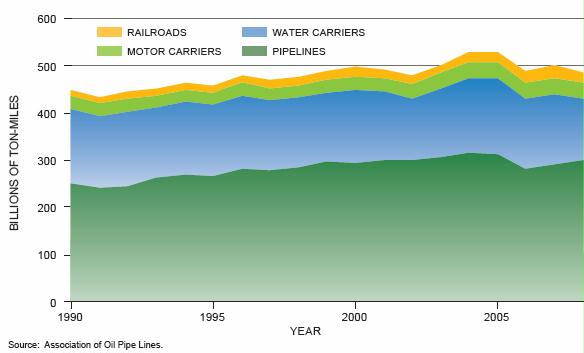
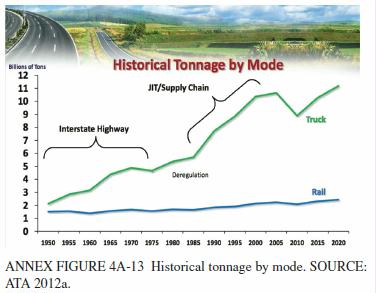
Look at the enormous waste of fuel when JIT supply chain trucks ramped up in the late 70s  (page 63).

JIT wasteful tonnnage by trucks

Excerpts from the 117 page: NRC. 2014. Reducing the Fuel Consumption and Greenhouse Gas Emissions of Medium- and Heavy-Duty Vehicles, Phase Two: First Report. National Research Council.

The fuel consumption and greenhouse gas (GHG) emissions of medium- and heavy-duty vehicles (MHDVs) have become a focus of legislative and regulatory action in the past few years. Section 101 of the Energy Independence and Security Act of 2007 (EISA 2007), Pub. L No. 110-140 §101, mandated the U.S. Department of Transportation to promulgate fuel consumption standards for MHDVs for the first time.

the National Research Council (NRC) in 2010 completed Technologies and Approaches to Reducing the Fuel Consumption of Medium- and Heavy-Duty Vehicles, referred to henceforth as the Phase One Report.

Improving in-use efficiency of fuel use in MHDVs-by driving innovation, advancement, adoption, and in-use balance of technology through regulation. At the same time, the committee seeks to advise on pathways to accomplish this, subject to the following constraints: (a) holding life-cycle cost of technology change or technology addition to an acceptable level; (b) holding capital cost of acquiring required new technology to an acceptable level; (c) acknowledging the importance of employing a balance of energy resources that offers national security; (d) avoiding near-term, precipitous regulatory changes that are disruptive to commercial planning; (e) ensuring that the vehicles offered for sale remain suited to their intended purposes and meet user requirements; (f) ensuring that the process used to demonstrate compliance is accurate, efficient, and not excessively burdensome; and (g) not eroding control of criteria pollutants or unregulated species that may have health effects.

As truck efficiency regulation advances, there are trade-offs that must be addressed. Metrics of interest are fuel efficiency, GHGs, cost, criteria pollutants, and energy security. The primary trade-off is GHGs versus fuel efficiency, when several fuels and their associated technologies are considered.

Natural gas accounts for about 25 percent of all U.S. energy use, yet only 0.1 percent is used in transportation, equivalent to about 0.5 billion gallons per year of petroleum fuel. However, in the short time since the release of the Phase One Report (NRC, 2010), natural gas has emerged as an economically attractive option for commercial vehicles. This has been driven by the rapid development of low-cost production of unconventional natural gas.

In order for medium and heavy trucks to use natural gas fuel rather than diesel, the most significant changes needed are the onboard fuel storage method and the means of introducing and igniting the fuel in the engine. Onboard fuel storage is by high pressure, effected by either compressed natural gas (CNG) cylinders (3,600 pounds per square inch is typical) or cryogenic containers filled with liquefied natural gas (LNG). For using natural gas in place of gasoline, the spark ignition engine carries over with modest changes, but fuel storage is still by one of the above two methods. Natural gas engines are well developed, although improvements can be pursued in

Natural gas’s inherent GHG benefit by virtue of its low carbon content (~28%) is partially negated by lower efficiency in currently available engines and the higher GHG impact of methane emissions. In addition, a natural gas leakage correction to GHG impact could negate the inherent tailpipe CO2 advantage.

Due to the economics-driven rapid adoption of natural gas, there is urgency to develop an optimum solution in Phase II Rule standards for both GHG emissions and fuel consumption (as well as criteria emissions) that will accommodate this fuel without artificially disrupting prevailing commercial transportation business models. As a specific example, the GEM certification tools need to include natural gas engine maps to more accurately quantify the emissions and fuel economy of natural gas vehicles.

There are four regions of the tractor-van trailer combination truck that are amenable to aerodynamic design improvements, including the various tractor details, the tractor-trailer gap, the trailer underbody, and the trailer tail.

The Phase I Rule had the effect of encouraging the adoption of technologies for reducing fuel consumption. Such reductions can be achieved by technological improvements to the vehicle as well as by improvements in operations, changes in behavior of drivers, and so forth. The Phase One Report considered other approaches (referred to, perhaps imprecisely, as nontechnical approaches) such as intelligent transportation systems; construction of lanes exclusively for trucks; congestion pricing; driver training; and intermodal operations (NRC, 2010, pp. 159 et seq.). Also considered were market-based instruments such as fuel taxes. Another viable approach would entail adjusting size and weight restrictions on trucks. For example, this might include greater use of vehicles that have favorable LSFC such as longer combination vehicles, which have greater freight capacity than the notional tractor-trailer, which can have a combined gross vehicle weight of 80,000 lb.5

Regarding the potential for technological change in the MY2019-2022 time frame, the committee, in its investigations to date, has not identified any combustion or other engine technologies beyond those identified in the NRC (2010) Phase One Report that would provide significant further fuel consumption reduction during the Phase II Rule time frame.

A further consideration is the gross vehicle weight assumed in the GHG Emissions Model (GEM) simulation, which for Class 8 vehicles is based on a payload weight of 38,000 lb, an intermediate load value. The Agencies adopted payload values for the GEM simulation calculations that are representative of real-world truck use, instead of merely

using the maximum gross combination vehicle weight rating (GCVWR) for the vehicle weight class. This captures the situation that over half of trucks on the road are volume limited,5 meaning the trailer is filled up with containers without reaching the weight limit. In such a case the combined tractor trailer is not at full GCVW of 80,000 lb, the maximum allowed weight for un-permitted interstate transit.6

Finding 8-1. While it may seem expedient to focus initially on those classes of vehicles with the largest fuel consumption (i.e., Class 8, Class 6, and Class 2b, which together account for approximately 90 percent of fuel consumption of MHDVs), the committee believes that selectively regulating only certain vehicle classes would lead to very serious unintended consequences and would compromise the intent of the regulation. Within vehicle classes, there may be certain subclasses of vehicles (e.g., fire trucks) that could be exempt from the regulation without creating market distortions. (NRC, 2010)

The recommendation that NHTSA conduct a pilot program had two broad purposes: first, the agency would gain experience with certification testing, data gathering, compiling, and reporting. The trial period was envisaged as a means for developing and refining the regulatory processes before the official start date of the program. Second, the pilot program would include gathering data on fuel consumption from several representative fleets of commercial trucks (e.g., long-haul, delivery vans, specialty vehicles, and large pickups). These data would provide a real world check on the effectiveness of the regulatory design on the fuel consumption of trucking fleets in various parts of the marketplace and in various regions of the country (NRC, 2010, p. 188).

[Nobody did their homework assignments from the 2010 study!]

The Agencies, however, declined to undertake a pilot program.9 Data gathering and comparing the performance of vehicles specified via the Phase I Rulemaking process versus current methods of specifying trucks for customers (using OEM specification tools) could nonetheless have begun in 2011 and been continued until now. Data gathering should be ongoing. At least some kind of demonstration programs could have been done, perhaps even with simulations. Omissions that were due to the absence of a demonstration program include the following: 1. The lack of baseline data from a few representative national fleets prior to the rulemaking, such as would enable comparison with post-rulemaking (after 2014) fuel efficiency. This would have also started to facilitate the comparison of real-world test data with compliance data.

Unintended Consequences. Interventions into complex systems inevitably produce unintended consequences. Fuel consumption regulations, in purposely trying to change product characteristics and mixes, could produce incentives and behaviors that may result in unintended consequences, either beneficial or detrimental. For example, some analysts have noted that original equipment manufacturers (OEMs) responded to the Corporate Average Fuel Economy (CAFE) standards by producing vehicles that counted as trucks for regulatory purposes

Two heavy-duty gasoline engine manufacturers (Ford13 and GM14) said that the Phase I Regulations are considerably more difficult to achieve for gasoline engines than they are for diesel engines in vehicle classes where both engine types are available (notably Classes 2b and 3). Both manufacturers have indicated that marginalization or elimination of gasoline engines from this segment is a possible future outcome based on present forecasts, and this feedback should be carefully considered when setting Phase II Regulations applicable to this segment. The Agencies may wish to consider whether such consequences are likely and, if so, to what extent they will be detrimental to the long-run health of the industry and the goals of reduced fuel consumption and GHG reduction, and if such second-order impacts can or should be mitigated.15

Other Recommendations in the NRC Phase One Report That Were Not Addressed by the Agencies

Recommendation 4-2. Because the potential for fuel consumption reduction through dieselization of Class 2b to 7 vehicles is high, the U.S. Department of Transportation/ National Highway Traffic Safety Administration (NHTSA) should conduct a study of Class 2b to 7 vehicles regarding gasoline versus diesel engines considering the incremental fuel consumption reduction of diesels, the price of diesel versus gasoline engines in 2010-2011, especially considering the high cost of diesel emission control systems, and the diesel advantage in durability, with a focus on the costs and benefits of the dieselization of this fleet of vehicles.

Diesel engines present an opportunity for incremental fuel efficiency gains and, for some vehicles, may have the advantage of better durability.

there was already a move from diesel to gasoline direct injection technology at the middle of the MHDV range, as noted in the Phase One Report (NRC, 2010, p. 64). Likewise a shift to more fuel efficient, smaller displacement, greater power-density diesel engines was then becoming apparent and was expected to motivate continued downsizing, as with passenger cars. An analysis by Frost & Sullivan, a consultancy, indicates 15 liter (15 L) engines will continue dominating the Class 8 engine market through 2018 but then are expected to lose market share to 11 L to 12 L and 12 L to 14 L engines.26While the consequences of these moves are reduced fuel consumption and reduced CO2 emissions, they may also have implications for the market as a whole and may influence factors such as supply chain and fuel choice.

The state of the economy will have a significant impact on MHDV vehicle-miles traveled (VMT), fuel consumption, and GHG emissions, particularly as macroeconomic trends affect growth and activity in the construction and manufacturing industry sectors. But in addition to the general economic health condition of the nation, the other potentially relevant factors discussed here include (1) the emergence of natural gas as a significant transportation fuel; (2) the role of biofuels; (3) the growing interest in the United States in dimethyl ether (DME) as a fuel; (4) the viability of electrification of the vehicles; (5) the development of automated and/or connected vehicles; (6) the implementation of green logistics; and (7) background regulatory developments.

Natural Gas The natural-gas-fueled engine, using either liquid natural gas (LNG) or compressed natural gas (CNG), is not a new technology. Natural gas engines were produced as early as 1860 and now power about 120,000 vehicles on U.S. roads.27

Coal to liquid

FIGURE 1-1 Illustrative pathway for vehicle fuels production and use.

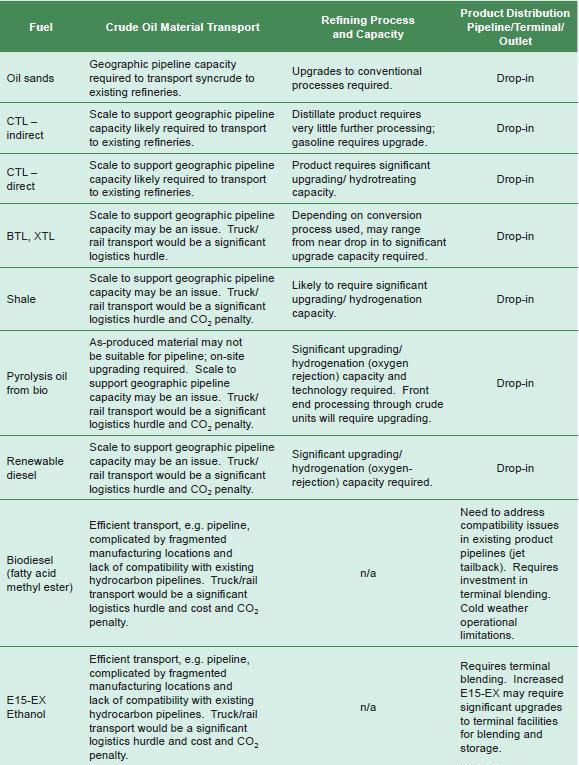
The application of natural gas for MHDVs has been more recent, however, and earliest uses were for transit buses and municipal vehicles. Over the past two decades, the natural gas engine has served as a niche technology in the MHDV market, present in mostly urban refuse haulers and transit bus applications. Natural gas is often referred to as a “bridge fuel,” since it is a way to bridge the diesel-fuel dominance of the MHDV market to the next non- petroleum-based fuel-yet to be identified to the point of having a broad consensus. Common production pathways and uses for natural gas and other current and future MHDV fuels are illustrated in Figure 1-1. The MHDV natural gas market developed slowly before circa 2010. Purchasers other than municipal fleets, which are subsidized by the government, had difficulty justifying the higher purchase price of the vehicle despite the lower cost of natural gas compared to diesel fuel. Furthermore, the cost of constructing fueling stations across the country 27 http://www.ngvamerica.org/media_ctr/fact_ngv.html. ranges between $600,000 to over $1,000,000 per station for compressed natural gas and nearly twice that per liquefied natural gas station.28 Municipal vehicles, which run routes during the day and are centrally garaged at night, can be readily refueled at the garage, making them good applications for this niche technology. In recent years, the gap between natural gas and diesel fuel prices has dramatically widened.29 Moreover, advancements in technology have enabled manufacturers to develop more natural gas engine options and attendant vehicle technologies to achieve reliability and durability similar to that of the diesel. Together these circumstances make natural gas a viable choice for future commercial over-the-road fleets. A variety of natural gas engines suited to a wide range of MHDV applications will be available by 2015. As more OEMs are introducing natural gas options to their product line, the share of CNG/LNG MHDVs continues to grow.

ACT Research predicts30 that the natural gas market share of MHDV truck and bus (includes municipal and refuse) could be as high as 36 percent by 2020. For these predictions to play out, the CNG/LNG infrastructure must be expanded.

While there has been a significant increase in the number of natural gas fueling stations over the past years, the infrastructure is still nascent and will require large investments to provide enough stations to prevent disruption in routes and travel times for longer-haul trucks. Another consideration in the future use of natural gas in the MHDV market is the rapid growth and output of hydraulic fracturing (“fracking”) in natural gas drilling. Fracking has greatly increased the supply and availability of natural gas while reducing its cost. EPA and some states are now exploring more rigorous regulation of fracking operations. Regulations are one of several factors that could significantly increase the cost or reduce the availability of natural gas. This would reduce the incentive to move toward natural gas fuels and technologies in the MHDV sector. Affordable fuel prices and a growing infrastructure all bode well for the future of natural gas in MHDVs.

However, if the price of fuel continues to be favorable vis-à-vis diesel, the transportation sector will have to compete with other sectors (e.g., electricity and heating) for domestic natural gas. (The exporting of natural gas could affect prices as well.) Predicting how this might affect the MHDV market is difficult. Analysts predict that as the economy improves, the price of natural gas will increase (AEO, 2013) but so will the price of petroleum-based fuels. Another important issue raised by fuels such as natural gas is, on the one hand. the distinction between vehicle fuel consumption and GHG and, on the other, the life- cycle analysis of the fuel consumption and GHG using natural gas as a fuel (well to wheels).

Biofuels. The current state of biofuel research, development, and production suggests that the biofuels produced in abundance over the next decade will likely be blends containing ethanol, gasoline, or biodiesel. In its 2013 Energy Outlook, the DOE’s Energy Information Administration (EIA) forecasts that the consumption of next-generation biofuels (including pyrolysis oils, biomass-derived Fischer-Tropsch liquids, and fuels derived from renewable feedstocks) by the transportation sector will increase to about 0.4 million barrels per day (BPD) from 2011 to 2040. This compares with 1.6 million BPD of diesel during the same period.

Ethanol has Been used as a blend in gasoline engines for over three decades.

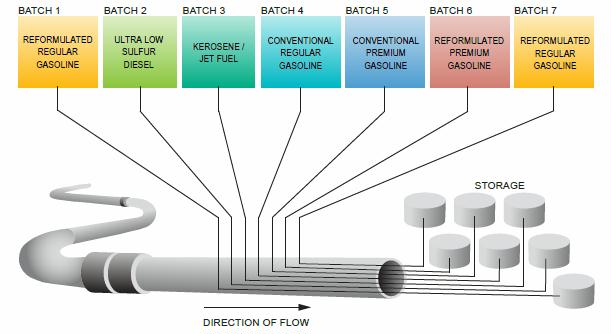
In 2001, the production of ethanol as a share of gasoline volume was only 1 percent. By 2011, the share rose to 10 percent (EIA, 2012). This is largely due to the first Renewable Fuel Standard (RFS) program, which was enacted in 2006 as a part of the Energy Policy Act of 2005. As a result of EISA 2007, the Renewable Fuels Standard “RFS2” mandated renewable fuel consumption of 36 billion gallons (35 billion of ethanol equivalent and 1 billion of biodiesel) by 2022. Although higher blends of ethanol are approved as a transportation fuel by EPA (E15 and E85), the majority of vehicles in the United States use E10. Higher blends can produce fewer GHG, but the higher blends usually exhibit less “tank mileage” (miles per gallon), because of the inherent lower energy content (i.e., enthalpy) of ethanol. Every 10 percent of ethanol in the fuel reduces fuel economy by approximately 3.5 percent (Knoll et al., 2009). Further, distribution infrastructure becomes more difficult at higher blends. Ethanol is a solvent, so its chemistry is prone to dissolving the hydrocarbon residue and water that are often found in the pipeline, which can render the transported fuel out of specification, especially if tanks and pipes are not properly cleaned before switching products.

Biodiesel Studies by EPA and others indicate that the fuel consumption of B5, the most commonly used biodiesel, is about 2 percent worse than that for conventional diesel.31

In 2001 biodiesel production was 9 million gallons. By 2011, it was nearly 100 times higher, at 967 million gallons. While this growth is significant, it represents only 1 percent of the total diesel production by volume. Consumption of biodiesel in 2011 was 878 million gallons (EIA, 2012). Similarly, RFS and EISA 2007 (RFS2) require consumption of 1 billion gallons biomass-based diesel. Tax credits and incentives through the RFS2 have had a positive influence on the production and consumption of biodiesel. Soybeans make up 57 percent of the biodiesel feedstock. Thus, droughts such as that the United States experienced in 2012 can cause the price of biodiesel to vacillate markedly, giving users little reason to purchase the fuel. The use of biofuels is well established in the United States. The growth in production and consumption still relies in a large part on incentives and tax credits. Nonfood-derived cellulosic feedstock is another consideration in the growth of these biofuels, but large-scale production and consumption is years away (NREL, 2012). A further fuel not yet in widespread use is so-called renewable diesel fuel, which is bio-oil refined to remove oxygen and which resembles petrol-derived fuels.

Dimethyl ether (DME) may show promise as an alternative fuel. Synthesized from methanol, it can be produced from biomass, natural gas, or coal. Its thermal efficiency and performance are comparable to those of diesel. DME typically sells at a premium to energy value (i.e., costs more for the same enthalpy). DME is liquefied at 50 pounds per square inch (psi) (or 345 kilopascal (kPa)), so its use requires similar tankage to propane. DME is expected to have the same selling price as a diesel gallon equivalent. 32 As with most alternative fuels, developing engine and vehicle modifications and the distribution infrastructure for the fuel are the most obvious obstacles to widespread use of DME in the near term. DME currently has minimal transportation applications in the United States.

Fischer-Tropsch. Other alternative fuels, known as Fischer-Tropsch (FT) or gas-to-liquid (GTL) fuels, are available in the market but are currently produced in very modest volumes: only about 200,000 barrels a day, which is equal to less than 1 percent of global diesel demand a day (NYT, 2012). These fuels are produced via the FT chemical process, using natural gas, coal, or biomass as feedstock. FT fuels are interesting because they reduce dependency on crude oil and, depending on the feedstock used, may reduce the CO2 footprint as compared with petroleum-based fuels.

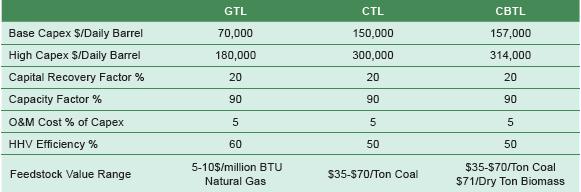
These benefits notwithstanding, FT fuels are expensive to produce. Capital costs, the reliability of cost-effective feedstock, and the logistics of sourcing and transporting feedstock are all considerable. Analysts believe that FT fuels will be cost-effective only when natural gas and oil prices are out of balance. As long as natural gas and oil price differentials remain relatively aligned, the large investment in FT technology will be unsustainable (NYT, 2012).

Electrification The electrification of the light-duty fleet appears to be finally achieving traction after many years of false starts and slow progress,33 raising the potential for electric or hybrid medium- and heavy-duty vehicles to reduce CO2 emissions and fuel consumption. There are a number of technology alternatives for incorporating electrification into the MHDV fleet, including (1) hybrid-electric vehicles (HEVs); (2) electrified accessories; (3) fully electric power trains; (4) electrified power take-off (PTO); (5) plug-in hybrid-electric vehicles (PHEVs); (6) external power to electric power train for zero emission vehicle (ZEV) corridors; and (7) alternative fuel/hybrid combinations.34

Sleeper berth. Solutions include battery-operated HVAC and auxiliary power units (APUs), start/stop systems, and truck stop electrification. Of course, given the range limitations of current vehicle battery technology, electrification is more feasible for some types and modes of MHD vehicles than others. For example, battery-powered motors are least feasible for long-haul heavy-duty trucks that usually travel hundreds of miles per day but may be very promising for service fleets where vehicles perform a number of local deliveries or other jobs per day and then are parked overnight at a centralized base, where they can be plugged in and recharged. One estimate is that up to 6.4 percent of power train systems in MHDVs (including buses) will be electric or hybrid by 2020.35 This represents slightly over 130,000 units, of which about two- thirds are projected to be hybrids and one-third pure electrics.36

Other analysts predict that electric and hybrid vehicles will represent only niche markets before 2030, when more significant market penetration is expected.37

Another important alternative-fuel technology involves hydrogen fuel cells as the power plant; such fuel cells are projected to significantly penetrate the MHDV sector by the early 2020s. Several light-duty vehicle manufacturers are developing fuel-cell vehicles (FCVs) for commercial introduction, including Hyundai in 2014 and Honda in 2015, with others planning introductions from 2017 to 2020.38 This will result in technology validation, hydrogen infrastructure development, and cost savings that will eventually benefit the commercialization of FCVs in the MHDV sector. California is supporting the introduction of FCVs through a partnership with vehicle manufacturers and other stakeholders that has developed a roadmap for installing the infrastructure needed for the commercialization of FCVs.39

Fuel cells are also being developed to provide auxiliary power for trailer refrigeration, used in some 300,000 refrigerated trucks.

By replacing the small diesel engines with the more efficient fuel cell, users will see fuel savings of approximately 10 gallons a day per unit,

The carbon dioxide and fuel consumption benefits of both electric and fuel-cell vehicles will depend to a significant degree on the emissions characteristics of the source used to generate the electricity or hydrogen fuel that powers the vehicle (Babaee et al., 2014).

Energy consumption and emissions associated with fuel production, distribution and processing, vehicle efficiency, and end-of-life may contribute to a substantial share of overall vehicle emissions and energy consumption.

Recommendation 1.10: NHTSA, in coordination with EPA, should begin to consider the well-to-wheel, life-cycle energy consumption and greenhouse emissions associated with different vehicle and energy technologies to ensure that future rulemakings best accomplish their overall goals.

Caterpillar Inc. is currently building 45 automated, 240-ton mining trucks to operate at an Australian iron-ore mine without an onboard operator (Berman, 2013).

Optimistic estimates are that the first automated long-haul trucks (ALHTs) may be commercially viable by the mid- to late-2020s, and could decrease fuel consumption by 15 to 20 percent compared to today’s traditional fleets through more


Green Logistics

Examples of such measures that could impact MHDVs are access control (including lane restrictions), urban traffic control measures, road pricing, smart traffic lights that provide more information to drivers on road conditions and traffic, ramp metering, and other fleet and fuel management approaches..

Electrification of accessories provides a 3 to 5 percent fuel consumption reduction if applied as a package on a hybrid vehicle. This benefit is more effective in urban driving conditions and in short-haul use; line-haul applications will benefit less.

It was confirmed by testing that a further reduction of 1 to 1.5% in fuel consumption may be obtained with thinner oils once durability has been confirmed. Thermostatic control of oil cooler-a solution used selectively in the past-can maximize lubricant performance over a broad temperature range. Some testing has reported a reduction in fuel consumption closer to 2%. The effect is more pronounced for cold starts and low-load operation.

o Hybrid power trains, including regenerative braking, engine downsizing, engine shut- off, enabling electrification accessories, plug-in hybrids, etc. No additional new hybrid systems have been identified in the reviews to date. However, given the high duty-cycle dependency, energy storage methods, costs, and relatively large potential fuel consumption reductions projected across most vehicle classes, NHTSA should form a study focused in this area to identify current realistic penetration rates and appropriate simulation and test methodologies to determine the resulting potential for fuel consumption reduction. Several manufacturers pointed out that with the ever more rapid rates at which new energy sources and new energy storage technologies are being adopted, the points of regulation and the certification methodologies need to be examined and potentially modified to more accurately evaluate and credit this trend. Improvements to be evaluated included propulsion system dynamometer certification instead of engine-only certification; more emphasis on transients in modeling, simulation, and testing; and standards and certification only at the vehicle level.

o Vehicle mass; vehicle lightweighting. The truck weight impacts the power needed to move the vehicle through rolling resistance, climbing grades, and accelerations. Use of lightweight materials and structures, such as cab structures, wheels, fifth wheel, bell-housing, etc., have contributed to reducing weight in tractors; additionally, aluminum composite panels have reduced the weight of trailers. A barrier to further reduction is the higher cost of light materials. Lightweighting is simultaneously balanced by the increase in vehicle mass needed to accommodate additional systems and equipment, such as new emission control equipment, aerodynamic improvement equipment, waste heat recovery, and hybrid components. No additional new technologies have been identified to date.

o Fuel efficiency or greenhouse gases versus cost. Reducing fuel use or GHG emissions may not be the most economically attractive scenario. Technology costs in some cases may exceed fuel savings over the vehicle life, and the least expensive fuel and technology combination may not offer the best efficiency or lowest GHG scenario. At a higher level, fuel choices may have substantial economic impacts beyond the trucking industry. For example, an advanced aerodynamic device that offers drag reduction of less than 1 percent is unlikely to offer payback during the first period of ownership if the weight and cost cross a certain threshold.

o Energy security versus efficiency and emissions. The use of alternative energy resources or a balancing of source uses may not yield highest efficiency, lowest GHG, or lowest criteria pollutants, but it may satisfy compelling national needs. For example, natural gas, as a domestic fuel, displaces imported oil. However, a spark- ignited natural gas engine is generally less energy efficient than a diesel engine.

These metrics all have different currencies, and it is impossible to establish exchange rates between them from purely technical arguments. The balancing of these metrics is an issue of policy.

COMMENTS ON THE CALHEAT REPORT FOR THE CALIFORNIA ENERGY COMMISSION

The California Hybrid, Efficient and Advanced Truck Research Center (CalHEAT) recently completed a study of trucks in California (Silver and Brotherton, 2013). The report provides valuable information related to the baseline of vehicles in California. The methodology used may serve as a model for developing a baseline for commercial vehicles in the entire United States. The abstract from that study reads as follows:

The CalHEAT reports also note that . . . as the first step in the development of this Roadmap, CalHEAT performed a California Truck Inventory Study to better understand the various types of trucks used in California, their relative populations, and how they are used. The analysis included nearly 1.5 million commercial medium and heavy-duty trucks, grouped by weight and application, to establish a baseline inventory and determine fuel use and potential for efficiency and emissions improvements. CalHEAT also conducted Phase I research to characterize the California truck population by size, use, and emissions, and prepared a baseline report of available technology and pathways for improvement.

ANNEX FIGURE 4A-7 North American Class 8 production. SOURCE: ACT Research.

FIGURE 4A-5 ATA truck tonnage index and ATA truck loads index NOTE: S.A., seasonally adjusted. SOURCE: ACT Research, copyright 2013. ANNEX FIGURE 4A-8 North American Class 5 thru Class 7 production. SOURCE: ACT Research.

ANNEX FIGURE 4A-10 Average age of active population of U.S. Class 8 vehicles. SOURCE:

fracturing process.5 At the surface, an integrated management plan is needed to address the supply, handling, reuse, and disposal of the fracking fluid to ensure sustainability throughout the production cycle.

In the electric power sector, the low price of NG has directly caused the closure of coal plants, as it has become more economical to use combined-cycle NG plants (with thermal efficiencies up to 65 percent) for electricity production. However, fuel price is the dominant contributor to the cost of electricity (55 percent). One analysis concluded that the break-even fuel price is between $4 and $6 per million British thermal units (mmBTUs). 6 In the heavy-duty transportation sector, price has a less direct effect on the use of NG as a fuel because delivering and compressing (or liquefying) the fuel account for a large share of the price at the pump. The break-even price of NG relative to diesel fuel is around $6 per million BTU (predelivery, not at the pump). If the costs of NG vehicles themselves come down relative to the costs of their diesel counterparts (discussed in the next section), the break-even value could be as high as $9 to $12 per million BTU. If, as projected by the Energy Information Administration (EIA), the price of NG in 2035 is about $7 per million BTU (EIA, 2013a), its use in the transportation sector will likely depend in part on future technological improvements. Currently, the biggest obstacles to NG use for freight transportation are (1) the lack of widespread and dependable infrastructure, (2) the substantial increase in weight and cost of the fuel tanks compared to diesel tanks, and (3) the availability of NG vehicles, although almost all MHDV manufacturers now offer a NG engine. More detailed discussion of infrastructure and technology follows in a later section of this chapter. Pipeline and infrastructure investment in the United States and Canada is likely to exceed $200 billion over the next 25 years (see footnote 2). EIA expects increased production, lower imports, higher exports, and higher prices, as shown in Table 5-1.

NG largely consists of methane, which is a powerful GHG. Leakage, most of which is estimated to come from gas production activities, could negate the hoped for climate benefits of reducing CO2 emissions by replacing other fossil fuels with NG. Methane has a shorter lifetime in the atmosphere than carbon dioxide, but its higher radiative forcing -that is, its ability to redirect heat that would otherwise escape the atmosphere-means that over 100 years it has 20 times the GHG impact of CO2. One analysis concluded that after taking into account current estimates of leakage, converting heavy-duty diesel trucks would have a net negative effect on climate change for centuries.4 One estimate of gas leakage, based on measurements at 190 onshore gas production sites, is 0.42 percent of the total gas production (Allen et al., 2013). Note that this leakage exceeds the amount of NG currently used in transportation. Other estimates of fugitive emissions have been significantly higher (e.g., Howarth et al., 2011).

NATURAL GAS ENGINES AND VEHICLES Technology Overview NG internal combustion engines are a well-developed and established technology. There are over 11 million NG vehicles worldwide, including passenger vehicles. In the United States, NG-fueled MHDVs, especially transit buses, have been incentivized for roughly 20 years in some states as part of emission- reduction programs. For MHDVs to use natural gas fuel, the most significant differences from current vehicles are the onboard fuel storage method and, for compression ignition (diesel-fueled) vehicles, the means of introducing and igniting the fuel in the engine. On-vehicle storage is either by high-pressure (3,600 psi is typical) CNG cylinders or by cryogenic containers filled with LNG. An illustration comparing on-vehicle storage of NG with diesel is shown in Figure 5-3.

Prices are per million BTU in 2012 dollars. Note that a million BTU is equivalent to about 8 gallons of diesel fuel. Thus, natural gas costs on the order of $2.00 per gallon equivalent, much less than diesel fuel. SOURCE: EIA (2013a).

For the same truck mission, the CNG tank plus fuel weighs about four times as much as a diesel tank plus fuel. LNG tanks and fuel weigh about twice as much as diesel. The cost of either CNG or LNG storage adds $40,000 to $50,000 to the cost of a heavy truck, but with the current low price of NG, the payback period for long-haul trucks is on the order of only 2 years. There are three general technical classifications of NG engines, as shown in Table 5-2. Either CNG or LNG can replace gasoline with only modest changes to the spark ignition (SI) engine. Compression ignition (CI) engines are more complicated; NG can be used in combination with diesel fuel (dual-fuel); or it can supply all the energy to a high-pressure direct-injection (HPDI) CI engine, in which a small amount of diesel fuel is needed to achieve ignition.

As of 2010, the number of medium- and heavy-duty NG vehicles in the United States is estimated to have been between 30,000 and 50,000, out of roughly 10 million total MHDVs (TIAX for American Natural Gas Association [ANGA]).

Fuel Consumption and GHG Comparisons of Natural Gas and Diesel Engines

When a fuel is combusted, its CO2 release per unit heat released is a function of its carbon content. Because it has a relatively low carbon content, NG releases about 28 percent less CO2 per BTU of heat than diesel fuel. However, SI engine efficiency is considerably lower than that of mature diesel engines, especially at light loads, partially offsetting the inherent GHG benefit of NG. In addition, unburned methane may be emitted by the vehicle, and upstream emissions from the production and delivery of the NG must be considered in a well-to-wheels comparison. Methane is a very potent GHG, so if these emissions are significant, NG vehicles could contribute more to GHG emissions than diesel vehicles.

While the results differ somewhat, NG engines and vehicles generally emit about 5 to 20 percent less CO2 (Krupnick, 2010; Kamel et al., 2002; Greszler, 2011). The advantage for NG is very dependent on the drive cycle. One estimate of the impact of methane emissions, shown in Figure 5-5, is that they reduce the CO2-equivalent GHG emissions benefit of NG from 13 percent to only 5 percent. This review of the data comparing diesel and NG engines affirms that the chemical advantage of NG for low GHG emissions is largely (but not completely) offset by the lower efficiency of most NG-fueled heavy-duty engines. This will need to be considered in setting specific GHG and fuel consumption standards for medium- and heavy-duty vehicles using NG, as was done in setting different standards for gasoline and diesel engines.

With the recent increase in the availability of low-cost NG, it is anticipated that its use in long-haul Class 7 and Class 8 trucks will increase, especially using LNG as a means of extending vehicle range.

Heavy trucks are 30 to 40 times heavier than passenger vehicles.

Liquefied motor vehicle. NG fuel could allow for the design of more efficient and less costly engines. However, a standard for in-use motor vehicle NG could require further processing of some pipeline gas before compression or liquefaction. Given the limited demand for motor vehicle NG currently envisioned, compared to nationwide consumption for other purposes such as home heating and power generation, it is not clear if suppliers of NG would invest in the gas cleanup needed for motor vehicle fuel. This could result in NG fueling stations being unavailable in certain areas where pipeline gas does not meet motor vehicle fuel specifications. This could impede the increased use of NG as a motor vehicle fuel. Finally, as noted above, the fuel tank, whether for CNG or LNG, accounts for most of the cost increment for NG vehicles over equivalent gasoline or diesel vehicles. In addition to cost, weight can be an issue. The cheapest solid steel (Type 1) cylinders weigh four to five times as much as gasoline or diesel tanks of the same capacity; advanced (Type 3) cylinders with thin metal liners wrapped with composite weigh about half as much as Type 1 tanks, although they cost more. Tanks with polymer liners weigh even less, but are even more expensive. Higher pressure tanks (up to 10,000 psi) could reduce fuel storage space, but at added cost and increased energy required to compress the gas.

FIGURE 5-6 Conceptual diagram of compressed natural gas filling stations. SOURCE:

http://www.afdc.energy.gov/fuels/natural_gas. html.

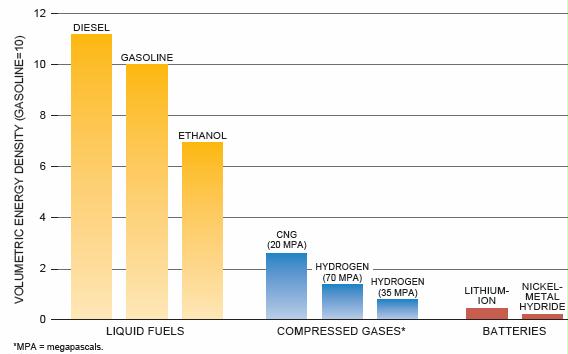
but diesel fuel still has about 1.7 times the volumetric energy density of LNG. As shown in Figure 5-3, the approximate range per 100 gallons in a long-haul truck is: 650 miles (diesel); 380 miles (LNG); and 170 miles (CNG). LNG fueling stations are similar in configuration and operation to gasoline and diesel fuel retail outlets. LNG is delivered to the fueling station in tanker trucks, stored there, and dispensed into vehicles with cryogenic LNG storage tanks (see Figure 5-7). Many LNG fueling sites supply CNG as well. The main disadvantage of LNG is that it gradually boils off as ambient heat penetrates the tank no matter how well insulated it is.

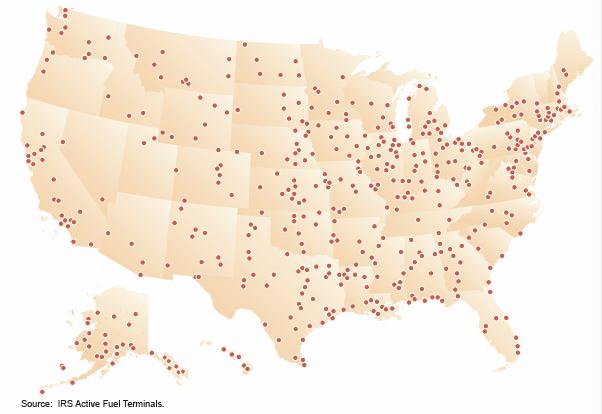
CNG Infrastructure. NG is moved throughout the United States in an extensive network of pressurized pipelines. According to the American Gas Association (AGA, undated), there are 1.9 million miles of CNG distribution lines and an additional 300,000 miles of transmission lines. The transmission lines are for long distance interstate transport and operate at high pressure, from 200 to 1,500 psi. The distribution and service lines to homes operate at low pressure, approximately 50 psi to less than 1 psi. CNG refueling stations for vehicles are connected to points in the distribution pipeline network. The gas industry spends over $6 billion per year on the transmission lines and $4 billion per year expanding the distribution system. There are 632 public CNG vehicle refueling locations in the United States (AFDC, undated) and around 1,200 including stations for private fleets (Weeks, 2013).

CNG stations are estimated to cost $600,000 to $1 million, with time-fills in the lower part of the range and fast-fills in the upper (ANGA, undated). These costs will be a considerable hindrance to the growth of CNG as a passenger vehicle fuel. One study estimated that between 16,000 and 32,000 stations would be needed to support a thriving NG vehicle population, with a much smaller number of refueling sites needed for heavy trucks (ANGA, undated). Equipping another 9,000 public stations will cost in the range of $5.4 to $9 billion.

LNG use is growing in transportation, especially for trucks that operate almost continually, but it probably precludes the use of LNG in light-duty vehicles. Only about 40 nonprivate LNG fueling stations are in operation in the United States, many of them in California (AFDC, undated; TIAX, 2009). Clean Energy Fuels Corporation has been establishing a cross-country network of LNG fueling stations (“America’s Natural Gas Highway”), with near-term plans for 100 LNG stations. Shell is working with TravelCenters of America to offer LNG for highway trucks and has a joint cooperation agreement on LNG with Volvo. LNG is produced at only about 50 to 60 sites in the United States, and there are a few LNG import terminals, so transport distance to LNG dispensing stations could be a detriment.

NG can be converted to other fuels using well-known processes and technology. Each has advantages and disadvantages for storage, GHG impact, and cost: o Dimethyl ether (DME) o Methanol o Ethanol o Gas-to-liquids (GTL) o Ammonia o Electricity o Hydrogen (for fuel cell vehicles

GTL plants have been established worldwide where low-cost NG is available. To be profitable, the scale of GTL plants is enormous as is the capital investment, and the production of high-value chemicals in addition to fuel is important. Shell and Sasol are the largest GTL producers. Operating since 2011, Shell’s Pearl GTL facility in Qatar is one of the largest such plants in the world (140,000 BPD products),

NG is the source for 95 percent of hydrogen production in the United States, and fuel cells are candidates for certain heavy vehicles such as buses and drayage tractors. In California, fuel cell heavy vehicles are a key option where zero-emission vehicles are needed. There are 10 hydrogen refueling stations in the United States, most of them in California (AFDC, undated).

NG is a feedstock for anhydrous ammonia, a feasible engine fuel that can be stored as a liquid at pressures similar to propane. Although it has been demonstrated in both SI and CI combustion systems, its toxicity and acute incompatibility with the human body make its widespread use as a transportation fuel impractical. About 30 percent of U.S. electricity comes from burning NG (EIA, 2013b), and this fraction is growing rapidly. Combined-cycle (gas turbine/steam turbine) technology can be highly efficient. Some units are over 60 percent efficient, much higher than coal-fired generation. Electric vehicles (battery electric or plug-in hybrids) can take advantage of NG in this path, thereby displacing petroleum.

Only electricity and hydrogen from NG can produce lower GHG emissions than direct combustion of NG in engines due to the inherently high efficiency of battery electric and fuel cell vehicles.

Key factors influencing the decision to purchase a NG vehicle are the fuel cost savings, initial cost premium for the vehicle, and ready access to refueling facilities.

Currently about half of new refuse trucks are NG-fueled, and that is expected to rise to 90 percent soon, in part because of local, state, and national incentives. However, refuse trucks collectively are not large consumers of fuel, so the greater opportunity for NG substitution is in Class 7 and Class 8 tractor-trailer rigs, which use about 20 times as much.

References (very few of them)

6 Revis James, Electric Power Research Institute, “The Role of Natural Gas in the Electricity Sector,” Presentation to the Board on Energy and Environmental Systems, September 11, 2012.

Mark Boling, Southwestern Energy, “Forum on Unconventional Natural Gas Issues: Water Quality,” Presentation to the Board on Energy and Environmental Systems, September 11, 201

Berman, D.K. 2013. Daddy, what was a truck driver? Wall Street Journal, July 23. Broder, J., and C. Krauss. 2012. “A big, and risky, energy bet.” New York Times. December 17.

4 Steven Hamburg, Environmental Defense Fund, “Methane leakage from natural gas production, transport and use- Implications for the climate,” Presentation to the Board on Energy and Environmental Systems, September 11, 2012.

Lempert, R. 2007. Scenario analysis under deep uncertainty. Modeling the Oil Transition: A Summary of the Proceedings of the DOE/EPA Workshop on the Economic and Environmental Implications of Global Energy Transitions, D.L. Greene, ed., ORNL/TM- 2007-014.

North American Council for Freight Efficiency (NACFE) and Cascade Sierra Solutions (CSS). 2013. Barriers to the Increased Adoption of Fuel Efficiency Technologies in the North American On-Road Freight Sector. July

Silver, F., and T. Brotherton. 2013. Research and Market Transformation Roadmap to 2020 for Medium-and Heavy-Duty Trucks. CEC-XXX2013-XXX. Draft Rev # 7 Dated 6-14-2013. Sacramento, Calif.: California Energy Commission.

38A. Webb, 2013, “Auto makers renew interest in fuel-cell vehicles: Despite cost, political hurdles.” Available at http://wardsauto. com/vehicles-amp-technology/auto- makers-renew-interest-fuelcell-vehicles-despite-cost-political-hurdles. 39

Posted in Efficiency | Comments Off on Reducing fuel consumption of medium & heavy-duty vehicles 2014 National Research Council

Commercial scale cellulosic ethanol still not happening in 2016 – why?

Here’s Rapier’s latest column on cellulosic ethanol explaining why it still isn’t commercial yet, despite attempts since the 1900’s.  He points out that we have been able to create cellulosic ethanol since 1900, but not economically.

February 13, 2016. Cellulosic Ethanol Falls A Few Billion Gallons Short.

Rapier, R. June 22, 2015 Cellulosic ethanol is going backwards. Energy trends insider.

May’s numbers are now in, and the situation has gotten worse. After reporting 288,685 gallons of cellulosic ethanol in April, May’s numbers only amounted to 114,018 gallons. This is only about 2.4% of the nameplate capacity of the announced commercial cellulosic ethanol plants. If we use year-to-date numbers, the annualized capacity is still less than 3% of nameplate capacity for facilities that cost hundreds of millions of dollars to build. Let that soak in. POET alone spent $275 million, with U.S. taxpayers footing more than $100 million of that bill. Abengoa reportedly received $229 million from taxpayers for its project. For this (plus however much that was spent by INEOS), the combined plants are running at an annualized capacity of 1.7 million gallons of ethanol, which would sell on the spot market today for $2.6 million.

We can conclude from this that the three companies with announced commercial cellulosic ethanol facilities — INEOS, POET, and Abengoa (NASDAQ: ABGB) — are finding the going much tougher than expected. I believe that the costs to produce their cellulosic ethanol are higher than the price they will receive for the ethanol. This is the sort of monthly cash drain that led to the shutdown of everyone else that ever tried to produce cellulosic ethanol commercially.

I suspect that INEOS has given up trying to produce cellulosic ethanol (their press releases have certainly dried up), and I suspect that the others aren’t too far behind. And there will be more tax dollars that have been flushed down the drain in pursuit of cellulosic ethanol, which companies have tried to produce economically — without success — for more than 100 years. It seems that those who do not learn history waste a lot of taxpayer money repeating it.

Rapier, R. May 20, 2015. Where are the Unicorns? 

In the 2007 EISA, Congress mandated that 100 million gallons of cellulosic ethanol had to be blended into the fuel supply in 2010, 250 million gallons in 2011, and then rapidly ramping to 16 billion gallons per year by 2022. Despite the mandates, there was no cellulosic biofuel produced in 2010 or 2011, and only 20,000 gallons were produced in 2012 by a company that subsequently declared bankruptcy. In 2013 about 230,000 gallons of cellulosic biofuel were produced by KiOR, which also subsequently went bankrupt.

I have written a number of articles on the cellulosic ethanol situation. To understand what cellulosic ethanol is, and to see that the history of this fuel in the U.S. dates back about 100 years, see my 2010 article Cellulosic Ethanol Reality Begins to Set In, my 2012 article The First Commercial Cellulosic Plant is NOT About to Open, or my 2013 article Why I Don’t Ride a Unicorn to Work.

The “First” Commercial Cellulosic Ethanol Plant is Announced

Several companies have either claimed they were about to open commercial cellulosic ethanol facilities, or that they have indeed done so. Each time this happens, there are headlines proclaiming that commercial cellulosic ethanol is a reality. My response to that is always essentially “You have to give it a few years before making that assessment.” Today, I provide evidence that despite the headlines, commercial cellulosic ethanol production has yet to be demonstrated.

In 2012, INEOS Bio and its joint venture partner New Planet Energy announced the opening of the Indian River County BioEnergy Center in Florida. Jim Greenwood, who was President and CEO of Biotechnology Industry Organization (BIO), testified before the House Committee on Agriculture “The biorefinery is a major landmark for this country. It’s the first commercial cellulosic refinery.”

Two things. The first, as you will see if you read my previous articles, is that the country’s first commercial cellulosic ethanol refinery was built nearly 100 years ago. Second, if I build a spaceship, and I tell you that commercial travel to Mars is now at hand — you would probably want to see me commercially fly that spaceship to Mars. In other words, I have to be both technically capable and it has to be economically viable before I can claim commercial success. If I spend a billion dollars and customers pay me a total of $5 million to take them to Mars, I am not a commercial success even if I am a technical success. With cash flow like that I would require heavy subsidies to keep my venture in operation.

Back to INEOS. Despite the May 2012 proclamation that the facility was about to open, it wasn’t until July 31st, 2013 that INEOS issued a press release that the company “is now producing cellulosic ethanol at commercial scale. First ethanol shipments will be released in August.” The nameplate capacity of this plant was 8 million gallons of cellulosic ethanol per year. In December 2013, the company issued a press release that said in part:

“Bringing the facility on-line and up to capacity has taken longer than planned due to several unexpected start-up issues at the Center. These efforts have highlighted some needed modifications and upgrades.”

Nine months later, in September 2014, the company issued another press release that read in part:

“INEOS Bio’s Vero Beach facility has recently completed a major turn-around that included upgrades to the technology as well as completion of annual safety inspections. We are now bringing the facility back on-line. In addition we will soon finish installation of equipment that will be used to remove impurities from one of our process streams that have been negatively impacting operations. This equipment will be commissioned and brought online over the remainder of the year.”

There have been no further operational updates. So what does the INEOS plant say about commercial cellulosic ethanol? Keep in mind that nobody disputes that you can build a plant to make cellulosic ethanol. The issue has always been about cost — due to complexity and high energy inputs. That’s why the cellulosic ethanol plants from 100 years ago were shut down.

POET Also Announces the “First” Commercial Cellulosic Ethanol Plant

Then there is POET, one of the largest producers of ethanol in the world. On July 7, 2011 the U.S. Department of Energy announced a $105 million loan guarantee to POET for the development of its 25 million gallon per year corn cob-to-ethanol facility, dubbed Project Liberty, at Emmetsberg, Iowa. Construction of the facility was expected to begin in August 2011, and cellulosic ethanol production was slated to begin in May 2013.

In September 2014, more than a year later than projected, in an announcement that must have been a surprise to INEOS, POET issued a press release: First commercial-scale cellulosic ethanol plant in the U.S. opens for business. The grand opening was attended by Willem-Alexander, King of the Netherlands, U.S. Secretary of Agriculture Tom Vilsack, Deputy Under Secretary Michael Knotek of the DOE, Iowa Governor Terry Branstad and Lieutenant Governor Kim Reynolds and thousands of guests. From the press release:

“Some have called cellulosic ethanol a ‘fantasy fuel,’ but today it becomes a reality,” said Jeff Broin, POET Founder and Executive Chairman. “With access now to new sources for energy, Project LIBERTY can be the first step in transforming our economy, our environment and our national security.”

To be clear, I never called it fantasy fuel, I just compared commercial cellulosic ethanol to a unicorn. The “commercial” modifier is important, because once again we have known for a very long time how to produce cellulosic ethanol.

Abengoa Announces a Commercial Cellulosic Ethanol Plant 

Next up was Abengoa (NASDAQ: ABGB), which had been building a cellulosic ethanol plant in Hugoton, Kansas. In October 2014 they announced the grand opening of the facility, an event attended by U.S. Secretary of Energy Dr. Ernest Moniz, Kansas Governor Sam Brownback and Kansas Senator Pat Roberts. The press release stated in part:

“Abengoa’s new industry-leading biorefinery finished construction in mid-August and began producing cellulosic ethanol at the end of September with the capacity to produce up to 25 million gallons per year.”

Last week, here was what Abengoa CEO Manuel Sánchez Ortega said about the facility when addressing Q1 2015 earnings:

“With regards to Hugoton, we continue working in the startup of the plant where we are making progress everyday resolving the issues that we have encountered, all of them related to the mechanical part of the plant. The bad news is that we still have our work to do to fix all identified challenges and the good news is that none of this are related to the biochemical process, which is the innovative part of the project.”

Is commercial cellulosic ethanol a reality? Certainly not yet according to Hugoton.

Report Card

While both INEOS and Abengoa have announced problems, to my knowledge POET has been silent about their progress. But they do all report production numbers to the EPA. The newest numbers were released today for April 2015 production.

Keep in mind that April 2015 marks nearly 2 years since INEOS announced they were producing commercial cellulosic ethanol. For POET and Abengoa, April marked the 8th month since they had announced the beginning of production. The total announced nameplate capacity of these 3 plants is 58 million gallons. So how close have they come to achieving this capacity?

Through March, EPA had listed year-to-date production of 286,237 gallon of cellulosic ethanol. The newly released data show that for April, the year-to-date cellulosic ethanol production was 574,922 gallons. This means that April’s production was 288,685 gallons. Annualized, this comes out to be 3.5 million gallons from plants with total announced nameplate capacity of 58 million gallons. Total production for the record month of April was then only 6% of nameplate capacity. That’s pretty bad considering these companies are at least 8 months into their learning curves.

The reason this is significant is that the production volumes have to be supported by the capital that is spent. If, in reality, only a fraction of the nameplate capacity can be reached (and clearly from the INEOS and Abengoa updates the capital costs are still rising) the hundreds of millions of dollars of capital buy very few actual gallons of capacity. Production at only a fraction of nameplate capacity will destroy the economics of the process and in turn the notion that commercial cellulosic ethanol is now a reality. A publicly traded company would eventually have to take an impairment against the facility — as KiOR did prior to their bankruptcy.

Still No Unicorns

While companies are rushing to take credit for commercial production of cellulosic ethanol, a look at the numbers released by the EPA today tells a different story. They warn of very high capital costs per actual gallon of production — a recipe for commercial failure. On the positive side, April’s numbers were slightly greater than the year-to-date production of the previous 3 months combined. If I had to guess, based on the lower capacity of INEOS and the ongoing problems at Abengoa, that production is predominantly POET’s.

POET probably does have the greatest chance of success. By co-locating their cellulosic ethanol process adjacent to one of their corn ethanol plants, they can share infrastructure, energy, and personnel, driving down costs. But the capital cost of that facility was announced at $275 million. Even if we assume that all of April’s production was from POET, it’s going to take a lot more than 3.5 million gallons of ethanol per year to support that level of capital spending – at least commercially. On the spot market that much ethanol per year would currently sell for about $5 million. Production rates will have to be much higher to justify hundreds of millions in capital spending.

Of course you can subsidize all sorts of schemes into existence. The real question is whether there is a realistic pathway to the process standing on its own commercially. We will check back in on this developing situation later in the year, but it’s going to require exponential production increases over the next few months to salvage the economics. Alas, despite claims of unicorn sightings, I still can’t find one to ride to work


Posted in Biofuels | Comments Off on Commercial scale cellulosic ethanol still not happening in 2016 – why?

Wind, solar, and storage impact on the California grid

California Energy commission. June 2010. Research evaluation of wind generation, solar generation, and storage impact on the California Grid. 131 pages.

Excerpts:

This report analyzes the effect of increasing renewable energy generation on California’s electricity system and assesses and quantifies the system’s ability to keep generation and energy consumption (load) in balance under different renewable generation scenarios.

In particular, researchers assessed 4 key elements necessary for integrating large amounts of renewable generation on California’s power system. Researchers concluded that accommodating 33% renewables generation by 2020 will require major alterations to system operations.

They also noted that California may need between 3,000 to 5,000 or more megawatts (MW) of conventional (fossil‐fuel‐powered or hydroelectric) generation to meet load and planning reserve margin requirements.

The study examines the relative benefit of deploying electricity storage versus utilizing conventional generation to regulate and balance load requirements.

Researchers also noted the effectiveness of storage technologies, in comparison to conventional generation, to meet energy systems’ need to accommodate large output changes of energy resources in a relatively short period.

Introduction

The integration of renewable energy resources into the electricity grid has been intensively studied for its effects on energy costs, energy markets, and grid stability. These studies all conclude that the variability and high‐ramping characteristics of renewable generation create operational issues.

Project Purpose

This research identifies key issues and assesses the effects of high renewable penetrations on intra‐hour system operations of the California Independent System Operator (California ISO) control area. It also looks at how grid‐connected electricity storage might be used to accommodate the effects of renewables on the system.

The research focuses on required changes to current systems to balance generation and load second‐by‐second and minute‐by‐minute, and to do so in the most cost‐effective manner. The study also assessed potential benefits of deploying grid‐connected electricity storage to provide some of the required components—including regulation, spinning reserves, automatic governor control response3, and balancing energy—necessary for integrating large amounts renewable generation.

The objective was to measure the effects of the variability associated with large amounts of renewable resources (20 percent and 33 percent renewable energy) on system operation and to ascertain how energy storage and changes in energy dispatch strategies could accommodate those effects and improve grid performance.

Automatic generation control operates the generators that supply regulation services (up and down) every 4 seconds to keep system frequency and net interchange error as scheduled. The real‐time dispatch buys and sells energy from generators participating in the real‐time or balancing market every five minutes to adjust generator schedules to track a system’s load changes.

Regulation in MW is the amount of second‐by‐second bandwidth or controllability used in balancing generation and load.

Spinning reserve is the excess amount of on‐line generation capacity over the amount required to supply load and available to respond to sudden load changes or loss of a generator.

Governor response is the near‐instantaneous adjustment of each generators output in response to system frequency changes, caused by the generator speed‐governing device.

System performance degraded, in terms of maximum area control error excursions and North American Electric Reliability Corporation control performance standards, significantly for 20 percent renewables penetration and became extreme at 33%

Droop is the gain on the generator’s local speed‐governing device, that is, how sensitive the generator’s output is to changes in system frequency. Ancillary services are those services that generators sell to the California ISO to enable system reliability and to follow load. Balancing energy is the energy the California ISO buys and sells every five minutes via real‐time dispatch to follow load.

Automatic generation control is the computer system at the California ISO that controls the generators in real time to balance load and generation second‐by‐second renewables penetration, using the same automatic generation control strategies and amounts of regulation services as today. Without adjustment to the automatic generation control and the amount of regulation procured maximum area control error excursions went from a typical band today of the order of ±100 MW to several times that in the 20 percent renewables scenario and to as much as 3,000 MW of error in the 33 percent scenarios. Such an excursion is not tolerable and would possibly cause other system protective devices to operate such as interrupting transmission flows to adjacent power systems.


The amount of regulation, without storage and using existing control algorithms, required to maintain system performance within acceptable limits for a 20 percent renewable case in 2012 was ±800 MW in the up and down direction, roughly double today’s amount.7

The amount of regulation and imbalance energy dispatched in real time, without storage and using existing control systems to maintain system performance, within acceptable limits during morning and evening ramp hours for 33 percent renewable cases in 2020 was 4,800 MW. The amount of regulation and imbalance energy dispatched in real time, without storage and using existing control algorithms, to maintain system performance within acceptable limits during non‐ramp hours to address system volatility for the 33 percent renewable cases in 2020 was approximately an additional 600 MW. By comparison, 1,200 MW of storage added to the baseline 400 MW of regulation provided superior results by comparison. (See Table 1).

Generally, the largest deviations in system performance occurred twice per day, once during the morning and once during the evening, corresponding to the interaction of diurnal production of wind and solar resources and fluctuation of demand. Accordingly, degradation of system performance appears to be predominantly caused by renewable ramping in the morning and evening along with traditional morning and evening load ramps.

Increasing regulation amounts, without the use of storage and improved control algorithms, can improve system performance. However, roughly 2‐to‐10 times the amount of today’s regulation and balancing capacity would be required to maintain system performance absent other operating protocols, such as limiting ramp rates and new services that could be developed as alternatives to address renewable ramping as well as scheduling and forecasting errors.

Large‐scale storage can improve system performance by providing regulation and imbalance energy for ramping or load following capability. The 3,000 to 4,000 MW range of fast‐acting storage with a two‐hour duration achieved solid system performance across all renewable penetration scenarios examined.

storage can be up to 2 to 3 times as effective as adding a combustion turbine to the system for regulation purposes. The relative effect of each depends on how much storage or regulation and balancing is already in the system. When the system has sufficient resources for stabilizing system performance, the incremental benefit of either technology approaches zero. This is an incremental ratio of the effect a combustion turbine or a storage device each have on system performance, and not an indicator of how much total capacity of each technology may be needed to manage the large ramping phenomena.


Without the use of storage, ramping of combustion turbine generators and hydro‐electric generation is likely to increase. This may likely have detrimental effects on equipment maintenance costs and life of the equipment, and greenhouse gas emissions because the resources will be asked to generate more often at less than optimal production ranges as well as to remain committed—that is, on‐line—in anticipation of ramping needs.

Governors’ executive order S‐14‐08 established a goal of 33% energy from renewable resources to serve California customer load by 2020. This will require significant increases in ancillary services (regulation) and real‐time dispatch energy, with attendant changes in the day ahead schedules of generation production by hour to ensure that such services are available— that is, that enough generators will be on‐line with excess capacity available during each hour. Such a change in scheduling practice will incur additional economic costs in the production of power. The use of storage in conjunction with new control and generation ramping strategies offers innovative solutions that are consistent with the need to continue to comply with current North American Electric Reliability Corporation system performance standards. Electricity storage promises to be a useful tool to provide environmentally benign additional ancillary service and ramping capability to make renewable integration easier. However, while this report concludes that the system flexibility provided by storage is more efficient than equivalent conventional generation capacity, it has not performed a comparative cost‐benefit analysis either in terms of fixed capital or variable costs.

The California ISO control area as simulated would require between 3,000 and 5,000 MW of regulation and energy for balancing and ramping services from fast resources (hydroelectric generators and combustion turbines) for the scenario of 33% renewable penetration scenario in 2020, absent other measures to address renewable ramping characteristics (See Table 1). The range reflects the different seasonal patterns in the days studied, as well as the mix of fast storage (capable of 10MW/second ramping) versus fast new and upgraded conventional units (combustion turbine and hydro expected as of 2020). The large ramping requirement is driven by the combination of solar generation and wind generation variability that is forecasted for the 33% scenario. Included within this variability is the steep, yet highly predictable, production curve associated with solar resources as the sun comes up in the morning and sets in the evening. Some of this ramping requirement can be satisfied by altering the likely system commitment for conventional generation to maintain a large amount of gas‐fired combustion turbines on‐line for ramping. It also may be possible to alter the scheduling of hydroelectric facilities and pump‐storage facilities so as to assure adequate ramping potential at critical periods, although there are environmental and operational difficulties associated with this potential solution.

Finally, altering or controlling the ramp rate of wind and solar resources for known ramping events such as sunrise and sunset can reduce regulation, balancing, and ramping requirements, but at the cost of curtailing renewable output.


The moment‐by‐moment volatility of renewable resources may need up to twice the amount of automatic generation control or regulation compared to todayʹs levels in the 20 percent scenario and somewhat more in the 33%. This is consistent with prior studies and manageable based on simulations using existing and anticipated sources of supply.

Generation ramping requirements to meet the morning load increase and the evening load decrease, as well as potentially other large changes in net load during the day, require large changes to generation dispatch in very short periods and may be the major operational challenge to ensuring reliability under a 33% renewable scenario.

Under the 33% renewable scenario, these ramps will be difficult to manage in the current paradigm of regulation and balancing energy/real‐time dispatch, where automatic generation control and real‐time energy dispatch must be used to counteract large renewable ramping behavior and scheduling / forecast errors. There should be an investigation into new protocols for renewable ramping and provide incentives for incentivizing the needed flexibility to reduce its effects would appear to be in order.

Fast storage (capable of at least 5 MW/second if not up to 10 MW/second in aggregate) is more effective than generally slower conventional generation in meeting the need for regulation and ramping capability

Use of storage avoids greenhouse gas emissions increases associated with committing combustion turbines strictly for regulation, balancing, and ramping duty.

A 30‐to‐50 MW storage device is as effective or more effective as a 100 MW combustion turbine used for regulation purposes, given the use of the storage‐specific control algorithms as mentioned in (4) above, the faster response of the storage as compared to a gas turbine,

Table 1 summarizes the quantitative benefits of using storage to address minute‐to‐minute volatility

this analysis recommends at least 400 MW or more additional regulation (but not balancing energy) for the 20 percent Renewables Portfolio Standard scenario while the California ISO report recommends 250 to 500 MW more depending on the season.

Possible imposition of requirements on renewable resources to accommodate their effects on grid operation, such as ramp rate limits on renewable resources, more accurate short‐term forecasting, sub‐hourly scheduling, and other possibilities.

Should electricity storage be directly linked to renewable installations or be procured by the California ISO as an ancillary service on behalf of the system as a whole? Whether renewable developers are required to provide or procure storage capabilities or the California ISO is required to procure it on behalf of the system as a whole will affect the stateʹs generation resource planning. The location of the storage (at the renewable resourceʹs location or elsewhere) will affect the planning of future power transmission lines as well.


The prospective benefits to California from the development of fast electricity storage resources for use in system regulation, balancing, and renewable ramping mitigation are significant. Specific benefits of fast electricity storage include:

  • Management of large renewable energy ramping and management of increased minute‐ to‐minute volatility without degrading system performance and risking interconnection reliability.
  • Reduced procurement of very large amounts of regulation, balancing, and reserves from conventional generators, which may be either very expensive or infeasible.

Avoidance of keeping combustion turbines on at minimum or midpoint power levels to support regulation and load following.

o Avoids increased greenhouse gas emissions.

o Avoids higher energy costs due to combustion turbine energy displacing lower cost combined‐cycle gas turbines and/or hydroelectric energy.

Can the California ISO system withstand a disturbance control standard event with 20 percent and 33 percent renewable resources, assuming that they displace existing thermal resources?

  • What is the storage equivalent of a 100 MW combustion turbine (CT)?

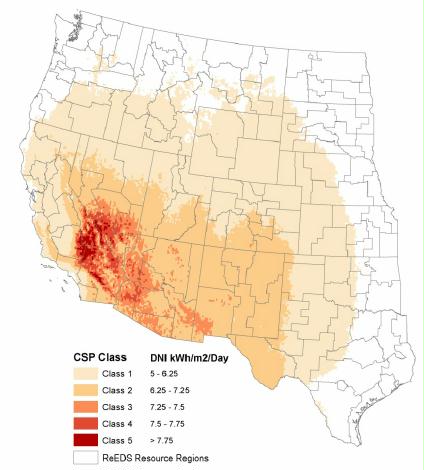
These values were provided to the research team by the California ISO, based on projects currently in the interconnection queue which would realize the 20 to 33 percent renewable portfolio standard level. Between 2009 and the high case for 2020, wind generation nameplate capacity increases by over fourfold.19 Concentrated solar generation increases by a factor of 25 over the same time period. Table 3. Generation Capacity by Type (MW)

Under typical circumstances the California ISO’s frequency regulation needs are achieved today by having about a dozen generators on AGC control in order to meet its WECC/NERC frequency performance obligations. However, under high renewable scenarios, the number of units needed on AGC may need to be many times greater. In addition to AGC service, the California ISO also operates a balancing energy market to respond to deviations between the scheduled and actual level of generation output on an hour‐to‐hour basis in real‐time operation. Although balancing energy responds at a slower rate than AGC, the operation of both of these markets overlap significantly, and they both impact the California ISO’s overall frequency and ACE performance. Therefore, both AGC and balancing energy needs are examined in this study.


The 2020 High scenario required very large amounts of regulation. Consequently, in order to ensure that units with higher ramp rates were available to provide sufficient regulation, some additional cases were run where all the CTs and hydro units remained on at 20 percent minimum so as to have the required regulation bandwidth available. (Otherwise regulation duty would fall on CCGT and other slower units, degrading performance).

The goal of this task was to define storage facility scenarios above and beyond the existing pumped storage facilities that exist in California (e.g., Helms and Castaic plants). The researchers began by using an infinite storage capacity model in order to see how much would be used by the system for each of the modeled days in 2012 and 2020. For this purpose infinite storage was defined as 10,000 MW with a 12‐hour discharge duration. The amount of power used from this stored energy source used by the model in 2012 and 2020 provides an indication of how much storage power capacity is required in various RPS and AGC scenarios. The energy used (charging or discharging) during major ramping periods is an indication of the energy needed.

An inability to withstand deep discharge cycles means, in effect, that additional capacity needs to be installed in order to provide effective capacity. Thus, if a technology were deployed that were limited to 50 percent discharge, it would be necessary to provide twice the capacity of a technology of one that had no such limit. Thus, a storage system with a 50 percent limit would in effect need 12,000 MWh of storage where the study had determined that a 3,000 MW, 2‐hour unit was required.

The United States Congress is considering legislation to establish tax incentives for large‐scale electricity storage

Table 4. Outcomes summary Year / Renewable Scenario Current 20% RPS 33% RPS Low Estimate 33% RPS High Estimate

Determining Levels of Storage Required to Accommodate Renewables (Infinite Storage Approach)

Cases studied with storage levels of 10,000 MW and 12 hr duration Maximum ACE > 3000 MW in 2020 3200 – 4800 MW Required variously Some improvement via altered scheduling Results varied numerically but were qualitatively consistent 3,000 MW of storage was “sweet spot” except in April

For all study days, researchers observed increasing degradation of ACE as the share of renewables increased in the generation portfolio. ACE performance was severely degraded in all of the 2012 and 2020 cases, with maximum ACE levels more than doubling and tripling the 2009 levels as shown in Figure 20. With an AGC bandwidth of 400 MW and no storage additions, the maximum observed ACE variation within one day was ‐600 MW to +1,100 MW for July 2012, and ‐1,900 MW to over +3,000 MW for July 2020 High. These results were obtained with all conventional units (CT, hydro, and CCGT) on regulation. The CCGT units are actually much slower than the others and are normally not in regulation.


As illustrated in Figure 21, frequency deviation is fairly unchanged across scenarios, varying up to around 0.06 Hz. This is because the bias of the WECC system is such that it takes a very large imbalance to generate a 0.1 Hz deviation.

The predominant cause of ACE degradation in future years is the ramping of wind down and solar up in the mornings, and vice versa in the evenings. Variability of renewable production in the high renewables cases of 2020 cause additional ACE movement. Wind production decreases in the morning roughly an hour before solar production increases, depending on the day of the year. As such, there is a large drop in wind production in the morning, followed by a rapid pick up of solar an hour later. This occurs just as load is ramping up. The reverse occurs at the end of the day. Commitment of the combustion turbines and combined‐cycle turbines as needed to accommodate the renewable generation greatly restricts the ramping ability of the remaining conventional generation.

Droop adjustments have little impact on system performance because the ramp rates required to make up for sudden changes in renewable production are beyond what conventional generation can provide. Note that this does not mean that droop should be revisited for conditions where the amount of conventional generation on line is greatly reduced and insufficient system droop is available for a large unit trip. However, the conventional unit droop is sufficient today for evening conditions and light load in the event of a nuclear plant trip and can be reasonably expected to be so in the future.

The amount of regulation required for AGC to maintain ACE within todayʹs limits was 800 MW in 2012, roughly double today’s amount, and 3,200 to 4,800 MW in the 2020 High renewables scenarios, roughly 8 to 12 times today’s amount. Infinite storage at first failed to adequately control ACE as expected, using the output of the conventional AGC system. When large‐scale storage was configured as a resource similar to conventional generation, providing regulation services results were suboptimal. Using a fast and very large storage system resulted in excellent ACE performance in all scenarios once the storage control algorithms were developed, as described in the following section.

The ability of AGC to control renewables volatility and ramping using todayʹs controls and protocols was evaluated. Researchers found that the amount of regulation required for AGC to maintain ACE within todayʹs limits was 3,200 to 4,800 MW in the2020 High renewables scenario. This was not because of momentary volatility; lesser increases are needed for that. Rather, such amounts were required to address diurnal ramping, especially that of the centralizing thermal solar production.

Analysis of the 2020 High scenario for the July day show that 3,200 MW of regulation is needed to accommodate the renewable evening ramping. Still more is required to maintain ACE at nominal levels. Researchers found that April 2020 would require in excess of 4, 000 MW of regulation. Even then, the performance is marginal.

The researchers and the California ISO observed that procuring this much regulation from conventional units when renewable production was quite high posed problems in and of itself. Renewable production in these scenarios peaks at 10,000 MW or more, well in excess of 20 percent of generation required. If the conventional units are scheduled strictly on an economic basis, the CTs will be the first units to be displaced by the renewables. Hydroelectric and nuclear generation will generally be the last to be displaced. CTs normally provide a significant amount of the regulation capacity in the system. CCT units generally have much lower maximum ramp rates and cannot provide the same regulation service as combustion turbines. As noted above, the generation schedules were constrained to maintain combustion turbines on during the day and available for regulation service so that these very high levels of regulation could be realistically provided. Aside from the ramping phenomena, the renewables cause increased volatility during normal operation. This was observed to result in increased ACE and degraded performance, but nearly to the same degree as the ramping phenomena. Accordingly, it was investigated how much additional regulation would be required to maintain system performance during the hours 10 AM to 6 PM – i.e., between ramps. The results of this are shown in Table 5. It can be seen that if ACE maximum should be maintained below 500 MW and CPS1 above 180, for example, increased regulation will be needed in 2012 and 2020. As a general observation, it seems that in 2012 800 MW or more is required and in 2020 as much as 1,600 MW. Hey, it looks to me like 3200 MW:


When large‐scale storage was configured as a resource similar to conventional generation providing regulation services results were suboptimal. The conventional AGC had primarily proportional control with limited integral gains in the control algorithm. This is because in the California ISO area, the AGC is not the primary mechanism for following ramping; the real time dispatch is. As a result, the AGC typically has to deal with relatively small fluctuations (at 400 MW of regulation procured, the California ISO AGC regulation bandwidth is 1 to 2 percent of system load or less). A ramp of 20 to 25 percent greatly exceeds AGC ability to respond.

The conventional generators overall are slower than the storage and would not be stable with as aggressive an integral gain as the storage system will be. Also, the amounts of storage employed versus conventional generation will be different.

3.6. Requirements for Storage Characteristics The key parameters for system storage are the power level, the duration or energy capacity, and the rate limit on changes to power output.

It was determined that the California ISO control area has maximum benefit from (a) 3,000 MW of storage power capacity with at least (b) a two‐hour duration and that the (c) ramping capabilities have to be 10 MW/second or greater. The 10 MW/second requirement translates to achieving 3,000 MW of output from zero in five minutes. Thus, if there is 3,000 MW of storage with a 5 MW/minute ramp capability (and a 2 hour duration) it would seem that there is a need for faster storage capable of making up the 1,500 MW deficiency that accrues at the end of five minutes – so that 1,500 MW of 10 MW/second storage is required, but with less duration. (Much less; it would need to produce a ramp down over the next five minutes; so that the total energy would be 125 MW hours; e.g. the duration is 125 MWh/1,500 MW or 5 minutes. A similar set of mathematics can be performed for any combinations of technologies with differing rate limits. This implies that a lower capacity cost technology such as CAES can be combined with high performance and higher cost technology such as Li‐Ion batteries or super‐capacitors.

The rate limit performance of the storage system overall is a critical parameter. As noted above, researchers assessed system performance for differing rate limits on the storage. The storage system must have an aggregate rate limit of at least 5 MW/second for a 3,000 MW aggregate system, and 10 MW/second is preferable. (10 MW/second out of 3,000 MW equates to 0.33 percent/second or 20 percent/minute in general).

A key policy question in developing a portfolio of renewable integration solutions is, how does equivalent storage compare to an investment in a new gas turbine for the same service? Storage is more expensive per MW provided, and it has a limited amount of energy it can supply to the system.

A gas turbine, on the other hand, can continuously inject energy to system as long as it has a fuel supply.


To help assess the question of whether a gas turbine provides more benefits for less money, researchers determined the rough equivalency of storage by examining the incremental impact of a single additional 100 MW CT. In particular, researchers evaluated the system performance impact of 100 MW of incremental CT dedicated to regulation and load following and compared that with the incremental impact of storage systems of different sizes.

Then one CT with a capacity of 110 MW with 50 percent of capacity allocated to regulation was added to the mix. This CT had a very high rate limit – 120 percent of capacity in 5 minutes. (The large CT units (over 500 MW) are significantly slower. The very small units are this fast or faster).

Then, instead of the CT, storage units of 50 and 100 MW were added to the model, and the test cases were repeated. Again, this was run twice. As expected, the 50 MW storage unit produced benefits similar to the CT in some cases and varied in others. The 100 MW unit exceeded the metrics improvement of the CT by far.

3.8. Issues With Incorporating Large Scale Storage in California

The results of this report indicate that renewable ramping creates volatility in the system and that storage has the technical potential to help address this volatility. However, key policy questions are how to best promote various ramping solutions and how to account for tradeoffs among them. Imposing ramping limits on renewable resources as an interconnection requirement would address volatility and leave open the question of which solution to use (storage, combustion turbine, or other means). Resource ramping limits are feasible for the ramp up phenomena (at some lost energy production), but not for the ramp down, which is technically difficult (requires storage in some form either at the resource or at the system level).

However, compared to other solutions, storage appears to have benefits and may be preferred in some instances. Without storage, CT ramping would need to increase. This has three basic impacts: • Increased maintenance costs and reduced lifetime from additional wear and tear • Postponed de‐commitment of CT units • Increased GHG emissions

Storage could absorb the volatility and limit CT ramping, diminishing these adverse impacts. Though storage units are more expensive than CTs, the avoided emissions and wear and tear may make the incremental cost worthwhile. Additional research needed to assess additional CT maintenance costs and to value emissions reductions. Figure 42 and Figure 43 show the benefits storage has for both CT and hydro generators in terms of reduced ramping in response to renewables. As the amount of storage increases, the amount of unit ramping decreases.

Excessive ramping up and down of hydro units has environmental implications for downstream water levels and may even by impractical in extreme cases.


The acquisition of regulation and ramping services from storage in the amounts identified will be a significant cost to the system. How these costs will be allocated – either to the entire market as an ancillary service or to renewable resources in effect by imposition of ramping rate limits has profound economic implications for renewable developers and the future economic viability of renewable resources.

Conclusions and Recommendations

There are five major conclusions from this research work:

  1. The California ISO control area will require between 3,000 and 4,000 MW of regulation / ramping services from ʺfastʺ resources in the scenario of 33 percent renewable penetration in 2020 that was studied. The large ramping requirement is driven by the combination of solar generation and wind generation variability that is forecasted for the 33% scenario. Some of this ramping requirement can be satisfied by altering the likely system commitment for conventional generation to maintain a large amount of gas fired combustion turbines on‐line available for ramping. It also may be possible to alter the scheduling of hydroelectric facilities and pump‐storage facilities so as to assure adequate ramping potential at critical periods, although there are environmental and operational difficulties associated with this.
  2. The moment by moment volatility of renewable resources will require additional AGC regulation services in amounts (up to doubling todayʹs levels) that can be reasonably procured.
  3. The ramping requirements twice a day or more require much more response and will be the major operational challenge.
  4. Fast storage (capable of 5 MW/second in aggregate) is more effective than conventional generation in meeting this need and carries no emissions penalties and limited energy cost penalties.
  5. Use of storage also avoids greenhouse gas emissions increases associated with scheduling combustion turbines ʺonʺ strictly for regulation and ramping duty.

An alternative to providing large‐scale fast system ramping is to constrain the ramp rates of wind farms and central thermal solar plants so as to reduce the need for system ramping resources. This is an interconnection requirement in some island systems today. Meeting ramp rate limits on up ramping is easy enough to do at some lost energy production; meeting down ramp requirements is more technically difficult.

Storage at the site of the renewable resources or as a market service that renewable producers can acquire is an alternative to a system ancillary service with identical benefits and results.

There are a number of policy issues at the state and federal level around this concept today which are elaborated in the report. The most important is to determine if ramping restrictions and support are the financial responsibility of the renewables operator or the market; and related to that what storage investments will qualify for what investment tax credits and how these are linked to renewables facilitating increased renewable generation.

The accommodation of 33% renewable generation resources is the goal established by the Governor for the state. To achieve this goal will require major alterations in system scheduling and operations under current paradigms, which will be costly in terms of energy costs and GHG emissions. The use of storage in conjunction with new control and ramping strategies offers a way to avoid these costs and provide current levels of system reliability and performance at lower risk. While it is yet to be investigated, storage also promises to be a useful tool in making use of DR as an additional ancillary service provider to facilitate renewable integration.

The 3,000 to 4,000 MW of storage which could be used to address renewables management requires a ramp rate capacity of 5 to 10 MW/second, or 0 to full power charging / discharging in 5 minutes. This equals or exceeds the ramping capabilities of most conventional generating units, and particularly the larger combustion turbines. Smaller combustion turbines in the California ISO database can meet this ramp rate requirement, but there are insufficient quantities of such units to provide the required 3,000 to 4,000 MW of fast ramping. Hydroelectric units are capable of changing output levels at these rates. However, it is unclear if the hydroelectric units have sufficient range available for regulation at these levels without having to operate in hydraulic forbidden zones. The hydro units also have very limited amount of water available in the fall and winter months, so they are not available as a regulation resource during a number of months.

A duration of two hours for the storage systems was found to be sufficient for the regulation, ramping and load following applications. The measurement of the relative effectiveness of storage to a combustion turbine demonstrates that, depending upon system conditions and other factors, a 30 to 50 MW storage device is as effective as a 100 MW CT used for regulation and ramping purposes. This is an incremental figure measured across a range of system scenarios; that relative performance figure of merit would not obtain across the entire range of regulation resources0 – 5,000 MW of course.

The acquisition of regulation and ramping services from storage in the amounts identified will be a significant cost to the system. How these costs will be allocated – either to the entire market as an ancillary service, or to renewable resources in effect by imposition of ramping rate limits, has profound economic implications for renewable developers and the future economic viability of the renewable resources.

The development of the ancillary service protocols for storage will definitely affect the R&D and engineering directions taken by the grid storage industry and need to be validated and made known as soon as practical. For instance, the two‐hour duration requirement is a significant parameter that will affect which storage technologies are in play or not. Similarly, the ramp rate requirements for grid storage in this application will have implications for the technologies developed and deployed. A careful study of the implications of acquiring very large amounts of regulation / reserves / load following via the market is in order.

The California ISO is considering changes to the market and the energy management system to integrate several hundred MWs of limited energy storage resources such as flywheels and batteries in the regulation market. These devices typically have very fast response rates and can switch between charge and discharge modes within 1 second. They also have very limited amount of energy storage capability, typically 15 minutes of energy, and therefore require constant monitoring to ensure they can continue to provide their full regulation range and are energy‐neutral over a 10 to 15 minute period.

The study was optimistic in one critical way – the impact of large forecast errors for renewable production, especially forecast errors associated with wind production, was not studied. The wind forecast errors assumed in the scheduling and dispatch were as actually observed on the studied days in 2008‐2009 and were not significant. Addressing larger wind power forecast error problems will further emphasize the benefits of storage as compared to conventional generation used for regulation as these units would have to be kept on for longer periods in order to provide against forecast error.

Note that the system has to be able to withstand the expected worst case scenario for coincident ramping seasonally –it cannot be designed and operated for averages if there are significant probabilities of reliability‐threatening coincident ramping. Literally hundreds of second‐by‐second simulation of the California power system were performed for each of the four days and four renewable scenarios developed. These simulations produced the conclusions and results described above. The conclusions and recommended control algorithms and dispatch protocols need to be validated across a much larger sample of days than the four seasonal typical weekdays chosen.

Finally, the study scope did not include examination of the costs of either greatly increasing procurement of ancillary services or of deploying large amounts of grid connected storage.

As indicated by this study, procurement of very large amounts of regulation and reserves from conventional units may cause market distortions. If so, new market and regulatory protocols may be required.

  • What incentives at the federal or state level are indicated to support storage resource development? And how should these be linked to renewable facilitation? It seems that storage should meet the technical performance characteristics identified in this report as validated and amended by the California ISO in order to qualify. The state may wish to communicate this concept to the U.S. Congress which is contemplating investment tax credits for storage.

Third, the Energy Commission should fund additional research on new energy storage technologies that can be integrated with large concentrated solar and PV installations. The goal is to reduce the variability of the solar energy production and to reduce the rapid and large ramp ups in the morning and ramp downs at sunset. Existing molten salt thermal storage is both expensive and operationally challenging. New technologies are needed now before the large solar plants are all designed and built.

Specific benefits of fast storage include: • Management of large renewable ramping as well as increased minute to minute volatility without degrading system performance and risking interconnection reliability. • Management of renewable volatility and ramping without having to procure very large amounts of regulation and reserves, which may be either very expensive or infeasible. • Reduced breakage and maintenance of the thermal and hydro generation fleet as they will be subject to less volatility and stress as the energy storage resources will absorb a lot of the rapid changes in energy production. • Avoidance of keeping combustion turbines on at minimum or midpoint power levels to support regulation and load following. o Avoids increased GHG emissions. o Avoids higher energy costs due to combustion turbine energy displacing lower cost CCGT and/or hydroelectric energy.

7.0 Glossary ACE Area Control Error AGC Automatic Generation Control CAES Compressed Air Energy Storage California ISO California Independent System Operator CCGT Combined‐cycle gas turbine CPS Control Performance Standard CPUC California Public Utilities Commission CS Concentrated solar CT Combustion turbine EAP I Energy Action Plan I EAP II Energy Action Plan II Energy Commission California Energy Commission GW gigawatt GWh gigawatt‐hour IOU investor‐owned utility kW kilowatt kWh kilowatt‐hour MRTU Market Redesign and Technology Upgrade MW megawatt MWh megawatt‐hour PIER Public Interest Energy Research NERC North American Electric Reliability Corporation T&D transmission and distribution VAR volt‐ampere reactive WECC Western Electricity Coordinating Council

Posted in Energy Storage, Renewable Integration | Comments Off on Wind, solar, and storage impact on the California grid

Sacramento SMUD AB 2514 Energy storage report

[The state of California has realized that it’s unlikely a larger or national transmission grid will be built to share and balance variable renewable power, and is going to Plan B, energy storage. The problem is, all of the utilities reported back that they weren’t going to be able to add any for reasons reported below. The larger utilities, PG&E, etc must comply, whether they like it or not]

Excerpts from the of 47 page: SMUD AB 2514 report to the state of California on adding Energy storage

CONCLUSION: Defer establishing energy storage procurement targets until more viable and cost-effective energy storage systems become available.

Since 2008, SMUD has invested over $30 million dollars in internally and externally funded research to understand and prepare SMUD and its customers for eventual deployment and utilization of energy storage. Staff has been conducting various field demonstrations, studies, and assessments of different storage technologies, used for different applications ranging from transmission scale to distribution scale to customer scale systems. On technical issues, this body of work has assessed technology performance including such factors as efficiency, reliability, and durability. On economic issues, this body of work has assessed capital costs, installation costs, operation costs , value , and cost effectiveness. Additionally through this body of work, staff has assessed grid integration issues and strategies for interconnecting, aggregating , visualizing and controlling storage systems from grid planning and operations perspectives.

In February 2010, the California Assembly formally recognized the benefits of energy storage through passage of Assembly Bill AB 2514 titled “Energy Storage Systems.” The bill was authored by Chair of the Assembly Rules Committee Nancy Skinner in partnership with then California Attorney General Jerry Brown. The bill passed both houses on September 9, 2010 and was signed by Governor Schwarzenegger on September 10, 2010. In passing the bill, the legislature found that increased deployment of energy storage systems can 1) help integrate increased amounts of variable, intermittent, and off-peak wind and solar energy that will be entering the California power mix on an accelerated basis; 2) avoid or defer the need for new fossil fuel peaking plants and avoid or defer distribution and transmission system upgrades, 3) reduce the use of high carbon-emitting power plants during high electricity demand periods and 4) provide the ancillary services otherwise provided by high carbon-emitting fossil-fueled plants.

October 21, 2013, the CPUC issued Decision D.13-10-040 requiring California’s three investor- owned utilities (IOUs), PG&E, SCE, and SDG&E, to procure 1,325 MW in aggregate of electricity storage projects by 2020 across each of the transmission, distribution and customer grid domains. The specific targets by domain, IOU and year are shown in the following table.

Table 1. Specific Energy Storage Procurement Targets under D.13-10-040

The Decision allows for procurement of all stationary energy storage technologies, except pumped hydro greater than 50 MW. This resource type was excluded because the CPUC was concerned the “sheer size of pumped storage projects would dwarf other smaller, emerging technologies; and as such would inhibit the fulfillment of market transformation goals.”

For the 2014 solicitation cycle, PG&E’s need is larger than SCE’s. PG&E intends to procure approximately 78 MW of storage primarily at the transmission grid level. Transmission & Distribution procurement will focus on three basic configurations; Standalone Energy Storage, Hybrid/Co-Located Energy Storage and Energy Storage Providing a T&D reliability function (Transmission or Distribution Asset). PG&E expects its total need will be filled through a new Energy Storage RFO, competitive solicitations authorized in other proceedings (i.e. the Long Term Procurement Plan, Resource Adequacy, or RPS proceedings), an application for a storage project to meet a utilityidentified storage opportunity. PG&E will rely on existing CPUC- approved customer programs to meet the targets for the customer segment.

In June 2012, the Redding Electric Utility (REU) received City Council authorization for long- term extension of the Utility’s Energy Storage Program, including permanent load shifting through the procurement and installation of several ice storage facilities (“Ice Bear”) throughout the service area. This technology permanently shifts air conditionerdriven peak demand to off-peak hours thereby increasing electric system efficiency and reducing operating costs. The program has proven to be a successful and cost-effective means of improving electric system efficiency for REU, given their climate and load patterns. This type of thermal energy storage meets the requirements of AB 2514 since it is cost-effective, reduces demand for peak electrical generation and also stores thermal energy for direct use for heating or cooling at a later time in a manner that avoids the need to use electricity at that later time. In August of 2014, REU established procurement targets around this program of 3.6 MW by 2016 and 4.4 MW by 20206

SMUD considered10 energy storage technologies in this report including six battery chemistries, pumped storage, compressed air energy storage, flywheels and thermal energy storage. The battery chemistries considered are: lithium ion, lead acid batteries, advanced lead acid, flow batteries, sodium sulfur batteries, and sodium metal halide (sodium nickel chloride is within the genre of battery technology). Each technology offers different operating, performance, capital expense, operating expense, footprint, safety, and technology readiness levels. Pumped Storage

One key advantage of this system is that the gravitational energy stored in the upper reservoir can be stored for long periods of time with virtually no energy loss. Pumped storage is an efficient way to augment baseload generation from conventional power plants. However, efficiency is limited by the efficiency of the pump and turbine unit used in the facilities. It also requires two proximal large reservoirs with a sufficient amount of water surface and pressure elevation between them. Suitable geologic formations are rare and tend to be found in remote off-grid locations, such as mountains, where construction is difficult or restricted.

Compressed Air Compressed Air Energy Storage (CAES) technology is particularly well-suited for energy-intensive applications such as peak-shifting or spinning reserves. CAES converts inexpensive, excess off-peak electricity into compressed air through the use of a motor and compressor. The compressed air is typically stored in sealed underground air pockets or caverns. When electricity is required, the system returns the compressed air to the surface. The air is then heated with natural gas and put through expanders to power a generator, which in turn produces electricity. While CAES utilizes natural gas, the technology uses less fuel than conventional gas turbines – in some cases two-thirds less.

Flywheels are approximately 85% efficient, the response time is extremely rapid, and while duration is low (typically between a few seconds and a few minutes); flywheels can provide a significant power surge. For example, the world’s largest flywheel has an effective capacity of 160 MW and a discharge time of around 30 seconds Thermal Energy Storage Thermal energy storage refers to storage systems that store heat or cooling (in the form of chilled or frozen water) to displace electrical air conditioning load during peak periods. In the case of California, ice thermal storage is particularly relevant. Most firms in this space offer large-scale systems for commercial businesses such as airports, convention centers, or large hotels.

Overall, Li-ion batteries offer high performance, high efficiency, small footprints, and high power density. Li-ion offers the most diversity in terms of subchemistries and borrows heavily from consumer electronics and electric vehicles industries.

Zinc bromide redox batteries use a reversible zinc electroplating process to charge and discharge the electrolyte in the batteries. This relatively complex electrochemical reaction has caused problems in the past with battery life and membrane clogging. Most of the entrants in this space, claim that they have solved these durability problems and can now produce long- lasting batteries. Zinc bromide batteries still require pumps and fluid flow (as do all flow batteries), which can lead to operations and maintenance issues during the long life of a stationary energy storage asset. Although it is a relatively rare and expensive element, vanadium is an excellent energy storage medium with very smooth voltage profiles and low internal resistance. Thus, a vanadium redox battery is capable of extremely long life and high efficiencies compared to other flow battery technologies. No manufacturer, however, has yet successfully figured out how to reduce the costs of these flow batteries to the point where they can compete with other chemistries such as Li-ion or advanced lead-acid.

Sodium metal halides high-temperature chemistry was originally invented in the 1970’s. Sodium metal halide batteries have the advantage of relatively low-cost materials, primarily sodium, zinc, and some nickel. This battery chemistry is still more expensive than Li-ion chemistries such as NCA and LFP. Additionally, sodium metal hydride batteries operate at very high operating temperatures (between 250°C and 350°C), which creates safety and efficiency risks that add to the cost of engineering the systems.

Table 2. Energy Storage Technologies and Best-Suited Utility Applications (ex customer-sited applications) Flywheel Li-ion Advance Thermal Sodium d LeadEnergy Metal

Summary of Energy Storage Deployments According to Navigant Research, 126,073.6 MW (599 systems) of energy storage are currently deployed globally. Another 34,860 MW (comprising 165 systems) are in the pipeline, which refers to projects that have been announced, projects that are funded, or projects currently under construction. Of the nearly 35,000 MW of energy storage in the pipeline, 89% is pumped hydro (traditional or small-scale variants), leaving 3,801 MW of advanced energy storage in the pipeline. Since 2000, 30,465 MW of energy storage have been deployed globally. Asia-Pacific leads the market with 20,317 MW installed, followed by Europe with 8,448 MW deployed, the Middle East with 1034 MW deployed and North America with 622 MW deployed.

The majority of these installations are pumped storage, which accounts for the high volume of storage installed over the past 15 years. Since 2000 in North America, 622 MW of energy storage have been installed, 619 MW in the United States. Of these 619 MW, 572 MW have been advanced energy storage technologies such as advanced batteries, flywheels, or compressed air, for example. 2013 and 2011 were the standout years for energy storage in the United States. In 2011 103 MW were installed in the U.S. and in 2013 that number more than tripled with 341 MW installed. Globally, as of the third quarter of 2014 (Figure 1), there are 23 energy storage technologies installed. Excluding pumped storage, these technologies account for 2730 MW of projects. North America leads the market with 19 technologies installed on the grid system.

Figure 1. Megawatts Deployed Energy Storage Projects by Region and Technology, Excluding Pumped Storage 3Q14

Table 3. Summary of SMUD Energy Storage Demonstrations

SMUD is considering a 400 MW, $800M pumped hydro facility at Iowa Hill.9 SMUD has performed extensive feasibility studies to understand the value that such a project would provide, with estimates ranging from $80-294/kW-yr depending on various factors including the extent and type of renewable generation on the grid, as well as the use of single speed versus variable speed drives within the pumped hydro storage plant. SMUD has also considered compressed air energy storage (CAES) by evaluating over 25 potential sites in and around the SMUD service territory. However, each site was found to have some significant risk associated with it, whether geological, technological, legal, or logistical. The most promising site has complex land rights issues, and the time-frame there would be 10 years or more to develop such a site for a compressed air energy storage plant.

One of the most significant challenges facing energy storage is the integration of storage equipment with other infrastructure, including distributed generation, grid assets, communications equipment, and data acquisition and control systems. Utilities currently must coordinate with multiple vendors, many of which are unfamiliar with the other components of the system, particularly energy storage.

Findings, and Lessons Learned. EPRI, Palo Alto, CA: 2013. 3002001256.; U.S. Energy Storage Project Case Studies: Results, Findings, and Lessons Learned in 2012. EPRI, Palo Alto, CA:

  1. 1024281.; Distributed Energy Storage Systems: Field Deployments and Lessons Learned. EPRI, Palo Alto, CA: 2013. 1024283.

Reliability, a primary concern for utilities, needs to be proven for widespread adoption of energy storage systems. Several vendors are at the pilot stage and have deployed few systems. In the Anatolia project, the RES vendor had a manufacturing defect that caused SMUD to shut down all the RES units. SMUD encountered multiple failures with various components including cooling fans, capacitors, SD cards, and modems. In Alameda County’s SmartGrid demonstration, the battery DC breakers repeatedly tripped from overcharging. Multiple others have also reported issues with charging and discharging behavior, as well as failed breakers and inverters.

distributed energy storage systems have not been fully optimized for certain applications. At Anatolia, the smoothing application did not work as effectively on RES units as on CES units. Furthermore, SMUD’s storage scheduling software was set up for individual unit programming, whereas fleet-level programming is more useful for utility-owned distributed energy resources. Additionally, SMUD received complaints that the RES units were too noisy when operating in smoothing mode caused by the high rate of switching occurring in the inverter. Multiple utilities, including SMUD, have found that some battery systems lack desirable safety mechanisms, such as remotely operated bypasses in case of a fault.

Communications were also a significant challenge in the Anatolia project. The customer broadband used for RES communication had unstable internet connectivity, and the connection with the cellular modem used for CES units was lost regularly until the cellular provider expanded coverage in the area. Also, in one instance, there was interference between a RES unit and customer broadband equipment.

Reliance on third party provided telecommunications has initially proven to be problematic in SMUD’s Mitsubishi Energy Storage Demonstration as well, resulting in problems with control and monitoring systems including fire protection monitoring.

Another significant lesson is that storage projects take longer than anticipated. With a lack of in-house expertise on new technology, SMUD has routinely found technical efforts to be more complex and time-consuming than expected. At Anatolia, SMUD had never worked with high resolution monitoring equipment on underground feeders and had issues with monitor phasing and SCADA integration. This need for troubleshooting can be further complicated when working with residential systems, as it may require schedule coordination, and some customers complained about the frequency and duration of visits. Other delays included UL and IEEE certification of RES units and the component failures described above.

As is sometimes the case with research and development, technologies occasionally are found to be inadequate or not ready to be scaled from bench scale to field demonstration scale. This proved to be the case with SMUD’s zinc bromine flow battery demonstration project with Premium Power. During the course of this project, difficulties in meeting the design and operational requirements arose and the use cases to be demonstrated were thus forced to be modified or removed by Premium Power. The original power rating of 500 kW and energy rating of 3,000 kWh expected from the system was downgraded to 160 kW and 640 kWh respectively. Additionally, the roundtrip efficiency goal of 66% was not attainable, with the system only reaching 40% roundtrip efficiency. As a result of these shortcomings, SMUD cancelled this research project, deeming this vendor’s technology not technically viable for field trial. Another lesson learned from SMUD’s energy storage technology demonstration work is that not all vendors and suppliers are financially stable. SMUD was awarded DOE funding to conduct demonstration of substation sited energy storage with Satcon and A123. The project would have demonstrated a 500 kW / 500 kWh system located at SMUD headquarters. However, before equipment could be installed, Satcon and A123 went bankrupt (for unrelated reasons). As a result, SMUD cancelled the project. This suggests energy storage vendors and the market as a whole is still developing. Finally, a key challenge with energy storage is projecting and deriving value from energy storage assets due to lack of familiarity with the system.

A broad challenge facing all utilities considering storage is that storage must be used for multiple different applications simultaneously to derive significant value. However, the degree to which one storage asset may be used simultaneously for multiple applications is currently unclear.

In its solar EV charge port project, SMUD found that simply measuring the efficiency of the system is challenging. Actual efficiencies, as well as lifetimes and other battery characteristics, can vary depending on how the battery is used for different applications. More reliable information can inform better decisions on storage investments, including technology selection, sizing, placement, and operating strategy.

Table 4. Summary of Value Analysis Results

  1. EPRI and E3 looked at the value of energy storage in a variety of locations and applications. The study assessed a wide range of benefits:

price arbitrage for SMUD, regulation revenues, system capacity benefits, deferred distribution investments, reduced customer demand charges, reduced customer TOU rate charges, increased power reliability and improved power quality. Figure 5 shows the results and they range from a present value of $150 to $950/kWh of energy storage capacity. 11Benefits Analysis of Energy Storage: Case Study with the Sacramento Utility Management District. EPRI, Palo Alto, CA: 2011.

Figure 5. EPRI/E3 Value Analysis Results As part of SMUD’s demonstration of customer and transformer sited energy storage (discussed above), Navigant Consulting conducted a value analysis of the configurations tested12: SMUD owned, transformer sited; SMUD owned, customer sited; and customer owned, customer sited. The value analysis was based upon Navigant’s benefit calculation methodology shown in Figure 6. It focused on the applications tested during the demonstration: electric energy time shift, voltage support, distribution upgrade deferral, time of use energy cost management, and electric power reliability. The range of values for each configuration is shown in Figure 7 and ranges from a net present value of $60 to $210/kW of energy storage capacity.

To complement the development of SMUD’s Iowa Hill PHS project, SMUD partnered with Energy Exemplar and EPRI and won a US DOE FOA grant to model the value of the Iowa Hill project. The analysis13found values ranging from $80 to $294/kW-yr, 13Modeling and Evaluation of Iowa Hill Pumped-Hydro Storage Plant: Value in SMUD and in Larger Region depending on the penetration of renewables and other market assumptions. Using this as a benchmark, SMUD’s resource planning group14assessed the value of a 135 MW CAES plant and found similar values in 2030. 5

Current energy storage installed costs vary significantly, not only between technologies but also from project to project within a specific technology, or even vendor. Factors such as grid connection fees, system installation, land acquisition, and other site specific costs will affect the cost of energy storage from project to project all things being equal. Cost ranges in terms of both power and energy are plotted in Figure 8 for comparison. Flywheel energy ranges ($/kWh) are plotted on the secondary y-axis. Practically speaking, flywheels are only used in power- intensive applications such as frequency regulation and most commercial flywheel systems are 15-minute systems. This puts flywheels at a disadvantage when comparing flywheel technology on an energy basis. The most mature technologies, pumped hydro, lead acid batteries, and NaS batteries have the smallest ranges in terms of both energy and power cost. Overall, these technologies have not experienced significant innovation in the past ten years.

Lithium ion is unique in the sense that the figures presented here represent a blending of the most expensive and least expensive subchemistries within lithium ion, both in terms of energy and power. Therefore, the large range of costs is a function of the diversity of subchemistries, some of which are developed for high-power applications, and others developed for high-energy applications.

Flow batteries have the widest range of costs, and this is primarily a function of the varied sub-chemistries and manufacturing models that are being tested within this battery type. Vendors building facilities with large electrolyte storage tanks may have higher $/kW figures than vendors opting to build identical modules. However, this strategy will result in a much lower $/kWh. Sub-chemistries that rely on expensive, albeit efficient and high-performance inputs such as vanadium, will have higher upfront costs than zinc or iron-based subchemistries. Not shown in the figure above are thermal energy storage costs. These are highly site specific depending on building’s layout, existing HVAC equipment and the amount of thermal storage required. In 2012, SMUD commissioned15a technical potential study for large thermal energy storage systems in its service territory, focusing on adding chilled water to existing HVAC systems. The thermal energy storage would be used to shift cooling loads to off peak hours. Detailed onsite surveys were done to estimate: the potential cooling capacity that could be shifted, installation costs, and customer willingness to adopt. The study found costs ranging from ~$50 to $70/ton-hour for chilled water systems and ~$210 to $230/ton-hour for ice storage systems. Installed costs however are not the only metric by which to compare different storage technologies because their application and life-cycle characteristics can be quite different, even within the same technology type. As noted above for example, comparing installed costs of flywheels used for frequency regulation (i.e., a power application) to batteries used for energy arbitrage (i.e., an energy application) can be misleading. In this instance, to have comparable life-cycles, batteries would require replacement and this would need to be considered as a variable O&M expense in any life-cycle analysis. Unfortunately, for many emerging storage technologies there is not yet sufficient data on useful life and annual O&M cost by application to understand lifecycle costs adequately. Unfortunately, no recent and comprehensive analysis can be found in literature that compares storage technologies on life-cycle bases for different applications. A 2013 Sandia National Laboratory report16has information on life-cycle costs, but it is primarily based upon vendor provided and has not been verified with independent real world performance data.

Unfortunately, the study only assessed two combined applications for use of the storage systems – renewable integration/time shifting, and transmission and distribution grid support. Figure 9 below from the EPRI report shows the results of their analysis in $/kWh using low and high costs and efficiencies specific to each technology.

Figure 9. Levelized Cost of Delivered Energy for Energy Storage Technologies Compared to CCGT Though dated, the results show that of the technologies analyzed PHS and CAES are the most cost competitive with using a combined cycle gas turbine to integrate renewables and align the renewable energy production with a utility’s peak load when the energy is most valuable. Projected Energy Storage Costs Market research firm Navigant Research has published that the majority of the cost reductions in each technology will come from developments in the systems integration piece of the supply chain and not in reduced costs from the technologies themselves. Systems integration is woefully underdeveloped in the storage industry. Currently, many technology developers devote significant resources to integrate technologies into energy storage projects.

Some technologies, such as sodium metal halide or flywheels, have few vendors.

When evaluating technical viability, it’s important to consider not only the energy storage technology but also the balance of system, communication and control software, and integration with existing software platforms.

Pumped hydro storage (PHS) and compressed air energy storage (CAES) have a long history of full-scale implementation. In the 1890s, the initial PHS system prototypes were built in Italy and Switzerland. By the 1920s and early 1930s, the first pumped hydro system was built in America, and reversible pump-turbines with motor-generators became available. Since then, PHS has matured and become a widespread energy storage technology with a worldwide installed capacity of about 123GW.22 There are currently two existing CAES facilities in the world: a 290 MW facility in Huntorf, Germany built in 1978; and a 110 MW facility in McIntosh, Alabama built in 1991. Both PHS and CAES can have very large system sizes with high power and energy, making them ideal for utility applications such as load management and operating reserves. The disadvantage is that both PHS and CAES have geographical limitations. PHS requires a reservoir, and underground CAES requires certain geological formations for storing compressed air. If those conditions are available, then PHS and CAES are viable options for bulk grid applications. Sodium sulfur batteries, flywheels, lithium ion batteries, advanced lead acid batteries, vanadium redox flow batteries, and zinc bromide flow batteries have been deployed in commercial applications over the last five years, if not longer.

One of the most significant challenges facing energy storage is the integration of storage equipment with other infrastructure, including distributed generation, grid assets, communications equipment, and data acquisition systems. Furthermore, there are multiple layers of communication that can be difficult to coordinate, especially when some are proprietary.

Cost Effectiveness. Per the guidance provided by Section 2836.2 of AB 2514, staff assessed the cost effectiveness of energy storage for a variety of standalone uses – summarized in Table 5 – and bundled uses.

Table 5. Summary of Applications and Cost Effectiveness

Renewable Energy Shifting – SMUD could use energy storage to store excess renewable energy and discharge during times of high need. However, SMUD currently does not have an issue with excess renewable energy and would get little value from this application. Wholesale Market Arbitrage and Cost Optimization – This application uses energy storage to charge during times of low energy cost and discharge during times of high energy cost. SMUD has analyzed this application in detail, but does not project a large enough, persistent (e.g. occurring over many hours a year) difference between on-peak and off-peak prices to make this cost effective.

Asset Management is the use of energy storage to defer investments in generation, distribution or transmission upgrades. This is applicable to SMUD; however SMUD is currently long on capacity.

In addition, as part of its value analysis, SMUD conducted a comprehensive review of current distribution assets to see if energy storage could defer any investments. SMUD found that its distribution system is robust and could use energy storage for deferral in a very small number of locations and the dollar value of deferral was small relative to the cost of energy storage.

Load Following – SMUD could use energy storage for load following, however SMUD currently uses its hydro resources for load following and they are very cost effective. Operating Reserves – Energy storage could be used to provide operating reserves but SMUD currently has enough reserves for the foreseeable future from its thermal and hydro assets.

Frequency Regulation – Similar to Load Following, SMUD could use energy storage for frequency regulation, but SMUD uses its hydro resources for this and they are cost effective.

Renewable Energy Capacity Firming – SMUD could use energy storage to increase the effective capacity of its renewable resources. However, SMUD currently purchases firming services from the CAISO (using thermal resources) at a competitive price.

Black Start – Energy storage could provide Black Start capabilities for SMUD, but SMUD currently has that capability in existing power plants and does not need more capability.

Renewable Energy Ramping – SMUD does not have wind in its Balancing Authority (BA) that would require ramping support. SMUD does have PV in its BA, but at current penetrations and through post-2020, staff’s current analysis indicates that SMUD can handle PV ramping with current assets.

Renewable Energy Smoothing – For SMUD’s large solar Feed In Tariff projects, energy storage could provide smoothing to mitigate the impacts (e.g. voltage violations, excessive equipment cycling, etc.) of large fluctuations in PV output. SMUD is currently demonstrating the technical viability of this but it has not proven cost effective as a standalone application.

Backup Power – Energy storage owned by SMUD or its customers could provide backup power during outages. However, SMUD has top tier SAIDI, SAIFI and CAIDI scores, so system uptime is very high and the need for backup power is low in SMUD’s service territory. In addition, when outages do occur, staff research indicates that the value of having backup power is low for most customer segments. One exception is the industrial segment, but most industrial customers likely already have backup power systems in place.

Power Quality – Using energy storage to manage power quality on a feeder is applicable, but staff has not found it to be cost effective relative to traditional power quality control equipment (e.g. load tap changers, voltage regulators, etc.). Industrial customers and data centers have high power quality requirements that energy storage could help meet, but they likely already have equipment in place to manage power quality and would not need to add energy storage for this purpose.

Results

Based upon this body of research, staff finds storage at this time is not cost effective with the exception of large pumped hydro storage. Consequently, staff recommends the SMUD Board of Directors should decline to establish an energy storage procurement target for December 31, 2016 and December 31, 2020 at this time.

Posted in Battery - Utility Scale | Tagged , | Comments Off on Sacramento SMUD AB 2514 Energy storage report

Wind and Solar diurnal and seasonal variations require energy storage

Preface. Currently energy storage is accomplished with the 67% of fossil fuels (natural gas and coal) used to generate electricity, especially natural gas which can kick in within microseconds to make up for failing wind, or run all the time when there’s no wind or sun.

But the vast majority of states will never have to worry about energy storage because they have minimal wind, solar, or both. Currently just 9 states contribute 88% of solar generation, and 9 states generate 74% of wind power.  The dreams of most states going 100% renewable will always be a dream (Gattie 2019).

Solar power can’t possibly provide power year-round, it varies far too much (Smil, V. 2017. Power Density. MIT):

“Differences in monthly insolation averages depend on latitude and cloudiness: in Oslo the difference between January and June is 16-fold; in Riyadh it is only 2-fold.

As reflected by actual PV electricity generation, in 2012 the German output was 4 TWh in May and just 0.35 TWh in January, 11 times less, an order of magnitude disparity (BSW Solar 2013).

Average capacity factors correlate with total irradiance. in places where it is less than 150 W/m2 they will be below 12%, for the insolation between 150 and 200 W/m2 they will range up to 20%, and in the sunniest locations with irradiance in excess of 200 W/m2 they will be up to 25%. Actual performance data show that even in sunny Spain, most plants have capacity factors of less than 20%, and in cloudy temperate climates that indicator will dip below 10%. In addition, only about 85% of a PV panel’s DC rating will be transmitted to the grid as AC power”

Alice Friedemann   www.energyskeptic.com  author of “When Trucks Stop Running: Energy and the Future of Transportation”, 2015, Springer and “Crunch! Whole Grain Artisan Chips and Crackers”. Podcasts: Practical Prepping, KunstlerCast 253, KunstlerCast278, Peak Prosperity , XX2 report

***

Mulder, F. M. 2014. Implications of diurnal and seasonal variations in renewable energy generation for large scale energy storage. Journal of Renewable and Sustainable Energy. 14 pages.

Excerpts:

Large scale implementation of solar and wind powered renewable electricity generation will use up to continent sized connected electricity grids built to distribute the locally fluctuating power. Systematic power output variation will then become manifest since solar power has an evident diurnal period, but also surface winds—which are driven by surface temperatures—follow a diurnal periodic behavior lagging about 4 hours in time. On an ordinary day a strong diurnal varying renewable electricity generation results when combining wind and solar power on such continent sized grid. Comparison with possible demand patterns indicates that coping with such systematically varying generation will require large scale renewable energy storage and conversion for timescales and storage capacities of at least up to half a day. Seasonal timescales for versatile, high quality, generally applicable, energy conversion and storage are equally essential since the continent wide insolation varies by a factor ~3, e.g., in Europe and Northern Africa together. A first order model for estimating required energy storage and conversion magnitudes is presented, taking into account potential diurnal and seasonal energy demand and generation patterns.

The insolation (solar radiation power per square meter at the earth’s surface) is daily modulated between zero and a maximum that depends on the latitude on earth and the season (Figure 1). For instance in Edmonton in Canada, Delft in the Netherlands, and Astana in Kazachstan (~52 North), there is a factor of 6 between the insolation in mid-summer and mid-winter due to the reduced instantaneous light intensity and time of daylight as shown below:

FIG. 1. Top: daily insolation at noon during the months of the year on the indicated northern latitudes. See also Fig. S1 in the supplementary material4 for the total daily insolation. Bottom: estimated average cubed windspeed v3 in the US for on shore (blue) and off shore (purple) locations (based on data from Ref. 5), and a simple sinusoidal approximation as in Eq. (2) (green).

FIG. 1. Top: daily insolation at noon during the months of the year on the indicated northern latitudes. See also Fig. S1 in the supplementary material4 for the total daily insolation. Bottom: estimated average cubed windspeed v3 in the US for on shore (blue) and off shore (purple) locations (based on data from Ref. 5), and a simple sinusoidal approximation as in Eq. (2) (green).

In Mexico City, the Western Sahara and Nagpur in central India (~19.5 North), the factor between summer and winter reduces but still reaches a sizeable factor of about ~1.5. Thus in principle a factor of 6 to 1.5 difference per solar power collecting footprint between seasons occurs, next to the diurnal day and night fluctuations, and varying cloud covers. These seasonal and diurnal influences multiply with each other to obtain the total solar power. For a multi-grid connected surface area spanning Europe and Northern Africa this will mean on average a sizeable factor ~3–4 between summer and winter insolation, modulating the day and night diurnal variation on a seasonal scale.

Wind resources within a continent sized electricity grid depend on the instantaneous wind speeds averaged over the grid surface area. It is well known that the wind power is about two times stronger in winter than in summer on northern latitudes (Figure 1).

Within this seasonal timescale there is however also a diurnal periodicity of relevance. In meteorological literature a number of data studies are available of the near surface layer average wind speeds over extended surface area’s in Africa and the North Atlantic, and the US in which thousands of local weather stations have been taken into account. The general insight gained is that there is a diurnal variation in wind speeds with significant amplitude, where the peak in wind amplitudes occurs in the afternoon and the minimum 12 h earlier in the early morning.

For instance in Ref. 7, the instantaneous wind speed averaged over a ~800 X 1000 km2 surface area on an ordinary day could be 4–5 m/s while the minimum could be 2 m/s (Figure 2). The wind speed amplitude has such diurnal pattern because it is driven by the surface temperature, i.e., the solar radiation heating the surface and atmosphere above it drives the observed wind speeds.

Since the kinetic energy contained in flowing air scales with the third power of the wind speed a factor 2 in wind speed amplitude means a factor 8 in recoverable energy in wind turbines.

Offshore: The wind patterns and diurnal variation in those is determined by the significant differential heating of the water and land area. During the day the land warms relatively fast due to solar light absorption and the cooler and denser air from the adjacent ocean flows over the land.13 At night the land cooling takes place by the continued emission of infrared radiation and the air flows reverse. Since the infrared is absorbed in the atmosphere more readily than the visible light (which is the basic origin of the Greenhouse effect) the nightly cooling process is on average relatively slower and the near coastal winds during night are therefore also driven less powerful than during daytime.

The sea breeze can extend several 100 km into the sea which means that the (future) wind turbines in those regions are under the influence of such diurnal wind patterns.14 It is also noted in Ref. 13 that in winter time the temperature difference between land and ocean is reduced and the sea breeze largely disappears.

FIG. 2. Daily averaged v3 for a large 800 X 1000 km2 area in the US and the average surface temperature for three consecutive days (constructed from data in Ref. 7).

A second factor that is important to determine a future energy storage scale is the connectivity of the generating facilities on large extended power grids. This determines how much electricity from distant sources, transmitted at the speed of light through the electricity grid, contributes to the instantaneous integrated output of the grid. The plans for long distance power transport include connected grids on the size of, e.g., Europe plus northern Africa; i.e., latitudes from ~24 to 62 and distances ~2000 X 3000 km2. Much larger grids are not considered in view of the large cost and increasing transport losses; the cost will increase faster than linear with distance traveled since also the amount of peak power to be transported will grow with the surface area that is connected.

This distance constraint makes that here a calculation for a large but limited range of latitudes and longitudes is considered. The result can, however, be extrapolated to the worldwide generating capabilities and storage demands because other independent grids will mostly be located on similar latitudes.

RESULTS Renewable power variation on continent sized grids.

The average latitude is then 43, which thus assumes that the solar power installations are considerably more south than currently. In addition equal contributions of a longitude ~5, 5, and 15 were taken corresponding to about 1600 km in the east-west direction. Such range of latitude and longitude corresponds roughly to grids spanning Northern Africa to Europe, and it is also within the latitude range where, e.g., the high density population and energy use is of the USA, North/East India, and China. The majority of installed capacity may be anticipated in such latitude range, e.g., to minimize transport costs and crossing of state borders.

FIG. 3. Estimated output per day of wind and solar power in the months of the years indicated. Due to the geographical locations of the facilities above the equator (see text) a significant variation in output power throughout the year is expected. GEA and IPCC (lower curves) indicate two different levels of renewable energy implementation.

Energy demand patterns. The energy use is modeled according to available current demand patterns throughout the year for electricity and primary energy. The assumption is that much of the current and future demand is, and will be, organized in time for functional reasons that cannot easily be altered to a large extent, but the use of electricity relative to primary energies can be altered.

Coping with the summer daytime peak and lower output during winter and at night will mean partly storing the peak electricity supply from renewables for use at night and in winter. On seasonal timescales, this involves renewable electricity conversion into a suitable form of stored primary energy or fuel.

Energy storage and conversion scales. To cope with the described systematic variability of renewable electricity generation, the current approach is to power up and down fossil fuel powered stations. In this way renewables reduce the operational filling factor of these stations, have an impact on the business model of these facilities, but do not really replace fossil fuel generating capabilities. The additional storage capacity required then “only” covers the time it takes to power up or down the fossil fuel powered stations to maintain the grid stability, if possible. From the modeled daily output by 2050 in Figure 4 it is clear that coping with the renewables peak power by switching off fossil power alone is not enough, since significantly more renewable power is produced than can be switched off. Thus assuming that renewable power generating capabilities essentially should replace fossil fuel based power generating capabilities and electricity will be converted to primary energy forms like fuels this will necessarily represent renewable energy storage and conversion on an unprecedented scale.

First, the daytime renewable electricity generation which is larger than the demand is stored for later use in the night, leading to a short time storage demand. Note that such short term storage also includes load or demand time shifting of, e.g., electrical vehicles. The remaining surplus of renewable energy is assumed to be converted to primary energy (e.g., high energy density fuels, see below) and stored for the longer seasonal timescale.

FIG. 5. Schematic of installed rated power. (a) Fossil generating capabilities and renewable solar and wind power without renewable energy storage option. To guarantee security of supply practically the full conventional fossil capacity will be required. (b) and (c) With long and short term storage of renewable energy part of the fossil capabilities can be replaced progressively by renewable powered facilities, or be fueled with renewable fuel.

More extended grid scale, extending towards the southern hemisphere would address the summer winter variability, while even larger east-west grids also spanning the entire globe would also address the day and night variability. However, the feasibility of such power harvesting and grid is not  clear in view of geographical factors such as available land area, depth of oceans, and geopolitics. Also the losses for each 1000 km may be 3% for high voltage DC lines,19,20 the AC-DC conversion, and back taking an additional 1.5% each. For distances up to 20,000 or 30,000 km the transmission then amounts to 0.9852 X 0.9720 or 30 = 0.53 or 0.39. In addition, such a very long distance grid should transport not on GW scale, as local power grids are currently built for, but rather on the level of power use of a continent, i.e., TW scale, which will also make it highly costly, if feasible. Thus also with such investment in a world grid, losses are non-negligible (and cannot be reused).

For less long distances, e.g., the distance from Norway to the Sahara (~4100 km), smaller losses occur (transmission = 0.86), but as stated above the daily and seasonal storage are not addressed. Counteracting seasonal effects could be possible with a grid extending from Norway to below the equator (e.g., Angola) which is a distance of 9300 km (transmission 0.73), but then the day and night variability is not addressed.

For smaller grid scales in principle, the weather conditions become less averaged and more fluctuating, and also more dependent on the specific location. The “short term” storage facilities then likely needs extension of the capacity towards storage times of days in order to deal with several unfavorable renewables generation days. The seasonal scale will depend on the more local average climate.

Based on the above both short term daily and long term seasonal storage is required on scales that will only be feasible for few storage options.21–23 Important scalable options for short term storage are heat storage24 (high temperature storage for CSP, low temperature heat) and batteries25 (sun-PV, wind). Currently applied pumped hydropower relies on the presence of suitable geographic factors and is thus limited in scale. The use of batteries as electricity store will require low cost and far improved lifetime during prolonged cycling of the batteries.

For seasonal scale energy storage artificial fuels are required. Hydrogen can be produced from renewable electricity and water26,27 using, e.g., alkaline electrolysis with relatively inexpensive Ni based catalysts. Ammonia stands out in energy density for static stores as it is liquid at 10 bars and room temperature (RT) with an energy density of 22.5 MJ/kg higher heating value (HHV), and it contains only abundant H and N.28,29 More conventional fuels with highest energy density up to 49 MJ/kg (propane) would require carbon, but can in principle be generated from renewable power, water and CO2 using existing technologies.30

However, ultimately in a fossil fuel poor energy economy CO2 has to be captured from air since central point sources would produce only a fraction of the needs.31

BIOFUELS FOR LARGE SCALE STORAGE?

Refs. 26 and 32, the use of biomass for biofuel generation is essentially excluded as viable large scale option. In the IPCC report,2 however, it is indicated with large uncertainty that biomass could contribute between 10% and 100% of future energy use. To gain some insight in this matter we use recent estimation of the energy production from biofuels per year to come to a surface area that would be required for producing chosen amounts of biofuel. As a reference the current energy use is expressed in required production of ml oil/m2 of earth surface and biofuel production in terms of oil equivalent per m2 earth surface (Fig. 7).

With a higher heating value of 34 MJ/l (gasoline) and an earth total surface area of 5.1 X 10¹⁴ m2 the current energy use of ~500 EJ/yr equals 28.8 ml oil/m2; an oil film of 28.8 um thick on the entire globe (Fig. 7). One of the often mentioned high yield biofuel sources that would not compete with food production directly is switchgrass. Its net energy yield in the form of bioethanol is reported33 as 6 MJ mÀ2 yrÀ1 which is equivalent to 176 ml oil mÀ2yrÀ1 (heating value of ethanol is 23.43 MJ/l). In order to power the world with switchgrass bioethanol one thus requires at least 28.8/176=16.3% of the entire surface of the globe, or ~half of the land area (assuming appropriate climate conditions).

For poplar trees the result is similar.34

For biodiesel from palmoil an estimated 0.6 l mÀ2 yrÀ1 is reported. In general for biodiesel 2.2 units of oil are the net energy gain for a harvest of 3.2 units,35 i.e., 600 X 2.2/3.2=412 ml mÀ2 yrÀ1 is the gain. So for palmoil 28.8/412=7.0% of the earth surface would be required to produce 500 EJ/yr. These numbers are relative to the entire surface of the globe, including oceans, poles, deserts, permafrost and mountains, regions with wildly different and incompatible climate conditions. The current agricultural area is quoted as 49X106 km2=4.9X10¹² m2 in 2010 by the Food and Agriculture Organization of the United Nations, which is almost 1% of the earth’s surface area. For switchgrass and poplar, and palmoil thus 16, respectively, 7 times more than the current agricultural area would be required to produce sufficient biofuel to reach the higher limit of 500 EJ/yr. In such perspective 10% of that appears as an enormous amount of additional area which needs to be made accessible for agricultural activities in a sustainable manner.

In addition the biomass will need to act as a valuable carbon source for materials fabrication and as such may become too precious as fuel.

Biofuels could also be considered to cover “only” the seasonal storage needs as described above, next to solar and wind power. In that case the 27 EJ by 2050 could be realized with a lower demand on space, which however still equals for palmoil ~7% X 27/500=0.38% of the surface of the earth. This corresponds to 42% of the current agricultural area (which will generally not be suitable for growing palmoil).

FIG. 7. Illustration comparing the current yearly energy demand with the amounts of experimentally verified yearly optimal biofuel yields. The unit is expressed in ml oil equivalent per square meter of total earth surface for the demand and in units of ml of oil equivalent per used square meter for the yields.

REFERENCES

Gattie, D. 2019. 100 percent renewable energy isn’t a response to climate change — it’s a retreat. The Hill.

Posted in Seasonal, Seasonal Variation | Tagged , | Comments Off on Wind and Solar diurnal and seasonal variations require energy storage

Eastern Wind Integration & Transmission study 2011 National Renewable Energy Laboratory

Excerpts from the 242 page Eastern Wind Integration & Transmission study, 2011, EnerNex corporation for National Renewable Energy Laboratory.

Key Findings

  1. Building transmission capacity takes much longer than installing wind plants. It is already starting to limit wind growth in certain areas. This report concludes that a 20% scenario is unlikely to happen with a business-as-usual approach.
  2. Supplying 20% of the electric energy requirements of the U.S. portion of the Eastern Interconnection would call for approximately 225,000 megawatts (MW) of wind generation capacity, which is about a tenfold increase above today’s levels.
  3. To reach 30% energy from wind, the installed capacity would have to rise to 330,000 MW.
  4. Without transmission enhancements, substantial curtailment (shutting down) of wind generation would be required for all the 20% scenarios.
  5. The higher quality winds in the Great Plains have capacity factors that are about 7%–9% higher than onshore wind resources near the high-load urban centers in the East. Offshore equals the Great Plains  but the cost of energy is higher because capital costs are higher.
  6. Wind generation cannot be dispatched to meet peak loads. Unlike conventional generating units, only a small fraction of the nameplate capacity rating of a wind plant can be counted on to be available for serving peak loads.
  7. The existing transmission infrastructure in the Eastern Interconnection has a limited capacity for accommodating additional wind generation; transmission congestion is already an issue in some areas, including those with the potential for tenfold or greater development in wind capacity.
  8. The capital cost of offshore is twice as high as onshore, fixed O&M ($/kW/yr) is 30% higher, and variable O&M ($/MWh) is 3 times higher.
  9. Because it is primarily a source of energy, not capacity, wind generation does not fit well into conventional resource adequacy-based transmission planning processes.
  10. High amounts of wind generation are likely in off-peak hours or seasons that might not be of special interest for reliability issues.
  11. Very large balancing areas with adequate transmission take maximum advantage of diversity in both load and wind generation. By contrast, the Western Interconnection, with the exception of California, comprises smaller, less tightly interconnected balancing areas. Even modest penetrations of wind generation, much smaller than those considered here, can have very significant operational and cost impacts because of the additional requirements they bring for regulation and balancing.
  12. Wind generation generally does not appear on peak and contributes less to serving load on peak than off peak. Wind generation on the peak hour in the Midwest ISO for the last 5 years has been 1.2%, 11.4%, 1.2%, 11.8%, and 56%, respectively.

It is important to note that the scenario definitions result in some areas being self-sufficient in wind capacity (wind energy requirements being met with local wind energy production) but others require support from wind located in external regions. Areas that meet the target energy on a regional basis, by scenario, are as follows:

  1. Scenario 1: Midwest ISO, MAPP, SPP
  2. Scenario 2: Midwest ISO, MAPP, SPP, New England ISO (ISO-NE), New York ISO (NYISO)
  3. Scenario 3: MAPP, SPP, PJM, ISO-NE, NYISO
  4. Scenario 4: Midwest ISO, MAPP, SPP, PJM, ISO-NE, NYISO
ISO-NE = New England Independent System Operator, MISO = Midwest ISO, NYISO = New York ISO, PJM = PJM Interconnection, SERC = Southeastern Electric Reliability Council, SPP = Southwest Power Pool, TVA – Tennessee Valley Authority

Areas with less than the target amounts by scenario include the following:

Scenario 1: ISO-NE, NYISO, PJM, Southeastern Electric Reliability Council (SERC), TVA, Entergy (operated as part of SERC)

Scenario 2: SERC, TVA, PJM, Entergy

Scenario 3: Midwest ISO, SERC, TVA, Entergy

Scenario 4: SERC, TVA, Entergy

Scenario 4 is 30% wind penetration and requires expensive offshore wind power to meet that goal.

Note that New England, New York, the South East, and Tennessee region have particularly low wind resources. 

Just a few years ago, 5% wind energy penetration was a lofty goal, and to some the idea of integrating 20% wind by 2024 might seem a bit optimistic. And yet, we know from the European experience—where some countries have already reached wind energy penetrations of 10% or higher in a short period of time—that change can occur rapidly and that planning for that change is critically important.

Planning for the expansion of the electrical grid is a process that requires an immense amount of study, dialogue among regional organizations, development of technical methodologies, and communication and coordination among a multitude of important stakeholders. Keeping abreast of the changes is challenging because there are so many different developments, ideas, and viewpoints.

The 20% Report states that although significant costs, challenges, and impacts are associated with a 20% wind scenario, substantial benefits can be shown to overcome the costs.

The growth of domestic wind generation over the past decade has sharpened the focus on two questions: Can the electrical grid accommodate very high amounts of wind energy without jeopardizing security or degrading reliability? And, given that the nation’s current transmission infrastructure is already constraining further development of wind generation in some regions, how could significantly larger amounts of wind energy be developed?

The Eastern Interconnection is one of the 3 synchronous grids covering the lower 48 U.S. states. It extends roughly from the western borders of the Plains states through to the Atlantic coast, excluding most of the state of Texas.

PAGE 23 Figure 1. NERC synchronous interconnections

Page 26: the 4 scenarios by iso authority

The Eastern Wind Data Study. A precursor to EWITS known as the Eastern Wind Data Study (AWS Truewind 2009) identified more than 700 GW of potential future wind plant sites for the eastern United States. All the major analytical elements of EWITS relied on the time series wind generation production data synthesized in this earlier effort. The data cover three historical years—2004, 2005, and 2006—at high spatial (2- km) and temporal (10-minute) resolution. On- and offshore resources are included, along with wind resources for all states.

  1. Scenario 1, 20% penetration – High Capacity Factor, Onshore: Utilizes high-quality wind resources in the Great Plains, with other development in the eastern United States where good wind resources exist.
  2. Scenario 2, 20% penetration – Hybrid with Offshore: Some wind generation in the Great Plains is moved east. Some East Coast offshore development is included.
  3. Scenario 3, 20% penetration – Local with Aggressive Offshore: More wind generation is moved east toward load centers, necessitating broader use of offshore resources. The offshore wind assumptions represent an uppermost limit of what could be developed by 2024 under an aggressive technology-push scenario.
  4. Scenario 4, 30% penetration – Aggressive On- and Offshore: Meeting the 30% energy penetration level uses a substantial amount of the higher quality wind resource in the NREL database. A large amount of offshore generation is needed to reach the target energy level.

By the mid-1990s, independent system operators (ISOs) and regional transmission operators (RTOs) began forming to support the introduction of competition in wholesale power markets. Today, two-thirds of the population of the United States and more than one-half of the population of Canada obtain their electricity from transmission systems and organized wholesale electricity markets run by ISOs or RTOs.

The study shows the following:

High penetrations of wind generation—20% to 30% of the electrical energy requirements of the Eastern Interconnection—are technically feasible with significant expansion of the transmission infrastructure.

New transmission will be required for all the future wind scenarios in the Eastern Interconnection, including the Reference Case. Planning for this transmission, then, is imperative because it takes longer to build new transmission capacity than it does to build new wind plants.

Interconnection-wide costs for integrating large amounts of wind generation are manageable with large regional operating pools and significant market, tariff, and operational changes.

Transmission helps reduce the impacts of the variability of the wind, which reduces wind integration costs, increases reliability of the electrical grid, and helps make more efficient use of the available generation resources. Although costs for aggressive expansions of the existing grid are significant, they make up a relatively small portion of the total annualized costs in any of the scenarios studied.

With significant wind generation, forecasting will play a key role in keeping energy markets efficient and reducing the amount of reserves carried while maintaining system security. Large operating areas—in terms of load, generating units, and geography—combined with adequate transmission, are the most effective measures for managing wind generation.

Figure 3. Comparison of scenario costs Although production-related costs constitute a large fraction of the total costs for all scenarios, these decline as the amount of wind generation increases. In scenarios 3 and 4, capital costs for wind generation increase because of slightly lower capacity factors and the much higher capital cost of offshore construction. page 30. It appears scenario 4 is about 175 billion dollars

Transmission costs are a relatively small fraction for all scenarios, with only a small absolute difference seen across the 20% cases. Wind integration costs are measurable but very small relative to the other factors.

The project team also assumed that operations in each area would conform to the same structure. For example, on the day before the operating day, all generating units bid competitively to serve load, and after market clearing, operators perform a security-constrained unit commitment to ensure that adequate capacity will be available to meet forecast load. During the operating day, generators are dispatched frequently to follow short-term demand trends under a fast, subhourly market structure. A competitive ancillary services market supplies regulation, balancing, and unused generation capacity to cover large events such as the loss of major generating facilities.

Wind generation was assigned a firm capacity value of 20%.

The conceptual transmission overlays, shown in Figure 8, consist of multiple 800-kilovolt (kV) high-voltage direct current (HVDC) and extra-high voltage (EHV) AC lines with similar levels of new transmission and common elements for all four scenarios. Tapping the most high-quality wind resources for all three 20% scenarios, the project team arrived at a transmission overlay for Scenario 1 that consists of nine 800-kV HVDC lines and one 400-kV HVDC line. As more wind generation is moved toward the east and more offshore resources are used in Scenario 3, the resulting transmission overlay has the fewest number of HVDC lines, with a total number of five 800-kV HVDC lines and one 400-kV HVDC line. To accommodate the aggressive 30% wind target and deliver a significant amount of offshore wind along the East Coast in Scenario 4, the overlay must be expanded to include ten 800-kV HVDC lines and one 400-kV HVDC line.

The total AC line costs include a 25% margin to approximate the costs of substations and transformers. In addition, the total HVDC line costs include those for terminals, communications, and DC lines. Costs associated with an offshore wind collector system and those for some necessary regional transmission upgrades are not included in the total estimated cost and would increase total transmission costs. With approximately 22,697 miles of new EHV transmission lines, the transmission overlay for Scenario 1 has the highest estimated total cost at $93 billion (US$2009).

The 800-kV HVDC and EHV AC lines are preferred, if not required, because of the volumes of energy that must be transported across and around the interconnection, as well as the distances involved. Similar levels of new transmission are needed across the four scenarios, and certain major facilities appear in all the scenarios.

Modeling indicates that significant wind generation can be accommodated as long as adequate transmission capacity is available and market/operational rules facilitate close cooperation among the operating regions.

Sufficient amounts of wind generation increase the variability and uncertainty in demand that power system operators face from day to day or even from minute to minute. Quantifying how the amounts of wind generation in each of the study scenarios would affect daily operations of the bulk system and estimating the costs of those effects were major components of EWITS.

RESERVE REQUIREMENTS. With large amounts of wind generation, additional operating reserves are needed to support interconnection frequency and maintain balance between generation and load. Because the amounts of wind generation in any of the operating areas, for any of the scenarios, dramatically exceed the levels for which appreciable operating experience exists, the study team conducted statistical and mathematical analyses of the wind generation and load profile. Types of reserves:

  1. Contingency Reserves. Reserves to mitigate a “contingency,” which is defined as the unexpected failure or outage of a system component, such as a generator, a transmission line, a circuit breaker, a switch, or another electrical element.
  2. Operating Reserves. That capability above firm system demand required to provide for regulation, load forecasting error, forced and scheduled equipment outages, and local area protection. This type of reserve consists of both generation synchronized to the grid and generation that can be synchronized and made capable of serving load within a specified period of time. In the production simulations
  3. Regulating Reserves. An amount of reserve that is responsive to automatic generation control (AGC) and is sufficient to provide normal regulating margin. Regulating reserves are the primary tool for maintaining the frequency of the bulk electric system at 60 Hz.
  4. Spinning Reserves. The portion of operating reserve consisting of (1) generation synchronized to the system and fully available to serve load within the disturbance recovery period that follows a contingency event; or (2) load fully removable from the system within the disturbance recovery period after a contingency event. The levels of wind generation considered in EWITS increase the amount of operating reserves required to support interconnection frequency and balance the system in real time.

Contingency reserves are not directly affected, but the amount of spinning reserves assigned to regulation duty must increase because of the additional variability and short-term uncertainty of the balancing area demand.

The assumption of large balancing areas does reduce the requirement, however. Under the current operational structure in the Eastern Interconnection, the total amount of regulation that would need to be carried would be dramatically higher.

Figure 9. Regulating reserve requirements by region and scenario. The incremental amount resulting from wind generation is the difference between the scenario number and the load-only value. page 42   quite a bit of extra spinning reserve required.

The fastest changes in balancing area demand—on time scales from a few to tens of seconds—are dominated by load, even with very large amounts of wind generation.

Incremental regulating reserve requirements are driven by errors in short-term (e.g., 10 to 20 minutes ahead) wind generation forecasts.

Because wind is variable and results in ramping, it is important to understand these ramp rates and maintain reserves to cover them as needed.

Wind generation cannot be dispatched to meet peak loads. Unlike conventional generating units, only a small fraction of the nameplate capacity rating of a wind plant can be counted on to be available for serving peak loads. With the amounts of wind generation considered in EWITS, though—more than 200,000 MW—understanding the small fraction in quantitative detail is important because it equates to billions of dollars of capital investment.

Transmission overlay enhancement: As described earlier, the analytical methodology was based on a single pass through what is considered to be an iterative process. Further analysis of the existing results could be used to refine the transmission

Because new transmission will most likely be necessary for much of the future wind power that will be installed in the United States, it is imperative to plan for this transmission. The lead times for building transmission are significantly longer than those for building wind plants.

The Eastern Wind Data Study (AWS Truewind 2009), a precursor to this study, identified more than 700 gigawatts (GW) of potential future wind plant sites for the eastern United States. Wind generation is approaching 30 GW in the United States

The existing transmission infrastructure in the Eastern Interconnection has a limited capacity for accommodating additional wind generation; transmission congestion is already an issue in some areas, including those with the potential for tenfold or greater development in wind capacity. Consequently, evaluating transmission needs was also a major aspect of this study.

1,325 separate wind production plants, most hypothetical and others corresponding to the locations of existing operating wind plants. These plants are aggregations of the 2-kilometer (km) wind simulation grid data from meteorological simulations done by AWS Truewind (2009). The nameplate capacity of these plants varies from 100 megawatts (MW) to greater than 1,400 MW. The total installed nameplate capacity is approximately 700 gigawatts (GW).

The wind data calculated for this study are roughly distributed according to the geographic quality of the wind resources across the eastern United States. Some heavier weighting was given to eastern states because high-capacity wind resources are concentrated in the western states. States like Nebraska and Minnesota have large amounts of high-quality wind; states like New Jersey, Maryland, and Ohio have relatively small amounts.

The plants with the lowest costs typically have the highest capacity factor.

Offshore wind plants tend to have the highest LCOE because of their high capital and maintenance costs—even though their capacity factors are generally quite high. The data in Figure 2-1 reflect approximately 580 GW of onshore wind nameplate capacity and about 100 GW of offshore wind nameplate capacity in the Great Lakes and off the eastern seaboard. Offshore wind is located in waters up to 30 meters (m) deep.

TABLE 2-1. LCOE ECONOMIC ASSUMPTIONS (US $2009) ASSUMPTION ONSHORE OFFSHORE

Another useful way to look at the overall data is in terms of capacity factor versus cumulative nameplate capacity. Capacity factor can be seen as a reasonable proxy for return on construction, carrying, and operations costs.

[The US consumes 4,000 TWh, eastern conn is 70% of popu so 2,800 needed]

SCENARIO 1 In general, this scenario exploits the onshore wind resources with high capacity factors across the interconnection. Consequently, it has the largest Great Plains wind capacity of the three 20% scenarios and takes advantage of the best onshore resources in the East. Table 2-4 shows capacity by operating region. Locations and sizes of individual plants are shown in Figure 2-8.

SCENARIO 2 In Scenario 2, some of the wind generation from the Great Plains is moved eastward. In addition, a modest amount of offshore development is assumed off the East Coast.

SCENARIO 3 To create a contrast with Scenario 1, a large amount of wind generation is moved from the Great Plains nearer to the East Coast load centers. To bring about this shift, a large amount of offshore wind generation is required.

SCENARIO 4 Reaching 30% energy penetration requires more than 300 GW of wind generation, and therefore uses a significant portion of the higher quality wind resources in the NREL database. A large amount of offshore wind is required, and the amounts in the Great Plains are comparable to Scenario 1.

EGEAS has five primary alternatives for region expansion: coal-fired steam turbines, natural-gas-fired combined cycles, natural-gas-fired combustion turbines, nuclear facilities, and wind facilities. Before using the capacity expansion model, the project team eliminated other alternatives such as integrated gasification and combined cycle (IGCC) units with sequestration, biomass, and hydro facilities as options because they were not economically competitive with the conventional resources under the assumptions applied to the analysis.

Wind is given a 20% capacity credit against the required planning margin; all other units produce 100% of available capacity at peak system hours

The amounts of wind generation defined for study in this project exceed the current installed capacity by nearly an order of magnitude. Transmission issues are already limiting wind energy development in some regions, so it is a near certainty that significant new transmission would be necessary to accommodate the much higher amounts of wind generation represented in the Eastern Wind Integration and Transmission Study (EWITS) scenarios.

BACKGROUND The transmission facilities that make up today’s Eastern Interconnection were developed through a planning process that had two basic objectives: (1) to connect specific new generating units to load, and (2) to maintain or enhance the reliability of the bulk power system in the face of growing demand. By building transmission facilities to interconnect with neighbors, capacity resources could be shared in emergencies, reducing the amount of excess capacity an individual utility must maintain to serve load reliably. Opportunities for economic exchanges of energy under nonemergency conditions were a side benefit— though not usually the driver—of the process.

Because it is primarily a source of energy, not capacity, wind generation does not fit well into conventional resource adequacy-based transmission planning processes. In conventional planning, the focus will typically be concentrated on certain system conditions—peak or minimum load hours, or operation of the system with a major facility out of service. The status of conventional generating units during these periods is usually a given. With large amounts of wind generation, the disposition of other conventional generating units may not be so easily ascertained; in addition, high amounts of wind generation are likely in off-peak hours or seasons that might not be of special interest for reliability issues.

Wind generation is accounted for by assigning an estimated capacity value, which is the fractional amount of nameplate rating that can be considered firm capacity for planning purposes.

All of the overlays are structured to allow a general west-to-east energy transfer. There are several reasons for such a bias. First, in all the scenarios, the western part of the interconnection has large amounts of wind generation and minimal load. Second, issues with loop flows in portions of the existing transmission system in roughly the geographical center of the interconnection favor west-to-east lines over more north-south orientations of long-distance facilities.

Canada has significant wind energy potential in addition to hydroelectric resources, and its proximity to the northeastern U.S. load centers in particular offers the northeastern portion of the United States access to wind generation that is relatively local compared to wind generation in the Great Plains. The TRC recommended that such a scenario be considered in the future, if and when compatible wind data are available for those provinces.

Tables 4-3 through 4-5 summarize the EWITS transmission construction cost-per-mile assumptions by voltage level and region, the estimated total line miles by voltage level, and the estimated cost in millions of US$2024 for the four wind scenario conceptual overlays. In Table 4-5, the total AC line costs include a 25% adder to approximate the costs of substations and transformers; the total HVDC line costs include terminals, communications, and DC line costs. The costs associated with an offshore wind collector system or some subregional transmission upgrades that would be required, which could be substantial, are not included in the total estimated cost. With approximately 21,666 miles of new EHV transmission, the transmission overlay for Scenario 4 has the highest estimated total cost at $158 billion.

The renewable energy production tax credit (PTC) is the primary federal incentive to encourage wind power development.

To accommodate increasingly high wind penetration levels, regional transmission infrastructure is needed to deliver substantial amounts of high quality wind energy to remote load centers. Without new transmission corridors to access the wind resources, large amounts of wind curtailment would occur.

SECTION 5: POWER SYSTEM REGULATION AND BALANCING WITH SIGNIFICANT WIND GENERATION Matching the supply of electrical energy to the demand for electricity, over time frames ranging from seconds to decades, is a fundamental building block for maintaining resource adequacy in the bulk power system. Wind generation adds additional variability and uncertainty that make the general task more challenging.

operating reserve to be specifically evaluated are as follows: • Regulating reserve: Generation responsive to automatic generation control (AGC) that is adjusted to support the frequency of the interconnection and compensate for errors in short-term forecasts of balancing area demand. • Contingency reserve: The unloaded capacity carried to guard against major system disruptions such as the sudden loss of a large generating unit or major transmission facility. • Contingency reserve—spinning: That portion of the contingency reserves that is synchronized to the system and fully available to serve load within the time specified by the NERC Disturbance Control Standard (DCS). • Contingency reserve—supplemental: That portion of the contingency reserve consisting of generation that is either synchronized to the system or capable of being synchronized to the system within a specified window of time that is fully available to serve load within the time specified by the NERC DCS.

OPERATING RESERVE— SPINNING DEFINITION Those services necessary to support the transmission of capacity and energy from resources to loads while maintaining reliable operation of the transmission service provider’s transmission system in accordance with good utility practice. The provision of capacity deployed by the balancing authority to meet the DCS and other NERC and regional reliability organization contingency requirements. That capability above firm system demand required to provide for regulation, load forecasting error, forced and scheduled equipment outages, and local area protection. Consists of spinning and nonspinning reserve. The portion of operating reserve that consists of • Generation synchronized to the system and fully available to serve load within the disturbance recovery period that follows the contingency event • Load that can be fully removed from the system within the disturbance recovery period after the contingency event. OPERATING RESERVE— SUPPLEMENTAL The portion of operating reserve that consists of • Generation (synchronized or capable of being synchronized to the system) that is fully available to serve load within the disturbance recovery period that follows the contingency event • Load that can be fully removed from the system within the disturbance recovery period after the contingency event. REGULATING RESERVE SPINNING RESERVE An amount of reserve that is responsive to AGC, which is sufficient to provide normal regulating margin. Synchronized unloaded generation that is ready to serve additional demand. a Adapted from

MANAGING VARIABILITY Each BAA must assist the larger interconnection with maintaining frequency at the target level (usually 60 hertz [Hz]) and must maintain scheduled energy flows to the BAAs with which it is interconnected. Balancing real power supply with real power demand is the means by which frequency is maintained. Regulation and load following are mechanisms for achieving this control under normal operating conditions.

Variations in the aggregate electric demand are continuous, and can be roughly separated into two components: • Fast variations, nearly random in nature, that result from a great number (millions) of individual decisions or actions like flipping light switches • Slower trends that are relatively predictable, such as the rising load in the morning and the falling load through the evening into nighttime.

Generation units on regulation duty are adjusted to compensate for random or sudden changes in demand. These adjustments take place automatically through AGC and occur, depending on the characteristics of the balancing area, over tens of seconds to a minute. Regulation movements both up and down are required, and the amount of net energy over a period is small because the movements tend to cancel each other. To offer regulation, therefore, a generating unit must reserve capacity and operate below its maximum (to reserve room for upward movement) and above its minimum (for downward movement). In addition, only generating units that meet the balancing authority’s requirements for providing regulation and frequency service can participate in the regulation market.

Contingency reserve is the conventional name for the spare generating capacity that can be called on in system emergencies. The spinning portion of the contingency reserve is synchronized with the grid and ready to respond immediately; off-line capacity that can be called on, started, and synchronized within a defined period of time (10 minutes or 30 minutes) makes up the non-spinning or supplemental contingency reserve. Unlike reserves for regulation, which are for supporting normal system operations within applicable reliability criteria, contingency reserves that are spinning are not dispatched continuously by AGC in response to ACE and are held in reserves for system emergencies. They are also unidirectional, in that the ability to move upward—serve more load—is counted as contingency reserve. Currently, the basis for the required contingency reserves varies across the interconnection. The need is usually defined by the magnitude of the top one or two largest loss-of-source events, which could result from a single contingency. For example, in an operating region where the largest plant is a 900-MW nuclear unit, enough additional generation must be available to cover the sudden loss of this large unit, assuming it normally operates at its rated output. In many reliability regions, a substantial portion of this additional generation must be synchronized with the grid (i.e., spinning). The required fraction of contingency reserves that must be spinning is often about 50% of total contingency reserves. As soon as a large 900 MW nuclear generator is lost, system frequency would begin to decline because the amount of load now exceeds the available supply. As frequency declines governors on all generating units, whether they are regulating units, units participating in the energy market, or operating reserve units, would detect the abnormal low frequency. If the deviation is large enough or exceeds a defined deadband, the governors would increase the mechanical power inputs to the generators. The system operator would use the operating reserves to replace the loss of generation. The NERC DCS requires balancing authorities to rebalance their systems within 15 minutes of a major disturbance and to restore the deployed contingency reserves within 105 minutes.

EFFECTS OF WIND GENERATION ON POWER SYSTEM CONTROL Actions to support frequency and maintain scheduled interchanges in a BAA are driven by the variety of errors in the generation and load balance. As a result, the effects of wind generation’s variability and uncertainty on the net variability and uncertainty of the BAA’s aggregate demand defines how a given amount of wind generation affects power system control. Measurable impacts would be manifested in increased requirements for regulation capacity and load-following capability. Wind plants typically do not affect contingency reserve requirements because the individual generators are relatively small.

Changes in wind generation over other time frames must also be factored into operational practices. Large drops in wind energy production could be as large as the contingency for which operating reserves are carried, but there would be a significant difference in the event duration. The nuclear unit described earlier could be lost in an instant, producing 900 MW 1 minute and going off line the next. Large reductions in aggregate wind generation do not occur suddenly— instead they can evolve over several hours. This is caused by the many individual turbines, the large geographic area over which they are installed, and the time it takes for major meteorological phenomena such as fronts to propagate.

Smaller, but more frequent, changes in wind generation over 1 to 4 hours are also operationally important. On these time scales, uncertainty about how much wind generation will be available becomes more important than variability. Because of the short lead time, replacement capacity for forecast wind generation that does not materialize in this time frame must be found. This replacement capacity can come from units already committed, regulating reserves (until economic replacement energy can be committed), units with quick-start capability if insufficient regulating reserves are available, or a neighboring balancing authority.

it was necessary to define requirements for contingency reserves on another basis. Where no information was available from current practice, the total contingency reserve requirement was defined as 1.5 times the single largest hazard (SLH) in the operating area. At least half of this requirement was required to be spinning.

REGULATION AND LOAD FOLLOWING The approach for calculating the incremental regulation and load-following capacity required to maintain control performance in each study BAA was based on observations from current market operations and experience from previous studies. The minute-to-minute variability of wind generation, relative to that of the aggregate load, is very small. Because the National Renewable Energy Laboratory’s (NREL) mesoscale data only goes down to a 10-minute resolution, actual wind data collected by NREL (Wan 2004) and others was used for the analysis in the quicker time frames. Those measurement data show that the standard deviation of the minute-to-minute variability—faster than that which can be dealt with by the subhourly energy market or subhourly scheduling— is about 1 MW for a 100-MW wind plant, based on separating the fastest variations from longer term trends using a 20-minute rolling average window.

Very-short-term aggregate forecasts of large amounts of load can be quite accurate. For wind generation, the variations over these same time periods are less so. Errors in the short-term forecast of wind generation will therefore increase the requirement for regulation.

The persistence forecast for wind generation performs reasonably well, but the variations at 10-minute intervals for even this large amount of wind generation exhibit more volatility than is observed in the aggregate load. Consequently, the errors in wind generation forecasts dominate the net error, as Figure 5-8 shows.

In summary, for regulating reserves with no wind generation, the amount of regulation capacity carried is equal to 1% of the hourly load. The total spinning reserve carried forward to the production simulations is the regulation amount plus the spinning part of the contingency reserve defined earlier:

With wind generation, the regulation reserve is augmented to account for the short-term wind generation forecast errors

Reductions in next-hour wind generation output—which, given the persistence forecast assumption, is equivalent to the forecast being more than what actually is delivered—could possibly be covered by quick-start (non-spinning) generation. For EWITS, the study team assumed that some additional spinning reserve would be held to cover next-hour forecast errors, which are expected to be frequent (once or more per day). The amount of additional spinning reserve was set at one standard deviation of the expected error. Additional supplemental or non-spinning reserve was also allocated to cover the larger but less frequent forecast errors. An amount equivalent to twice the standard deviation of the expected next-hour wind generation forecast error was used here.

The penetrations of wind generation considered in EWITS are well beyond what experience can speak to definitively; further analysis is certainly warranted.

SCENARIO CHARACTERISTICS After considering various locations of wind resources and different wind penetration levels, four wind scenarios were developed: three 20% wind energy scenarios and one 30% wind energy scenario. Figure 6-1 summarizes the wind penetration levels by region and scenario. Among the three 20% wind scenarios, Scenario 1 has the highest penetration levels in the western regions because it uses the most high-quality wind resources in the Great Plains. Because wind is moved eastward and more offshore wind is used in Scenarios 2 and 3, the penetration levels increase in the PJM Interconnection, the New York ISO (NYISO), and the New England ISO (ISO-NE) as the levels drop in the western regions. To meet the 30% wind mandate, Scenario 4 uses a significant amount of good-quality wind across the footprint and offshore wind along the East Coast with the highest wind penetration levels in almost all the regions. Based on wind quality and availability, the Tennessee Valley Authority (TVA) and Southeastern Electric Reliability Council (SERC) have very little installed wind capacity and are the primary wind import regions. Conversely, the Southwest Power Pool (SPP) has very high wind penetration levels for all four scenarios. Because of the unique characteristics of the wind resource, additional reserve requirements are required to regulate the wind and maintain system reliability. The incremental reserve for each region is an hourly profile and varies hourly with the amount of wind generation at that particular hour. Figure 6-2 shows the annual, average, variable spinning reserves by region and scenario. As the figure shows, the level of required operating reserves increases with wind penetration levels, as expected. Figure 6-1.

Wind energy penetration levels by region using 2004 hourly profiles

Figure 6-2. Annual average variable spinning reserve using

SPP, MISO, and MAPP are the primary export regions and SERC is the predominant import region because of low wind availability in all the scenarios. | Added on Tuesday, February 10, 2015 7:46:18 AM

TOTAL COSTS Each EWITS scenario created for 2024 results in a picture of the Eastern Interconnection that is substantially different from what is in place today. The changes made include adding very large amounts of wind, regional and overlay transmission, and conventional generation. As described earlier, the top-down method leads to a snapshot of 2024; it does not consider the evolution of today’s power system through time to get to 2024. After refining each scenario through additional iterations of the study process, more conventional planning methods would be employed to fill in the details of the evolution over time, along with even further refinement.

Currently, wind generation in the Midwest ISO area is concentrated in a small geographic area in southwestern Minnesota and northern Iowa. Wind generation potential exists in much of the Midwest


Posted in Renewable Integration, Wind | Comments Off on Eastern Wind Integration & Transmission study 2011 National Renewable Energy Laboratory

Peak fossil fuels limits climate change to low-to-medium outcomes in IPCC report

Excerpts from 24 page:  Höök, M., Tang, X. 2013. Depletion of fossil fuels and anthropogenic climate change: a review. Energy Policy, 52: 797-809

Conclusion of paper:

Fossil fuel constraints will limit anthropogenic climate impact towards the low-medium outcomes presented by the IPCC reports.

There are several feedback and climate mechanisms that can potentially cause severe changes in the climate at lower CO2 concentrations than expected by the IPCC (2007). Consequently, the peaking of fossil fuels should not be seen as something that automatically solves the issue of anthropogenic climate change. Availability and future production paths will, however, put a limit on mankind’s ability to emit GHGs and this must be factored into the climate change projections. The current situation, where climate models largely rely on emission scenarios detached from the reality of supply and its inherent problems is problematic. In fact, it may even mislead planners and politicians into making decisions that mitigate one problem but make the other one worse. It is important to understand that the fossil energy problem and the anthropogenic climate change problem are tightly connected and need to be treated as two interwoven challenges necessitating a holistic solution.

Rest of paper:

Scenario probabilities in SRES (2000) presents 40 scenarios with different developments for the global energy system and the manmade greenhouse gas emissions. These scenarios are founded on literature reviews, development of emission narratives, and quantification of the narratives with the help of six integrated models from different countries. Four specific drivers for CO2 emissions, namely population; economic activity (gross domestic product or GDP) per capita; energy intensity (primary energy consumption per unit of GDP); and carbon intensity (CO2 emissions per unit of energy) are identified by the IPCC (Pielke et al. 2008). SRES illustrates that future emissions, even in the absence of any explicit environmental policies, very much depend how economies and technologies are structured, the energy sources that are preferred and how people use available land area as well as the choices that people make. IPCC claim that the scenarios “represent pertinent, plausible, alternative futures” and derive from a descriptive and open-ended methodology that aims to explore alternative futures (SRES, 2000). The emission scenarios are neither predictions nor forecasts, even though they are commonly used as such. In addition, no probabilities or likelihoods are assigned to any of scenarios since and all of them are considered equally plausible. This condition was a requirement made by the Terms of Reference (SRES, 2000). The absence of likelihoods in SRES triggered critique (Schneider, 2001; 2002; Webster et al., 2002) highlighting that decision-makers and policy analysts necessitate probability estimates to be able to assess the risks of climate change impacts resulting from these scenarios. The SRES team (Grübler and Nakicenovic, 2001) countered by claiming that social systems (important in emission scenarios) are fundamentally different from natural science systems and are largely dependent on the choices people make. Morgan and Keith (2008) reviewed available findings on scenario analyses and uncertainty and found that the “equal probability”-approach often lead to systematic overconfidence and bias. Jones (2001) concluded that equally valid scenarios cannot be realistic, since the range is due to a combination of component ranges of uncertainty, and thus the extremes of this range must be less probable than the central estimate. It has also been argued that the equal probability of each emission scenario is a rather odd postulation and even may be seen as an attempt to assign unjustifiably high weight to extreme outcomes (Höök et al., 2010a; Patzek and Croft, 2010).

Fossil fuels in the global energy system

Since the dawn of the industrial revolution, fossil fuels have been the driving force behind the industrialized world and its economic growth. Fossil energy has grown from insignificant levels in 1800 to an annual output of nearly 10 000 million tons of oil equivalents (Figure 2). At present, about 80% of all primary energy in the world is derived from fossil fuels with oil accounting for 32.8%, coal for 27.2% and natural gas for 20.9% (IEA, 2011). Combustible biomass and waste (10.2%), nuclear power (5.8%) and hydroelectric dams (2.3%) are the largest contributors to the global energy system after fossil energy, but they account for only a minor share of the global primary energy supply (IEA, 2011). Only 0.8% of the world’s primary energy is derived from geothermal, wind, solar or other alternative energy sources. More specifically, wind power accounted for only 0.2% of the global primary energy supply with its 23 Mtoe contribution in while direct solar energy accounted for 0.1% with a 12 Mtoe output (SRREN, 2011).

Importance of future energy systems for emissions

Fossil fuels will remain the backbone of the world’s energy system for all foreseeable time, given their present dominance. Furthermore, global reliance on fossil energy brings about an associated problem, namely associated emissions. In fact, energy production is the dominating source of CO2 and other GHGs. Roughly 70% of all anthropogenic GHG emissions derive from the energy sector (Figure 3), with the largest contribution made by CO2 from fossil fuel combustion. In 2008, nearly 30 billion tons of CO2 were emitted from fossil fuel consumption and this has doubled since 1970 (Figure 4). Global warming and climate change caused by GHG emissions are strongly linked to fossil energy production and utilization. Consequently, examining likely and possible trajectories of the future energy systems are vital for understanding future climate change caused by mankind.

Despite alertness about fossil fuel depletion as well as understanding about the finite supply of oil, gas and coal, the issue of physical resource availability has not been widely discussed in long-term outlooks used to assess the risk of anthropogenic climate change. In fact, energy is often seen as a limitless exogenous input to economic planning with the result that energy demand is well defined, but disconnected from the physical and logistical realities of supply (Nel and Cooper, 2009). As a result, SRES (2000) contains a set of scenarios not compatible with the possibility that the implied recoverable volumes and extraction rates of fossil fuels are physically unreasonable or even unachievable. Peak oil and fossil fuel depletion have received little attention from the climate change debate, despite its relevance for future anthropogenic emissions (Kharecha and Hansen, 2008; Crúcz et al., 2010).

Extreme climate change projections are commonly built on the assumption that there will be essentially no issue at all with future supply of fossil energy.

Fossil fuels are the dominating GHG source and, consequently, assumed availability and future production paths are vital for projecting man-made changes to atmospheric concentration of CO2 and climate. However, the underlying assumptions and data sources in SRES (2000) are old or even outdated. This has chiefly to do with the one-sided view on fossil fuel availability expressed by the works that SRES relies on, chiefly relying on economic models rather than geological and technical estimates (Höök et al., 2010a).

Rogner (1997) and Gregory and Rogner (1998) are the main sources for details regarding fossil fuel availability for SRES (2000). Rogner (1997) draws his conclusions from compiling a number of hydrocarbon resource estimates prior to 1997, derived from sources such BP, World Energy Council, German Federal Institute of Geosciences as well as academic studies. Especially, additional occurrences beyond the common resource base, so called “unconventional hydrocarbons” such as tar sands and gas hydrates, are seen as important by Rogner (1997). These occurrences are claimed to be capable of making fossil fuels appear as an almost unlimited energy source, under the caveat that economic and technological development are favorable.

Rogner (1997), and thereby SRES (2000), conveys the notion that “the sheer size of the fossil resource base makes fossil sources an energy supply option for many centuries to come.” More specifically, the low long-term costs are worth mentioning, as the fossil energy cost is assumed to be not significantly higher than typical 1990s market price (i.e. spot prices of around 17 dollars/barrel). It is worth noticing that Gregory and Rogner (1998) specifically mention the “pessimistic” view on ultimate recoverable resources, represented by geologists such as Campbell. This is contrasted by the “optimistic” side, headed by economists. However, limits to future supply is quickly dismissed by Gregory and Rogner (1997) as new technologies and changing economic conditions could – in theory – make enormous amount of hydrocarbon molecules available in the Earth’s crust available for utilization. In essence, IPCC and SRES has chosen to disregard the issues of resource depletion and the concept of physical limits based on little more than economic beliefs (Höök et al., 2010a; Valero and Valero, 2011).

Background to hydrocarbon depletion

All deposits of fossil fuels are limited either physically or economically, thus making them finite and non-renewable natural resources. This originates from the simple fact that it takes millions of years for fossil fuels to accumulate while the deposits are extracted rapidly, making it impossible for the rate of creation to keep up with the rate of extraction. More generally, if the extraction rate is faster than replenishment rate the resource will be finite in the sense that it will eventually be depleted (Höök et al., 2010c).

Possible limits to growth and how it would affect society were explored through system dynamics by the Club of Rome in the infamous report entitled “The Limits to Growth” (Meadows et al., 1972). In retrospect, 30 years of reality actually coincides well with the “standard run” scenario (Turner, 2008). However, sustained false statements – mainly from economists – discredited the report in the public debate. Its call for sustainability and fundamental policy changes simply went by relatively unnoticed (Turner, 2008). As life after the oil crisis of the 1970s returned to normal many of the issues raised concerning resource depletion were simply forgotten.

In the late 1990s, Colin Campbell and Jean Laherrere, two petroleum geologists formerly working in the oil industry, examined reported reserves and extrapolated discovery curves (Campbell and Laherrere, 1998). Their results indicated that the world was running out of cheap and abundant oil and that a maximum production rate of oil could occur somewhere around 2010. Many subsequent studies have pointed to similar time intervals (Bentley and Boyle, 2007). Aleklett and Campbell (2003) covered more issues and created an updated model for oil depletion along with a first expansion into natural gas. The issue of peak gas and peak coal was also raised in the wake of the peak oil debate. Once again, these works became targets for doomsday accusations and claims of undue pessimism, mostly from economists.

Fossil fuel production outlooks in SRES

Total primary energy production from fossil fuels in the SRES outlooks range from a mere 50% increase from year 2010 in the B1 family to over 400% in the A1 family (Figure 6–9). The individual SRES projections for oil, gas and coal can be found in Höök et al. (2010a), while this study only presents aggregated fossil energy production trajectories. By 2100, most of the ultimate reserves of conventional oil, gas and coal will be depleted (Höök et al, 2010a). What happens after 2100 is not discussed in SRES (2000) and several scenarios simply end with high production levels. Altogether, not a single one of all 40 scenarios in SRES (2000) is envisioning a future society with remarkably less fossil fuel dependence than at present.

One can also make some important observations from the arithmetic of growth. Every time a growing production doubles it takes more than all that has been used in all the preceding growth (Bartlett, 1993; 1999; 2004). Taking the average fossil energy production of A1 as an example (Figure 6), it is projected that the global production of fossil energy in 2040 will be approximately twice as much as in 2010. In other words, it is stated that during these 30 years the world will produce and consume more fossil energy than the total that has been consumed since the dawn of the industrialized age. This is actually quite mind-bending when stated in this way as opposed to the simplistic long-terms trends with an exponential growth of a mere percent or so annually. The amount of miners, equipment, permits, investments, regional issues and social acceptance needed to achieve this huge task is not discussed in SRES in any detail as everything is just aggregated into four large world regions.

Resources are irrelevant for production, unless they cannot be transformed to reserves and commercially exploited. Vast resources have little to do with the likelihood of significant future exploitation, as this is dependent on more factors than just geological availability. It is the flow of fossil energy resources, i.e. production flows, that is demanded and society can only use the amounts that can be exploited and recovered. The size of the tank – the resource base – is of secondary importance as it is the tap that governs flow rate and practical availability for the civilization.

Vast amounts of unconventional hydrocarbons are pointless for preventing the coming of a production peak if they cannot be developed fast enough. The world may indeed be awash in hydrocarbon resources as claimed in SRES (2000), but this is simply no guarantee for high production levels in the future.

One of the first to detect the optimistic production paths were Laherrere (2001; 2002). He compared technical industry data with the SRES projections, thus finding the emission scenarios to be excessively optimistic on future oil and gas supply. This was true for both conventional and unconventional resources. By 2100, the A1G scenarios consume around 14 times more natural gas than in 2000 and Laherrere (2001) even described this as “pure fantasy”. He concluded that the IPCC assumptions about abundant volumes of cheap oil and gas were in dire need of revision.

Similar ideas was expressed by Campbell and Aleklett (Coghlan, 2003), who earlier had questioned the longevity of the world’s oil and gas endowment (Aleklett and Campbell, 2003). Sivertsson (2004), who had updated the results of Aleklett and Campbell (2003), later showed a major discrepancy between all 40 SRES scenarios and expected future production and discoveries of gas and oil. The authors of SRES responded to this by claiming that the findings were too “conservative” and claimed that there was still plenty of coal to exploit. Thus, the question was largely shifted over to coal.

The investigation of SRES was expanded to include coal by Rutledge (2007). However, the conclusion still indicated that cumulative energy production and CO2 emissions from coal, oil and gas would be less than any of the IPCC emission scenarios. Different coal production forecasts later indicated that reasonable production profiles were going to be lower than projected in the SRES (Energywatch Group, 2007; Mohr and Evans, 2009; Höök et al., 2010b; Patzek and Croft, 2010).

In hindsight, empirical observations show that nearly 60 countries have already passed their maximum production levels of oil (Sorrell et al., 2010). A most comprehensive summary of over 500 peer-reviewed studies on oil concluded that a global peak before 2030 appears likely and there is a significant risk of peaking before 2020 (UKERC, 2009). Sorrell et al. (2010) also found that forecasts that delay the peak of conventional oil production until after 2030 rest upon several assumptions that are at best optimistic and at worst implausible. Clearly, the risks associated with future oil supply and how it impacts the global energy system should be given serious consideration.

Another inadequacy in SRES is the lack of discussion surrounding details. For oil, the world has a significant dependence on roughly 300 giant oil fields, accounting for 60% of world oil production (Höök et al., 2009). In comparison, there are 50–70 000 oil fields in the world.

Likewise, a significant fraction of the world oil supply is derived from relatively few countries, such as countries around the Persian Gulf.

Optimistic assumptions are also placed on gas in SRES (2000). To achieve the projected ten-fold increases in global gas production, astronomical investment must be made but this appears unlikely from available long-term policies and planning documents. For gas, methane hydrates are identified as the important long-term supplier in SRES as earlier mentioned. In reality, exploitation of gas hydrates is still far from commercially feasible. Beauchamp (2004) points out that, by any standard, gas hydrates will not come cheap – economically, energetically or environmentally.

Currently, IPCC and SRES (2000) seem far more optimistic about future oil production than the petroleum industry itself. This indeed is a peculiar standpoint.

Coal production

For coal, the geographical distribution of reserves and resources is very uneven. About 90% of known geological occurrences, both commercially feasible and infeasible, are concentrated to just six countries. In addition, global production is also focused in an only few countries (China alone made up approximately 50% of global coal output in 2011). Studies have also found that the peaking of Chinese coal production might occur relatively soon (Tao and Li, 2007; Mohr and Evans, 2009; Lin and Liu, 2010). It is safe to say that the SRES coal projections would put significant expectations on just a few countries, but detailed studies of the most important coal nations do not indicate that such outlooks are reasonable (Höök et al., 2010b).

Coal-to-liquids (CTL) is assumed to be widely applicable and available at low costs – typically below 30 dollars/barrel and even as little as 16 dollar/barrel in some cases (SRES, 2000). Such assumptions seem rather unsound compared to more recent and updated assessments, which end up around 48-75 US$/barrel (Vallentin, 2009). For example, The B2 MESSAGE scenario projects a CTL production of 32 Mb/d by 2100, which is also higher than global oil production at the same time. Such CTL-capacities would require approximately 10,000 Mt of coal per year – more than current global coal output (Höök and Aleklett, 2010). No details on conversion ratios and other important factors are given in SRES (2000), except for statements on the technological possibilities.

SRES (2000) also portrays the importance of unconventional fossil hydrocarbons, justified by Rogner (1997) and Gregory and Rogner (1998). As an example, the B1 family assumes that massive unconventional oil and gas supplies have a geographic distribution widely different from conventional resources and that will have a major impact on future fuel supply and trade flows. The transition from conventional to unconventional oil and gas is assumed to be smooth in SRES (2000) as new technology allows tar sands, gas hydrates and similar fuels to be exploited. This is justified without quantitative assessments.

A question of development pace

A smooth energy transition requires that alternative energy sources are developed fast enough to offset the expected shortfall of fossil energy due to hydrocarbon depletion. To better understand the scope of this challenge, it is important to have a grasp of how fast conventional hydrocarbons may be declining. Taking conventional oil as an example, existing production has been found to decline at around 6% annually and this is a commonly accepted numbers derived by several studies (Höök et al., 2009; Sorrell et al., 2012). This decrease can be quantified into required new annual production addition of 3 to 7 Mb/d – roughly a new North Sea per year – and this puts some real numbers on what is required just to offset the decline in existing production. Even though unconventional hydrocarbons are available, the important question is what kind of flow rates they can provide.

The attenuation of the peak oil decline requires a sustained growth of more than 10% for unconventional oil production over at least the next 20 years (de Castro et al., 2009). Such sustained growth rates have not been seen for any of the global energy systems in history and are not expected by either of the dominating forecasting agencies, i.e. the IEA or the EIA. Also, Mohr and Evans (2010) found that projected unconventional oil production could not mitigate the peak of conventional oil. Even the BGR (2008), the main data source of Rogner (1997), states that: “after peak oil, the nonconventional oil production will rather modify the decline in oil supply than close the gap between demand and supply.

The development pace of unconventional hydrocarbons are essential in offsetting the lost production flows due to peaking of conventional ones. Even if vast amounts of unconventional fossil fuels are available in theory, they must still be developed fast enough to smoothly offset the decline of conventional flows. It is essentially a question of flows, not the size of available resources as society demands and only can use the amounts that are producible.

Fantazzini et al. (2011) also highlight some energy transition risks and pointed to the fact that for the last 150 years society has not transitioned from previous fuel sources to new ones — just adding them to the total supply. Fouquet (2010) investigated energy transitions seen in history and found that the whole innovation chain took more than 100 years and the diffusion phase nearly 50 years for new energy sources. Furthermore, the contribution to global energy supply from new energy systems will be marginal at best – even if their development mimics the most extreme growth rates seen in history (Höök et al., 2012). Consequently, quantitative studies indicate that transitions to unconventional hydrocarbons or renewable/alternative energy will be slow and likely not able to smoothly fill the resulting gap as conventional fossil fuels become depleted.

Bardi (2007) showed that resource scarcity frequently increases price oscillations, which often slow an energy source transition. Likewise, Reynolds and Baek (2012) show that peak oil and the theory surrounding oil depletion are important determinants for oil prices. Hamilton (2011) points out 11 of the 12 US Recessions since World War II were preceded by an increase in oil prices. The combination of declining oil production (and thus oil priced high enough to cause recessions), high taxes, austerity measures, more restrictive credit conditions and demographic shifts have the potential to severely constrain the financial resources required for a transition to alternative energy sources. It is also likely that this combination of forces triggers the contraction of the world economy (Hamilton, 2009b; Dargay and Gately, 2010).

Lutz et al. (2012) explored the macroeconomic consequences of peak oil and found that sharp increases in oil prices due to the nature of the oil market in the short/medium term. The global macroeconomic effects of an increase of the oil price as high as modeled here are comparable to the effects of the financial and economic crises of 2008/2009. Oil exporting countries gained importance in the globalized economy, while importance of oil importing economies decreases. Both Lutz et al. (2012) and Kerschner and Hubacek (2009) found that the transport sector would be firstly and strongly effected, but all other sectors were subjected to indirect impacts through global supply chains.

Interdependencies between fossil fuel production activities also complicate the situation. At present over 95% of the energy in the transportation sector is derived from petroleum (IPCC, 2007). Lin and Liu (2010) note that transportation could account for over 50% of the total coal cost for a consumer. Consequently, increasing oil prices are likely to give increasing coal costs. The globalized supply chains used by virtually all energy technologies are dependent on transports. After peak oil distance will, once again, become increasingly expensive, and oil price may begin to act as a trade barrier for products and implementation of new energy sources (Fantazzini et al., 2011).

To conclude, society may become caught in a struggle with alternating circumstances of insufficient cash flow to handle price spikes and plummeting prices that do not cover cost structures. Fantazzini et al. (2011) and Tverberg (2012) found indications that oil supply problems would be likely to trigger financial problems, thus making substitutions even harder.

Energy-return on investment

Another factor worth considering is the energy-return-on-investment (EROI) simply referring to the ratio of energy output and the required energy input for an arbitrary energy source. It is only the net energy produced that can be used for non-energy activities in society.

Growth rates of global energy systems have also been shown to correlate to EROI, where energy sources with high EROI tend to grow faster. This could possibly imply that the growth rates seen for fossil fuels in history will not be easily matched by future alternative or renewable energy sources (Höök et al., 2012).

Future GDP-growth requires net energy inputs, hence net energy consumption will grow roughly in parallel. However, depletion of fossil fuels implies that the EROI will diminish. This has already been seen in history (Gagnon et al., 2009; Murphy et al., 2010; Grandell et al., 2011). To counter decreasing EROI, gross production of fossil fuels and corresponding CO2 emissions must grow even faster. Moriarty and Honnery (2010) discuss the ambiguous effects and show that fossil fuel depletion may either help or hinder CO2 reductions depending on society’s response. Finally, Heun and de Wit (2012) found highly non-linear oil price and production cost movements when EROI declined below 10, indicating the underlying connection to economic consequences of switching to alternative fuels with lower EROI.

Sociopolitical consequences

Others have shown that peak oil is likely to reduce mobility for individuals as well as disrupting urban freight movements (Aftabuzzaman and Mazloumi, 2011). Krumdieck et al. (2010) found that people living in low-density sprawled urban forms with very few work or resource destinations accessible by public transport, biking or walking, are at a higher risk than people living in concentrated activity areas with integrated land use and transport modes and with closer access to production and work activities. As a result, peak oil could hit certain groups in society harder and lead to increased social tensions.

Increasing oil prices due to depletion will increase the amount of oil- related income flowing into autocratic and weakly institutionalized states. Colgan (2012) notes that such states are the most likely sites of future revolutionary governments and highlight that such regimes and large oil incomes are a toxic combination for international peace and security. Consequently, the world might expect further turbulence and political violence in oil-producing regions in the future. It is feasible to assume that increased conflicts will be an obstacle for energy transitions.

Nothing is guaranteeing that the relatively peaceful period currently experienced by the developed nations that is favorable to rapid energy source transitions will continue much longer.

Friedrich (2010) gave examples illustrating that peak oil can throw countries into sociological trajectories not prone to easy energy transitions.

Sometimes it is claimed that peaking of conventional hydrocarbons would be disastrous for the environment. This is motivated by the established fact that unconventional fossil fuels have much larger emission footprints (Brandt and Farrell, 2007). However, this is only valid if, and only if, unconventional hydrocarbon production becomes a major part of the future energy system. Once again, vast unconventional resources do not “automagically” imply high production rates as future exploitation is dependent on more factors than just geological occurrences.

Smil (2008) also pointed out how the scenarios ignored several key facts about global energy and its future, more specifically the Jevons paradox (Jevons, 1856) which has implied that for the last 150 years all energy efficiency improvements have actually been translated into higher energy use. Finally, Smil (2000) and Bezdek and Wendling (2002) pinpoint that long range energy forecasters have made many inaccurate projections, mostly as overestimations. The smooth energy transition assumptions built into SRES (2000) are debatable or even questionable. Such idealized substitution mechanisms are likely to oversimplify the complexity of energy transitions, in particular when supply of the dominant energy source (i.e. oil) is declining.

Climate impact assessments from fossil fuel constraints

Fossil fuel depletion limits the maximum extent of anthropogenic global warming, although this is challenging to handle in a holistic manner. Energy constraints pose a threat to the economy (Nel and Cooper, 2009), and similarly changes in human energy-related behaviors can lead to a broad range of effects on natural ecosystems (Czúcz et al., 2010). Energy, economy and ecology are seldom seen as three interconnected problems. The lack of widely accepted benchmarks for energy constraints in long-term planning has been a problem often forcing analysts to overlook this factor or oversimplify it into exogenous inputs disconnected from the reality of supply. Consequently, only a relatively limited set of analyses have been investigating the climate changes that limited future production of fossil fuels may have. This review attempts to identify all published papers dealing with this issue.

Doose (2004) discussed fossil fuel limits and how they would impact future anthropogenic climate change. He used a simplistic carbon sink model and a basic Hubbert-type production model and found that it would be unlikely that future atmospheric CO2 concentrations would rise higher than 650 ppm before falling to 450 ppm by 2150.

Brecha (2008) highlighted that there are both geologic and economic reasons to expect limits in future production and made simplified emission scenarios to explore the consequences. He found that CO2 concentrations would end up somewhere between 500 and 600 ppm, corresponding to a 2–3° C temperature increase. This is still above the proposed 2° C climate ceiling, but far less than the large temperature increases generated by the more extreme scenarios in SRES.

Kharecha and Hansen (2008) used a Bern carbon cycle model and a set of peak oil and gas compatible emission scenarios to explore the implications of peak oil for climate change. It should be noted that they considered coal to be abundant and capable of increasing production up to 2100 in a business-as-usual outlook, resulting in 550 ppm CO2 in the atmosphere. Four other scenarios had more constrained coal production profiles, somewhat more compatible with published peak coal projections (Mohr and Evans, 2009; Höök et al., 2010b; Patzek and Croft, 2010: Rutledge, 2011). The CO2 concentration ended up around 450 ppm for these scenarios and they were found to be largely consistent with current assessments of the cumulative 21st century emissions needed to stabilize atmospheric CO2 at 450 ppm even after factoring in carbon cycle feedbacks.

Nel and Cooper (2009) made a complete treatment of fossil energy to better understand its impact on the economy and climate. The emissions were projected to a peak at 11 GtC by 2020 before diminishing to around 6 GtC by 2100. Climate responses were examined with three carbon cycle models, where the Bern model reached atmospheric CO2-levels of ~540 ppm by 2100 compared to the other models that gave lower atmospheric concentrations. The model with the best fit to historical data peaked at around 430 ppm by 2060 before slowly decreasing. The consequent warming would be limited to about 1° C above the 2000 level.

The three studies reached somewhat different results and a lot of this can primarily be attributed to different assumptions about climate sensitivity. Zecca and Chiari (2010) criticized Nel and Cooper (2009) for underestimating future warming, but Ward and Nel (2011) defended their position. Zecca and Chiari (2011a) used a simplistic carbon cycle/climate sensitivity model to transform 10 recent fossil fuel forecasts into temperature projections under “realistic” fossil fuel production trajectories. It was found that CO2 concentration could increase up to 445–540 pm with a corresponding temperature increase of 0.9–1.6° C with respect to year 2000. Nel (2011) evaluated

SRES scenarios against fossil fuel depletion models and proposed attainable trajectories for emissions.

In addition, a new parametric carbon feedback model was developed and found to be consistent with empirical data. A radiative feedback model was used for sensitivity analysis to establish a range of reasonable global warming outcomes. Finally, Nel (2011) predicted a maximum atmospheric concentration of CO2 in the range of 500-560 ppm and a maximum global mean surface temperature increase of 1.5–2°C relative to year 2000.

Ward et al. (2012) stochastically modeled future emissions and found that high emissions are unlikely to be sustained through the second half of this century, even with the addition of shale oil and other unconventional hydrocarbons. The most frequently occurring model runs typically yielded an overall peak in emissions somewhere between 2040 and 2050, with a corresponding peak emissions rate of 60–70 GtCO2/year. However, these results were not converted into expected temperature increases or average CO2 concentrations.

Another study by Zecca and Chiari (2011b) expanded the discussion of carbon cycle models, but also found that despite methodological differences analysts arrived to the same important conclusion: it is likely that fossil fuel depletion will limit the atmospheric CO2 concentration at levels lower than the ones derived from SRES and normally presented in the anthropogenic climate change debate. Even though there is still a considerable debate regarding the detailed climate response from fossil fuel limits, one can identify an emerging unity that it will be vital limit for mankind’s ability to cause climate change. Whether or not dangerous climate change will occur due to mankind’s GHG emissions is still an open question and depends on climate sensitivity and feedback mechanisms as well as fossil fuel availability and future energy trends. The issue is complex and more intra-disciplinary studies are encouraged.

Concluding discussions

Peak oil and related limits to future fossil energy extraction are nearly absent in the climate change debate (Kharecha and Hansen, 2008). It is certainly about time to change this and stop seeing anthropogenic release of CO2 as something detached from future energy supply questions. Energy cannot be seen as a limitless input to economic/climate models and remain disconnected from the physical and logistical realities of supply (Nel and Cooper, 2009).

Vernon et al. (2011) found that supply-side constraints may dominate and that scenarios which disregarded such limits are too narrow. The current set of scenarios, SRES (2000), is perforated by optimistic expectations on future fossil fuel production that are improbable and some of the scenarios can even be ruled out as clearly unrealistic. Several scenarios also agree poorly with reality over the recent years and some can even be ruled out due to this mismatch. It can be argued that several SRES scenarios are in need of revision – generally downward – regarding production expectations from fossil fuels. The utopian thinking in SRES (Hjerpe and Linnér, 2009), is unsubstantiated in the light of recent developments and there are serious issues with the future production modelling. Extraction of fossil energy is dependent on much more than just geological availability. Some scenarios would also place unreasonable expectations on just a few countries or regions. Is it reasonable to expect that China would increase their coal production by a factor of 8 over the next 90 years, as implied by the A1C-scenarios? More detailed studies on China has actually placed the likelihood of a peaking in Chinese production relatively soon (Tao and Li, 2007; Mohr and Evans, 2009; Lin and Liu, 2010). Energy forecasting on a global perspective sometimes overlooks constraints which occur on a smaller geographical level, necessitating more detailed models to better capture the reality of the world’s fossil fuel production. Especially a better handling of coal is crucial, as it accounts for both the largest amounts of remaining fossil fuels as well as the largest CO2 emissions.

SRES (2000) also appears to have missed the growing body of evidence that supports an imminent peaking of world oil production (UKERC, 2009). Needless to say, many of the assumptions used in the IPCC emission scenarios are outdated and in dire need of re-evaluation. The current stance, where SRES (2000) is much more optimistic about future oil supply than the oil industry and other agencies attempting to forecast future oil supply with high levels of accuracy puts the IPCC in a rather odd or even awkward position.

The extreme scenarios with high temperature increases can only be obtained by disregarding supply constraints and projecting continued exponential growth in fossil fuel extraction until 2100. The validity of the climate change projections obtained from climate models can be no more than the soundness of the input, i.e. the emission scenarios, that was used to derive those estimates. It can only be stated that the golden rule of modelling – “garbage in – garbage out” – should always be held dear. The extent and timing of peak oil and other impending peaks are not clear, but it is obvious that these events will have a significant impact on mankind’s future release of CO2 given the importance of fossil fuels as a source of anthropogenic emissions.

References

Aftabuzzaman M, Mazloumi E, 2011. Achieving sustainable urban transport mobility in post peak oil era. Transport Policy, 18(5), 695–702. DOI:http://dx.doi.org/10.1016/j.tranpol.2011.01.004

Aleklett, K., Campbell, C.J., 2003. The peak and decline of world oil and gas production. Minerals and Energy – Raw Materials Report, 18(1), 5–
20. DOI: http://dx.doi.org/10.1080/14041040310008374

Arrhenius, S., 1896. On the influence of carbonic acid in the air upon the temperature of the ground. Philosophical Magazine and Journal of Science,
5(41), 237–276.

Bardi, U., 2007. Energy Prices and Resource Depletion: Lessons from the Case of Whaling in the Nineteenth Century. Energy Sources, Part B: Economics, Planning, and Policy, 2(3), 297–304. DOI: http://dx.doi.org/10.1080/1556724060062943521

Bartlett, A.A., 1993. Arithmetic of growth: methods of calculation. Population and Environment, 14(4), 359–387.

Bartlett, A.A., 1999. Arithmetic of growth: methods of calculation II. Population and Environment, 20(3), 215–246.

Bartlett, A.A., 2004. The essential exponential! For the future of our planet, University of Nebraska Press, ISBN 978-0975897300, Lincoln, NE

Beauchamp, B., 2004. Natural gas hydrates: myths, facts and issues. Comptes Rendus Geoscience, 336(9), 751–765. DOI:
http://dx.doi.org/10.1016/j.crte.2004.04.003

Bentley, R.W., Boyle, G., 2007. Global oil production: forecasts and methodologies. Environment and Planning B: Planning and Design, 35(4),609–626. DOI: http://dx.doi.org/10.1068/b33063t

Bezdek, R.H., Wendling, R.M., 2002. A half century of long-range energy forecasts: errors made, lessons learned, and implications for forecasting.Journal of Fusion Energy, 21(3-4), 155–172. DOI: http://dx.doi.org/10.1023/A:1026208113925

BGR, 2008. Reserves, resources and availability of energy resources 2007, Available from: http://www.bgr.bund.de/BP, 2012. Statistical review of world energy 2012, Available from: http://www.bp.com

Brandt, A.R., Farrell, A.E., 2007. Scraping the bottom of the barrel: greenhouse gas emission consequences of a transition to low-quality and synthetic petroleum resources. Climatic Change, 84(3–4): 241–263. DOI: http://dx.doi.org/10.1007/s10584-007-9275-y

Brecha, R.J., 2008. Emission scenarios in the face of fossil-fuel peaking. Energy Policy, 36(9), 3492–3504. DOI:
http://dx.doi.org/10.1016/j.enpol.2008.05.023
Campbell, C., Laherrère, J., 1998. The end of cheap oil. Scientific American, March 1998, pp. 76-83,
Castles I., Henderson D., 2003. The IPCC emission scenarios: an economic-statistical critique. Energy & Environment, 14(2–3), 159–185. DOI:
http://dx.doi.org/10.1260/095830503765184583
de Castro, C., Miguel, L.J., Mediavilla, M., 2009. The role of non conventional oil in the attenuation of peak oil. Energy Policy, 37(5), 1825–1833.
DOI: http://dx.doi.org/10.1016/j.enpol.2009.01.022

Coghlan, A., 2003. ‘Too little’ oil for global warming. New Scientist, 2 August 2003. See also: http://www.newscientist.com/article/dn4216

Colgan J, 2012. Oil and resource-backed aggression. Energy Policy, 39(3), 1669–1676. DOI: http://dx.doi.org/10.1016/j.enpol.2010.12.042

Curtis, F., 2007. Climate change, peak oil, and globalization: contradictions of natural capital. Review of Radical Political Economics, 39(3), 385–390. DOI: http://dx.doi.org/10.1177/0486613407305288

Czúsz, B., Gathman, J.P., McPherson, G.R., 2010. The impending peak and decline of petroleum production: an underestimated challenge for conservation of ecological integrity. Conservation Biology, 24(4), 948–956.

Dargay J.M., Gately, D., 2010. World oil demand’s shifttoward faster growing and less price-responsive products and regions. Energy Policy, 38(10), 6261-6277. DOI: http://dx.doi.org/10.1016/j.enpol.2010.06.014

Dessai, S., O’Brien, K., Hulme, M., 2007. On uncertainty and climate change. Global Environmental Change, 17(1), 1–3. DOI:http://dx.doi.org/10.1016/j.gloenvcha.2006.12.001

Doose, P.R., 2004. Projections of fossil fuel use and future atmospheric CO2 concentrations. The Geochemical Society Special Publications, 9, 187–195. DOI: http://dx.doi.org/10.1016/S1873-9881(04)80015-4

Energywatch Group, 2007. Coal: resources and future production, EWG-paper No. 1/07, Available from: http://www.energywatchgroup.com/

Fantazzini, D., Höök, M., Angelantoni, A., 2011. Global oil risks in the early 21st Century. Energy Policy, 39(12), 7865–7873. DOI:http://dx.doi.org/10.1016/j.enpol.2011.09.035

Fouquet R, 2010. The slow search for solutions: Lessons from historical energy transitions by sector and service. Energy Policy, 38(11), 6586–6596.DOI: http://dx.doi.org/10.1016/j.enpol.2010.06.029

Friedrichs, J., 2010. Global energy crunch: How different parts of the world would react to a peak oil scenario. Energy Policy, 38(8), 4562–4569.DOI: http://dx.doi.org/10.1016/j.enpol.2010.04.011

Gagnon, N., Hall, C.A.S, Brinker, L., 2009. A preliminary investigation of energy return on energy investment for global oil and gas production.Energies, 2(3), 490–503. DOI: http://dx.doi.org/10.3390/en20300490

Girod, B., Wiek, A., Mieg, H., Hulme, M., 2009. The evolution of the IPCC’s emissions scenarios. Environmental Science & Policy, 12(2), 103–118. DOI: http://dx.doi.org/10.1016/j.envsci.2008.12.006

Grandell, L., Hall, C.A.S., Höök, M., 2011. Energy return on investment for Norwegian oil and gas from 1991 to 2008. Sustainability, 3(11), 2050–2070. DOI: http://dx.doi.org/10.3390/su3112050

Gray, V., 1998. The IPCC future projections: are they plausible? Climate Research, 10(2), 155–162. DOI: http://dx.doi.org/10.3354/cr010155

Gregory, K., Rogner, H.H., 1998. Energy resources and conversion technologies for the 21st century. Mitigation and Adaptation Strategies forGlobal Change, 3(2), 171–229. DOI: http://dx.doi.org/10.1023/A:1009674820623

Green, K.C., Armstrong, J.S., Soon, W., 2009. Validity of climate change forecasting for public policy decision making. International Journal of Forecasting, 25(4), 826–832. DOI: http://dx.doi.org/10.1016/j.ijforecast.2009.05.011

Groves, D.G., Lempert, R.J., 2007. A new analytic method for finding policy-relevant scenarios. Global Environmental Change, 17(1), 73–85. DOI:http://dx.doi.org/10.1016/j.gloenvcha.2006.11.006

Grübler, A., 1998. A review of global and regional sulfur emission scenarios. Mitigation and Adaptation Strategies for Global Change, 3(2-4), 383–418. DOI: http://dx.doi.org/10.1023/A:1009651624257

Grübler, A., Nakićenović, N., 2001. Identifying dangers in an uncertain climate. Nature, 412(6842), 15.

Hamilton, J., 2009. Causes and consequences of the oil shock of 2007-08. Brookings Papers on Economic Activity, Spring 2009, 215-259.

Hamilton, J., 2011. Historical oil shocks. In: Parker, R.E., Whaples, R.M. (Ed.), Handbook of Major Events in Economic History, Routledge, ISBN:978-0415677035

Heun MK, de Wit M, 2012. Energy return on (energy) invested (EROI), oil prices, and energy transitions. Energy Policy, 40, 147–158. DOI:http://dx.doi.org/10.1016/j.enpol.2011.09.008

Hjerpe, M, Linnér, B.O., 2008. Utopian and dystopian thought in climate change science and policy. Futures, 41(4), 234–245. DOI:http://dx.doi.org/10.1016/j.futures.2008.09.007

Hubbert, M.K., 1956. Nuclear energy and the fossil fuels. Publication No. 95, 40 pp. Shell Development Company, Houston, Texas.

Höök, M., Hirsch, R., Aleklett, K., 2009. Giant oil field decline rates and their influence on world oil production. Energy Policy, 37(6), 2262–2272. DOI: http://dx.doi.org/10.1016/j.enpol.2009.02.020

Höök, M., Aleklett, K., 2010. A review on coal to liquid fuels and its coal consumption. International Journal of Energy Research, 34(10), 848–864. DOI: http://dx.doi.org/10.1002/er.1596

Höök, M., Sivertsson, A., Aleklett, K., 2010a. Validity of the fossil fuel production outlooks in the IPCC Emission Scenarios. Natural Resources Research, 19(2), 63–81. DOI: http://dx.doi.org/10.1007/s11053-010-9113-1

Höök, M., Zittel, W., Schindler, J., Aleklett, K., 2010b. Global coal production outlooks based on a logistic model. Fuel, 89(11), 3546–3558. DOI:http://dx.doi.org/10.1016/j.fuel.2010.06.013

Höök, M., Bardi., U., Feng, L., Pang, X., 2010c. Development of oil formation theories and their importance for peak oil. Marine & Petroleum Geology, 27(9), 1995–2004. DOI: http://dx.doi.org/10.1016/j.marpetgeo.2010.06.005
22

Höök, M., Li, J, Johansson, K, Snowden, S., 2012. Growth rates of global energy systems and future outlooks. Natural Resources Research, 21(1), 23-41. DOI: http://dx.doi.org/10.1007/s11053-011-9162-0

IEA, 2010. C02 emissions from fuel combustion – 2010 edition. Available from http://www.iea.org
IEA, 2011. Key World Energy Statistics 2011. Available from http://www.iea.org

IPCC, 1990. First Assessment Report, Available from http://www.ipcc.ch/
IPCC, 1995. Second Assessment Report, Available from http://www.ipcc.ch/
IPCC, 2001. Third Assessment Report, Available from http://www.ipcc.ch/
IPCC 2007. Fourth Assessment Report, Available from http://www.ipcc.ch/

Jevons, W.S., 1856. The coal question: an inquiry concerning the progress of the nation, and the probable exhaustion of our coal-mines, Augustus M
Kelley Pubs, ISBN 978-0678001073, London, England

Jones, R.N., 2001. An environmental risk assessment/management framework for climate change impact assessments. Natural Hazards, 23(2–3),
197–230. DOI: http://dx.doi.org/10.1023/A:1011148019213

Kerschner C, Hubacek K, 2009. Assessing the suitability of input–output analysis for enhancing our understanding of potential economic effects of Peak Oil. Energy, 34(3), 284–290. DOI: http://dx.doi.org/10.1016/j.energy.2008.07.009

Kharecha, P.A., Hansen, J.E., 2008. Implications of “peak oil” for atmospheric CO2 and climate. Global Biogeochemical Cycles, 22(3), GB3012. DOI: http://dx.doi.org/10.1029/2007GB003142

Koetse, M., de Groot, H., Florax, R. 2008. Capital-energy substitution and shifts in factor demand: A meta-analysis. Energy Economics, 30(5),2236–2251. DOI: http://dx.doi.org/10.1016/j.eneco.2007.06.006

Krumdieck S, Page S, Dantas A, 2010. Urban form and long-term fuel supply decline: A method to investigate the peak oil risks to essential activities. Transportation Research Part A: Policy and Practice, 44(5), 306–322. DOI: http://dx.doi.org/10.1016/j.tra.2010.02.002

Laherrere, J., 2001. Estimates of oil reserves. Paper presented at the EMF/IEA/IEW meeting, International Institute for Applied Systems Analysis (IIASA), Laxenburg, Austria – June 19, 2001.

Laherrere, J., 2002. Forecasting future production from past discovery. International Journal of Global Energy Issues, 18(2–4), 218–238. DOI:http://dx.doi.org/10.1504/IJGEI.2002.000961

Lemos, C.M., Rood, R.B., 2010. Climate projections and their impact on policy and practice. Wiley Interdisciplinary Reviews: Climate Change, 1(5), 670–682. DOI: http://dx.doi.org/10.1002/wcc.71

Lin B.Q., Liu, J.H., 2010. Estimating coal production peak and trends of coal imports in China. Energy Policy. 38(1), 512–519. DOI:http://dx.doi.org/10.1016/j.enpol.2009.09.042

Lutz C, Lehr U, Wiebe KS, 2012. Economic effects of peak oil. Energy Policy, 48, 829–834. DOI: http://dx.doi.org/10.1016/j.enpol.2012.05.017

Malthus, T., 1798. An essay on the principle of population, Penguin Classics, ISBN 978-0140432060, London, England, 304 p.

McCartney, G., Hanlon, P., Romanes, F., 2008. Climate change and rising energy costs will change everything: A new mindset and action plan for 21st Century public health. Public Health, 122(7), 658–663.

McKibbin W.J., Pearce, D., Stegman, A., 2007. Long term projections of carbon emissions. International Journal of Forecasting, 23(4), 637–653.

Meadows, D.H., Meadows, D.L., Randers, J., Behrens, W., 1972. The limits to growth, Universe Books, ISBN 978-0451136954, New York, USA

Meinshausen, M., et al., 2009. Greenhouse-gas emission targets for limiting global warming to 2°C. Nature, 458(7242), 1158–1162.

Morgan, M.G., Keith, D.W., 2008. Improving the way we think about projecting future energy use and emissions of carbon dioxide. Climatic Change, 90(3), 189–215. DOI: http://dx.doi.org/10.1007/s10584-008-9458-1

Mohr, S.H, Evans, G.M., 2009. Forecasting coal production until 2100. Fuel, 88(11), 2059–2067. DOI: http://dx.doi.org/10.1016/j.fuel.2009.01.032

Mohr, S.H, Evans, G.M., 2010. Long term prediction of unconventional oil production. Energy Policy, 38(1), 265–276. http://dx.doi.org/10.1016/j.enpol.2009.09.015

Moriarty, P., Honnery, D., 2009. What energy levels can the Earth sustain? Energy Policy, 37(7), 2469–2474. DOI:http://dx.doi.org/10.1016/j.enpol.2009.03.006

Moriarty, P., Honnery, D., 2010. Rise and Fall of the Carbon Civilisation. Springer, London. 218pp.

Murphy, D.J., Hall, C.A.S., 2010. Year in review — EROI or energy return on (energy) invested. Annals of the New York Academy of Sciences, 1185, 102–118. DOI: http://dx.doi.org/10.1111/j.1749-6632.2009.05282.x

Nakićenović, N., Victor, N., Morita, T., 1998. Emissions scenarios database and review of scenarios. Mitigation and Adaptation Strategies for Global Change, 3(2), 95–131. DOI: http://dx.doi.org/10.1023/A:1009699523349

Nel, W.P., Cooper, C.J., 2009. Implications of fossil fuel constraints on economic growth and global warming. Energy Policy, 37(1), 166–180. DOI:http://dx.doi.org/10.1016/j.enpol.2008.08.013

Nel, W.P., 2011. A parameterised carbon feedback model for the calculation of global warming from attainable fossil fuel emissions. Energy & Environment, 22(7), 859–876. DOI: http://dx.doi.org/10.1260/0958-305X.22.7.859

Patzek, T.W., Croft, G.D., 2010. A global coal production forecast with multi-Hubbert cycle analysis. Energy, 35(8), 3109–3122. DOI:http://dx.doi.org/10.1016/j.energy.2010.02.009

Peterson, T.C., Connolley, W.M., Fleck, J., 2008. The myth of the 1970s global cooling scientific consensus. Bulletin of the American Meterological Society, 89(9), 1325–1357. DOI: http://dx.doi.org/10.1175/2008BAMS2370.1

Pielke, R., Wigley, T., Green, C., 2008. Dangerous assumptions. Nature, 454(7187), 531–532. DOI: http://dx.doi.org/10.1038/452531a

Reynolds, D.B., Baek, J., 2012. Much ado about Hotelling: Beware the ides of Hubbert. Energy Economics, 34(1), 162–170. DOI:http://dx.doi.org/10.1016/j.eneco.2011.04.010

Rogner, H.H., 1997. An assessment of world hydrocarbon resources. Annual Review of Energy and the Environment, 22(1), 217–262.

Rutledge, D., 2007. Hubbert’s Peak, the Coal Question, and Climate Change, presentation at the ASPO-USA World Oil Conference, 17-20 October 2007, Houston, Texas, Available from: http://rutledge.caltech.edu/

Rutledge, D., 2011. Estimating long-term world coal production with logit and probit transforms. International Journal of Coal Geology, 85(1), 23–33. DOI: http://dx.doi.org/10.1016/j.coal.2010.10.012

Schenk, N.J., Lensink, S.M., 2007. Communicating uncertainty in the IPCC’s greenhouse gas emissions scenarios. Climatic Change, 82(1–2), 293–308.

Schneider, S.H., 2001. What is “dangerous” climate change? Nature, 411(6833), 17–19. DOI: http://dx.do.org/10.1038/35075167

Schneider, S.H., 2002. Can we estimate the likelihood of climatic changes at 2100? Climatic Change, 52(4), 441–451. DOI:http://dx.doi.org/10.1023/A:1014276210717

Sivertsson, A., 2004. Study of world oil resources with a comparison to the IPCC emissions scenarios. Master thesis from Uppsala University.

Smil, V., 2000. Perils of long-range energy forecasting: reflections on looking far ahead. Technological Forecasting and Social Change, 65(3), 251–264. DOI: http://dx.doi.org/10.1016/S0040-1625(99)00097-9

Smil, V., 2008. Long-range energy forecasts are no more than fairy tales. Nature, 453(7187), 531–532. DOI: http://dx.doi.org/10.1038/453154a23

Sorrell, S., Miller, R., Bentley, R., Speirs, J., 2010. Oil futures: A comparison of global supply forecasts. Energy Policy, 38(9), 4990–5003. DOI:http://dx.doi.org/10.1016/j.enpol.2010.04.020

Sorrell, S., Speirs, J., Bentley, R., Miller, R., Thompson, E., 2012. Shaping the global oil peak: A review of the evidence on field sizes, reserve growth, decline rates and depletion rates. Energy, 37(1), 709–724. DOI: http://dx.doi.org/10.1016/j.energy.2011.10.010

SRES, 2000. Special Report on Emissions Scenarios. Report prepared for the Third Assessment Report. November 2000. Available from: http://www.ipcc.ch/

SRREN, 2011. Special Report on Renewable Energy Sources and Climate Change Mitigation. Report prepared and released by the IPCC. May 2011. Available from: http://www.ipcc.ch/

Tao Z., Li M., 2007. What is the limit of Chinese coal supplies — A STELLA model of Hubbert Peak. Energy Policy, 35(6), 3145–3154. DOI:http://dx.doi.org/10.1016/j.enpol.2006.11.011

Tol, R.S.J., 2006. Exchange rates and climate change: an application of fund. Climatic Change, 75(1–2), 59–80.

Turner, G.M., 2008. A comparison of The Limits to Growth with 30 years of reality. Global Environmental Change, 18(3), 397–411. DOI:http://dx.doi.org/10.1016/j.gloenvcha.2008.05.001

Tverberg, G., 2012. Oil supply limits and the continuing financial crisis. Energy, Volume 37, Issue 1, January 2012, Pages 27-34. DOI:http://dx.doi.org/10.1016/j.energy.2011.05.049

van Ruijven, B., et al, 2008. Modeling energy and development: an evaluation of models and concepts. World Development, 36(12), 2801–2821. DOI:http://dx.doi.org/10.1016/j.worlddev.2008.01.011

Valero, A.  2011. A prediction of the exergy loss of the world’s mineral reserves in the 21st century. Energy, 36(4), 1848–1854. DOI:http://dx.doi.org/10.1016/j.energy.2010.02.041

Vallentin, D., 2008. Policy drivers and barriers for coal-to-liquids (CTL) technologies in the United States. Energy Policy, 36(8), 3198–3211. DOI: http://dx.doi.org/10.1016/j.enpol.2008.04.032

Verhulst, P.F., 1838. Notice sur la loi que la population suit dans son accroissement. Correspondence Mathematique et Physique, 10, 113–121.

Vernon, C., Thompson, E., Cornell, S., 2011. Carbon dioxide emission scenarios: limitations of the fossil fuel resource. Procedia Environmental Sciences, 6, 206–215. DOI: http://dx.doi.org/10.1016/j.proenv.2011.05.022

Victor, D.G., 2009. Global warming: Why the 2°C goal is a political delusion. Nature, 459(7249), 909. DOI: http://dx.doi.org/10.1038/459909a

van Vuuren, D.P., O’Neill, B.C., 2006. The consistency of IPCC’s SRES scenarios to 1990–2000 trends and recent projections. Climatic Change, 75(1–2), 9–46. DOI: http://dx.doi.org/10.1007/s10584-005-9031-0

van Vuuren, D.P., de Vries, B., Beusen, A., Heuberger, P.S.C., 2008. Conditional probabilistic estimates of 21st century greenhouse gas emissions based on the storylines of the IPCC-SRES scenarios. Global Environmental Change, 8(4), 635–654. DOI:http://dx.doi.org/10.1016/j.gloenvcha.2008.06.001

Walsh, K.J.E., et al., 2004. Using sea level rise projections for urban planning in Australia. Journal of Coastal Research, 20(2), 586–598. DOI: http://dx.doi.org/10.2112/1551-5036(2004)020[0586:USLRPF]2.0.CO;2

Ward, J.D., Nel, W.P., 2011. Comment on Fossil-fuel constraints on global warming by A. Zecca and L. Chiari. Energy Policy, 39(11), 7464–7466.DOI: http://dx.doi.org/10.1016/j.enpol.2010.01.026

Ward JD, Mohr SH, Myers BR, Nel WP, 2012. High estimates of supply constrained emissions scenarios for long-term climate risk assessment. Energy Policy, article in press. DOI: http://dx.doi.org/10.1016/j.enpol.2012.09.003

Webster, M.D., et al., 2003. Uncertainty analysis of climate change and policy response. Climatic Change, 61(3), 295–320. DOI:http://dx.doi.org/10.1023/B:CLIM.0000004564.09961.9f

UKERC, 2009. Global oil depletion: an assessment of the evidence for a near-term peak in global oil production, UK Energy Research Centre, London, Available from: http://www.ukerc.ac.uk/support/Global%20Oil%20Depletion

Zecca, A., Chiari, L., 2010. Fossil-fuel constraints on global warming. Energy Policy, 38(1), 1–3. DOI:
http://dx.doi.org/10.1016/j.enpol.2009.06.068

Zecca, A., Chiari, L., 2011a. Constraints of fossil fuels depletion on global warming projections. Energy Policy, 39(9), 5026–5034. DOI:
http://dx.doi.org/10.1016/j.enpol.2011.06.011

Zecca, A., Chiari, L., 2011b. Observational constraints of the past CO2 concentration on the results of carbon cycle models. Energy Policy, 39(11), 7467–7469. DOI: http://dx.doi.org/10.1016/j.enpol.2010.02.024

Posted in ! PEAK EVERYTHING, But not from climate change: Peak Fossil Fuels, Climate Change, Supply Chains, Transportation | Tagged , , , | Comments Off on Peak fossil fuels limits climate change to low-to-medium outcomes in IPCC report

Can wind power be scaled up to 24 TW by 2050?

[Below are excerpts from this 22 page paper. Alice Friedemann]

Davidsson, S., et al. (2014) Growth curves and sustained commissioning modelling of renewable energy: Investigating resource constraints for wind energy. Energy Policy.

Although the wind itself is a type of renewable energy, the wind turbines converting the kinetic energy in the wind into electrical energy are not renewable and are built using a wide range of non-renewable resources.

Several recent studies have proposed fast transitions to energy systems based on renewable energy technology. Many of them dismiss potential physical constraints and issues with natural resource supply, and do not consider the growth rates of the individual technologies needed or how the energy systems are to be sustained over longer time frames. A case study is presented modelling potential growth rates of the wind energy required to reach installed capacities proposed in other studies, taking into account the expected service life of wind turbines.

The annual installation and related resource requirements to reach proposed wind capacity are quantified and it is concluded that these factors should be considered when assessing the feasibility, and even the sustainability, of fast energy transitions. Even a sustained commissioning scenario would require significant resource flows, for the transition as well as for sustaining the system, indefinitely. Recent studies that claim there are no potential natural resource barriers or other physical constraints to fast transitions to renewable energy appear inadequate in ruling out these concerns.

A few recent peer reviewed studies stand out by proposing future energy systems almost completely based on energy from the wind and the sun, claimed to be achievable as soon as the year 2050, or even more rapidly by 2030 (García- Olivares et al., 2012; Jacobson and Delucchi, 2009; Kleijn and van der Voet, 2010).

Substituting the entire current energy system based on fossil fuels with renewable energy technologies involves up-scaling a disparate set of small scale industries, and the time-frame to do this within only a couple of decades, can appear optimistic. The implications of the fast growth of the renewable energy technologies needed to do this are often not adequately addressed in the studies proposing future energy systems based on renewable energy. The question of how these energy systems are then to be sustained over a longer time scale are usually not considered.

This study aims to add the perspectives of time and scale to evaluating the feasibility of fast energy transitions by taking account of annual growth rates needed to reach proposed future energy systems as well as investigating how an energy system based on renewable energy technologies could be sustained in the long run. This is mainly done by modelling growth patterns needed to reach the installed capacities of wind energy proposed in other studies, taking account of the life expectancies and need for replacement of technology, using wind energy as an example. The requirement of natural resources for the construction of wind energy is quantified on an annual basis to examine the impact on views of potential material constraints.

The growth of renewable energy technologies needed for an energy transition must inevitably come with the growth of an industry capable of manufacturing and installing that technology, capital to finance these investments, as well as an increased demand for certain natural resources.

Renewable energy technologies such as wind and solar energy are more metal intensive than current energy sources and a transition to renewable energy would increase demand for many different metals (Kleijn et al., 2011). Several different critical metals have been identified as potential bottlenecks in the deployment of “low-carbon energy technologies” (Moss et al., 2011). It has also been argued that a shift to an energy system based on renewable energy would inevitably be largely driven by fossil fuels, and a fast growth of renewables would actually add new fossil fuel demand to current demand during a transition period (Moriarty and Honnery, 2009).

The concept of “energy return on investment” (EROI) appears lower for renewable energy technologies than many conventional fossil fuels we currently rely on for our energy supply (Hall et al., 2013). Concerning solar photovoltaics (PV), it has been suggested that high energy input for the production of crystalline silicon solar cells could be a constraint for the growth of this technology, while current thin film technologies could never reach significant production levels due to the use of scarce materials (Tao et al., 2011). Dale and Benson (2013) even claim that the solar PV industry has not yet paid back any net energy to society, partly due to its high relative growth rates, and concludes that both the timing and magnitude of energy inputs and outputs are important factors in determining an energy balance for the solar industry.

Others raise issues with the variable production of electrical energy from wind and solar energy as well as the large amount of capital needed for investment in new energy production as potential constraints on this development (Trainer, 2013, 2012).

Installed wind capacity Jacobson and Delucchi (2009) describe an energy system consisting of 51% wind energy and 40% solar energy that is “technically possible” to achieve before 2030. This scenario is further elaborated on in Jacobson and Delucchi (2011) and Delucchi and Jacobson (2011), where the time frame is postponed due to difficulties in implementing the necessary policies by 2030, but it is still said to be technically feasible to achieve by 2030. Kleijn and Van der Voet (2010) present a similar scenario, with slightly more wind energy but many times more solar PV, since the total energy demand is assumed to be much larger. García-Olivares et al. (2012) propose an energy mix similar to the Jacobson and Delucchi (2009) scenario, but state that solar PV is unlikely to be able to reach these levels due to constraints induced by scarce materials used for solar PV technology and propose using concentrating solar power (CSP) instead. Table 1 summarizes the main features of these three studies as well as the current situation as of 2012.

The studies described in Table 1 all propose energy systems completely based on renewable energy technology, with wind and solar energy making up almost the entire global energy supply by 2030 or 2050. Although important differences occur between the different studies, some interesting similarities exist. While the solar energy contributions vary greatly both in size and technologies chosen, the assumed contribution from wind is very similar between the studies, with suggested installed capacities ranging from 18 to 24 TW. All three studies discuss potential constraints caused by natural resources and conclude that this factor will likely not constrain the development towards the proposed energy future. The growth patterns needed for the individual technologies is not given much attention, and when growth rates of technologies are mentioned it appears as if exponential growth rates are assumed, or at least deemed feasible.

This study investigates the implications of fulfilling these growth patterns by letting wind energy grow exponentially reaching 19 TW by 2030 and 24 TW by 2050. Although not specified in the studies, these capacities are then assumed to be sustained to the year 2100, to be able to investigate the implications of sustaining this capacity.

Laxson et al. (2006) describes a sustained manufacturing model, where installed capacity of wind energy grows to reach 1 %, 20% and 30% of U.S. electricity demand by 2020 or 2030. After 25 years the capacity installed 25 years earlier are replaced (repowered). The need to replace the capacity after the end of the service life of the wind turbines affects the desired manufacturing capacity of the wind industry. If the installed capacity of wind is to be sustained over a longer time frame, an industry capable of replacing the capacity taken out of use must exist. If the growth trajectory is too slow to reach a manufacturing capacity large enough to replace the old turbines in the future, the actual wind capacity in use can in fact see a drop after the initial goal is reached. On the other hand, if the manufacturing capacity is expanded too fast, the demand for new turbines will drop and leave manufacturing capacity idle.

The sustained commissioning model in this study builds upon the ideas proposed by Laxson et al. (2006), with some modifications. The use of the word commissioning instead of manufacturing is proposed to highlight the fact that taking wind capacity into use is not only about physically producing wind turbines, but requires an entire industry of getting the right materials, manufacturing parts, permission to install wind farms, assembling and installing turbines, as well as getting the wind farms connected to an electrical grid capable of transporting the power to consumers.

Höök et al. (2012) reviewed historical growth rates of energy output from the six energy resources considered as global energy systems, defined as energy sources contributing over 100 Mtoe, or supplying about 1% of global annual primary energy. These include oil, gas, coal, biomass, hydropower and nuclear power. Generic growth behavior for these six energy systems was found, with growth rates decreasing as the energy output increased. It is stated that none of the fossil fuels have grown at more than 10% over longer time periods, and not even the “oil boom” showed sustained growth rates of more than around 7%. The growth rates for nuclear and hydropower show similar behavior as those seen for fossil fuels, despite fundamental differences in technology, suggesting that similar growth patterns could be expected for other energy technologies as well.

Technology can be taken out of use for several different reasons, making the assumption of expected service life somewhat difficult to estimate. However, it must be considered certain that they will not last forever. In the case of wind turbines, the end-of-life can be reached due to technical failure or fatigue, or when the turbine no longer satisfies the need or expectations of the user, when a wind farm is either decommissioned or repowered, where the individual turbines are replaced with new ones (Ortegon et al., 2013). The assumed service life will have a significant impact on annual installations needed in the models in this study.

The question then is what a reasonable estimate of service life for a wind turbine is. Ortegon et al. (2013) state that the designed life expectancy for a wind turbine is 20-30 years, but assumes a service life of 20 years. Laxson et al. (2006) state that the design service life of a wind farm is 20 to 30 years but use a 25 year service life in the models. Within the life cycle assessment (LCA) community it appears to be somewhat of a standard to assume a 20 year service life. Kubiszewski et al. (2010) presents a meta-analysis of 119 different turbines from 50 different analyses between 1977 and 2006, where a vast majority assumed a 20-year life span. Davidsson et al. (2012) looked at ten more recent LCAs of wind turbines and found similar tendencies. Dolan and Heath (2012) reviewed and harmonized 72 LCAs on wind turbines and concluded that 20 years was the most commonly cited lifetime estimate as well as a common design life for modern wind turbines. Basically, a 20 year service life appears to be the most reasonable assumption based on current literature.

One of the first countries to build large quantities of wind energy was Denmark, and data on both commissioned and decommissioned facilities exist all the way back to 1977 (Energistyrelsen, 2014). Using the assumption that the wind turbines will be in use for 20 years it is then possible to compare how much capacity that should be decommissioned 20 years after its construction with the actual numbers on decommissioning. Figure 1 shows these theoretical numbers on decommissioning as well as actual historical decommissioned capacity. Although they do not correlate exactly, especially since a large amount of turbines was taken out of use in the year 2002, they appear to follow a similar pattern, and the total cumulative decommissioned capacity of 431 MW comes remarkably close to the theoretical number of 468 MW.

Figure 1. Historically decommissioned wind capacity in Denmark as well as capacity that should theoretically have been decommissioned when taking account for an estimated service life of 20 years. Data from Energistyrelsen (2014).

Figure 1. Historically decommissioned wind capacity in Denmark as well as capacity that should theoretically have been decommissioned when taking account for an estimated service life of 20 years. Data from Energistyrelsen (2014).

Including an assumption on service life for a technology can have large impacts on the annual installation need for the growth period, but also for the energy system in a longer time frame. Looking at a scenario for 2050, assuming a 20 year service live of wind turbines, only turbines built after 2030 will even be in use at that time. Turbines built between now and 2030 will only be in service during the transition and for scaling up the industry. After 2050 the old turbines will need to be replaced, so an industry capable of sustaining this level of production needs to be in place.

Wind turbines can roughly be divided into two categories: geared turbines and gearless turbines. The turbines can operate with either a fixed speed or limited variable speed concept, both cases using a three-stage gearbox. Turbines operating with variable speed can use either a gearbox or a direct drive train concept. Some concepts use significant amounts of scarce materials in their design. For instance, permanent magnet synchronous generators (PMSG), which is a widely used generator concept with a direct drive train, uses significant amounts of rare earth elements (REEs). These generators often operate without gears, which can be beneficial since the gearbox often needs maintenance. There are other direct drive concepts that do not use these materials, such as induction generators and exited synchronous generators (EESG). The need for rare earth elements is estimated to be 160-200 kg/MW for generators used in direct drive concepts, while PMSG designs used in combination with a gearbox the need for REE is reduced to about 30 kg/MW (Buchert, 2011).

As a constraint for a total expansion of wind energy on a global scale the significance of these materials are often dismissed since designs not relying on them would likely arise if the supply of these materials becomes increasingly limited.

Wind turbines require large amounts of other materials, such as steel and copper as well, and these materials are quantified in the case study as an example of resource requirements. This study uses the assumption that 1 MW of wind capacity requires 140 tons of iron and steel and 2 tons of copper, as described by Kleijn and Van der Voet (2010).

Figure 2a presents the cumulative growth curves of wind capacity enabling 19 TW by 2030 and 24 TW by 2050 with exponential growth profiles. Figure 2b shows the resulting annual commissioning required to reach 19 TW wind capacity by 2030, as well as what is required to sustain this capacity in the future. It can be seen that not only the cumulative installations, but also the annual installations grow exponentially, leading to quite extreme annual installations at the end of the growth period. Reaching 19 TW by 2030 with exponential growth means that 21 % of all installed capacity would be installed in the final year, and 68 % would be installed in the last 5 years. Reaching 24 TW by 2050 with exponential growth means that 11% of all the capacity would be installed in the final year, and 45% would be installed in the last 5 years (Figure 2c). Sustaining these capacities will require an annual commissioning growing exponentially in a kind of cyclic behavior.

Similar results were found by Honnery and Moriarty (2011) who used 3 different exponential growth rates reaching 2 different installed capacities of wind power and found that these growth rates leads to “boom and bust cycles” in equipment manufacture as well as net energy output from the system.

Assuming double digit exponential growth of energy technologies for decades after reaching significant contributions to the global energy system can simply not be considered realistic since the pure arithmetic of such growth patterns leads to unreasonable expectations on annual installation rates. Further discussions on the nature of exponential growth can be found in other studies (Bartlett, 1993; Meadows et al., 1972).

cumulative installed capacity of 24 TW by 2050


Figure 2. a) Cumulative installed capacity of wind power reaching 19 TW by 2030 and 24 TW by 2050 with exponential growth. b) Annual commissioning of wind capacity required for reaching 19 TW by 2030 and sustaining this capacity. c) Annual commissioning of wind capacity required for reaching 24 TW by 2050 and sustaining this capacity.

Reaching 24 TW by 2050 alone is modeled using a logistic function. Figure 3a describes a logistic growth curve fitted to the historic data and constrained at 24 TW wind capacity. This appears to be a more realistic growth pattern than exponential growth, but what is not always considered is that the annual additions needed will not only be installing new turbines, but also replacing old turbines at the end of their service life. Assuming a 20 year service life for a wind turbine, the annual requirements of replacing old turbines can be modeled with a second logistic curve with a 20 year time lag. Figure 3b shows the annual commissioned capacity needed both for the net growth as well as replacing old capacity taken out of use.

Figure 3. a) Cumulative installed capacity of wind energy described by a logistic curve fitted to historical data reaching 24TW by 2050. b) Annually commissioned wind capacity required to reach 24TW by 2050 taking account for replacing decommissioned turbines.

Figure 3. a) Cumulative installed capacity of wind energy described by a logistic curve fitted to historical data reaching 24TW by 2050. b) Annually commissioned wind capacity required to reach 24TW by 2050 taking account for replacing decommissioned turbines.


The maximum annual installations needed for logistic growth is much lower than the exponential case, but reaching 24 TW still requires significant numbers. Also, as can be seen in Figure 3b, assuming logistic growth of cumulative installed capacity in this case means that the total annual installations needed when taking account for replacing old turbines creates a dip in annual installation need before rising again. This type of pulsing behavior is commonly seen in nature (Odum, 2007), and might not be an unrealistic scenario. However, it might not be optimal, since this would create an industry capable of installing more wind capacity in a year than is needed to sustain this in the long run.

Figure 4. a) A sustained commissioning growth pattern reaching 24 TW of installed capacity wind energy by 2050, where cumulative installed capacity grows exponentially with 26 % annually until reaching an annual installation rate needed to sustain this installed capacity. b) The associated annual commissioning of wind energy required to reach the same level of capacity.

Figure 4. a) A sustained commissioning growth pattern reaching 24 TW of installed capacity wind energy by 2050, where cumulative installed capacity grows exponentially with 26 % annually until reaching an annual installation rate needed to sustain this installed capacity. b) The associated annual commissioning of wind energy required to reach the same level of capacity.


Less scarce materials are commonly ruled out as constraints based on quite simple arguments, but for a complete transition to a renewable energy system even common materials have been mentioned as potentially problematic. Kleijn and van der Voet (2010) suggest that the sheer size of the proposed transition would challenge production even for “bulk materials” such as steel and copper.

Constructing the wind capacity of 24 TW would only demand a few per cent of global iron ore and copper reserves. However, using the growth patterns from the case study, this total resource requirement can be spread out over the time period leading up to the proposed realization year and be translated into annual requirements for the different resources. These annual quantities can then be compared with projections for future production of these resources. It could also be useful to take account for competing demand from other uses for a more complete systems view.

The quantities presented in Table 2 could give an indication of the size of the annual resource requirements for building these quantities of wind capacity. Table 2 describes the resulting maximum annual installations

Even in the sustained commissioning model, the annual installation of 1.2 TW needed to sustain the 24 TW wind capacity leads to significant annual requirements for copper and steel.

Under these assumptions, only sustaining the 24 TW of wind energy, assumed to provide 15% of global energy demand by Kleijn and Van der Voet (2010), would need the equivalent of 11% of total global steel production and 14% of global copper production (based on 2012 rates of production).

This means that reaching and sustaining this installed wind capacity would require quantities of steel that is similar to the current automotive industry, that used 12% of the steel produced in 2011, while the entire sector of electrical equipment used only around 3% (World Steel Association, 2012). The amount of copper needed for the turbines is comparable to what is used for making electric motors, of around 12% of the global copper production, while the electric energy transmission sector use about 26% (Achzet et al., 2011).

This study makes no attempt to project what the future energy systems might look like, neither on the demand nor the supply side. Instead, the assumptions of future installed capacity of wind energy for the case study is taken directly from these other studies, and translated into possible growth patterns. It should be mentioned that the works used in this case study are quite extreme when it comes to proposed installed capacities of wind and solar energy compared to most other studies proposing similar energy transitions. However, they are still considered relevant since they are widely cited in peer reviewed scientific journal articles.

During the growth phase this demand would be additional to current demand and must be assumed to come from supplementary production, and even if the replacement of turbines in the future would be based on recycling old turbines, a similar sized commissioning industry would be needed, as well as an industry capable of recycling the materials and making them available for new turbines. The pure scale of creating and sustaining this type of energy system is simply massive.

In the case of wind energy, metals considered somewhat scarce, such as neodymium, are sometimes mentioned as a potential issue, but “bulk” materials such as steel and copper are usually dismissed as potential constraints. However, none of them pay much attention to assumed growth rates or what resource flows that would be needed to sustain the growth or to sustain the proposed energy system in the future.

Three common ways to evaluate natural resource constraints in other studies have been found. First, the “Reserve-to-production ratio” (R/P ratio), comparing the current annual production to reserve estimates is a very common method. Secondly, simply comparing the total demand incurred by the proposed energy system to reserve estimates is a frequently used method. Thirdly, simply stating that the materials used are theoretically recyclable is sometimes used as an argument that no natural resource constraints will occur. All three of these arguments have their merits and can be used to make fast and easy estimates of natural resource constraints, but using any of them to completely dismiss potential problems with natural resource supply appears questionable.

An example of R/P ratio being used to disregard natural resource constraints can be found in Jacobson and Delucchi (2011), where it is stated that the world have “somewhat limited reserves” of iron ore, which is claimed to last for 100-200 years at current production. However, this assumes that annual production remains constant and global steel production is currently increasing rapidly, and realizing the Jacobson and Delucchi (2009) scenario would mean a significant increase of an already expanding demand for steel. Comparing current production to reserve estimates could give a first indication of potential constraints, but it appears insufficient to motivate a total dismissal of problems that might occur. Bartlett (2006) describes several problems with using the R/P ratio for a resource under growing production, and states that it gives rise to unwarranted optimism.

The method of comparing the total requirements of a resource for reaching a future energy system to estimated reserves can be found in García-Olivares et al. (2012), where it is stated that the complete power system needed for the energy system described would need 40% of total estimated copper reserves. Adding assumptions of the copper needed from the demand side of the transport sector García-Olivares et al. (2012) reach a total of 60% of global copper reserves. This method has the potential of indicating if the quantities needed could be a problem. For instance, the claim that realizing the energy system proposed in García-Olivares et al. (2012) could demand 60% of the current copper reserves appear like extraordinary quantities, although reserve estimates can change with time.

This method does not say anything about what resource flows would be needed and how fast the materials could be brought to market.

The third common argument to dismiss potential resource constraints is using the simple fact that some materials are recyclable. Jacobson and Delucchi (2011) argue that some rare resources, such as neodymium for electric motors and generators, platinum for fuel cells and lithium will have to be recycled or replaced with less scarce materials to reach a 100% renewable energy system, unless additional resources are located. Jacobson and Delucchi (2009) claim that there are indications that there are not enough economically recoverable lithium to build “anyway near the number of batteries needed in a global electric- vehicle economy”, but at the same time state that recycling could change this equation. There is no doubt that recycling would be important for sustaining a “sustainable” energy system in the future, but this does not mean that recycling will change the total amount of materials needed in the system at a given moment in time. The same atoms simply cannot both be in use and recycled to build other technology at the same time. The minimum amount of a resource needed to sustain the system simply does not change because of recycling. A more comprehensive discussion on recycling using the case of lithium is available in Vikström et al. (2013).

The end of life recycling rate (EOL-RR) appears to be around 70-90% for iron and steel, but since the steel demand is growing and is commonly used for long lived uses, the recycled content (RC) in new material is lower at around 32-52%, while the same factors for copper has been estimated to be between 43-53% and 22-37% respectively (Graedel et al., 2011).

While some expect that the recycling rates for metals used in electricity generation technologies will be higher due to expected high collection rates (Elshkaki and Graedel, 2013), others mentions different situations that could lead to materials not being recycled (Davidsson et al., 2012).

For some materials, recycling can even be technically problematic. In the case of REEs, such as neodymium, recycling is commonly mentioned as being important for a sustainable energy system, but at the moment no infrastructure for recycling of REEs from the permanent magnets exists and the end-of-life recycling rate is estimated to be less than 1% (Buchert, 2011).

One important problem with recycling rare earth elements is the fact that the metals oxidize quickly and disappear in the slag (Buchert et al., 2009). However, it could be technically possible to reach recycling rates of more than 90% for both neodymium and dysprosium (Schüler et al., 2011). A sustainable energy system would have to recycle as much as possible of the materials after the end of the service life, but even if recycling rates would eventually come close to 100%, the industry for replacing old technologies would still demand large resource flows indefinitely. The case study culminating in 24 TW of installed wind capacity demands an equivalent of over 10% of current (2012) global annual demand of bulk materials such as copper and steel. Even if these turbines were to be recycled at the end of their life and built using only recycled materials, it would still mean large material flows.

Another important perspective is the fact that this study only includes the material demands for constructing wind energy,

An energy system completely based on renewable energy technology would likely need more of these technologies, but also energy storage and transmission capable of creating a functioning energy system. For instance, Barnhart and Benson (2013) investigates energy and material requirements for different energy storage technologies and concludes that building an energy storage capacity that could be required in the future require amounts of materials and energy that are comparable to current annual production values.

An industry growing too fast can mean that the industry consumes more energy than it produces on an annual basis (Honnery).

There are many other examples of potential constraints on the growth of renewable energy technology, many of which are discussed by others. IEA (2013b) mentions costs, grid integration issues and permit issues as obstacles to a goal of 18% of global electricity from wind energy by 2050.

For wind energy, constructing the wind turbine and the connected capital costs constitute the majority of the total cost, with 76 – 85% of the total cost being capital cost (Timilsina et al., 2013). Financing for this cost needs to be in place before the wind capacity can be commissioned. Jacobson and Delucchi (2009) state that the construction of the proposed energy system would cost around 100 trillion USD over 20 years (not including transmission), which will be paid back by the sale of electricity and energy. Trainer (2012) interprets this as an investment of 5 trillion USD annually would be needed, which is said to be around 11 times the early 2000s annual investments in energy of around 450 billion USD. However, as discussed in this paper, this type of growth pattern is not very realistic.

The variability of production and grid integration is commonly suggested as the main barriers for implementation of renewable energy and it has even been suggested that this factor limits penetration rates of wind energy to 2 % of electricity production (Lenzen, 2010). These factors are discussed in more detail in other studies (Trainer, 2013, 2012).

The fact that energy production from renewable energy technologies is intermittent and non-dispatchable can also be argued to add to the total costs due to the need for backup power (Larsson et al., 2014).

The grid improvements and backup power requirements have to be in place before the variable energy production is taken into use, so the estimated growth curves can prove important for these aspects as well.

Although these technologies are likely more sustainable than fossil fuels, they are not without environmental impacts and are built using non-renewable resources. They should therefore not automatically be considered sustainable. A rapid growth in these technologies will even increase demand for a variety of different resources. Suitable growth rates of energy technologies, as well as how an energy system can be sustained over a longer time frame, should be considered when discussing sustainable energy systems for the future.

References

Achzet B., Reller A., Zepf V., University of Augsburg, Rennie C., BP, Ashfield M. and Simmons J., ON Communication, 2011. Materials critical to the energy industry. An introduction. http://www.bp.com/content/dam/bp/pdf/sustainability/group- reports/Materials_March2012.pdf Ang, B.W., Ng, T.T., 1992. The use

Bartlett, A.A., 2006. A Depletion Protocol for Non-Renewable Natural Resources: Australia as an Example. Natural Resources Research 15, 151–164.

Buchert, M., 2011. Rare Earths – a Bottleneck for future Wind Turbine Technologies? Presented at Wind Turbine Supply Chain & Logistics, Berlin, 29 August 2011. Available from: http://www.oeko.de/oekodoc/1296/2011-421-en.pdf

Dale, M., Benson, S.M., 2013. Energy Balance of the Global Photovoltaic (PV) Industry – Is the PV Industry a Net Electricity Producer? Environ. Sci. Technol. 47, 3482–3489.

Elshkaki, A., et al., 2013. Dynamic analysis of the global metals flows and stocks in electricity generation technologies. Journal of Cleaner Production, 59, 260-273.

Graedel, T. E., et al., 2011. Recycling rates of metals: A status report. Journal of Industrial Ecology. 15(3), 355-366.

Larsson, S., et a;., 2014. Reviewing electricity production cost assessments. Renewable and Sustainable Energy Reviews 30, 170–183.

Laxson, A., Hand, M.M., Blair, N., 2006. High Wind Penetration Impact on U.S. Wind Manufacturing Capacity and Critical Resources. National Renewable Energy Laboratory. Report No. NREL/TP 500-40482.

Lenzen, M.,2010. Current State of Development of Electricity-Generating Technologies: A Literature Review. Energies 3, 462–591. Lund, H., 2007. Renewable energy strategies for sustainable development. Energy 32, 912–919.

Meadows, D.H., Meadows, D.L., Randers, J., Behrens III, W.W., 1972. The Limits to Growth. Earth Island Limited, London.

Tao, C.S., Jiang, J., Tao, M., 2011. Natural resource limitations to terawatt- scale solar cells. Solar Energy Materials and Solar Cells 95, 3176–3180.

Trainer, T., 2012. A critique of Jacobson and Delucchi’s proposals for a world renewable energy supply. Energy Policy 44, 476–481.

Trainer, T., 2013. 100% Renewable supply? Comments on the reply by Jacobson and Delucchi to the critique by Trainer. Energy Policy 57, 634–640.

USGS, 2013. 2011 Mineral Yearbook: Rare Earths [Advanced Release]. Available from: http://minerals.usgs.gov/minerals/pubs/commodity/rare_earths/myb1-2011-raree.pdf

Vikström, H., Davidsson, S., Höök, M., 2013. Lithium availability and future production outlooks. Applied Energy 110, 252–266. Wilson, C., Grubler, A., Bauer, N., Krey, V., Riahi, K., 2013. Future capacity growth of energy technologies: are scenarios consistent with historical evidence? Climatic Change 118, 381–395. 395. 67-8


Posted in Wind | Comments Off on Can wind power be scaled up to 24 TW by 2050?

Demand reduction of electricity to balance the electric grid

Demand reduction of electricity to balance the electric grid by Alice Friedemann

By the time a smart grid is integrated into all the existing computer systems, wasting electricity with each round-trip of information, (rolling) blackouts are likely to be occurring due to lack of energy, especially for natural gas power plants.

Also, PG&E found that most customers weren’t able to program their thermostats, many had teenagers or other members of the family who secretly turned up the air-conditioning or heat, overriding the smart-grid demand reduction, and so on. Restaurants and other businesses were unwilling to drive customers away by reducing energy use, and large businesses had so many different computer systems running their many kinds of thermostats that writing software interfaces between the utility and buildings to automatically raise or lower temperatures was going to cost more and take more time than expected.

So instead, PG&E is lowering demand by sending an email and leaving a phone message a day ahead of when peak demand is likely, and customers are given lower rates year-round in exchange for limiting electricity use the next day between 2 and 7 pm for about 15 to 20 days of the year.

It’s far more likely that demand will be lowered because of declining energy will shrink the economy, making unemployment rise. Between unaffordable energy prices (even low ones in a deflationary crash will be too high for the unemployed to pay), and eventually rationing if the plutocracy allows it, will be how electricity is limited.

There is only so much demand that can be limited

Domestic and commercial sectors only use 16% of electricity. These domains can limit their heating and cooling, but that only gets about 10% of total energy saved. The most energy-intensive industrial processes such as ammonia (fertilizer) and cement manufacture could only postpone using energy by shutting down for periods of low energy availability, wasting expensive capital. Energy-intense kilns and furnaces can’t switch on and off to match short solar and wind peaks (Trainer).

Trainer, T., 2012. A critique of Jacobson and Delucchi’s proposals for a world renewable energy supply. Energy Policy 44, 476–481.

Posted in Demand Reduction | Comments Off on Demand reduction of electricity to balance the electric grid

Jacobson and Delucchi energy dreams are irresponsible fairy tales

Jacobson and Delucchi energy dreams are irresponsible fairy tales by Alice Friedemann

Jacobson & Delucchi are like religious preachers who tell people what they want to hear.  Energyskeptic has hundreds of articles from peer-reviewed sources that explain why their ideas are absolutely crazy.  Here are just a few of the problems off the top of my head, other critiques follow:

  • They promote solutions that are far from commercial, and are unlikely to ever be commercial (hydrogen, wave and tidal power, flywheels,  electric vehicle-to-grid)
  • They are totally unaware of energy returned on energy invested concepts that have been around for decades and propose solutions with too low  an EROI to sustain society (i.e. solar PV)
  • Do not address the many issues of wind power
  • Don’t take into account the fossil fuel energy to replace billions of existing diesel engines that last up to 40 or more years that power trucks, trains, ships, and other equipment, or explain how we could possibly electrify them
  • Quantify how much fossil fuel energy it will take to make the alternative energy contraptions  which typically last only half as long as fossil plants — about 20 years for onshore wind and solar, 15 years for offshore wind due to corrosion, battering by waves, etc.
  • Don’t understand how powerful oil is and why it’s so hard to replace
  • Is unaware of  how the electric grid works (not his field) and the need to balance intermittent energy with generation that can ramp up and down quickly to balance intermittent, unpredictable, and unreliable wind, solar, and wave power (the only renewable that can do that is biomass which he rejects for it’s greenhouse gas contributions, though he ought to be rejecting biomass for the tremendous ecological harm and negative EROEI).
  • Above all, energy storage is needed, mainly utility-scale batteries for which there isn’t enough material or energy to construct because there aren’t enough (pumped) hydro storage or compressed air energy storage locations. Geothermal is baseload and can’t ramp up and down to balance wind and solar.  The idea of hydrogen storage is so preposterous that it ought to make any reasonable person question his other “solutions” as well.

Vaclav Smil in 2010 “Energy Myths and Realities”:

Smil (2018) has a great takedown of Jacobson within this paper as well:

EYE ON THE MARKET • ENERGY OUTLOOK 2018 Pascal’s Wager
http://vaclavsmil.com/wp-content/uploads/2018/09/JPM2018.pdf

Jacobson and Delucchi propose to convert all of the world’s energy supply to sustainable energy in just two decades by following the WWs (wind, water, and sunlight) path. Given the fact that most of the contemplated capacity in large hydrostations is already in place, their grandiose plan rests on installing 3.8 million large (each with 5 MW capacity) wind turbines and 89,000 photovoltaic and concentrated solar power plants (averaging 300 MW). They estimate the cost of all this (not including new transmission lines) as about $100 trillion dollars.

This lightning-fast extravaganza would require abandoning (except for hydro dams and HV lines) all of the world’s existing energy infrastructure and erecting a new one by 2030. The average annual cost of this enterprise-taking into account its authors’ estimate and adding the cost of extensive new transmission grids, lost capital value of the suddenly abandoned fossil-energy industries, and forgone revenue from their terminated operations—would be easily equal to the total value of the U.S. gross domestic product (GDP) or close to a quarter of global GDP.

My verdict concerning this project’s feasibility has been shared by many other life-long students of energy and could not be expressed better than by quitting just two of many scathing comments submitted to the editors of Scientific American, in which the Jacobson and Delucchi proposal appeared.

Michael Briggs wrote: “as a physicist focused on energy research, I find this paper so absurdly poorly done that it is borderline irresponsible. There are so many mistakes, it would take hours of typing to point out all of the problems. the fact that Scientific American publishes something so poorly done does not speak well of the journal.

Seth Dayal added “This paper is an irresponsible piece of nonsense that would generally be found for order in the back pages of some pulp fiction magazine. The sad part is the editors for some reason chose to not only publish the claptrap but to endorse it”.

It is one thing when a former politician endorses an unrealistic project to boost his media presence or when an astute businessman pushes a scheme that would eventually benefit his investments—but it is an entirely different matter when one of the world’s oldest science magazines lends its pages to fairy tales that any seasoned engineer and any responsible student of energy systems find grotesquely immature.

Roman playwright Terence wrote 2100 years ago “Men believe what they want to”. It may be true, but it is hardly the best foundation for rational energy or any other policies.

More critiques:

Critique of the 100 Percent Renewable Energy for New York Plan by Edward Dodge

A Critique of Jacobson and Delucchi’s Proposals for a World Renewable Energy Supply by Ted Trainer

Not enough wind, solar, geothermal to replace fossil and nuclear power in the 11 western states of the WECC.   California, Oregon, Utah, and Washington have already developed most (if not all) of their prime-quality in-state resources by Alice Friedemann

U.S. Renewable Energy Technical Potentials: A GIS-Based Analysis by Anthony Lopez, National Renewable Energy Laboratory.

My comment: this document shows that the solutions for New York state in Jacobson’s 2013 paper “Examining the feasibility of converting New York State’s  all-purpose energy infrastructure to one using wind, water ,and sunlight” in Energy Policy is physically impossible because New York does not have enough Solar PV, Solar CSP, geothermal, hydropower, or wind power/capacity/potential. Nor do any of the other 36 states in the Eastern Interconnection

Comments on Jacobson et al.’s proposal for a wind, water, and solar energy future for New York State by Nathaniel Gilbraith et al.  

A Reality Check on a Plan for a Swift Post-Fossil Path for New York By Andrew C. Revkin, New York Times


Posted in Alternative Energy, Vaclav Smil | 3 Comments